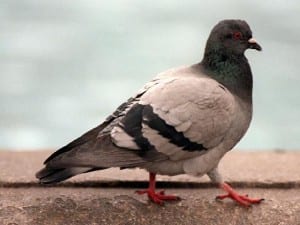
A BARCELONA town is waging war on its pigeon population by taking avian birth control in hand.
In a controversial bid to reduce its pigeon count, Badia del Valles’ town hall is scattering contraceptives to curb the spiralling population.
Automatic dispensers will periodically release 10 grams of Ovistop per bird which operates as birth control for the feathered pests.
Pigeons will be put ‘on the pill’ between July and December, the boom season for breeding, and the project has so far been dubbed effective by town hall sources.
The strategy is expected to reduce the pigeon population to 20% of what it is now over five years.
Since just two birds can give birth to up to 50 pigeons per year, overpopulation has been a growing problem.
About Pigeon Patrol:
Pigeon Patrol Products & Services is the leading manufacturer and distributor of bird deterrent (control) products in Canada. Pigeon Patrol products have solved pest bird problems in industrial, commercial, and residential settings since 2000, by using safe and humane bird deterrents with only bird and animal friendly solutions. At Pigeon Patrol, we manufacture and offer a variety of bird deterrents, ranging from Ultra-flex Bird Spikes with UV protection, Bird Netting, 4-S Gel and the best Ultrasonic and audible sound devices on the market today.
Voted Best Canadian wholesaler for Bird Deterrent products four years in a row.
AvePro Bird Netting was selected as the primary netting product for the new Melbourne Market Canopies project. One of the largest bird netting projects completed to date in Australia, the work was accomplished by AvePro’s Victoria-based installation team in about 10 weeks. Pest IT Pty Ltd supplied the netting for the project.
The installation team consisting of 15 teams of netting installers worked around the clock while AvePro worked at a feverish pace to keep up with the production and the short procurement time.
The massive Melbourne Market Canopies bird netting project required almost 60,000 square metres of AvePro Deluxe 19mm net and hundreds of thousands of stainless steel fittings as well as 13,000 metres of zipper featuring a custom design. Each of the 250-plus stallholder canopy bays has a 33-metre supporting zipper that allows complete access to the roof mounted cameras, fire services, vents and serviceable fixtures as well as the refrigeration appliances on the roof.
A key objective of the project at the Melbourne Market was to create a bird-free zone to meet the requirements for food safety, cleanliness and hygiene while also reducing maintenance. The AvePro system prevents birds from accessing or roosting above the stallholder canopy bays, truck wash areas and loading docks.
Pest IT supplied the materials, training and design to assist the installation team and the client. Stall holders for both the new Flower Market and Fruit and Vegetable Markets will move into their new AvePro ‘Bird-Free Zone’ when the market opens in August 2015
About Pigeon Patrol:
Pigeon Patrol Products & Services is the leading manufacturer and distributor of bird deterrent (control) products in Canada. Pigeon Patrol products have solved pest bird problems in industrial, commercial, and residential settings since 2000, by using safe and humane bird deterrents with only bird and animal friendly solutions. At Pigeon Patrol, we manufacture and offer a variety of bird deterrents, ranging from Ultra-flex Bird Spikes with UV protection, Bird Netting, 4-S Gel and the best Ultrasonic and audible sound devices on the market today.
Voted Best Canadian wholesaler for Bird Deterrent products four years in a row.
LINDENHURST, N.Y. (CBSNewYork) — An effort to protect pedestrians from pigeon droppings is creating quite a mess on Long Island.
As CBS2’s Jennifer McLogan reported, the Long Island Rail Road put up fish netting below overhead rails, but birds became trapped in the netting and died.
Residents in Lindenhurst complain of the appalling sight as live pigeons are entangled in the tough new netting, even laying eggs on it, McLogan reported.
“That’s messed up. They should at least let them fly away first,” said Brandon Diaz.
Below the LIRR tracks, under the superstructure, several of the birds have already succumbed to the lack of food and inability to free themselves. Smelly carcasses have been spotted on a ledge and in a cage, McLogan reported.
“It is a sin. It shouldn’t be happening. It’s cruelty,” said James Abendolla.
Small business owner T.C. Kross contacted the MTA, enraged over what she called animal abuse.
The agency explained it is doing its best to curb droppings and keep pigeons away from passengers, McLogan reported.
Kross said the pigeons, once heralded as military messengers during World War I and II, don’t deserve to suffer.
“Netting over a live animal so they die of dehydration and starvation, that’s not OK,” said Kross.
Locals contacted pigeon experts seeking advice and alternatives were suggested, including spikes and egg sterilization, McLogan reported.
“I’m shocked too because basically we called the MTA in regards to the problem we have with the pigeons,” said Lindenhurst Mayor Thomas Brennan. “They put up these nets, which were horrendous, and now they want us to clean it up.”
The MTA is now accepting responsibility — and getting an earful from residents worried about their health from inhaling dried bird droppings.
“It’s airborne, so you don’t know if you’re gonna get sick or not. We have animals up there that are dying and eating each other and eating their eggs, and it’s just not right,” said Lauraine Ippolo.
The MTA said the pigeons will be released from the netting. A clean up is now underway and a new plan to keep the pigeons at bay is in the works, McLogan reported.
About Pigeon Patrol:
Pigeon Patrol Products & Services is the leading manufacturer and distributor of bird deterrent (control) products in Canada. Pigeon Patrol products have solved pest bird problems in industrial, commercial, and residential settings since 2000, by using safe and humane bird deterrents with only bird and animal friendly solutions. At Pigeon Patrol, we manufacture and offer a variety of bird deterrents, ranging from Ultra-flex Bird Spikes with UV protection, Bird Netting, 4-S Gel and the best Ultrasonic and audible sound devices on the market today.
Voted Best Canadian wholesaler for Bird Deterrent products four years in a row.
THERE’S A REASON Woody Allen once dubbed pigeons the rats of the sky. They’re filthy. They poop on everything, and that stuff can carry disease. And they pester you mercilessly, especially when you’re just trying to eat a sandwich. Everyone knows they’re gross.
Well, almost everyone. Photographer Mårten Lange loves them, and says pigeons aren’t the problem, cities are. “Pigeons are dirty because cities are dirty,” says Lange, whose book, Citizen, features striking black-and-white portraits of Columba livia domestica. “So if you find them disgusting, look around you.”
The Swedish photographer, who has made similarlystunning portraits of crows in Tokyo, started photographing pigeons while living in London last year. He was drawn to how they struggle, much like humans, to overcome the challenges of a hostile cityscape. Each day presents a number of dangers: flying into a window, being eaten by a cat, losing a toe to those bits of string that always seem to wind around their feet. “These birds are very often quite beat up, dirty, crippled and just sad, but they never give up,” he says.
Click to Open Overlay GalleryCitizen, Études Books, 2015. MÅRTEN LANGE
Though pigeons typically gather in flocks, Lange shot them individually using a long lens to blur the background and an on-camera flash to make the birds look like cut-outs. Given that pigeons are essentially fearless, getting close was no problem. “The flash would make them twitch sometimes, but they were quite indifferent to being photographed,” Lange says.
The whimsical portraits look like they were made in a studio. Each bird appears surprisingly unique and regal, its eyes and gestures communicating emotions like fear, anger, playfulness, and contentment. You almost expect them to talk. “They are individuals,” Lange says, “just like us.”
Maybe he’s right. Pigeons are pretty smart, after all. And they’re industrious, capable of finding their way home across great distances—a trait that made them particularly useful for communication during the First and Second World Wars. Charles Darwin and Nikola Tesla both loved them. And they can actually be quite beautiful, as Lange’s photographs show. But the photographer isn’t trying to make anyone love pigeons, only appreciate them as something more than flying rats. “I’m just pointing to a correlation between our lives and theirs,” he says. “Our habitat is their habitat.”
About Pigeon Patrol:
Pigeon Patrol Products & Services is the leading manufacturer and distributor of bird deterrent (control) products in Canada. Pigeon Patrol products have solved pest bird problems in industrial, commercial, and residential settings since 2000, by using safe and humane bird deterrents with only bird and animal friendly solutions. At Pigeon Patrol, we manufacture and offer a variety of bird deterrents, ranging from Ultra-flex Bird Spikes with UV protection, Bird Netting, 4-S Gel and the best Ultrasonic and audible sound devices on the market today.
Voted Best Canadian wholesaler for Bird Deterrent products four years in a row.
Downtown Chicago, where I spend most of my time, has beggars on nearly every corner.
Many of them have regular perches, like fishermen with favorite spots. Others, more creative – and usually more crafty – seem to wander around instead. But except for the licensed sellers of Streetwise and a truly unfortunate few, most of them are hustlers.
The legless Viet Nam veteran whose bare stumps stick out beneath his shorts as he sits, head hung in discouragement, at the corner of Adams and LaSalle Streets is truly unfortunate, a man who gave his legs for a country that turned its back on him when he came home from an unpopular war.
So is the rather lively but elderly fellow who stands outside the Walgreen’s at 200 West Adams Street cheerily chirping “have a nice day’ to all who pass, hoping without asking that someone will slip him a few bucks to help him through the day. It seems likely he is mentally challenged.
But most of the rest I encounter are frauds and tricksters.
Take, for example (please!) the ubiquitous white college-age beggars who prop themselves against lampposts with hand-lettered “homeless” signs while drinking their morning Starbuck’s coffees and reading their Kierkegaard and Karl Marx. If they’re not college students raising beer money or leftovers from the last Lollapalooza, Grateful Dead concert, or “Occupy” protest then I’ll eat the “School of the Art Institute” T-shirts right off their backs.
Some panhandlers are quite creative, even entertaining. A roving trickster most often seen in the vicinity of South Michigan Avenue does quite a good Shakespeare rendition while greeting potential victims with a flourish and a “Greetings, kind sir! Prithee, may I have word with you?”
Perhaps my favorite, for their brazenness and gall, are those who approach with the desperate plea: “I don’t want your money; may I please just ask you a question?” “Sure, what’s your question?” “May I please have some money?” No, you may not.
I’ve been taken in more than a few times, though, because I’m what you might deride as a “compassionate” conservative. Although I truly believe that it’s better to teach someone how to fish than simply to give him one, I’ll sometimes give a hungry person a fish nonetheless. Almost always I regret it later. For the more elaborate the story, the more likely it isn’t true.
A young, tall African-American clad in red and white basketball warm-ups and size sixteen shoes approached me one cold, dark Christmas Eve, tears streaming down his obviously distressed face. “What’s wrong with people in this town?” he lamented. “Everybody sees a seven foot tall black man approaching them and they run away.” I didn’t.
His spiel was that he’d missed the University of Oklahoma basketball team bus back to Norman after a game in Chicago and needed $85.00 to get home for the holidays. Of course, he would repay me once he got there. He was tall enough and wearing the right colors, but when I tried to flag down a passing police cruiser to help out, he bolted. According to that evening’s sports roundup, the Oklahoma Sooners were playing in the Chaminade Classic in Honolulu , 4246 miles away from Chicago.
Another supposed college student, an agitated young white man, insisted one Labor Day weekend evening that his wallet had been stolen when he fell asleep on the CTA. He, too, needed cash to get home, in this case for a train to South Bend to meet his father who would drive him back to Indiana University. He even had a police report documenting the supposed robbery.
I left him with the doorman in my building lobby while I called the local precinct, which verified that a person by that name had indeed filed such a report. A quick Internet search revealed an IU student by that name. Still, I knew almost immediately that I’d been taken from the look in his eyes and the speed with which he fled when he grabbed the $70.00 from my hands. A week or so later a Chicago Tribune columnist wrote about having been taken in by the exact same scam.
I could tell you about the pregnant woman and her husband who’d been burned out of their home (he had scorch marks on his had to prove it) for whom I bought $60.00 worth of groceries, the fellow with the scar on his forearm just out of prison who took me for $40.00 for the magazine subscriptions that never arrived, or the kid with the fake UNICEF ID who scowled when I gave him a check (which never cleared) instead of cash when he came collecting door-to-door. I could even tell you about the construction worker who needed fifty or sixty bucks to get home because his truck had blown its starter – three nights in a row – but I won’t.
Just don’t feed the pigeons when you come to Chicago, especially if they’ve got a story to sell. You might just turn out to be one.
About Pigeon Patrol:
Pigeon Patrol Products & Services is the leading manufacturer and distributor of bird deterrent (control) products in Canada. Pigeon Patrol products have solved pest bird problems in industrial, commercial, and residential settings since 2000, by using safe and humane bird deterrents with only bird and animal friendly solutions. At Pigeon Patrol, we manufacture and offer a variety of bird deterrents, ranging from Ultra-flex Bird Spikes with UV protection, Bird Netting, 4-S Gel and the best Ultrasonic and audible sound devices on the market today.
Voted Best Canadian wholesaler for Bird Deterrent products four years in a row.
Birds of prey are to be used to scare nuisance seagulls and other pest scavenger birds away from a Galway landfill site.
The problem of seagulls and other pest birds is so great at the East Galway Landfill in Kilconnell, Galway County Council is looking for birds of prey to aid in curbing the nuisance.
The local authority has sought tenders for bird control services at the landfill site near Ballinasloe. The successful bidder will be asked to use deterrents, including birds of prey such as falcons and eagles, “to deter pest bird species form causing nuisance at the landfill site”.
In conjunction with the use of birds of prey, artificial deterrents such as balloons, kites and distress callers will be used to combat the problem of nuisance birds at the landfill.
The deterrents must be used when the contractor is on site, and when the contractor is not on site in order to comply with bird control conditions set-out in the waste licence for the facility.
Using birds of prey is considered an environmentally friendly way of combating the problem of seagulls and pest birds at landfill sites.
Gulls and other birds feeding at landfill waste sites can cause problems for neighbours of the site as well as to people working at the landfill, and flight paths.
According to the County Council, the successful company must fly birds of prey as a deterrent at the site every day that the contractor is present.
According to the Environmental Protection Agency, scavenger birds such as starlings, crows, blackbirds, and gulls are most commonly associated with active landfills.
They can be a nuisance, transfer pathogens, litter and scraps to neighbouring areas and also be a hazard to aircraft. The EPA said, in its guidelines, that some birds resident on landfills are protected species and this protection must be respected at all times.
In recent weeks seagulls, in particular, have received bad press. In England, gulls have been hitting the headlines for all the wrong reason and the Prime Minister, David Cameron called for a ‘big conversation’ on aggressive menace gulls, which he encounters at Cornwall.
In Ireland, Fianna Fáil senator, Ned O’Sullivan last year said swooping seagulls were a scourge in Dublin, attacking young people and causing a raucous racket at night contributing to residents’ sleep deprivation.
His party colleague in the senate, Denis O’Donovan, last week called for a cull of seagulls because they were becoming a pest and nuisance.
About Pigeon Patrol:
Pigeon Patrol Products & Services is the leading manufacturer and distributor of bird deterrent (control) products in Canada. Pigeon Patrol products have solved pest bird problems in industrial, commercial, and residential settings since 2000, by using safe and humane bird deterrents with only bird and animal friendly solutions. At Pigeon Patrol, we manufacture and offer a variety of bird deterrents, ranging from Ultra-flex Bird Spikes with UV protection, Bird Netting, 4-S Gel and the best Ultrasonic and audible sound devices on the market today.
Voted Best Canadian wholesaler for Bird Deterrent products four years in a row.
The downtown area of the city of Fredericton is missing thousands of feathered residents.
Areas that would normally roost hundreds of pigeons are now empty.
The city says it has not worked to remove the birds and says their absence is concerning.
“I haven’t seen too many pigeons around,” said by-law officer Don Veysey who has worked on the by-laws concerning the birds in the past.
“I’ve been checking a few areas around where we have been having problems with pigeons in the past and I’ve noticed that there is just none around.”
Don Veysey
Fredericton bylaw officer Don Veysey has worked on pigeon bylaws in the past. (Shane Fowler/CBC)
Veysey says to his knowledge there has been no major project to rid the downtown of the birds and it may be something the city should look into.
“That is something to be concerned with,” said Veysey. “Pigeons are a natural phenomenon, they’ve been around here for hundreds of years. It could be something of concern.”
Checks in areas that have been traditional habitats for pigeons such as beneath underpasses, the Fredericton grandstands, and harness racing horse barns all turned up empty for the birds.
Residents have noticed the flock missing from city streets and downtown roofs.
“I haven’t seen any pigeons” said Bruce Newman, a local painter and resident of Fredericton for the last 15 years.
“There are usually lots of pigeons downtown but I haven’t seen any. I think it’s pretty unnatural. Something could be going on, but I don’t know what.”
In the four hours CBC spent trying to locate any of the birds in the downtown only seven were spotted in total.
About Pigeon Patrol:
Pigeon Patrol Products & Services is the leading manufacturer and distributor of bird deterrent (control) products in Canada. Pigeon Patrol products have solved pest bird problems in industrial, commercial, and residential settings since 2000, by using safe and humane bird deterrents with only bird and animal friendly solutions. At Pigeon Patrol, we manufacture and offer a variety of bird deterrents, ranging from Ultra-flex Bird Spikes with UV protection, Bird Netting, 4-S Gel and the best Ultrasonic and audible sound devices on the market today.
Voted Best Canadian wholesaler for Bird Deterrent products four years in a row.
Police were called to the Strip District Friday morning after a clash between an animal rights activist and a man trapping pigeons.
Todd Glotfelty, who calls himself “the bird man of Elliott,” was trapping birds when he was confronted by a woman.
“She accused me of doing all kinds of evil stuff to pigeons. Pigeons are my life. I love pigeons,” said Glotfelty.
According to a police spokesperson, it is legal to trap birds in the city except in a city park.
Councilwoman Darlene Harris told Channel 11’s Rick Earle that she plans to introduce legislation that would ban bird trapping in the city limits.
“I have no idea what happened, but the lady in question got annoyed or very upset because she saw these gentlemen here are claiming to trap birds for wedding releases but they have feral gray pigeons in their van and she was upset,” said Rebecca Reid, a friend of the woman.
Glotfelty said he uses the birds for weddings.
The woman will not face charges related to the confrontation, but she was warned by police to stay away from Glotfelty.
About Pigeon Patrol:
Pigeon Patrol Products & Services is the leading manufacturer and distributor of bird deterrent (control) products in Canada. Pigeon Patrol products have solved pest bird problems in industrial, commercial, and residential settings since 2000, by using safe and humane bird deterrents with only bird and animal friendly solutions. At Pigeon Patrol, we manufacture and offer a variety of bird deterrents, ranging from Ultra-flex Bird Spikes with UV protection, Bird Netting, 4-S Gel and the best Ultrasonic and audible sound devices on the market today.
Voted Best Canadian wholesaler for Bird Deterrent products four years in a row.
Guards have captured a pigeon flying cocaine and cannabis into a prison in Costa Rica.
La Reforma prison guards in San Rafael de Alajuela, Costa Rica, captured the bird as it flew 14 grams of cocaine and 14 grams of cannabis into the facility stuffed into a pouch attached to its body.
Paul Bertozzi, director of the police, confirmed reports that at around 2pm on Wednesday jailers saw the pigeon flying of the walls and towards the centre of the prison.
A mugshot of the bird, caught by security officers and taken into custody, was released by Costa Rica’s Department of Justice and Peace as a warning to be vigilant for Narcopalomas.
Narcopalomas, loosely translated as ‘drugs doves’, have been used by prisoners and their accomplices in the past– similar birds have been caught in prisons in Colombia, Argentina and even Bosnia.
Mr Bertozzi said the pigeon was “nothing new” and that drug traffickers were using “unimaginable ways to achieve their macabre atrocities”.
“In the past (the traffickers) have used cats and dogs to pass drugs to prisoners. Now it seems they are using pigeons to carry in their wares from the outside,” he told Spanish news agency Efe.
The latest such example hardly surprised prison authorities though: iguanas, dogs and cats have been used in the past to smuggle illegal substances into the jail.
About Pigeon Patrol:
Pigeon Patrol Products & Services is the leading manufacturer and distributor of bird deterrent (control) products in Canada. Pigeon Patrol products have solved pest bird problems in industrial, commercial, and residential settings since 2000, by using safe and humane bird deterrents with only bird and animal friendly solutions. At Pigeon Patrol, we manufacture and offer a variety of bird deterrents, ranging from Ultra-flex Bird Spikes with UV protection, Bird Netting, 4-S Gel and the best Ultrasonic and audible sound devices on the market today.
Voted Best Canadian wholesaler for Bird Deterrent products four years in a row.
Croke Park hit the headlines recently when the stadium decided to introduce a hawk to get rid of pigeons on the pitch.
Stadium Director at Croke Park Peter McKenna said recently that they’ve been running an acoustic system for a couple of months and that worked very successfully.
“It mimics a hawks cry and the birds disperse but then they become used to it.
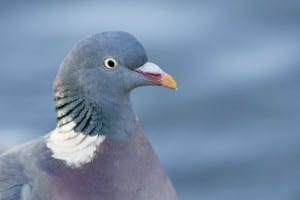
“They’re probably not really pigeons either, they’re more kind of vermin. The wood pigeon which is a beautiful bird and probably very timid but these are a quasi-breed.
“All we want to do is scare them away, hopefully they’ll move across to Clonliffe College or some place like that and nest and roost in the trees there,” he said.
Martha Smithers, Stadium Operations at Croke Park, said that anything that can impact the pitch they take seriously.
“The pigeons are always present on the pitch, but the seed is a field day for them; it’s like dinner for them,” she said.
The introduction of a hawk at Croke Park has had an effect on pigeon numbers, Smithers said.
“The hawk has been flying for a while as a deterrent and as a bird of prey there has been a reduction in the numbers of pigeons on the pitch.
“Other methods we use are flying a hawk kite and noise. We’re constantly reseeding and constantly repairing; reseeding is vital at this time of year with the finals,” Smithers said.
With All-Ireland football matches coming up, blanket defences are sure to deter the pigeons and on September 6 at the All-Ireland Hurling Final there will be cats amongst the pigeons!
About Pigeon Patrol:
Pigeon Patrol Products & Services is the leading manufacturer and distributor of bird deterrent (control) products in Canada. Pigeon Patrol products have solved pest bird problems in industrial, commercial, and residential settings since 2000, by using safe and humane bird deterrents with only bird and animal friendly solutions. At Pigeon Patrol, we manufacture and offer a variety of bird deterrents, ranging from Ultra-flex Bird Spikes with UV protection, Bird Netting, 4-S Gel and the best Ultrasonic and audible sound devices on the market today.
Voted Best Canadian wholesaler for Bird Deterrent products four years in a row.
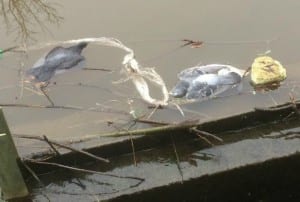
It may sound like something from a 1960s B-film, but a project in North Yorkshire that uses lasers to deter pigeons is proving remarkably successful.
Gavin Milson, project technical assistant at Stockbridge Technology Centre, Cranfield University and high-tech GPS company Manterra reckon that using laser-based bird deterrents could be a cost-effective answer to dealing with the feathered fiends.
The equipment emits a strobing laser – akin to what you might find at a disco – which serves to scare off troublesome birds.
See also: Suffolk farmer battles pigeons with drones
In a Tru-Nject project – a high-tech study designed to investigate soil mapping and fertiliser application – had been set up to in late July this year, 165,000 pointed cabbage were transplanted at a North Yorkshire farm.
Normally the crop would be netted after transplanting, but the project team used a Dutch Agrilaser Autonomic laser, powered by a solar panel and deep-cycle gel battery.
Mr Milson is delighted with the outcome.
“This novel piece of technology appears to have effectively protected the cabbages.
“Its potential for bird control in field vegetables has generated significant interest and is threatening to emerge as a major, albeit unexpected, output from the project.
“Whilst light bird damage has been noted on selected plants in some isolated areas of the crop, complete loss of any individual plant to birds has not” Gavin Milson, Stockbridge Technology Centre
“Whilst light bird damage has been noted on selected plants in some isolated areas of the crop, complete loss of any individual plant to birds has not.
“Indeed, the vast majority of plants have received no unwanted attention from pigeons at all.”
The Tru-Nject team are now discussing plans to fully test the system in an oilseed rape crop later this year, comparing laser-protected crops to unprotected control crops.
It is hoped that this will provide even stronger evidence that the Agrilaser can function as a stand-alone option to manage bird damage in field crops.
About Pigeon Patrol:
Pigeon Patrol Products & Services is the leading manufacturer and distributor of bird deterrent (control) products in Canada. Pigeon Patrol products have solved pest bird problems in industrial, commercial, and residential settings since 2000, by using safe and humane bird deterrents with only bird and animal friendly solutions. At Pigeon Patrol, we manufacture and offer a variety of bird deterrents, ranging from Ultra-flex Bird Spikes with UV protection, Bird Netting, 4-S Gel and the best Ultrasonic and audible sound devices on the market today.
Voted Best Canadian wholesaler for Bird Deterrent products four years in a row.
Large flocks of pigeons are part of San José’s daily landscape, and while pedestrians are mostly used to the scene, health officials say the local winged population is getting out of control. The Health Ministry recently ordered city officials to outline and implement plans to control the number of pigeons in public spaces, mostly in the capital’s downtown.
The feathers of common or feral pigeons (Columba livia) usually carry chlamydia as well as parasites that can be carriers of several other diseases. A 2012 study from the University of Basel, Switzerland, found pigeons can carry some 60 types of microorganisms associated with respiratory infections, as well as lung and brain damage.
Earlier this year, ministry experts conducted an inspection prompted by citizen complaints regarding a perceived increase in the number of pigeons in the capital’s parks, boulevards and other open spaces.
Inspections concluded that the high concentration of pigeons in those spaces is related to the large amount of waste from businesses in the area, and because people constantly feed them.
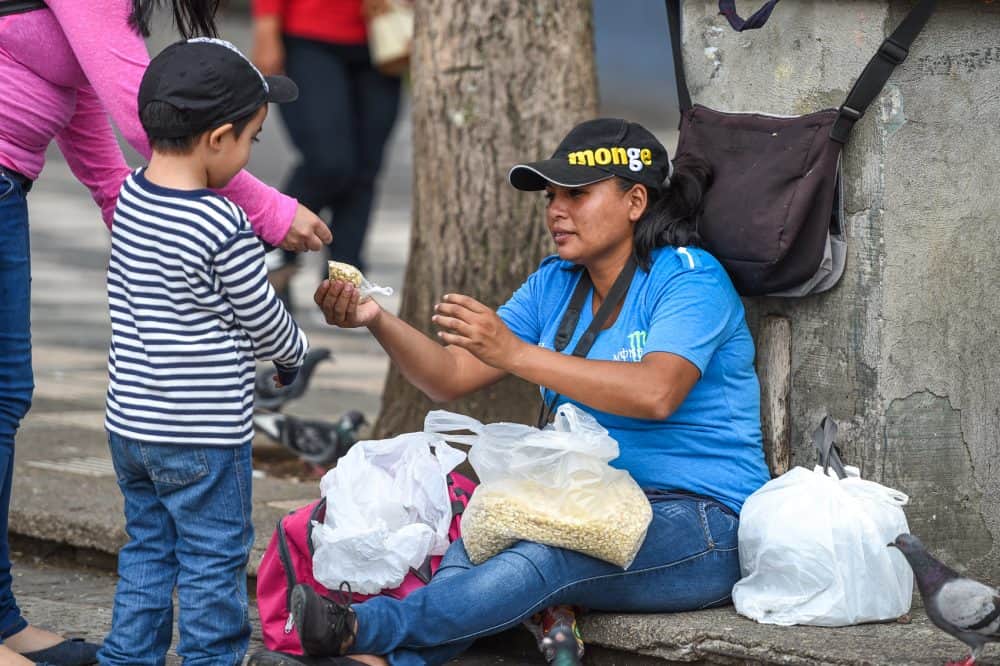
In April the Health Ministry ordered the Municipality of San José to take specific action to curb the increase in pigeon populations downtown. The ministry’s sanitary order called for an immediate ban on pigeon feed sold by street vendors. It requested that Municipal Police confiscate feed when found.
The ministry also asked the city to draft a plan for removing pigeon droppings from sidewalks and parks, and one for improving waste management in the area.
Public health problem
An investigation by the National University’s entomology lab concluded that people who spend time in San José’s public places with large pigeons populations are at risk.
Between 2012 and 2013, UNA experts collected samples of pigeon droppings at four of the capital’s locations where the largest populations are found: Plaza de la Cultura, Plaza de las Garantías Sociales, Parque Morazán and Parque Guadalupe, in northeast San José.
Among their findings UNA researchers found organisms that can be passed to humans, mostly salmonella, usually known as a food poisoning, and chlamydia, mostly known as a sexually-transmitted disease. In fact, chlamydia can be spread from bird to human through particles on the bird, in the bird’s poop or in the air.
The Health Minister at the time, María Luisa Avila Agüero, said that pigeons in these public places also carry two other diseases that can affect humans: toxoplasmosis andhistoplasmosis. According to the U.S. Centers for Disease Control and Prevention, toxoplasmosis is particularly dangerous for pregnant women, as an infection during the early months of pregnancy may result in serious consequences, including abortion, congenital malformations, hydrocephalus, blindness, deafness and intellectual disability. An infection in late pregnancy may result in a child born apparently in health conditions, but years later the child can develop visual disorders that can produce total blindness.
The National Theater, a San José arquitectural landmark, is one of the pigeons’ favorite buildings.
Alberto Font/The Tico Times
Damage to architectural heritage
Besides serious health concerns, citizens have requested the removal of pigeons from downtown San José because of the damage pigeon poop causes to buildings, including historic structures such as the National Theater, Melico Salazar Theater, Knor building (on Central Avenue), the Metropolitan Cathedral and La Merced Church, among others.
William Monge Quesada, director of the Culture Ministry’s Center for Conservation of Cultural Heritage, said that in recent years several strategies to address the problem have been unsuccessful.
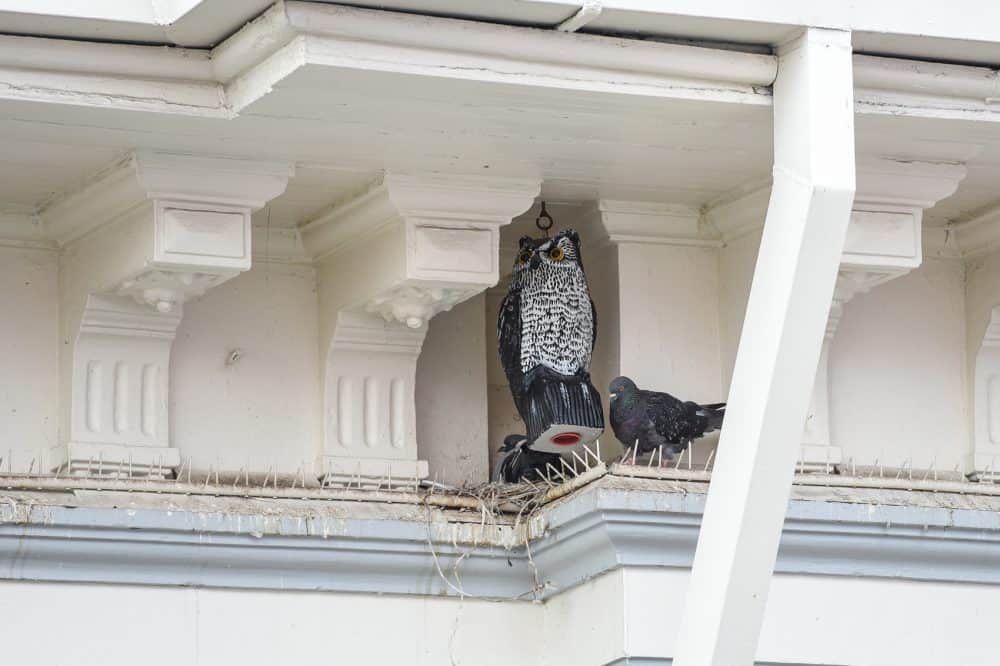
He said city officials had tried many things, from placing metal mesh on cornices, fake owls to scare pigeons, and even ultrasonic systems that imitate pigeon predators. “Scare tactics worked at first but pigeons got used to them pretty soon,” he said.
Monge, an architect who previously worked at the National Theater, said metal mesh worked well but was an expensive solution. Also, at certain times of the year parakeets make holes that pigeons use to enter the ceilings and nest there.
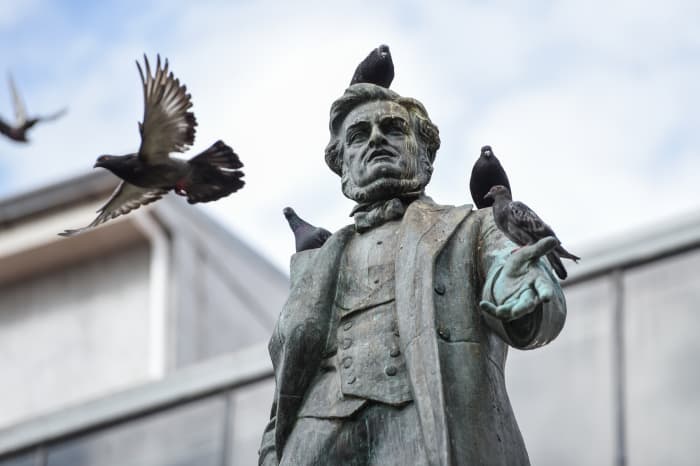
Pigeon droppings corrode rooftops and, as rain washes them, they also corrode cornices and walls. Monuments and statues around San José are also suffering damage, including that of four-time president Juan Mora Porras, located next to the Post Office building.
The statue of ex president Juan Mora Porras is covered in pigeon droppings.
Alberto Font/The Tico Times
Who’s in charge?
The city’s director of tourism Carmen Azofeifa Vindas said authorities have a plan involving relocating the pigeons outside of the capital and implementing a birth control program to reduce the population. The latter could involve adding contraceptives to the pigeons’ food, Azofeifa said.
The relocation plan currently doesn’t have a timetable. Municipal officials are carrying out an investigation to determine an appropriate location for relocating the birds.
City officials are also consulting with counterparts in other countries, mainly in Europe, where authorities have successfully controlled pigeon populations that also were damaging historic buildings and affecting public health, she said.
Municipal officials hope a timetable for the relocation and birth control plan might be ready as soon as next month. Azofeifa, however, believes the municipality likely will need specialized help to carry out the plan. Officials have asked for assistance — at the suggestion of the Health Ministry — from the National System of Conservation Areas (SINAC) and the National Animal Health Service (SENASA) but both agencies say the pigeon relocation problem is not within their responsibilities.
Coordinating with these and other agencies could prove difficult for the city.
SENASA told The Tico Times through its press office that wildlife is out of the agency’s jurisdiction.
SINAC’s wildlife manager Joaquín Calvo Domingo said the city should take the first steps to deal with the problem. He thinks municipal officials first need to improve waste collection and prevent people from feeding the pigeons.
“Once these situations are under control, SINAC might get involved in the next stage of the plan to control overpopulation,” Calvo said.
On the cultural side, officials at the Center for Conservation of Cultural Heritage have yet to draft plans to protect the capital’s historic buildings. William Monge took office a month ago following the dismissal of most of the Culture Ministry’s top officials as a result of thefailed organization of this year’s International Arts Festival.
“I’ve said we need to appoint a person who will be responsible for coordinating efforts with other agencies on this issue,” Monge said last week. He said that person would likely be chosen within a few months.
Pigeons are not scared of fake owls anymore. Metal devices placed to keep them away now support their nests.
Alberto Font/The Tico Times
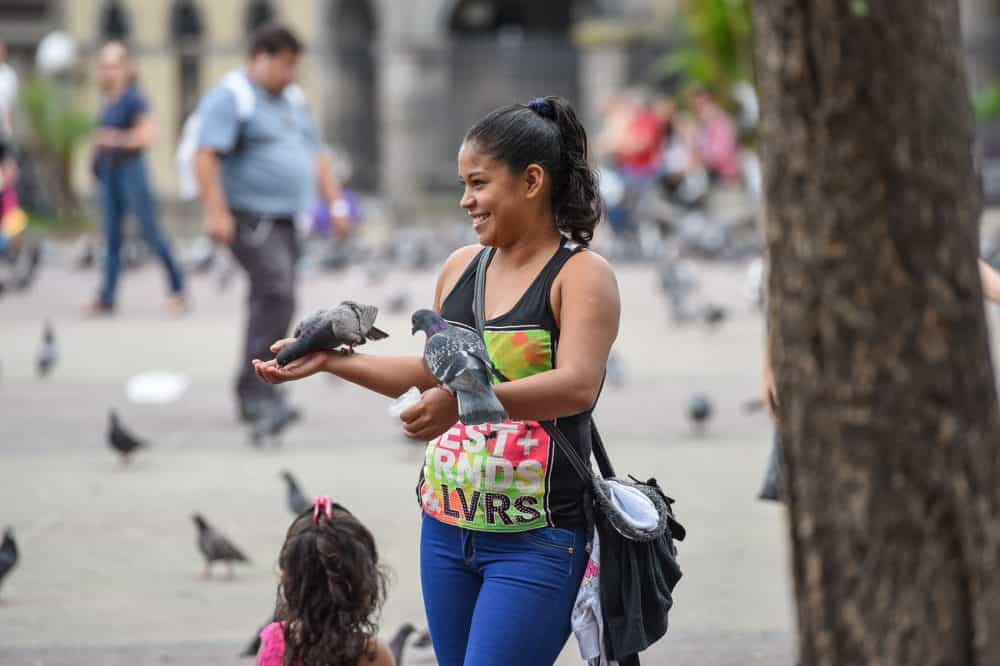
People touch pigeons unaware that they can be carriers of diseases.
Alberto Font/The Tico Times
Pigeon droppings are damaging several historic buildings in San José.
Alberto Font/The Tico Times
Street vendors sell corn for feeding pigeons, in spite of a prohibition from the Health Ministry.
About Pigeon Patrol:
Pigeon Patrol Products & Services is the leading manufacturer and distributor of bird deterrent (control) products in Canada. Pigeon Patrol products have solved pest bird problems in industrial, commercial, and residential settings since 2000, by using safe and humane bird deterrents with only bird and animal friendly solutions. At Pigeon Patrol, we manufacture and offer a variety of bird deterrents, ranging from Ultra-flex Bird Spikes with UV protection, Bird Netting, 4-S Gel and the best Ultrasonic and audible sound devices on the market today.
Voted Best Canadian wholesaler for Bird Deterrent products four years in a row.
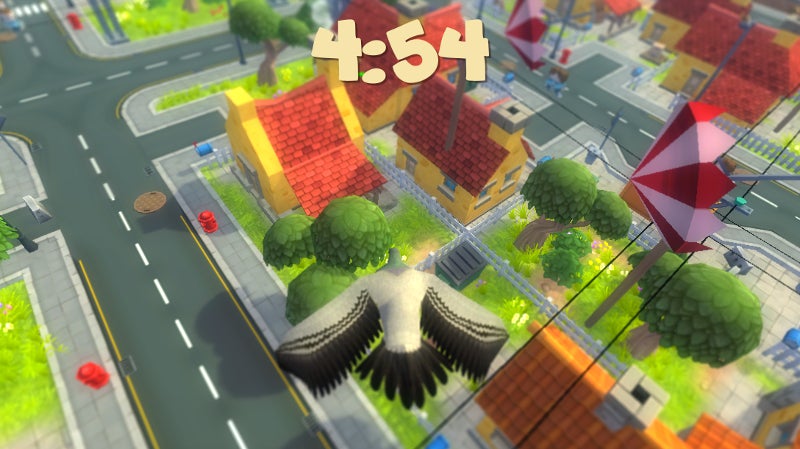
Wonky Pigeon Sure Is A Game About A Pigeon That Poos On People
I mean, I’m not really sure what else I was expecting. Let me set the scene for you: I had just finished taking a ClickHole quiz entitled “Can You Match The Pigeons To The Way They’re Ruining My Whole Life?” Afterward, I stepped away from my PC to go down to the building that houses my apartment complex’s washing machine, to put my laundry in the drier. Boom: from behind a rubbish bin emerged a pigeon, eyes afire with some sort of bird emotion (probably vengeance) screaming into the sky.
“OK,” I thought to myself, “that was a little weird.”
Rattled, I returned to my PC to engage in one of my favourite self-care/loathing acts: checking Steam’s new releases page. Of course, my eyes immediately gravitated to Wonky Pigeon. It is highly unlikely that any of these events are connected, but there’s your idea for a modern reboot of Alfred Hitchcock’s The Birds, Hollywood.
So the game is about a pigeon trying to destroy cities with poop. Humanity played some kind of cruel joke on the pigeon, and then things got wacky. Also, apocalyptic.
But the rabbit — pigeon? — pigeon hole (ew) runs deeper. Look at this list of things that are in the game:
Both evil and comic game story — Use a pigeon to destroy a city with poo.
Beautiful cartoon graphics — You will love to shoot green poo.
Split screen coop mode — Two pigeons is better than one.
The dramatic poo cam — Drive the poo until it hits the target.
Pigeon sounds by John J. Dick — The famous actor who voiced Serious Sam.
That last one took me by surprise too. I guess he does a mad solid pigeon impersonation? Stock recordings of pigeons also do a pretty good pigeon impersonation, but to each their own!
Anyway, Wonky Pigeon is a game about a pigeon who poos on people. That is pretty much The Whole Thing. It just launched on Steam Early Access, although curiously, I am unable to purchase it at the moment. So yes, the world is weird, and pigeons are arseholes (with other miscellaneous bird parts attached).
About Pigeon Patrol:
Pigeon Patrol Products & Services is the leading manufacturer and distributor of bird deterrent (control) products in Canada. Pigeon Patrol products have solved pest bird problems in industrial, commercial, and residential settings since 2000, by using safe and humane bird deterrents with only bird and animal friendly solutions. At Pigeon Patrol, we manufacture and offer a variety of bird deterrents, ranging from Ultra-flex Bird Spikes with UV protection, Bird Netting, 4-S Gel and the best Ultrasonic and audible sound devices on the market today.
Voted Best Canadian wholesaler for Bird Deterrent products four years in a row.
I was sitting in the High Street, outside M & S, waiting for Sue to finish buying up the whole store.
A chap came up and had a carrier bag of tit-bits for the pigeons.
They seemed to know him and flew down for a bit of lunch.
How healthy they looked with most of them still having their legs and toes.
In London practically all the pigeons look tatty, have no feet or are dragging a leg because it was entwined with cotton, wire or some other form of ligature.
Previously I had been sitting, waiting for the train, on Marylebone Station.
A couple of pigeons were gleaning what they could on the concourse.
There it was.
One had a definite limp with cotton wrapped around its leg, a ligature almost severing the foot.
How could I ignore it?
I couldn’t.
I went into M & S and bought some biscuits.
The plan was to entice our pigeon to come within distance then I could pounce and grab.
Did this without any trouble. Then to untangle the cotton from its leg.
Bad mistake.
As I started to unwind it the leg started to bleed profusely.
From being a hero I had become a villain who made pigeons bleed.
I stemmed the bleeding with tissues and getting a box, once more in M & S, I took my bemused pigeon back to Tiggys where, once the cotton had been removed, the leg could be sutured back together.
The true endorsement of the pigeon that I witnessed was in St Mark’s Square in Venice.
The local council had banned the sale of pigeon food. I was in Venice where a group of tourists in wheelchairs were having a fabulous time feeding the pigeons. They were loving every minute of it.
Leave the pigeons be.
Somebody loves them.
About Pigeon Patrol:
Pigeon Patrol Products & Services is the leading manufacturer and distributor of bird deterrent (control) products in Canada. Pigeon Patrol products have solved pest bird problems in industrial, commercial, and residential settings since 2000, by using safe and humane bird deterrents with only bird and animal friendly solutions. At Pigeon Patrol, we manufacture and offer a variety of bird deterrents, ranging from Ultra-flex Bird Spikes with UV protection, Bird Netting, 4-S Gel and the best Ultrasonic and audible sound devices on the market today.
Voted Best Canadian wholesaler for Bird Deterrent products four years in a row.
Rick Gibson, UA Cooperative Extension
Birds can devastate young vegetable seedlings or ruin fresh fruit in the blink of an eye but if we know what to do, and take action before they strike, we can often prevent problems.
Many of us are all too familiar with damage caused by birds to ripening apricots, plums, grapes and other garden fruits. We know it happens and even come to expect it. However, few people realize that birds can also seriously damage vegetable gardens. The fact is that yes, birds can make pests of themselves in vegetable gardens, particularly when young plants are in the seedling stage. Some people would be quick to say that they can be very aggravating pests. For those who know what I am talking about, I sense your frustration.
Birds can damage fruit and vegetables in two basic ways. The most obvious is direct feeding and the other is contamination of food products. Let’s consider some examples.
Horned larks are notorious in the commercial vegetable industry and in home vegetable gardens for nipping at new seedlings emerging from the ground. They usually don’t really eat the plant. Mostly they just bite it, perhaps for a taste of the sap. Sometimes though, they will pull it completely out of the ground. In these cases, it is not uncommon to find the poor, abused seedling lying discarded nearby after this not too gentle treatment. Horned larks are not the only ones that do this of course, but they are notorious for this kind of damage.
Other birds like finches, sparrows, thrashers and wrens will peck holes in the soft flesh of ripening fruit. Figs, apricots, peaches and plums are common targets for birds. Woodpeckers and their relatives, the sapsuckers, peck holes in the rinds of citrus fruit looking for a juicy taste of fresh fruit. Many birds figure out how to hunt the seeds that you just put in the ground and have lunch at your expense. If you are growing your own grains, watch out for the red-winged blackbird. They and their cronies will absolutely love your harvest.
Birds also cause damage to garden crops through direct contamination of the edible parts of the plant. Bird droppings are usually not a problem when they fall on fruits that will be peeled, but when they end up on difficult to wash fruit like blackberries, strawberries and clusters of table grapes, they make a real mess and the residues could harbor disease.
The sight of bird feces on fresh fruit is guaranteed to quickly destroy any desire one might have to pluck a ripe fruit and plop it directly in the mouth. Even so, most produce can be cleansed with a careful washing. In fact, it is a good idea to inspect food materials carefully before you place anything in your mouth. Even if you can’t see any contamination, it is always good to wash before you eat. It is better to be safe than sorry, I say.
How do we prevent bird problems in the garden? When thinking about control, many people quickly jump to the idea of chemical poisons and repellents. However, since most gardeners do not have the proper training, certification and license to use chemicals to control birds, that way is out. Don’t even think about it. Put it out of your mind. Don’t go there.
The same goes for shooting with fire arms, sling shots or arrows. There are a whole bunch of laws that if violated, could bring embarrassment, financial difficulties and even imprisonment. Unless you have legal permission, birds cannot be harmed in any way. Just so we are clear, almost every bird you see is protected by state and/or federal regulations. Killing or injuring birds without a license carries a stiff punishment and could get you into big trouble. Don’t do it.
So, what can you do to protect your garden from the ravages of hungry birds? There are a number of things that can be done and most fall within three categories: frightening devices, mechanical barriers and habitat modification.
Okay, let me emphasize right here that I am not recommending the use of loud sounds in populated areas to frighten away birds. While farmers out in the country might get away with propane cannons, fireworks and blank shotgun blasts, no one in the city wants to wake up to a loud bang or pop at the crack of dawn. Not only will the neighbors be upset, but the local law enforcement community also. They take a dim view of such activities, even if it is in the name of good gardening, because there are laws against disturbing the public peace.
On the other hand, a good predator silhouette works very well to frighten birds away. It is quiet and causes no harm to the animals. Some people use hawks or snakes, but I like to use an owl. Strategically placed and moved regularly, birds have a tough time telling the difference between a real owl and a plastic one in the few seconds they have to make a life or death decision. I really like the plastic owl that, with power from a solar collector, is able to move its head. Any movement is good because it gives the birds a more realistic view. I have seen birds literally do a U-turn in mid flight when they suddenly see what they think is a live owl hiding among the foliage of a fig or apricot fig. Predator images seem to work equally well in vegetable gardens.
Mechanical barriers are another good way to keep birds away from sensitive plants. Many people already use bird netting over citrus, apricots, grapes and plums to protect their fruit. Floating row covers, light spun fabric especially designed for agricultural use or the netting you use on your fruit trees can be set up to keep birds away from tender vegetable plants until they are large enough that birds lose interest. The floating row cover can be laid directly on top of the plants because they are light enough that they do not damage plants. Netting can be laid on top of a pole framework to keep them off the plants.
The last way to prevent bird damage is to change the natural habitat around your garden. Modifying conditions to make the area less interesting to the birds will help prevent bird populations from becoming excessive. The fewer the birds, the less damage will be sustained.
Of course, birds can travel some distance to a feeding area so habitat modification may have its limits, but anytime we can camouflage or make a feeding site less interesting, the better off we will be. Common modification techniques include removing roosting areas like trees and shrubs in the vicinity of the garden area, moving the bird bath and decorative bird houses to another part of the yard and eliminating nearby resting areas.
Birds cause many types of damage in the garden. While there are some things that we definitely should not do, there are steps that you and I can take to effectively prevent bird damage without harming protected species.
About Pigeon Patrol:
Pigeon Patrol Products & Services is the leading manufacturer and distributor of bird deterrent (control) products in Canada. Pigeon Patrol products have solved pest bird problems in industrial, commercial, and residential settings since 2000, by using safe and humane bird deterrents with only bird and animal friendly solutions. At Pigeon Patrol, we manufacture and offer a variety of bird deterrents, ranging from Ultra-flex Bird Spikes with UV protection, Bird Netting, 4-S Gel and the best Ultrasonic and audible sound devices on the market today.
Voted Best Canadian wholesaler for Bird Deterrent products four years in a row.
They may only have a brain the size of a thimble, but it appears pigeons can categorise and name objects in the same way a human children learn new words.
A new study from the University of Iowa has shown that the birds are capable of learning to categorise 128 different photographs into 16 basic categories.
Scientists taught three pigeons to attribute different breeds of dog or types of shoe, for example to a particular symbol in exchange for a reward.
CROWS ARE PROBLEM SOLVERS
Crows are widely thought to be among the most intelligent of birds, but a recent study found they are even smarter than first thought, capable of solving complex tasks previously thought possible only by humans, apes and monkeys.
Most impressively, they performed the tasks spontaneously – without any prior training.
Two hooded crows were placed into a wire mesh cage into which a plastic tray containing three small cups was occasionally inserted.
The sample cup in the middle was covered with a small card that had a colour, shape or number of items pictured on it.
The other two cups were also covered with cards – one that matched the sample, and one that didn’t.
The cup under the matching card contained mealworms, which the crows were rewarded with if they chose the correct match.
The crows were then required to conduct a similar task but with images on cards that did not precisely match.
Researchers were surprised that the not only could the crows correctly perform these relational matches, with a success rate of 78 per cent – 50 per cent being regarded as chance – but that they did so spontaneously, without explicit training.
However, the researchers said it took their birds around 40 days to perfect the task of learning just 16 categories.
Professor Edward Wasserman, a psychologist at the University of Iowa who led the work, said: ‘Our birds’ rate of learning appears to have been quite slow. Human adults regularly learn 16 categories in the space of an hour, yet, pigeons took 45,000 trials to reach their associative limits.
‘Would children learn faster than pigeons? Almost certainly. However, our pigeons came to the experiment with literally no background knowledge.
‘They did not understand the nature of the “task”, they had not encountered these categories before, and they had empty lexicons.
‘Children, on the other hand, bring all of these things to bear on the problem of learning words.
‘Thus, the more relevant comparison group may be newborn infants, who indeed take 6–9 months to learn their first words.’
On each training day, the researchers presented each of the pigeons with 128 randomly ordered images.
Each image fitted into one of 16 categories – baby, bottle, cake, car, cracker, dog, duck, fish, flower, hat, key, pen, phone, plan, shoe, tree.
The birds then had to peck on one of two different colour symbols presented to them on a touchscreen computer – one that was associated with the correct category and the other the wrong category.
If the birds selected the correct symbol they were rewarded with a pellet of food. Incorrect choices plunged the birds into darkness foir a new seconds.
After the training, the birds were then presented with images from the categories they had not seen before to see if they could correctly attribute them.
Pigeons are known for their ability to find their way home, but the new study suggests they are even smarter
One of the birds reached an accuracy of 80 per cent, a second achieved 70 per cent accuracy and the third was 65 per cent accurate.
Writing in the journal Cognition, the researchers said their experiment was a very simple mirror of the way children are taught words – by their parents pointing to pictures and asking them to name the object.
They said: ‘Our paradigm is not a direct analog of human word learning.
‘Nevertheless, it does offer a unique biological model of a critical property of word learning – namely, the fact that a learner must map many exemplars to many categories.’
Professor Wasserman added: ‘Unlike prior attempts to teach words to primates, dogs, and parrots, we used neither elaborate shaping methods nor social cues.
‘Our pigeons were trained on all 16 categories simultaneously, a much closer analog of how children learn words and categories.
‘Differences between humans and animals must indeed exist – many are already known – but, they may be outnumbered by similarities.
‘Our research on categorization in pigeons suggests that those similarities may even extend to how children learn words.’
The scientists taught the pigeons to group images of real objects into the 16 distinct categories shown above
Pigeons are known to be smarter than many birds and their homing instinct allows them to memorise their location and find their way home from hundreds of miles away.
Professor Bob McMurray, another psychologist who took part in the study, said the results showed that human learning is not as unique as was previously believed.
He said: ‘Children are confronted with an immense task of learning thousands of words without a lot of background knowledge to go on.
‘For a long time, people thought that such learning is special to humans.
‘What this research shows is that the mechanisms by which children solve this huge problem may be mechanisms that are shared with many species.’
CROWS ARE ‘LEFT-BEAKED’ OR ‘RIGHT-BEAKED’
Researchers studying New Caledonian crows recently discovered the clever corvids display a preference for holding a stick tool on a certain side of their beaks – and this could be to make the most of their wide field of vision.
The researchers believe the birds may be trying to keep the tip of the stick in view of the eye on the opposite side of their heads, so they can see clearly in order to use tools in the most dexterous way.
Lead scientist Dr Alejandro Kacelnik, from Oxford University, said: ‘If you were holding a brush in your mouth and one of your eyes was better than the other at brush length, you would hold the brush so that its tip fell in view of the better eye. This is what the crows do.’
New Caledonian crows surprised experts with their ability to use sticks to extract larvae from burrows and, in captivity, retrieve food placed out of reach.
The study, published in the journal Current Biology, also suggests that the birds’ unusually wide field of vision actually helps them to see better with one eye.
About Pigeon Patrol:
Pigeon Patrol Products & Services is the leading manufacturer and distributor of bird deterrent (control) products in Canada. Pigeon Patrol products have solved pest bird problems in industrial, commercial, and residential settings since 2000, by using safe and humane bird deterrents with only bird and animal friendly solutions. At Pigeon Patrol, we manufacture and offer a variety of bird deterrents, ranging from Ultra-flex Bird Spikes with UV protection, Bird Netting, 4-S Gel and the best Ultrasonic and audible sound devices on the market today.
Voted Best Canadian wholesaler for Bird Deterrent products four years in a row.
Farmers cultivating fruits like grapes on ‘pandal’ are advised to erect anti-bird nets with subsidy under the National Horticulture Mission to protect the fruits from birds, squirrels, owls, etc., as the netting protects the crops from extensive damage to fruits and vegetables.
Anti-bird netting is an effective method for preventing crop loss usually caused by birds that invade the vineyards in flocks. Anti-bird netting can be done manually or mechanically depending upon the need. The anti-bird nets can also be used for holding animals in an enclosure, thus preventing any pillaging by birds and in some instances for keeping wild animals out and preventing consequent damage. With regard to aviary protection, wide-meshed nets are recommended.
Plastic anti-bird netting is a light weight but strong netting that will protect soft fruits and vegetables from bird attacks and browsing animals. Anti-bird netting can be used for fruit cages, protection of crops from birds, rabbits, squirrels and other similar pests, he added.
The plastic bird netting is lightweight, easy to handle and simple to install over fruit cages, directly over fruit trees and on vegetable or fruit growing areas.
The netting apertures allow smaller essential pollinating insects through and smaller butterflies while preventing birds. Anti-bird nets have a rectangular structure which creates a strong plastic mesh structure, making it easier to install and long lasting than the diamond mesh structured plastic bird netting.
Inspecting a field with anti-bird netting protection at Krishnapuram in the district, S. Raja Mohamed, Deputy Director of Horticulture, said 50 percent subsidy at the rate of Rs. 17.50 per sq.m. limited to 5,000 sq.m. per beneficiary was being given under the NHM to the farmers, who needed anti-bird nets.
As a promotional measure during the current fiscal, 1,000 sq.m. had been allotted to P. Ravichandran of Krishnapuram under this component with an allocation of Rs. 17,500.
“Farmers cultivating fruits like grapes and vegetables grown on ‘pandal’ may go for anti-bird netting with the NHM subsidy. While this effort fetches sizable assistance, the yield is also increased substantially by preventing invading birds and smaller animals,” Mr. Raja Mohamed said.
About Pigeon Patrol:
Pigeon Patrol Products & Services is the leading manufacturer and distributor of bird deterrent (control) products in Canada. Pigeon Patrol products have solved pest bird problems in industrial, commercial, and residential settings since 2000, by using safe and humane bird deterrents with only bird and animal friendly solutions. At Pigeon Patrol, we manufacture and offer a variety of bird deterrents, ranging from Ultra-flex Bird Spikes with UV protection, Bird Netting, 4-S Gel and the best Ultrasonic and audible sound devices on the market today.
Voted Best Canadian wholesaler for Bird Deterrent products four years in a row.
Some very interesting new research has uncovered something remarkable about pigeons. Apparently, they can learn much like a human.
“The research shows the mechanisms by which children learn words might not be unique to humans,” comments study author Bob McMurray, of the University of Iowa. “Children are confronted with an immense task of learning thousands of words without a lot of background knowledge to go on. For a long time, people thought that such learning is special to humans.”
McMurray goes on to say, “What this research shows is that the mechanisms by which children solve this huge problem may be mechanisms that are shared with many species.”
Obviously, a pigeon does not have the same capacity for information as a human, but the study suggest that they have, at least, comparable capacity for learning.
“It is certainly no simple task to investigate animal cognition; but, as our methods have improved, so too have our understanding and appreciation of animal intelligence,” explains study author Ed Wasserman, of the University of Iowa. “Differences between humans and animals must indeed exist, many are already known. But, they may be outnumbered by similarities. Our research on categorization in pigeons suggests that those similarities may even extend to how children learn words,”
He presents hypotheticals: “Would children learn faster than pigeons? Almost certainly; However, our pigeons came to the experiment with literally no background knowledge. They did not understand the nature of the ‘task’ they had not encountered these categories before, and they had empty lexicons.”
“Children, on the other hand, bring all of these things to bear on the problem of learning words,” he says. “Thus, the more relevant comparison group may be newborn infants, who indeed take 6 to 9 months to learn their first words.”
About Pigeon Patrol:
Pigeon Patrol Products & Services is the leading manufacturer and distributor of bird deterrent (control) products in Canada. Pigeon Patrol products have solved pest bird problems in industrial, commercial, and residential settings since 2000, by using safe and humane bird deterrents with only bird and animal friendly solutions. At Pigeon Patrol, we manufacture and offer a variety of bird deterrents, ranging from Ultra-flex Bird Spikes with UV protection, Bird Netting, 4-S Gel and the best Ultrasonic and audible sound devices on the market today.
Voted Best Canadian wholesaler for Bird Deterrent products four years in a row.
Two Aeroflot jets collided with birds in the past 24 hours, but no one was injured.
The pilots of an Airbus A-330 radioed air traffic controllers shortly after taking off from Moscow’s Sheremetyevo Airport on a flight to London to say that they had struck a large bird, Interfax reported Thursday.
“Nonetheless, the crew decided to continue the flight,” an official in Moscow’s air traffic control was quoted as saying.
The plane departed Moscow at 8:45 p.m. Wednesday. No serious damage was discovered to the aircraft after it safely landed in Heathrow.
The report did not say how many people were aboard the jet, which typically can carry 250-300 passengers.
The second bird strike occurred as an Airbus A-321 flight from Moscow was preparing to land at the Kaliningrad airport at 3:40 p.m. Wednesday. The bird hit the cockpit’s windshield, Moscow’s air traffic control said, without elaborating on whether the windshield was damaged.
Interfax did not say how many people were on the flight.
About Pigeon Patrol:
Pigeon Patrol Products & Services is the leading manufacturer and distributor of bird deterrent (control) products in Canada. Pigeon Patrol products have solved pest bird problems in industrial, commercial, and residential settings since 2000, by using safe and humane bird deterrents with only bird and animal friendly solutions. At Pigeon Patrol, we manufacture and offer a variety of bird deterrents, ranging from Ultra-flex Bird Spikes with UV protection, Bird Netting, 4-S Gel and the best Ultrasonic and audible sound devices on the market today.
Voted Best Canadian wholesaler for Bird Deterrent products four years in a row.
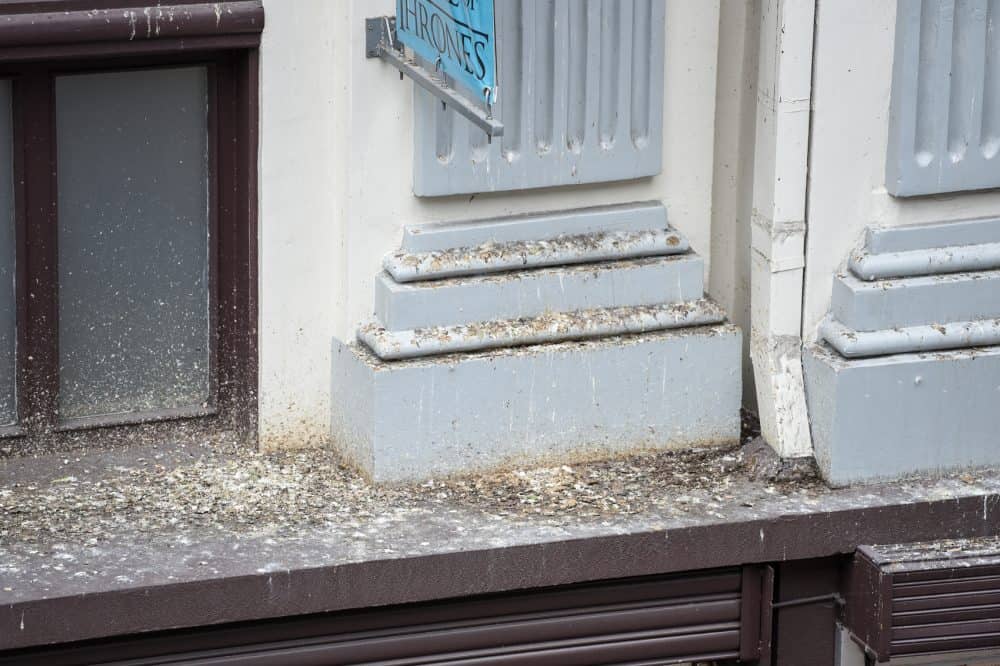
March 2, 2015 — A READER ASKS: I live in a midsize co-op in Brooklyn. We have a huge pigeon problem. There are pigeon droppings everywhere. It’s not just unsightly; there’s so much of it now that I’m concerned about it becoming a health hazard. As far as anyone can tell, nobody in the building seems to be feeding them — we do have a policy in place against doing so. But is there anything the building can do to fix this problem and make the pigeons go away?
HABITAT ANSWERS: Pigeons find window ledges, rooftops, bridges, and warehouses to be ideal substitutes for the natural ledges in cliff sides that they have always used as roosting, nesting and sheltering sites. The good news is that there are some simple things that co-ops and condos can do to keep birds from their buildings — and the best part is that they are humane.
Stop Feeding the Pigeons
It’s good that nobody in your building seems to be feeding the pigeons, but that doesn’t mean that the building is not unintentionally doing so. Pigeons are going to hang around places where they can help themselves to discarded food and even crumbs. Keep the sidewalk clean and outdoor garbage tidy. Cleaning regularly will help discourage pigeons from gathering and setting up nests in your building.
Prevent Roosting and Nesting
Pigeons look for flat surfaces for roosting and nesting, so the building has to take steps to make flat surfaces unavailable to them. With the correct application of the right product, roosting structures can be rendered virtually pigeon-free. There are a variety of devices that can be used to change flat nesting spots into inaccessible spaces and prevent pigeons from roosting in areas where they’re not wanted.
The Humane Society recommends the following products, all of which can be ordered from birdbarrier.com or 800-NO-BIRDS.com:
Attach wood or metal sheathing (Birdslides) at a 45- to 60-degree angle over window ledges and other flat surfaces to keep pigeons from landing.
Install “bird wires” to keep pigeons off ledges, railings, awnings, and rooftops.
Where the problem is more serious, consider using strips that give mild electric shocks.
Use netting to keep pigeons out of large areas.
Netting is probably your building’s best bet — it’s not only humane and effective but also a lot more cost effective.
Never use polybutylene gel, adds the Humane Society. Sticky gel repellents made from polybutene can harm all birds and any animal that comes in contact with it. The HSUS strongly recommends that these dangerous repellents be avoided at all costs. The feathers of any bird that comes into contact with the dense, sticky gel will become damaged, interfering with their ability to fly and to stay water-proofed. These gel repellents are not selective. Other birds are likely to land on the gel, get stuck, and die. The polybutene gels are particularly harmful to smaller species.
Planned Pigeonhood?
As year-round nesters, a pair of pigeons can raise a dozen or more young each year. If pigeons have plenty of food and space, their numbers can quickly increase. Fortunately, a bird contraceptive is available that limits growth of pigeon flocks. Ovocontrol bird food is “birth control” for pigeons. Innolytics, LLC
Known as OvoControl, pigeon contraception comes in the form of a kibble-type food, which causes birds that eat it regularly to lay eggs that fail to develop. Combined with exclusion and other humane measures to discourage roosting and nesting, OvoControl effectively reduces hatching rates in pigeons, thereby limiting flock sizes and diminishing problems associated with large numbers of pigeons.
Talk to Your Property Manager
Whatever you do, and regardless of how frustrating the problem, do not resort to poisoning them. In New York, it’s illegal to kill pigeons. Your property manager can suggest viable options for your building and then present those to the board for a final decision. Your board should be involved in addressing any bird-related problems, because the solution will usually affect the building’s exterior.
About Pigeon Patrol:
Pigeon Patrol Products & Services is the leading manufacturer and distributor of bird deterrent (control) products in Canada. Pigeon Patrol products have solved pest bird problems in industrial, commercial, and residential settings since 2000, by using safe and humane bird deterrents with only bird and animal friendly solutions. At Pigeon Patrol, we manufacture and offer a variety of bird deterrents, ranging from Ultra-flex Bird Spikes with UV protection, Bird Netting, 4-S Gel and the best Ultrasonic and audible sound devices on the market today.
Voted Best Canadian wholesaler for Bird Deterrent products four years in a row.


 A BARCELONA town is waging war on its pigeon population by taking avian birth control in hand.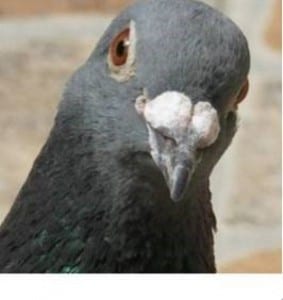
 AvePro Bird Netting was selected as the primary netting product for the new Melbourne Market Canopies project. One of the largest bird netting projects completed to date in Australia, the work was accomplished by AvePro’s Victoria-based installation team in about 10 weeks. Pest IT Pty Ltd supplied the netting for the project.
 LINDENHURST, N.Y. (CBSNewYork) — An effort to protect pedestrians from pigeon droppings is creating quite a mess on Long Island.
 THERE’S A REASON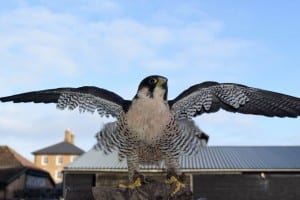
 Downtown Chicago, where I spend most of my time, has beggars on nearly every corner.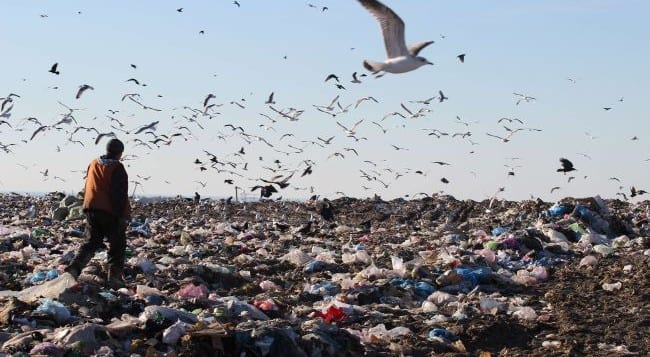
 The downtown area of the city of Fredericton is missing thousands of feathered residents.
 Police were called to the Strip District Friday morning after a clash between an animal rights activist and a man trapping pigeons.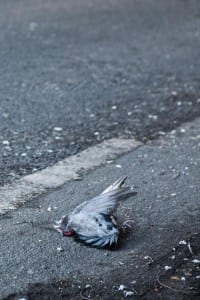
 Guards have captured a pigeon flying cocaine and cannabis into a prison in Costa Rica.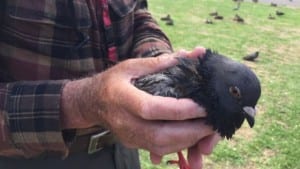
 Croke Park hit the headlines recently when the stadium decided to introduce a hawk to get rid of pigeons on the pitch.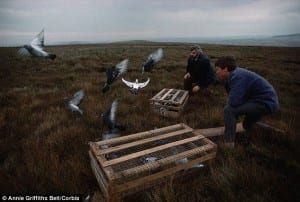
 It may sound like something from a 1960s B-film, but a project in North Yorkshire that uses lasers to deter pigeons is proving remarkably successful.
 Large flocks of pigeons are part of San José’s daily landscape, and while pedestrians are mostly used to the scene, health officials say the local winged population is getting out of control. The Health Ministry recently ordered city officials to outline and implement plans to control the number of pigeons in public spaces, mostly in the capital’s downtown.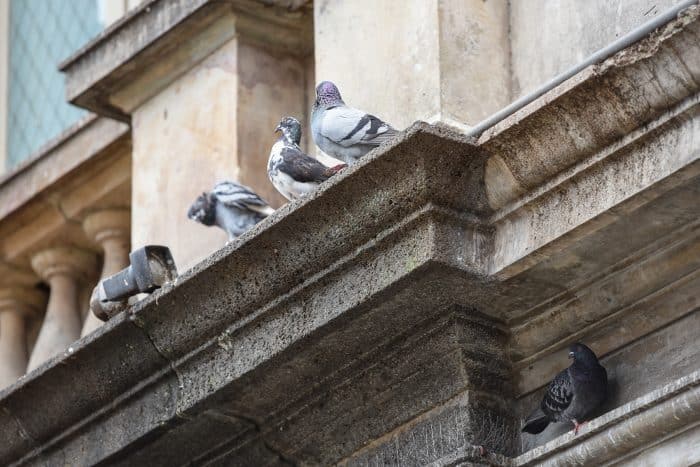
 I was sitting in the High Street, outside M & S, waiting for Sue to finish buying up the whole store.
 Rick Gibson, UA Cooperative Extension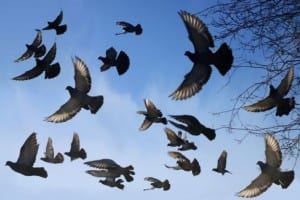
 They may only have a brain the size of a thimble, but it appears pigeons can categorise and name objects in the same way a human children learn new words.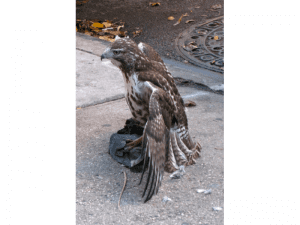
 Farmers cultivating fruits like grapes on ‘pandal’ are advised to erect anti-bird nets with subsidy under the National Horticulture Mission to protect the fruits from birds, squirrels, owls, etc., as the netting protects the crops from extensive damage to fruits and vegetables.
 Some very interesting new research has uncovered something remarkable about pigeons. Apparently, they can learn much like a human.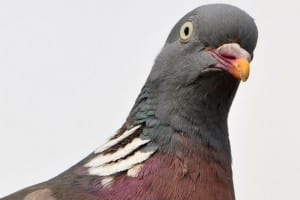
 Two Aeroflot jets collided with birds in the past 24 hours, but no one was injured.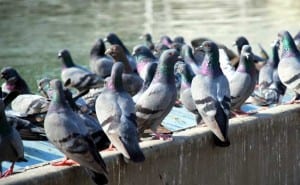
 March 2, 2015 — A READER ASKS: I live in a midsize co-op in Brooklyn. We have a huge pigeon problem. There are pigeon droppings everywhere. It’s not just unsightly; there’s so much of it now that I’m concerned about it becoming a health hazard. As far as anyone can tell, nobody in the building seems to be feeding them — we do have a policy in place against doing so. But is there anything the building can do to fix this problem and make the pigeons go away?