by Pigeon Patrol | Feb 9, 2021 | Animal Deterrent Products, Bird Deterrent Products, Bird Law, Bird Netting, Bird Spike, Bird Spikes, Pigeon Patrol's Services, Pigeon Spikes, Pigeons, UltraSonic Bird Control
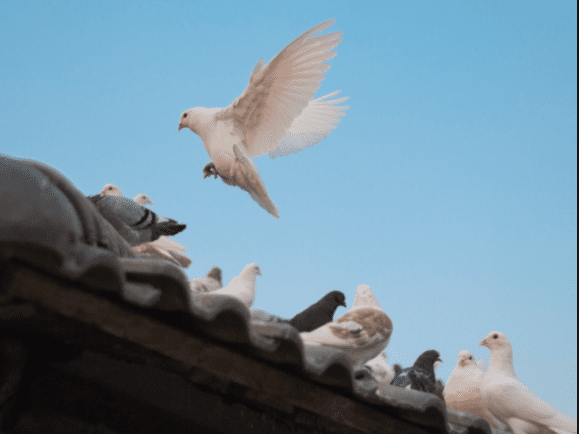
Bird control technicians’ nightmare – what to do when we are asked to do the impossible? The straight answer is that there is really nothing we can do when pigeons land on your roof, but there is much more to know.
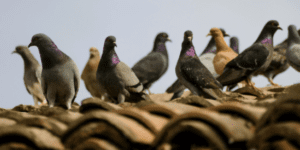
Many customers ask: “Why? Why my roof, what’s so special about my roof that they have to land there?” Believe it or not you are asking the right question: Why? Once you understand why, you will also understand why is it hard to provide a solution in this situation.
Almost always, the primary cause of such problem is the availability of food nearby, plenty of it on a regular basis. Probably someone is feeding the birds or there are lots of garbage in the area or open garbage bins/containers. They could also nest or roost in close proximity and simply they use your roof as a comfy perching spot having a nice vantage point over their feeding area.
What could we do? Install hundreds of feet of spikes on your roof? Put up scary owls? Maybe speakers on the roof peak? Unfortunately none of them are viable. It is simply not feasible to protect large, flat (horizontal or sloped) roof surfaces, such as the entire roof of a victorian house for example.
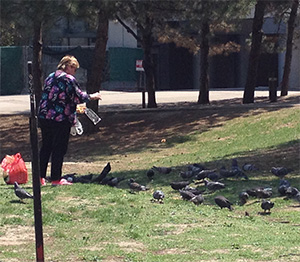
Lady feeding the pigeons in College Park – every day.
First, we need to find ways of eliminating food and water sources nearby. Then we must find their nesting/roosting areas – which will most likely be on another property, otherwise you would see them somewhere else on your house/building, (in which case it would be very easy to resolve the issue,– that provides sheltered structural configurations to establish a protected area where they can stay at night. Pigeons don’t see well at night and usually they go to their roosting spots before nightfall and stay there during the night.
If protecting these areas are not possible (because they are on someone else’s property) we can look at strategically installing Bird Spikes or exclusion Bird Netting or the combination of both, maybe Electric Tracks at critical areas to discourage them from landing on your roof.
You can see now that there aren’t any straightforward solutions in the case of house roof tops and that it is very time consuming to address the issue holistically. The best thing you can do is to call up a professional and get an opinion, you might have missed something that a pro will notice that could help resolve the issue.
source
Some other options for bird repellent would be the Ultrasonic Sound Repellent which makes noises that can only be heard by pigeons and scare them off with the sound or the laser beam which can be activated by movement or you can time when these lasers come on. These lasers are too strong for the pigeons vision to handle and they will fly elsewhere. You can purchase these here : https://www.pigeonpatrol.ca/product/laser/
Pigeon Patrol Products & Services is the leading manufacturer and distributor of bird deterrent (control) products in Canada. Pigeon Patrol products have solved pest bird problems in industrial, commercial, and residential settings since 2000, by using safe and humane bird deterrents with only bird and animal friendly solutions. At Pigeon Patrol, we manufacture and offer a variety of bird deterrents, ranging from Ultra-flex Bird Spikes with UV protection, Bird Netting, 4-S Gel and the best Ultrasonic and audible sound devices on the market today.
Contact us at 1- 877– 4– NO-BIRD, (604) 585-9279 or visit our website at www.pigeonpatrol.ca
Pigeon / Pigeon Patrol / Pigeons Roosting / Vancouver Pigeon Patrol / Bird Control / Surrey Pigeon Control / Pest /
by Pigeon Patrol | Feb 9, 2021 | Bird Law, Bird Netting, Bird Spike, Bird Spikes, Columbidae, Pigeon Patrol's Services, Pigeon Spikes
If you’re looking for the answer to the question “do anti bird spikes reduce pest bird problems?”, then you undoubtedly already have a problem with bird control. Birds are either landing or nesting on your property.
So lets see if bird spikes really work!
You need to look at why the birds are landing and possibly building a nest. Is it because you feed wild birds and other unwelcome species, such as feral pigeons or starlings, are having the lion’s share? Birds go to places where food is most abundant and easy to take. If you want to control what birds you attract to your garden, especially smaller ones, but not pigeons and starlings, make sure you only place food in feeding containers that make it virtually impossible for the larger birds to feed from. If there’s no readily available food, these larger birds will move on to somewhere else.
Secondly, if you have a bird control problem with the smaller birds then anti-bird spikes may not be effective in preventing them from landing and nesting. If you think about it logically, the smaller birds have feet which are designed to grab hold of small branches and twigs – spikes can give them this ideal landing perch.
However, larger birds, such as seagulls and pigeons don’t have feet adapted for landing on fine spiky branches and twigs and therefore anti bird spikes can be a very effective deterrent. If there are a vast numbers of birds, their droppings have been known to build-up on and around the spikes which then forms an ideal platform for them to build nests. SOURCE
Conclusion:
Anti-bird spikes can reduce pest bird control problems if you’re trying to humanely deter larger birds from landing or nesting. On the other hand, the spikes may be the ideal conditions for smaller birds; so you need to take a multi-faceted approach to control unwanted birds from making your property their home or landing site.
Do bird spikes hurt the birds? Bird and pigeon spikes do not hurt birds, they act as a visual and physical barrier. Bird spikes are a humane bird deterrent as the bird doesn’t come into direct contact with the bird spikes.
Pigeon Patrol Products & Services is the leading manufacturer and distributor of bird deterrent (control) products in Canada. Pigeon Patrol products have solved pest bird problems in industrial, commercial, and residential settings since 2000, by using safe and humane bird deterrents with only bird and animal friendly solutions. At Pigeon Patrol, we manufacture and offer a variety of bird deterrents, ranging from Ultra-flex Bird Spikes with UV protection, Bird Netting, 4-S Gel and the best Ultrasonic and audible sound devices on the market today.
Contact us at 1- 877– 4– NO-BIRD, (604) 585-9279 or visit our website at www.pigeonpatrol.ca
Pigeon / Pigeon Patrol / Pigeons Roosting / Vancouver Pigeon Patrol / Bird Control / Surrey Pigeon Control / Pest / Vancouver Pigeon Blog / Birds Inside Home / Pigeons in the cities / Ice Pigeons/ What to do about pigeons/ most common types of sparrows , Damages Caused by Sparrows, How To Keep Raccoons Away, Why Are Raccoons Considered Pests?de-fence, Pigeon Nesting and Breeding Patterns and Behavior What Do I Do With a Bird Trapped in My Wall? Professional Bird Control Company Keep The Birds Away From Your Business Why Are Raccoons Considered Pests? BIRD SPIKES WORK 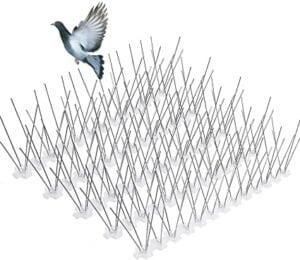
by Pigeon Patrol | Jan 20, 2021 | Bird Deterrent Products, Bird Law, Bird Netting, Bird Spikes, Columbidae
Pigeon Patrol is A Professional Bird Control Company Based In Vancouver thanks for tuning into our blog!
Many people don’t think about hiring a company to take care of bird problems, but with the help of bird control companies, variety of businesses can reap the rewards. Birds can be nice to look at, but over time, they can become a nuisance and potentially even affect the success of your business appearance. Here are five benefits of hiring a bird control service:
Why You Should Hire A Professional Bird Control Company
Humane Bird Control
You might be wondering if hiring a bird control service brings harm to the birds, but it certainly does not have to. A new technology called electronic bird repellent uses sonic and ultrasonic frequencies to deter birds without causing them any harm. The birds will simply hear these frequencies in the form of predatory calls or bird distress signals, and they will instinctively avoid the area. Plus, the frequencies used are out of the range of what humans can hear, so you do not have to worry about the deterrent itself being a nuisance! We also have the option of capturing the birds in a cage (with food and water) and bring them into the wild for them to live a new life
Cleaner Appearance
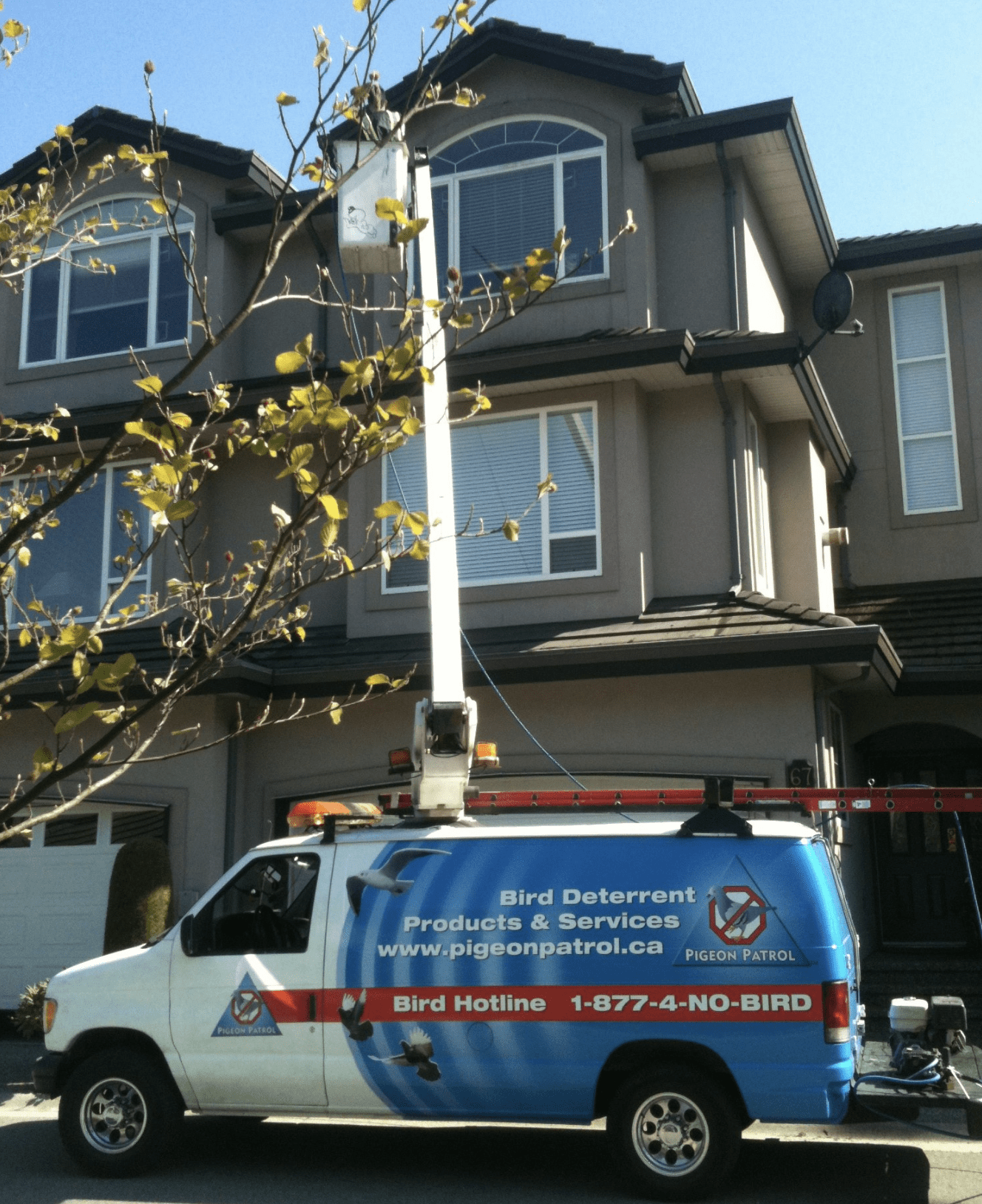
With a bird control service in place, you do not have to worry about bird droppings piling up on your company mailbox or awning (or even falling on an unsuspecting person’s head!). These droppings can drastically affect the aesthetic appeal of your building, which can turn customers off from doing business with you. Particularly if your building has any historical value, that value can become diminished by the abundance of droppings. We will clean your property with the right equipment
Less Health Risks
Birds carry all kinds of diseases, including salmonella, E. coli, and meningitis, and many of those diseases can be transferred to humans through the birds’ droppings. Humans do not have to come into contact with the droppings to contract these illnesses; the pathogens can be inhaled if a human is even in close vicinity to the droppings. It is best to not even take the risk of sickening any of your employees or customers when affordable bird control is an option. source
Preventing Damage
If you choose to not hire a professional bird control service, you will save some money in the short-term, but it could cost you in the long-term as the acid in bird droppings starts to erode any stonework or metal on your building. Of course, if you clean the droppings regularly, you likely will not have issues, but cleaning the droppings requires dedication, time, and money on a regular basis. With a bird control service, you can have preventative measures put in place once and never worry about it again.
Peace of Mind
In addition to eliminating the unsightly droppings, physical damage, and health issues that birds can cause, hiring a bird control service can also make your building simply more pleasant to be around. No longer will you have to worry about any unpleasant smells or distracting noises when you want to open a window or eat your lunch outside. The only thing you might miss is the birds chirping in the morning, but there’s an app for that!
Pigeon Patrol Products & Services is the leading manufacturer and distributor of bird deterrent (control) products in Canada. Pigeon Patrol products have solved pest bird problems in industrial, commercial, and residential settings since 2000, by using safe and humane bird deterrents with only bird and animal friendly solutions. At Pigeon Patrol, we manufacture and offer a variety of bird deterrents, ranging from Ultra-flex Bird Spikes with UV protection, Bird Netting, 4-S Gel and the best Ultrasonic and audible sound devices on the market today. source
Contact us at 1- 877– 4– NO-BIRD, (604) 585-9279 or visit our website at www.pigeonpatrol.ca
Pigeon / Pigeon Patrol / Pigeons Roosting / Vancouver Pigeon Patrol / Bird Control / Surrey Pigeon Control / Pest / Vancouver Pigeon Blog / Birds Inside Home / Pigeons in the cities / Ice Pigeons/ What to do about pigeons/ most common types of sparrows , Damages Caused by Sparrows, How To Keep Raccoons Away, de-fence, Pigeon Nesting and Breeding Patterns and Behavior What Do I Do With a Bird Trapped in My Wall? Professional Bird Control Company
by Pigeon Patrol | Nov 15, 2020 | Animal Deterrent Products, Bird Deterrent Products, Bird Law, Bird Netting, Bird Spikes, Columbidae, Doves, history of pigeons, Pigeon Control, Pigeon Droppings
Looking for more information about which birds are considered pests? Read on to learn more!
The Birds That Are Pests
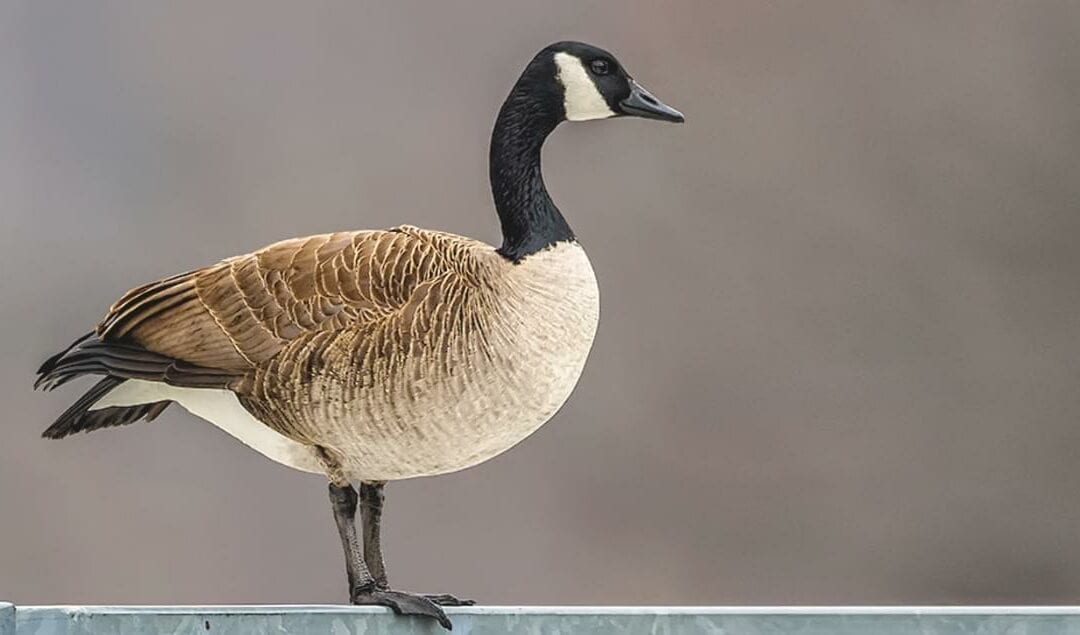
There are six types of birds found in Canada can be classified as nuisance pests, which are the house sparrows, starlings, pigeons, woodpeckers, gulls, and Canada geese
The house sparrow is a bird of the sparrow family Passeridae, found in most parts of the world. It is a small bird that has a typical length of 16 cm and a mass of 24–39.5 g. Females and young birds are coloured pale brown and grey, and males have brighter black, white, and brown markings
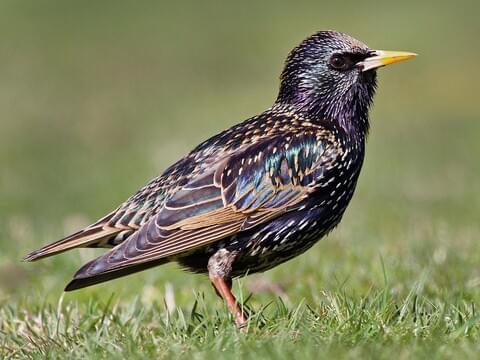
Starlings are small to medium-sized passerine birds in the family Sturnidae. The name “Sturnidae” comes from the Latin word for starling, sturnus. Many Asian species, particularly the larger ones, are called mynas, and many African species are known as glossy starlings because of their iridescent plumage
Pigeon
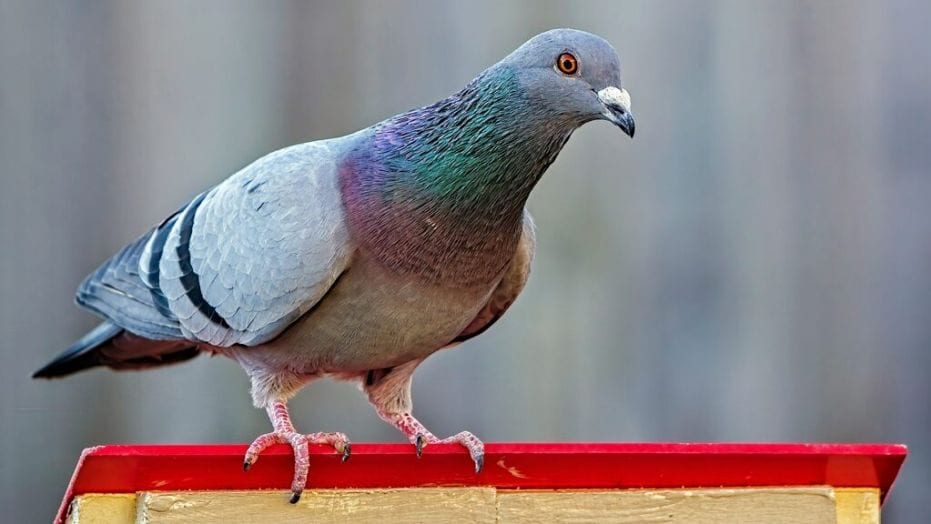
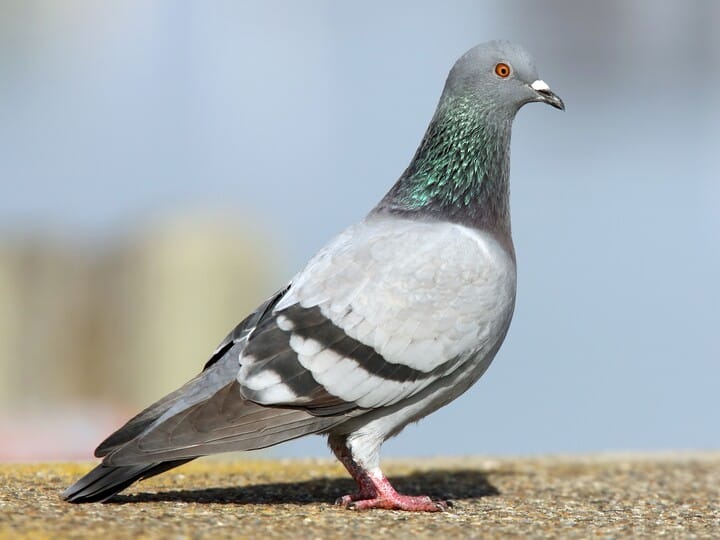
Next on the list is the Pigeon, Also known as the rock dove. Pigeons are known for causing diseases and damage due to their droppings. The droppings trigger human slips and falls as well as accelerating the aging of structures and statues.. Other pests that live on these birds are fleas, lice, mites, ticks and more. Pigeons vary in color but most of them are bluish gray with 2 black bands on the wing and black tip to the tail.
 Source
Woodpeckers
Woodpeckers are part of the family Picidae, that also includes the piculets, wrynecks, and sapsuckers. Members of this family are found worldwide, except for Australia, New Guinea, New Zealand, Madagascar, and the extreme polar regions. A woodpecker will attack for many reasons. The attack can be for food, shelter or to attract a mate. The reasons for attack include finding insects for food, often carpenter bees, or for a nest cavity or roosting site, or for other social reasons.
Gulls
Gulls, or colloquially seagulls, are seabirds of the family Laridae in the suborder Lari. They are most closely related to the terns and only distantly related to auks, skimmers and even more distantly to waders
Canada Geese
The Canada goose is a large wild goose species with a black head and neck, white cheeks, white under its chin, and a brown body. It is native to arctic and temperate regions of North America, and its migration occasionally reaches northern Europe
How to identify Birds
Canadian bird pests vary in length, overall size, and colouration. The smallest pest bird species, house sparrows are approximately 14 to 18 cm long with a wingspan of 19 to 25 cm. At the other end of the spectrum, Canada geese boast a wingspan as long as 182 cm and range from 90 to 120 cm in length. Some of the most common bird colourations include shades of grey, white, black, and brown. Pigeons, which rank as arguably the most colourful bird pest, may appear with streaks of light blue, green, lilac, peach, and various other shades.
Signs of an infestation
Birds are not exactly stealthy creatures, and infestations usually become evident with the increased presence of adult birds, the frequent occurrence of chirping and other noises, the sighting of nests, and an increased quantity of droppings in the area.
Birds Removal
Modifying the surrounding environment can aid property owners in ridding buildings of nuisance birds. Netting or spike strips can be strategically positioned to deter or prevent birds from landing and nesting. Noise devices, such as generators that mimic the sounds that natural predators make, work best in agricultural settings, while visual scare tactics are effective in the short term or when paired with other prevention and exclusion techniques. For particularly aggressive birds and those protected by the Migratory Bird Treaty Act, call a fully licensed pest control professional to take care of the problem legally and effectively.
How to prevent Birds from invading
Monitor water accumulating at likely nesting sites, fix any broken or deficient drainage systems, cover outdoor garbage containers tightly, eliminate any notable sources of food.
Habitat, Diet, and Life Cycle
Habitat
Many of the pest birds in Canada are migratory species which fly south when the temperatures approach the freezing point. Many pest birds have a widely distributed population and benefit greatly from the development of cities and the distribution of human populations. Some species construct nests and raise their young in elevated areas, while others nest on the ground. Birds generally prefer to live in the immediate vicinity of a water source but have no trouble flying reasonable distances to collect food. Most species adapt well to various surroundings.
Diet
Pest birds mainly eat fruits, seeds, grains, and insects. Many species live in close proximity to people and often feed on human food like bread, popcorn, peanuts, cake, discarded restaurant fare, and similar items. Much to the dismay of farmers, pest birds frequently target crops and livestock feed, as well. Gulls and Canada geese in particular maintain special dietary preferences. Gulls often feed on fish, rodents, and carrion, while the geese mostly consume plants like cattails, clover, and grass.
Life Cycle
Without exception, birds mate and rear their young in the spring and summer months. On average, pest birds produce one or two broods each year. House sparrows, however, can produce as many as five generations annually. Most birds require an incubation period of two weeks, though the eggs of both Canada geese and gulls require nearly a month of incubation. Newly hatched birds then leave the nest after an average of two to four weeks of preening. Depending on a variety of factors, nuisance birds typically live between 2 and 10 years.
Commonly Asked Questions
How worried should I be about birds?
Pest birds can carry parasites like fleas, mites, and ticks, and transmit diseases to humans and livestock. Pigeon excrement often contains the fungal diseases histoplasmosis and cryptococcosis, which are especially dangerous to people with compromised immune systems.
Many bird species are noisy and can damage buildings and equipment. Not only are pest bird droppings unsightly, they can stick to buildings, potentially eroding the structure.
Pest birds can also create drainage issues and fire hazards by nesting in the small crevices, drains, and gutters of buildings. Many bird species are also aggressive towards humans or native bird populations.
However, dealing with pest birds can be difficult, due to the Migratory Bird Treaty Act, which protects certain species from trapping and relocation practices. Any attempt to remove a pest bird must also comply with the Fish & Wildlife Act.
While netting, spike strips, noise devices, and visual scare tactics may be valid options, often only a professional, licensed pest control service can meet the regulatory standards required when it comes to removing and keeping away pest birds.
About Pigeon Patrol:
Pigeon Patrol Products & Services is the leading manufacturer and distributor of bird deterrent (control) products in Canada. Pigeon Patrol products have solved pest bird problems in industrial, commercial, and residential settings since 2000, by using safe and humane bird deterrents with only bird and animal friendly solutions. At Pigeon Patrol, we manufacture and offer a variety of bird deterrents, ranging from Ultra-flex Bird Spikes with UV protection, Bird Netting, 4-S Gel and the best Ultrasonic and audible sound devices on the market today.
Contact us at 1- 877– 4– NO-BIRD, (604) 585-9279 or visit our website at www.pigeonpatrol.ca
Bird Gone, Pigeon Gone, Seagull Gone, Pigeon problems, 1-877-4NO-BIRD, 4-S Gel, Bird Control, Pigeon Control, bird repellent,, sonic bird repellent, stainless steel , bird spikes Vancouver, Ultra Sonic Bird Control, Bird Netting, stop aggressive pet birds Canada bird deterrents, Pigeon Pests, B Gone Pigeon, Pigeon Patrol, pest controller, pest control operator, pest control technician, Pigeon Control Products, humane pigeon, pigeon deterrents, pigeon traps, Pigeon repellents, stop aggressive pet birds Sound & Laser Deterrents, wildlife control, raccoon, skunk, squirrel deterrent, De-Fence Spikes, Dragons Den, Canada bird spikes, Canada pigeon, pigeon control, pigeon patrol, pigeon. destroy pigeons, crow, starling, Pigeon Habitat, Pigeon identifications, pigeon myths, stop aggressive birds, stop aggressive pet birds
by Pigeon Patrol | Oct 20, 2020 | Bird Law, MBCA, Pigeon Control, Pigeon Patrol's Services
What Is The Bird Protection Law?
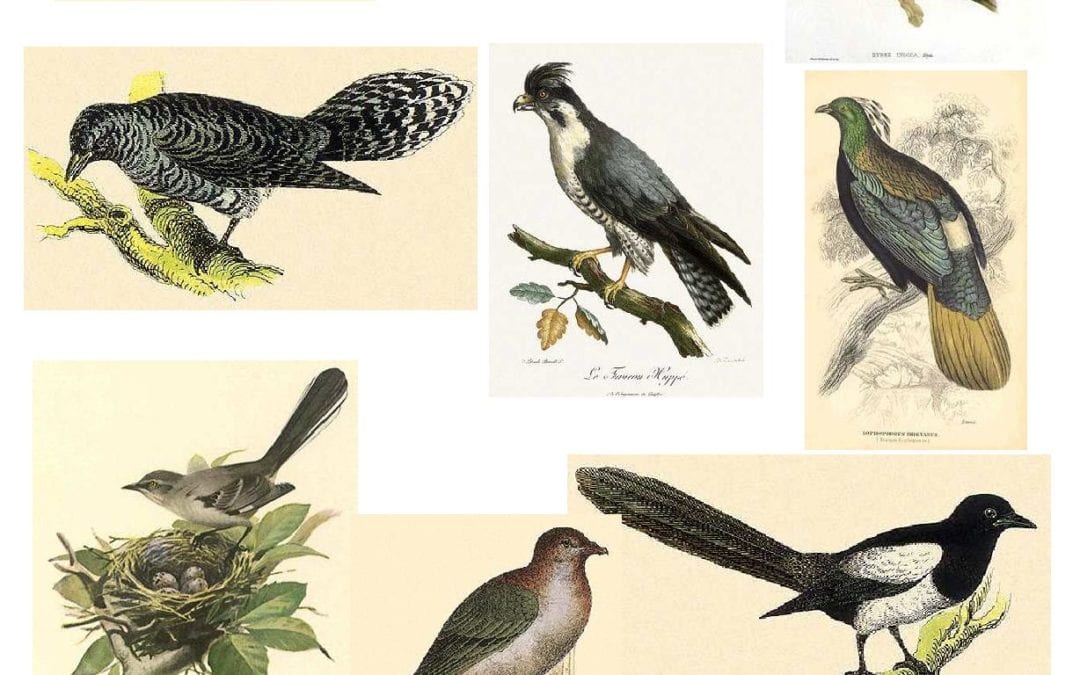
Most species of birds in Canada are protected by the bird law under the Migratory Birds Convention Act, 1994 (MBCA). The MBCA was passed in 1917, and updated in 1994 and 2005, to implement the Migratory Birds Convention, a treaty signed with the United States in 1916. As a result, the Canadian federal government has the authority to pass and enforce regulations [Migratory Birds Regulations (C.R.C., c. 1035)] to protect those species of birds that are included in the Convention. Similar legislation in the United States [Birds Protected By The Migratory Bird Treaty Act] protects birds species found in that country, though the list of bird species protected by each country can be different.
“Migratory birds” are defined by Article I of the Convention which names the families and subfamilies of birds protected, and provides some clarification of the species included. This list is provided as a policy interpretation of Article I. Bird species not listed here may, or may not, be protected under provincial or territorial legislation, the Convention on Biodiversity, or the Species at Risk Act (2002). Persons making any decisions regarding the protected status of a bird species in Canada should consult these other statutes. Environment and Climate Change Canada requires that all three criteria below be met to qualify a species for the list of bird species protected in Canada under the MBCA.
Protected Birds
Most Common Protected Birds
- Swallows.These birds generally have a short bill, long pointed wings, and a deeply forked tail. They arrive seasonally and build their mud nests under eaves and patio covers. Swallows fly to and from their nests thousands of times a day and employ “aerial foraging” to capture flying insects in their beaks.
- Woodpeckers. These sharp-billed birds tap trees and wood surfaces an average of 8,000-12,000 times per day, leaving deep, round holes 3 to 5cm in diameter. They generally have a very long tongue (up to four inches) with a glue-like substance on the tip for catching insects. They also have bristle-like feathers over their nostrils to keep wood particles from being inhaled.
- Canada Geese. These large birds feed on grasses, sedges, waste grain and berries. They can see more than 180 degrees horizontally and vertically, and they can travel more than 1,000 kilometers a day while migrating. Some geese live up to 24 years in the wild. The birds can cause major damage to turf grass due to foraging and fecal contamination. A single goose can defecate every 20 minutes and leave up to 1.5 pounds each day.
- Gulls.These large, clever birds can drink both fresh and salt water. They vary in size from the Little Gull (120 g and 29 cm) to the large Great Black-Beaked Gull (1.75 kg and 75 cm). They will eat seed, fruit and leftovers of human meals. The mounds of gull droppings can damage boats, streetlights and coastal rooftops. The bacteria, fungal agents and ectoparasites found in gull droppings can carry such diseases as histoplasmosis, encephalitis, salmonella and meningitis.
Unprotected Birds
Unprotected birds include the Pigeon, House Sparrows, & European Starling. They are not covered in the bird law
Pigeons are the largest of the 3 species, at about 12 inches long, and weigh 12 to 17 ounces. They typically are blue-gray with 2 black bands on the wings, and a black band on the tail that contrasts with its white rump (Figure 3). Color ranges from all white to mottled brown to sooty black. They are larger than the tawny-brown mourning doves that are native to the US and protected by federal and state regulations.
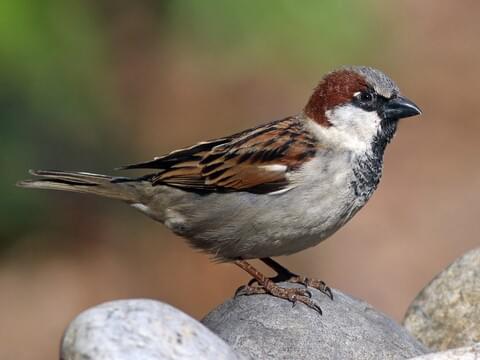
House Sparrows are the smallest of the unprotected birds at about 6½ inches long and weighing less than an ounce (Figure 1). Both genders are mostly brown with black streaks above and grayish below. Males have a black throat-bib flanked by white spots. Immature male house sparrows look like females. Do not confuse house sparrows with native sparrows (i.e., chipping sparrow, grasshopper sparrow, song sparrow) that are beneficial and protected by federal and state regulations.
European starlings are robin-sized, short-tailed black birds about 8½ inches long, and weigh about 3 ounces. Plumage color changes with gender and season (Figure 2). In summer, adults are glossy black with light speckles. In winter, birds have larger speckles, making them look browner from a distance. The dark pointy beak becomes bright yellow in spring. Both males and females have pinkish-red color on their legs. Other native “blackbirds” (e.g., red-winged blackbird and common grackle) and are protected by federal and state regulations
Species Range
All 3 species of unprotected birds are found throughout the northeast, especially where there are people and human-altered environments.
Health and Safety Concerns
These birds can carry and transmit diseases that are infectious to humans. Diseases of particular concern include aspergillosis, histoplasmosis, psittacosis, and salmonellosis. In addition, all 3 species may pose significant hazards with bird-aircraft strikes at airports.
General Biology, Reproduction, and Behavior
Reproduction
Female house sparrows lay 3 to 9 eggs in a single clutch, and may nest twice a year beginning in early April. Female starlings lay 4 to 6 eggs per clutch and can also nest twice a year. Pigeons mate year-round, but most of their 5 to 6 broods produced annually are raised during the spring and summer, when temperatures are above freezing. Females usually lay 2 eggs per clutch.
Nesting/Denning Cover
Nests of house sparrows are messy piles of grasses, string, paper, and twigs that fill a void or crevice where the nest is placed
Source
About Pigeon Patrol:
Pigeon Patrol Products & Services is the leading manufacturer and distributor of bird deterrent (control) products in Canada. Pigeon Patrol products have solved pest bird problems in industrial, commercial, and residential settings since 2000, by using safe and humane bird deterrents with only bird and animal friendly solutions. At Pigeon Patrol, we manufacture and offer a variety of bird deterrents, ranging from Ultra-flex Bird Spikes with UV protection, Bird Netting, 4-S Gel and the best Ultrasonic and audible sound devices on the market today.
Contact us at 1- 877– 4– NO-BIRD, (604) 585-9279 or visit our website at www.pigeonpatrol.ca
Bird Gone, Pigeon Gone, Seagull Gone, Pigeon problems, pigeon spikes, 1-877-4NO-BIRD, 4-S Gel, Bird Control, Pigeon Control, bird repellent, Bird Spikes, bird law sonic bird repellent, stainless steel bird spikes, bird spikes Vancouver, Ultra Sonic Bird Control, Bird Netting, Plastic Bird Spikes, Canada bird spike deterrents, Pigeon Pests, B Gone Pigeon, Pigeon Patrol, pest controller, pest control operator, Bird law pest control technician, Pigeon Control Products, humane pigeon spikes, pigeon deterrents, pigeon traps, Pigeon repellents, Sound & Laser Deterrents, wildlife control, raccoon, skunk, squirrel deterrent, De-Fence Spikes, Dragons Den, Canada bird spikes, Canada pigeon, pigeon control, pigeon patrol, pigeon. Kill pigeons, crow, starling, Pigeon Habitat,