by Pigeon Patrol | May 23, 2016 | Bird Netting, Pigeon Spikes
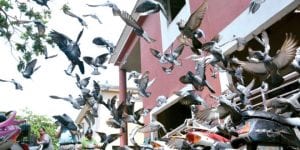
 PIGEONS that congregate outside Masjid Haji Muhammad Salleh mosque have been getting an extra ingredient in their breakfast.
Every day, pigeons that flock to the area are served a corn-based feed containing a drug called nicarbazin, which stops the female birds from developing eggs or causes them to lay eggs that do not hatch.
This is a new “birth control” method to limit pigeon numbers tested by the Agri-Food and Veterinary Authority of Singapore (AVA), at a field outside the mosque at Palmer Road near Shenton Way.
The trial, which started on Oct 13 and will last a year, comes on the back of soaring complaints about the nuisance caused by pigeons.
AVA has already received about 3,400 pieces of pigeon-related feedback from Jan to Oct this year, more than the 2,500 they received in the whole of last year and the 2,100 in 2013.
It has also seen a growth in feedback about all kinds of birds, including pigeons, from some 4,400 messages in 2013 to 6,100 in the first 10 months of this year alone.
Mohamed Idris, secretary of the management board of the mosque at Palmer Road, said pigeons have always been around, but the problem worsened over the last 10 years.
The field outside the mosque has an estimated 400 pigeons, twice as many as two years ago. The birds would fly into the mosque compounds, making them a nuisance to staff and people who go to the mosque to pray.
“They leave their droppings on the floor and you walk on it… They congregate at the food areas as well,” he said.
This has led AVA to choose the mosque as the first area to try out the new method.
During a demonstration yesterday, Janet Chia, executive manager of the Operations (Wild Animals) section at AVA, said it will take about a year to see a drop in the pigeon population there.
Around five mosque volunteers will be in charge of feeding the laced feed to the pigeons. The method could be rolled out to other areas in Singapore if the trial succeeds.
When tested in Italy, the method was found to reduce the pigeon population there by 30 to 40 per cent over four years.
The drug does not harm the birds and is not toxic to animals or humans if taken in small amounts. It would take 40kg of the feed to see toxic effects in dogs and cats, and 60kg for a child, said Ms Chia.
She also urged the public not to feed birds, as this “would encourage their population size to grow and encourage them to congregate and cause nuisance”.
Feeding pigeons is illegal and those found to flout the rules face a fine of up to $500. AVA has caught 113 bird feeders so far this year, including 13 who did so outside the mosque.
About Pigeon Patrol:
Pigeon Patrol Products & Services is the leading manufacturer and distributor of bird deterrent (control) products in Canada. Pigeon Patrol products have solved pest bird problems in industrial, commercial, and residential settings since 2000, by using safe and humane bird deterrents with only bird and animal friendly solutions. At Pigeon Patrol, we manufacture and offer a variety of bird deterrents, ranging from Ultra-flex Bird Spikes with UV protection, Bird Netting, 4-S Gel and the best Ultrasonic and audible sound devices on the market today.
Voted Best Canadian wholesaler for Bird Deterrent products four years in a row.
Contact Info: 1- 877– 4– NO-BIRD (www.pigeonpatrol.ca)
by Pigeon Patrol | May 22, 2016 | Animal Deterrent Products, Bird Netting, Pigeon Patrol's Services
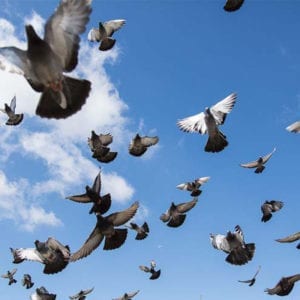
 Residents of a road plagued by pigeons are calling for people who feed them to be fined.
Court Road in Sparkhill regularly features hordes of pigeons making a mess on the houses and park, according to those who live there.
Signs tell people not to feed the pigeons – but the advice is ignored on a daily basis, say residents.
Aisha Khan, of Court Road, said the pigeons were “making a mess all around” and were “totally annoying”.
Neighbours are calling on Birmingham City Council to introduce a by-law so people who feed the birds can be fined.
The council said there were no plans to introduce by-laws but it was working with the community to promote cleaner streets.
About Pigeon Patrol:
Pigeon Patrol Products & Services is the leading manufacturer and distributor of bird deterrent (control) products in Canada. Pigeon Patrol products have solved pest bird problems in industrial, commercial, and residential settings since 2000, by using safe and humane bird deterrents with only bird and animal friendly solutions. At Pigeon Patrol, we manufacture and offer a variety of bird deterrents, ranging from Ultra-flex Bird Spikes with UV protection, Bird Netting, 4-S Gel and the best Ultrasonic and audible sound devices on the market today.
Voted Best Canadian wholesaler for Bird Deterrent products four years in a row.
Contact Info: 1- 877– 4– NO-BIRD (www.pigeonpatrol.ca)
by Pigeon Patrol | May 21, 2016 | Bird Netting, Pigeon Patrol's Services, Pigeon Spikes
 An innovative attempt to deter pigeons from a popular beach using thousands of scented yellow stickers was deemed a success after it avoided being blacklisted under new EU water bathing regulations.
Teignmouth beach in Devon was among 13 beaches which had been expected to fail tough new tests for cleanliness but which managed to make dramatic improvements in order to make the grade.
Twelve beaches failed to meet the new standards, meaning that they must put up signs before the swimming season begins next May advising tourists to stay out of the water.
The move could have serious ramifications for local business and tourism in those much-loved spots, which include Clacton in Essex, East Looe in Cornwall, Walpole Bay in Margate, Kent and Wildersmouth in Ilfracombe, North Devon.
The new EU bathing water regulations raise the “pass mark” for beaches around Europe.
They judge water quality on a four-year average, meaning that 25 beaches identified as ‘at risk’ earlier this year due to poor results in previous years were given the chance to make last-ditch improvements to turn things around.
Among them was Teignmouth, where guano from hundreds of pigeons roosting beneath its pier had become one of the major sources of pollution.
Previous attempts to scare away the pigeons had failed so the council this year resorted to deploying thousands of yellow stickers scented with citronella and garlic at pigeon-width intervals under the pier to try to deter them from roosting.
The project, undertaken with a £15,000 grant from the Environment Agency, significantly reduced the number of pigeon and seagull guano getting into the water.
Blackpool North and Blackpool Central had also faced blacklist, in part due to droppings from donkeys doing tourist rides.
Donkey owners were urged to clean up after the animals to avoid the faeces being left on the sand and washed out to sea.
But the local council said that the main issues, involving sewage, had been eradicated because United Utilities had invested £160million worth of infrastructure improvements.
Agriculture was cited as the main pollutant at several beaches often due to effluent from livestock grazing near streams that feed into the sea, and new cattle fencing was installed to tackle the problem.
Many other beaches had problems from sewage treatment works or sewage overflows.
Although far more beaches managed to avoid blacklist than had been expected, the new regulations mean that only 97 per cent of England’s bathing waters are deemed clean enough to swim in, as opposed to 99.5 per cent last year, when just two spots failed to reach the mandatory grade: Lyme Regis Church Cliff Beach, Dorset, and Staithes, North Yorkshire. Both remain on the blacklist.
In total, 63.6 per cent of bathing waters meet the new “excellent” standard.
Rory Stewart, the Environment Minister, said: “We continue working to further improve the quality of our water, and last year our coast was the cleanest it has ever been.
“Swimming is allowed and all beaches remain open; new EU standards are simply there to advise and inform the public on water quality.
“I want Britain’s beaches, seas and lakes to have the cleanest water in the world. We need everyone to help us achieve this – from Government, water companies and councils to local communities.”
Dr Pete Fox, director of land & water at the Environment Agency added: “Water quality at beaches is better than any time in living memory, with dramatic improvements having been made over the last few decades.
“The Environment Agency has led successful work to monitor, investigate and reduce pollution, which has benefited the environment and people with nearly all of England’s beaches meeting the new stringent water quality standards.”
About Pigeon Patrol:
Pigeon Patrol Products & Services is the leading manufacturer and distributor of bird deterrent (control) products in Canada. Pigeon Patrol products have solved pest bird problems in industrial, commercial, and residential settings since 2000, by using safe and humane bird deterrents with only bird and animal friendly solutions. At Pigeon Patrol, we manufacture and offer a variety of bird deterrents, ranging from Ultra-flex Bird Spikes with UV protection, Bird Netting, 4-S Gel and the best Ultrasonic and audible sound devices on the market today.
Voted Best Canadian wholesaler for Bird Deterrent products four years in a row.
Contact Info: 1- 877– 4– NO-BIRD (www.pigeonpatrol.ca)
by Pigeon Patrol | May 20, 2016 | 4-S Gel Bird repellent, Bird Netting, Pigeon Patrol's Services
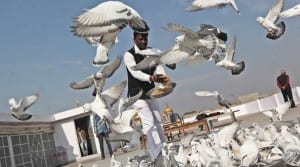
Ajay Sood is one amongst many professional Kabootarbaaz, whose family has lived in the gullies of the Dhobi Bada, Kinari Bazar in Old Delhi. Everyday, he spends hours training his flock of pigeons in kabootarbaazi. Express Photo by Tashi Tobgyal New Delhi 291215
A quiet British street has been turned into a real-life version of Alfred Hitchcock’s horror film The Birds after being plagued by thousands of pigeons.
Residents in Court Road in Sparkhill, Birmingham, are calling on the council to start fining people who feed the birds.
Thousands of pigeons flock to the street, which overlooks a local park, every day – covering the pavement, cars and residents, with droppings.
The pigeons are flocking in their thousands to Court Road, Sparkhill, despite Birmingham City Council warning residents not to feed them
Pictures show the birds completely covering the roofs of rows of terraced houses as they wait for people to come and feed them.
Birmingham City Council have placed signs in the area urging residents to ‘Stop feeding pigeons!’.
Residents said the street is plagued by the birds, which even fly down chimneys to get inside people’s houses.
The road overlooks a nearby park, where the pigeons can be seen amassing in a feeding frenzy and ignoring the council’s signs on display
Some residents have complained that the pigeons have managed to get into their houses through their chimneys
Samuel Okello, 25, said: ‘Sometimes in the night, some of them go in the chimney.
‘When you sleep you feel as if they are flying inside.
‘The smell as well, it’s terrible and it must put people off coming to the area.
One residents said the park has become a ‘no-go area’ and that parents no longer take their children to play
‘They have basically made the park a no-go area and nobody would play there with their children.’
Resident Saif Khan said: ‘There are too many rats and mice coming because of this.
‘They are getting in the houses.
‘It looks like something from the Alfred Hitchcock horror film and can be quite intimidating when you see thousands of them up there.’
Despite the thousands of pigeons (pictured above) in the street, the council insists it is not planning to introduce a by-law to fine those caught feeding the birds
Council chiefs have put signs in the park which read: ‘Stop feeding pigeons! Due to the ever increasing number of rats and the consistent fouling of the footpath visitors are kindly asked to stop feeding the pigeons in this park.’
Neighbours are now calling on Birmingham City Council to introduce a by-law so people who feed the birds can be fined.
But the authority said there were currently no plans to introduce by-laws and added it was working with the community to promote cleaner streets.
About Pigeon Patrol:
Pigeon Patrol Products & Services is the leading manufacturer and distributor of bird deterrent (control) products in Canada. Pigeon Patrol products have solved pest bird problems in industrial, commercial, and residential settings since 2000, by using safe and humane bird deterrents with only bird and animal friendly solutions. At Pigeon Patrol, we manufacture and offer a variety of bird deterrents, ranging from Ultra-flex Bird Spikes with UV protection, Bird Netting, 4-S Gel and the best Ultrasonic and audible sound devices on the market today.
Voted Best Canadian wholesaler for Bird Deterrent products four years in a row.
Contact Info: 1- 877– 4– NO-BIRD (www.pigeonpatrol.ca)
by Pigeon Patrol | May 19, 2016 | 4-S Gel Bird repellent, Animal Deterrent Products, Bird Deterrent Products, Bird Netting
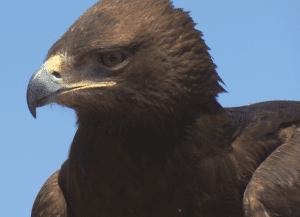
 Marlborough Falcon Trust handler, Rob Lawry, is using Tappe the falcon on the campus at University of Canterbury to scare away pigeons as a humane pest control measure.
The University of Canterbury (UC) hopes a native falcon will eradicate hundreds of pigeons plaguing the campus.
In its latest move to reduce the pigeon population, a karearea bird – as pictured on the $20 banknote – has been trained to make territorial flights to scare off flocks of pest birds from buildings and the campus.
Marlborough Falcon Trust handlers Vikki Smith and Rob Lawry have been free-flying the specially bred one-year-old karearea, called Tappe, in what is believed to be the first programme of its kind in New Zealand.
Hundreds of pigeons are plaguing the University of Canterbury campus.
UC engineering services manager Rob Oudshoorn said the pigeon problem had “escalated dramatically” since the quakes when central city roosting spots were pulled down.
Combined with an abundance of food from the ruined city and the campus’ proximity to town, the university’s pigeon population has ballooned into the hundreds and affects more than 20 buildings.
The falcon is the university’s latest innovation to solve the problem after unsuccessful attempts using electric fencing, spikes and controlled culling with slug guns, Oudshoorn said.
Marlborough Falcon Trust handler Rob Lawry hopes Tappe, a karearea bird, will stop University of Canterbury’s pigeon problem.
Excrement is the biggest problem the birds bring as it piles around doors, windows, footpaths, and roofs, he said. Where pigeon numbers are high, buildings deteriorate more rapidly and the spread of disease increases.
“And depending on the scale of it, it can become quite an issue. In the extreme if it’s left there for a long period of time, those piles of excrement bring in maggots, and the excrement itself is pretty toxic too really.”
With a population of around 6000, karearea are rare. They are a natural predator to pigeons, which use avoidance and escape as a natural defence.
The natural bird control technique is used around the world, including Dubai, airports and London’s Trafalgar Square.
Lawry said the birds are trained to fly to a lure held by an instructor, rather than to capture birds.
“As the falcon comes rocketing towards the lure I pass it behind me in the direction I want it to travel, and so he goes up high in that direction. When he goes high the pigeons will go ‘I’m out of here because there’s a falcon here’. But at that point if there’s a really slow pigeon the falcon might get it.”
Lawry said Tappe had responded well to training at UC and would expand the program
About Pigeon Patrol:
Pigeon Patrol Products & Services is the leading manufacturer and distributor of bird deterrent (control) products in Canada. Pigeon Patrol products have solved pest bird problems in industrial, commercial, and residential settings since 2000, by using safe and humane bird deterrents with only bird and animal friendly solutions. At Pigeon Patrol, we manufacture and offer a variety of bird deterrents, ranging from Ultra-flex Bird Spikes with UV protection, Bird Netting, 4-S Gel and the best Ultrasonic and audible sound devices on the market today.
Voted Best Canadian wholesaler for Bird Deterrent products four years in a row.
Contact Info: 1- 877– 4– NO-BIRD (www.pigeonpatrol.ca)
by Pigeon Patrol | May 18, 2016 | Bird Netting, Pigeon Spikes, Pigeons in the News, UltraSonic Bird Control
JAIPUR: A study coordinated by Sawai Man Singh (SMS) Medical College made a startling revelation that pigeons could cause serious respiratory diseases. They said even air-coolers were harmful for lungs.
Feeding pigeons is fine, but constant exposure to them could invite serious diseases like hypersensitivity pneumonitis (HP), says a recent national study coordinated by Sawai Man Singh (SMS) Medical College.
“At least 22% of cases of HP had history of bird (pigeon) exposure,” said Dr Sheetu Singh, assistant professor, Institute of Respiratory Diseases, SMS Medical College, and coordinator, ILD India Registry – a perspective database (March 2012-April 2015).
“Another major finding of the study shows that around 48.8% patients with HP in the registry had exposure to air-coolers,” Dr Singh said.
In Jaipur, pigeons have homes in flats and apartments. Pigeons’ droppings and nesting could be found easily in heritage buildings, flats, apartments, government buildings, which forces residents of the city to remain exposed to such environmental conditions. Over the past few years, more pigeons are being spotted everywhere. “Pigeons’ droppings or pigeon-affected environment is not good for lungs,” Dr Singh said, while talking about the findings of the study.
The ILD India registry is a set of data collected for the very first time in the country from 19 cities including Jaipur by 27 investigators. They managed to collect clinical data from 1,090 patients. In Rajasthan, 400 patients were found suffering from ILD, but the figures could be even higher. The findings further say, “A vast majority of ILD patients (47%) enrolled in this registry were diagnosed with HP, an inflammatory-fibrotic lung disease, caused by inhalation of environmental factors and 71% of patients with HP lived in urban areas.”
The details of the breakthrough findings were presented by former SMS superintendent Dr Virendra Singh in a session during NAPCON 2015, on Friday, and discussed by a panel of experts during the session that was moderated by Dr Ganesh Raghu, director, Centre for ILD, sarcoid and pulmonary fibrosis program, Seattle, USA.
The experts discussed that since the disease is usually unrecognised, one can avoid its progression by preventing further exposure to such environment or surroundings either at home or work place. The findings from the results of the analyses of data gathered by the participating site pulmonologists from their consenting patients across India, is an eye-opener and has implications not only for the public and physicians in India but provides useful insights into the field of ILD in general.
About Pigeon Patrol:
Pigeon Patrol Products & Services is the leading manufacturer and distributor of bird deterrent (control) products in Canada. Pigeon Patrol products have solved pest bird problems in industrial, commercial, and residential settings since 2000, by using safe and humane bird deterrents with only bird and animal friendly solutions. At Pigeon Patrol, we manufacture and offer a variety of bird deterrents, ranging from Ultra-flex Bird Spikes with UV protection, Bird Netting, 4-S Gel and the best Ultrasonic and audible sound devices on the market today.
Voted Best Canadian wholesaler for Bird Deterrent products four years in a row.
Contact Info: 1- 877– 4– NO-BIRD (www.pigeonpatrol.ca)
by Pigeon Patrol | May 17, 2016 | 4-S Gel Bird repellent, Bird Netting, UltraSonic Bird Control
Researchers Andrew Biewener and David Williams of Harvard University have uncovered the reason for the seemingly impeccable flight abilities of pigeons – they can make choices on what flying technique to follow when faced with an obstacle.
Scientists and engineers have studied the flight patterns of pigeons, which, despite a great presence in the city where major unnatural path blocks are present like buildings and cars, rarely crash compared to other birds like robins.
The duo set up an area with video cameras and pre-planted obstacles made of plastic pipes, which the pigeons have to fly over in order to get their meal. Upon review of the videos, the two researchers observed that the pigeons perform two techniques when passing through an obstacle. The more amazing part is how the pigeons are able to decide on which technique is the better choice, based on the distance of the obstacle they had to pass through, according to Phys.Org.
The pigeons had to scrunch their bodies in order to pass through the obstacles. However, for obstacles with a distance of at least half a wing apart, the pigeons opted to lift their wings as if to flap, but when they approached the obstacle, their wings “paused” so that they didn’t hit the plastic pipes. When the pipes were much closer, the pigeons opted to pull their wings into their body – a technique that presents a higher chance of losing altitude, but greatly protects the birds from wing damage.
Biewener and Williams believe that the ability of the pigeons to choose what technique to follow is a deliberate act. This means the birds are able to intelligently made a decision before passing through the obstacles, which is something rare since birds in general are not known to be an “intelligent” species.
About Pigeon Patrol:
Pigeon Patrol Products & Services is the leading manufacturer and distributor of bird deterrent (control) products in Canada. Pigeon Patrol products have solved pest bird problems in industrial, commercial, and residential settings since 2000, by using safe and humane bird deterrents with only bird and animal friendly solutions. At Pigeon Patrol, we manufacture and offer a variety of bird deterrents, ranging from Ultra-flex Bird Spikes with UV protection, Bird Netting, 4-S Gel and the best Ultrasonic and audible sound devices on the market today.
Voted Best Canadian wholesaler for Bird Deterrent products four years in a row.
Contact Info: 1- 877– 4– NO-BIRD (www.pigeonpatrol.ca)
by Pigeon Patrol | May 16, 2016 | 4-S Gel Bird repellent, Bird Netting, Pigeon Spikes, UltraSonic Bird Control
 FEEDING the birds could cost a lot more than tuppence a bag under new rules to make Northwich a cleaner and safer place to work and visit.
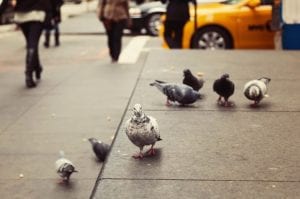
Anyone caught giving food to pigeons in the town centre will be fined £75 in a bid to reduce the number of the birds in the shopping area.
Northwich Business Improvement District (BID) has worked with the regulatory authorities at Cheshire West and Chester Council and Streetscene on the new legislation.
Mark Henshaw, Northwich BID officer, said: “The Northwich BID team is constantly looking at ways to make the town an even better place to visit and after a series of complaints about pigeons we knew we needed to act.
“These posters will hopefully discourage people from feeding the birds; a cleaner, safer and more prosperous Northwich is beneficial to everyone.”
The BID is installing 50 enforceable signs in and around the town centre on bins and shop frontages.
The signs are designed to stop people from feeding the pigeons, outlining that individuals could be fined £75 on the spot if they are found guilty of giving food to the birds.
This will be enforced by community wardens who will be monitoring the situation for two hours a day between Monday and Saturday.
The measures follow numerous complaints from shoppers and traders about the growing number of pigeons in the town centre.
Concerns about the issue have also been raised with Northwich Town Council.
Mark said he hoped the signs would deter people from feeding the pigeons and cause the pigeon population would decrease.
About Pigeon Patrol:
Pigeon Patrol Products & Services is the leading manufacturer and distributor of bird deterrent (control) products in Canada. Pigeon Patrol products have solved pest bird problems in industrial, commercial, and residential settings since 2000, by using safe and humane bird deterrents with only bird and animal friendly solutions. At Pigeon Patrol, we manufacture and offer a variety of bird deterrents, ranging from Ultra-flex Bird Spikes with UV protection, Bird Netting, 4-S Gel and the best Ultrasonic and audible sound devices on the market today.
Voted Best Canadian wholesaler for Bird Deterrent products four years in a row.
Contact Info: 1- 877– 4– NO-BIRD (www.pigeonpatrol.ca)
by Pigeon Patrol | May 15, 2016 | Bird Deterrent Products, Bird Netting, Pigeon Patrol's Services, Pigeon Spikes
COMMUTERS using the Bandar Baru Kuala Selangor Bus Terminal are in a flap over pigeons roosting in the rafters of the vandalised first floor of the bus station that used to be occupied by traders.
Office workers and traders working opposite the bus terminal were worried that the thick covering of dried pigeon droppings on the first floor could be carried by the winds and lead to a number of illnesses.
Feral rock pigeons, which are stout-bodied and pale grey birds with black patterns, are often seen scavenging for food in flocks around the bus station before returning to their “homes” on the first floor in the late evenings.
Bandar Baru Kuala Selangor Bus Terminal is sandwiched by Jalan Melati 3/17 and Jalan 3/19 within the commercial quarter but there are also residential units in the surrounding area.
Businessman Chong Hee Fah, 58, said the shops on the first floor of the bus station had closed down in mid-2005 and unscrupulous individuals had stripped the aluminium and metal fittings from the shop lots.
“All the shop lots there have been damaged. I work within walking distance to the bus station and I am worried the pigeon droppings will cause illnesses.
Kuala Selangor Bus Terminals first floor covered in pigeon droppings is a health hazard.
Kuala Selangor Bus Terminal’s first floor covered in pigeon droppings is a health hazard.
“Fine particles of the bird droppings along with feathers sometimes land on our cars after a gust of wind blows through the bus terminal,” he added.
Assistant officer Amira Kadir, 22, who works for Kuala Selangor District Council (MDKS) Zone 3B councillor Nor Azhar Jamil, said the first floor of the bus station had been abandoned for some time and she hoped the local council would revive it.
Klang Consumer Association president Devadass Anjan urged MDKS to conduct an immediate clean up of the pigeon droppings at the bus station as these birds could transmit various diseases.
“Commuters, shoppers, people working around the area and even those living within a short distance from the bus station could suffer from respiratory diseases, rashes and allergies.
“Children would be more at risk and MDKS must clean up the bus station,” he said.
Devadass added that MDKS must install pigeon spikes on the ledges and fence up the openings of the first floor to curb the problem.
The first floor of the Kuala Selangor Bus Terminal off Jalan Melati 3/19 that used to house various trading booths have been abandoned and is now a place for pigeons to roost making it a messy affair and health hazard. —Photos by KAMARUL ARIFFIN/The Star
The first floor of the Kuala Selangor Bus Terminal off Jalan Melati 3/19 that used to house various trading booths have been abandoned and is now a place for pigeons to roost making it a messy affair and health hazard.
According to a medical practitioner, pigeon droppings could cause histoplasmosis, a fungal disease that develops in the droppings and is carried by the wind.
“Signs of histoplasmosis begin to show about two weeks after initial infection and it causes tiredness, fever and chest pains,” she said.
MDKS secretary Azahari Sairin said the pigeon problem at the bus station was difficult to solve as the first floor had been abandoned for a decade.
“For 10 years, the first floor had been left vacant. For a short time, there were other businesses but most left within a month or two.
“As a result of food remnants available in back lanes and some people feeding the pigeons, the flock has thrived,” he said.
Azahari said MDKS would conduct a thorough clean up of the first floor and use bristling wires or spikes to fence the openings to discourage the birds from getting into the building.
“MDKS has allocated RM50,000 to refurbish the first floor of the bus station and work will begin in the first quarter of 2016.
“Our aim is to encourage the sale of local handicraft and household decorations that could bring tourists and locals to the commercial area,” he said.
About Pigeon Patrol:
Pigeon Patrol Products & Services is the leading manufacturer and distributor of bird deterrent (control) products in Canada. Pigeon Patrol products have solved pest bird problems in industrial, commercial, and residential settings since 2000, by using safe and humane bird deterrents with only bird and animal friendly solutions. At Pigeon Patrol, we manufacture and offer a variety of bird deterrents, ranging from Ultra-flex Bird Spikes with UV protection, Bird Netting, 4-S Gel and the best Ultrasonic and audible sound devices on the market today.
Voted Best Canadian wholesaler for Bird Deterrent products four years in a row.
Contact Info: 1- 877– 4– NO-BIRD (www.pigeonpatrol.ca)
by Pigeon Patrol | May 14, 2016 | 4-S Gel Bird repellent, Bird Netting, Pigeon Spikes
The Plattsburgh City Council is voting to change a law that would prohibit feeding and harboring certain animals.
According to the proposal, a person, business, association, or firm would not be allowed to intentionally feed or keep pigeons, raccoons, deer, skunk, opossums, coyotes, birds, squirrels, or fox within the city.
The changes to the law would not apply to bird feeders.
Officials say the law is needed due to the “unnatural presence of those animals and is hereby declared a public nuisance.”
Plattsburgh Mayor Jim Calnon will hold a public hearing at 5 p.m. to discuss this proposed law. Read the City Council’s agenda.
About Pigeon Patrol:
Pigeon Patrol Products & Services is the leading manufacturer and distributor of bird deterrent (control) products in Canada. Pigeon Patrol products have solved pest bird problems in industrial, commercial, and residential settings since 2000, by using safe and humane bird deterrents with only bird and animal friendly solutions. At Pigeon Patrol, we manufacture and offer a variety of bird deterrents, ranging from Ultra-flex Bird Spikes with UV protection, Bird Netting, 4-S Gel and the best Ultrasonic and audible sound devices on the market today.
Voted Best Canadian wholesaler for Bird Deterrent products four years in a row.
Contact Info: 1- 877– 4– NO-BIRD (www.pigeonpatrol.ca)
by Pigeon Patrol | May 13, 2016 | Animal Deterrent Products, Bird Netting, Pigeon Spikes, Pigeons in the News
 Each year, thousands of Arizona residents email or call Rosie Romero’s radio show with questions about everything from preventing fires in their chimneys to getting rid of tree roots invading their sewer system. His goal is to provide answers that suit the specific lifestyle wherever someone lives in Arizona.
Q: I’m interested in having a solar electrical system built on my roof. But I’m wondering what experience the solar industry has had with birds that try to nest under the panels. I have a sloped roof. Would it be harder for nests to be built in that situation?
A: Most of the time when birds try to nest under solar panels, it’s usually in the case of flat roofs. Generally, a frame is put up to deter birds from nesting. In addition, there are wire-mesh devices that can clip onto solar panels to keep doves and pigeons out. Plastic bird netting can be used as well.
Q: I have a foam roof on my home in Tucson and my air conditioner is on top of that roof, along with my ductwork. The ducts that come down into the house have been insulated with foam as well. But recently, my roof has sprung a leak around the air conditioner. Roofers have told me that to fix the leak, I have to take off the entire foam roof. Why can’t I just take off one section of the foam and then patch that area with new foam? The roofer says I can’t because new foam won’t stick to the old.
A: I can understand what you’re trying to say, and actually it does seem as if you should be able to do that. However, if the elastomeric coating that is on top of the foam has been sunburned, it might be impossible to get the foam patch to stick. You should get a second opinion on your situation from a qualified, experienced foam-roofing company.
Q: Does a person who climbs up on your roof to inspect the damage need to have a license or do they have to have some kind of certification? In other words, can my neighbor go up and inspect my flat roof to tell me what is wrong and where my leak is coming from?
A: Obviously, anyone can go up on your roof to check out what’s going on, and that person doesn’t need a license or certification. But I wouldn’t send just anyone up there; you need a licensed contractor who has a significant amount of experience. For one thing, flat roofs are tough to troubleshoot, because water can travel from one spot on a roof to another to leak into your house. Although walking around on a flat roof can be easier, one misstep on a sloped roof can lead to a fall or other injury. And sometimes just walking on a roof can do quite a bit of damage.
Keep in mind that if there is a problem on a roof that needs fixing and that fix requires $1,000 worth of work, then the repair has to be done by a company licensed by the state registrar of contractors.
About Pigeon Patrol:
Pigeon Patrol Products & Services is the leading manufacturer and distributor of bird deterrent (control) products in Canada. Pigeon Patrol products have solved pest bird problems in industrial, commercial, and residential settings since 2000, by using safe and humane bird deterrents with only bird and animal friendly solutions. At Pigeon Patrol, we manufacture and offer a variety of bird deterrents, ranging from Ultra-flex Bird Spikes with UV protection, Bird Netting, 4-S Gel and the best Ultrasonic and audible sound devices on the market today.
Voted Best Canadian wholesaler for Bird Deterrent products four years in a row.
Contact Info: 1- 877– 4– NO-BIRD (www.pigeonpatrol.ca)
by Pigeon Patrol | May 12, 2016 | Bird Deterrent Products, Bird Netting, Pigeon Patrol's Services, Pigeon Spikes
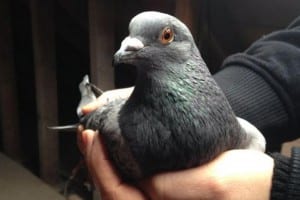
 A pair of proteins may hold the key as to how animals like pigeons, sharks and bees sense the Earth’s magnetic field and use it to navigate, scientists say.
“This magnetic protein compass may explain how animals can navigate their way,” said lead researcher Dr Can Xie, a molecular biophysicist at Peking University in Beijing.
However another expert is not convinced the finding, reported in today’s issue of the journal Nature Materials, is the key to solving the mystery of how animals navigate.
Scientists have been trying for a long time to work out the biological machinery that enables animals — including pigeons, trout, sharks, bats, turtles, whales and bees — to sense the Earth’s magnetic field and use it for navigation.
Dr Xie and colleagues thought that since a broad range of animals possess this sense, there should be a single “evolutionarily conserved” system that is responsible.
The protein complex spontaneously aligns in the direction of external magnetic fields
Dr Can Xie, Peking University
Previous research has suggested that a light-sensitive protein in the eye called cryptochrome (Cry) plays a key role in magnetic sensing abilities, but Dr Xie and colleagues reasoned it would need to team up with other proteins to actually form a compass.
They screened the genome of fruit flies and discovered an iron-containing protein they dubbed MagR (for magneto-receptor), which can have features of a magnet when polymerised.
“For example MagR forms a rod-like polymer and can orient itself in the direction of a given magnetic field,” Dr Xie said.
He said computer modelling and experiments show how MagR couples with Cry, and that both the MagR polymer and MagR/Cry protein complex can actually respond to magnetic fields.
“The protein complex spontaneously aligns in the direction of external magnetic fields,” Dr Xie said.
“We also showed through immunohistochemical studies biochemical and biophysical methods that the MagR/Cry complex is stable in the retina of pigeons.
“Biochemical and biophysical methods indicated this complex can also forms in butterfly, rat, whale and human cells.
“This is all strong evidence indicators that this biological compass exists in animals.”
Dr Xie said further research was required to understand how Cry was helping MagR to become magnetic, and how signals from the compass were processed by the nervous system.
“To construct an entire and complete explanation of magnetoreception and magnetic navigation may take decades and probably several generations to complete,” he said.
Dr Xie, the discovery of such proteins could be used in the future for manipulating cells and molecules in the human body using magnetic fields.
New Zealand expert prefers the nose to the eyes
However, Professor Michael Walker of the University of Auckland, who has been studying magnetic sensing for decades, is not convinced by the latest findings.
I would back the magnetite hypothesis over the cryptochrome hypothesis
Professor Michael Walker
“It’s a very tentative suggestion,” he said.
“So far as I can tell, the evidence supplied by the researchers is in vitro, not in animals.
“There is no evidence that the correct conditions for the formation of the protein complex actually exists in the eye of animals.”
Professor Walker prefers another hypothesis — that animals navigate using cells in the nose containing crystals of an iron oxide known as magnetite.
He said a large body of research supports this, including experiments in which pigeons that have their noses anaesthetised can no longer navigate properly.
Such research suggests no input from the eyes is required for magnetic sensing.
“I would back the magnetite hypothesis over the cryptochrome hypothesis,” Professor Walker said.
While Dr Xie said that both hypotheses have “credible theoretical and experimental foundations”, Professor Walker said natural selection would make it highly unlikely there is more than one biological compass.
About Pigeon Patrol:
Pigeon Patrol Products & Services is the leading manufacturer and distributor of bird deterrent (control) products in Canada. Pigeon Patrol products have solved pest bird problems in industrial, commercial, and residential settings since 2000, by using safe and humane bird deterrents with only bird and animal friendly solutions. At Pigeon Patrol, we manufacture and offer a variety of bird deterrents, ranging from Ultra-flex Bird Spikes with UV protection, Bird Netting, 4-S Gel and the best Ultrasonic and audible sound devices on the market today.
Voted Best Canadian wholesaler for Bird Deterrent products four years in a row.
Contact Info: 1- 877– 4– NO-BIRD (www.pigeonpatrol.ca)

by Pigeon Patrol | May 11, 2016 | Animal Deterrent Products, Bird Deterrent Products, Bird Netting
 A MUM intends to fight an on-the-spot £50 fine for feeding pigeons in the city centre after claiming she had no idea it was an offence.
Claire Jenkins admitted doing that near Topshop in Oxford Street when confronted by a litter enforcement officer, but said that it only involved little scraps of bread.
“I bought a frankfurter for me and a burger for my 16-year-old son from one of the street outlets,” said Mrs Jenkins, of Clos Trafle, Gowerton. “We eat them on the bench there. We had little scraps left. I put mine on the bench and he put his on the ground. We walked to a bin to put our napkins in and when we turned around a warden said it was classified as litter. I thought he was joking. I live in Gowerton and never come into Swansea. I said I didn’t know about it and didn’t see any signs.”
Mrs Jenkins said she was given a £50 fixed penalty rising to £75 if not paid with seven days, and leading to a magistrates court appearance if the latter was not paid within 14 days.
Seagull feeding fines dropped because religions could be offended, but Swansea says not
“I found it degrading,” she said. “I was feeding crumbs. I didn’t know it was classed as an offence.”
A Swansea Council spokesman said: “We launched a city-wide campaign in the summer to encourage the public to put leftover food in the bin and not throw it on the ground for birds. This was following a request by city centre businesses whose customers say they have been plagued by seagulls that are causing a nuisance, particularly when people are consuming food.
“The feedback we received from visitors has been very positive. Posters have been put up on bins in the city centre advising shoppers of the penalties for littering and our message is that if you don’t drop litter you won’t face the fine.”
About Pigeon Patrol:
Pigeon Patrol Products & Services is the leading manufacturer and distributor of bird deterrent (control) products in Canada. Pigeon Patrol products have solved pest bird problems in industrial, commercial, and residential settings since 2000, by using safe and humane bird deterrents with only bird and animal friendly solutions. At Pigeon Patrol, we manufacture and offer a variety of bird deterrents, ranging from Ultra-flex Bird Spikes with UV protection, Bird Netting, 4-S Gel and the best Ultrasonic and audible sound devices on the market today.
Voted Best Canadian wholesaler for Bird Deterrent products four years in a row.
Contact Info: 1- 877– 4– NO-BIRD (www.pigeonpatrol.ca)
by Pigeon Patrol | May 10, 2016 | Bird Netting, Pigeon Patrol's Services, Pigeons in the News, UltraSonic Bird Control
 Many birds travel in flocks, but the question of how they choose the leader has long puzzled scientists.
Now a team of researchers led by Mr Benjamin Pettit from Oxford University think they have the answer.
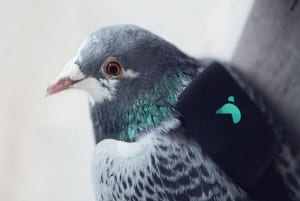
They fitted four flocks of 10 homing pigeons with small data logging backpacks and sent them on a series of group and solo flights.
These tracked not only the birds’ skill in making a beeline for home, but also measured their ability to influence the flock’s direction by recording the fractional time delays it takes one bird to react to another when flying together.
Some birds are naturally faster and consistently get to the front, where they end up doing more of the navigation, which means on future flights they know the way better.
Associate Professor Dora Biro
The researchers found that when the birds flew a route on their own for the first time those identified as leaders were no better than followers in forging a direct route home to their roost. But when the birds were tested individually after they had flown the route as part of a flock, leaders were found to have learned straighter homing routes than followers.
“Some birds are naturally faster and consistently get to the front, where they end up doing more of the navigation, which means on future flights they know the way better,” said study co-author Associate Professor Dora Biro, also of Oxford University.
“You can compare this to a ‘passenger-driver’ like effect: drivers in a car have to pay attention while passengers are often unable to recall the route they were driven along, especially if they remained passive in the navigation process.”
The finding, published in Current Biology, changes our understanding of how the flocks are structured and why pigeons have consistent leadership hierarchies, the researchers said.
Are leaders born or made?
Previous research had shown that leaders were not necessarily the most successful breeders or those with more social affiliations (friends) in the flock. Giving followers extra training flights does not promote them into a leadership position either.
Researcher releasing pigeon
PHOTO: Even when the pigeons were released from different locations the same pigeons led the flock (Zsuzsa Akos)
Instead, pigeons build on their natural strengths – in this case flight speed – to become leaders, said the researchers.
“Flight speed is correlated with body size, pectoral muscle mass and so on, but not necessarily with competence at solving the task at hand,” Dr Biro said.
“But we found that leaders learnt more during navigational problem-solving than followers, and as a result became better informed leaders.
“This suggests a positive feedback between leadership and competence, where leaders become increasingly more competent at leading – in a sense, they are ‘made’ into better leaders by being forced to lead in the first place.”
Even when the birds were released from new locations the same birds tended to lead, added Mr Pettit.
Could pigeon leadership apply to other birds?
Mr Pettit said the research demonstrated leadership hierarchies could arise from individual differences driven by a simple mechanism such as speed.
“In this case, the slower birds lag slightly behind and end up following their faster flock mates. Leadership does not require complex social interactions,” he said.
The findings indicated we would expect to find leadership in a wide variety of species that travel in groups, he said.
You may also like …
‘Protein compass’ may explain how pigeons find their way home
Pigeons identify breast cancer
However other factors would also come into play in migratory species.
“It depends on the variation in experience within the flock,” Mr Pettit said.
“In our experiment, the pigeons all had roughly the same level of experience, having never been released from those sites before. If some flock members have much more experience than others, for example migratory flocks with a mix of ages, then experience is probably a larger determiner of leadership.
“Another consideration is that in v-shaped flocks, flying in front is more energetically costly, so birds such as pelicans, ibises, and geese might have different patterns of leadership for that reason.”
About Pigeon Patrol:
Pigeon Patrol Products & Services is the leading manufacturer and distributor of bird deterrent (control) products in Canada. Pigeon Patrol products have solved pest bird problems in industrial, commercial, and residential settings since 2000, by using safe and humane bird deterrents with only bird and animal friendly solutions. At Pigeon Patrol, we manufacture and offer a variety of bird deterrents, ranging from Ultra-flex Bird Spikes with UV protection, Bird Netting, 4-S Gel and the best Ultrasonic and audible sound devices on the market today.
Voted Best Canadian wholesaler for Bird Deterrent products four years in a row.
Contact Info: 1- 877– 4– NO-BIRD (www.pigeonpatrol.ca)
by Pigeon Patrol | May 9, 2016 | Animal Deterrent Products, Bird Deterrent Products, Bird Netting, Pigeon Spikes
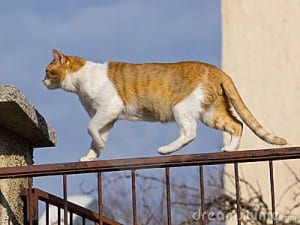
 The Village of Lancaster has taken preventive measures to halt an increase in the feral cat and rat population.
The Village Board passed a resolution on Monday accepting trap, neuter and return programs as viable and acceptable population control tools for the cats.
Where’s the story?
PointsMentioned Map7 Points Mentioned
Board members voted unanimously to allow people to go into areas affected by large populations of feral and free-roaming cats, trap them, spay or neuter them, and set them free. The groups humanely trap the cats and vaccinate them before they are released back into the areas where they were found.
Historically, the practice has been to trap the animals and kill them.
However, under what the village is calling the TNR program, the animals will act as placeholders, occupying territory and living their lives without more cats moving into the area. The existing cats will not have the means to reproduce if trapped, limiting the growth of population.
“In lieu of destroying feral cats, they are going to be gathered, neutered and released back to where they were found,” said Village Attorney Arthur Herdzik, who wrote the resolution. “Studies indicate that destroying them creates a vacuum that other cats fill. There is also a cruelty issue.”
Under the resolution, the trapping of cats is now legal in the village and residents are encouraged to participate.
The board was approached by Feral Cat FOCUS Inc., an all-volunteer, not-for-profit company that deals with cat populations in this manner for the safety of the animals and of the people who live in the affected neighborhoods.
“[FOCUS] approached me. It is a humane way to treat cats. They aren’t taken to a shelter. The Erie County Legislature is endorsing this,” said village Trustee Russell W. Sugg. “Groups like FOCUS will educate the public. There is no cost to the village.”
According to FOCUS, the group has already performed 60 to 70 recent procedures on cats in the Lancaster area.
Buffalo, Williamsville, Springville and West Seneca have recently passed similar legislation.
The village has also seen an increase in activity from rat populations.
According to Shawn Marshall, the village’s code enforcement officer, he has received around 75 calls from residents complaining about rats since he took the job in June.
“The downtown business district area has had problems for years now.” said Marshall.
Rats have become more active and are attracted to dog feces, open garbage cans, leaf and firewood piles, and vacant structures.
At this time, the village does not have lidded garbage totes for trash collection.
According to Marshall, the totes would have to be provided by the Town of Lancaster and the cost to provide the totes to residents would be in the millions of dollars as the current fleet of trucks is not fitted with tote lifts.
Residents can prevent any possible rat infestation by cleaning up leaf piles, lifting firewood piles off the ground, getting lidded garbage cans and regularly cleaning up any waste from pets and disposing of it properly.
If residents have a rat issue, they can contact the Erie County Health Department, which will bait the rats for disposal.
According to Marshall, the county will take care of the problem in about a week.
Marshall is no stranger to rats. Near his home on Como Park Boulevard near Aurora Street, he had a problem at the beginning of November. He returned home one night to see a rat on one of his decorative Halloween pumpkins.
Marshall said all he can do is direct people to the county Health Department.
Residents can contact the Erie County Health Department by calling 858-7690.
About Pigeon Patrol:
Pigeon Patrol Products & Services is the leading manufacturer and distributor of bird deterrent (control) products in Canada. Pigeon Patrol products have solved pest bird problems in industrial, commercial, and residential settings since 2000, by using safe and humane bird deterrents with only bird and animal friendly solutions. At Pigeon Patrol, we manufacture and offer a variety of bird deterrents, ranging from Ultra-flex Bird Spikes with UV protection, Bird Netting, 4-S Gel and the best Ultrasonic and audible sound devices on the market today.
Voted Best Canadian wholesaler for Bird Deterrent products four years in a row.
Contact Info: 1- 877– 4– NO-BIRD (www.pigeonpatrol.ca)
by Pigeon Patrol | May 8, 2016 | 4-S Gel Bird repellent, Animal Deterrent Products, Bird Deterrent Products, Bird Netting, Pigeon Spikes
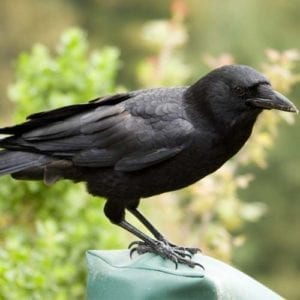
 Back in February, the BBC posted a story about a Seattle girl who got gifts from crows. She was brought bolts, beads, buttons, earrings, and bones, among other things. It was also revealed that she feeds these animals. The essence of the story, the reason it went viral, is it so perfectly, in the popular imagination, captured an innocent relationship between a child and the wild. The birds understood her and she understood them. Like all children, she had not become a human (experienced) yet. She still had a primal connection with the animal kingdom.
But even this paradise proved to be short-lived. By August, the neighbors of the girl were suing her family for attracting all manner of wild urban life to their upscale Seattle neighborhood, Portage Bay. Crows, pigeons, squirrels, and even rats, they claimed, had all learned about this girl and her generosity. Seagulls were seen as flying from Elliot Bay to Portage Bay with the certainty that the main problem of life will be solved there. The neighbors claimed that, as a consequence, the shit of these synanthropic animals spoiled their properties. They wanted $200,000 in damages. Now the girl’s family is fighting back, claiming their daughter’s feeding has not attracted rats and gulls.
What to make of this situation? I asked my favorite writer and thinker on crows, Lyanda Lynn Haupt (she wrote Crow Planet: Essential Wisdom from the Urban Wilderness), for her view on the escalating tensions in Portage Bay. She responded with a lovely and insightful letter:
I think that many people long for a sense of connection with wild animals. This story served up evidence of such a possibility, and it captured everyone’s imagination. Plus, let’s face it—that little girl is cute as pie. No wonder social media went crazy. Did the crow really bring gifts to the girl? Some crows do gather shiny bits of this and that—gum wrappers, thumb tacks, shells, foil, bright red berries—and cache them in one place. Little collections of treasure. I can see how this action could be interpreted as the bringing of gifts to the little girl with the food, and there is little harm in imagining this to be so. That said, there is no reason to be feeding crows. They are already flourishing in the urban environment, and the neighbors are right—the amount of food it takes to bring in that many crows can make a mess and invite even more problematical urban wildlife. Even in this little video there are squirrels and pigeons. Whether there is evidence of rats or not, they are common visitors to urban bird feeders, even much smaller ones.
The neighbors are freaking out a bit. It is not “The Birds.” No one is going to get sick. And hanging dead crows on your porch (legal or not) to deter the neighbors and their crow visitors is just creepy. But lots of crows and pigeons and food and mess around? I agree, not good. Loud, annoying. And not in line with a deeper understanding of what helps and what harms urban wildlife. To live well alongside urban wildlife and our human neighbors: Keep cat and dog food inside (so as not to attract rodents, raccoons, coyotes, and crows). Close up entrance holes to keep animals from entering to shelter or nest. And if you do feed birds: just small feeders for small birds, cleaned scrupulously, with seeds that fall beneath cleaned up daily. Better would be to plant native trees and shrubs with seeds and berries that local birds love. I think it is a beautiful privilege to live alongside wild creatures close to home. But we need to do it with some grace and wisdom.
I think the story is sticking around so long because of the winning combination: cute girl with pet wild birds and lawsuit!
There is one more thing. I think if the crow feeder was a boy, the neighborhood may not have been so aggressive and filed a lawsuit. What is seen as annoying in a girl is often registered as a gift in a boy.
About Pigeon Patrol:
Pigeon Patrol Products & Services is the leading manufacturer and distributor of bird deterrent (control) products in Canada. Pigeon Patrol products have solved pest bird problems in industrial, commercial, and residential settings since 2000, by using safe and humane bird deterrents with only bird and animal friendly solutions. At Pigeon Patrol, we manufacture and offer a variety of bird deterrents, ranging from Ultra-flex Bird Spikes with UV protection, Bird Netting, 4-S Gel and the best Ultrasonic and audible sound devices on the market today.
Voted Best Canadian wholesaler for Bird Deterrent products four years in a row.
Contact Info: 1- 877– 4– NO-BIRD (www.pigeonpatrol.ca)
by Pigeon Patrol | May 7, 2016 | 4-S Gel Bird repellent, Animal Deterrent Products, Bird Netting, Pigeon Patrol's Services
 A warehouseman died from lung cancer caused by birds pecking the asbestos roof of a store where he used to work, an inquest heard.
For 12 years the deadly dust floated down on Anthony Jones, who got a job at the cash and carry when he was 15 but left three decades ago.
He was killed this year, aged 57, by mesothelioma – a type of lung cancer whose only known cause is asbestos fibres.
Mr Jones had said after being told he had terminal cancer: “I can’t recall ever working with or near asbestos.
“My exposure was most likely at the firm’s ex-premises in Gloucester, as I was told there was always a problem with birds pecking the asbestos-based roof.”
GNSThe cash’n carry warehouse where Anthony Jones workedDeadly: The cash and carry warehouse where Anthony Jones worked
Fibres: Pigeons pecking the asbestos roof were a constant problem
Daily Mirror Campaign Asbestos time bomb logoCall for action: The Daily Mirror has been running the Asbestos Timebomb campaign
A post-mortem on the bachelor, of Frampton on Severn, found 19,355 asbestos fibres per gram of dry lung tissue, a level consistent with work exposure.
Coroner Katy Skerrett recorded a verdict of death due to industrial disease and said: “It’s not the type of employment where you’d expect to be exposed to asbestos.”
The victim’s sister Margaret Ball, 72, said after the Gloucester inquest: “This dust was floating down on him all that time at work and seems that is why he got this terrible disease years later.”
About Pigeon Patrol:
Pigeon Patrol Products & Services is the leading manufacturer and distributor of bird deterrent (control) products in Canada. Pigeon Patrol products have solved pest bird problems in industrial, commercial, and residential settings since 2000, by using safe and humane bird deterrents with only bird and animal friendly solutions. At Pigeon Patrol, we manufacture and offer a variety of bird deterrents, ranging from Ultra-flex Bird Spikes with UV protection, Bird Netting, 4-S Gel and the best Ultrasonic and audible sound devices on the market today.
Voted Best Canadian wholesaler for Bird Deterrent products four years in a row.
Contact Info: 1- 877– 4– NO-BIRD (www.pigeonpatrol.ca)
by Pigeon Patrol | May 6, 2016 | 4-S Gel Bird repellent, Animal Deterrent Products, Bird Deterrent Products, Bird Netting
 CASTLEHILL Church has been made secure ahead of a major clean-up inside.
The privately owned building has become a roosting place for hundreds of pigeons, who have been able to access the building via slats in the roof and gaps in the stained glass windows.
Following pressure from the public and Moray Council during the summer, owner Claire Love has employed John Still Steeplejacks of Aberdeen to carry out the task.
Neighbouring manse owner, Kay Ferrett’s family suffered more than most from an infestation of flies plaguing the west end of Forres High Street, believed to be coming from numerous bird carcasses and droppings inside the church.
“Work has started on pigeon removal and clean up,” confirmed Ms Love in a brief email to the ‘Gazette’.
Mrs Ferrett was able to see the size of the task for herself when she went inside with the contractors.
“It’s nuts,” she said. “I never thought it would be this bad!
“They gave me a surgical mask to wear and I was escorted inside via the basement entrance.
“What I saw was horrendous – I was shocked by the mess and overcome by the smell, even through the mask. There was so much excrement and dead pigeons everywhere.
“It’s absolutely covered in poo and pigeons so I’m not surprised there were so many flies in my house over the summer.”
John Still Steeplejacks, roofers, slaters and joiners, also deal with bird and pest control.
“Our job is to clear the church of wildlife then clean up any mess they’ve made,” said Mr Still.
“We have no specific time frame but we want to get it done as quickly as possible as we have other commitments to keep.”
Homes and businesses near the church endured an invasion of flies during the summer, many believe were a result of what was inside.
Having seen them for herself, Mrs Ferrett hopes the clean-up will stop a repeat.
“Once we got upstairs, apart from what was underfoot, I was overcome by the beauty of the hall. It’s such a shame that it has been allowed to get into the state it’s in now.
“I was upset to hear that the church owner did not stick to the time lines for the clean-up set by the local authority during the last few months
“Thankfully they’re dealing with it now but I’m told it will take a few months to clean up.”
Moray Council will not be taking any enforcement action.
“The owner appears to be complying with what was requested of her in terms of boarding up the windows etc to prevent birds getting in and cleaning up the mess,” said a spokesman. “Assuming the owner is doing everything that was asked of her, we will not be taking any action.”
Meanwhile, a collapsing wall on the west wing continues to pose a problem for the community. Youths previously accessed the building at that side before it was secured.
Mr Still warned that it continues to be an issue: “A lower flat roof inside on the west wing is dangerous,” he said. “Particularly if anyone was to stand on it.
“We plan to put warning signs up to warn folk.”
About Pigeon Patrol:
Pigeon Patrol Products & Services is the leading manufacturer and distributor of bird deterrent (control) products in Canada. Pigeon Patrol products have solved pest bird problems in industrial, commercial, and residential settings since 2000, by using safe and humane bird deterrents with only bird and animal friendly solutions. At Pigeon Patrol, we manufacture and offer a variety of bird deterrents, ranging from Ultra-flex Bird Spikes with UV protection, Bird Netting, 4-S Gel and the best Ultrasonic and audible sound devices on the market today.
Voted Best Canadian wholesaler for Bird Deterrent products four years in a row.
Contact Info: 1- 877– 4– NO-BIRD (www.pigeonpatrol.ca)
by Pigeon Patrol | May 5, 2016 | Bird Netting, Pigeon Spikes, UltraSonic Bird Control
CARLSBAD — Flocks of feral pigeons have prompted the Carlsbad City Council to set a date on Jan. 12 to hear a new ordinance that would allow the city to eradicate the problem.
Introduced at Tuesday night’s city council meeting, the ordinance would prohibit the feeding and harboring of feral pigeons, and includes a section that defines pigeon-proofing.
Carlsbad Mayor Dale Janway said in an emailed statement that the city has received continuous complaints about large flocks of pigeons all across the city.
If this new ordinance were to be adopted then it would allow the city to reduce the feral pigeon population in the city.
Because pigeons not only cause damage to buildings and ventilation systems, but also can carry harmful diseases, the ordinance has some merit.
City officials said that pigeons carry many diseases, particularly found in their droppings, and they pose the risk of carrying fungus such as Histoplasmosis or the fungus Cryptococcis.
“Psittacosis is a rare bacteria, and pigeons may also carry mites and parasites,” a city news release said. “Pigeon droppings are (also) acidic and can damage buildings.”
Officials also cited sanitary concerns as another reason to introduce the ordinance.
Environmental Services Superintendent Richard Aguilar said that the large population of pigeons has not been an issue in Carlsbad until recently.
“Within the last two years, the population has doubled or tripled, due to the feeding,” Aguilar said in an email. “My understanding is one pigeon couple can result in a population of a few thousand after a few years.”
According to the city council agenda, “the most efficient long-term methods to control excess feral pigeon populations is to limit their access to food, shelter and nesting materials.”
The ordinance would define “feeding” as providing food to pigeons, meaning that any person intentionally feeding pigeons on public or private property would be in violation of the ordinance.We’re not trying to stop people from putting out a bird feeder, what we’re stopping is the excessive feeding that is causing this problem,” Aguilar said.
Janway said the ordinance will heard by the city council during the Jan.12 meeting and the council will then be able to vote on whether to adopt the ordinance.
About Pigeon Patrol:
Pigeon Patrol Products & Services is the leading manufacturer and distributor of bird deterrent (control) products in Canada. Pigeon Patrol products have solved pest bird problems in industrial, commercial, and residential settings since 2000, by using safe and humane bird deterrents with only bird and animal friendly solutions. At Pigeon Patrol, we manufacture and offer a variety of bird deterrents, ranging from Ultra-flex Bird Spikes with UV protection, Bird Netting, 4-S Gel and the best Ultrasonic and audible sound devices on the market today.
Voted Best Canadian wholesaler for Bird Deterrent products four years in a row.
Contact Info: 1- 877– 4– NO-BIRD (www.pigeonpatrol.ca)
by Pigeon Patrol | May 4, 2016 | Animal Deterrent Products, Bird Netting, Pigeon Patrol's Services, Pigeon Spikes
 Who or what is killing birds in Utica’s downtown?
That is the question Matthew Perry, a Utica Peregrine Falcon Project founder, and others are trying to answer after members of the group found around 20 dead pigeons and other birds over the weekend.
“We’ve found several of the birds to have corn in their throats and in their bills and around their bodies,” Perry said Monday. “That is consistent with one of the pesticides that’s commonly used by licensed applicators and by people that have permission to use them in an area.”
That pesticide, Perry said, could be Avitrol, a poison used for nuisance pigeons and spread on whole corn.
But Perry warned it is too early to know exactly what is going on.
“We have to be really careful in what we’re saying here because we’re not absolutely positive that’s what’s happening,” he said. “It’s suggested by the way we’re finding these birds and the fact that no one seems to be reporting similar things across the area. In some cases it could be impact deaths. We might be finding birds that have smashed against windows.”
If it is Avitrol, Perry said the public should be careful if it comes across a dead bird downtown. He stressed that people should not handle the bird and that they should not pick any kernels without gloves.
The issue appears to have been going on for about three weeks, but now seems heightened, Perry said. Dead birds have been found from roughly Lafayette Street to Bank Place.
“Some people have reported around the city that they see these birds acting disoriented,” he said. “They’re hitting windows. So we’re really concerned that we might be too late.”
Deborah Saltis, a member of the Peregrine Falcon Project, spent part of her lunch break Monday looking for any downed or dead pigeons in the Hopper Street area.
She said of the roughly 20 birds found over the weekend, 18 were pigeons. Of those, 10 were found in the Hopper Street area and eight were found in other downtown locations.
“(Hopper Street) is one of the areas we found the most over the weekend, so I was rechecking it,” Saltis said. “There’s definitely something going on. Whether it’s inadvertent or on purpose, I don’t know.”
Another call came in early Monday, afternoon about half an hour after she first spoke to the O-D. That bird was found on Columbia Street, near the former Norm Seakan television and appliance store.
The state Department of Conservation has had cases referred to them, Perry said, and possibly the Oneida County Health Department. Some of the dead birds have already been dropped off at the DEC and are expected to be checked out by a pathologist and the corn samples tested, he said.
The DEC received reports last week of a number of dead pigeons spotted in the Utica area, said the DEC. On Friday, a wildlife technician secured four dead pigeons and they were sent to the department’s Wildlife Health Unit at the WildlifeResourcesCenter in Delmar, N.Y. for testing.
There was no timeline given for test results, the DEC said.
Melanie Adams with the county’s health department said that she had not been notified so she couldn’t say if the health department had been notified. If something was brought to the department’s attention, then they would notify the DEC.
There also is concern for how the city’s pair of peregrine falcons, who rely on pigeons and other birds as a main source of food, could be impacted, Perry said.
The falcons are “probably the best kind of pigeon control you can ever imagine,” he said, and can take more than 300 pigeons a year on average.
“We might not have the smoking gun for a while and this being a holiday weekend, I’m concerned that the first sign that there’s a problem might be a dead Peregrine,” he said. “That’s not what I would like to see.”
The Utica Peregrine Falcon Project was founded in 2012. The group has installed a nesting box outside of the 15th floor of the downtown AdirondackBankBuilding.
“Peregrine falcons only recently bounced back from the brink of extinction due to the widespread use of the pesticide DDT,” Perry said. “The species’ resurgence has been a testament to their own resilience as well as to the dedication of our society to be better stewards of the environment and to place a value on maintaining healthy, natural ecosystems.”
About Pigeon Patrol:
Pigeon Patrol Products & Services is the leading manufacturer and distributor of bird deterrent (control) products in Canada. Pigeon Patrol products have solved pest bird problems in industrial, commercial, and residential settings since 2000, by using safe and humane bird deterrents with only bird and animal friendly solutions. At Pigeon Patrol, we manufacture and offer a variety of bird deterrents, ranging from Ultra-flex Bird Spikes with UV protection, Bird Netting, 4-S Gel and the best Ultrasonic and audible sound devices on the market today.
Voted Best Canadian wholesaler for Bird Deterrent products four years in a row.
Contact Info: 1- 877– 4– NO-BIRD (www.pigeonpatrol.ca)