by Pigeon Patrol | Mar 21, 2022 | Bird Spike, Pigeons, Pigeons in the News, Raccoons, Sparrows, UltraSonic Bird Control
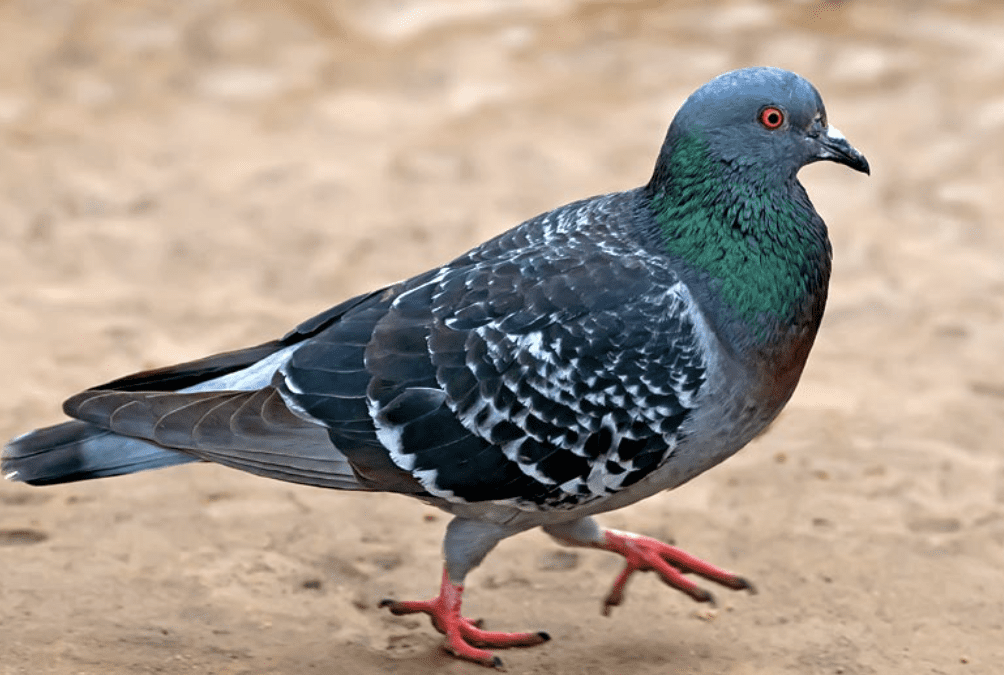
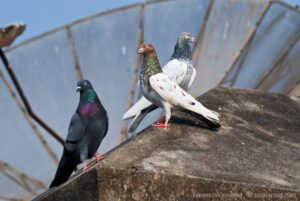
A study on a population of pigeons on the University of South Africa’s Muckleneuk campus was conducted over 2 years. Counts were conducted during a baseline year (March 2013–February 2014) to establish the pigeon population index inhabiting the campus buildings, and again in the management year (August 2014–August 2015) once Eagle Eyes™, Fire (Flash) Flags, bird spikes and a combination thereof were implemented on the buildings. An efficacy reduction percentage was determined for each of the control structures. The total pigeon index on the campus declined by 50 % once the control structures were implemented. Control structures; however, differed markedly in efficacy from each other. Whilst bird spikes indicated the highest efficacy at reducing the pigeon population index, seasonality also influenced the efficacy of the control structure. Quantified understanding of the efficacy of pigeon control measures allows urban management to make informed decisions about reducing pigeon populations.
Source
Pigeon Patrol Products & Services is the leading manufacturer and distributor of bird deterrent (control) products in Canada. Pigeon Patrol products have solved pest bird problems in industrial, commercial, and residential settings since 2000, by using safe and humane bird deterrents with only bird and animal friendly solutions. At Pigeon Patrol, we manufacture and offer a variety of bird deterrents, ranging from Ultra-flex Bird Spikes with UV protection, Bird Netting, 4-S Bird Gel and the best Ultrasonic and audible sound devices on the market today.
Voted Best Canadian wholesaler for Bird Deterrent products ten years in a row.
Contact us at 1- 877– 4– NO-BIRD, (604) 585-9279 or visit our website at www.pigeonpatrol.ca
Pigeon/Pigeon Patrol / Pigeons Roosting / Vancouver Pigeon Control /Bird Spikes / Bird Control / Bird Deterrent / Pigeon Deterrent? Surrey Pigeon Control / Pest /Seagull deterrent / Vancouver Pigeon Blog / Birds Inside Home / Pigeons in the cities / Ice Pigeons/ What to do about pigeons/ sparrows , Damage by Sparrows, How To Keep Raccoons Away, Why Are Raccoons Considered Pests/ De-fence / Pigeon Nesting/ Bird Droppings / Pigeon Dropping/ woodpecker control/ Professional Bird Control Company/ Keep The Birds Away/ Birds/rats/ seagull/pigeon/woodpecker/ dove/sparrow/pidgeon control/pidgeon problem/ pidgeon control/flying rats/ pigeon Problems/ bird netting/bird gel/bird spray/bird nails/ bird guard
by Pigeon Patrol | Mar 21, 2022 | Bird Spikes, Columbidae, Doves, history of pigeons, MBCA, pet bird, Pigeon Control
If the babies are alert and healthy, nests should be replaced in their original location, or in cases where nests have been removed due to conflict (e.g., noise from the babies, construction, concern about feces from the nest), they can be replaced close to the original location using a false nest. Parents will accept babies that have been handled by humans, though handling should be kept to a minimum to avoid frightening the babies.
Use the guidelines below to build a false nest.
Note that although birds sometimes nest in locations inconvenient for people, they typically do not cause damage and remain in the nest for a very short time, usually 2-3 weeks. After this time, the babies leave the nest and do not return, at which point the nesting material can be removed and the entrance hole covered with 1/2 inch wire mesh to prevent future nesting.
For replacing cup-shaped nests in trees, shrubs, or on eavestroughs or other flat surfaces:
- Step 1: Obtain an open plastic container – a large margarine tub usually works well, or a berry basket – to use as the base for the new nest. Poke holes in the bottom if there are none to allow for moisture drainage.
- Step 2: Pack nesting material into the container. If you have remnants of the original nest, this is ideal. If not, use dry grass packed tightly into the container. Push the nesting material down in the middle and up around the sides to form a cup shape just large enough to contain the babies snugly.
- Step 3: Thread several pieces of wire into a hole on the bottom of the container and out through another hole. These will become fasteners that can be used to wire the new nest in the original nest location.
- Step 4: Attach the new nest to the location of the original nest if you can safely access it, or near it an area sheltered from direct sunlight and rain. It is important that the nest be as close as possible to the original since parent birds identify their babies by location. If you are not sure of the original location, look for signs such as remnants of nesting material or accumulation of feces to make your best guess.
- Step 5: Once the nest is securely in place, tuck the baby or babies firmly into it. Make sure that the babies are sitting upright with their legs tucked underneath them, and that the sides of the nest support the babies in this position.
- Step 6: Leave the area and monitor from a distance for 1-2 hours to see if the parents return to care for the babies. If there is no sign of any adults coming to the nest within that time period, contact a wildlife rehabilitator.
For replacing nests built in crevices (e.g. vent shafts, holes in buildings):
House sparrows and starlings, two common urban species, use this type of nest.
Photo courtesy AAA Gates’ Wildlife Control.
- Step 1: Obtain a large plastic jug – a windshield wiper fluid/antifreeze bottle works well. You can also use a gallon milk jug or two-litre pop bottle (though pop bottles are usually too small for a full nest of starlings). Make sure the container is thoroughly rinsed and dried.
- Step 2: Poke holes in the bottom to allow for moisture drainage.
- Step 3: Cut a square section on the side of the container 2-3 inches from the bottom. Only cut three sides of the square – the bottom and the two sides. Leave the top of the square attached, so that the cut flap can be pulled up from the bottle to form an awning. The square should be about two inches on all sides to allow the parent birds to perch on the edge and feed their young.
- Step 4: Pack nesting material into the container. If you have remnants of the original nest, this is ideal. If not, use dry grass packed tightly into the container. The nesting material should be packed in tightly to better support the babies. Push the nesting material down in the middle and up around the sides to form a cup shape just large enough to contain the babies snugly. The bottom of the “cup” should be about one inch below the bottom of the cut hole.
- Step 5: Secure a piece of wire around the top of the container (if it is a jug with a handle, wrap the wire around the handle. If not, poke two holes on opposite sides of the top of the jug and thread a piece of wire through). This wire will become a fastener that can be used to wire the new nest in the original nest location.
- Step 6: Attach the new nest as close you can to the entry point of the original nest if you can safely access it. (If possible, hang it right overtop of the original entrance point.) It is important that the nest be as close as possible to the original since parent birds identify their babies by location. If you are not sure of the original location, look for signs such as remnants of nesting material or accumulation of feces to make your best guess.
- Step 7: Once the nest is securely in place, tuck the baby or babies firmly into it. Make sure that the babies are sitting upright with their legs tucked underneath them. The babies should be sitting high enough that you can see their heads through the hole you have cut. Monitor from a distance for 1-2 hours to see if the parents return to care for the babies. If there is no sign of any adults coming to the nest within that time period, contact a wildlife rehabilitator.
Source
Pigeon Patrol Products & Services is the leading manufacturer and distributor of bird deterrent (control) products in Canada. Pigeon Patrol products have solved pest bird problems in industrial, commercial, and residential settings since 2000, by using safe and humane bird deterrents with only bird and animal friendly solutions. At Pigeon Patrol, we manufacture and offer a variety of bird deterrents, ranging from Ultra-flex Bird Spikes with UV protection, Bird Netting, 4-S Bird Gel and the best Ultrasonic and audible sound devices on the market today.
Voted Best Canadian wholesaler for Bird Deterrent products ten years in a row.
Contact us at 1- 877– 4– NO-BIRD, (604) 585-9279 or visit our website at www.pigeonpatrol.ca
Pigeon/Pigeon Patrol / Pigeons Roosting / Vancouver Pigeon Control /Bird Spikes / Bird Control / Bird Deterrent / Pigeon Deterrent? Surrey Pigeon Control / Pest /Seagull deterrent / Vancouver Pigeon Blog / Birds Inside Home / Pigeons in the cities / Ice Pigeons/ What to do about pigeons/ sparrows , Damage by Sparrows, How To Keep Raccoons Away, Why Are Raccoons Considered Pests/ De-fence / Pigeon Nesting/ Bird Droppings / Pigeon Dropping/ woodpecker control/ Professional Bird Control Company/ Keep The Birds Away/ Birds/rats/ seagull/pigeon/woodpecker/ dove/sparrow/pidgeon control/pidgeon problem/ pidgeon control/flying rats/ pigeon Problems/ bird netting/bird gel/bird spray/bird nails/ bird guard
by Pigeon Patrol | Mar 21, 2022 | 4-S Gel Bird repellent, Animal Deterrent Products, Bird Deterrent Products, Bird Law, Bird Netting, Bird Spikes
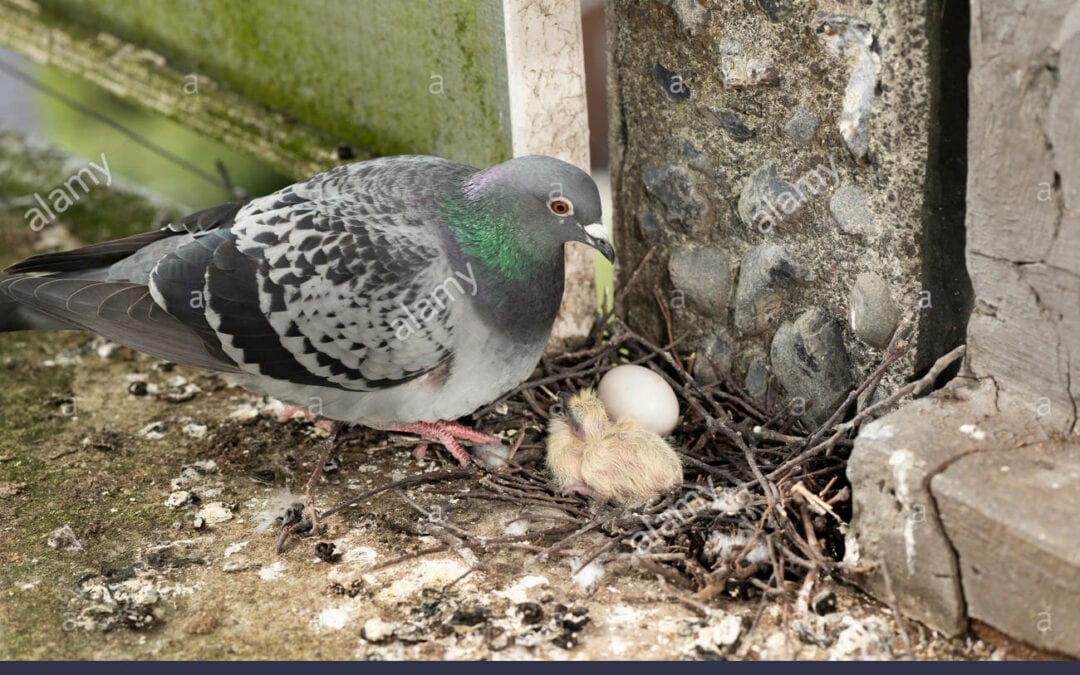
The development of cities and urban sprawl has made room for wildlife inhabiting human environments. Among birds, feral pigeons (Columba livia domestica) are often present in large numbers in the cities. Problems related to pigeon occurrence result in economic loss and health issues for humans. There are different methods of controlling pigeon populations in urban areas. In this study, we compared three techniques that can be used for pigeon pest control. In two urban industrial sites in Hungary, we used trapping, falconry (in both Study Area 1 and 2) and mist-netting (only in Study Area 2) to remove pigeons. We compared the effectiveness and limitations of each method. Our results show that over 105 days in Study Area 1, we managed to remove 173 individual pigeons. We did not find a significant difference between the effectiveness of trapping or falconry. In Study Area 2, the overall number of pigeons removed was 1412 over a period of 150 days. There, we managed to catch significantly more birds by netting than by trapping or falconry, but the latter two did not differ statistically. We recommend a combination of techniques for pigeon control. Mist-netting can be the most effective way for direct pigeon removal, whereas trapping is an easier but less efficient method to catch pigeons. Falconry is the least efficient in pigeon catching and requires the most investments, but the bird of prey may chase the pigeons away for a short time.
Source
Pigeon Patrol Products & Services is the leading manufacturer and distributor of bird deterrent (control) products in Canada. Pigeon Patrol products have solved pest bird problems in industrial, commercial, and residential settings since 2000, by using safe and humane bird deterrents with only bird and animal friendly solutions. At Pigeon Patrol, we manufacture and offer a variety of bird deterrents, ranging from Ultra-flex Bird Spikes with UV protection, Bird Netting, 4-S Bird Gel and the best Ultrasonic and audible sound devices on the market today.
Voted Best Canadian wholesaler for Bird Deterrent products ten years in a row.
Contact us at 1- 877– 4– NO-BIRD, (604) 585-9279 or visit our website at www.pigeonpatrol.ca
Pigeon/Pigeon Patrol / Pigeons Roosting / Vancouver Pigeon Control /Bird Spikes / Bird Control / Bird Deterrent / Pigeon Deterrent? Surrey Pigeon Control / Pest /Seagull deterrent / Vancouver Pigeon Blog / Birds Inside Home / Pigeons in the cities / Ice Pigeons/ What to do about pigeons/ sparrows , Damage by Sparrows, How To Keep Raccoons Away, Why Are Raccoons Considered Pests/ De-fence / Pigeon Nesting/ Bird Droppings / Pigeon Dropping/ woodpecker control/ Professional Bird Control Company/ Keep The Birds Away/ Birds/rats/ seagull/pigeon/woodpecker/ dove/sparrow/pidgeon control/pidgeon problem/ pidgeon control/flying rats/ pigeon Problems/ bird netting/bird gel/bird spray/bird nails/ bird guard
by Pigeon Patrol | Mar 7, 2022 | MBCA, pet bird, Pigeon Control, Pigeon Droppings, Pigeon Patrol's Services, Pigeon Predators
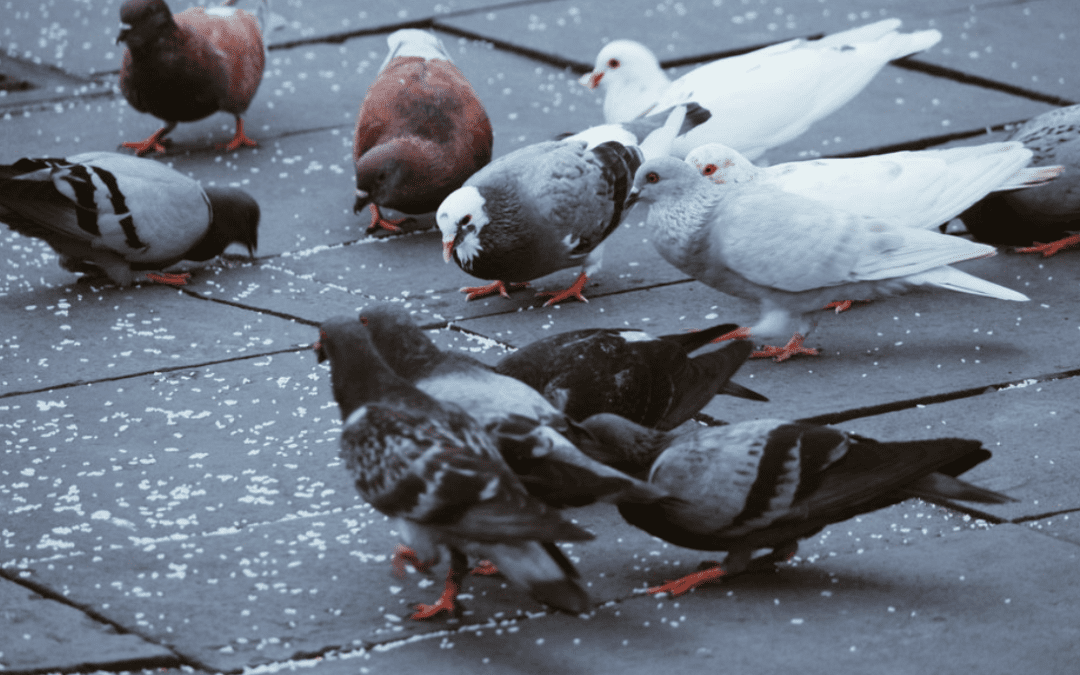
The world is urbanising rapidly, and it is predicted that by 2050, 66% of the global human population will be living in urban areas. Urbanisation is characterised by land-use changes such as increased residential housing, business development and transport infrastructure, resulting in habitat loss and fragmentation. Over the past two decades, interest has grown in how urbanisation influences fundamental aspects of avian biology such as life-history strategies, survival, breeding performance, behaviour and individual health. Here, we review current knowledge on how urbanisation influences the nesting biology of birds, which determines important fitness-associated processes such as nest predation and community assembly. We identify three major research areas: (i) nest sites of birds in urban areas, (ii) the composition of their nests, and (iii) how these aspects of their nesting biology influence their persistence (and therefore conservation efforts) in urban areas. We show that birds inhabiting urban areas nest in a wide variety of locations, some beneficial through exploitation of otherwise relatively empty avian ecological niches, but others detrimental when birds breed in ecological traps. We describe urban-associated changes in nesting materials such as plastic and cigarette butts, and discuss several functional hypotheses that propose the adaptive value and potential costs of this new nesting strategy. Urban areas provide a relatively new habitat in which to conserve birds, and we show that nestboxes and other artificial nest sites can be used successfully to conserve some, but not all, bird species. Finally, we identify those subject areas that warrant further research attention in the hope of advancing our understanding of the nesting biology of birds in urban areas.
Source
Pigeon Patrol Products & Services is the leading manufacturer and distributor of bird deterrent (control) products in Canada. Pigeon Patrol products have solved pest bird problems in industrial, commercial, and residential settings since 2000, by using safe and humane bird deterrents with only bird and animal friendly solutions. At Pigeon Patrol, we manufacture and offer a variety of bird deterrents, ranging from Ultra-flex Bird Spikes with UV protection, Bird Netting, 4-S Bird Gel and the best Ultrasonic and audible sound devices on the market today.
Voted Best Canadian wholesaler for Bird Deterrent products ten years in a row.
Contact us at 1- 877– 4– NO-BIRD, (604) 585-9279 or visit our website at www.pigeonpatrol.ca
Pigeon/Pigeon Patrol / Pigeons Roosting / Vancouver Pigeon Control /Bird Spikes / Bird Control / Bird Deterrent / Pigeon Deterrent? Surrey Pigeon Control / Pest /Seagull deterrent / Vancouver Pigeon Blog / Birds Inside Home / Pigeons in the cities / Ice Pigeons/ What to do about pigeons/ sparrows , Damage by Sparrows, How To Keep Raccoons Away, Why Are Raccoons Considered Pests/ De-fence / Pigeon Nesting/ Bird Droppings / Pigeon Dropping/ woodpecker control/ Professional Bird Control Company/ Keep The Birds Away/ Birds/rats/ seagull/pigeon/woodpecker/ dove/sparrow/pidgeon control/pidgeon problem/ pidgeon control/flying rats/ pigeon Problems/ bird netting/bird gel/bird spray/bird nails/ bird guard
by Pigeon Patrol | Mar 7, 2022 | history of pigeons, MBCA, pet bird, Pigeon Control, Pigeon Droppings, Pigeon Patrol's Services, Pigeon Predators
Impatient for winter to be over, we had put on our boots to go seeking signs of spring but had instead found a sign of the previous summer. We must have walked past this thicket a score of times last summer without ever noticing birds around it, but here is a bird’s nest among the branches, at eye level, in plain sight now that winter has stripped away the last of the leaves.
It would be easy enough to pass it by. If we pause to look closely, though, it becomes more intriguing. We may never know what kind of bird built the nest, because there are several species here that might construct this type: an open-cup shape lashed into a three-way fork in an upright twig. But it inspires a sense of wonder beyond mere questions about identification. Somehow a small bird knew how to gather the myriad materials for this structure. Somehow this bird arranged scores of small pieces of twig and grass and weed and bark, weaving them together with such precision that the nest is still sturdy and secure after being exposed to the winter’s rain and wind. Considered in the proper light, this little bundle of dried vegetation is really a small miracle.
“My favorite palette is the color of winter decay,” says photographic artist Sharon Beals. It’s 7 a.m. in San Francisco, but she is already on her way out the door to work on her project for the day. Much of her professional photography takes her outside, “wandering a river for hours, looking at bugs, muck, and minnows,” as she says, or photographing native plants or their pollinators. Today, though, she will spend up to 11 hours in a museum, examining birds’ nests and photographing many of them. The results will add to her growing collection of nest portraits—extraordinarily detailed images that have already wowed scientists and artists alike.
Beals became immersed in this subject almost by chance when a friend, knowing her fascination with the subtle minutiae of nature, brought her an abandoned bird nest. Studying it, she knew she had to find a way to capture its intricacy. Using a very high-resolution flatbed scanner, she made images of this nest, and then another, and another.
But problems loomed. For one thing, she says, after turning a nest upside down on the scanner, she might have to spend hours cleaning all the dust that falls from the nests off the images in Photoshop. For another, as she discovered, possessing these nests was illegal.
Beals overcame the first challenge by moving to very high-resolution cameras and by taking multiple exposures, focusing on different planes, then melding the images together. But the second problem was tougher. The laws protecting U.S. birds are far more sweeping than most people imagine. Without special permits, it is illegal for private citizens to possess most species of native birds, or their feathers, or their eggs, or even their abandoned nests. The laws may seem excessive, but they were enacted at a time when our birds were under siege from commercial plume hunters and recreational egg collectors, and they were written to be wide-ranging and inclusive. Rather than give up or break the law, Beals turned to the Museum of Vertebrate Zoology and the California Academy of Sciences, and soon had permission to come in and photograph nests from among the hundreds in the institutions’ specimen collections.
The popular image of natural history museums may be of a handful of stuffed creatures on public display in glass cases, but most keep the majority of their specimens in research collections out of public view. The nests at the California Academy of Sciences were mostly collected decades ago, at a time when relatively little was known about birds’ habits. These specimens provided basic data points then, and they continue to be scientifically valuable today.
For Sharon Beals, they also provided a treasure trove of artistic possibilities. She spent days at the academy, examining and photographing nests. “These first images gave me the satisfaction of seeing the materials on almost a cellular level,” she says. “I loved the quiet, subdued palette, and the shapes created by the form-follows-function art of the nest builders themselves. I loved the amazing variety of content and construction, the way the materials became like line and brushstroke.” When she began printing the images larger than life, on sheets of fine etching paper two feet across, others shared her enthusiasm. Visitors to her studio were fascinated. Almost invariably they became intensely curious. Beals had found a way to make people see the nests, truly see them, as cause for wonder and for endless questions about the birds that built them.
Birds do not live in their nests the way humans live in their houses. A few species, such as some wrens, will use them as shelters to sleep in at night, but they are the exceptions. For the majority, the nest is just a cradle. Built to hold the eggs and the helpless young, it is abandoned once the young birds are old enough to leave. In most cases it is never used again.
There is evidence that some dinosaurs built primitive nests on the ground and even cared for their hatchlings there. Today many creatures besides birds—from wasps to mice to alligators—shelter their young or their eggs in nests that they construct themselves. But for variety of placement and material, and for sheer complexity of design, nothing can compare with birds’ nests. Especially among smaller birds, nests are often remarkable for their inventive use of local materials to provide support, shelter, and camouflage. The nests are tiny marvels of disposable architecture.
The skill to create them comes almost entirely from instinct (although there is evidence that young adult birds, making their first nests, do improve with practice). Studies have shown that at least some birds, hand-raised in captivity, can build a nest typical of their own species without ever having seen one. The instinct to do this must be flexible, because the locations and materials available for nests in the wild vary, but it must be based on a considerable amount of precision as well.
Even a small bird’s relatively simple nest may be composed of several kinds of material used for different purposes. For example, a white-crowned sparrow’s may have coarse twigs at the base, finer twigs and weeds intertwined with rootlets and bark strips to form the open cup, dry leaves in the outer edge, and fine grasses and other soft materials molded into an inner lining. And that’s just a simple number. A more complex nest, such as the long hanging pouch of an American oriole, may involve actual weaving or sophisticated knots tied in long plant fibers, and it may take days of intense effort to build.
Most birds are opportunistic when it comes to building materials, and will readily incorporate manmade items into their nests if they fit basic requirements of size and texture. Paper, string, nails, pieces of wire, and bits of fabric regularly show up in the handiwork of suburban birds. In some areas house finches have become a minor nuisance by dismantling nylon window screens to use the strands for their nests.
In many cases, though, the materials chosen must have specific properties. Studies of nesting European starlings have found that the birds were selecting certain plants, such as wild carrot and yarrow, containing chemicals that would inhibit the growth of mites and other parasites. In eastern North America the great crested flycatcher often adds a piece of shed snakeskin, and the power of suggestion imparted may help deter predators or other intruders. Chipping sparrows often use animal hair (gathered in farmyards, or even plucked from startled pets) for their nest lining. Feathers are also ideal for soft, insulating lining material. Big birds like quail or ducks use their own down feathers for this purpose, but swallows and other small birds prefer feathers dropped by larger birds. A truly extreme example of material gathering is practiced by certain tropical swifts, fast-flying small birds that will actually strike much larger birds in midair to knock feathers loose.
As a very general rule, females are the skilled builders. For many species they do all the construction, including some (such as hummingbirds) for which males abdicate any responsibility for helping with the nest or young. In other cases, the male provides the basic foundation and the female adds the detailed lining. A male marsh wren may build 20 or more “dummy nests” around his territory; the female chooses one, adds lining, and uses it as the actual site for the eggs. The male’s building spree is not wasted effort: The presence of all those decoys may provide some protection for the real one, as predators tire of raiding nests that turn out to be empty.
Some of the most impressive nests are also among the smallest. A hummingbird nest is a wondrous creation of tiny plant fibers, mosses, and spiderwebs, so small that a 50-cent piece would completely cover it. It is as soft as felt but strong, with the spiderwebs making it pliable enough to stretch and expand as the rambunctious young hummers grow and exercise in it. Many hummingbirds will camouflage the outside with bits of lichen. At a distance such an object looks, for all the world, like a natural bump or knob on the branch, thereby deceiving potential predators in the mother bird’s absence.
At the opposite extreme are eagles. A pair of bald eagles may use the same nest for years, adding material to it annually until it becomes huge (an extreme example can reach a depth of 20 feet and a weight exceeding two tons). Such a nest is merely a ramshackle heap of sticks, hardly an admirable piece of avian architecture, but it does have its admirers: House sparrows and other small birds sometimes tuck their own nests into the lower crevices, and great horned owls may commandeer the entire nest, perhaps even driving the eagles from their aerie.
The finest nests are crafted by smaller birds, however, and the majority are never reused, not even by their original builders. It seems all the more remarkable that birds should create these intricate structures for such ephemeral use. It seems ironic, too, that most of us are not legally allowed to possess these nests, even after they have been abandoned. But when we are lucky enough to find them in the wild, or see them revealed in works of photographic art like the ones reproduced here, we cannot avoid holding them and the birds that made them in absolute awe.
Source
Pigeon Patrol Products & Services is the leading manufacturer and distributor of bird deterrent (control) products in Canada. Pigeon Patrol products have solved pest bird problems in industrial, commercial, and residential settings since 2000, by using safe and humane bird deterrents with only bird and animal friendly solutions. At Pigeon Patrol, we manufacture and offer a variety of bird deterrents, ranging from Ultra-flex Bird Spikes with UV protection, Bird Netting, 4-S Bird Gel and the best Ultrasonic and audible sound devices on the market today.
Voted Best Canadian wholesaler for Bird Deterrent products ten years in a row.
Contact us at 1- 877– 4– NO-BIRD, (604) 585-9279 or visit our website at www.pigeonpatrol.ca
Pigeon/Pigeon Patrol / Pigeons Roosting / Vancouver Pigeon Control /Bird Spikes / Bird Control / Bird Deterrent / Pigeon Deterrent? Surrey Pigeon Control / Pest /Seagull deterrent / Vancouver Pigeon Blog / Birds Inside Home / Pigeons in the cities / Ice Pigeons/ What to do about pigeons/ sparrows , Damage by Sparrows, How To Keep Raccoons Away, Why Are Raccoons Considered Pests/ De-fence / Pigeon Nesting/ Bird Droppings / Pigeon Dropping/ woodpecker control/ Professional Bird Control Company/ Keep The Birds Away/ Birds/rats/ seagull/pigeon/woodpecker/ dove/sparrow/pidgeon control/pidgeon problem/ pidgeon control/flying rats/ pigeon Problems/ bird netting/bird gel/bird spray/bird nails/ bird guard