by Pigeon Patrol | Jun 4, 2014 | Animal Deterrent Products, Bird Deterrent Products, Pigeons in the News, UltraSonic Bird Control
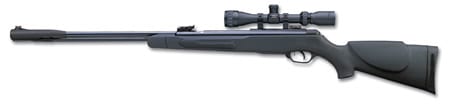
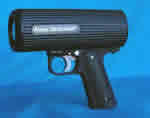
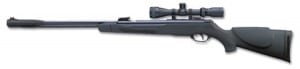
 Laser technology is now being used more commonly as a bird deterrent and research into effective scaring techniques using low-power lasers is ongoing. The most common type of laser used for bird control is the handheld laser which resembles a small handgun. Other formats exist including a rifle which is designed to produce a narrow spot of light for more precise targeting and a laser ‘stick’ which resembles a conventional torch. The main benefits of a laser is that the product is silent, environmentally safe, simple to use and non-lethal. The main disadvantage of a laser is that the product is considered to be ineffective in daylight, certainly in strong sunlight, and has its main use between dusk and dawn. This restricts its use to the control of those species that are active during darkness or dawn/dusk as well as for the control of roosting birds.
The laser is not commonly associated with pigeon control due to the fact that the pigeon is not active during the hours of darkness or at dusk and therefore the product has been more or less ignored by the pigeon control industry. As the laser is developed and as trials are undertaken to establish a broader application for the product, pigeon control will inevitably be a major consideration. If the laser could be used to effect as a roost inhibitor, or as a scaring device in low-light conditions, the product would undoubtedly be used far more extensively for the purposes of pigeon control.
One serious problem associated with the use of lasers as a bird scaring device is the fact that the product can be indiscriminate when used with a wide beam and in darkness. In low-light conditions, at dusk or dawn for example, the beam can be trained on the target species with ease ensuring that there is no ‘over-spill’ that may disturb non-target species or birds or animals. In darkness, however, the beam from the laser is visible over a large area and may disturb non-target species birds or possibly protected species of birds. For example, if a laser was used in an urban environment to scare pigeons and if protected species such as swallows or house martins were scared sufficiently to abandon their nests, there would be serious legal consequences for the property owner.
The laser would appear to have limited applications as a bird scaring device due to the fact that the product is considerably less effective when used in daylight. Although the ‘Avian Dissuader’ was found to be extremely effective when used to control pigeons, in daylight hours, whilst roosting and perching on a food processing plant in New Zealand, the consensus suggests that the product is less than effective when used as a daytime scaring device.
As with most scaring products there are also concerns in respect of habituation and therefore the product will almost certainly need to be used in conjunction with other scaring devices and anti-perching products where appropriate. The laser is clearly species-specific and will be completely ineffective with some species but surprisingly effective with others. The laser has been particularly effective when used to control Canada Geese and other waterfowl such as cormorants but the product clearly has limitations when used in an urban application. The laser is also context-specific confirming that the product will not necessarily offer the same degree of scaring on each site where it is used. Weather conditions and the availability of alternative sources of food and roosts will both impact on the success of the laser.
The laser is recommended for use as a roost inhibitor but it is clear that the product can only be effective with nocturnal species if used in darkness, thus reducing the versatility of the product. There are also concerns voiced byDEFRA that the laser can cause non-selective disturbance when used in darkness due to the fact that the light beam is visible over a large area. This could cause serious issues should the product be used in the vicinity of rare or protected species of breeding birds. It should also be pointed out that the light beam could also cause human disturbance when used in darkness.
The laser has its main application in rural environments, on water and on airfields but not in urban environments. Although the laser appears to have been successful in moving pigeons from their perches on a food processing plant, it is unlikely that the product could be used to effect in a town or city centre or in residential areas.
About Pigeon Patrol:
Pigeon Patrol Products & Services is the leading manufacturer and distributor of bird deterrent (control) products in Canada. Pigeon Patrol products have solved pest bird problems in industrial, commercial, and residential settings since 2000, by using safe and humane bird deterrents with only bird and animal friendly solutions. At Pigeon Patrol, we manufacture and offer a variety of bird deterrents, ranging from Ultra-flex Bird Spikes with UV protection, Bird Netting, 4-S Gel and the best Ultrasonic and audible sound devices on the market today.
Voted Best Canadian wholesaler for Bird Deterrent products four years in a row.
Contact Info: 1- 877– 4– NO-BIRD (www.pigeonpatrol.ca)
The information on this blog is for personal use only. Content for this blog obtained from other websites is not being used for any commercial reasons whatsoever as per the copyright statement on the Pigeon Control Resource Centre’s website. http://www.pigeoncontrolresourcecentre.org/ Special thanks for the people and companies that helped gather this information. This information is to be used for reference only.
by Pigeon Patrol | Jun 4, 2014 | Bird Deterrent Products, Bird Netting, Pigeons in the News
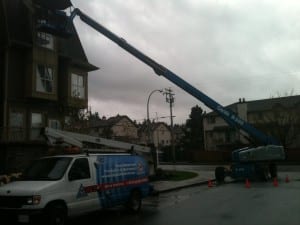
 Olympia firefighters stepped up to help on Sunday when a duck flew right into the backstop netting at the Capitol High School baseball field and got stuck about 40 feet from the ground.
David Supensky of For Heaven’s Sake Animal Rescue and Rehabilitation said they got a call about the stuck duck and when he arrived at the scene with a ladder, he realized he wouldn’t be able to reach the bird.
He called the Olympia Fire Department and they came out with their 100-foot ladder.
“They cut the netting and put the bird in a crate and brought it down,” Supensky said.
Supensky said the bird had some abrasions on its left wing. Supensky’s wife removed the netting from the bird’s wing and kept it overnight.
The next day David released the bird back in Yauger Park, which is near the ball field.
“It went right back into the water,” Supensky said. “A happy ending.”
About Pigeon Patrol:
Pigeon Patrol Products & Services is the leading manufacturer and distributor of bird deterrent (control) products in Canada. Pigeon Patrol products have solved pest bird problems in industrial, commercial, and residential settings since 2000, by using safe and humane bird deterrents with only bird and animal friendly solutions. At Pigeon Patrol, we manufacture and offer a variety of bird deterrents, ranging from Ultra-flex Bird Spikes with UV protection, Bird Netting, 4-S Gel and the best Ultrasonic and audible sound devices on the market today.
Voted Best Canadian wholesaler for Bird Deterrent products four years in a row.
Contact Info: 1- 877– 4– NO-BIRD (www.pigeonpatrol.ca)
by Pigeon Patrol | Jun 4, 2014 | Bird Deterrent Products, Bird Netting, Pigeon Spikes, Pigeons in the News, UltraSonic Bird Control
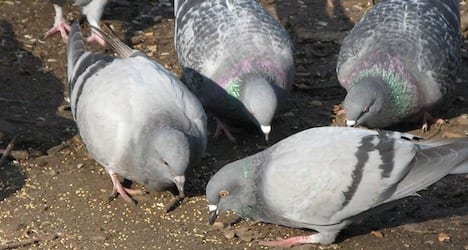
 A Harris hawk has been released into the skies above Watford town centre to terrify pigeons away from the newly revamped Parade.Officials said the hawk, called Angel, has been trained not to maul the pigeons but only scare them away and described the method as the most “humane” available.
“Harris hawks are relatively timid and will not hunt anything much bigger or faster than them, but they will make urban pigeons feel suitably unwelcome.”
Alongside its aerial assault, the council is also mounting an information campaign against town centre pigeons.
“By flying a Harris Hawk trained not to harm the pigeons, just deter them, we’ve found an effective but humane method of pest control.”
Officers have been handing out leaflets encouraging people not to feed pigeons and the council has also commissioned a video, which compares the bird to rats.
The anti-pigeon initiative comes as the redevelopment of The Parade nears completion. Part of the project will see the northern end of the pedestrianised area de-cluttered and opened up to be used for cultural events.
About Pigeon Patrol:
Pigeon Patrol Products & Services is the leading manufacturer and distributor of bird deterrent (control) products in Canada. Pigeon Patrol products have solved pest bird problems in industrial, commercial, and residential settings since 2000, by using safe and humane bird deterrents with only bird and animal friendly solutions. At Pigeon Patrol, we manufacture and offer a variety of bird deterrents, ranging from Ultra-flex Bird Spikes with UV protection, Bird Netting, 4-S Gel and the best Ultrasonic and audible sound devices on the market today.
Voted Best Canadian wholesaler for Bird Deterrent products four years in a row.
Contact Info: 1- 877– 4– NO-BIRD (www.pigeonpatrol.ca)
by Pigeon Patrol | May 4, 2014 | 4-S Gel Bird repellent, Bird Deterrent Products, Bird Netting, Pigeon Patrol's Services, Pigeon Spikes, Pigeons in the News, UltraSonic Bird Control
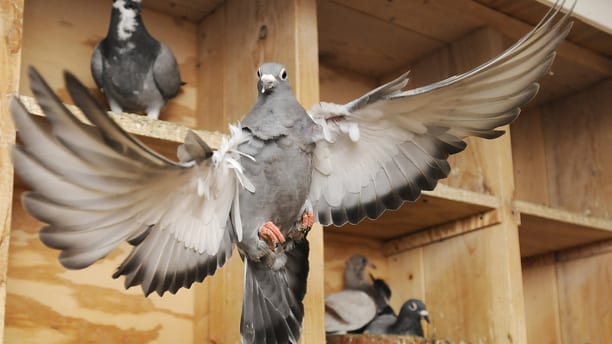
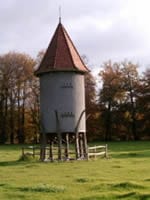
 The use of artificial breeding facilities (ABFs) such as dovecotes or pigeon lofts as a method of pigeon control is becoming increasingly popular in Europe with many users experiencing astonishing results. This control was pioneered by the Pigeon Control Advisory Service (PiCAS International) in the 1970s as a means of humanely and naturally controlling pigeon flock size without the need to resort to invasive and ineffective lethal controls. In the 1980s the scientific world took an interest in the use of ABFs to control pigeon populations with research* proving conclusively that lethal controls, when used on pigeons, were not only ineffective but may actually have the effect of increasing pigeon flock size. The same research found that ABFs were a highly effective means of reducing pigeon flock size.
The use of ABFs as a method of pigeon control is one of the most effective and cost-effective methods of reducing the impact of entrenched area-wide pigeon-related problems for property owners. The principle of this method of control is to provide an artificial breeding facility in which pigeons are encouraged to roost and breed and from which newly laid eggs are removed and substituted with dummy eggs. When eggs are removed they must always be replaced with dummy eggs to ensure that the hen bird does not continue to produce more eggs. If the hen does lay and re-lay every time her eggs are removed this may result in a calcium deficiency in the bird and as the goal is a small and healthy flock of pigeons, health-related issues must be prioritised. ABFs come in two forms; loft-type facilities that would normally be provided on or in a building anddovecote facilities that might be provided in a public park or in similar urban areas where pigeons can be accommodated and tolerated without causing problems.
About Pigeon Patrol:
Pigeon Patrol Products & Services is the leading manufacturer and distributor of bird deterrent (control) products in Canada. Pigeon Patrol products have solved pest bird problems in industrial, commercial, and residential settings since 2000, by using safe and humane bird deterrents with only bird and animal friendly solutions. At Pigeon Patrol, we manufacture and offer a variety of bird deterrents, ranging from Ultra-flex Bird Spikes with UV protection, Bird Netting, 4-S Gel and the best Ultrasonic and audible sound devices on the market today.
Voted Best Canadian wholesaler for Bird Deterrent products four years in a row.
Contact Info: 1- 877– 4– NO-BIRD (www.pigeonpatrol.ca)
The information on this blog is for personal use only. Content for this blog obtained from other websites is not being used for any commercial reasons whatsoever as per the copyright statement on the Pigeon Control Resource Centre’s website. http://www.pigeoncontrolresourcecentre.org/ Special thanks for the people and companies that helped gather this information. This information is to be used for reference only.
by Pigeon Patrol | Apr 20, 2014 | 4-S Gel Bird repellent, Animal Deterrent Products, Bird Deterrent Products, Bird Netting, Pigeon Patrol's Services, Pigeon Spikes, Pigeons in the News, UltraSonic Bird Control
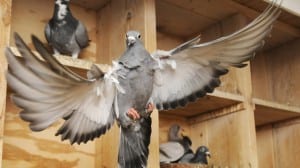
 The need to control feral pigeon populations in urban areas has been the subject of intense debate for decades with town and city councils making little impact on the problem due to lack of investment and, in many cases, a reluctance to think laterally. Although the feral pigeon has been a common feature of urban life for the last 100 years there is no doubt that urban flocks are now growing faster than their numbers can be controlled. The reason for this unprecedented rise in feral pigeon numbers is due, almost exclusively, to the availability of food and the methods used to control the birds. Other factors such as the availability of good roosting and breeding facilities also play their part.
Today the feral pigeon can be seen in virtually every area of the globe other than the two polar icecaps, exploiting man for food and his buildings for the purposes of roosting and breeding. Man has attempted to control the feral pigeon by using a variety of lethal controls, includingpoisons, narcotics, cage traps and shooting, and yet the pigeon has shrugged off all these attempts at population control and continued to live and breed in close association with man undeterred. Lethal controls have been complemented by an arsenal of deterrents, provided in an effort to deny or restrict roosting and perching opportunities (thereby reducing guano-related problems). Anti-roosting systems such as anti-roosting spikes have proved extremely effective at displacing pigeons from areas that pigeons roost and nest; but may not be a total solution as pigeons may simply move to other areas nearby.
So what other options are available to control and contain the problem?
The use of lethal control as a means of controlling and reducing pigeon populations has been found to have no effect in terms of reducing pigeon flock size.
Breeding Control
The principle of a scheme using artificial breeding facilities is to provide a pigeon loft ordovecote in which feral pigeons can be encouraged to roost and breed and from which their eggs can be removed as laid and replaced with dummy eggs. This method of breeding control has been found to be extremely effective in reducing flock size and maintaining that reduction indefinitely.
If public feeding is identified to be the cause of the problem a system of controls must be provided that take the impact of persistent feeding into consideration at the same time as identifying large-scale pigeon roosts and closing them down.
About Pigeon Patrol:
Pigeon Patrol Products & Services is the leading manufacturer and distributor of bird deterrent (control) products in Canada. Pigeon Patrol products have solved pest bird problems in industrial, commercial, and residential settings since 2000, by using safe and humane bird deterrents with only bird and animal friendly solutions. At Pigeon Patrol, we manufacture and offer a variety of bird deterrents, ranging from Ultra-flex Bird Spikes with UV protection, Bird Netting, 4-S Gel and the best Ultrasonic and audible sound devices on the market today.
Voted Best Canadian wholesaler for Bird Deterrent products four years in a row.
Contact Info: 1- 877– 4– NO-BIRD (www.pigeonpatrol.ca)
The information on this blog is for personal use only. Content for this blog obtained from other websites is not being used for any commercial reasons whatsoever as per the copyright statement on the Pigeon Control Resource Centre’swebsite. http://www.pigeoncontrolresourcecentre.org/ Special thanks for the people and companies that helped gather this information. This information is to be used for reference only.