by Pigeon Patrol | May 25, 2021 | Bird Law, Columbidae, pet bird, Pigeon Predators, Pigeons in the News, Sparrows
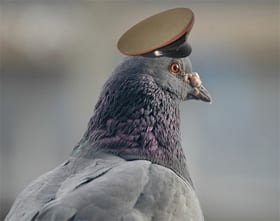
Found in a field in mid-September by a couple out hiking in Ingersheim, northeastern France, the message was sent from one German military officer to another in 1910, when the area was still part of Germany, according to Dominique Jardy, curator of the nearby Linge Memorial museum.
Jardy told CNN the message was folded up inside a small aluminum capsule and the script is difficult to decipher.
A German friend, whom Jardy asked to translate the message, said the officer, who was based in the town of Colmar, is recounting German military exercises in the area.
“Platoon Potthof receives fire as they reach the western border of the parade ground, platoon Potthof takes up fire and retreats after a while,” the message reads, according to the AFP news agency. “In Fechtwald half a platoon was disabled. Platoon Potthof retreats with heavy losses.”
These losses are an estimate based on the war games rather than actual deaths, said Jardy, explaining that this is common practice during military exercises.
Difficulty in reading the script means there is some debate about whether the message was sent in 1910 or 1916. However, Jardy is convinced it is the former because he is not aware of any military maneuvers around Colmar in 1916, and the note uses terms specific to military exercises rather than warfare.
Artifacts like the message are almost never found today, Jardy said.
“It’s really very, very, very rare,” he said. “It’s really exceptional.”
The message will now go on display at the Linge Memorial museum, which tells the story of a battle between French and German forces in 1915.
France ceded Ingersheim and the surrounding area to Germany in 1871 after the Franco-German war, but the territory changed hands again in 1918 with the Allied victory in World War I.
Pigeon Patrol Products & Services is the leading manufacturer and distributor of bird deterrent (control) products in Canada. Pigeon Patrol products have solved pest bird problems in industrial, commercial, and residential settings since 2000, by using safe and humane bird deterrents with only bird and animal friendly solutions. At Pigeon Patrol, we manufacture and offer a variety of bird deterrents, ranging from Ultra-flex Bird Spikes with UV protection, Bird Netting, 4-S Bird Gel and the best Ultrasonic and audible sound devices on the market today.
Voted Best Canadian wholesaler for Bird Deterrent products ten years in a row.
Contact us at 1- 877– 4– NO-BIRD, (604) 585-9279 or visit our website at www.pigeonpatrol.ca
Pigeon/Pigeon Patrol / Pigeons Roosting / Vancouver Pigeon Control /Bird Spikes / Bird Control / Bird Deterrent / Pigeon Deterrent? Surrey Pigeon Control / Pest /Seagull deterrent / Vancouver Pigeon Blog / Birds Inside Home / Pigeons in the cities / Ice Pigeons/ What to do about pigeons/ sparrows , Damage by Sparrows, How To Keep Raccoons Away, Why Are Raccoons Considered Pests/ De-fence / Pigeon Nesting/ Bird Droppings / Pigeon Dropping/ woodpecker control/ Professional Bird Control Company/ Keep The Birds Away/ Birds/rats/ seagull/pigeon/woodpecker/ dove/sparrow/pidgeon control/pidgeon problem/ pidgeon control/flying rats/ pigeon Problems/ bird netting/bird gel/bird spray/bird nails/ bird guard
by Pigeon Patrol | May 17, 2021 | Bird Netting, Pigeon Patrol's Services, Pigeon Predators, Pigeon Spikes, Pigeons, Pigeons in the News
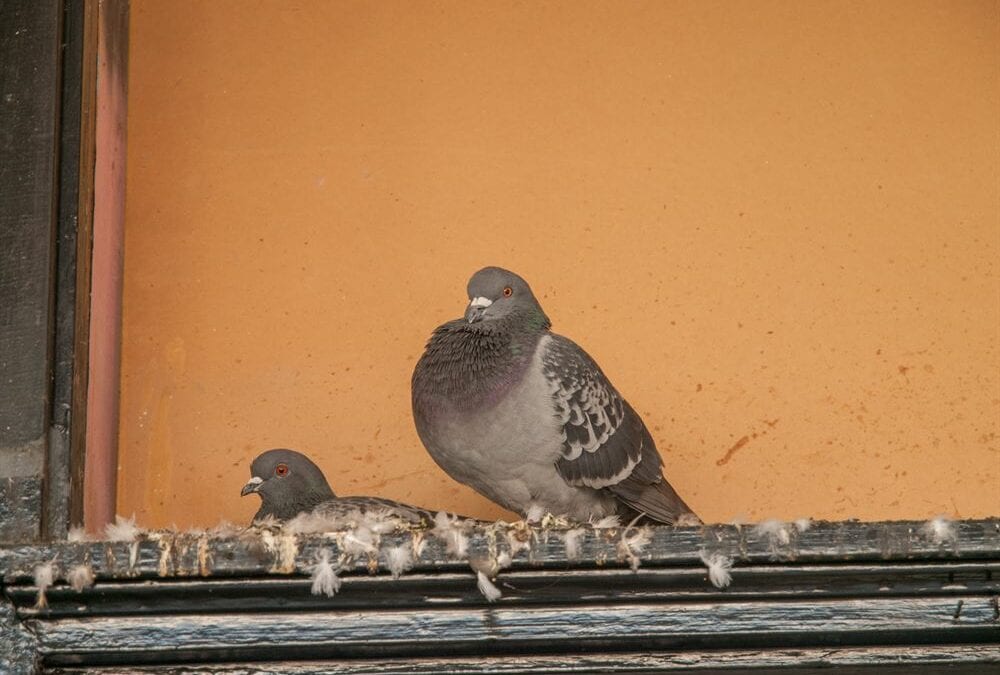
When pigeons live on our buildings and deface it, it is possible to remove the birds by excluding them (netting) from the area, but we don’t need to kill them. You should make it a priority to clean the area’s they have been since pigeons do carry mites and you don’t want the mites going in your building when the pigeons are gone.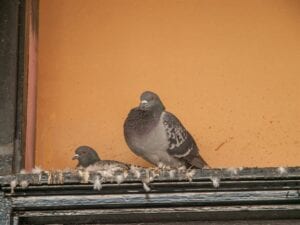
Pigeons are frequently called rats with wings. The term “rats with wings” came from a 1980 play, “Stardust Memories” starring Woody Allen. Allen used the term in the movie and apparently someone with a vested interest in misleading the public decided to use it in a campaign to drum up business for pigeon control. The facts are just the opposite. Yes, there are some diseases that can be transmitted by pigeons, but no more so than any other bird, including such popular pets as parakeets, canaries, etc.
They do have their attributes. During World War I, pigeons carried thousands of messages that saved many hundreds of lives. In World War II pigeons continued to be used. Radios were frequently not working due to damage or when unfavorable terrain rendered them almost useless. Pigeons continued to fly through enemy fire, and amazingly 95% of them completed their missions. One pigeon in particular, named “Cher Ami” was a World War I Carrier Pigeon, one of 600 birds owned and flown by the U.S. Signal Corps. Cher Ami was originally bred by the British Signal Corps. He was transferred to the Americans after the war on Oct. 27, 1918.
Cher Ami delivered 12 important messages within the American sector at Verdun, France. On his last mission, Cher Ami, shot through the breast by enemy fire, managed to return to his loft. A message capsule was found dangling from the ligaments of one of his legs that had also been shattered by enemy fire. The message he carried was from Major Whittlesey’s “Lost Battalion” of the 77th Infantry Division that had been isolated from other American forces. Just a few hours after the message was received, 194 survivors of the battalion were safe behind American lines. Cher Ami was awarded the French “Croix de Guerre” with Palm for his heroic service between the forts of Verdun. He died in 1919 as a result of his battle wounds. Cher Ami was later inducted into the Racing Pigeon Hall of Fame in 1931 and received a gold medal from the Organized Bodies of American Racing Pigeon Fanciers in recognition of his extraordinary service during World War I.
Pigeons continued their valiant service during World War II and the Korean War. The Dickin Medal for Valor, an award only for animals, was given to 31 pigeons in World War II, more than any other animal. (The next closest animals were dogs, with 8 medals).
Source
Pigeon Patrol Products & Services is the leading manufacturer and distributor of bird deterrent (control) products in Canada. Pigeon Patrol products have solved pest bird problems in industrial, commercial, and residential settings since 2000, by using safe and humane bird deterrents with only bird and animal friendly solutions. At Pigeon Patrol, we manufacture and offer a variety of bird deterrents, ranging from Ultra-flex Bird Spikes with UV protection, Bird Netting, 4-S Bird Gel and the best Ultrasonic and audible sound devices on the market today.
Voted Best Canadian wholesaler for Bird Deterrent products ten years in a row.
Contact us at 1- 877– 4– NO-BIRD, (604) 585-9279 or visit our website at www.pigeonpatrol.ca
Pigeon/Pigeon Patrol / Pigeons Roosting / Vancouver Pigeon Control /Bird Spikes / Bird Control / Bird Deterrent / Pigeon Deterrent? Surrey Pigeon Control / Pest /Seagull deterrent / Vancouver Pigeon Blog / Birds Inside Home / Pigeons in the cities / Ice Pigeons/ What to do about pigeons/ sparrows , Damage by Sparrows, How To Keep Raccoons Away, Why Are Raccoons Considered Pests/ De-fence / Pigeon Nesting/ Bird Droppings / Pigeon Dropping/ woodpecker control/ Professional Bird Control Company/ Keep The Birds Away/ Birds/rats/ seagull/pigeon/woodpecker/ dove/sparrow/pidgeon control/pidgeon problem/ pidgeon control/flying rats/ pigeon Problems/ bird netting/bird gel/bird spray/bird nails/ bird guard
by Pigeon Patrol | May 10, 2021 | Bird Deterrent Products, Bird Law, Bird Netting, Bird Spikes, Columbidae, Pigeon Predators, Pigeon Spikes
Most of us love having backyard birds to watch and to feed. The music of songbirds is a sure sign of spring. On the other hand, bird damage to lawns can be extensive. If you’re finding small holes in your grass and you see a lot of birds around, the damage is probably caused by birds foraging for food. There are some ways you can keep birds from digging up lawn and grass. Read on to learn more.
Why are Birds Digging up my Lawn?
It’s not hard to identify bird damage to lawns. If you see a lot of birds in your yard and you find small, about one-inch (2.5-cm.) holes in the turf, it’s most likely bird-related damage. What are birds digging for in your lawn? The phenomenon of birds digging holes in lawns has an easy explanation: food. They’re looking for tasty snacks, so if you’re seeing a lot of bird damage, it means you have an insect problem. Basically, your lawn is the best restaurant around because it has so many bugs. Birds are simply foraging for grubs, worms, and insects. The good news about this is that the grubs and insects will actually do more damage to your lawn than the birds will, and the birds are helping you control the population.
How to Keep Birds from Digging up Lawn
If you want to avoid the bird damage of small holes all over your lawn, you have to get rid of the insect pests. To get rid of your bug problem, invest in a pesticide, preferably something natural. You can either have it applied by a professional lawn company or you can do it yourself. It is important to time the application. If you have grubs, for instance, you need to apply in late spring or early summer. It’s also important to time application to avoid harming the birds. Apply the pesticide in late afternoon so it will be dry by the next morning when the birds reappear to search for breakfast. If you prefer not to have birds at all around your property, there is little you can do but you can try using a few scare tactics that may keep the birds away.
Source
Pigeon Patrol Products & Services is the leading manufacturer and distributor of bird deterrent (control) products in Canada. Pigeon Patrol products have solved pest bird problems in industrial, commercial, and residential settings since 2000, by using safe and humane bird deterrents with only bird and animal friendly solutions. At Pigeon Patrol, we manufacture and offer a variety of bird deterrents, ranging from Ultra-flex Bird Spikes with UV protection, Bird Netting, 4-S Bird Gel and the best Ultrasonic and audible sound devices on the market today.
Voted Best Canadian wholesaler for Bird Deterrent products ten years in a row.
Contact us at 1- 877– 4– NO-BIRD, (604) 585-9279 or visit our website at www.pigeonpatrol.ca
Pigeon/Pigeon Patrol / Pigeons Roosting / Vancouver Pigeon Control /Bird Spikes / Bird Control / Bird Deterrent / Pigeon Deterrent? Surrey Pigeon Control / Pest /Seagull deterrent / Vancouver Pigeon Blog / Birds Inside Home / Pigeons in the cities / Ice Pigeons/ What to do about pigeons/ sparrows , Damage by Sparrows, How To Keep Raccoons Away, Why Are Raccoons Considered Pests/ De-fence / Pigeon Nesting/ Bird Droppings / Pigeon Dropping/ woodpecker control/ Professional Bird Control Company/ Keep The Birds Away/ Birds/rats/ seagull/pigeon/woodpecker/ dove/sparrow/pidgeon control/pidgeon problem/ pidgeon control/flying rats/ pigeon Problems/ bird netting/bird gel/bird spray/bird nails/ bird guard
by Pigeon Patrol | May 10, 2021 | Columbidae, Doves, pet bird, Pigeon Droppings, Pigeon Predators, Pigeons
This is the last bite of the food portion of NPR Morning Edition host Steve Inskeep’s Revolutionary Road trip from Tunisia to Cairo, in which Steve arrives in Cairo and samples stuffed pigeon.
Dear Salt,
Since my first visit to Egypt in 2011, my NPR colleague Kimberly Adams has been insisting that I try stuffed pigeon. It’s a delicacy in Egypt. I finally took her advice the other night at a Cairo restaurant called the Abu Sid. They serve you the whole bird, with a variety of stuffings; I ordered pigeon stuffed with rice.
The birds are small — small enough that a single order consists of two. There’s probably more rice than meat inside, but the rice was moist. I hope it’s not too much of a cliché to say that the meat tasted like the darker parts of a chicken.
As you know, many Americans are a little shocked to hear about stuffed pigeon because in the United States, pigeons are widely regarded as little more than rats with wings. And this leads to my question:
Roughly how much of the world regards pigeon as a delicacy and how much as a disgusting pest?
Dear Steve,
The short answer seems to be that in most parts of the world, including some fancy U.S. restaurants, young pigeons (squab) are highly prized for the moist, dark, gamey flesh you just tasted.
These avian superstars are the very same species as the Rock Pigeons that drive New Yorkers crazy, says Courtney Humphries, author of Superdove: How the Pigeon Took Manhattan… And the World. But “the main difference between the pigeons on your windowsill and on your plate is: Lifestyle,” Humphries says.
Those juicy little squabs we eat didn’t scavenge the city for garbage.
If you dine on pigeon in the U.S. – whether in Chinatown, Little Italy or a white tablecloth restaurant — your bird probably came from somewhere like the Palmetto Pigeon Plant in South Carolina. This institution, founded in the 1920s, raises hundreds of thousands of squabs every year, as well as Cornish hens and poussin.
And you can be sure that the pigeons you ate in Cairo were raised for the plate too. “Egyptian pigeons are bred only for consumption,” says Anne-Marie Bissada, a Canadian-Egyptian journalist who writes the cooking blog The Egyptian Kitchen. “All throughout the countryside, you can find these little towers that keep all the pigeons,” she says.
But, there are feral pigeons in Egyptian cities, she tells The Salt, and “the pigeons that we hate in North America are just as hated there, too.”
In fact, it seems that once you get a taste for grilled or stuffed pigeon, a pigeon problem won’t be far behind. Andrew Blechman, who wrote Pigeons: The Fascinating Saga of the World’s Most Revered and Reviled Bird, says “the vast majority of today’s feral pigeons can trace their roots to the proliferation of dovecotes across Eurasia. Ancient Rome was populated with feral pigeons nesting on its monuments and homes.” And Courtney Humphries points out that “the street pigeons we see in North America today are here because pigeons were carried over on ships to feed European colonists.”
But whether you love the bird or hate it, The Salt can’t think of a more fitting topic for your your last culinary post from the Revolutionary Road. Pigeons are not just the world’s oldest domesticated bird — more ancient than Ancient Egypt — but a delicacy prized across North Africa, and a food for the poor as well as the powerful.
But, as Andrew Blechman observes, they are also the long time bearers of good and bad news. “It was a pigeon that delivered the results of the first Olympics in 776 B.C., and a pigeon that first brought news of Napoleon’s defeat at Waterloo more than 2,500 years later.”
Now, of course, we have NPR.
Thank you, Steve, and safe travels.
Source
Pigeon Patrol Products & Services is the leading manufacturer and distributor of bird deterrent (control) products in Canada. Pigeon Patrol products have solved pest bird problems in industrial, commercial, and residential settings since 2000, by using safe and humane bird deterrents with only bird and animal friendly solutions. At Pigeon Patrol, we manufacture and offer a variety of bird deterrents, ranging from Ultra-flex Bird Spikes with UV protection, Bird Netting, 4-S Bird Gel and the best Ultrasonic and audible sound devices on the market today.
Voted Best Canadian wholesaler for Bird Deterrent products ten years in a row.
Contact us at 1- 877– 4– NO-BIRD, (604) 585-9279 or visit our website at www.pigeonpatrol.ca
Pigeon/Pigeon Patrol / Pigeons Roosting / Vancouver Pigeon Control /Bird Spikes / Bird Control / Bird Deterrent / Pigeon Deterrent? Surrey Pigeon Control / Pest /Seagull deterrent / Vancouver Pigeon Blog / Birds Inside Home / Pigeons in the cities / Ice Pigeons/ What to do about pigeons/ sparrows , Damage by Sparrows, How To Keep Raccoons Away, Why Are Raccoons Considered Pests/ De-fence / Pigeon Nesting/ Bird Droppings / Pigeon Dropping/ woodpecker control/ Professional Bird Control Company/ Keep The Birds Away/ Birds/rats/ seagull/pigeon/woodpecker/ dove/sparrow/pidgeon control/pidgeon problem/ pidgeon control/flying rats/ pigeon Problems/ bird netting/bird gel/bird spray/bird nails/ bird guard
by Pigeon Patrol | May 10, 2021 | history of pigeons, pet bird, Pigeon Predators, Pigeons
What Is Squab?
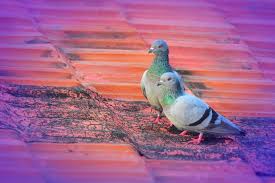
squab are young pigeons that have never flown. For thousands of years, they have been a favorite meal for every stratum of society throughout the world. They were unequivocally the first domesticated poultry, even preceding chicken.
This may surprise twenty-first-century Americans. More often we think of pigeons as annoying denizens of city monuments and buildings. In fact, these are rock doves, a relative of pigeons, and far less edible. Yet squab is considered a most exquisite ingredient in cuisines as distinct as Cantonese, Moroccan, and French. The simple reason for squab’s universal appeal is the delicate, succulent flesh, truly unlike that of any other bird. Squab is a dark-meat bird, like duck and goose, yet the meat is not nearly as fibrous, rendering it far more tender. Its flavor, when properly cooked, is a lush, rich essence, reminiscent of sautéed foie gras, albeit with more texture.
History of Eating Squab
Historically, squab was a reliable and inexpensive source of animal protein. Documents detailing aristocratic banquets frequently show squab used in one or several important courses. B’stilla, a splendid Moroccan phyllo-crusted pie that is sweet, salty, crispy, and juicy at the same time, is traditionally made with squab. It dates from around the 15th century when the Moors were kicked out of Andalusia and migrated to North Africa. Huge molded timbales of pasta, and molded domes of rice made with squab and rich accompaniments, were fashionable 16th and 17th-century Italian culinary showpieces.
Early on, wide circular structures with tapered tops, or dovecotes, were built in fields to attract wild pigeons to roost. Numerous cubbyholes lined the interior, accommodating several breeding pairs. Adult birds forage independently and, being monogamous, return every evening to the same roost throughout their adult life. Other than constructing the residence facility, the squab farmer was required to do little or no maintenance except to harvest the young squab. Using a ladder, one simply plucked them from the nest.
Farming Squab
In the United States, squab are raised primarily in central California and South Carolina. The birds weigh about 1 pound each. Large covered pens are used for up to a dozen breeding pairs. They are capable of producing up to 24 offspring a year. Parents share in all activities required to raise the squab. They build their nest together, incubate the eggs, and feed the young. The male participates willingly as long as the female accommodates him sexually on demand. When she refuses, he pecks her in the middle of the head. As a result, farmers can separate the sexes far more easily than might otherwise be the case.
They just look for the bald birds, which are females.
Sorting young squab from mature pigeons is also an easy activity. The farmer gathers his squab in a crate. When the crate is opened and shaken vigorously, any birds that fly away are not squab but adult pigeons.
No one farms squab to make a fortune. The birds’ notorious sensitivity prevents using modern poultry techniques, like those employed in the factory farming of chickens, to produce enormous flocks at minimal costs. They respond poorly to artificial insemination and inferior-quality feeds laced with animal by-products.
Farm-raised pigeons must have the same food year-round. Their nesting cubbies must never be disturbed. For this reason, the cost of squab, which has remained constant for decades, is expensive relative to mass-marketed chickens. It’s a whole lot of bother to raise good squab. But these succulent birds make a feast fit for a king.
Pigeon Patrol Products & Services is the leading manufacturer and distributor of bird deterrent (control) products in Canada. Pigeon Patrol products have solved pest bird problems in industrial, commercial, and residential settings since 2000, by using safe and humane bird deterrents with only bird and animal friendly solutions. At Pigeon Patrol, we manufacture and offer a variety of bird deterrents, ranging from Ultra-flex Bird Spikes with UV protection, Bird Netting, 4-S Bird Gel and the best Ultrasonic and audible sound devices on the market today.
Voted Best Canadian wholesaler for Bird Deterrent products ten years in a row.
Contact us at 1- 877– 4– NO-BIRD, (604) 585-9279 or visit our website at www.pigeonpatrol.ca
Pigeon/Pigeon Patrol / Pigeons Roosting / Vancouver Pigeon Control /Bird Spikes / Bird Control / Bird Deterrent / Pigeon Deterrent? Surrey Pigeon Control / Pest /Seagull deterrent / Vancouver Pigeon Blog / Birds Inside Home / Pigeons in the cities / Ice Pigeons/ What to do about pigeons/ sparrows , Damage by Sparrows, How To Keep Raccoons Away, Why Are Raccoons Considered Pests/ De-fence / Pigeon Nesting/ Bird Droppings / Pigeon Dropping/ woodpecker control/ Professional Bird Control Company/ Keep The Birds Away/ Birds/rats/ seagull/pigeon/woodpecker/ dove/sparrow/pidgeon control/pidgeon problem/ pidgeon control/flying rats/ pigeon Problems/ bird netting/bird gel/bird spray/bird nails/ bird guard
by Pigeon Patrol | Apr 26, 2021 | Bird Law, Pigeon Control, Pigeon Patrol's Services, Pigeon Predators
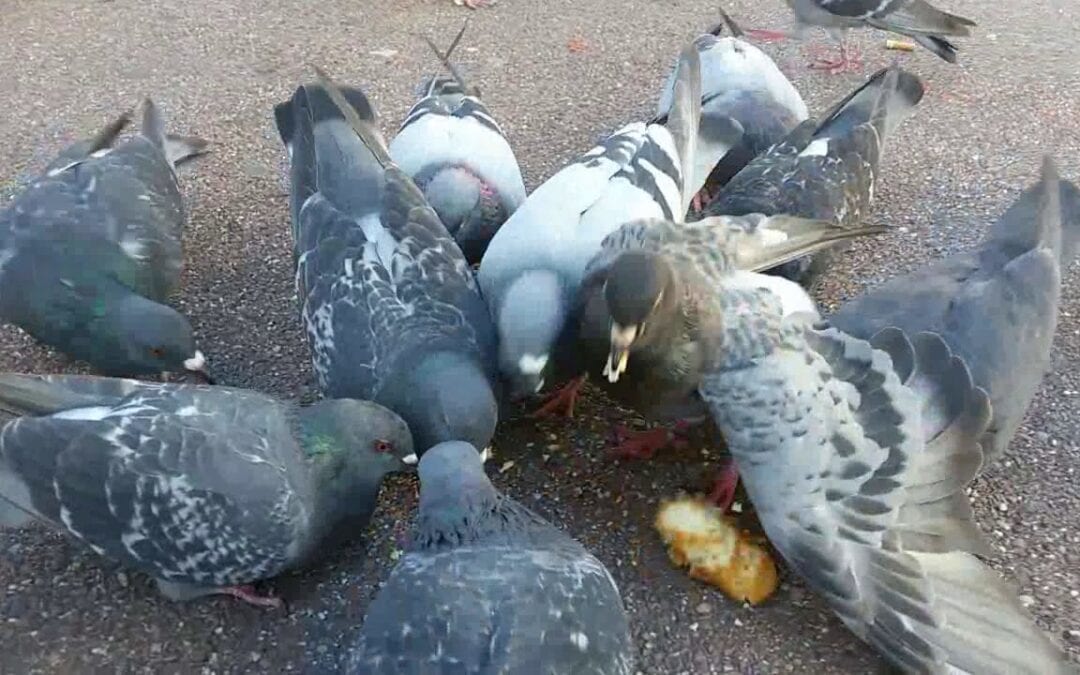
Commonly known as Pigeons, Rock Pigeons are often considered a nuisance by some city officials and some farm businesses.
In cities they congregate in large flocks and can create messes with their droppings.
On farms, eating grains and possible harm to livestock through bacteria and viruses are concerns about these birds.
Many pigeon deterents are available online to prevent nesting in areas they’re not wanted.
Introduced into North America from Europe in the 1600’s, these birds have been associated with humans for thousands of years.
Rock Doves are thought to have been the first domesticated bird, raised for meat as far back as the time of the ancient Egyptians.
Description
Pigeons have different colors due to breeding by humans. They are the descendants of the wild Rock Dove of Europe.
About 13 inches in length with a dark gray head, iridescent neck, with a light gray back and 2 dark wing bars.
Mating – Breeding Habits
Like Mourning Doves, pairs are monogamous, often breeding in consecutive seasons for as long as both birds of a pair live.
Most will attempt to raise several broods each year. Sometimes as many as four or five broods will be raised in a single year.
The breeding season of these birds can be all year provided climate conditions allow. There seems to be some slowing down during the winter months.
Nesting Habits
The nesting habits of Pigeons are a bit unique. The male chooses a site in view of the female, selecting one stick and bringing it back, lays it in front of his mate.
The female who stays at the nesting site accepts the sticks the male brings to her and places them underneath her.
The nest of these birds can be found along building ledges, rafters, beams, under bridges or inside barns.
The nest is saucer-like in shape and made of stems and leaves.
The female may sit on the nest a day or two before the first egg is laid. Generally 2 white eggs are laid.
Both the male and female will incubate but the female will spend the most time on the eggs since she will be on the nest from mid-afternoon to mid-morning.
Incubation last for about 18 days. When the eggs hatch the young are covered in yellow down.
Young pigeons in the nest are referred to as “squabs”
Initially, the squabs are fed what is referred to as crop milk. This is a regurgitated thick liquid food that comes from the parents crops.
At about 10 days the squabs are fed increasing amounts of the food types that adults eat and are no longer dependent on crop milk.
The young will double in size in a day and a half. Making them one of the fastest growing vertebrate in the world.
Within 2 weeks the flight feathers begin to emerge and by week 3 the squabs are covered in feathers.
The tail and full feathering is completed by the 28th day and their weight is that of an adult.
The young will now leave the nest and the male will teach them what they need to know to survive.
This is 10 – 15 days longer than most of our backyard birds.
The female will begin a new clutch and this cycle will repeat about every 30 days when weather cooperates.
Do Pigeons Reuse the Same Nest
It’s more accurate to say that the same nest site is used as the second and subsequent nest are built on top of the previous nest.
Nest that are several years old can measure out to be as much as 7 inches high and 19 inches wide.
Feeding Habits – What Pigeons Eat
Rock Pigeons feed on the ground. To prevent seed spoilage and to keep the birds healthy a ground feeder is recommended for all ground feeding birds.
The best types of food to offer these birds are properly mixed seeds specifically made for doves and pigeons.
For more information on seeds and photos of each, please see our
Bird Seed Page.Predators
The primary preadators of pigeons include: man, peregrin falcon, and cats. Nest predators include oppossums, raccoons, crows and owls. Hawks will capture perching birds.
Are Pigeons Smart Birds?
According to Professor Richard J. Herrnstein at the Harvard Psychological Laboratories they are. Pigeons were smart enough to learn all the letters of the english alphabet.
In another study, Pigeons were able to recognize themselves in a mirror. This makes them one of six species and the only non-mammal to be able to do so.
So yes, Pigeons are a pretty smart bird.
What is the Lifespan of Pigeons?
Pigeons may live 3 – 6 years in the wild with the average being 3 – 4 years. In captivity they have lived as long as 15 years depending on the care given to the bird.
Pigeons in History
During the world wars, Homing Pigeons were trained to return to a loft in the UK.
Troops then took the pigeons with them and used them to send messages when radio and written communication were being intercepted.
Pigeon Fun Facts
Pigeons have the ability to see about 26 miles.
When fully feather, adult pigeons have around 10,000 feathers.
There are approximately 400 million pigeons in the world.
Pigeon Patrol Products & Services is the leading manufacturer and distributor of bird deterrent (control) products in Canada. Pigeon Patrol products have solved pest bird problems in industrial, commercial, and residential settings since 2000, by using safe and humane bird deterrents with only bird and animal friendly solutions. At Pigeon Patrol, we manufacture and offer a variety of bird deterrents, ranging from Ultra-flex Bird Spikes with UV protection, Bird Netting, 4-S Bird Gel and the best Ultrasonic and audible sound devices on the market today.
Voted Best Canadian wholesaler for Bird Deterrent products ten years in a row.
Contact us at 1- 877– 4– NO-BIRD, (604) 585-9279 or visit our website at www.pigeonpatrol.ca
Pigeon/Pigeon Patrol / Pigeons Roosting / Vancouver Pigeon Control /Bird Spikes / Bird Control / Bird Deterrent / Pigeon Deterrent? Surrey Pigeon Control / Pest /Seagull deterrent / Vancouver Pigeon Blog / Birds Inside Home / Pigeons in the cities / Ice Pigeons/ What to do about pigeons/ sparrows , Damage by Sparrows, How To Keep Raccoons Away, Why Are Raccoons Considered Pests/ De-fence / Pigeon Nesting/ Bird Droppings / Pigeon Dropping/ woodpecker control/ Professional Bird Control Company/ Keep The Birds Away/ Birds/rats/ seagull/pigeon/woodpecker/ dove/sparrow/pidgeon control/pidgeon problem/ pidgeon control/flying rats/ pigeon Problems/ bird netting/bird gel/bird spray/bird nails/ bird guard