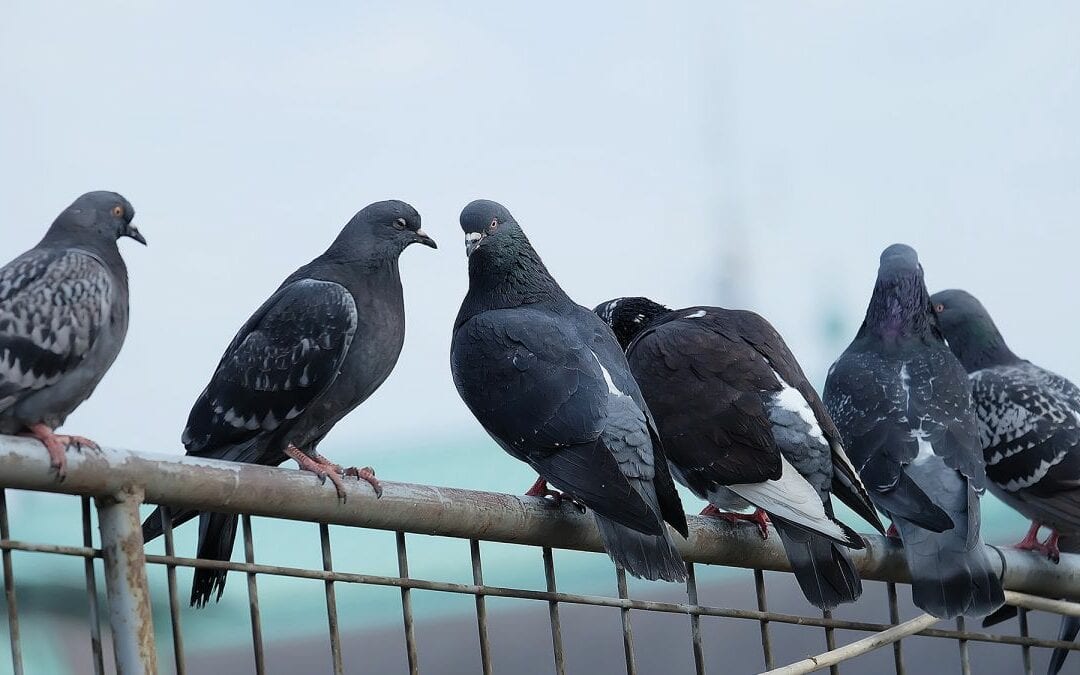
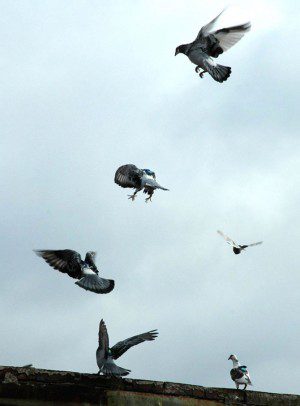
What would you call a flock of flamingos, a swarm of swallows, or a group of eagles? Different birds have different collective nouns to describe large groups, such as a raft, a band, a host, a chime, and even a kettle. While many of these terms are obsolete, seldom used, or just plain silly, they are still unique and distinctive names that are familiar to birders. Many flock names are descriptive not only of the group of birds but also of their behavior or personalities. Birds flock together mostly as a safety mechanism, for example. Birders who understand these esoteric words and associated behaviors and can apply them to the appropriate birds will enjoy birding even more.
What Is a Flock?
Not every group of birds is automatically a flock. The two characteristics that generally constitute a flock are:
6 Sounds Birds Make and What They Mean
Numbers: Counting birds can give you a hint. Just two or three birds are not usually a flock. But there is no set minimum number of birds that are needed to call a group a flock. In general, larger groups are always considered flocks, while smaller groups may be flocks if the birds are not often seen in groups. For example, gregarious birds such as gulls, ducks, and starlings are often seen in very large groups, so just a half dozen of these birds together would not usually be called a flock. Less social birds, however, such as hummingbirds or grosbeaks, would be considered a flock if there were only a few birds since they are much less likely to gather in larger groups.
Species: Any large group of birds, no matter how many different species make up the group, can be called a flock if only a general flock term is used. The more unique, specialized terms, however, are only used for single-species flocks. The exception is when all the species that make up the flock are still in the same related family. A flock of sparrows, for example, can still be called a knot, flutter, host, quarrel, or crew even if several sparrow species are part of the group. A group of wading birds, however, is just a flock if there are herons, godwits, egrets, flamingos, storks, and plovers all mixed in the crowd, as all these birds have different collective nouns for their species.
Fun Fact
A flock of crows is known as a murder, a name given to these smart, social creatures because they were once thought of as omens of death, scavenging for food where there were dead bodies.
Why Do Birds Fly Together?
Birds form clusters of organized groups, called flight flocks, for a reason. Experts believe flocks increase the odds of survival and safety. Flocking can increase the possibility of finding food and protecting each other from trouble and predators. Flock of birds that fly in V formations may be doing so to conserve energy. Birds drafting off of each other’s flapping wings can make the journey easier and less exhausting.
Certain birds, such as starlings, for example, form acrobatic flocks that can turn on a dime to create shapes and undulating feats in the air. This flock behavior is meant to quickly deter their predator, the fast and furious falcon. Other birds, such as dunlins, may synchronize a subtle tilt to their bodies while in a flight flock as a way to camouflage their plumage to confuse predators.
Special Names for Flocks of Birds
When a flock consists of just one type of bird or closely related species of birds, specialized terms are often used to describe the group. The most colorful and creative flock names include:
Birds of Prey (hawks, falcons): cast, cauldron, kettle
Bobolinks: chain
Budgerigars: chatter
Buzzards: wake
Cardinals: college, conclave, radiance, Vatican
Catbirds: mewing
Chickadees: banditry
Chickens: peep
Cormorants: flight, gulp, sunning, swim
Coots: cover
Cowbirds: corral, herd
Cranes: herd, dance
Creepers: spiral
Crossbills: crookedness, warp
Crows: murder, congress, horde, muster, cauldron
Doves: bevy, cote, flight, dule
Ducks: raft, team, paddling, badling
Eagles: convocation, congregation, aerie
Emus: mob
Finches: charm, trembling
Flamingos: flamboyance, stand
Frigatebirds: fleet, flotilla
Game Birds (quail, grouse, ptarmigan): covey, pack, bevy
Pigeon Patrol Products & Services is the leading manufacturer and distributor of bird deterrent (control) products in Canada. Pigeon Patrol products have solved pest bird problems in industrial, commercial, and residential settings since 2000, by using safe and humane bird deterrents with only bird and animal friendly solutions. At Pigeon Patrol, we manufacture and offer a variety of bird deterrents, ranging from Ultra-flex Bird Spikes with UV protection, Bird Netting, 4-S Bird Gel and the best Ultrasonic and audible sound devices on the market today.
Voted Best Canadian wholesaler for Bird Deterrent products ten years in a row.
Contact us at 1- 877– 4– NO-BIRD, (604) 585-9279 or visit our website at www.pigeonpatrol.ca
Pigeon/Pigeon Patrol / Pigeons Roosting / Vancouver Pigeon Control /Bird Spikes / Bird Control / Bird Deterrent / Pigeon Deterrent? Surrey Pigeon Control / Pest /Seagull deterrent / Vancouver Pigeon Blog / Birds Inside Home / Pigeons in the cities / Ice Pigeons/ What to do about pigeons/ sparrows , Damage by Sparrows, How To Keep Raccoons Away, Why Are Raccoons Considered Pests/ De-fence / Pigeon Nesting/ Bird Droppings / Pigeon Dropping/ woodpecker control/ Professional Bird Control Company/ Keep The Birds Away/ Birds/rats/ seagull/pigeon/woodpecker/ dove/sparrow/pidgeon control/pidgeon problem/ pidgeon control/flying rats/ pigeon Problems/ bird netting/bird gel/bird spray/bird nails/ bird guard
Pigeons predominantly feed on grains and cereals, thus they can consume quickly any grainy foods lift in the open. Aside from grains and cereals, Pigeons are known to feed on small insects as well as earthworms . Pigeons can feed on small Kentucky rats , lizards and many other reptiles, they can also carry these small animals in their claws or feet through hundreds of miles during flights until they reach their destination and without losing grip of such animals.
The question of feeding pigeon or not will largely depends on whether the bird is domesticated or not. While domesticated Louisville pigeons can be fed at a restricted area of a property, free-roaming pigeons must never be fed. Domesticated pigeons must only be fed if they are very few (between 1 and 5), however, feeding domesticated Kentucky pigeons may attract the attention of other pigeons , thus the population of pigeons around your property may soar within a short period of time.
Feeding of Louisville pigeons are widely discourage because of the possibility of such birds causing damages to different compartments of a property during flight. When you feed pigeons, they will end up defecating on your roof, similarly, they will end up roosting and building nests close to you property because they have a ready source of food. Feeding Kentucky pigeons around your property also means that they will eventually gain access to other places such as the patio, deck, and garage.
When you feed pigeons close to your Louisville property, they will get used to migrating there in search of food, and when you are not around, they may decide to fly through your door or window. Feeding pigeons within your Kentucky property will increase the chances of the birds gaining access to the attic or the chimney at the top , where they can easily roost and establish their nests. Even when your pigeons are domesticated, you must only feed them in their cages and not outside of their abode, this will reduce their chances of accessing your roof, since they are used to eating in their bowls or troughs , inside their cages.
Feeding Kentucky pigeons is discouraged in every way because of the enormous damages they tend to cause in and outside of properties. The birds are aggressive in nature, and their droppings can get too much to the extent of making roofs to cave in. Pigeon damages reduce the value of homes and can cause thousands of dollars in damages.
Pigeon Patrol Products & Services is the leading manufacturer and distributor of bird deterrent (control) products in Canada. Pigeon Patrol products have solved pest bird problems in industrial, commercial, and residential settings since 2000, by using safe and humane bird deterrents with only bird and animal friendly solutions. At Pigeon Patrol, we manufacture and offer a variety of bird deterrents, ranging from Ultra-flex Bird Spikes with UV protection, Bird Netting, 4-S Bird Gel and the best Ultrasonic and audible sound devices on the market today.
Voted Best Canadian wholesaler for Bird Deterrent products ten years in a row.
Contact us at 1- 877– 4– NO-BIRD, (604) 585-9279 or visit our website at www.pigeonpatrol.ca
Pigeon/Pigeon Patrol / Pigeons Roosting / Vancouver Pigeon Control /Bird Spikes / Bird Control / Bird Deterrent / Pigeon Deterrent? Surrey Pigeon Control / Pest /Seagull deterrent / Vancouver Pigeon Blog / Birds Inside Home / Pigeons in the cities / Ice Pigeons/ What to do about pigeons/ sparrows , Damage by Sparrows, How To Keep Raccoons Away, Why Are Raccoons Considered Pests/ De-fence / Pigeon Nesting/ Bird Droppings / Pigeon Dropping/ woodpecker control/ Professional Bird Control Company/ Keep The Birds Away/ Birds/rats/ seagull/pigeon/woodpecker/ dove/sparrow/pidgeon control/pidgeon problem/ pidgeon control/flying rats/ pigeon Problems/ bird netting/bird gel/bird spray/bird nails/ bird guard
The Blue Rock Pigeon lives in perfect freedom in ledges, fissures and holes of rocks, forts, old buildings and side walls of wells. It prefers to live in those places of towns and cities which have plenty of coarse grains. Thus, their favourite resorts include big buildings, godowns, grain markets, temples, mosques, churches, tombs, railway stations and office buildings. They never nest on trees.
Nature:
The pigeons are inoffensive, harmless, timid and gregarious birds. During breeding season solitary couples make a simple, flat and artless nest of small sticks and thin roots, etc., at all sorts of places where there is some shelter from rain and sun. The eggs are laid in these nests and further development also occurs there. During winter, the pigeons collect into flocks which may be composed of several hundred individuals.
Food and Feeding:
The pigeons are vegetarians, feeding on grains, pulses, seeds of fruits and grasses. Sometimes they feed on insects, snails and slugs probably mistaken for seeds. They regularly leave their places of retreats and settlings during mornings and evenings, and collect into flocks to plunder the nearby fields.
Locomotion:
The pigeons are provided with long powerful wings which are well adapted for swift and strong flight. They walk on their two legs and such kind of walking is called bipedal gait. They walk on ground in search of food with great rapidity. When startled, they rise suddenly by striking the ground with their wings producing a crackling sound.
Sound:
The pigeons do not sing, chirp or screech but produce a characteristic sound which resembles the syllables gootur-goon, gootur-goon.
Family Life:
They lead a monogamous life, i.e., one male lives and copulates with only one female throughout the life.
ADVERTISEMENTS:
Reproduction and Incubation:
The internal fertilisation is performed by copulation in which temporary union of male and female takes place at their cloacal ends, i.e., cloacae of the two oppose each other, and transfer of sperms occurs directly into the urodaeum of female. The pigeons are oviparous, the eggs are laid in the nest and are incubated by the warmth of the parent’s body and hatching occurs after a fortnight.
Parental Care:
The newly hatched youngs are immature, helpless and featherless and are nourished by both parents by a fatty, curdy secretion, the pigeon’s milk, which is secreted in their crop. The parental care and homing instinct are well developed in pigeons.
Distribution:
The Blue Rock Pigeons are widely distributed in Palaearctic (Europe) and Oriental regions (Asia) and North Africa. They are especially plentiful in Palestine city of Israel. In India, two subspecies of Columba livia are namely, Columba livia neglecta is found up to 13,000 feet on the Himalaya.
Another Columba livia intermedia is smaller and darker race, which occurs throughout India. The Indian wild pigeon differs from that of European in having the rump or lower part of the back ash-coloured, while Indian pigeon is white.
Pigeon Patrol Products & Services is the leading manufacturer and distributor of bird deterrent (control) products in Canada. Pigeon Patrol products have solved pest bird problems in industrial, commercial, and residential settings since 2000, by using safe and humane bird deterrents with only bird and animal friendly solutions. At Pigeon Patrol, we manufacture and offer a variety of bird deterrents, ranging from Ultra-flex Bird Spikes with UV protection, Bird Netting, 4-S Bird Gel and the best Ultrasonic and audible sound devices on the market today.
Voted Best Canadian wholesaler for Bird Deterrent products ten years in a row.
Contact us at 1- 877– 4– NO-BIRD, (604) 585-9279 or visit our website at www.pigeonpatrol.ca
Pigeon/Pigeon Patrol / Pigeons Roosting / Vancouver Pigeon Control /Bird Spikes / Bird Control / Bird Deterrent / Pigeon Deterrent? Surrey Pigeon Control / Pest /Seagull deterrent / Vancouver Pigeon Blog / Birds Inside Home / Pigeons in the cities / Ice Pigeons/ What to do about pigeons/ sparrows , Damage by Sparrows, How To Keep Raccoons Away, Why Are Raccoons Considered Pests/ De-fence / Pigeon Nesting/ Bird Droppings / Pigeon Dropping/ woodpecker control/ Professional Bird Control Company/ Keep The Birds Away/ Birds/rats/ seagull/pigeon/woodpecker/ dove/sparrow/pidgeon control/pidgeon problem/ pidgeon control/flying rats/ pigeon Problems/ bird netting/bird gel/bird spray/bird nails/ bird guard
With bits of DNA extracted from century-old museum specimens, researchers have found a place for the extinct passenger pigeon in the family tree of pigeons and doves, identifying for the first time this unique bird’s closest living avian relatives.
The new analysis, which appears this month in Molecular Phylogenetics and Evolution, reveals that the passenger pigeon was most closely related to other North and South American pigeons, and not to the mourning dove, as was once suspected.
Naturalists have long lamented that one of North America’s most spectacular birds was also one of the first to be driven to extinction. In the early 1800s it was the most abundant bird species on the planet, even though its range was limited to the eastern and central forests of the United States and parts of eastern Canada. Flocks of passenger pigeons were so vast they darkened the sky; it could take days for a flock to pass overhead.
“It must have been unbelievable to see one of these flocks,” said Kevin Johnson, an ornithologist with the Illinois Natural History Survey at the University of Illinois and lead author of the study. “There is nothing in modern times that we can compare it to. The passenger pigeon was very nomadic and it formed these huge flocks, in the millions, and breeding colonies in the millions.”
Passenger pigeons followed their food, settling down in forests that periodically produced a superabundance of acorns and chestnuts. The pigeons nested in dense colonies covering hundreds of acres. This made them easy targets for human predators.
Intensive hunting of the pigeons in the mid-to-late 19th century disrupted their ability to breed, Johnson said. That and habitat destruction led to the bird’s eventual extinction. (The last of her kind, a passenger pigeon named Martha, died in the Cincinnati Zoo in 1914.)
To find the passenger pigeon’s place in the evolutionary history of pigeons and doves, Johnson and his colleagues compared sequences from two of its mitochondrial genes with those of 78 species of pigeons and doves from around the world. (There are more than 300 species of pigeons and doves worldwide.)
“We had two sequences from the mitochondrial genome, which is a separate organelle in the cell that has its own genome,” Johnson said. Mitochondrial genes are plentiful and so are easier to sequence, he said. And the mitochondrial genome evolves more rapidly than the nuclear genome, making it a good target for evolutionary studies.
The researchers first analyzed the available sequence data for all (extant and extinct) pigeons and doves together. Then they focused only on the living species, for which much more genetic information is available. They built a family tree of all living pigeons and doves, and then compared the available gene sequences of the passenger pigeon to those of its relatives to find its place in that tree. Both approaches placed the passenger pigeon on the same place in the tree.
Prior to this study, some believed that the passenger pigeon was most closely related to the mourning dove, a smaller species that also has a relatively long tail, Johnson said.
“But it turns out, based on the DNA, that it’s actually related to the New World big pigeons in a totally different genus,” he said.
The band-tailed pigeon, Patagioenas fasciata, which lives in the western mountainous regions of North and South America, was the passenger pigeon’s geographically nearest relative. Other members of this genus are found in forests in parts of Mexico, Central and South America and the Caribbean.
The passenger pigeon was fairly distinct from its relatives, however, as it belonged to a separate genus, Ectopistes, Johnson said.
“The passenger pigeon is in a monotypic genus, which means there is only one species in that genus: Ectopistes migratorius,” he said. “This bird is pretty diverged from its nearest relatives, meaning it had a unique place in the world. It represented a unique lineage that’s now gone.”
The study team included Dale Clayton, of the University of Utah; John Dumbacher of the California Academy of Sciences and the Smithsonian Conservation Biology Institute; and Robert Fleischer, of the Smithsonian Conservation Biology Institute.
Pigeon Patrol Products & Services is the leading manufacturer and distributor of bird deterrent (control) products in Canada. Pigeon Patrol products have solved pest bird problems in industrial, commercial, and residential settings since 2000, by using safe and humane bird deterrents with only bird and animal friendly solutions. At Pigeon Patrol, we manufacture and offer a variety of bird deterrents, ranging from Ultra-flex Bird Spikes with UV protection, Bird Netting, 4-S Bird Gel and the best Ultrasonic and audible sound devices on the market today.
Voted Best Canadian wholesaler for Bird Deterrent products ten years in a row.
Contact us at 1- 877– 4– NO-BIRD, (604) 585-9279 or visit our website at www.pigeonpatrol.ca
Pigeon/Pigeon Patrol / Pigeons Roosting / Vancouver Pigeon Control /Bird Spikes / Bird Control / Bird Deterrent / Pigeon Deterrent? Surrey Pigeon Control / Pest /Seagull deterrent / Vancouver Pigeon Blog / Birds Inside Home / Pigeons in the cities / Ice Pigeons/ What to do about pigeons/ sparrows , Damage by Sparrows, How To Keep Raccoons Away, Why Are Raccoons Considered Pests/ De-fence / Pigeon Nesting/ Bird Droppings / Pigeon Dropping/ woodpecker control/ Professional Bird Control Company/ Keep The Birds Away/ Birds/rats/ seagull/pigeon/woodpecker/ dove/sparrow/pidgeon control/pidgeon problem/ pidgeon control/flying rats/ pigeon Problems/ bird netting/bird gel/bird spray/bird nails/ bird guard
The feral pigeon (Columba livia) carries with it a reputation that runs counter to conservation: it is feral, exotic and invasive and even considered down right filthy. But upon closer inspection, the pigeon could be a subject worthy of study for both ecological and social science purposes and highlight the importance of urban species in ecology. This insight on pigeons occurred during an urban ecology study that focused on habitat and population dynamics of the birds and is also supported through an extensive literature review. As a nearly ubiquitous species, we discuss how important pigeons are as a prey-base for numerous raptors and underscore our position by highlighting several studies on the biological uptake of environmental contaminants that may have benefited from including the pigeon as part of the research. We further our stance on the importance of pigeons in urban ecology by highlighting additional concerns such as zoonotic disease and climate change. We expand our case by turning to the social construction of nature, the importance of public participation in conservation. Once again, the ubiquitous presence of pigeons lends itself well to citizen science in ecology and conservation, especially to show trends across a range of geographic locations. In short, this commentary strives to reconceptualize the feral pigeon, promoting the bird as a valuable asset to ecological and social research in ways that raise awareness for conservation concerns and advance our scientific thinking.
Pigeon Patrol Products & Services is the leading manufacturer and distributor of bird deterrent (control) products in Canada. Pigeon Patrol products have solved pest bird problems in industrial, commercial, and residential settings since 2000, by using safe and humane bird deterrents with only bird and animal friendly solutions. At Pigeon Patrol, we manufacture and offer a variety of bird deterrents, ranging from Ultra-flex Bird Spikes with UV protection, Bird Netting, 4-S Bird Gel and the best Ultrasonic and audible sound devices on the market today.
Voted Best Canadian wholesaler for Bird Deterrent products ten years in a row.
Contact us at 1- 877– 4– NO-BIRD, (604) 585-9279 or visit our website at www.pigeonpatrol.ca
Pigeon/Pigeon Patrol / Pigeons Roosting / Vancouver Pigeon Control /Bird Spikes / Bird Control / Bird Deterrent / Pigeon Deterrent? Surrey Pigeon Control / Pest /Seagull deterrent / Vancouver Pigeon Blog / Birds Inside Home / Pigeons in the cities / Ice Pigeons/ What to do about pigeons/ sparrows , Damage by Sparrows, How To Keep Raccoons Away, Why Are Raccoons Considered Pests/ De-fence / Pigeon Nesting/ Bird Droppings / Pigeon Dropping/ woodpecker control/ Professional Bird Control Company/ Keep The Birds Away/ Birds/rats/ seagull/pigeon/woodpecker/ dove/sparrow/pidgeon control/pidgeon problem/ pidgeon control/flying rats/ pigeon Problems/ bird netting/bird gel/bird spray/bird nails/ bird guard
No matter what type of business you’re in, pests may eventually become a problem. This is doubly true if you’re in the food business in London. Out of all the pests you may encounter, birds are probably one of the worst. Not only are these pests irritating, but they can also be extremely harmful to your business. As an example, here are a handful of reasons why pigeons are bad for business.
Pigeons can harm businesses in the following ways
1. Their faeces and the damage it causes
The biggest issue with pigeons is their faeces. These birds defecate constantly. To make matters worse, they very often do their business over your business. In addition to this, if their mess is on the ground, someone will eventually have to clean it up. And this is something you’ll have to do over and over again due to the health and safety risks associated with pigeon droppings.
Another reason why pigeons are bad for business, is because they defecate onto your roof. This is also an enormous hassle to clean up. More importantly, it can cause significant damage to your roof. The reason why is because pigeon faeces are extremely corrosive. This means that over time, accumulated droppings can eat through your roof, and also damage important infrastructure.
2. Annoying your patrons
The main problem with pigeons is that they often take over outside eating areas and harass patrons. This is probably the biggest reason why pigeons are bad for food industry and hospitality businesses. Anyone who has found themselves surrounded by a seething mass of pigeons pestering them for scraps can attest to this.
These birds are extremely annoying and off putting, and have even been known to defecate on customers. They also make a lot of noise. What’s more, over time the presence of these birds can actually dissuade people from purchasing your food or visiting your cafe. All in all, pigeons are a serious nuisance and should be dealt with by a professional London pigeon control team immediately.
3. Nesting on buildings
Pigeons are also bad for business because they nest on the property. The problem here is that pigeons can damage your building in several ways. Besides defecating, they also continuously shed their feathers.
These feathers can eventually block drains which may, in turn, lead to flooding and water damage. Along with this, their feathers blocks vents, chimneys, and air conditioning units.
Pigeons also cause damage whilst building their nests. Not to mention the mess and debris they leave you to deal with. The other issue with nests, is that pigeons often destroy parts of your roof in their hunt for building materials. These birds may also peck at and damage roofs and sections of your guttering.
Pigeon Patrol Products & Services is the leading manufacturer and distributor of bird deterrent (control) products in Canada. Pigeon Patrol products have solved pest bird problems in industrial, commercial, and residential settings since 2000, by using safe and humane bird deterrents with only bird and animal friendly solutions. At Pigeon Patrol, we manufacture and offer a variety of bird deterrents, ranging from Ultra-flex Bird Spikes with UV protection, Bird Netting, 4-S Bird Gel and the best Ultrasonic and audible sound devices on the market today.
Voted Best Canadian wholesaler for Bird Deterrent products ten years in a row.
Contact us at 1- 877– 4– NO-BIRD, (604) 585-9279 or visit our website at www.pigeonpatrol.ca
Pigeon/Pigeon Patrol / Pigeons Roosting / Vancouver Pigeon Control /Bird Spikes / Bird Control / Bird Deterrent / Pigeon Deterrent? Surrey Pigeon Control / Pest /Seagull deterrent / Vancouver Pigeon Blog / Birds Inside Home / Pigeons in the cities / Ice Pigeons/ What to do about pigeons/ sparrows , Damage by Sparrows, How To Keep Raccoons Away, Why Are Raccoons Considered Pests/ De-fence / Pigeon Nesting/ Bird Droppings / Pigeon Dropping/ woodpecker control/ Professional Bird Control Company/ Keep The Birds Away/ Birds/rats/ seagull/pigeon/woodpecker/ dove/sparrow/pidgeon control/pidgeon problem/ pidgeon control/flying rats/ pigeon Problems/ bird netting/bird gel/bird spray/bird nails/ bird guard