by Pigeon Patrol | Jan 24, 2016 | 4-S Gel Bird repellent, Bird Netting
 Pigeons never seem to crash. While their less-fortunate cousins occasionally take down airplanes, the humble city pigeon darts between lampposts, dodges skyscrapers and dips around oncoming traffic with ease. Now scientists have captured some of that action on film—and figured out how pigeons manage to squeeze through particularly tight spaces.
Pigeons need to strike the perfect balance between safe and efficient flight. When maneuvering between two poles, for instance, they can choose to either raise their wings upward in a mid-flap pause, or fold their wings inward. The so-called “wing-pause” is the more efficient method — it costs very little energy and results in almost no altitude loss. Meanwhile, the “wing-fold” position saps more energy and loses more altitude, but it’s easily the safest way to protect delicate wings from an unforgiving lamppost.
After training four pigeons to fly back and forth across a flight corridor, scientists dropped obstacles into their flight paths to test whether each bird would use the wing-pause or wing-fold maneuver. When it came to tight spaces, the scientists found that the birds favored the less efficient wing-fold maneuver — presumably because, in those situations, there was a high probability of ramming into a pole. But for larger gaps (12 inches, or about half a wingspan), the pigeons were less concerned about a collision, and chose the riskier but lower energy wing-pause maneuver. From the paper:
The choice between these two postures seems mediated by an element of caution or uncertainty…the efficient flight strategy is chosen where gaps are wider and there is less chance of a collision occurring.
The findings may explain why, despite the millions of pigeons in New York City, we rarely see them smash into cars or telephone poles. Beyond that the research suggests that some birds tune their flight strategies, rapidly weighing the odds of making it through a narrow pass.
About Pigeon Patrol:
Pigeon Patrol Products & Services is the leading manufacturer and distributor of bird deterrent (control) products in Canada. Pigeon Patrol products have solved pest bird problems in industrial, commercial, and residential settings since 2000, by using safe and humane bird deterrents with only bird and animal friendly solutions. At Pigeon Patrol, we manufacture and offer a variety of bird deterrents, ranging from Ultra-flex Bird Spikes with UV protection, Bird Netting, 4-S Gel and the best Ultrasonic and audible sound devices on the market today.
Voted Best Canadian wholesaler for Bird Deterrent products four years in a row.
Contact Info: 1- 877– 4– NO-BIRD (www.pigeonpatrol.ca)
by Pigeon Patrol | Jan 23, 2016 | Bird Deterrent Products, Bird Netting, Pigeons in the News
 A medieval monument in England underwent a dramatic cleaning when a high pressure tanker sucked up about 25 tons of pigeon poo from the historic structure.
Measuring almost three feet deep, the bird droppings built up over decades inside the towers of the roofless 14th-century Landgate Arch in Rye, East Sussex.
Since there is no public access to the towers, the massive, mushy mess went unnoticed until last month, when members of the Rother District Council, which owns the ancient monument, made the stomach-turning finding.
“Whilst we’ve removed other massive blockages such giant fatbergs in sewers, we have never seen such a monumental mass of festering feces before,” Mike Walker, managing director for CountyClean Environmental Services, appointed to clean the towers last week, said in a statement.
He added that the build up behind the doors was such that cleaners had to force the doors open.
“Once inside, it was like walking on a giant chocolate cake and the smell was awful –- even through a facemask,” he said.
Had the guano not been removed, it would have continued to accumulate and cause structural damage to the monument. The acidic pigeon poo can damage stonework seriously.
The clean-up took four days using a powerful custom built machine.
“The machine provides high powered vacuum suction through hoses as well as high pressure water jetting,” Graeme Sanderson at CountyClean Environmental Services told Discovery News.
The only survivor of four fortified gateways, the Landgate Arch dates to 1329, in the early years of the reign of King Edward III. It features a chamber over the arch and was built to protect Rye from marauding French invaders.
Pigeons are often perched in the alcoves of the iconic Arch, which is still the only vehicular route into the medieval center of Rye and one of the town’s most photographed sights.
About Pigeon Patrol:
Pigeon Patrol Products & Services is the leading manufacturer and distributor of bird deterrent (control) products in Canada. Pigeon Patrol products have solved pest bird problems in industrial, commercial, and residential settings since 2000, by using safe and humane bird deterrents with only bird and animal friendly solutions. At Pigeon Patrol, we manufacture and offer a variety of bird deterrents, ranging from Ultra-flex Bird Spikes with UV protection, Bird Netting, 4-S Gel and the best Ultrasonic and audible sound devices on the market today.
Voted Best Canadian wholesaler for Bird Deterrent products four years in a row.
Contact Info: 1- 877– 4– NO-BIRD (www.pigeonpatrol.ca)
by Pigeon Patrol | Jan 22, 2016 | Bird Deterrent Products, Bird Netting, Pigeon Spikes
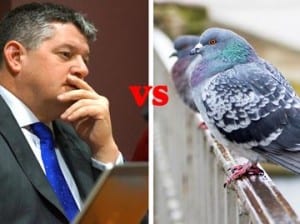
 A PIGEON was killed by a man in Exeter after it pecked at scraps from his hotdog, a court heard.
Exeter Magistrates’ Court heard the incident took place near Castle Street in the city on St Valentine’s Day last month, when a member of the public witnessed Jeremy Wayle, 48, of Totnes, crush the bird under his foot outside the cafe.
Appearing before magistrates Wayle pleaded guilty to killing a non schedule one wild bird, and through his solicitor said he “accepted it should not have happened and his behaviour was wholly unacceptable.”
The court heard Wayle had been having a nice day until he started eating a hot dog and a flock of pigeons descended near him.
Irritated by the avian invasion, he trapped one of the birds under his foot and crushed it to death, causing “shock and distress” to a female shopper.
The woman confronted him telling Wayle he was “nasty,” the court heard.
Wayle told the woman that pigeons were vermin.
Police were called and Wayle, who is unemployed, was searched and found to have a small amount of cannabis on him.
In mitigation, the court heard he suffered a head injury 30 years ago and had suffered from post-traumatic stress disorder. Magistrates heard he did not want to upset anyone and was very apologetic for his behaviour.
Wayle, was given a conditional discharge for 12 months, ordered to pay £15 to the court and had cannabis was forfeited and ordered to be destroyed.
About Pigeon Patrol:
Pigeon Patrol Products & Services is the leading manufacturer and distributor of bird deterrent (control) products in Canada. Pigeon Patrol products have solved pest bird problems in industrial, commercial, and residential settings since 2000, by using safe and humane bird deterrents with only bird and animal friendly solutions. At Pigeon Patrol, we manufacture and offer a variety of bird deterrents, ranging from Ultra-flex Bird Spikes with UV protection, Bird Netting, 4-S Gel and the best Ultrasonic and audible sound devices on the market today.
Voted Best Canadian wholesaler for Bird Deterrent products four years in a row.
Contact Info: 1- 877– 4– NO-BIRD (www.pigeonpatrol.ca)

by Pigeon Patrol | Jan 21, 2016 | Bird Netting, Pigeons in the News, UltraSonic Bird Control
 After years of war with the pigeons, Venice is now in war with the seagulls. The birds have become very aggressive. At one point last summer they’ve attacked a man working on a rooftop. Recently, the seagulls have become so brave that they jump on trays carried by the waiters in Piazza San Marco. They even hunt and kill pigeons for food. The point is, the new treat on the main Piazza in Venice comes from the seagulls who are no longer scared from humans and do not fear our reaction against them.
The numbers of pigeons in Venice have fallen sharply when a few years ago the city banned the sale of grains. However, seagulls are the new phenomenon that is gradually becoming even worse then the pigeons. You can see them early in the morning roaming around the trashcans, opening bags of garbage and eating leftovers, before the sweepers are able to pick them up.
gabbiani e colombi ai tavolini del caffe florianNow with the arrival of spring, the eggs hatch and with little to satisfy their hunger, the problem is getting greater. Finding a solution from the city, the region and the local health organization is urgently needed. Eighty nests have been found in the city since 2006 and their number has grown greatly since then. Now there are too many to be destroyed at once. “In Piazza San Marco which is a limited space you might think is the first place to begin the destruction – says Giuseppe Cherubini who is responsible for Hunting and Fishing of the Region – the nests are in the Basilica, in the Ducal Palace and the Magistrates, we are willing to give permission for their removal immediately.” The task however is not that easy. There has been even a proposal to introduce falcons or hawks that could naturally eliminate the great number of seagulls. However, an animal and birds expert, who asked to remain anonymous, said: “In Italy there are regulatory issues, the herring gull is a protected species.” According to other experts it is not easy to use hawks in a small space as the San Marco Square.
So, for now the problem will still stay unresolved in Venice. There is a new war between pigeons, seagulls and humans and so far the seagulls are winning. It seems that the easiest solution is to limit the food consumption on the Piazza San Marco to only designated areas and bars. Besides, who wants to walk around people who are using the square for a picnic site, spreading blankets and baskets with food?
About Pigeon Patrol:
Pigeon Patrol Products & Services is the leading manufacturer and distributor of bird deterrent (control) products in Canada. Pigeon Patrol products have solved pest bird problems in industrial, commercial, and residential settings since 2000, by using safe and humane bird deterrents with only bird and animal friendly solutions. At Pigeon Patrol, we manufacture and offer a variety of bird deterrents, ranging from Ultra-flex Bird Spikes with UV protection, Bird Netting, 4-S Gel and the best Ultrasonic and audible sound devices on the market today.
Voted Best Canadian wholesaler for Bird Deterrent products four years in a row.
Contact Info: 1- 877– 4– NO-BIRD (www.pigeonpatrol.ca)
by Pigeon Patrol | Jan 20, 2016 | 4-S Gel Bird repellent, Bird Netting, Pigeon Patrol's Services
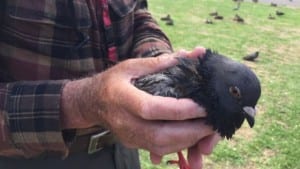
 A pest control contractor hired by Halifax has been using poison to control the pigeon population at the Keshen Goodman Public Library.
CBC News uncovered the information when the city’s pest control contract came up for renewal. The new tender for services in Halifax includes a mention of “an Avitrol program” at the library.
Avitrol is described by its manufacturer as a flock deterrent. It’s designed to look like corn kernels and left out for birds to eat.
Once it’s consumed, Avitrol affects the birds’ central nervous system and causes convulsions that can last more than four hours. The prolonged, uncontrolled flapping is meant to scare other birds away.
The company’s website states there is no way to effectively use Avitrol without some birds dying from the product.
Hope Swinimer, founder of Hope for Wildlife, says she’s seen a number of poisoned birds brought to her shelter.
“It looks like they are struggling, just like mini seizures,” she said. “They look really confused and there’s sometimes vomiting too.”
Avitrol is currently banned in New York City, San Francisco, the United Kingdom and Red Deer, Alta.
Visitors to the Keshen Goodman Library were surprised to hear the poison has been used to control birds in the area.
“I think placing poison for that is not a good idea,” said Brenda Gionet.
“Sometimes my kids fall down and they put their hands on ground,” said Herman Bhuller.
Poison may not be effective
“If there’s poison on the ground and if they swallow it, I think that would be dangerous.”
The poison may not even be very effective. Many wildlife experts said new birds often move into the area once the previous birds are killed or scared off.
“If you revisit the spot, six months down the road, you’re going to see the exact same problem,” said Swinimer.
After CBC News contacted the city with questions about Avitrol, officials said the poison would no longer be specifically mentioned in the next tender for pest control, up for renewal this year.
However, there is no ban preventing Halifax’s contractor or other pest control companies from continuing to use Avitrol on public or private property.
About Pigeon Patrol:
Pigeon Patrol Products & Services is the leading manufacturer and distributor of bird deterrent (control) products in Canada. Pigeon Patrol products have solved pest bird problems in industrial, commercial, and residential settings since 2000, by using safe and humane bird deterrents with only bird and animal friendly solutions. At Pigeon Patrol, we manufacture and offer a variety of bird deterrents, ranging from Ultra-flex Bird Spikes with UV protection, Bird Netting, 4-S Gel and the best Ultrasonic and audible sound devices on the market today.
Voted Best Canadian wholesaler for Bird Deterrent products four years in a row.
Contact Info: 1- 877– 4– NO-BIRD (www.pigeonpatrol.ca)
by Pigeon Patrol | Jan 19, 2016 | Bird Netting, Pigeon Spikes, UltraSonic Bird Control
 SAN FRANCISCO (KCBS)— When most people think of pigeons, the common city street bird comes to mind, but there’s a different kind of pigeon in California and it’s at risk, according to environmental scientists.
Most of the Pacific Coast Band-tailed pigeons are dying specifically between San Francisco and San Diego. The stocky, reclusive bird is the state’s only native pigeon. Its head is a beautiful purple accompanied by a yellow bill and legs.
Environmental scientists at the California Department of Fish and Wildlife have identified a parasite as avian trichomoniasis, an organism that lives in the throat and mouth of the infected bird, which prohibits them from eating.
Dr. Jennifer Scarlett with the San Francisco SPCA said the street pigeon is thought to be the main source of infection for the bird.
“What happens is where there’s lots of birds congregating, especially around bird feeders and watering holes, is where we’ll see this transmit to the California native pigeon,” Scarlett said.
While there aren’t risks of transmission to other animals, the parasite can be transmitted to other birds such as raptors and hawks.
If you have a birdfeeder in your home’s yard, officials ask that you clean them or even to get rid of them for the next few months.
About Pigeon Patrol:
Pigeon Patrol Products & Services is the leading manufacturer and distributor of bird deterrent (control) products in Canada. Pigeon Patrol products have solved pest bird problems in industrial, commercial, and residential settings since 2000, by using safe and humane bird deterrents with only bird and animal friendly solutions. At Pigeon Patrol, we manufacture and offer a variety of bird deterrents, ranging from Ultra-flex Bird Spikes with UV protection, Bird Netting, 4-S Gel and the best Ultrasonic and audible sound devices on the market today.
Voted Best Canadian wholesaler for Bird Deterrent products four years in a row.
Contact Info: 1- 877– 4– NO-BIRD (www.pigeonpatrol.ca)
by Pigeon Patrol | Jan 18, 2016 | Bird Deterrent Products, Bird Netting, Pigeon Patrol's Services
 While the peregrines are away, the pigeons will play.
Salt Lake City’s peregrine falcons are not using the nest box atop the Joseph Smith Memorial Building this spring, and pigeons — one of the raptor’s favorite foods — have taken advantage of the vacancy.
People checking in on the peregrine falcons via the web cameras installed at the nest box instead will see the lowly birds.
The 2015 nesting season dissolved when a female falcon that had been at the nest box was found injured and captured March 29. The female, which a state biologist believes has raised 11 youngsters in the box since 2011, was diagnosed with aspergillus, a fungal respiratory disease. She remains in a wildlife rehabilitation center.
Bob Walters, a watchable wildlife coordinator with the Utah Division of Wildlife Resources, says she is recovering, but has some lingering issues.
“If it clears up, we will let her go,” Walters said. “If it doesn’t, it is logical she could end up as an educational bird.”
Walters has spotted another pair of falcons hanging around the One Utah Center, at 201 S. Main St. He set up a nest box on the building April 21, but the birds have not been caught using it.
“Humans are pretty spoiled; we expect success,” Walters said. “Nature doesn’t always happen that way.”
The free-loading pigeons may be soon be evicted and the cameras turned off.
“I’m an optimist. We will wait a little longer,” Walters said.
Most peregrine falcons have already hatched this season, he said. “We are just waiting to make sure no falcons show up, and then we will likely close up the box.”
About Pigeon Patrol:
Pigeon Patrol Products & Services is the leading manufacturer and distributor of bird deterrent (control) products in Canada. Pigeon Patrol products have solved pest bird problems in industrial, commercial, and residential settings since 2000, by using safe and humane bird deterrents with only bird and animal friendly solutions. At Pigeon Patrol, we manufacture and offer a variety of bird deterrents, ranging from Ultra-flex Bird Spikes with UV protection, Bird Netting, 4-S Gel and the best Ultrasonic and audible sound devices on the market today.
Voted Best Canadian wholesaler for Bird Deterrent products four years in a row.
Contact Info: 1- 877– 4– NO-BIRD (www.pigeonpatrol.ca)
by Pigeon Patrol | Jan 17, 2016 | 4-S Gel Bird repellent, Bird Deterrent Products, Bird Netting
 It has come to my attention that there’s been some mirth at Hollister City Hall’s expense over the current field experiment with stereophonic raptor cackles in the downtown area. A steady stream of screeches and cackles emanates from the parking garage at Fourth and San Benito streets throughout the daylight hours.
I’m here to say that the mirth may be misplaced – at least for the time being. City Manager Bill Avera ordered the audio assault to be initiated in an effort to displace a booming population of feral pigeons that were busy procreating and simultaneously turning the garage into a cesspool.
Initial reports delivered to the City Council indicated that there do seem to be fewer pigeons doing what pigeons do in and on the garage structure. That makes sense. Birds are highly vocal, and critically aware of the noises around them. Broadcasting a variety of calls from predatory birds is likely to make other birds a little edgy and inclined to move on to quieter perches.
Birds use vocalizations for a number of purposes. Some of the singing we hear comes from males, eager to let others’ know that they’ve laid claim to a very desirable patch of real estate. Others are contact calls. Take a walk outside, and you are likely to encounter a cloud of Bushtits, or a flock of Chestnut-backed Chickadees, all visiting non-stop as they move through shrubs and trees. They’re staying in touch with one another, offering assurance that none of the members of the flock has seen or sensed anything thought to be a threat.
A group of retiring waterbirds called rails are very vocal. Given that they inhabit dense wetland growth, voice is just about the only way they can keep in touch with one another.
I may have been one of the first to notice the downtown calls, and to notice that they weren’t live, but Memorex. So let me be among the first to say that whatever efficacy the recordings have in convincing, the solution will be temporary at best.
Years ago, Bill Muenzer, owner of Muenzer’s Cyclery and Sporting Goods on Fifth Street, began selling life-sized plastic Great Horned Owls. They began appearing on downtown rooftops with the intention of moving the pigeons along. And that, too, seemed to work very well for a while.
But eventually, a thought flickered into some brighter-than-average pigeon pea brain. If those owls don’t move for a few weeks, maybe something’s up. Soon enough, the pigeons were back.
That’s going to happen with the recordings, too. So the feathered arms race will have to continue. A few years ago, the most chilling screams came from speakers on the roof of the Monterey Bay Aquarium Research Institute administrative building in Moss Landing. They were the sounds of gulls being seriously messed with. The calls made my blood run cold, but they didn’t seem to bother the hundreds of gulls perched on the same roof at all.
Some birds are well poised to thrive around people. Gulls can scavenge our leftovers and use flat rooftops as secure roosts. The feral pigeons circling downtown Hollister are the descendants of a genuine wild bird, known as the Rock Pigeon.
When Europeans first got here, the pigeons nested on cliff ledges. Then we built urban canyons filled with perfect cliff ledges. We call them “buildings” and “parking structures.”
Moreover, we continued domesticating pigeons. One of the first things a farmer does in domesticating livestock is to breed in a tendency to breed rapidly, the better to get more livestock.
The result is that today, we have a bunch of randy birds downtown with poor hygiene practices.
So enjoy the raucous downtown symphony while it lasts, because it won’t last long. The pigeons will see to it.
About Pigeon Patrol:
Pigeon Patrol Products & Services is the leading manufacturer and distributor of bird deterrent (control) products in Canada. Pigeon Patrol products have solved pest bird problems in industrial, commercial, and residential settings since 2000, by using safe and humane bird deterrents with only bird and animal friendly solutions. At Pigeon Patrol, we manufacture and offer a variety of bird deterrents, ranging from Ultra-flex Bird Spikes with UV protection, Bird Netting, 4-S Gel and the best Ultrasonic and audible sound devices on the market today.
Voted Best Canadian wholesaler for Bird Deterrent products four years in a row.
Contact Info: 1- 877– 4– NO-BIRD (www.pigeonpatrol.ca)
by Pigeon Patrol | Jan 16, 2016 | Bird Deterrent Products, Bird Netting, Pigeon Patrol's Services, Pigeon Spikes
 Technology has its part to play at the Wimbledon tennis championships but it isn’t about to replace one important high-flying job.
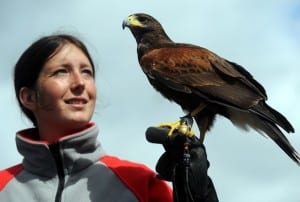
Rufus the hawk is to keep his role scaring off pigeons around the SW19 event after his owners rejected suggestions a drone could take his place.
The Harris hawk is a regular visitor to the All England Lawn Tennis Club where he has been keeping feathered pests away for the last seven years.
Rufus’s owner Imogen Davis said drones do not have the “predatory instinct” of a bird of prey.
She said: “Pigeons would simply get used to them and become accustomed to them. Rufus is a predator, drones are not.”
Reaching speeds of up to 30mph, eight-year-old Rufus has been making weekly visits to the south-west London venue over the past 12 months.
He will step up to daily 5am patrols when the highlight of the British tennis calendar begins on Monday.
The Harris hawk, who has his own Twitter page and pass to enter Wimbledon, can also be found scaring off pigeons at Craven Cottage, the home of Fulham football club, as well as Westminster Abbey and Billingsgate Fish Market.
Rufus hit the headlines three years ago when he was stolen from a car overnight during Wimbledon.
After widespread media coverage, the bird of prey was handed in to the RSPCA a few days later.
About Pigeon Patrol:
Pigeon Patrol Products & Services is the leading manufacturer and distributor of bird deterrent (control) products in Canada. Pigeon Patrol products have solved pest bird problems in industrial, commercial, and residential settings since 2000, by using safe and humane bird deterrents with only bird and animal friendly solutions. At Pigeon Patrol, we manufacture and offer a variety of bird deterrents, ranging from Ultra-flex Bird Spikes with UV protection, Bird Netting, 4-S Gel and the best Ultrasonic and audible sound devices on the market today.
Voted Best Canadian wholesaler for Bird Deterrent products four years in a row.
Contact Info: 1- 877– 4– NO-BIRD (www.pigeonpatrol.ca)
by Pigeon Patrol | Jan 15, 2016 | 4-S Gel Bird repellent, Animal Deterrent Products, Bird Deterrent Products, Bird Netting
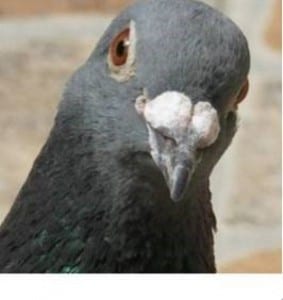
 A chronically ill man may have to stop feeding his beloved pigeons, after a dispute with the manager of the supermarket next to his Bexleyheath flat.
Steven Picard feeds stray birds on his roof – which overlooks the Sainsbury’s Local car park in Windermere Road – two to three times a day.
The 63-year-old supermarket “regular” has been told to stop encouraging the feathered creatures, and may now have to choose between them and his local store.
Following a dispute with store’s manager, Mr Picard was “peed off” and says the situation forced him to shop online for over a week.
He suffers from multiple sclerosis (MS), which means he struggles to travel further afield to shop.
He told News Shopper: “I think it’s ridiculous.
“It’s not illegal to feed pigeons.
“The supermarket’s only 50 yards away from me.
“It’s very inconvenient because of my MS to go any further.”
Mr Picard said the Sainsbury’s manager claimed birds were dive bombing customers and making a mess on cars, but Mr Picard refused to stop feeding them.
He added: “I do enjoy feeding them, because my lifestyle these days is quite limited.
“They congregate on my lower roof and then they go away.
“They know me well.
“It’s not in their area that I am feeding birds.
Feeding pigeons can attract large groups (stock image)
“I have been a good customer, every day for the last four years.”
Mr Picard was also upset and embarrassed that the manager “shouted at” him in front of other shoppers.
He said: “It was completely out of order.
“I cannot walk very easily because of my MS.
“I have to go online now for shopping.
“It’s a lot more inconvenient.
“I just want the situation to be resolved.”
About Pigeon Patrol:
Pigeon Patrol Products & Services is the leading manufacturer and distributor of bird deterrent (control) products in Canada. Pigeon Patrol products have solved pest bird problems in industrial, commercial, and residential settings since 2000, by using safe and humane bird deterrents with only bird and animal friendly solutions. At Pigeon Patrol, we manufacture and offer a variety of bird deterrents, ranging from Ultra-flex Bird Spikes with UV protection, Bird Netting, 4-S Gel and the best Ultrasonic and audible sound devices on the market today.
Voted Best Canadian wholesaler for Bird Deterrent products four years in a row.
Contact Info: 1- 877– 4– NO-BIRD (www.pigeonpatrol.ca)
by Pigeon Patrol | Jan 14, 2016 | Bird Netting, Pigeon Spikes, UltraSonic Bird Control
 BY DUSICA SUE MALESEVIC | Residents on Duane St. in Tribeca are fed up with a neighbor they say is attracting pigeons and their droppings.
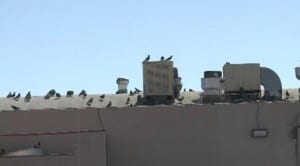
At 173 Duane St., a resident on the fifth floor is reportedly feeding pigeons — they are going back and forth from her apartment — incensing residents at 171 Duane St., who have been complaining to Community Board 1.
There has been a long history of complaints, said Caroline Bragdon, director of neighborhood interventions for the city Department of Health and Mental Hygiene’s pest control services program. Many inspections had been done, but it had never warranted a violation until now, she told the Quality of Life Committee at their Thurs., Apr. 16 meeting.
The violation would be sent to the owner of the building, not the tenant.
“Sometimes it seems unfair that we’re writing violations to the owner of the building, but we can’t go after an individual,” she said.
Neighbors said the pigeon droppings are piling up on air conditioner units. The woman has also been seen feeding pigeons in Duane Park.
Benjamin Flavin, lawyer for 171 Duane St., said that the tenant is an elderly woman who has been living at 173 Duane St., a co-op, for around 20 years.
In addition to pigeon problems, Bragdon went over what she called favorite hot spots for rats. She started with 403 Greenwich St., which is between Beach and Hubert Sts.
“Right now, it’s just a vacant lot with rat holes in it that no one is doing anything with,” she said.
The lot is owned by 403 Greenwich Enterprises L.L.C. The owners have not been attending their hearings, said Bragdon, who has increased the violation from $300 to $600 to now $1,200. She said if this continues, it would go to $2,000.
“They don’t care,” the city’s Bragdon said. “They’re just letting their violations default. A lot of the wealthier owners will just pay.”
“It’s nothing — it’s the cost of doing business,” said Pat Moore, chairperson of the C.B. 1 committee.
The lot has been vacant for quite some time, said Bragdon, who explained that putting some bait stations costs a couple hundred dollars a month. The owners could also choose to dump gravel over the soil, which would deter the rats.
Further south at 372 Greenwich St. between Harrison and N. Moore Sts., Bragdon said it has gotten pretty ratty. At one time, it was maintained by the volunteer organization, Friends of Greenwich Street, but remains to be seen who is responsible for its upkeep now.
There are several planters, said Bragdon, but it is just one, the one in front of 372 Greenwich that has the rat problem.
“Rat condo,” quipped Moore.
Bragdon went through one more site at 29 Harrison St., which was issued its first violation and has Rubbermaid bins filled with soil and gnaw marks on them — a sign that rats were around.
She then listened to places that the committee and the public suggested to investigate. Committee member Marc Ameruso said 53 Beach St. has a raised platform with vents and “at night, [the rats] just take over the street.”
C.B. 1 Chairperson Catherine McVay Hughes mentioned a problem site in the Financial District, a lot on Rector and Trinity Place.
“I have never ever seen the quantity and the size of these rats,” she said. “It’s really scary.”
About Pigeon Patrol:
Pigeon Patrol Products & Services is the leading manufacturer and distributor of bird deterrent (control) products in Canada. Pigeon Patrol products have solved pest bird problems in industrial, commercial, and residential settings since 2000, by using safe and humane bird deterrents with only bird and animal friendly solutions. At Pigeon Patrol, we manufacture and offer a variety of bird deterrents, ranging from Ultra-flex Bird Spikes with UV protection, Bird Netting, 4-S Gel and the best Ultrasonic and audible sound devices on the market today.
Voted Best Canadian wholesaler for Bird Deterrent products four years in a row.
Contact Info: 1- 877– 4– NO-BIRD (www.pigeonpatrol.ca)
by Pigeon Patrol | Jan 13, 2016 | 4-S Gel Bird repellent, Bird Deterrent Products, Bird Netting, Pigeon Patrol's Services
ABERDEEN, SD – We’ve all seen them. Some of us have maybe even cleaned up messes left by them.
Cities across the country and here in KELOLAND are looking at ways to fight a pigeon problem. The issue made its way to the Aberdeen City Council Monday.
“They continue to be a continuous problem and they do cause quite a bit of damage and they’re a health hazard,” animal control officer John Weaver said.
Aberdeen city manager Lynn Lander wants to contract with a professional to fight the problem. Lander says the goal isn’t to eliminate the birds, but rather to control the population.
The service would cost $7,250 a year, Lander said. Owners would still need to play a part in guarding their property from pigeon damage.
“We would go to specific buildings to disrupt the nesting process because a typical pair can have as many as 20 offspring and a wild pigeon can live up to 10 years,” Lander said.
Pigeons have caused damage to public and private property in Aberdeen. The Aberdeen Police Department has a device that runs to a vent on the roof. Pigeons nested in that vent, dropping eggs and droppings right down into the building.
“Very annoying,” Daryl Van Dover with the Aberdeen Police Department said. “The pigeons have been quite a problem for some time.”
“Through my research and talking to various different municipalities, we all have the same problems,” Lander said.
There are already efforts underway to cut down on the number of pigeons in town. The Aberdeen Downtown Association manages a netting program. Through that program a man recently captured and hauled more than 500 birds from the Hub City, Weaver said.
Lander wants the additional pigeon population control to target problem areas and supplement efforts already taking place.
At the police station, workers have already tried blocking birds from the vent but say they’re running into issues again.
“We’re attempting to screen them out once again and hopefully that’ll take care of the problem,” Weaver said.
About Pigeon Patrol:
Pigeon Patrol Products & Services is the leading manufacturer and distributor of bird deterrent (control) products in Canada. Pigeon Patrol products have solved pest bird problems in industrial, commercial, and residential settings since 2000, by using safe and humane bird deterrents with only bird and animal friendly solutions. At Pigeon Patrol, we manufacture and offer a variety of bird deterrents, ranging from Ultra-flex Bird Spikes with UV protection, Bird Netting, 4-S Gel and the best Ultrasonic and audible sound devices on the market today.
Voted Best Canadian wholesaler for Bird Deterrent products four years in a row.
Contact Info: 1- 877– 4– NO-BIRD (www.pigeonpatrol.ca)
by Pigeon Patrol | Jan 12, 2016 | Bird Netting, Pigeons in the News, UltraSonic Bird Control
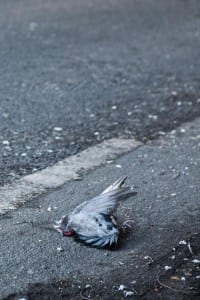
 A FRESH complaint has put the cat amongst the pigeons on Forres High Street.
Following a story which appeared in the ‘Gazette’ in January about health risks caused by the birds roosting on the town hall, a concerned member of the public pointed out that the problem is just as bad, if not worse, at the top of Bank Lane next to the most central bus stop in the town.
“The mess on Bank Lane is something that affects everyone here,” said the complainer, who wishes to remain anonymous.
“These include people waiting at the bus stop, schoolchildren using the lane and anyone who parks in the car park behind the bank. What a terrible sight for our visitors to see and walk through too!”
The local woman claimed that until recently, piles of festering pigeon faeces had been left on the thoroughfare for at least a year.
“I see children walk up and down there every day,” she said. “When it rains the mess turns slushy. It gets on their shoes and
is brought with them wherever they go.
“My concern is that this will be an ongoing problem if it is not cleaned regularly and the mess is already building up again.”
She added: “The owner of the building will need to pigeon-proof the windows.
“If Moray Council will not insist the owner puts netting on the windows, then who is responsible for cleaning up the mess?”
The owners of neighbouring takeaway Chicken Hut have attempted to tackle the problem themselves.
“We don’t want people to see or stand in it,” said chef Mohamed Elmerzougui. “So we have to clean it up once or twice a week. It’s a big problem.
“The pigeons live on the roof of the building, so aren’t scared off by passers-by. The council should clean up their mess and do something about them.”
Mohamed’s colleague Nacerddine Leghroumi claimed he hadn’t seen anyone from Moray Council attempt to deal with the issue.
“We have to clean it up or it reflects badly on us,” he said. “It takes about three hours in total to sort out the mess that’s up to 2cm deep.
“We scrape it off the surface with a metal brush, then use a shovel to take it away. We then throw hot soapy water down, then
finally, an hour later, slowly brush off anything that remains.”
He added: “We have never seen Moray Council do the work in the six months since we took over.”
Forres Community Council has been made aware of the complaint and passed it on to Moray Council’s environmental services department.
“The area was brushed and power washed,” said a council spokesperson.
“Pigeon droppings are on ongoing problem in this area and the council cleans it as and when resources allow.
“Feral pigeons will take advantage of any suitable roosts in builtup areas and will often roost there night after night, with the result that their droppings accumulate.
“Building owners can take measures to proof their properties against roosting and nesting pigeons in much the same way as they can to deter gulls.”
About Pigeon Patrol:
Pigeon Patrol Products & Services is the leading manufacturer and distributor of bird deterrent (control) products in Canada. Pigeon Patrol products have solved pest bird problems in industrial, commercial, and residential settings since 2000, by using safe and humane bird deterrents with only bird and animal friendly solutions. At Pigeon Patrol, we manufacture and offer a variety of bird deterrents, ranging from Ultra-flex Bird Spikes with UV protection, Bird Netting, 4-S Gel and the best Ultrasonic and audible sound devices on the market today.
Voted Best Canadian wholesaler for Bird Deterrent products four years in a row.
Contact Info: 1- 877– 4– NO-BIRD (www.pigeonpatrol.ca)
by Pigeon Patrol | Jan 11, 2016 | Bird Deterrent Products, Bird Netting, Pigeon Spikes
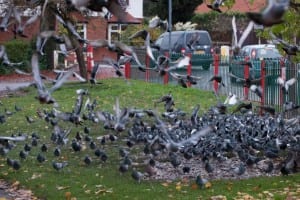
FILE PICTURE – Pigeons on a suburban British street. Tenants are in flap after getting a badly written letter from the council threatening to evict them – for FEEDING PIGEONS. See swns story SWPIGEON. They received the missive, littered with grammatical mistakes, suggesting that a “spy” had been hired to find out who had been feeding the birds. The hand signed letter, purporting to be from Islington Council in north London, states that the feeding had led to a rise of pigeon excrement and made the area look an “unsightly mess”.
FIREFIGHTERS were called to deal with a seagull trapped in roof netting in Shoreham.
The RSPCA was called out by the householders to a property in The Herons on Sunday morning.
Shoreham firefighters were then called at 12.22pm to help free the bird from netting around the chimney.
The crew was at the scene for an hour and used a roof ladder and small tools to release the gull, then left it in the care of the RSPCA officer.
Liz Wheeler, RSPCA inspector, said: “We see this kind of thing happening all the time during the summer months.
“People put netting on their rooftops to deter birds from nesting but it’s often not put up properly, causing birds to become trapped and to suffer.
“It is an offence to intentionally trap wild birds like gulls, so we are asking people to be mindful of their actions and make sure that if they do use netting, they install it correctly and regularly check and maintain it.
“We spend all summer getting trapped gulls out of roof netting and it’s easily avoidable.”
About Pigeon Patrol:
Pigeon Patrol Products & Services is the leading manufacturer and distributor of bird deterrent (control) products in Canada. Pigeon Patrol products have solved pest bird problems in industrial, commercial, and residential settings since 2000, by using safe and humane bird deterrents with only bird and animal friendly solutions. At Pigeon Patrol, we manufacture and offer a variety of bird deterrents, ranging from Ultra-flex Bird Spikes with UV protection, Bird Netting, 4-S Gel and the best Ultrasonic and audible sound devices on the market today.
Voted Best Canadian wholesaler for Bird Deterrent products four years in a row.
Contact Info: 1- 877– 4– NO-BIRD (www.pigeonpatrol.ca)
by Pigeon Patrol | Jan 10, 2016 | 4-S Gel Bird repellent, Bird Deterrent Products, Bird Netting, UltraSonic Bird Control
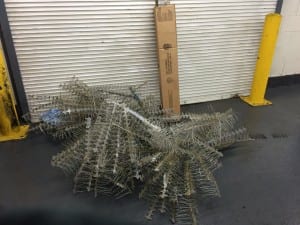
 DUBAI, United Arab Emirates—In 2010, an English-language newspaper in Dubai ran a cover story titled Pigeon Impossible: Rats With Wings. “Pigeons have become a nuisance in the city, leaving many residents exasperated,” the report said. “These birds which have been breeding uncontrollably are messing up property with their droppings.” It detailed how pigeon waste was corroding roofs, windows, machinery, car paint, and infecting air conditioning systems. A public health official lamented the “serious” problem, but said that there was no way to count the number of pigeons that were relieving themselves across the city.
The report pointed out that Switzerland had experimented with pigeon contraceptive pills, Britain had hired air gun–wielding snipers to shoot pigeons off buildings, and the United States had used plastic models of birds of prey to scare them off airport runways.
Dubai has been called “the Manhattan of the Arab world.” Over the past three decades, as the United Arab Emirates rapidly developed, it had been preoccupied with breaking world records: It now has the world’s tallest building, largest mall, longest driverless metro, and fastest steel rollercoaster. But an onslaught of pigeon droppings didn’t fit the city’s glittering public image.
The city’s growth was accompanied by a growth in the pest population, including pigeons. A proliferation of pest control firms, now over a hundred in Dubai, was accompanied by a niche market specializing in bird control, many of them employing falcons—natural predators of smaller birds as well as a prized status symbol for the Emirati elite. At the upper end of the market, falcons now travel on private jets with royals from the Persian Gulf on hunting expeditions across the world. In 2010, the UAE led a submission to UNESCO, the United Nations’ cultural agency, eventually having falconry, a tradition dating back at least 4,000 years, recognized as an example of intangible cultural heritage. But thanks to the pigeon problem, falcons are being put to work in less glamorous occupations as well.
One morning in January, a flock of pigeons with bobbing heads, their rainbowlike neck feathers sparkling, occupied a railing on a sand-bleached luxury hotel. The hotel sits in a palm-tree–shaped artificial archipelago, the Palm Jumeirah, on the southern coast. The pigeons bumbled near the Gold Suites, rooms that came with gold furnishings, rain showers, and a private butler to pack bags and shine shoes.
A few weeks earlier, a family at a resort nearby had been attacked by crows, one of them digging its claws into a guest’s head, requiring first-aid with painkillers and icepacks.
“These feral birds,” said Hendri Du Toit, an urban falconer, squinting at the Gold Suites. “They won’t be here for long because Marley has come.”
Marley, a saker falcon with gold-flecked wings, was blindfolded and perched on Du Toit’s arm. He was born and bred in Dubai, even though saker falcons, recognized by their brown upperbellies and horizontal pursuit, usually breed around the northern Himalayas. Marley had traveled to this hotel sitting inside the boot of an SUV that barreled past skyscrapers with mirrored windows and marble megaliths. Another saker falcon, Ziggy (who is not Marley’s son), waited in the boot while Marley finished his assignment.
Du Toit, who grew up in South Africa, has been a full-time falconer in Dubai for three years, working for his mentor Peter Bergh, who runs a falconry firm specializing in bird control and entertainment shows.
Marley’s job was to scare, not kill, Du Toit said, attaching a transmitter to the falcon’s back to track his location. He had been trained to circle around, sending the pigeons fleeing in dust, dirt, panic, and then return to his falconer, who would reward him with a big feathery chunk of quail meat.
Du Toit lifted the leather hood that covered Marley’s eyes, and the bird looked around hysterically, his eyes shining like black marbles. On one side he saw a constellation of deck chairs, beach umbrellas, and a water-dipped skyline, and on the other, a row of great buildings, facades, and railings where pigeons, crows, and Indian mynas could be hiding.
He settled on top of a white beach umbrella.
“He’s lazy today because there isn’t a lot of wind,” Du Toit said. “So we’ll let him follow us around for a bit.”
Du Toit walked along the beachfront, a piece of quail tucked into his pocket, and Marley hopped closer, one umbrella to the next.
“Why is he following this silly man?” Du Toit said. “Because he knows I have his lunch.”
Marley finally took off, heading for the Gold Suites, sending the flock of pigeons into delirium. He knew the area well, Du Toit said, because he’d been flying here three times a week for two years as part of the falconry firm’s winter team. The summer team was currently in the molting chambers, changing feathers under artificial light, to get ready for bird control during the summer. (Molt is triggered by longer daylight hours, when the bird perceives food to be in abundance and invests in feather growth. To avoid featherless falcons being scorched in the testing Dubai summer, molting was being artificially stimulated in advance.)
Marley had never killed a pigeon during his pest-control rounds because then “the pigeon family will know it’s safe for the next day or two,” Du Toit said. “We don’t want that.”
The hotel kept a monthly record of the number of complaints from pigeons. A drop in complaining guests meant Marley was doing well, and an increase (which usually came in winter when guests preferred to dine outdoors) meant he needed to expand his route and flying time.
Du Toit kneeled and swirled a rope with a piece of quail tied to one end, and Marley dived for it. He was back on his falconer’s arm, being fed, hooded, and sent to his “happy place,” in Du Toit’s words.
On Fridays, Marley’s duties extended to posing for photos with hotel guests who were looking for a new display picture. “He doesn’t mind being around people,” Du Toit said. “But at the end of the day, he’s a hunting companion and not a pet.”
Bergh, the man Du Toit reports to at Royal Shaheen, the falconry firm, started his business eight years ago with two birds. “Today we have 11 guys and 85 birds,” he said. “Because falconry is one of those things that is like a disease. It kind of grabs you from the inside and doesn’t let you go.”
If you break down Bergh’s features into slight eyes, wide smile, sunburnt nose, it does not capture the boyhood wonder with which he recounts every experience.
“Flying falcons in the middle of a concrete jungle is hardcore. It’s a really tough form of falconry,” he said. “The birds come back because I’m their food provider, they don’t come because they like me or think I’m a nice guy. They’re creatures of habit. So they’re thinking, ‘If I come back to Pete, I get a big fat juicy meal but if I catch a pigeon, I get one small juicy meal.’ ”
Falconry essentially is the art of managing a falcon’s appetite, he said. “You’re standing here on the beach, when the falcon starts disappearing around the back of the hotel, you’ve now lost visual contact, your communication is gone, your mobile signal is gone. If the bird now sees a pigeon across the road, what’s stopping the bird from deciding to chase that pigeon? Nothing really, other than the bird’s loyalty to fly around the building and seek comfort in seeing Pete again. In an urban environment, the margin for error is huge, you’re radically increasing the possibility of something going wrong.”
Bergh, 36, grew up on a sugarcane farm in Pietermaritzburg, a small town outside Durban in South Africa, studying until the 10th grade and taking care of his parent’s horses. At 17, he became a professional player of polocrosse (a sport that marries polo and lacrosse), first representing his country and then playing for a rich coffee farmer’s team in Zimbabwe. Five years later, he came to Dubai to become a guide at a desert resort that kept horses, camels, and falcons.
“It fascinated me that the falcon would go and kill something, you could make a trade and put the whole kill in your pocket, and it would take a little reward to do it again,” he said. “I read all the books there were to read and I spent every spare minute I had at the mews,” a place where falcons are kept.
He then trained under a falconer in Dubai whose main business was bird control, and after two years, he quit to set up his own business, partnering with a falcon breeder who had the patronage of a sheikh from Dubai’s ruling family. The breeder would lend his birds, which cost anything from $1,500 to a million. The price of a falcon is determined by bloodline, breed, size, and gender. The most sought-after is the female gyrfalcon, larger by almost a third compared to the male, and originating from the Arctic.
“Contrary to popular belief, there is no such thing as an Arabian falcon. They don’t come from here, it’s too hot,” he said. “It was when they would migrate over the Middle East on their way to Africa that the Bedouin learned to catch their falcons and train them. At the end of winter, they would simply untie them and release them back to the wild. A beautiful system, hey?”
Bergh spends his spare mornings innovating for tourism shows, where the majesty of the falcon can be fully displayed. “I’m trying to push a lot of my attention on the tourism stuff. We can keep doing bird control but we know that Dubai wants to go for Expo 2020, we know how many people are coming to the Dubai airport, and that there’s a huge market for this,” he said.
One of his ideas is to get his falcons to chase a radio-controlled plane that he modified to resemble a houbara bustard, the bird traditionally hunted by the Bedouin, and now pushed to near extinction, prompting governments to cancel hunting permits to Arab royalty.
One morning in March, Bergh was lying flat, his chin buried in sand, in the middle of the 87–square-mile Dubai Desert Conservation Reserve, talking to a black peregrine falcon. He was gently pulling a rope with a piece of quail attached at one end, the falcon first fluttering in defiance, but then hopping along obediently as his bait moved closer.
Three other falcons—Darky, Thunder, and Batman—had been lined up on a metal stand covered with artificial grass. Bergh wielded his kite-shaped toy plane, parts of it glued to an enlarged image of the flaky pattern found on the houbara bustard’s wings. He attached a piece of quail to the plane with a magnet, and Thunder, a peregrine who had now been unhooded, flapped her wings. The plane took off, Bergh maneuvering its movements with a remote, and Thunder leaped in pursuit. The two disappeared into the sky until Thunder finally snatched her lure midair, and the plane dipped.
“She got clever,” Bergh said, sipping his morning coffee. “We need to maneuver more next time.” So far, Bergh has crashed 38 toy planes.
Three other white SUVs pulled over in the desert plateau with falconers who were training a sheikh’s birds with a live pigeon. Bergh waved at them, and they waved back.
Bergh began experimenting with remote-control planes after he watched a sheikh’s falconers use drones to develop a falcon’s muscles. “The way the Arab have traditionally hunted is like here I’m on a camel with my falcon who is wearing his burqa. When they find a hobuara, the hood comes off, and it’s a straight-line sprint. Catch the houbara, put in my pocket, feed my family, and let’s go again,” he said. “We need to understand how dialed-in the Bedouin were to the land. Now imagine what they could have done with technology.”
About Pigeon Patrol:
Pigeon Patrol Products & Services is the leading manufacturer and distributor of bird deterrent (control) products in Canada. Pigeon Patrol products have solved pest bird problems in industrial, commercial, and residential settings since 2000, by using safe and humane bird deterrents with only bird and animal friendly solutions. At Pigeon Patrol, we manufacture and offer a variety of bird deterrents, ranging from Ultra-flex Bird Spikes with UV protection, Bird Netting, 4-S Gel and the best Ultrasonic and audible sound devices on the market today.
Voted Best Canadian wholesaler for Bird Deterrent products four years in a row.
Contact Info: 1- 877– 4– NO-BIRD (www.pigeonpatrol.ca)
by Pigeon Patrol | Jan 9, 2016 | 4-S Gel Bird repellent, Bird Netting, Pigeon Patrol's Services, Pigeon Spikes
Pooing pigeons are fouling the village green, invading cafes and dive bombing the elderly at Browns Bay on Auckland’s North Shore.
Hibiscus and Bays Local Board chairwoman Julia Parfitt is pleading with visitors not to feed the birds.
“It’s a constant battle,” she said.
People are actively discouraged from feeding the pigeons of Browns Bay.
Katasha McCullough/Fairfax NZ
People are actively discouraged from feeding the pigeons of Browns Bay.
“I know many people get joy from feeding birds but they need to think about the effects of it.”
Signs put up in the village green in March asking visitors not to feed the pigeons are being ignored.
The board has received complaints from members of the public about pigeons swooping and frightening children and the elderly.
Parfitt said large volumes of feathers and excrement were causing hygiene issues because the village green is used for community events and is a popular spot for families. Businesses in the area were also affected.
“Unfortunately many of the local cafes have real health and safety problems,” Parfitt said.
“Having pigeons come on to your premises is a real nuisance.”
Ben Gusto cafe duty manager Pankaj Anand said the birds come right inside the premises up to the cabinet and coffee machines.
About Pigeon Patrol:
Pigeon Patrol Products & Services is the leading manufacturer and distributor of bird deterrent (control) products in Canada. Pigeon Patrol products have solved pest bird problems in industrial, commercial, and residential settings since 2000, by using safe and humane bird deterrents with only bird and animal friendly solutions. At Pigeon Patrol, we manufacture and offer a variety of bird deterrents, ranging from Ultra-flex Bird Spikes with UV protection, Bird Netting, 4-S Gel and the best Ultrasonic and audible sound devices on the market today.
Voted Best Canadian wholesaler for Bird Deterrent products four years in a row.
Contact Info: 1- 877– 4– NO-BIRD (www.pigeonpatrol.ca)
by Pigeon Patrol | Jan 8, 2016 | Animal Deterrent Products, Bird Netting, Pigeon Patrol's Services
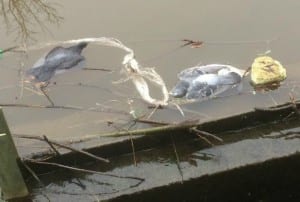
 Pigeons have made an unwelcome return to Taunton Station bridge last week after workmen removed the netting used to keep the flying critters away.
Dozens of pigeons have now flown back to the bridge, where Network Rail spent more than £300,000 on improvements and deterrents to keep them away.
About Pigeon Patrol:
Pigeon Patrol Products & Services is the leading manufacturer and distributor of bird deterrent (control) products in Canada. Pigeon Patrol products have solved pest bird problems in industrial, commercial, and residential settings since 2000, by using safe and humane bird deterrents with only bird and animal friendly solutions. At Pigeon Patrol, we manufacture and offer a variety of bird deterrents, ranging from Ultra-flex Bird Spikes with UV protection, Bird Netting, 4-S Gel and the best Ultrasonic and audible sound devices on the market today.
Voted Best Canadian wholesaler for Bird Deterrent products four years in a row.
Contact Info: 1- 877– 4– NO-BIRD (www.pigeonpatrol.ca)
by Pigeon Patrol | Jan 7, 2016 | Animal Deterrent Products, Bird Netting, Pigeon Spikes
Harris Hawk in Flight
OVERVIEW
The use of hawks and falcons to remove pigeons and gulls is becoming ever more popular in the UK with raptor-specific companies starting to compete with conventional pest control services for business. The use of a raptor as a pigeon removal option is commonly marketed as a ‘green’ and ‘natural’ method of control that is ‘humane’ and ‘in tune with nature’. It should be fully understood that flying a raptor as a method of control is not a non-lethal method of control, nor is it ‘humane’. Raptors cannot be trained not to kill the target species and when they do catch a bird the resultant spectacle of the raptor tearing the prey to piecescannot, under any circumstances, be perceived as being ‘humane’. It is also the case that a majority of the raptors that are used for the purpose of pigeon removal are not the natural predator of the target species and therefore this method of control cannot be considered to be ‘natural’ or ‘in tune with nature’ either.
Flying a raptor as a method of pigeon removal has its roots in falconry where a hawk or falcon is trained to kill animals or other birds, normally for pleasure or for sport. Falconry is considered to be a blood-sport and subsequently, those companies that offer falconry services are providing their client base with a highly controversial service that is certainly not proven to be an effective method of bird control. For use as part of a bird scaring system on landfill sites or for airport runways the service may have some value, but in respect of urban applications the use of a raptor to remove pigeons is not only expensive but can be the source of highly negative publicity for the client. If a raptor goes ‘feral’ during a control operation and catches and kills a pigeon or gull in front of staff or onlookers the negative publicity that is inevitably generated can be extremely damaging for the client. Raptors do not necessarily kill their preyimmediately and therefore the prey can remain alive for anything up to 10 or 15 minutes whilst the raptor eats the bird alive.

Harris Hawk on Perch
The use of raptors within the pigeon removal sector has marked a change for an industry that is often perceived as shying away from publicity, good or bad, in favour of a more discreet approach to the issue of bird control. For decades commercial bird control has involved extensive and excessive use of lethal controls (culling) in an effort to resolve entrenched bird-related problems. Scientific research*, however, has found that all forms of lethal control are not only ineffective but also deeply unpopular with the general public. As a result, the pest control industry has maintained a low profile. With the introduction of raptor-based controls over the last 10 years, however, the image of the industry has begun to change with pest control companies starting to talk publicly about the controls they use and particularly those controls that they suggest are ‘green’.
The use of hawks or falcons to disperse birds is not a new method of control in the bird control sector with hawks historically being used to disperse gulls and other birds from waste disposal sites, landfill sites and airports for many years. Their use in urban environments for the control of pigeons and gulls, however, has been less common. The principle of using a raptor to remove pigeons in urban applications is to visit a site 2 to 3 times a week initially and fly the raptor for 1-3 hours. Providers of the service suggest that as the weeks and months go by, visits will be reduced based on the fact that the raptor has created a ‘territory’ into which the target species will learn not to enter. The effectiveness of the service, however, depends upon the ability of the raptor to instil sufficient fear in the target species to ensure that the flock deserts its feeding or roosting site. Where the removal of pigeons and gulls is concerned, this is highly unlikely to happen. It is also the case that flying a raptor cannot be undertaken in poor weather conditions, a further limitation for this control option.

Harris Hawk in Flight
Most companies offering this service also provide conventional pest control services and often recommend that a cull will be necessary, prior to flying a raptor, in order to reduce bird numbers so that the raptor will be more effective as a deterrent. Most providers of the service also suggest that raptors can be an extremely effective and cost-effective method of control providing that the client is prepared to continue using the service for extended periods. If flying a raptor as a bird scarer is effective then why would the client need to invest in a culling programme? The reality is that most experts within the pest control industry believe that flying a raptor as a method of control is simply a gimmick and has little or no effect as a stand-alone method of control. Where a cull is recommended prior to the use of a raptor, the client sees a reduction in bird numbers and assumes that this reduction is as a result of the raptor being effective when in reality it is as a result of thecull. The client then continues to use the service until bird numbers rise back to the pre-cull figure (which they invariably do) and only then is the effectiveness of the service brought into question.

Peregrine Falcon
Another reason why flying a raptor as a method of control is less than effective as a pigeon removal option is due to the species of hawk or falcon commonly used. The natural predator of the pigeon, for example, is the peregrine falcon, a bird that can achieve speeds of up to 200 miles per hour in a dive and one of the few birds that has the speed and the manoeuvrability to outpace and catch a pigeon in flight. The peregrine falcon is rarely if ever used for this purpose in the bird control sector, with the harris hawk being the most commonly used raptor for pigeon removal work. The harris hawk is relatively slow in flight, much slower than the feral pigeon and therefore the pigeon does not view the harris hawk as a threat, whereas the peregrine falcon would be perceived as the ultimate threat. The fact that the harris hawk is not the natural predator of the pigeon and is not a native species in the UK, combined with the fact that the harris hawk is unlikely to catch a pigeon in flight, renders this species a poor choice where scaring pigeons is concerned. Pigeons are highly intelligent birds and they will never be deterred from their feeding and breeding sites due to the presence of a harris hawk for a few hours a week.

Harris Hawk
Pursuing Prey
A raptor may have the effect of removing pigeons from their existing roosts and perching areas when the bird is first introduced, but pigeons quickly realise that there is little threat and although they will be wary of the raptor, they will not move far from their feeding sites. As soon as the raptor has left the site the pigeons will immediately return to their perches and the client is left with no protection. For a raptor to have any effect on a feeding flock of pigeons the bird would have to be on-site 24 hours a day and even then, the presence of the hawk would not be enough to deter pigeons from exploiting a regular food source. In the wild, hawks only kill to eat and feed their young, not for pleasure, so once the bird has made a kill it is highly unlikely that the bird will to continue to work and it is also likely that the target species will be aware of this.
Raptor control services are now being marketed more strongly as a means of scaring roof nesting gulls from buildings and residential dwellings in urban areas. The use of a raptor to scare gulls is even less effective than the use of a harris hawk to remove pigeons. This is because hawks and falcons are commonly ‘mobbed’ by gulls and other large birds such as corvids (crow family) when they fly too close to feeding or breeding areas. Gulls and other large birds have little fear of predators such as hawks and falcons other than when they have young and then their response is likely to be more, not less, aggressive toward the predators. Hawks and falcons have little or no effect on roof nesting gulls outside the breeding period and during the breeding period, when gulls can be a serious problem for property owners, they will be quickly chased away by breeding gulls rendering them completely ineffective as a control option.

Harris Hawk About to Kill
As with all scaring techniques and devices, the target species will quickly habituate to the use of a raptor, whether or not the raptor is the natural predator of the species concerned. Therefore at best, the raptor option can only be seen to be appropriate as part of a wider control system. For landfill sites and airport runways where multiple scaring techniques are commonly used, the raptor may be effective up to a point. For urban applications where scaring techniques are rarely used due to the potential for human disturbance, anti-perching products would be a far more appropriate option rather than the use of a raptor or any other scaring device. Raptors are only as good as their handlers and a poorly trained bird will do little work and as a result will pose little or no threat to the target species. Even well trained birds will sometimes fly away and sit on a building some distance from the client site (which the raptor is supposed to be protecting), in some cases taking hours for the bird to return to the handler. Hawks and falcons can be trained up to a point, but when in flight or away from their handler their natural instincts take over and the handler can do little or nothing if the bird chooses to attack a protected species of bird or sit and refuse to fly. The client still pays for the service, however, whether the hawk works or not.
Negative publicity has dogged the use of raptors in the pigeon removal sector with barbaric spectacles such as the hawk handlers in Trafalgar Square ‘throwing’ their birds at juvenile, sick and injured pigeons in front of children and visitors to London constantly making the headlines. This type of macabre sight, where a hawk tears a live pigeon to bits as tourists look on, is anything but ‘green’ and ‘in tune with nature’ and as such cannot be taken seriously as a pigeon removal option. Similarlly, the use of a raptor by Nottingham City Council in 1999 attracted extremely negative publicity for the Authority. The Council brought the hawk in for a 2 month contract costing ratepayers £5000, in an effort to remove pigeons from Nottingham city centre. The hawk had no effect whatsoever on the pigeon population, but was the subject of a TV documentary as a result of the fact that the bird was tearing pigeons to piecesin front of the general public in broad daylight. The negative publicity generated was extremely damaging for Nottingham City Council and the £5000 of public money spent on the programme could clearly have been put to better use.

Harris Hawk with Kill
The use of a raptor for the purposes of pigeon removal is a bandwagon that many falconers and enthusiasts are jumping on and yet in most cases, these individuals know little or nothing about bird control. Even renowned falconry experts such as Jemima Parry-Jones are highly critical of the use of raptors for the purposes of bird control, in the main due to the potential for injury to the raptor. The use of a raptor may appear to be a humane and natural bird control option but in reality it is very far from that. Handlers require no training in either pest control or falconry in order to offer their services as raptor-specific bird control experts and yet the novelty of this method of control has ensured that the marketplace is overflowing with experts making astonishing claims about the effectiveness of the service that they offer. Falconry may have been popular in the middle ages but it is clearly not perceived as being an appropriate nor politically correct means of controlling and killing pest birds in the 21st century.
DEFRA’s view:
The Department of the Environment, Food and Rural Affairs (DEFRA) is the UK’s Government body that oversees the Wildlife and Countryside Act and produces legislation to which the pest control industry must adhere. The following information is taken from a document provided on DEFRA website entitled: ‘Review of international research regarding the effectiveness of auditory bird scaring techniques and potential alternatives’. By J Bishop, H McKay, D Parrott and J Allan.
“The success of this method of bird control is based on the fact that many birds have a natural fear of falcons and hawks as predators, so their presence in the area encourages problem species to disperse. The natural reaction of most prey species is to form a flock and attempt to fly above the falcon. If this fails, they will attempt to fly for cover and leave the area (Transport Canada, undated).”
“The species of falcons and hawks used depend on the bird pests present. They should preferably be a bird predator of the pest bird species as occasional kills will reinforce the perception of danger (Grubb 1977, cited in Erickson et al. 1990). The peregrine falcon (Falco peregrinus) and the goshawk (Accipiter gentiles) are most often used (Erikson et al. 1990). Raptor use is mainly limited to airports where the risk of birdstrikes is high and a variety of measures are taken to ensure aircraft safety, though in the UK, falcons are also frequently used to deter birds from landfill sites (Baxter 2002c).”
“When using falconry for bird control on airfields, the raptor must be clearly visible to discourage target birds from entering the area and to chase away birds already present. Actual capturing or killing of a bird is not the object (Roeper 2001). Falconry is an expensive method of bird control as the birds require special care and training and a specialist handler, and often a number of falcons must be provided to operate at different times of the day. For many aerodromes the additional time and expenditure cannot be justified (CAA 2002). However, falconry is popular with the public as it is environmentally friendly and considered humane as the target birds are not killed but merely chased from the area (Dolbeer 1998), though the most effective falconry does involve the occasional killing of the prey species.”
“Roeper (2001) analysed the mean number of bird strikes reported per 100 landings and 100 departures at Travis Air Force Base, California, before and after the introduction of a falconry programme. His results indicated that falconry reduced the number of strikes and also reduced the severity of strikes in terms of mean dollar costs of aircraft damage. However, these cost savings appeared to be less than the cost of the falconry programme. He recommended that research be continued to determine when habituation to the falcons occurred and to determine which species of birds were not deterred by the falcons.”
“Successful bird control using falconry was achieved on military air bases at Istres, France. Between 1979 and 1983, the numbers of bird strikes were reduced from 16 to zero (Briot 1984). Dolbeer (1998) evaluated the effectiveness of shooting and falconry for bird control at JFK International Airport, New York. The study indicated that shooting reduced bird strikes but falconry did not.”
“The use of falcons and hawks on landfill sites in the UK has been evaluated by Baxter (2000e; 2002c; undated), and has shown varying success. Numbers of scavenging gulls and corvids were reduced when falcons were flown, particularly from dawn to dusk, though poor weather conditions when the birds could not be flown allowed the gulls and corvids to return to feed. Hawks (red-tailed hawk and Harris hawk) were less successful. These raptors generally take ground prey like rabbits when hunting, so their interest in pursuing corvids and gulls was minimal (Baxter, undated). Habituation to the hawks occurred quickly and within four weeks gulls and corvids resumed feeding at the landfill.”
“Although expensive and time consuming, falconry has the potential to remove hazardous birds from areas of land more quickly than can be achieved using conventional bird control methods, and they can also extend their influence into surrounding land where access may be restricted. However, other bird-scaring methods are often equally or more effective and economical (Erickson et al. 1990). Falcons appear to be more successful than hawks at bird control due to differences in prey species. Like many other control techniques, poor visibility and bad weather restricts use, and the birds must be flown regularly to sustain their effectiveness.”
Price range:
The cost of this service varies considerably from company to company. Most providers of the service will insist on a demonstration prior to quoting due to the fact that when a hawk is first introduced into a flock of feral pigeons it will have an immediate effect. Charges range from £60-£80 per ½ hour – 1 hour through to £150 per visit for up to 3 hours.
User reviews:
To date we have been unable to find any user reviews for raptor control services but we will update this section as and when user reviews are made available to us. If you are able to provide a user review for raptor control services please contact the Pigeon Control Resource Centre.
Editorial comments:

Harris Hawk
The use of a raptor as a bird control option is clearly a highly debatable and expensive method of control with few, if any, guarantees of success. In most cases the cost of the service alone renders this control option prohibitive for a majority of property owners and the issue of negative publicity for the client is a further consideration. The fact that the client will need to use the service virtually every day and for several hours each day in order for the raptor to have any effect on the target species will necessitate an indefinite contract, potentially costing over £1000 a week. To put this figure into perspective, the average budget put aside for pest control services by most commercial property owners for a small to medium sized building, which will include the control of rodents as well as birds, is normally less than £1000 a year.
The most worrying aspect of the ever-increasing use of raptors in the pest control marketplace is the fact that most of those offering the service know little or nothing about bird control, particularly those with a background in falconry. When a client is asked to pay out large sums of money for a control system that is not only considered to be ineffective but which also requires the contractor to provide the service indefinitely, the reputation of the industry as a whole is compromised. The average building can be effectively proofed with an industry standard product such as the anti-roosting spike for a fraction of the cost of a one-month contract for a raptor control service. The essential difference is that once the building has been protected by effective anti-perching products such as anti-roosting spikes the property owner can forget the problem. When using raptor control services the contract is open-ended and the effectiveness of the service is, at best, questionable.

Harris Hawk
Experts within the field of falconry, such as Jemima Parry-Jones, an international authority on the subject, have been highly critical of the use of raptors for the purpose of bird control, which speaks volumes about this method of control. Real concerns exist over the safety of raptors used for bird control, particularly when being flown in urban environments. In town and city centres the sheer volume of overhead cables and wires and buildings with mirrored frontages present very considerable dangers to birds that have no history of flying in these environments. Raptors such as the kestrel are sometimes seen in city centres, with small numbers breeding and hunting exclusively in urban environments, but this is the only species of raptor that is regularly seen in town and city centres in the UK. Urban kestrels will feed almost exclusively on small birds, rarely pigeons and never gulls, and therefore this species presents no danger to the most common urban pest species. When a large raptor is introduced into a foreign environment such as city centre where sights, sounds and moving objects abound to distract the birds, the safety of the raptor is brought into question, irrespective of how well trained the bird may be.
A good example of a handler unable to exert control over a raptor is the case of a raptor that was being used by a falconer as part of a pigeon removal operation in a suburb of Norwich in 2005. When the bird decided that it had had enough of working it flew off into Norwich city centre where the bird attacked a pigeon, bringing it down in front of horrified shoppers and diners at lunchtime where it proceeded to tear the pigeon to pieces whilst still alive. The pigeon was apparently alive for some 15 minutes whilst being eaten, according to onlookers. The negative publicity surrounding this type of botched pest control operation simply acts to bring the pest control industry into disrepute. Similarly, the actions of the hawk handlers contracted by Ken Livingstone, Mayor of London, in Trafalgar Square have done little to persuade the public that falconry is anything other than an inhumane bloodsport.

Harris Hawk Eating Live Pigeon
 1
1
Horrified Shoppers Look On
Horrified shoppers look on as raptor eats a pigeon it has attacked and brought down in Norwich City centre, 2005.
These photos appeared in the Norwich Evening News 1st December 2005 and are provided courtesy of the Norwich Evening News.
Flying a raptor as a method of control cannot be considered to be an effective nor a cost-effective means of controlling any species of pest bird. The service appears to be an outlet for falconry hobbyists in the main and even where the service is provided by a bona fide pest control company, such as the company used in Trafalgar Square, the standard and public acceptance of the service is far from guaranteed. The Pigeon Control Resource Centre cannot recommend this service other than for use on airfields and waste disposal sites and even then there is doubt as to the effectiveness of this control. For the control of pigeons and gulls in urban environments the service is simply a waste of money and in virtually every case those experiencing problems with pest species of birds would be better advised to install anti-perching products or look at other scaring options.
About Pigeon Patrol:
Pigeon Patrol Products & Services is the leading manufacturer and distributor of bird deterrent (control) products in Canada. Pigeon Patrol products have solved pest bird problems in industrial, commercial, and residential settings since 2000, by using safe and humane bird deterrents with only bird and animal friendly solutions. At Pigeon Patrol, we manufacture and offer a variety of bird deterrents, ranging from Ultra-flex Bird Spikes with UV protection, Bird Netting, 4-S Gel and the best Ultrasonic and audible sound devices on the market today.
Voted Best Canadian wholesaler for Bird Deterrent products four years in a row.
Contact Info: 1- 877– 4– NO-BIRD (www.pigeonpatrol.ca)
by Pigeon Patrol | Jan 6, 2016 | 4-S Gel Bird repellent, Bird Netting, Pigeons in the News, UltraSonic Bird Control
 OvoControl P Pellets
OVERVIEW
Oral birth control is not commonly used for the control of birds and previous attempts to find an effective and humane oral contraceptive for the control of feral pigeons have been unsuccessful. Research is ongoing, however, to produce an oral contraceptive drug that can be fed to pigeons and other problem birds in an effort to reduce flock size humanely and in a cost-effective manner. Other methods of birth control that are commonly used to control pigeon flock size include the removal and replacement of eggs (fromartificial breeding facilities) and, to a lesser extent, ‘egg oiling’. Egg oiling is an extremely effective method of bird control which involves immersing newly-laid eggs in paraffin BP to block the pores of the egg, denying oxygen to the undeveloped foetus. Egg oiling and egg removal/replacement are both tried and tested methods of birth control that are considered to be highly effective in the control of pigeons and other birds alike. The use of ‘egg oiling’ as a method of control is discussed, in detail, in a dedicated product/service review entitled ‘Egg oiling’. Schemes involving egg removal/egg replacement from artificial breeding facilities are discussed in the ‘Artificial breeding facilities’ product review.
At present there are no oral contraceptives available in the UK that are licensed for use with pigeons or any other birds. The Department of the Environment, Food and Rural Affairs (DEFRA) has confirmed that although it has commissioned research into contraceptives for animals, it has not been in a position to commission research into contraceptives designed to be used for birds. This is because all species of birds are protected in the UK whereas the same cannot be said of animals and their lack of legal protection allows trials of this nature to be carried out.
Oral contraceptives for birds are far from common and those that have made it into the commercial marketplace have not been popular nor sold well. The best known avian oral contraceptive is a drug called Ornitrol that was developed for use as a bird and animal contraceptive on the back of its development as a cholesterol inhibitor in humans. The active ingredient diazacon (20,25 diazacholesterol) is a cholesterol mimic that inhibits cholesterol production and blocks steroid hormone formation. The reason that the drug was first considered for bird control was based on the fact that as eggs contain cholesterol, diazacon may lower cholesterol at the same time as inhibiting reproduction. More importantly, diazacholesterol 20,25 may have the ability to block the production of hormones (estrogen, testosterone and progesterone), all necessary for reproduction. Tests were carried out using sparrows and pigeons and it was found that diazacholesterol 20,25 was effective in reducing reproduction in both species. As a result the product was registered as a means of controlling pigeon populations under the trade name of Ornitrol.
Ornitrol was designed to be used in the same way that narcotic baits such as Avitrol are used to kill pigeons, by feeding non-treated grain on the chosen site for 7-10 days and then substituting the treated grain for grain treated with Ornitrol. This treatment was sufficient to make female pigeons sterile for up to 6 months. The process is then repeated every 6 months indefinitely. Ornitrol administered to pigeons acts in the same way as a human birth control pill, if the drug is not consumed every 6 months female pigeons become fertile once more and continue to breed unhampered.
Ornitrol is now no longer produced but its development as a reproductive control has led to the current research and development of drugs such as OvoControl G and P, relatively new birth control drugs designed for use with Canada geese and feral pigeons respectively. Ornitrol was discontinued due to concerns about the long-term use of the drug and the fact that in the form it was produced it was easily and quickly consumed by non-target species. For use on birds like pigeons that breed all year round, Ornitrol would need to be used continually throughout the year and it was found that the drug caused muscle tremors in pigeons when used over long periods. Not only this, but the drug was also extremely expensive to provide on this basis.
OvoControl P is a drug produced by an American company called Innolytics that is designed to control the “hatchability of eggs”, according to the manufacturer. The active ingredient of the contraceptive is nicarbazin, a drug originally used to control enteric disease in chickens. OvoControl works by interfering with the vitelline layer of the egg, separating the egg white from the yolk. The vitelline layer is a membrane that is vital for the development of an egg and without it the egg will not hatch.
Unlike Ornitrol, OvoControl P is fed to pigeons from day 1 but during the acclimatisation process (normally lasting between 5 and 14 days) OvoControl P is fed at a reduced level of 1 ounce (28 grammes) per 30 birds. As pigeons become acclimatised to feeding on the site OvoControl P can then be increased up to a maximum of 1 ounce (28 grammes) per 5 birds. The main criteria for the use of OvoControl P is a site where pigeons can be encouraged to feed on a daily basis, ideally at the same time each day and where there are no non-target species present. The manufacturer suggests that OvoControl P should be fed in the early hours of the morning and ideally on flat rooftops or, if rooftops are not available, on flat paved areas that are consistent with the restrictions imposed on the use and distribution of the drug. Wherever possible OvoControl P should be fed to pigeons close to their roosts or daytime perching places.
The following chart outlines dosage per pigeon with the basic calculation being: estimated pigeon population x 0.2 ounces (5.5 grams) of OvoControl P = amount of OvoControl P to be fed daily.
- 2 ounces (56 grammes) of bait = 10 pigeons
- 8 ounces (224 grammes) of bait = 40 pigeons
- 1 pound (0.4 kilogramme) of bait = 80 pigeons
- 5 pounds (2.2 kilogrammes) of bait = 400 pigeons
- 10 pounds (4.4 kilogrammes) of bait = 800 pigeons
- 30 pounds (13.6 kilogrammes) of bait = 2,400 pigeons
- 2 cups of bait = 14 ounces (0.3 kilogrammes) = 70 pigeons
- 1 gal of bait = 112 ounces (3.1 kilogrammes) = 560 pigeons

Mechanical Distributor
for OvoControl P
The manufacturer suggests that OvoControl P can be fed to pigeons using a variety of methods. Options include the use of various sized and shaped containers containing the drug in order to accommodate all pigeons feeding on the site, including dominant cock birds and submissive/juvenile birds. Containers must be perforated to allow drainage. This method is only recommended on sites where the flock consists of less than 50 birds. Other methods include hand feeding (broadcast distribution) where the drug is distributed over an area not more than 20 feet radius (6 metre radius) and mechanical feeding, a method used for pigeon flocks of more than 50 birds. The broadcast limit for mechanical feeders must be set to a radius of no more than 20 feet (6 metres). Mechanical feeders should only be used on flat roof areas or flat paved areas that have restricted public access.
The recommended use of mechanical feeders suggests that OvoControl P can be used without the need for a human presence but this is not the case. Clearly a human presence is required to identify non-target species birds, to assess flock size prior to distributing OvoControl P, to remove OvoControl P in wet conditions and to ensure that children and pets do not come into contact with the drug. The suggested use of mechanical feeders, outlined on the OvoControl P website, is misleading and may result in some users simply ignoring the operational requirements of OvoControl P and distributing the drug indiscriminately.
There are a number of restrictions involved with the use of OvoControl P which include:
- OvoControl P must be used throughout the entire breeding period – in pigeons this is 365 days a year and OvoControl must be distributed every day
- The human applicator must visit the site early in the morning to distribute OvoControl P
- The human applicator must thoroughly assess pigeon activity on the site prior to distributing OvoControl P and undertake a pigeon head count each day
- The human applicator must reduce/increase the volume of OvoControl P fed each day according to the results of the head count to ensure optimum coverage for the whole flock
- The human applicator must ensure that children and pets do not come into contact with OvoControl P
- The human applicator must remain on site for up to one hour to ensure that all the bait is eaten and to ensure that non-target species do not attempt to exploit the bait
- The human applicator must ensure that no non-target species are feeding on site during the distribution process and whilst the bait is being consumed by pigeons or the applicator may be committing an offence. In the USA it is an offence to feed treated bait to protected, threatened and endangered birds
- Daily observations for non-target species birds must be carried out throughout the 5-14 day acclimatisation period and once a week thereafter
- OvoControl P must not be used in rain and neither should the drug be used within 20 feet of any body of water including ponds, rivers and lakes – when distributed on rooftops or paved areas in wet conditions the area in which OvoControl P is to be distributed must be dry and ideally beneath some type of canopy
- OvoControl P can only be used in urban applications and on flat roof areas or paved areas where public access is restricted
- Health and safety must be assessed and health and safety restrictions include: wearing protective eyewear (as OvoControl causes moderate eye irritation), washing all contaminated clothing before re-use, washing thoroughly after handling OvoControl P and before eating, drinking or smoking. Gloves, long-sleeved shirt and long trousers must be worn at all times when handling or distributing OvoControl P
The manufacturer confirms that OvoControl P will render all birds that take the bait sterile, including protected species, but claims that OvoControl P is manufactured and provided in a format that will only be palatable to pigeons. The manufacturer provides a very long list of restrictions for use, however, suggesting that exploitation by non-target species is a real concern and yet no formal training is required for human applicators. The most significant concerns raised in respect of all orally fed contraceptive drugs are their impact on non-target species. Although the manufacturer suggests that that there is little likelihood of exploitation by non-target species, as a result of the size and shape of the bait, there is still an admission that the drug can be ingested by protected birds. The manufacturer suggests that a bird the size of a songbird or sparrow would not be interested in OvoControl P, but there is no advice or comment made in respect of larger birds exploiting the bait. The only mechanism available to stop non-target species exploiting the bait is the human applicator and the ability of that person to identify non-target species and to scare them from the site. Identification and the scaring of non-target species is also dependent on the human applicator remaining on-site, in all weather conditions, for the requisite 1 hour period following distribution. The only positive aspect of OvoControl P over drugs like Ornitrol is the fact that secondary toxicity cannot take place. According to the manufacturer, non-target effects can only result from direct ingestion of OvoControl P.
Health and safety guidance provided by the manufacturer also suggests that OvoControl P can cause “moderate eye irritation” to the human applicator. If the human applicator is required to wear protective eyewear as a result of concerns over safety, what affect will OvoControl have on the target species? It must be assumed that if OvoControl can cause moderate irritation to the human eye the same must apply to the avian eye, bringing health and safety of the target species into question. No mention is made of this fairly obvious welfare concern on the Innolytics website . Animal protection laws in the USA are far less comprehensive than equivalent legislation in the UK and the criteria required to attract a licence for a new drug in the USA may be less challenging than criteria necessary for a similar application in the UK. If OvoControl P can cause irritation in the avian eye there is clearly the potential, in extreme cases, for sight to be compromised with potentially lethal consequences.
The most obvious problem associated with the use of OvoControl P to control pigeon populations is the cost of the control, not only in terms of the cost of the drug itself but, more importantly, the cost in human time. For an individual to be expected to attend a rooftop site every day, 365 days a year and in all weathers, to spend upwards of an hour assessing pigeon activity, distributing bait and then watching for non-target species is a big ask for any property owner. The early hours of the morning are considered to be anti-social hours and therefore premium rates would have to be paid to employees undertaking the required tasks and protective clothing would also need to be provided. Not only this, but contaminated clothing must be washed prior to re-use and showering facilities may need to be provided on site. There is a great deal of responsibility placed on the individual/s carrying out the daily distribution and assessment works, not only to carry out a pigeon head count but also to ensure that non-target species do not exploit the bait and that no children and pets access the distribution area. If rain starts to fall it must be assumed that the human applicator must also be available to sweep up all the OvoControl P pellets before they become contaminated with water.
Any option to control pigeon flock size humanely and effectively must be viewed as a positive development and although trials suggest that OvoControl P can be effective in reducing pigeon flock size, the cost of the control and the question of welfare is inevitably brought into question. Following in the footsteps of Ornitrol, a poorly performing and extremely expensive contraceptive drug, it was incumbent on the manufacturer of OvoControl P to provide an option that outperformed Ornitrol in every department. To an extent Innolytics has achieved this by providing a drug that has few known side effects and which, they claim, is unlikely to be exploited by non-target species. If the drug is as effective as the manufacturer claims and assuming that the drug is unlikely to be exploited by non-target species, will the sheer cost of human interaction render it too expensive to use? Based on the information supplied by the manufacturer the answer to that question has to be a resounding “yes”. Pest control budgets are notoriously low with most property owners budgeting only a few hundred pounds for all their pest control needs (including budgets for rodent control) so it seems highly unlikely that any company or individual will be prepared to put aside what must be considered to be a huge annual sum in order to use OvoControl P.
Although OvoControl P appears to have clear advantages as a means ofreducing the breeding potential of the feral pigeon, the product offers little in the way of relief for the property owner experiencing entrenched pigeon-related problems. The manufacturer confirms that OvoControl P should be used as part of an overall control system rather than as a stand-alone control, but this begs the question – why would a property owner choose to use OvoControl P as well as conventional control options? The cost of using OvoControl P for one year would almost certainly allow most property owners to comprehensively protect their entire property with an industry standard anti-perching product. Once a property is protected with a product like the anti-roosting spike, the property owner would have anything from 10-30 years of relief without the need to spend more money. If the same property owner used OvoControl and anti-perching products to protect their property the cost would not only be extreme in the first year (with the cost of spikes and OvoControl P) but the property owner would have to continue spending large sums every year for the continued use of OvoControl P.
For a city council or a government body that has responsibility for area-wide pigeon control, the use of OvoControl P may be considered as an option in an effort to reduce the size of urban pigeon flocks. For the individual or the commercial property owner, however, the product must be considered to be prohibitively expensive to use, offering far less value than conventional anti-perching and exclusion products. It is possible that council or government bodies could undertake area-wide trials, offering grants to property owners to trial the use of OvoControl P on their sites or properties, but it is hard to see any application for the product for the average property or site.
DEFRA’s view:
As there are no avian oral contraceptive drugs available in the UK at present, DEFRA does not discuss this control option on its website. A spokesperson for DEFRA did confirm, however, that should a product like OvoControl P be made available in the UK, all the science involved with the drug as well as details of the preferred delivery mechanisms would be required in order to make a decision as to whether that drug was suitable to be licenced for use in the UK.
The Health and safety Executive (HSE) confirmed that any employer using a birth control product on their site must carry out an in-depth risk assessment confirming that the product is safe to use and also confirming that the use of the product on-site conforms to Section 2 of the Health and Safety at Work Act. The HSE also confirmed that the manufacturer of the product has a duty to divulge any and all information about the product via a detailed data sheet. Any drug used to induce sterility in a bird would be listed as a product that is potentially hazardous to human health and as such would be listed as such under the Control of Substances Hazardous to Health Act.
Price range:
The cost of OvoControl P is $4.88 per lb. In real terms this equates to approximately $6 a day to treat 100 pigeons Mechanical feeders are available for automatic distribution of OvoControl P:
- Durable Baked on Green Scatter Feeder $500.00
- 22 gauge Galvanised Finish Feeder $450.00
- Optional Green or Galvanised Solar Panel $75.00
User reviews:
To date we have been unable to find any user reviews for oral contraceptives but we will update this section as and when user reviews are made available to us. If you are able to provide a user review for oral contraceptives please contact the Pigeon Control Resource Centre.
Comments from the Manufacturer/Distributor:
The following is taken from the Innolytics website:
“Innolytics, LLC has developed an innovative and humane technology to help control the population growth of pest avian species. The technology, developed in collaboration with the USDA/APHIS National Wildlife Research Center (NWRC), essentially represents oral contraception for birds. There is no comparable technology on the market in the USA today. The product is called OvoControl.
Originally developed to help manage the burgeoning resident Canada goose population in the Northwest, Mideast and Northeastern areas of the United States, the US Environmental Protection Agency (“EPA”) recently registered the product for use in pigeons.
Pigeons, the ubiquitous bird that populates virtually all cities, towns and industrial sites are typically managed with exclusion techniques, poisoning or trapping. While the exclusion devices will keep birds away from a specific building or location, the underlying bird population continues to grow. The use of OvoControl complements exclusion techniques – nets, spikes and electrified strips – and provides an alternative to poisoning or trapping birds.
OvoControl for pigeons is ideal for use at large scale sites and facilities, areas where some birds can be tolerated, but where a significant reduction in the population is desired. Potential sites include urban areas, schools, airports, power plants and refineries. Large scale field studies at urban sites in Italy demonstrate a population decline of nearly 50% in just two years.
The core technology for OvoControl centers on the proven ability to significantly decrease the hatchability of eggs by feeding treated bait to birds during the reproductive season. The effect is fully reversible and care has been taken to develop a feeding system which will limit exposure to non-target species. The USDA conducted extensive research on this technology and continues to evaluate further applications in other pest species.
The EPA granted the first registration for egg hatch control for resident Canada geese in 2005 and subsequently registered the product for pigeons in 2007. Ducks and other development projects are underway for a range of other bird species.
Innolytics’ OvoControl technology enjoys the full support of the leading animal welfare and conservation organizations in the US and abroad.”
Editorial comments:
The use of oral contraceptives for bird control has been debated internationally for decades with early research in Europe drawing few conclusions about their effectiveness or whether chemosterilants should be used at all. Swiss trials found that it was impossible to isolate feral flocks in order to assess whether contraceptives could be used to reduce breeding. Because pigeons are highly mobile, using multiple feeding sites each day, the same birds could not be relied upon to visit test sites each and every day, particularly at the precise time that treated grain was being offered. Pigeons from specific feeding flocks were also found to integrate with other feeding flocks on an irregular basis, rendering any data collected corrupt. Laboratory experiments can be undertaken to assess the effectiveness of contraceptives, but laboratory environments do not, in any way, mimic the pigeon’s natural habitat.
The only oral contraceptive available that is designed specifically for use with pigeons is OvoControl P with its sister product OvoControl G, used for the control of Canada geese. Both products have been passed for use in the USA by the US Environmental Protection Agency (EPA), but standards adopted by EPA are unlikely to be considered acceptable in the UK and some other European countries. Trials undertaken by the manufacturer of OvoControl P in Italy have apparently provided some quite astonishing results with reductions of up to 50% in under two years, but no detailed information is available about these trials on the Innolytics website. As Innolytics suggest that OvoControl P should be used as part of a comprehensive control regime it is quite possible that culling was used as an additional control to compliment the use of OvoControl P. This may account for the unusually large reduction in flock size in such a relatively short period. It should also be noted that many US companies trial their products in Italy and although there is no obvious reason why this should be the case, it is possible that Italy has relaxed animal protection laws as does the USA.
Other methods of breeding control do achieve extraordinary results, such as the use of artificial breeding facilities where eggs are removed and replaced withdummy eggs on a weekly basis. This control, pioneered by the UK-based Pigeon Control Advisory Service (PiCAS International), is now used extensively across Europe and has been found to reduce flock size dramatically and within short time frames. The egg removal/replacement method of control is not labour intensive (5 minutes a week to remove and replace eggs), costs virtually nothing and stops all breeding talking place within the breeding facility. OvoControl P, relative to this control option, is extremely expensive, is not guaranteed to be effective and offers the property owner on whose building the problem exists, no relief whatsoever. Pigeons will quickly learn to use artificial breeding facilities, even if their existing roosts are left unprotected and once established within lofts the birds will breed openly, irrespective of whether their eggs are interfered with or not.
OvoControl P is a good idea but fatally flawed in terms of its operational costs and the need to continue to offer the control indefinitely. OvoControl must be provided every day, 365 days a year, no exceptions. Most property owners that experience problems with pigeons do not have pigeons roosting overnight and breeding on their property, they simply have daytime perching problems where pigeons are using their property for the purposes of exploiting a food source. For these property owners to use OvoControl P as well as installing anti-perching products does not make sense. OvoControl P is designed to reduce flock size by birth control, a long-term goal, whereas anti-perching products will provide any property owner with instant and comprehensive relief, assuming that the product has been installed as per manufacturers’ recommendations. For local authorities to use oral contraceptives in order to reduce flock size in an effort to provide property owners with some long-term relief (and spend less on purchasing deterrents) makes perfect sense and is a control option that would justify the use of public money to provide. To expect individuals and property owners to employ controls of this nature is simply pushing the envelope a little too far.
Although the manufacturer of OvoControl P suggests that there is little if no chance of non-target species taking the bait, there is no doubt that if this were the case the product would be recommended for much wider use. OvoControl P has been designed in such a way that it is difficult for smaller birds to exploit, but not impossible. There is also the issue of larger birds taking the bait. Whether or not non-target species are able or inclined to take the bait is critically important to the success of any type of contraceptive and until such a time as a product is designed that is species-specific and that cannot be exploited by non-target species, this control option will inevitably have its critics.
The issue of health and safety, not only for the human applicator of the product but also for the target species, is another issue that needs further research and investigation. A product that can cause “moderate irritation” to human eyes will almost certainly have the same effect on avian eyes. Although it must be borne in mind that the USA, where this product is approved for use, has far more relaxed animal protection laws than the UK, there is no doubt that this issue of potential suffering will be a cause for concern in the UK and many European countries. It is unlikely that OvoControl P will be introduced into the UK in the foreseeable future and if the product was introduced in its present format it is unlikely to be approved for use by DEFRA or the HSE.
Also commonly known as:
Ornitrol, OvoControl, OvoControl P, ovoControl G, the pigeon pill, pigeon contraceptive
Relevance to pigeon control:
Oral birth control is used as a method of pigeon control
About Pigeon Patrol:
Pigeon Patrol Products & Services is the leading manufacturer and distributor of bird deterrent (control) products in Canada. Pigeon Patrol products have solved pest bird problems in industrial, commercial, and residential settings since 2000, by using safe and humane bird deterrents with only bird and animal friendly solutions. At Pigeon Patrol, we manufacture and offer a variety of bird deterrents, ranging from Ultra-flex Bird Spikes with UV protection, Bird Netting, 4-S Gel and the best Ultrasonic and audible sound devices on the market today.
Voted Best Canadian wholesaler for Bird Deterrent products four years in a row.
Contact Info: 1- 877– 4– NO-BIRD (www.pigeonpatrol.ca)
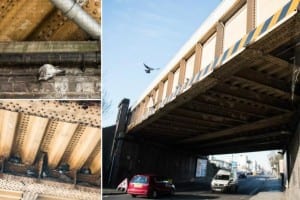
by Pigeon Patrol | Jan 5, 2016 | Bird Netting, Pigeons in the News, UltraSonic Bird Control
 Liquid Paraffin BP
Egg oiling with liquid paraffin BP is approved for use under the Control of Pesticides Regulations(COPR) but can only be used under licence provided by the Department of Environment, Food and Rural Affairs (DEFRA) under Section 16 (1) of the Wildlife and Countryside Act 1981.
It is an offence to interfere with a nest or its contents and therefore, before taking any action to remove a nest with or without eggs or chicks, or to oil eggs within a nest, permission must be sought from the Department of the Environment, Food and Rural Affairs (DEFRA).
Egg oiling is considered to be an extremely effective method of non-lethal and humane bird control but is not commonly used for the control of urban species such as the feral pigeon. Egg oiling is a method of egg treatment that is normally used for the control of ground nesting birds and is considered to be 100% effective if carried out at the correct time of year. The only exception to this rule would be where egg oiling is used for the control of roof-nesting birds such as the gull. Although the gull does not nest at ground level the process has been successfully adapted to be used as part of a gull control programme where birds are nesting in accessible areas at height.
Egg oiling involves the use of liquid paraffin BP to coat the shell of the egg in order to stop the embryo from developing. Liquid paraffin BP is a white mineral oil, commonly known as paraffin oil, which is available from chemists in small quantities or from chemical suppliers in 500 ml+ bottles for larger applications. When an egg is removed from the nest and fully immersed in liquid paraffin BP the oil blocks the pores of the egg, coating the underlying egg membrane and depriving the fertilised egg of oxygen. In order for the process to be completely effective the whole of the egg must be coated leaving no gaps or ‘dry’ areas.DEFRA recommends the use of a wide-necked container or small bucket for dipping the eggs. Once immersed in the liquid paraffin BP the egg must be turned 360° several times to ensure that the whole egg is coated. DEFRArecommends that the operator should wear protective gloves and a facemask to comply with Control of Pesticides Regulations (COPR) but confirms that a gloved hand will not remove liquid paraffin BP from a coated egg. Liquid sprays or sponges should not be used to coat the egg as these methods of coating may leave some areas of the shell untreated.
Once the egg has been dipped in liquid paraffin BP it should be allowed to drain before being replaced in the nest. The nests and eggs that have been treated should be marked to ensure that they are not revisited and re-oiled more often than is necessary – this reduces both labour and the quantity of liquid paraffin oil used. The major benefit of this method of egg treatment is that the parent will be unaware that the egg has been interfered with and will continue to incubate the eggs for the requisite period. Other methods of egg interference include the following:
- Breaking eggs (in the nest)
- Pricking eggs (using a pin or needle to make a hole in the shell of the egg that will allow bacteria to enter the egg as well as desiccating the contents)
- Removing eggs
- Cracking eggs
- Shaking eggs
- Removal of eggs and the provision of dummy eggs
All of these methods of egg interference are not only illegal, unless a licence has been obtained from DEFRA, but they are also ineffective, with the possible exception of removing eggs and replacing them with dummy eggs. When eggs are interfered with by any means other than egg oiling with liquid paraffin BP, the parent will normally re-lay another clutch of eggs immediately, rendering the process of interference pointless. Dummy eggs are likely to be accepted by the parent but only if the dummy egg is an exact replica of the real egg, not only in size and colour but also in weight. When using egg oiling it is important to be aware that if the target species commonly lays more than one clutch of eggs per season it is possible that re-laying will occur once the parent has incubated the treated eggs for the normal period (ie. for pigeon control this period would be 19 days).
As each and every species of bird lays a particular number of eggs (within a range), and as each species will spend varying periods laying and incubating their eggs, the timing of each egg oiling operation is critical. Some species of birds lay 12-15 eggs, some only 2 or 3. Some species breed all-year round others only produce one clutch per year. It is therefore also critically important to have in-depth knowledge of the target species before applying for a licence to oil eggs and before undertaking any oiling operations. As egg oiling operations can be highly labour-intensive, particularly where the control of waterfowl is concerned, a well planned and structured species-specific progamme must be provided. Failure to do so will compromise the success of the operation and dramatically reduce cost-efficiency.
Where the control of species such as the feral pigeon is concerned egg oiling can be an extremely effective method of control when combined with a loft-based control system. A system of this nature would normally involve the use of an artificial breeding facility such as pigeon loft where pigeons are encouraged to roost and breed as an alternative to their normal roosting and breeding sites. As pigeons breed all-year round any control system involving the use of egg oiling would need to be provided throughout the year with particular attention paid to the period March-October, this being the height of the breeding period. Although human interaction would be required throughout the whole year the act of oiling and marking eggs and nests in a loft-based environment would only take minutes per week.
Egg oiling is most commonly associated with the control of Canada goose populations due to the fact that Canada geese are becoming a growing problem in the UK with static populations of non-migratory birds increasing every year. As with the control of most species of bird, effective Canada goose control systems involve the use of several control techniques with egg oiling being considered to be one of the most effective options. Egg oiling regimes must be well planned and require nesting sites to be monitored prior to nests being built and clutches being laid. Clutches must be oiled immediately after the final egg has been laid on sites where multiple nests exist and for single breeding pairs the eggs should be oiled 3 days after the last egg has been laid. Canada geese start to lay in the second half of March with most eggs being laid in the first half of April. It would therefore be necessary to visit the breeding site 3 times; at the end of March, mid-April and the end of April. All eggs should be oiled throughout this period and by doing so it is highly unlikely that the parent will re-lay once past the end of the normal incubation period.
For the control of large gulls in urban environments egg oiling can be an extremely effective method of control, particularly when used as the main control option alongside the installation of deterrents and anti-perching devices. Gulls are normally colonial, sometimes breeding in mixed colonies and laying their eggs between mid-April and late June. Gulls will either breed on flat-roof areas, normally in numbers, or solitarily on or beside chimney pots or other difficult-to-access areas at height. Nests will need to be visited several times during the course of the breeding period to ensure that all the eggs are oiled. Clutches should be oiled as soon as incubation has started. As with Canada geese, constant monitoring will be required but as gulls tend to habituate to the same nesting site each year the monitoring process may be more straightforward. Although the installation of deterrents and anti-perching devices may be required, egg oiling, if carried out consistently and thoroughly, will be 100% successful as a birth control option. It may also have the effect of moving the birds on to other breeding sites permanently due to their lack of success in rearing young on the site concerned. This process is likely to take 2 to 3 seasons before the birds permanently desert the site.
Egg oiling is a cheap, humane and 100% effective method of control that can be used in a variety of situations and for the control of a wide variety of bird species. When used for the control of some species, such as wildfowl in rural areas, the act of oiling may be labour-intensive, thereby increasing the cost of the operation. However, the fact that this method can be 100% effective relative to conventional controls such as shooting, which are completely ineffective (and in some cases act to increase population size as a result of rejuvenation), egg oiling has to be considered to be one of the most effective methods of control available.
DEFRA’s view:
The Department of the Environment, Food and Rural Affairs (DEFRA) is the UK’s Government body that oversees the Wildlife and Countryside Act and produces legislation to which the pest control industry must adhere. The following information is taken from a document provided on DEFRA website entitled: ‘Review of international research regarding the effectiveness of auditory bird scaring techniques and potential alternatives’. By J Bishop, H McKay, D Parrott and J Allan. For the purpose of this review we have included a section on nest destruction as this control option is often tried and found to fail prior to resorting to egg oiling.
Egg Destruction and Oiling
“Egg destruction is used to reduce the local population of pest birds and in the UK it requires a licence from Defra. Eggs can be destroyed by several methods. Straightforward egg removal can encourage re-laying unless the eggs are replaced by hardboiled or wooden replicas (Baker et al. 1993). The pricking of eggs with a needle allows bacteria to enter the egg as well as desiccate its contents (French and Parkhurst 2001), but some pricked eggs may still hatch and birds may abandon clutches to relay.
Egg oiling is a cheaper, more effective and more humane method of egg control. It involves coating the egg shells with oil such as liquid paraffin (Baker et al.1993). This stops air from passing through the shell to the embryo and prevents it from developing properly. Baker et al. (1993) tested this method on Canada geese and achieved a 100% success rate; none of the 231 treated eggs hatched. They also pricked some eggs and these too did not hatch, but they were incubated for significantly less time, allowing the adults to relay elsewhere.”
“This technique, using white mineral oil, was also effective on ring-billed and herring gull eggs, though some eggs (8-9%) sprayed early in incubation or sprayed with only a small quantity of oil late in incubation, did hatch (Christens and Blokpoel 1991). For total success, it was recommended that spraying should be undertaken three times during incubation. Although this should be more effective it is more labour-intensive and so less cost-effective.”
“The sole use of egg destruction is unlikely to reduce a local population in the longterm. It is a time-consuming process as all nests have to be located and treated, and this may be hindered by problems of access. The timing of destruction is important and any reduction in a population caused by the loss of young birds may well be offset by immigration of new birds from nearby non-treated areas.”
“The technique has been approved under the Control of Pesticides Regulations (COPR) but can only be used under a licence issued by the Department of Environment, Food and Rural Affairs (Defra) under Section 16(1) of the Wildlife and Countryside Act, 1981.”
Nest Destruction
“Nest destruction, like egg destruction, requires a licence in the UK. It is a time consuming though relatively inexpensive control technique, and may help to control a local pest species. This technique was used to control double-crested cormorants in America, and reduce their negative impacts on the nesting habitats of other colonial waterbirds, as well as help to restore the fish community (Farquhar et al. 2000). During weekly visits nests on the ground were removed by hand and those in trees dislodged with a telescopic pole. The nesting material was scattered to discourage rebuilding. Since the nest removal programme began there has been no successful cormorant breeding in the area.”
“Ickes et al. (1998) recommended nest and egg removal for ground-nesting colonies of gulls but found that the technique was unlikely to reduce the number of nesting gulls in a given area, but it moved the problem as the gulls dispersed to recolonise other sites. Nest and egg removal and just egg removal were found to be equally effective but the former technique was approximately 60% more labour intensive. This made it more expensive.”
“In general, the use of other scaring methods in addition to nest disturbance and destruction is more likely to cause abandonment of an area by a bird pest species (Blokpoel and Tessier 1992, cited in Ickes et al. 1998).”
Price range:
Paraffin BP is widely available through high street chemists or in large quantities from chemical suppliers. The cost for larger quantities varies considerably but for a 180 kilo drum of liquid paraffin BP, from a large chemical supplier, the cost would be approximately £300.00. To put this in perspective, 1 kilo would be sufficient for most users to oil a considerable number of nests several times in one season.
For small quantities the price of a small bottle of liquid paraffin BP from a chemist is £1.10 for a 150ml bottle.
User reviews:
The following comment is made by a spokesperson for the Pigeon Control Advisory Service, an organisation that has widely recommended the use of egg oiling as a means of controlling a variety of avian species:
“Many of our clients have used egg oiling to great effect for the control of gulls, ducks, Canada geese and pigeons. This method of control is completely effective when the user is prepared to undertake regular monitoring and oiling according to the breeding habits of the target species. In fact this is the only method of bird control that we have found to be 100% effective.”
“The user has to be prepared to make the effort to monitor and identify nests, as well as undertake 2 or 3 oiling operations per year, but if clients follow the advice they are given they will be rewarded with an extremely effective control system that is humane and non-invasive.”
“Where artificial breeding facilities are used by clients for the purpose of pigeon control we will normally offer the option of using egg oiling to treat eggs as an alternative to egg removal and replacement with dummy eggs. Both methods are effective and in each case the adult is unaware that the eggs have been interfered with, but egg oiling has the edge over the use ofdummy eggs. In some cases dummy eggs are rejected by the parent and they have re-laid as a result, but to date we have not had an instance where oiled eggs have been deserted. The only possible down-side of egg oiling, relative to removal and replacement with dummy eggs, is that it takes a couple of minutes longer per week, but this is the only negative.”
Editorial comments:
Egg oiling is a rare phenomenon in the world of bird control – it is a control that is 100% effective. Although there are anti-perching products, such as the anti-roosting spike, that are 100% effective when installed according to manufacturers instructions, there are no other scaring, deterring or birth control products that are anything like as effective as egg oiling. Egg oiling is a versatile control option that can be effective with a wide variety of bird species and in countless applications.
Although the monitoring process and resultant oiling operations may be time consuming in some applications, the long-term advantage is that the target species may simply cease using the site for the purpose of breeding if they have been unsuccessful in breeding for several consecutive years. This is particularly the case where roof-nesting gulls are concerned. Mature roof nesting gulls return to the same breeding site each year and unless physically prevented from doing so are unlikely to be persuaded to go elsewhere. If their eggs are oiled for several consecutive years and they produce no young, the birds may associate the unsuccessful breeding attempts with the site rather than with any other factor. As a result the birds may move on to another site without the need to resort to any other control option. When egg oiling is combined with the provision of anti-perching products and possibly some type of visual or bio-acoustic scarer, the user will have a highly effective and comprehensive control system.
Egg oiling will hold appeal for a majority of those experiencing bird-related problems as the process of oiling is extremely simple to undertake without the need for special training or protective clothing other than gloves and a facemask. Paraffin oil is also extremely inexpensive to buy and very little is used during the course of an oiling operation. Therefore the main cost implications are simply man-hours required to monitor nest sites and oil eggs.
One of the major advantages of egg oiling is that it is humane and non-lethal. Egg oiling offers the user a bird-friendly product that is not only inexpensive to provide but that is also highly effective as a control option. Lethal control has historically been used to control many of the species that we commonly associate with egg oiling, including Canada geese and roof-nesting gulls, but lethal control is a completely ineffective and often controversial control option. In a majority of cases where lethal control is used in an attempt to reduce population size on commercial sites, employees will react in an extremely negative way to what they see as unnecessary killing. This, combined with the fact that lethal controls such as shooting and cage trapping can actually have the opposite effect and increase population size, demonstrates the effectiveness of egg oiling as an excellent all-round and popular alternative to invasive controls.
For anyone considering egg oiling as a control option it must be stressed that an in-depth understanding of the target species and its breeding habits is essential. Once the user is satisfied that he or she is fully conversant with the target species and is in a position to provide the necessary time to monitor breeding and undertake oiling, this method can be used by virtually anyone. Egg oiling can clearly be used in large-scale commercial applications but it can also be used to great effect by the individual who has a minor problem with, for example, nesting pairs of ducks in their waterside garden. In this application monitoring would be simple and straightforward and the benefit would be that there would be virtually no cost associated with the control. Neither would this form of birth control cause any controversy based on the fact that it is non-invasive and bird-friendly.
Sources:
DEFRA quotes:
PDF on DEFRA website entitled: ‘Review of international research regarding the effectiveness of auditory bird scaring techniques and potential alternatives’. By J Bishop, H McKay, D Parrott and J Allan.
Also commonly known as:
Egg dipping, birth control, egg interference, egg control, contraceptive control
Relevance to pigeon control:
Low relevance to pigeon control for conventional applications but this method is increasingly being used where loft or dovecote-based pigeon control systemsare being employed. Egg oiling is more commonly used for the control of waterfowl such as Canada geese and in recent years for the control of roof-nesting gulls
About Pigeon Patrol:
Pigeon Patrol Products & Services is the leading manufacturer and distributor of bird deterrent (control) products in Canada. Pigeon Patrol products have solved pest bird problems in industrial, commercial, and residential settings since 2000, by using safe and humane bird deterrents with only bird and animal friendly solutions. At Pigeon Patrol, we manufacture and offer a variety of bird deterrents, ranging from Ultra-flex Bird Spikes with UV protection, Bird Netting, 4-S Gel and the best Ultrasonic and audible sound devices on the market today.
Voted Best Canadian wholesaler for Bird Deterrent products four years in a row.
Contact Info: 1- 877– 4– NO-BIRD (www.pigeonpatrol.ca)