by Pigeon Patrol | Aug 16, 2015 | Bird Deterrent Products, Bird Netting, Pigeon Patrol's Services, Pigeon Spikes, Pigeons in the News, UltraSonic Bird Control
Glasgow 2014 was undeniably the biggest Commonwealth games so far, with over 1 million tickets to 250 medal events being sold, and many millions more watching worldwide. And when events that large attract crowds of those numbers, unfortunately, you will usually find pests and birds looking to scavenge on what’s left behind.
 NBC Bird and Pest Control Solution’s Scotland division stepped up to the challenge ahead of them; providing complete pest control services for the entire two week duration of the games. This included servicing fly units in Hampden Park’s catering and restaurant areas, as well as ensuring that over 250 pigeons were ethically moved from the stadium ahead of the athletics.
As the UK’s leading bird control specialists, NBC’s years of experience in ethical bird control was called upon, and using a combination of their techniques, they kept Glasgow’s local birds at bay throughout the games, and the spectators safe to watch the spectacular sporting events uninterrupted.
Having worked at Hampden Park for over 6 years, the teams existing knowledge of the stadium came in handy. When the football pitch was replaced with a running track, the disruption caused to the existing deterrents allowed the pigeons a window of opportunity. They quickly re-inhabited the stadium, causing problems for staff and customers, as well as creating a mess on the seating and athletics areas.
Without disturbing the construction project, the team worked quickly and efficiently to ensure that the problem was dealt with; with all eyes on Hampden Park, it was imperative that the stadium was kept clean and bird activity to the bare minimum.
Starting early at 4 a.m. so as not to disturb staff and customers, the expert team would begin. The most effective way to eradicate growing pigeon activity is using falconry, and NBC’s expertise in this area paid off; with several hundred pigeons finding somewhere else to go for the duration of the games.
NBC’s ethical bird control services are the UK’s leading, with years of collective experience making them fully equipped to tackle any bird problem.
Whether a site is industrial, retail or even an airport, NBC’s 18 years’ worth of experience working with birds means there is not a lot that they haven’t seen or dealt with. With free and comprehensive site surveys and advice on legislation, NBC’s bird deterrent services cover from all angles, with a 5-year guarantee on all bird proofing installations, leaving a site with complete peace of mind.
About Pigeon Patrol:
Pigeon Patrol Products & Services is the leading manufacturer and distributor of bird deterrent (control) products in Canada. Pigeon Patrol products have solved pest bird problems in industrial, commercial, and residential settings since 2000, by using safe and humane bird deterrents with only bird and animal friendly solutions. At Pigeon Patrol, we manufacture and offer a variety of bird deterrents, ranging from Ultra-flex Bird Spikes with UV protection, Bird Netting, 4-S Gel and the best Ultrasonic and audible sound devices on the market today.
Voted Best Canadian wholesaler for Bird Deterrent products four years in a row.
Contact Info: 1- 877– 4– NO-BIRD (www.pigeonpatrol.ca)
by Pigeon Patrol | Aug 15, 2015 | 4-S Gel Bird repellent, Animal Deterrent Products, Bird Deterrent Products, Bird Netting, Pigeon Spikes
 Posters urging people not to feed pigeons have been placed on trees
INCREASING complaints about pigeon fouling has led councillors to try to stamp out bird feeding in Maida Vale.
Posters urging people not to feed pigeons have been placed on trees around Wymering Road by Westminster Council in an attempt to drive down the bird population.
Cllr Thomas Crockett, who is backing the scheme, said: “I think trying not to encourage them into the area is probably half the battle and if they don’t find it as easy to find a ready supply of food, they’re not going to breed as easily”
Cllr Crockett said he had received a number of complaints about pigeon fouling since he was elected in May, adding: “Somebody said his car ended up looking like a Jackson Pollock painting, which I thought was a nice way of putting it, although rather him than I.”
In 2007 the council introduced a byelaw that banned pigeon-feeding in the north terrace of Trafalgar Square to reduce the population.
The former Mayor of London Ken Livingstone had earlier introduced a ban on feeding in the main square in an attempt make the area “more pleasant for public use”.
At the time, animal welfare groups said the ban was inhumane and would starve the birds to death.
Cllr Crockett said they had no plans to introduce a ban in Maida Vale, adding: “Strictly speaking it’s littering, but it would be bonkers to enforce that, as it’s well-intentioned.
People leave their leftover or stale bread around the base of trees. They do it, I’m sure, because they love animals and think they’d rather feed it to the birds than just throw it in the rubbish bin, but perhaps without realising that they’re not much fun.”
He added: “It’s just a question of not encouraging them in the area and thinking maybe it’s not particularly nice for them either, because you see these horrible mangy things flapping about.”
Council street cleaners have been using high-pressure water hoses to blast away the build-up from pavements beneath trees.
Cllr Crockett believes the pigeon problem is racking up an ever-increasing bill and said: “Not only are they dirty, they make mess themselves. And this costs all council tax payers’ money
About Pigeon Patrol:
Pigeon Patrol Products & Services is the leading manufacturer and distributor of bird deterrent (control) products in Canada. Pigeon Patrol products have solved pest bird problems in industrial, commercial, and residential settings since 2000, by using safe and humane bird deterrents with only bird and animal friendly solutions. At Pigeon Patrol, we manufacture and offer a variety of bird deterrents, ranging from Ultra-flex Bird Spikes with UV protection, Bird Netting, 4-S Gel and the best Ultrasonic and audible sound devices on the market today.
Voted Best Canadian wholesaler for Bird Deterrent products four years in a row.
Contact Info: 1- 877– 4– NO-BIRD (www.pigeonpatrol.ca)
by Pigeon Patrol | Aug 14, 2015 | Bird Deterrent Products, Bird Netting, Pigeon Patrol's Services, Pigeon Spikes, Pigeons in the News, UltraSonic Bird Control
The first time I saw him he had a paint brush in his hand working on the blonde’s kitchen. Saw him again the next day and still didn’t ask his name.
The third time I saw him he was standing in Jack’s parking lot on Quintard. He was in a painter’s white T-shirt and pants, had stopped for breakfast.
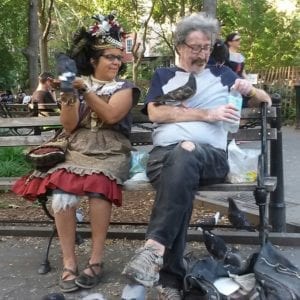
But before he fed himself, he had pigeons to feed. He does that most weekday mornings, flinging bread crumbs into the Verizon parking lot next door. Pigeons come by the dozen, fluttering to a “two-point” landing to peck, strut, and all but eat out of his hand.
He was there again the next time I was at Jack’s for breakfast, feeding his pigeons. It was when he headed for his own breakfast that I recognized him.
I walked out to meet him, told him who I was, and he had been on Mike Snider’s painting crew that had painted our kitchen a month or so back.
He told me his name was Felix Padilla, but said he didn’t remember me, wasn’t sure he remembered being in my house.
“We paint a lot of houses.”
That’s when I asked Felix Padilla about the pigeons and did he do this every morning.
“Every morning, every morning.”
Why?
“I’m an Apache and we’re nature’s people. I go through at least three loaves of bread a day, feed the pigeons here, feed the squirrels in the park, doesn’t matter. I love animals. I’m an animal freak. Doesn’t matter, dog or bird or squirrel, whatever.
“I’ve been feeding the wild since I was a little kid. Even the baddest dog will come to me, doesn’t matter. They sense your aura and your soul. Animals can read you just as soon as you step into their world.
“Out west where Apaches lived, cowboys and other people would bring horses for us to break. We’d have them riding in an hour or so.
“Show a little respect, show a little love, give ’em a little space, then they come to you and show you love.”
One thing here is Padilla didn’t come from “out west.” He was born in Sidney, Neb. Lodgepole, a wide place in the road, was his childhood home.
“Hadn’t been for World War II, I’d probably be on the reservation. My grandfather was born on the reservation but, then went off to war. After the war he settled in Nebraska.
“Most of my family lives out in Utah now. My grandmother is out there. Believe it or not, Geronimo was a distant cousin.”
Geronimo spent most of his life fighting the “white man” and Padillo finds it a bit ironic that . ..
“They named the baddest helicopter in the world after us, the Apache.”
A graduate of Saks High School, hanging on to 12-inch blocks (one in each hand) figured into a paint brush in one hand.
“I’ve been painting since I was 20 years old. I was working on a masonry crew, toting 12-inch blocks and mixing mud. A fellow by the name of Randy Poppin was painting a house for Jack Cotton Realty.
“He and Jack were talking and one of his painters hadn’t shown up. Heaviest thing I’d ever seen a painter carry was a gallon of paint so I went up to Poppin and asked if he could use some help.
“He asked me if I could paint. I told him that I could do what he was doing. That’s where it started.”
“But what I really am is one of God’s people. I have faith in God and believe in Jesus.”
Somewhere in our visit, he left the bread crumbs with the pigeons and turned toward Jack’s with:
“I’m hooked on Mountain Dews and Dr. Peppers, which is not good. I’m getting fatter and fatter, uglier and uglier, and older and older.”
As he opened the door to Jack’s, I wondered if he would have a Dr. Pepper with his biscuit.
Thanks for visiting.
About Pigeon Patrol:
Pigeon Patrol Products & Services is the leading manufacturer and distributor of bird deterrent (control) products in Canada. Pigeon Patrol products have solved pest bird problems in industrial, commercial, and residential settings since 2000, by using safe and humane bird deterrents with only bird and animal friendly solutions. At Pigeon Patrol, we manufacture and offer a variety of bird deterrents, ranging from Ultra-flex Bird Spikes with UV protection, Bird Netting, 4-S Gel and the best Ultrasonic and audible sound devices on the market today.
Voted Best Canadian wholesaler for Bird Deterrent products four years in a row.
Contact Info: 1- 877– 4– NO-BIRD (www.pigeonpatrol.ca)
by Pigeon Patrol | Aug 13, 2015 | Bird Netting, Pigeon Patrol's Services, Pigeon Spikes, Pigeons in the News
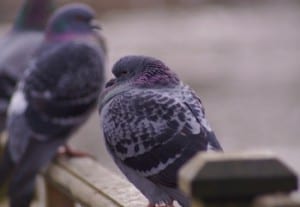
 Whereas humans are risk averse for monetary gains, other animals can be risk seeking for food rewards, especially when faced with variable delays or under significant deprivation. A key difference between these findings is that humans are often explicitly told about the risky options, whereas non-human animals must learn about them from their own experience. We tested pigeons (Columba livia) and humans in formally identical choice tasks where all outcomes were learned from experience. Both species were more risk seeking for larger rewards than for smaller ones. The data suggest that the largest and smallest rewards experienced are overweighted in risky choice. This observed bias towards extreme outcomes represents a key step towards a consilience of these two disparate literatures, identifying common features that drive risky choice across phyla.
About Pigeon Patrol:
Pigeon Patrol Products & Services is the leading manufacturer and distributor of bird deterrent (control) products in Canada. Pigeon Patrol products have solved pest bird problems in industrial, commercial, and residential settings since 2000, by using safe and humane bird deterrents with only bird and animal friendly solutions. At Pigeon Patrol, we manufacture and offer a variety of bird deterrents, ranging from Ultra-flex Bird Spikes with UV protection, Bird Netting, 4-S Gel and the best Ultrasonic and audible sound devices on the market today.
Voted Best Canadian wholesaler for Bird Deterrent products four years in a row.
Contact Info: 1- 877– 4– NO-BIRD (www.pigeonpatrol.ca)
by Pigeon Patrol | Aug 12, 2015 | Bird Netting
 ESCANABA — The City of Escanaba’s newly resurfaced tennis courts are not only loved by our local athletes, but also the seagulls. Until recently, these birds were perching on the court’s lights and dropping waste on its surface.
To address this issue, the city purchased 3 to 4 inch bird spikes. These spikes were installed on top of each of the court’s 22 lights. As an added bonus, the city was able to change a few old bulbs while they were using the bucket truck. The bird issue was brought to the city’s attention by community members.
“We’re always looking to take feedback from the public,” said City of Escanaba recreation director, Tom Penegor. “In this case, it was something that we could do, tried, and did and it’s working and hopefully they’ll last a long time.”
The entire bird spike project cost less than $500.
About Pigeon Patrol:
Pigeon Patrol Products & Services is the leading manufacturer and distributor of bird deterrent (control) products in Canada. Pigeon Patrol products have solved pest bird problems in industrial, commercial, and residential settings since 2000, by using safe and humane bird deterrents with only bird and animal friendly solutions. At Pigeon Patrol, we manufacture and offer a variety of bird deterrents, ranging from Ultra-flex Bird Spikes with UV protection, Bird Netting, 4-S Gel and the best Ultrasonic and audible sound devices on the market today.
Voted Best Canadian wholesaler for Bird Deterrent products four years in a row.
Contact Info: 1- 877– 4– NO-BIRD (www.pigeonpatrol.ca)
by Pigeon Patrol | Aug 11, 2015 | Bird Deterrent Products, Bird Netting, Pigeon Patrol's Services, Pigeon Spikes, UltraSonic Bird Control
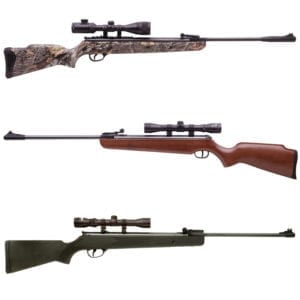
WENATCHEE — The BB gun that triggered a lockdown Friday of Confluence Health’s Wenatchee Valley Medical Center was set to be used for the first time to scare pigeons off the roof, Wenatchee Police Chief Tom Robbins said Wednesday.
Officers from local law enforcement agencies locked down the busy center around 4:30 p.m. Friday after a witness reported seeing a man with a rifle butt extending from under his coat. The incident ended after 90 minutes with no injuries or arrests.
Robbins said the BB gun was brought to the medical center by an employee of the facility’s maintenance department. Scaring away pigeons is not his primary job, said the chief, but pigeons had become a maintenance issue on the roof.
“It’s my understanding that they had not used the BB gun before, but thought it might be a way to scare the pigeons away from the area,” said Robbins.
The BB gun was carried by the employee to the medical center’s maintenance shop but had not yet been used, said Robbins. When the employee was eventually contacted, he was not on-site and had left the facility. A maintenance worker said the state Department of Fish and Wildlife had indicated the BB gun would be an acceptable way to deal with the pigeon problem, Robbins added.
A law officer and maintenance staffer located the BB gun and brought it to the incident command team for verification.
About Pigeon Patrol:
Pigeon Patrol Products & Services is the leading manufacturer and distributor of bird deterrent (control) products in Canada. Pigeon Patrol products have solved pest bird problems in industrial, commercial, and residential settings since 2000, by using safe and humane bird deterrents with only bird and animal friendly solutions. At Pigeon Patrol, we manufacture and offer a variety of bird deterrents, ranging from Ultra-flex Bird Spikes with UV protection, Bird Netting, 4-S Gel and the best Ultrasonic and audible sound devices on the market today.
Voted Best Canadian wholesaler for Bird Deterrent products four years in a row.
Contact Info: 1- 877– 4– NO-BIRD (www.pigeonpatrol.ca)
by Pigeon Patrol | Aug 10, 2015 | Bird Netting, Pigeon Patrol's Services, Pigeon Spikes, Pigeons in the News
CRANSTON, R.I. –
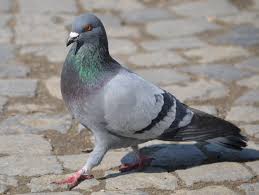
A man faces charges after Cranston police said Wednesday he hit a 9-year-old girl in the back with an arrow while trying to hit pigeons.
Daniel King, 27, was charged with criminal negligence, a felony. He was arraigned at Kent County District Court and is being held as a probation violator at the Adult Correctional Institutions.
Lt. Matthew Moynihan of the Cranston Police Department said the incident happened at about 5:30 p.m. Tuesday.
Moynihan said the girl was walking her dog near Bain Street when she was struck in the back with an arrow. Police said the arrow ricocheted off the ground and hit her.
Moynihan said the victim removed the arrow herself, but was taken to Hasbro Children’s Hospital.
Moynihan said it was a regular bow-and-arrow hunters use, and that King was using it carelessly.
About Pigeon Patrol:
Pigeon Patrol Products & Services is the leading manufacturer and distributor of bird deterrent (control) products in Canada. Pigeon Patrol products have solved pest bird problems in industrial, commercial, and residential settings since 2000, by using safe and humane bird deterrents with only bird and animal friendly solutions. At Pigeon Patrol, we manufacture and offer a variety of bird deterrents, ranging from Ultra-flex Bird Spikes with UV protection, Bird Netting, 4-S Gel and the best Ultrasonic and audible sound devices on the market today.
Voted Best Canadian wholesaler for Bird Deterrent products four years in a row.
Contact Info: 1- 877– 4– NO-BIRD (www.pigeonpatrol.ca)

by Pigeon Patrol | Aug 9, 2015 | Bird Deterrent Products, Bird Netting, Pigeon Patrol's Services, Pigeon Spikes, Pigeons in the News
Feral pigeons beware: robotic peregrine falcons and bald eagles could soon be patrolling the skies near you.
Remote-controlled birds of prey that scare flocks of smaller birds from airport landing strips, farms and anywhere else they are a nuisance are being tested in the Netherlands.
Birds of prey have long been used to control bird populations. The instinct of smaller birds is to flee an area that they believe to be the hunting ground of a bird of prey. The method is believed to be more effective than others such as spikes an d gunshots, but hiring the birds
About Pigeon Patrol:
Pigeon Patrol Products & Services is the leading manufacturer and distributor of bird deterrent (control) products in Canada. Pigeon Patrol products have solved pest bird problems in industrial, commercial, and residential settings since 2000, by using safe and humane bird deterrents with only bird and animal friendly solutions. At Pigeon Patrol, we manufacture and offer a variety of bird deterrents, ranging from Ultra-flex Bird Spikes with UV protection, Bird Netting, 4-S Gel and the best Ultrasonic and audible sound devices on the market today.
Voted Best Canadian wholesaler for Bird Deterrent products four years in a row.
Contact Info: 1- 877– 4– NO-BIRD (www.pigeonpatrol.ca)
by Pigeon Patrol | Aug 8, 2015 | Bird Netting
LEBANON, Ore. (KOIN 6) — It took 45 people to knock down a fire at a rural Lebanon property that spread from a chicken coop to a nearby shop.
The fire, at 40487 Snow Peak Dr., took the lives of one chicken, and 15-20 doves and pigeons.
Luckily, someone walking by spotted the fire and alerted the property owners, and no people were hurt.
Crews used a strike team brought in water tankers and a total of 18 vehicles from Albany Fire, Scio-Crabtree Fire, Brownsville Fire, Sweet Home Fire, and the Oregon Department of Forestry.
Crews brought the two-alarm fire under control at roughly 7:00 a.m. Damage to the neighboring shop is estimated at $70,000, while the loss of the chicken coop is valued at $1,500.
About Pigeon Patrol:
Pigeon Patrol Products & Services is the leading manufacturer and distributor of bird deterrent (control) products in Canada. Pigeon Patrol products have solved pest bird problems in industrial, commercial, and residential settings since 2000, by using safe and humane bird deterrents with only bird and animal friendly solutions. At Pigeon Patrol, we manufacture and offer a variety of bird deterrents, ranging from Ultra-flex Bird Spikes with UV protection, Bird Netting, 4-S Gel and the best Ultrasonic and audible sound devices on the market today.
Voted Best Canadian wholesaler for Bird Deterrent products four years in a row.
Contact Info: 1- 877– 4– NO-BIRD (www.pigeonpatrol.ca)

by Pigeon Patrol | Aug 7, 2015 | Bird Deterrent Products, Bird Netting, Pigeon Patrol's Services, Pigeon Spikes
 It is so wonderful to see some progress taking place in downtown North Battleford with it coming back to life with all the numerous renovations going on. Far too many business places have been closed for so long. It was sad to see compared to other provincial cities and little towns.
But, will it take care of the over population of pigeons? They do create a real problem in the whole downtown area. Years ago they got started at the grain elevators, now the elevators are located outside the city, but not the pigeons. Those flat roof buildings must be in a real mess of pigeon droppings, feathers, nests and the odd dead pigeon. The rains come and wash all the filth down on the public streets.
Pigeons can be carriers of all sorts of dangerous germs, which the public and business people are exposed to. It would be nice to see a clean-up done before the new businesses start to operate.
When pigeons become a nuisance on the farmer’s vacant buildings, the farmers do not go for all that messy clean up. They quickly do away with the pigeons completely. Any more moving in will get the same treatment.
Another blight on the city’s landscape is the gopher over population. They seem to be all over any vacant grassy area in the city. Those unsightly holes and mounds of soil dug up on the lush green grass kill the beauty.
North Battleford is a good home city to all, once it is cleaned up.
About Pigeon Patrol:
Pigeon Patrol Products & Services is the leading manufacturer and distributor of bird deterrent (control) products in Canada. Pigeon Patrol products have solved pest bird problems in industrial, commercial, and residential settings since 2000, by using safe and humane bird deterrents with only bird and animal friendly solutions. At Pigeon Patrol, we manufacture and offer a variety of bird deterrents, ranging from Ultra-flex Bird Spikes with UV protection, Bird Netting, 4-S Gel and the best Ultrasonic and audible sound devices on the market today.
Voted Best Canadian wholesaler for Bird Deterrent products four years in a row.
Contact Info: 1- 877– 4– NO-BIRD (www.pigeonpatrol.ca)

by Pigeon Patrol | Aug 6, 2015 | Bird Deterrent Products, Bird Netting, Pigeon Patrol's Services, Pigeon Spikes, UltraSonic Bird Control
‘Scarey Man’ Inflated
OVERVIEW
The ‘Scarey Man’ inflatable scarecrow is an electrically operated bird control scaring device based on the traditional scarecrow and operating from a battery power source. Scarey Man has its main application in the agricultural sector and is used to scare a wide variety of agricultural pests such as wood pigeon and the corvid family (crows, rooks etc.). Scarey Man is also commonly used as a bird control device to scare seagulls in both urban and rural applications, waterfowl and herons from lakes and ponds and birds from fruit and vegetable crops.
The Scarey Man inflatable scarecrow is a 5’6” tall inflatable man constructed of heavy-duty and brilliantly coloured PVC. Scarey Man is fully automated and inflates every 18 minutes for 25 seconds throughout daylight hours, switching off at night. Alternatively an optional pre-set timer can be fitted providing 4 set periods of operation every 24 hours. During operational periods the device inflates and deflates as well as emitting a loud noise. Scarey Man can also be used at night via an optional extra light sensor which will illuminate the unit over and above its standard operation. Both noise and illumination can be switched independently. A variable timer is also available as an optional extra which allows the user to adjust display frequency.

‘Scarey Man’ Deflated
Scarey Man inflatable scarecrow is operated via a 12-volt battery with the unit running for 14 days between charges. A ‘battery low’ indicator light is provided to alert the user when the unit needs to be re-charged. The battery can be housed either inside or outside the base unit with the internal battery housing being impervious to most weather conditions.
Most bird control scaring devices, static or otherwise, fail to be effective as a stand-alone deterrent and need to be complimented with other scaring and anti-perching products in order to be effective. The main benefit of Scarey Man over traditional static bird control devices is that the product incorporates movement, sound and visual stimulus in one unit. Although there are minor disadvantages inherent in the use of Scarey Man, (such as the fact that the device can be blown over in strong winds when sited in exposed areas), the product appears to offer the potential to be effective in many different applications and for the control of a wide range of species.

‘Scarey Man’ Base Unit
Scarey Man has been used to great effect in numerous countries worldwide including the USA and Canada, Australia and many European countries. Scarey Man will act as a scaring device for both birds and animals. Bird species that it has been used to deter include crows, collared doves, seagulls, cormorants, pigeons, starlingsand magpies. The unit has also been successfully used to deter protected species of birds and waterfowl such as swifts and swans.
Although Scarey Man was designed with the protection of crops in mind, there are numerous other applications for the device. Scarey Man can be used to stop herons from predating on fish in fish farms and fishing ponds, making the device a good commercial option for fish farmers and fishing clubs alike. Scarey Man has also been trialled by the Royal Society for the Protection of Birds(RSPB) as a scaring device to deter gulls from competing with nesting terns. Scarey Man can be used as a bird control device to deter birds from exploiting fruit in vineyards and orchards as well as protecting ground-hugging fruit crops such as strawberries. There are many other applications for this device, including urban applications, making it an extremely versatile bird control device with low running costs and the added advantage that the product is completely humane and non-lethal.
DEFRA’s view:
The Department of the Environment, Food and Rural Affairs (DEFRA) is the UK’s Government body that oversees the Wildlife and Countryside Act and produces legislation to which the pest control industry must adhere. The following information is taken from a document provided on DEFRA website entitled: ‘Review of international research regarding the effectiveness of auditory bird scaring techniques and potential alternatives’. By J Bishop, H McKay, D Parrott and J Allan.
“Predator models, such as scarecrows, are common, traditional methods used in attempts to scare avian pests. They mimic the appearance of a predator and so cause birds to take flight to avoid potential predation (Harris and Davis 1998). Most scarecrows are human-shaped effigies, usually constructed from inexpensive materials; Knittle and Porter (1988) report that simple scarecrows made from black plastic bags attached to wooden stakes are effective at deterring waterfowl from grain fields, as long as the effigies are put out before the birds arrive.”
“In general, however, motionless devices either provide only short-term protection or are ineffective as the threat from them is only perceived rather than real. In a survey of hatchery managers in the United States only one of the 14 hatchery managers who commented on the effectiveness of various control techniques said that scarecrows had a high success rate. Six said they had no effect (Parkhurst et al. 1987). Some birds may even come to associate them with favourable conditions (Inglis 1980).”
“To maximise effectiveness devices should possess biological significance, appear lifelike, be highly visible and their location changed frequently in order to extend the period of habituation (Vaudry 1979). The effectiveness of scarecrows may be enhanced if fitted with loose clothing and bright streamers that move and create noise in the wind (Vaudry 1979) – effectively becoming a moving visual.”
“Recently, several types of moving, inflatable human effigies have become commercially available. One of these, the Scarey Man inflatable scarecrow is marketed worldwide. Created by a Cambridgeshire farmer the Scarey Man is a life-size plastic effigy powered by a 12 volt car battery, that inflates rapidly, emits a high pitched wail and may illuminate at night. Inflation occurs about every 18 minutes and lasts for 25 seconds. According to the Pest-Away Australia website, one Scarey Man costs AU$1390.00 and can give up to 6 hectares of crop coverage. For smaller sites, the Scarey Boy is now available (Clarretts Ltd.).”
“Australian testimonials on the Pest-Away Australia website state that the use of Scarey Man is effective at preventing crows from damaging melon crops. Andelt et al. (1997) tested it’s effectiveness at deterring black-crowned night-herons (Nycticorax nycticorax) and great blue herons (Ardea herodias) from a fish rearing unit in Colorado. Two manikins were programmed to activate for 35-40 seconds every 9-10 minutes from about 1700 or 2045 through to 0800 hours in order to frighten birds during their peak feeding times. Numbers of birds were reduced only during the first four nights of the trial. After that time, numbers of both species increased significantly. Birds quickly habituated to the manikins and so Scarey Man was deemed ineffective at scaring herons from the fish-rearing unit.”
“Stickley and King (1995) also used Scarey Man to repel double-crested cormorants (Phalacrocoax auritus) from catfish ponds. Ten mannekins were deployed, an average of one for every 14 hectares of surface water. Cormorant numbers dropped during the first week of use, but by the 11th day it was felt they were beginning to lose their effectiveness. Despite trying to enhance its effect by placing hats and camouflage masks on the devices, changing their positions and substituting shooters for Scarey Man, levels of birds could not be reduced further. Despite some habituation within two weeks, the overall conclusion was that Scarey Man could only be recommended in cases where cormorant depredations were a serious problem.”
“Other animated scarecrows have met with varying success. Conniff (1991) describes a jack-in-a-box device with inflatable arms, revolving strobe lights and amplified sounds (130dB, distance unknown) of horns honking, people shouting, shotguns and birds screaming. This scarecrow was declared ‘ineffectual’ against cormorants.”
“Another device developed and tested by the Denver Wildlife Research Centre (Cummings et al. 1986) combined an inflatable plastic scarecrow with a propane exploder. Costing about US$900 (or US$14/0.4 hectares (1 acre) based on a ten year life for the unit), this was effective for deterring blackbirds from sunflowers in some fields; it was less effective in fields where the birds had an established feeding pattern.”
“Ultimately, however lifelike, under most circumstances scarecrows do not present a threat that is sufficiently alarming to birds (Inglis 1980). Over a period of time birds learn that effigies or models do not represent an actual threat and are no longer alarmed by them. To increase the threat and therefore the habituation time, it is recommended that these devices be reinforced with other sound-producing or visual deterrents. Ideally, for example, scarecrows should be periodically reinforced by human activity.”
Price range:
The Scarey Man inflatable scarecrow is currently available in the UK and for worldwide distribution. The price of a basic unit is £320.00 + VAT ranging though to £395.00 + VAT for a unit with all the optional extras included.
User reviews:
RSPB – Coquet Island
The RSPB has trialled Scarey Man on one of its reserves off the coast of Northumberland. Coquet Island is home to approximately 30,000 pairs of breeding seabirds including 3 species on the RSPB’s ‘Red’ list (species of high conservation concern) and 5 species on the RSPB’s ‘Amber’ list (species of lower conservation concern). The increase in numbers of herring gull and black-backed gull was a cause of concern in relation to competition with the tern for nesting space and also the predation of tern eggs and chicks by both species of gull.
The RSPB employed a number of different bird control devices in an effort to deter gulls from impacting on the tern population and these controls included the use of gas guns, distress calls, human disturbance, ‘humming line’, scarer rope and Scarey Man. The following comments are taken from an RSPB document entitled ‘The effectiveness of different methods of deterring large gulls Larus spp. from competing with nesting terns Sterna spp. on Coquet Island RSPB reserve, Northumberland, England’ by P Morrison and RI Allcorn:
“Initially a traditional scarecrow, constructed from two sticks, a plastic head, a boiler suit and a fluorescent jacket, was used. This was erected after the puffins had arrived back. In 2004, an inflatable scarecrow, a ‘scary man’ was introduced. Once activated the scary man inflates and deflates five times every eighteen minutes. Scary man was modified in 2005 to be activated by remote control from a hide. There is a light and a siren attached to the inflatable, both of which can be operated independently of each other. The scary man was re-positioned regularly whilst deployed to maximize its effect. It cannot be used in strong winds, as it is easily blown over, reducing its effectiveness.”
“The original scarecrow had some success within the puffin nesting areas, with gulls avoiding the immediate proximity but had less success in reducing overall gull numbers on island.
“2004 was the first year that the scary man was used. It was targeted against gulls loafing on the south beach. Juvenile gulls flew off immediately after the initial inflation whilst adult herring gulls only flew on the fifth inflation. During the period when it was intended to deploy the scary man, there were few gulls on the intertidal zone and the weather conditions were unfavourable, rendering any judgements of its usefulness questionable. To be most effective the scary man needs to be positioned as close as possible to the sites the gulls use, but as all the control switches are on the scary man itself, the presence of the person setting up or activating the scary man tends to scare the gulls away. More trials need to be conducted to find out the true effectiveness, including night scaring trials (using the light and siren) and to investigate the potential for remote control or pre-programming (as done in 2005). A hide might be needed from which to undertake observations to assess its effectiveness, as otherwise human presence might confound the results.”
“The scary man did scare gulls from the beach with the return rates of the birds being between 10-15 minutes. Given the correct timings on inflation, this could prove a useful deterrent to gull roost formation and the establishment of breeding territories. There was a limited affect on non-target species, mainly black-headed gull, oystercatcher Haematopus ostralegus, fulmar and shag Phalacrocorax aristotelis, but these returned to the area within a few minutes.”
International Paper, Inverurie Mill
A large paper milling plant based in Scotland, some 18 miles from the coast, purchased 2 Scarey Man bird control scarers in 1999 in an attempt to resolve entrenched seagull roosting problems at their milling plant in Inverurie. The mill was experiencing growing problems with gulls roosting on roof areas of the plant and management decided that action needed to be taken.
The problems being experienced by the mill were described as akin to something out of Alfred Hitchcock’s film ‘The Birds’ by Site Services Supervisor Gary Morrison with huge numbers of gulls being attracted to the site for the purposes of roosting. Interestingly no breeding was taking place on the site and the problem was present all year round, not just within the breeding period as is often the case with gull-related problems. Prior to the introduction of Scarey Man scarers, the roof areas were cleaned by an outside contractor and a total of 22 tons of guano was removed from the roofs. This clearly demonstrates the extent of the problem. Guano was found to be blocking drains and causing water ingress problems throughout the site.
One employee suggested trialling Scary Man having seen the product demonstrated on a farming programme as a crop protection of system. Gary Morrison contacted Clarratts, manufacturer and distributor of Scarey Man, and purchased two units for use on an 8000 square metre flat roof. The 2 units were installed on the roof and had an instant effect on the roosting gulls. The gulls immediately moved to the rear area of the roof but were still prepared to use the roof as a roost, albeit as far away from the bird control scarers as possible. Gary Morrison ordered a further 6 units and installed them on the roof – this had the desired effect. The gulls moved from the roof in question as soon as sufficient coverage was achieved by the product.
The gulls then moved to another roof on the site and this time netting was used to protect the 14,000 square metre roof. The bird control netting operation was carried out ‘in-house’ at a total cost of £16-£17,000.00. The company chose to install netting ‘in-house’ based on quotes in the region of £120,000.00 from pest control contractors for netting the roofs.
Gary Morrison explained that they only experienced two minor problems with the product:
The first problem was accessing the roof for the purposes of charging the battery units used for running the devices. The company contacted the manufacturer of Scarey Man and for a small extra charge the units were wired to run on alternating current (AC) rather than on the batteries which use a direct current (DC). This completely resolved the issue.
The second problem was the issue of noise from the audible siren. The Scary Man units were being used throughout the night rather than the day based on the fact that the problem they were being employed to deal with was an overnight roosting problem rather than a daytime perching problem. An employee living 1 mile from the site had been able to hear the noise created by the siren on a still night with no wind. As the units offered switching capabilities the noise element was simply switched off and this completely resolved the problem.
As a bird control scarer the product has been 100% successful as far as International Paper is concerned and although the Scarey Man scarers are still installed on the flat roof areas they have not been activated for the last 3-4 years. This confirms that the product will not only have an immediate effect on the target species when installed and operated as per manufacturers specifications, but it will also induce enough fear into the birds to ensure that they do not return.
The following testimonial is provided by Geoff and Tanya Young, farmers in Queensland, Australia:
“Since purchasing a bird control Scarey Man twelve months ago, we have had outstanding success at scaring birds from our crops. In the past we have used various types of scarers including gas guns and hawk look-alikes, but none of these were anywhere near as effective as the Scarey Man inflatable scarecrow.
We grow various crops throughout the year, including melons and pumpkins and have finally managed to find a way to keep the crows from ruining our crops. Scarey Man has also been successful at chasing away feral pigs, which used to cause a lot of damage.
We find that by placing bundles of material similar in appearance to Scarey Man at intervals around the crop and swapping the real Scarey Man with the ‘dummies’ regularly, we can cover a much larger area, as the birds remain wary of everything that may be a real Scarey Man.
Soon after purchasing Scarey Man, we ordered a Variable Timer from Pest-Away Australia to add to the element of surprise. Scarey Man was already by far the best scaring device we had come across, but with the extra element of surprise of the timer, he was even better.
Scarey Man had paid for himself within the first week, when he successfully protected a melon crop from crows.
David and the staff at Pest-Away Australia have provided us with excellent service and we can thoroughly recommend them and their Scarey Man as a great bird control product.”
Comments from the Manufacturer/Distributor:
The following description of Scarey Man is taken from the Clarratts website:
“Scarey Man is an excellent bird control device for use in a wide range of situations. Using a unique combination of sound and movement he strikes fear into his target prey and keeps them away for longer periods than ‘conventional’ control devices.
Scarey Man can be used in agriculture to deter birds and predators. Protecting young crops from damage (such as pigeon damage in Oil Seed Rape) is no problem, and by keeping pests away Scarey Man can pay for himself very quickly. Field scale crops of all kinds (arable, vegetable, ornamental etc.) can be protected as can orchards and vineyards. Livestock are also protected by Scarey Man, as are fisheries where herons and other fish loving birds need to be deterred.
Whilst Scarey Man was designed originally for bird control in agriculture his use has quickly spread into a multitude of other areas. For example he is used in airports to keep runways clear, and on commercial/residential properties to prevent fouling by pigeons and other birds.”
Michael Barratt, Director of Clarratts said the following about Scarey Man as a bird control product:
“The sudden movement with surprise is the secret success for “The Scarey Man”. The inflatable scarecrow which operates electronically and automatically combines sudden movement, a loud noise, a bird phobic colour (red) and illumination at night, depending which model you require.
Birds and predators faced with these surprise effects are first distracted from feeding and then systematically frightened away from the area as “Scarey Man” continues to deflate and then re-inflate to a commanding height and an intimidating size on a time basis. During operation Scarey Man emits a loud noise and illuminates at night – functions that are independently switched on all models.
The display takes place about every 18 minutes and lasts for approximately 25 seconds as the “Scarey Man” rises and falls, long enough to drive off the pests.
The entire operation carried out by “Scarey Man” may be automatically synchronised to daytime or night-time using a light sensor. Alternatively a pre-set timer can be fitted to set the timed programme you require during a 24 hour cycle.
Sales of “Scarey Man” are for different uses all over the world from pigeons on oilseed rape in the UK to red-billed quelea on wheat crops in Tanzania, cormorants on fisheries and protecting grapes in Australia.”
Editorial comments:

‘Scarey Man’
Deployed in Field
Scarey Man is a versatile and inexpensive bird control scarer that is simple to set up and use and that has relatively low running costs. The unit will hold a 14-day charge (dependent on application and frequency of timed displays) making it a low maintenance option if powered by a battery (DC current). If sited in inaccessible areas the unit can be powered by mains power (AC current) to reduce maintenance. The cost of a basic unit is extremely low relative to other powered bird control scarers and even with all the added extras included, the cost is still under £400.00 per unit representing excellent value for money. The main benefit of Scarey Man over its competitors is versatility with the unit combining three commonly used scaring techniques – noise, light and movement. The fact that the unit is programmable makes it even more versatile and the long list of animals and birds that the product has been used to deter supports the manufacturer’s claims in this respect.
Although Scarey Man was originally designed for use in the agricultural sector, urban applications for the device appear to be far-ranging. Scarey Man has been used to deter a massive roosting flock of gulls from a paper mill in Scotland with a 100% success rate and without using any complementary anti-perching or scaring devices. To have achieved such comprehensive success without the use of complementary controls is almost unheard of, certainly where the control of roosting gulls is concerned. Although the siren was deemed to be a minor nuisance, based on the fact that the unit was being used at night in this application, the switching options allowed the user to switch off the siren whilst still using movement and light as a deterrent. The other minor problem was the man hours required to access the roof area where the units were sited in order to re-charge the batteries every 14-days. This problem was easily resolved by wiring the units to be powered by AC current.
Scarey Man would also appear to be a good bird control option where the control of feral pigeons on roof areas is concerned. One of the most difficult problems for any property owner to manage is how to stop pigeons from perching on pitched or flat roofs. When combined with an anti-perching product such as the anti-roosting spike (and the ridge spike) Scarey Man could be used to great effect as a complementary control in this application.
Scarey Man could also be used on flat roof areas where breeding colonies of gulls are an annual problem. A conventional flat roof bordered by a low wall or parapet is an ideal urban breeding site for many species of gull, with noise and guano-related problems presenting serious issues for residents or those working in the building. By providing a Scarey Man on the flat roof itself, and by installing gull anti-roosting spikes on the wall or parapet, the roof will be far less attractive to gulls. It must be understood, however, that any action taken to deter breeding gulls must start well in advance of the breeding period. Once breeding has started gulls will not be deterred by any scaring device, althoughanti-perching spikes will physically prevent the birds from accessing those areas where the product is installed.
DEFRA’s view is that Scarey Man can be effective in some applications but may need to be used in conjunction with other scaring techniques in order to be completely effective. As with most bird control scaring products, DEFRA’sresearch found that the target species habituates to the device rapidly and therefore Scarey Man may only be appropriate where more serious and entrenched problems are concerned. DEFRA went on to say:
“Over a period of time birds learn that effigies or models do not represent an actual threat and are no longer alarmed by them. To increase the threat and therefore the habituation time, it is recommended that these devices be reinforced with other sound-producing or visual deterrents.”
As Scarey Man combines both sound and movement as well as light it would appear that the product fulfils most of the criteria set out by DEFRA in order to be effective as a stand-alone device.
The RSPB had mixed results when using Scarey Man to control herring gulls and black backed gulls on Coquet Island reserve off the coast of Northumberland. Juvenile gulls were deterred immediately when Scarey Man inflated but adult birds were less worried by the device. The RSPB moved the device regularly in order to increase effectiveness and also modified the device so that it could be operated by remote control from a hide. The one problem the RSPB did experience, however, was the ease with which the unit could be blown over in strong winds, seriously compromising its effectiveness.
The RSPB concluded that more research had to be undertaken to maximise the effectiveness of Scarey Man including trials to assess the effectiveness of the product when used at night. Summing up the RSPB said:
“The scary man did scare gulls from the beach with the return rates of the birds being between 10-15 minutes. Given the correct timings on inflation, this could prove a useful deterrent to gull roost formation and the establishment of breeding territories.”
Scarey Man clearly has a future where the scaring of a wide variety of pest species is concerned and none more so than in the control of gulls in urban or semi-urban environments. Trials carried out by the RSPB suggest that Scarey Man may not be appropriate in exposed applications where it would be difficult or impossible to tether the device to ensure that it did not blow over in strong winds, but in urban or agricultural applications the product clearly has major benefits. As with all scaring products, however, Scarey Man may need to be provided in conjunction with other scaring/anti-perching products to be completely effective and there will be situations where the target species may habituate to the device.
Sources:
DEFRA quotes:
PDF on DEFRA website entitled: ‘Review of international research regarding the effectiveness of auditory bird scaring techniques and potential alternatives’ By J Bishop, H McKay, D Parrott and J Allan.
RSPB quotes:
‘The effectiveness of different methods of deterring large gulls Larus spp. from competing with nesting terns Sterna spp. on Coquet Island RSPB reserve, Northumberland, England’ by P Morrison and RI Allcorn International Paper Ltd: Quotes from Gary Morrison, Site Services Supervisor, International Paper Ltd, Inverurie, Scotland
Also commonly known as:
Inflatable scarecrow, predator balloon, inflatable scarer, inflatable bird scarer
Relevance to pigeon control:
‘Scarey Man’ is a scaring product used mainly in the agricultural sector for the scaring of birds such as the wood pigeon. ‘Scarey Man’ has relevance to feral pigeon control in as much as it may complement an existing anti-perching system
About Pigeon Patrol:
Pigeon Patrol Products & Services is the leading manufacturer and distributor of bird deterrent (control) products in Canada. Pigeon Patrol products have solved pest bird problems in industrial, commercial, and residential settings since 2000, by using safe and humane bird deterrents with only bird and animal friendly solutions. At Pigeon Patrol, we manufacture and offer a variety of bird deterrents, ranging from Ultra-flex Bird Spikes with UV protection, Bird Netting, 4-S Gel and the best Ultrasonic and audible sound devices on the market today.
Voted Best Canadian wholesaler for Bird Deterrent products four years in a row.
Contact Info: 1- 877– 4– NO-BIRD (www.pigeonpatrol.ca)

by Pigeon Patrol | Aug 5, 2015 | 4-S Gel Bird repellent, Animal Deterrent Products, Bird Deterrent Products, Bird Netting, Pigeon Patrol's Services, Pigeon Spikes
OVERVIEW
Replica plastic owls and fake owl decoys are one of the most commonly used bird scaring devices to scare pigeons and other pest species of birds from their perching and roosting sites, predominantly on buildings in town and city centre environments. Fake owl decoys are normally mounted on roof areas where the product can be clearly seen by problem birds as they approach their roosting or perching areas. Replica plastic owls are also often sited in key and sensitive areas on buildings where pigeons are causing specific problems. These areas could be canopies in front of shops or railway stations, or possibly architectural features on period properties where pigeons are causing extreme problems as a result of soiling.
Bird scarer devices and replica plastic owls, are normally life size models of real owls and stand approximately 12″-23″ high depending on which product is chosen and which species of owl is being replicated. The quality of the reproduction varies considerably with some models looking quite life-like and others looking little or nothing like a real owl. A majority of fake plastic owl decoys have no moving parts, although there are now some models on the market like the Rotating Head Owl that move with air currents. Some of the more advanced owl scarers actually move on a rail whilst flapping their wings and making a hooting sound.

Replica Plastic Owl
Fake Owl Decoy
The principle of using a plastic owl decoy as a bird scarer is to use the pest birds instinctive fear of predators and predation to scare the bird away from its desired roosting, perching or breeding areas.
According to manufacturers and distributors claims, the replica plastic owl can be used to scare a wide variety of different species of pest birds in both urban and agricultural environments.
The product is completely humane which will have great appeal for those requiring a non-lethal or non-violent product and the fake plastic owl decoy is also relatively inexpensive to buy.
DEFRA’s view:
The Department of the Environment, Food and Rural Affairs (DEFRA) is the UK’s Government body that oversees the Wildlife and Countryside Act and produces legislation to which the pest control industry must adhere. The following information is taken from a document provided on DEFRA website entitled: ‘Review of international research regarding the effectiveness of auditory bird scaring techniques and potential alternatives’. By J Bishop, H McKay, D Parrott and J Allan.
“The basis for this scarer is mimicry of real predators and evocation of fear and avoidance in the target species. Most potential prey species react to predator models; the strength of the response, however, varies between species (Conover 1979) and in some cases raptor models can attract rather than repel birds as species like blackbirds and crows often mob owls and owl models (Conover 1983 cited in Harris and Davis 1998).”
“Model raptors fail to incorporate behavioural cues, which may be critical to the induction of fear and avoidance in the target species. Falcons which are “in the mood to hunt” are said to be “sharp set”; such birds are invariably hungry enough to fly at quarry. Although it is hard for human observers to differentiate between a falcon when it is sharp set and conversely well fed, birds will mob a hawk more frequently when sharp set than when well fed. Thus, model raptors will be inherently less threatening and subsequently less effective than live raptors (Inglis 1980).”
“In general, raptor models are inexpensive (£5- £25 for plastic owl models) and easy to deploy. However, birds quickly learn that the model poses no threat and rapidly habituate to it.”
Price range:
Prices for replica plastic owls vary considerably and currently range from £15 through to £25, but the cost is dependent on whether the owl is static (i.e. no moving parts) or whether it has wing, eye or head movement. Some of the more advanced robotic owls cost several hundred pounds and this does not include the cost of installation.
User reviews:
Alistair Brenning, Wales
“Had pigeons sitting on my fence. The owl worked in that it scared them off but eventually they came back.”
Comments from the Manufacturer/Distributor:
The following quotes from those involved with the bird control industry in the USA appear to sum up the general consensus on this product:
Barry Neer, a salesman at Nixalite of America Inc., a company that sells bird scarers said:
“The feedback we get from most customers is that within a few days the birds are sitting right on top of the owl.”
Michael Gelder, owner of Bay Area Bird Control in San Carlos, California said:
“If I see one (plastic owl),” he says “I know that the building still needs attention.”
Bird Barrier America Inc., also based in California, commented:
“There are two ways that replica plastic owls can actually be used as bird deterrents, a) throw the owl hard at them and b) physically block access to the area with the owl.”
In contrast to these views, Neal Caldwell, owner of Dalen Products Inc., of Knoxville, Tennessee, a manufacturer of replica plastic owls, suggests that negative views from within the pest control industry are simply competitive grousing.
Caldwell goes on to say:
”The owl seems to be effective wherever we put them.”
Editorial comments:
Fake owl decoys have received a considerable amount of negative publicity in relation to their effectiveness as a bird deterrent and bird scarer, but sales of the product appear to be consistently high. This may be as a result of the fact that the product is extremely inexpensive to buy and if, once installed, it proves to be ineffective the purchaser may feel that complaining to the retailer is a wasted effort.

Replica Plastic Owl
Fake Owl Decoy
DEFRA’s research clearly suggests that in some cases replica plastic owls can actually attract pest species of birds rather than deter them. DEFR also confirms that the product will only have limited success with some, rather than all species of bird. Where live raptors are flown to deter pest species of birds they are regularly mobbed by the target species, particularly gulls and members of the corvid family (crows, rooks etc). This fact alone suggests that a static plastic owl decoys will have little success in its own right. The owl is a very efficient predator, but it not the natural predator of the gull or the pigeon. In a vast majority of cases plastic owl decoys will be sold to those experiencing problems with these species and as a result the product is likely to fail unless it is provided as part of a comprehensive control system. Even then there is doubt as to whether the fake plastic owl can or will play any useful part.
Both DEFRA’s view, and that of the pest control industry, appears to be the same – the product is ineffective in anything but the very short-term. This may be as a result of the fact that a majority of fake plastic owls are static deterrents with no moving parts and therefore birds will become habituated to them extremely quickly. Broadly speaking, any deterrent that does not move or emit any type of sound or noise is likely to be ignored by many of the most common pest species of birds. There are bird scarer devices available that have moving parts such as moving eyes, head and wings, and some that even make a screeching sound as well, but although these products may have some limited success with timid garden birds such as blackbirds, they are unlikely to play any useful part in a control system designed to resolve an entrenched bird-related problem. It is also clear that although claims are made by both distributor and manufacturer alike that replica plastic owls will be effective in deterring a wide variety of pest species of birds, the reality is that the most common pest species (gulls and pigeons) will remain undeterred by this product.

Replica Plastic Owl
Fake Owl Decoy
The major benefit of this product is that it is inexpensive and relatively simple to install and therefore, if it fails, it can be replaced without too great a loss to the property owner concerned. It should always be understood, however, that there are no ‘quick fixes’ where effective bird management is concerned and if a product or service appears to be ‘too good to be true’, there is a very good chance that it is. Industry standard products such as the anti-roosting spike continue to be the only really effective stand-alone deterrent available to most property owners and in light of this, restricted pest control budgets may be better spent on tried and tested products rather than their ‘quick fix’ counterparts.
Also commonly known as:
Plastic hawks, plastic raptors, owl decoy, plastic owl decoy, decoy birds of prey, hawk decoy, plastic predator, fake owls, fake hawks, robot owls, robotic owls, robotic hawks, fake predator
Relevance to pigeon control:
Replica plastic owls are a pigeon-specific scaring product
About Pigeon Patrol:
Pigeon Patrol Products & Services is the leading manufacturer and distributor of bird deterrent (control) products in Canada. Pigeon Patrol products have solved pest bird problems in industrial, commercial, and residential settings since 2000, by using safe and humane bird deterrents with only bird and animal friendly solutions. At Pigeon Patrol, we manufacture and offer a variety of bird deterrents, ranging from Ultra-flex Bird Spikes with UV protection, Bird Netting, 4-S Gel and the best Ultrasonic and audible sound devices on the market today.
Voted Best Canadian wholesaler for Bird Deterrent products four years in a row.
Contact Info: 1- 877– 4– NO-BIRD (www.pigeonpatrol.ca)
by Pigeon Patrol | Aug 4, 2015 | 4-S Gel Bird repellent, Animal Deterrent Products, Bird Deterrent Products, Bird Netting, Pigeon Patrol's Services, Pigeon Spikes, UltraSonic Bird Control
Daddi Long Legs
OVERVIEW
The Daddi Long Legs anti-bird device is a unique and versatile anti-perching device that will protect virtually any surface but is specifically designed to protect surfaces that require regular maintenance. The Daddi Long Legs anti-bird device is a spider-shaped deterrent with a rotating head from which fine stainless steel wire ‘arms’ protrude. This product is manufactured and distributed by a company in the United States called Bird-B-Gone.
The unit is mounted on a UV protected polycarbonate base and comes in three sizes; 1.25 metre diameter, 1.8 metre diameter and 2.5 metre diameter. Each model will protect a circular area equivalent to the spread of its ‘arms’.
The stainless steel ‘arms’ are constructed from extremely thin wire and as a result move and wave freely in the wind. When a bird attempts to land on the surface protected by the device, its feet will touch the ‘arms’ resulting in the bird feeling unsafe and aborting its landing. The ‘arms’ should extend slightly over the area to be protected (2″ is recommended by one supplier) to ensure that birds cannot perch on the edge of the surface. If more than one unit is installed the ‘arms’ of each unit should just touch each other.
The Daddi Long Legs anti-bird device can be used to protect a wide variety of surfaces including street lights, air conditioning units, grain silos, flat roofs, boats and virtually any other surface. Although the product is relatively expensive compared to industry standard products such as the anti-roosting spike, its main application is intended to be hard to protect areas such as a domed street light housing or the roof of grain silo where conventional products may be less effective. As the Daddi Long Legs anti-bird device requires no maintenance and is simple and quick to install the product will have particular appeal to those wishing to undertake a DIY installation. The product would also be ideal for mounting in areas where access is difficult or expensive.
The Daddi Long Legs anti-bird device is virtually invisible when viewed from a distance mainly due to the extremely thin stainless steel ‘arms’ and the white plastic base and head. When mounted against the skyline the unit is almost impossible to see. The plastic base and head are made from a material called delrin, a frictionless material that allows the base and head to rotate freely. The only disadvantage of delrin is that the material is resistant to glue so an acrylic mounting plate is supplied with each Daddi Long Legs so that it can be screwed to the base of the unit. The acrylic plate is then adhered to the surface to be protected with a strong adhesive. Alternatively the base of the hub can be screwed directly to the surface to be protected with stainless steel screws.
In areas where high maintenance regimes are necessary or where constant human access is required, the Daddi Long Legs anti-bird device is ideal due to the fact that the ‘head’ can be de-mounted from the base unit whilst maintenance takes place. Once maintenance is completed the head is simply re-attached to the base unit. The only other ‘reversible’ product on the market is the anti-roosting spike which can also be removed and replaced with ease when access is required.
The Daddi Long Legs anti-bird device is highly recommended for specialist installations such as pleasure craft in marinas where problems with gulls and pigeons are common and where conventional products are often inappropriate. Several ingenious adaptors are available to fix Daddi Long Legs to commonly-used perching places on boats. A railing mount is available to attach the unit to safety railings around the boat with a quick-release screw so that the unit can be de-mounted quickly and easily. A ‘boat mount’ is also available that allows the unit to be attached to almost any area of a boat with bungee cords or rope – examples of where the adaptor might be used to great effect is on a coiled sail or horizontal mast. Finally, for all areas where the ‘boat mount’ and the railing clamp cannot be used, a ‘sandbag base’ is available. The sandbag base is simply a weighted bag of sand to which the unit can be easily attached.
Another example of where the Daddi Long Legs anti-bird device can be used to protect an area often used by birds but difficult to protect is a flat roof. The roofs of single storey extensions are commonly used by garden birds and pigeons as a vantage point to exploit food provided on bird tables. Flat roofs are also used extensively by seagulls for the purpose of nesting. Most roofs, particularly felt roofs, are difficult to access and damage can be caused by constant human access to clean-up bird excrement. Daddi Long Legs can be adapted for installation on flat roofs and once installed, requires no maintenance. Daddi Long Legs can be installed on a flat roof by placing paving slabs on the roof at required intervals and then attaching the unit to the slab. The unit can be attached to the slab by drilling 3 holes into the slab, inserting a raw plug into each hole and then fixing with the stainless steel screws supplied. The base unit is ready drilled with three holes for the purpose. The units can then be moved as required, whilst still attached to the slabs, to ensure that the required protection and coverage is achieved. Alternatively the head can be detached from the base unit and then re-installed.
DEFRA’s view:
The Daddi Long Legs anti-bird device is not discussed on the DEFRA website.
Price range:
Daddi Long Legs is currently available in the UK and one leading pest control supplier offers the unit and optional extras for the following prices:
- Daddi Long Legs 1.25 metre diameter: £36.51 + VAT
- Daddi Long Legs 1.80 metre diameter: £41.46 + VAT
- Daddi Long Legs 2.5 metre diameter: £46.41 + VAT
- Optional sandbag boat base: £33.66 + VAT
- Optional railing clamp adaptor: £18.66 + VAT
- Optional strap on boat base: £4.34 + VAT
User reviews:
To date we have been unable to find any user reviews for Daddi Long Legs but we will update this section as and when user reviews are made available to us. If you are able to provide a user review for Daddi Long Legs please contact the Pigeon Control Resource Centre.
Comments from the Manufacturer/Distributor:
At present we have been unable to obtain the manufacturer’s comments.
Editorial comments:
Daddi Long Legs is a unique and versatile anti-roosting product that has its main application in difficult to protect and difficult to access areas. Its main advantage is that it is simple and easy to install and most installations can be undertaken without the need to instruct a specialist contractor. The product is as appropriate for residential and ‘home’ installations as it is for large-scale commercial applications, although the cost of the unit is always going to be an issue where the protection of large areas is concerned. Daddi Long Legs is also ideal for specialist applications such as boats or ships and can be fitted to virtually any surface.
Daddi Long Legs is a low visibility product and therefore has considerable appeal for those needing to protect an area where aesthetics are an issue. Any bird deterrent or anti-perching device that blends in with the architecture of the building or site concerned is highly sought after but many of the products that fall into this category, such as nylon bird netting, are often prohibitively expensive and can degrade very rapidly. The Daddi Long Legs anti-bird device is ideal for installations against the skyline, such as the roof of a grain silo, where the product is virtually invisible from the ground. The product is also ideal for difficult to protect architectural features due to its low visibility and versatility where installation is concerned. The optional installation products such as the sandbag, railing clamp and boat clamp will allow the product to be installed on to most surfaces with relative ease. Ease of installation also means that the product can be removed quickly and easily should access to the area or surface be required. The only other anti-perching product on the market that offers this degree of versatility is the anti-roosting spike.
Daddi Long Legs is ideal for specialist applications such as the protection of boats in marinas or boatyards. Historically gulls and pigeons have been a constant nuisance for boat owners and those managing marinas and boatyards with the only control options being the use of sonic or noise-related devices. These devices may, in part, be effective against gulls outside the breeding season (distress call-related devices are ineffective during the breeding season) but are completely ineffective against pigeons. Daddi Long Legs, however, is an excellent choice for the protection virtually any area of a boat with the added benefit that the product can be quickly and easily removed when not required and then reinstalled when the boat returns to the marina. The fact that the product is white (as are most boats) and is more or less invisible against the skyline further lends itself to this application.
One of the most difficult areas of any building to protect is a flat roof. Nylon netting is commonly recommended and used for this application by contractors.Nylon netting is expensive, invasive to install, has the potential to trap birds and often degrades quickly requiring regular maintenance. The Daddi Long Legs anti-bird device is quick and easy to install on flat roofs and has the added advantage that once installed the product requires no maintenance. Should access to the roof be required for any reason the ‘head’ can be removed and replaced easily as can the whole unit if necessary, assuming that it has been attached to a paving slab as is recommended for this application.
Daddi Long Legs may be expensive relative to low visibility anti-perching products that achieve the same goal, but the product certainly has validity as a stand-alone device for use in hard to protect areas. If Daddi Long Legs is compared directly with a product such as nylon netting, however, there is no doubt that once installation and maintenance cost associated with the installation of netting are taken into consideration, Daddi Long Legs would be the more cost effective option. If used in conjunction with anti-roosting spikesthe combination of the two products will often be all that is required to comprehensively proof a building, particularly where aesthetics are an issue or where invasive bird exclusion products are forbidden, such as on many grade listed buildings. The benefits and flexibility of the Daddi Long Legs anti-bird device appear to outweigh any disadvantages associated with the initial cost of purchasing the unit.
Also commonly known as:
Bird spider, spider deterrent, whirlybird
Relevance to pigeon control:
‘Daddi Long Legs’ is a pigeon-specific anti-perching product
About Pigeon Patrol:
Pigeon Patrol Products & Services is the leading manufacturer and distributor of bird deterrent (control) products in Canada. Pigeon Patrol products have solved pest bird problems in industrial, commercial, and residential settings since 2000, by using safe and humane bird deterrents with only bird and animal friendly solutions. At Pigeon Patrol, we manufacture and offer a variety of bird deterrents, ranging from Ultra-flex Bird Spikes with UV protection, Bird Netting, 4-S Gel and the best Ultrasonic and audible sound devices on the market today.
Voted Best Canadian wholesaler for Bird Deterrent products four years in a row.
Contact Info: 1- 877– 4– NO-BIRD (www.pigeonpatrol.ca)

by Pigeon Patrol | Aug 3, 2015 | Bird Deterrent Products, Bird Netting, Pigeon Patrol's Services, Pigeon Spikes
Defender 4™ Steel Anti-
Roosting Steel Spike
OVERVIEW
This product review will focus on the Defender™ range of Anti-Roosting Pigeon Spikes Standard Applications including: Defender™ Flat Surface Spikes, Defender Pipe Spikes™, Defender Gutter Spikes™ and Defender Fixing Silicone™.
Anti-roosting pigeon spikes are considered to be the most efficient and the most cost-effective pigeon exclusion device available within the pest control marketplace. Most independent experts believe that pigeon spikes are the only anti-roosting product (or exclusion device) that can be considered to be 100% effective, providing that they are installed as per the manufacturer’s recommendations. Pigeon spikes are renowned for their versatility in terms of application, longevity and the ease of installation, making them the best-selling anti-roosting product available. Probably their greatest benefit to the property owner is the fact that the product is not only extremely quick and easy to install but they can be installed by virtually anyone, negating the need to instruct a specialist contractor and thereby further reducing the cost and complexity of the installation.

Defender Plastic Anti-
Roosting Spikes
Pigeon spikes are used throughout every town or city centre worldwide and can be seen installed on a huge variety of surfaces as a means of deterring almost every species of wild bird, although they are most commonly installed on buildings for the purpose of pigeon control. Pigeon spikes are almost invisible once installed and therefore can be used to protect buildings where aesthetics are the greatest consideration, providing the property owner with a neat, effective and low-visibility control. Other examples of where the pigeon spike can be used to great effect are lamp posts, flat surfaces of any description, gutters, louvers, roofs, pipes, statues, cabling, awnings, aerials, chimneys, eaves, architectural features of virtually any description, glass canopies, I-beams, air conditioning housings, railings, flat roofs, boats, shop signs and even trees – the range of applications for the product is endless.

Defender 4™ Steel
Anti-Roosting Spikes
Pigeon spikes can be installed onto almost every surface irrespective of the fabric concerned and examples include glass, metal, wood, plastic, masonry, brick, steel and even canvas. Fixing options also offer a great deal of versatility and although silicone gel is the most commonly used product to adhere pigeon spikes to the surface to be protected, other methods of fixing include nails, screws, cable ties, Velcro (for internal applications) and mounting onto plywood for a removable/reversible option. Although pigeon spikes are most commonly provided in a conventional vertical application, the product can also be installed horizontally and even upside down in areas where protection is required (but where there is no flat surface below the area to be protected upon which to adhere a spike).

Defender 4™ Steel
Anti-Roosting Spikes
Another benefit of pigeon spikes is that they are completely humane and non-lethal, unlike many of its counterparts. Internationally renowned bird protection agencies, such as the Royal Society for the Protection of Birds (RSPB) and the Pigeon Control Advisory Service (PiCAS International), recommend pigeon spikes, confirming their place as the most effective and the most humane anti-roosting product available. Although pigeon spikes may appear to be able to inflict harm on any bird that comes into contact with them, the chance of a bird injuring itself is virtually zero. This is because most birds that occupy urban areas, where the pigeon spike is most commonly used, are intelligent and well versed in avoiding dangers such as roads, overhead cables, etc., and will not attempt to land on an area protected with pigeon spikes. The feral pigeon is the most common target species in respect of most pigeon spike installations and is considered to be the most intelligent of all urban-dwelling bird species that commonly uses buildings for the purpose of breeding, roosting and daytime perching. It is virtually unheard of for a pigeon to harm itself on anti-roosting spikes and therefore the product can be used with a clear conscience by property owners experiencing pigeon-related problems. Products such as nylon bird netting, another commonly used defence against pigeons, has a poor track record in this respect, with vast numbers of pigeons dying each year having become trappedbehind or within netting installations.

Defender Gull™ Spikes
It is important to make the distinction between anti-roosting products and bird exclusion products. The pigeon spike is a pure anti-roosting/perching product that is used almost exclusively to stop virtually any species of wild bird from landing on flat surfaces, although the product can also be used to block holes and can be installed vertically, horizontally and upside down in this application. Bird exclusion products such as nylon bird netting are normally installed to protect an area rather than a specific surface. The major difference between the two types of product, in real terms, is that the pigeon spike is relatively inexpensive to purchase, can be installed by the property owner and is completely reversible and non-invasive (in relation to the fabric of the building) to install; nylon bird netting, on the other hand, can be an expensive product to have installed and in a majority of cases it must be installed by a specialist contractor. Nylon bird netting is also highly invasive to install (in respect of the fabric of the building – it must be drilled and bolted in place) and, unlike pigeon spikes, is not reversible. In 99% of applications where nylon bird netting is recommended as a means of controlling pigeons, anti-roosting spikes can be used to much greater effect and at a significantly lower cost to the property owner.

Defender Ridge Spikes™
Where the protection of grade listed buildings are concerned, pigeon spikes are the obvious choice due to the reversibility of the product and the non-invasive nature of the fixing products (silicone gel) used. Most listed buildings officers and those responsible for protecting heritage buildings will demonstrate a preference for pigeon spikes for this reason alone. To compromise an ancient building or monument by drilling and fitting Rawl bolts in order to provide a suspension system for nylon netting is senseless when pigeon spikes are completely non-invasive to install and have a significantly longer lifespan than nylon bird netting.
Another industry standard anti-roosting product that is used to protect flat surfaces is the post and wire system, or spring-wire system. This system involves the installation of vertical steel posts into (or onto) the fabric to be protected, through which thin stainless steel wires are suspended at between 8mm and 10mm above the surface to be protected. The principle of this system is that when a bird attempts to land on the surface its feet will first touch the steel wire, making the bird feel unsafe and resulting in the bird aborting its landing. Although this system is low profile and virtually invisible from the ground, as are pigeon spikes, the system is prone to failure and, like nylon bird netting, the vertical steel posts must be drilled into the surface to be protected compromising the fabric of the building. Not only this, but the system is considerably more expensive than pigeon spikes and must be installed by a specialist contractor, whereas pigeon spikes can be installed as a DIY option by the property owner concerned.
Defender Flat Surfaces Spikes

Defender 4™ Steel Anti-
Roosting Spikes
For the purposes of this review we have chosen to concentrate on the Defender™ range of pigeon spikes for several reasons. The brand is manufactured and distributed in the UK by a company called Jones and Son, who are internationally renowned for producing extremely high quality products at a reasonable price. The Defender™ range also offers what must be the most extensive range of spike-related products available on the market and probably more importantly, the Defender™ range carries a 10 or 12-year product warranty (dependent on product type) and is the only company worldwide that the Pigeon Control Resource Centre could identify (following extensive research) that offers more than a basic 1-year warranty. There are numerous companies worldwide that manufacture pigeon spikes and even more companies that distribute and wholesale the product, but in the main these companies market their products directly (and often solely) to the pest control industry rather than direct to the general public. 
Defender 8™ Plastic Anti-
Roosting Spikes
It is also worth pointing out that the UK is now starting to experience a glut of anti-roosting spike products from the Far East (in particular from China) and there are real concerns over the quality and longevity of these products. It is not uncommon to see what appear to be stainless steel pigeon spikes, manufactured in China, on offer for extremely reasonable prices on the Internet. Although some of these products may use stainless steel, it has been found that many are simply ‘mirror polished’ galvanised pigeon spikes which will rust and degrade extremely rapidly. In most cases, manufacturers of these products do not reveal what the products are constructed from and rely on the product to sell based on the fact that it looks like stainless steel and is offered well below standard market prices. Our advice is to always buy a warranted pigeon spike from a reputable source.

Defender 4™ Steel
Anti-Roosting Spikes
The most commonly used pigeon spike is known as the 4-point spike, which provides 4 pins protruding from a UV-stabilised transparent polycarbonate base and normally protects an area of up to 200mm. There are then two further options: a spike wholly moulded in polycarbonate and a spike using a polycarbonate base with stainless steel pins. Both products are hard-wearing and equally effective but the stainless steel pigeon spike normally costs a little more than the moulded polycarbonate spike. There are several other sizes and types of pigeon spike, the most common being the 2-point spike, protecting an area of approximately 100mm, the 6-point spike, protecting an area of approximately 300mm, the pipe spike and the gutter spike. This rather dated and over-complicated method of identifying the correct spike to suit the needs of the surface to be protected has been superseded by Pigeon Control Resource Centre with the new
Defender 4™ Steel
Anti-Roosting Spikes
Defender™ range. The Defender™ range has a simplified system of identifying its range of spike products in an effort to assist the layman to choose the correct pigeon spike to suit their needs. Instead of naming the range on the basis of how many pins each spike provides, the Defender™ range names its products with respect to the area each strip of spikes will protect. For example, the Defender 4™ will protect an area of up to 4” (100mm) wide, the Defender 8™ will protect an area of up to 8” (200mm) wide and so on, making the process of choosing the correct spike for the area or surface concerned extremely simple and straightforward. This system applies to both the Defender™ moulded polycarbonate (plastic) spike and the Defender™ stainless steel spike.
There is always debate about whether the plastic spike is in any way inferior to the industry standard stainless steel spike. Many suppliers that offer only the steel spike will denigrate the plastic spike, but normally fail to justify this criticism. The Defender™ plastic spikes (Defender 4™ Plastic and Defender 8™ Plastic) are offered with a 10-year guarantee and are considered to be every bit as robust and long-lasting as their stainless steel counterparts (Defender 4™ Steel, Defender 8™ Steel and Defender 12™ Steel). The essential difference between the two types of spike is that the ‘pins’ of the plastic spike are marginally thicker than those on the steel spike (because they are moulded) and therefore may be considered to be slightly more noticeable. The difference is extremely slight, as is the cost of the two options relative to each other – the Defender 8™ Steel is only 40 pence per strip more expensive that the Defender 8™ Plastic. According to Pigeon Control Resource Centre, manufacturer of the Defender™ range, the Defender 8™ Plastic and the Defender 8™ Steel are the most popular products in the range, based on the fact that the average surface upon which pigeon spikes are installed can be protected with a single run of this sized spike.

Defender™ TV Aerial Spikes
The Defender™ range of pigeon spikes are sold in ‘strips’ measuring 334mm, and although some suppliers still sell their pigeon spikes by the metre, in a majority of cases they will still be provided in strips. The benefit of buying pigeon spikes by the strip rather than by the metre is that for extremely small applications the purchaser need not buy more than is actually required. The Defender™ range of pigeon spikes are provided with a UV-stabilised transparent polycarbonate base which is produced in a zigzag format with regular star-shaped holes (the Defender™ range has 10-holes per strip) through which the strip can be either nailed or screwed to the surface to be protected or through which the silicone gel is forced when fixed in place (the silicone, when dried, forms ‘rivets’ which lock the base in place).
The Defender™ range includes a number of standard pigeon spikes and a further range of pigeon spikes designed for specialist applications, which with be dealt with in a separate product review entitled ‘Anti-roosting spikes – specialist applications’. The standard range includes the following:
- Defender 4™ plastic spike, which will protect an area of up 4″ (100mm) wide.
- Defender 4™ steel spike, which will protect an area of up to 4″ (100mm) wide.
- Defender 8™ plastic spike, which will protect an area of up to 8″ (200mm) wide.
- Defender 8™ steel spike, which will protect an area of up to 8″ (200mm) wide.
- Defender 12™ steel spike, which will protect an area of up to 12″ (300mm) wide.
- Defender Pipe Spike™, which will protect any pipe diameter from 1″(25mm) to 6″ (152mm).
- Defender Gutter Spike™, which will protect 13″ (333mm) of gutter per strip.
Technical specifications for the Defender™ range of spikes are as follows:
- Spike base is constructed from ultraviolet light-stabilised polycarbonate (durable polycarbonate resin, product code HFV-1700).
- Strip length is approximately 337mm.
- Temperature resistance: no loss of mechanical strength at a temperature of 130°C.
- The protruding pins are manufactured from 304-grade stainless steel and have a tensile strength of 1600N/mm.
- The length of each pin is 122mm and has a diameter of approximately 1.42mm.
- Spike height (pigeons), measured from base to tip of highest pin: steel spikes 115mm; moulded polycarbonate spikes 112mm.
A major benefit of the Defender™ range of pigeon spikes is that with each order of the product (irrespective of how small) the purchaser receives a comprehensive and easy to understand CD, which provides a step-by-step guide for installation by the layman. When installing pigeon spikes for the first time this CD is invaluable. Many pigeon spike systems fail simply due to poor installation where not enough care has been taken to clean the surface to be protected or where the product has been installed in wet conditions or in temperature ranges outside those recommended by the manufacturer. Installing pigeon spikes is extremely straightforward and the product will continue to be effective for up to 30 years in a majority of cases, but a little time taken to prepare surfaces and read the manufacturer’s instructions (or watch the CD, in the case of Defender™ spikes!) will dramatically enhance longevity.

Defender Starling and
Sparrow Spikes™
Before taking any action to install pigeon spikes a thorough examination of the problem and the area to be protected is vital to ensure comprehensive protection. It may be helpful to read the DIY Controls page for more detailed information on surveying both the problem and the areas that may need to be protected in order to provide a comprehensive anti-perching system. For the purposes of this review we will concentrate on the installation of pigeon spikes to deter feral pigeons, but be aware that pigeon spikes can be installed to deter virtually any species of bird, providing the appropriate product is chosen. For example, there is little point in installing pigeon spikes to deter starlings or sparrows, as this size of bird will easily manoeuvre around or through this size and gauge of spike. For smaller birds the Defender Starling and Sparrow Spikes™ will be required and the advantage of these finer spikes is that they will provide effective control of all sizes and species of bird that commonly cause problems on UK properties, with the possible exception of the gull.Defender Starling and Sparrow Spikes™ are reviewed in the ‘Anti-roosting spikes – specialist applications’ product review.

Defender 8™ Plastic
Anti-Roosting Spikes
Firstly the property must then be assessed to identify all areas that have the potential for birds to perch or roost upon. It is important thatall areas are protected rather than just the areas where the problem currently exists, because once pigeon spikes have been installed in these areas it is almost certain that the pigeons will simply move to other, possibly more sensitive areas of the building to roost or perch. It is also highly likely that once the property has been comprehensively protected with pigeon spikes the birds will move to buildings adjacent, so it may be worth discussing this with neighbours and consider placing one large order of pigeon spikes which can be installed on each building concurrently, ensuring that the problem does not move sideways. This may also reduce the cost of the product for all parties concerned as a result of buying in quantity. In order to better understand what areas of a building may be prone to perching or roosting issues (once currently occupied surfaces have been protected) please refer to the DIY Controls page where a detailed assessment of every area where pigeons may perch is discussed. The ‘Quick guide to pigeon control and the law’ discussion document also provides a detailed view as to what can and cannot be done to each area of a property in respect of both the law and the various deterrents that may or may not be appropriate.
Prior to installing Defender™ pigeon spikes it is important to remember that the product should not be installed when it is raining or where the surface to be protected is wet or when the temperature is above 45°C or below 5°C. If installation is undertaken in these conditions the comprehensive Defender™ warranty will be compromised. The surface to be protected must bethoroughly cleaned, ensuring that all guano and other debris is completely removed. It is also important to remove lichen or any other plant growth, such as moss. For the silicone to key to the surface to be protected it must be dry and completely clean. It is unnecessary to waste money on branded cleaning agents; these are no better than hot soapy water (with a splash of disinfectant if required), but if using a liquid to clean it is important to ensure the surface is completely dry before installing the spikes.
In many cases pigeon spikes are actually installed in the wrong areas and therefore fail to resolve the problem – this is not the sole preserve of the layman, however; many professional contractors make similar errors when assessing the correct areas to install the product. If a windowsill or ledge issoiled with guano it is not always the case that pigeons are perching on this surface, particularly if the area is at first floor level or below. It is highly likely that the soiling results from perching or roosting above the surface, possibly onexternal exposed pipework, a hopper, guttering or on upper storey windowsills. These are the areas that need to be protected. If the areas where the pigeon spikes need to be installed are outside the scope of a DIY installation a window cleaner or roofing contractor will often install pigeon spikes for whatever reason on your behalf.
Defender 4™ Steel
Anti-Roosting Spikes
The surface to be protected will have already been measured during the assessment process to ensure that the requisite volume of spikes are available when work starts – this is particularly important if the installation is at height where access equipment has to be used. Access equipment such as scaffold or cherry pickers (vertical lifts) are expensive and will be charged by the week or day respectively, so ensuring that you have access to all areas that require protection (and the requisite volume of pigeon spikes) is critical. Irrespective of how well the property is assessed there will always be areas that need slightly longer runs of pigeon spikes than originally anticipated or areas that had not originally been identified. It is therefore sensible to buy 10% more product than is required, based on the fact that most suppliers will accept returns of unused, excess product. It is important to remember, however, that in a vast majority of cases this will attract a 20% re-stocking fee. This is another area where the Defender™ range differs – whether the volume of Defender™ pigeon spikes purchased has been deliberately over-ordered or whether there is a small excess once the installation is complete, the product can be returned to Pigeon Control Resource Centre without any re-stocking fee for a full and ‘no questions asked’ refund. It is also worth pointing out that Pigeon Control Resource Centre will willingly send out free samples of their Defender™ range of products prior to purchase, thereby allowing the property owner to see precisely what the product looks and feels like prior to placing an order. This is extremely helpful should there be any doubt about whether pigeon spikes are the most appropriate product to suit the building concerned and indeed in an effort to choose between the moulded polycarbonate spike or the stainless steel spike.
Defender Fixing Silicone™
Once the surface to be protected has been thoroughly cleaned and allowed to dry the Defender™ Plastic or Defender™ Steel pigeon spikes can be installed. Whether the Defender™ plastic spike or steel spike has been chosen the installation process is the same. A generous bead (about 10mm – the thickness of a finger) of Defender Fixing Silicone™ should be applied onto the underside base of the spike if the surface is smooth and a slightly thicker bead if the surface is uneven. Defender Fixing Silicone™ can be used to install pigeon spikes to brick, timber, lead, glass, stonework, concrete, plastic, steel and most other surfaces where pigeon spikes may be required. A single tube of Defender Fixing Silicone™ will adhere approximately 24 strips of Defender™ plastic or steel spikes to the surface to be protected and life expectancy is at least 20 years.
The first row of Defender™ pigeon spikes (assuming that more than one row is required) is then installed close to the leading edge of the ledge, ensuring that the first pin completely covers and protects the leading edge itself. The pigeon spike should then be pressed down firmly until the Defender Fixing Silicone™ oozes through the star-shaped holes in the base of the spike – once dry the silicone will form a hard rivet which will lock the spike in place. If there is more than a 50mm gap behind the first row of Defender™ pigeon spikes the manufacturer recommends that another row will be required and should be installed in the same way as the first row. For wide ledges, windowsills or architectural features on period properties multiple rows of Defender™ plastic or steel pigeon spikes will be required and should be installed leaving gaps of no wider than 50mm between rows – this will provide comprehensive protection.
If the surface to be protected is uneven with raised areas it is extremely important to ensure that the Defender™ plastic or steel pigeon spike is installed onto the highest point. This is because if the lower area is protected it may be possible for a pigeon to stand on the raised area, rendering the installation less effective or completely ineffective. The Defender™ plastic or steel pigeon spikes should be installed onto the raised areas prior to spiking the lower sections. As with the entire Defender™ range of pigeon spikes, the base of each 335mm strip is provided with 9 breakable sections that allow the user to fit the spike to virtually any shape or size space, resulting in little or no wastage and seamless installations. If the surface is uneven this is particularly beneficial.
It is important to understand that if pigeons have entered a hole or recess in an exterior wall , soffit or an eave it is not sufficient to simply install Defender™ pigeon spikes to resolve the problem. It is likely that pigeons have entered the cavity for the purposes of nesting and/or roosting. If pigeons have dependent young they will not be deterred by pigeon spikes and will make strenuous efforts to access their young, almost certainly dislodging the pigeon spikes in the process. Any attempts to block the hole would have the potential to trap adult and/or young dependent birds within the cavity. This would not only beillegal, due to the fact that it would cause unnecessary suffering, but it would also cause health and safety issues within the building. This is because once a trapped pigeon dies its carcass will become maggot infested within a matter of days and the smell from the decomposing carcass will be extremely unpleasant. It is therefore incumbent on any property owner to fully investigate the interior of each and every cavity prior to blocking the hole. Any adult or dependent birds must be removed prior to taking any action. A detailed explanation of how to go about surveying cavities and voids is provided on the DIY Controls page.
It should also be noted that contractors (painters, window cleaners, builders, roofing contractors, etc.) will often dislodge, break or remove pigeon spikes when working on a property. If pigeon spikes have been installed prior to works being required or undertaken it is important to instruct the contractor concerned to avoid them or, if access to spiked areas is required, that spikes should be removed and replaced before and after works have been completed. It may be wise to consider building this requirement into any contract or agreement.
We have now discussed the installation of Pigeon Control Resource Centre’s standard range of Defender™ plastic and steel pigeon spikes, but there are two further spike-based anti-roosting products within the Defender™ range that fall outside the ‘specialist application’ range of products but which require slightly different installation. These products are the Defender Pipe Spike™ and theDefender™ Gutter Spike.
Defender™ Pipe Spike

Defender™ Pipe Spike
The Defender™ Pipe Spike is a purpose-built narrow spike that is designed to protect all types of pipework in the range 25mm to 150mm from perching or roosting by pigeons. The Defender™ Pipe Spike is constructed from stainless steel 304-grade wires protruding from a Durolon UV-protected polycarbonate base and is identical to the Defender™ plastic and steel spike. The product warranty on the Defender™ Pipe Spike is 12 years and the product is available in standard strips of 335mm.
The Defender™ Pipe Spike comes with special serrated cable ties that are ready attached to the base of the product to provide the user with an extremely quick and straightforward installation. A conventional pipe spike is adhered to a pipe with silicone and then, at the user’s discretion, may be further secured by using a standard cable tie. If silicone is used as the sole means of adhering a pipe spike to a pipe it will almost certainly be dislodged by the first pigeon that tries to land on the pipe. The Defender™ Pipe Spike comes equipped with a special serrated cable tie that does not require silicone and which grips the pipe firmly enough to ensure that the spike cannot be dislodged. As with all pigeon spikes, the surface of the pipe must be cleaned thoroughly prior to installation.
Defender™ Gutter Spike

Defender™ Gutter Spike
The Defender™ Gutter Spike is used to protectguttering and hoppers of all types with an almost instant installation, courtesy of the integral attaching clip which clips the whole assembly to the outer lip of a gutter or hopper in seconds. As with the Defender™ Pipe Spike and the standard Defender™ plastic and steel spikes, the Defender™ Gutter Spike is constructed from stainless steel 304-grade wires protruding from a Durolon UV-protected polycarbonate base. The product warranty on the Defender™ Gutter Spike is 12 years and the product is available in standard strips of 333mm.
There are two industry standard methods of protecting a span of guttering and both methods are completely inadequate and prone to almost instant failure. The first is to install a single vertical spike to the leading edge of the gutter via a series of insubstantial clamps which inevitably fail and become dislodged as soon as the first bird attempts to land on the gutter. The second is a version of the post and wire system which involves clamping, once again with insubstantial clamps, a series of vertical steel posts which support a steel wire designed to be suspended approximately 8mm to 10mm above the leading edge of the gutter. As with the vertical spike, as soon as a pigeon attempts to land on the leading edge of the gutter and touches the suspended wire the vertical posts cave in and the system becomes completely ineffective. In both cases these products are not only a waste of money but they only protect the leading edge of the gutter, not the gutter itself where pigeons often nest in the summer months.
The Defender™ Gutter Spike is unique in as much as the entire spike assembly, consisting of 3 stainless steel pins, one vertical and two angled, protect the entire gutter, including the leading edge and the whole interior of the gutter from both perching and nesting. Not only this, but the assembly will also help stop other debris such as twigs from building up within the gutter and causing a blockage with subsequent water ingress problems to the property concerned. Neither clamps nor adhesive are required to install the system; the assembly clips to the leading edge of the gutter ensuring that the system is not only 100% effective but it is completely reversible so that if access is required to the roof for any reason the assembly can be de-installed and then re-installed in seconds. The Defender™ Gutter Spike is a completely unique anti-roosting system that renders all other gutter protection systems redundant.
DEFRA’s view:
The Department of the Environment, Food and Rural Affairs (DEFRA) is the UK’s Government body that oversees the Wildlife and Countryside Act and produces legislation to which the pest control industry must adhere. The following information is taken from a document provided on the DEFRA website entitled ‘Review of international research regarding the effectiveness of auditory bird scaring techniques and potential alternatives’ by J. Bishop, H. McKay, D. Parrott and J. Allan.
“Point systems consist of strips of plastic or metal with thin, upward-pointing, stainless steel or plastic spikes in a variety of configurations, which are attached to ledges. The spikes present a physical barrier to prevent birds from landing. These systems are relatively expensive and although easy to install, they require checking occasionally in order to remove debris which may cover up the wires, reducing effectiveness. The tips of wire spikes are cut square, as sharpened tip systems, (which are used in the USA), are illegal for use in the UK (Turner 1998).”
*Editor’s comment: The above view that anti-roosting spikes are expensive is not upheld by the Pigeon Control Resource Centre. Please see the ‘Editorial comments’ section.
Price range:
The Defender™ range of products is extensive and includes both moulded polycarbonate (plastic) pigeon spikes in 3 sizes and stainless steel pigeon spikes, also in 3 sizes. The ‘standard’ range also includes Defender Pipe Spikes™ and Defender Gutter Spikes™. The Defender™ ‘specialist applications’ range has a further range of products available, which is covered in a separate review entitled ‘Anti-roosting-spikes – specialist applications’.
User reviews:
Guy Merchant, a leading international authority on pigeon control and founder of the Pigeon Control Advisory Service (PiCAS International), said the following of anti-roosting spikes:
“We (PiCAS International) have recommended anti-roosting spikes to our extensive client base for decades, based on the effectiveness of the product, the ease of installation and the fact that the product is the most humane anti-roosting product or bird exclusion product on the market. As the anti-roosting spike is so effective, in our opinion 100% effective, the use of this product negates the need for other more invasive controls, such asculling, to be used.
As independent experts specialising in humane and non-lethal control systems, our clients look to us to provide a solution that will be cost effective and at the same time will not harm or cause suffering to the target species. Although the anti-roosting spike may look aggressive and appear to have the potential to harm birds, in reality the reverse is the case. In my personal experience I have only once been made aware of a pigeon harming itself on anti-roosting spikes and yet tens of thousands of birds die each and every year having come into contact with so-called humane bird exclusion products, such as netting.
PiCAS International has always recommended Pigeon Control Resource Centre’s product range for a number of reasons, but most importantly because the company ethic is such that they will never sell any product or device that can be used to kill or harm birds and their Defender™ range of anti-roosting spikes are the best on the market – period.”
The following user comments were kindly supplied by Pigeon Control Resource Centre in respect of feedback for their Defender™ range of products:
Name: Alexandra Martin-Zakheim
“Very efficient service and delivery of an excellent product. No pidgeons and happy hosters who don’t have to put up with being fouled on from above.”
Name: Andrew Harrison
“Absolutely brilliant…simplicity itself…pigeons have instantly moved on…not a lot more to say – does exactly what it says on the tin!!”
Name: Mr L Charles
“I had pigeons on my TV Aerial and Sky dish all the time making a right mess on the floor below. Since installing the spikes on the aerial with cable ties I’ve had no more unsightly mess. I also found that the gutter clips sold by this company allow you to clip the spikes on your satellite dish. Excellent products and delivered next day as promised.”
Name: Jeremy Redman
“Fully effective and simplicity itself to install – and the pigeons have learned to roost on the roof again! There will always be a trade off between mess and the pleasure of attracting wild birds to your garden; but at least it’s easier now to get rid of it and far less unsightly.”
Name: John Habberley
“The pigeon spikes secured to the end of the roof have ensured that the patio underneath is now free of pigeon droppings – a great success story! The workmen who installed them were very pleased with the quality of the glue and have asked for your company details. Now free of pigeon droppings. Regards and thanks for a good product.”
Name: Frank Creese
“The spikes have totally deterred pigeons from fouling our bay window facia tiles and pavior. We are now free from the chore of constantly having to wash down the affected areas.”
Name: Pat Oxley
“Extremely easy to fit and unobtrusive to the eye, very satisfied. Our newly rendered walls are pigeon poop free.”
Name: James Wright
“The website is extremely easy to use and secure for ordering purposes. The site has loads of pictures and is full of great information. Quite simply a joy to use for any customer. I had a problem with Starlings nesting under the roof tiles. They were getting in where the tiles overlap the gutter. The spikes have totally resolved this problem as they were easy to fit to the gutter and thus blocked up the holes under the tiles to prevent entry. Job done…..does not get any easier :-).”
Name: Matt Searston
“Easy to buy, quick delivery, simple installation….. No more Pigeons ! No more droppings on the decking.”
Name: Kim McKenzie
“Since installing the spikes me versus the pigeons round one has been a success. The pigeons have steered and swooped well away from my balcony and I have now scrubbed my balcony and can now have my breakfast in peace and free of pigeon mess. A very happy customer and great value for money and my friends say the slim metal spikes are actually quite stylish. I cannot put into words the satisfaction at seeing them sitting on the roof opposite in the rain.
I hope this helps although some feedback for you- being a girl and not understanding that the glue to attach the spikes needed a gun to apply it it -would be very helpful to mention this when purchasing the glue as I had to make an unplanned trip to B&Q”
Name: Gavin Skinner
“Easy to use, and very effective on keeping pigeons at bay. Other than not having the mess from pigeons to clean up ( which is brilliant ) , no change!!”
Name: Sue Gardiner
Company: Hacienda Management Services
“The company is Hacienda Management Services and we are based in Fuente Alamo, Murcia, Spain. The pigeon spikes are fantastic and I run a management company based on a golf resort where before the land was agricultural and the villas have all had pigeon problems. Unused villas have piles of pigeon poo and nests with eggs or babies so these spikes are fantastic in that they stop the pigeons from roosting.”
Name: John Haslehurst
“The plastic spikes I purchassed were extremely easy to put in place, I used small screws one at each end of the strip. The Decking has remained clear of Pigeon Poo since putting them up, however the other birds have decided to perch on the actual decking and are causing a mess. That said they are smaller birds and the mess is easier to clear up. I’ve not seen a bird trying to land on the pergola since so they do work.”
Name: Iain Wilson
“For 6 years now we have suffered from Pigeons roosting on our Television Aerial which is positioned just above a newly constructed Conservatory. The problem that comes with roosting pigeons is a large amount of pigeon waste. This waste was being launched from the TV aerial onto the conservatory roof then across onto our kitchen windows. Thankfully this is now a thing of the past due to the very effective and safe pigeonoff deterrent. Using the polycarb spikes these are both safe to the pigeons and does not affect the TV reception. Only problem now is the pigeons no longer roost with us but have moved to our neighbours….maybe another order on the way.”
Name: Joshua Nartker (Project Manager)
Company: Kodiak Roofing & Waterproofing, Lincoln, CA, USA
Deterapigeon.com was easy to navigate, simple and to the point. We received the bird spikes quickly and found them easy to install, an effortless assembly!
Our client was pleased with the product and we are sure it will provide added protection to the roof system and its finish.”
Comments from the Manufacturer/Distributor:
The following manufacturer quote has been kindly provided by David Jones, who is Director of the UK’s leading manufacturer of anti-roosting spikes, Jones and Son. The Jones and Son range includes the Defender™ range of anti-roosting spikes:
“Jones and Son are leading manufacturers of humane and affordable anti-roosting bird spikes. All of our spike systems simply prevent birds from landing without any injury. Jones and Son developed and patented the Defender™ range of spikes, which can be simply installed without the need to bring in a specialist contractor. Our spikes are manufactured to the highest possible standards; we only use ultraviolet-stabilised polycarbonate bases and stainless steel wires. With such a high product specification we have no hesitation in offering 10-year or 12-year extended warranties on every component or product we produce.
Our aim is to ensure that the quality of our products is matched by the customer support that is offered to all purchasers or enquirers. We are a close and caring family business that encourages the public to contact us for advice, irrespective of the problem that they are experiencing; we usually reply within 2 hours and ask people to test us – if we fail then we’ll send them a large bar of chocolate! If customers are unsure what a bird spike will look like on their property then we’ll send them a free sample. If after the purchase they change their mind they can simply return them for a full refund. And if they’ve got a few left over we’ll also refund them for the unused quantity. Customer service and value for money is the watchword of our business.”
Editorial comments:
It is quite clear that anti-roosting spikes are the ultimate anti-perching system available for the control of feral pigeon populations; whether it be on large commercial sites for the control of large flocks or to stop a pair of pigeons nesting on a residential property, the product is equally appropriate and just as effective. The product is simple to install, available with an extraordinarily long guarantee (if purchasing the product from the Defender™ range) and can be installed as a DIY installation by the property owner. These factors alone confirm the pigeon spike as the optimum deterrent for both the property owner who is prepared to undertake a DIY installation and the pest control industry itself, installing, as it does, millions of metres of pigeon spikes on client properties every year. The sheer range of spike-based products available from the Defender™ range ensures that the pigeon spike can be used for virtually every application, be it a chimney pot or a windowsill, guttering or external pipework – the installation options are wide ranging and the product itself is enormously versatile.
The comments taken from the DEFRA website (please see ‘DEFRA’s view’) are surprisingly low key and not particularly inspiring, certainly in light of the fact that leading experts within the field of pigeon control are, as one, wholly convinced by the effectiveness of the pigeon spike and recommend them widely. DEFRA also suggests that the pigeon spike is expensive, but this is simply not the case. The pigeon spike is clearly the most cost-effective anti-roosting product available due to its longevity and its effectiveness, and when compared to the cost of other products, such as nylon bird netting or the post and wire system, the cost of a spike-based system pales into insignificance. Commercial contractors will often recommend nylon bird netting or post and wire systems in preference to pigeon spike-based systems and yet it is often the case that extensive netting or post and wire-based systems will cost literally thousands of pounds more than an equivalent spike-based system. Not only this, but both netting and post and wire systems require invasive suspension systems that are not reversible, whereas spike-based systems, using silicone as an adhesive, are wholly non-invasive and completely (and easily) reversible.

Defender Fixing Silicone™
Where the control of feral bird populations is concerned the trend is now for non-lethal and completely humane systems, unlike the recent past where the pest control industry sold cullingas its main service. Although the law states quite clearly that it is illegal to use lethal means to control birds such as pigeons to protect a property, or unless there is a demonstrable and serious threat to public health, culling was widespread and, incredibly, is still offered as a control option today. The anti-roosting spike negates the need for any form of lethal control, based on the effectiveness of the product, and this holds great appeal for a vast majority of those experiencing pigeon-related (or bird-related) problems. The Pigeon Control Advisory Service (PiCAS International), an independent not-for-profit organization, has been a long-time supporter of the pigeon spike and rarely recommends any other product, based simply on the effectiveness, cost-effectiveness and the ability of the product to offer the user a humane and stand-alone control system. The Royal Society for the Protection of Birds (RSPB), a world leader where the provision of bird habitats is concerned, also recommends the anti-roosting spike.
Each and every property owner that experiences a problem with pigeons is looking for a product that is cheap to purchase, inexpensive and quick to install, reversible and can be installed by the user. The pigeon spike ticks all these boxes and more. The Defender™ range of products is aimed at the DIY installer and offers each purchaser, irrespective of how small the order, with a CD clearly showing what steps need to be taken to undertake a permanent and sound pigeon spike installation. The Defender™ range is also easy and straightforward to buy on the Internet and Pigeon Control Resource Centre, the manufacturer and distributor, openly encourages the public to contact them for advice or information about what product to choose and what they should do if they experience a problem. Not only this, but the company will happily send out free samples of the product prior to purchase and refund the customer, with no re-stocking fee, should the customer have excess product remaining following installation. This user-friendly approach is welcome and long overdue in a marketplace that is not always renowned for its transparency and good customer relations.
Although there are a vast number of distributors and retailers selling pigeon spikes on the Internet we are starting to see cheap Asian imports coming onto the UK market and this is a worrying turn of events. Broadly speaking, UK and European-manufactured products are of a reasonably high standard, but many of the products coming in from Asia are far from this. Some products are dressed up to look like conventional and recognizable products and yet they are made from inferior materials and simply cannot be compared to ranges such as the Defender™ range. Our strong advice is to contact the Pigeon Control Resource Centre for independent advice if in doubt and always buy pigeon spikes from a reputable UK or European source. Cheap imported pigeon spikes may cost a little less but they come with no warranty (and if one is offered it is unlikely to be honoured) and they will probably need to be replaced within a year or two at best.
In respect of application, the pigeon spike cannot be beaten, based on the huge variety of surfaces upon which the product can be installed. The pigeon spike can also be used by owners of period properties or grade-listed buildings with a clear conscience due to the non-invasive nature of installation. For use on listed buildings it is always wise to discuss the installation of deterrents with a listed buildings officer prior to installing any pigeon control products, although some listed buildings officers harbour negative views of the pigeon spike for reasons most can’t explain. The fact of the matter is that there is no pigeon control product that is less invasive to install than the pigeon spike. Some other anti-roosting products may appear to be less visible (such as the electric shock system or the post and wire system) but once installed they are no less visible or less damaging to the aesthetics of the buildings concerned than the pigeon spike and they will be very considerably less effective as a stand-alone control. In most cases they will almost certainly be a great deal more expensive.
The extensive range of anti-roosting products available from the Defender™ range now offer the property owner a staggering number of innovative options for protecting their property without the need to compromise aesthetics or have to use the services of a specialist contractor for supply or installation. In the past property owners have had to rely solely on both advice and the supply of products from specialist contractors and the customer has not always been provided with the best option to suit their needs. With the advent of the Internet, however, buying products from companies like Pigeon Control Resource Centre, who are wholly customer led, not only provides the property owner with a huge range of sensibly priced products but also offers free expert advice to anyone experiencing a pigeon-related problem. Not only is every Defender™ product dispatched with a free installation CD, but for more complex problems, or for unexpected problems, the team of experts at Pigeon Control Resource Centre are available 5 days a week for telephone advice. This level of customer service was previously unheard of within the pest control industry and, at last, a leading manufacturer and supplier of bird control products has brought the industry into the 21st century.
To date, the pigeon spike is the only product that we have reviewed to receive a 5 star rating and deservedly so – the anti-roosting spike is simply the best defence against pigeons that money can buy, no exceptions.
Sources:
DEFRA quotes:
PDF on DEFRA website entitled: ‘Review of international research regarding the effectiveness of auditory bird scaring techniques and potential alternatives’ By J Bishop, H McKay, D Parrott and J Allan.
Also commonly known as:
Pigeon spikes, Defender Chimney Pot Spikes™, needle strips, Defender 8™ plastic, bird spikes, Defender Ridge Spikes™, pipe spikes, Defender 4™ steel, stainless spikes, Defender 8™ steel, plastic spikes, Defender Starling and Sparrow Spikes™, polycarbonate spikes, Defender 4™ plastic, point system,Defender Rocking Spider™, spikes, Defender 12™ steel, Defender TV Aerial Pack™, pigeon point, Defender Gutter Spikes™, birdpoint, Defender pipe spike™, bird point, Defender Gull™, roost inhibitor, Defender Opening Window Spikes™
Relevance to pigeon control:
Anti-roosting spikes are pigeon specific and have a high relevance to pigeon control
About Pigeon Patrol:
Pigeon Patrol Products & Services is the leading manufacturer and distributor of bird deterrent (control) products in Canada. Pigeon Patrol products have solved pest bird problems in industrial, commercial, and residential settings since 2000, by using safe and humane bird deterrents with only bird and animal friendly solutions. At Pigeon Patrol, we manufacture and offer a variety of bird deterrents, ranging from Ultra-flex Bird Spikes with UV protection, Bird Netting, 4-S Gel and the best Ultrasonic and audible sound devices on the market today.
Voted Best Canadian wholesaler for Bird Deterrent products four years in a row.
Contact Info: 1- 877– 4– NO-BIRD (www.pigeonpatrol.ca)

by Pigeon Patrol | Aug 2, 2015 | 4-S Gel Bird repellent, Bird Deterrent Products, Bird Netting, Pigeon Patrol's Services
Bird Proof Bird Gel and
Bird Liquid
OVERVIEW
Repellent Gels & Repellent Liquids are bird prevention products that are designed to prevent birds perching or roosting. Repellent gel is normally used to prevent birds landing on solid external surfaces such as windowsills or architectural features and is applied using a mastic gun (caulking gun). Repellent liquid is a less viscous version of the same product allowing the user to spray or paint the liquid onto larger or more difficult to treat internal areas via a pressurised spraying device. There are numerous brands of both repellent gel and repellent liquid available on the market with most branded gel and liquid products having the same properties and being used and applied in the same way.
Repellent gel is recommended for most types of external application and repellent liquids are more commonly used for internal applications. Both products are relatively easy to apply and virtually any surface where birds perch or roost can be treated with the product. Even trees and shrubs can be sprayed with repellent liquid. Both products are suitable for use with all species of birds making the products extremely versatile. Repellent gel and repellent liquid are both non-poisonous and non-harmful to birds according to the manufacturer, but both products can cause redness and irritation to human skin when contaminated and instructions for use of repellent liquid suggest that the product should not be sprayed directly on to birds. One supplier suggests that the product can irritate human eyes and eyelids can become glued together on contact. This clearly suggests that repellent gel can also glue the eyes of birds together.

Bird Gel on Windowsill
Repellent gel is a transparent sticky substance that feels tacky to touch and which will remain effective for periods ranging from 2 months up to one year. Repellent gel is designed to be effective in normal temperature ranges but will be less effective in temperatures below 0°C and above 40°C. Whilst gel is non-flammable, toxic gasses will form on combustion due to the petroleum content of the product. Repellent gel should always be coated with a sealant compound once installed to ensure that birds do not become ‘glued’ to the substance. It is a legal requirement in the UK to treat gel with a sealant. Repellent gel should only be used with caution on porous or semi-porous surfaces due to the fact that the substance will ‘leech’ into the stone, potentially causing staining. In extreme cases repellent gel can cause staining to masonry that will require the surface to be sand-blasted in order to remove the residue. A sealant compound is available to treat porous surfaces prior to application.
Repellent gel is available in tubes which fit directly into a mastic gun for application. One tube of repellent gel will cover a 10 foot area when provided in a continuous bead. Installation instructions vary dependent on brand, but repellent gel is normally installed as one continuous strip leaving a minimum gap of 1” per 10 foot of product to allow rain to drain from the protected area. For standard installations on narrow surfaces (less than 4” wide) one ½” bead of product will suffice. For installations on wider surfaces (greater than 4” wide but less than 8” wide) a second bead will be required – the two beads should be spaced 2” apart. In both cases the bead nearest the leading edge of the area to be protected should be installed 1” from the leading edge. For surfaces greater than 8” wide multiple beads will be required. Once the repellent gel has been installed a sealant compound must be installed over the gel to ensure thatbirds cannot become trapped.

Spraying Repellent
Liquid
Repellent liquid has a greater coverage than repellent gel and 1 gallon will cover an area of up to 125 square feet. Repellent liquid can be installed by painting on to the surface to be protected (once the surface has been thoroughly cleaned) or it can be sprayed via hand-pumped sprayers, mechanical sprayers or pressure generated sprayers. In the case of hand-pumped or mechanical sprayers a discharge pressure of up to 40-50 p.s.i. is acceptable. For equipment with a generated pressure a discharge pressure of up to 150 p.s.i. can be used. When repellent liquid is used to treat an internal area such as the struts and cross members of a steel-clad warehouse roof, the product should be sprayed in one continuous film over the areas to be protected. More than one application may be required where larger birds are concerned.
One variation on the standard range of repellent gels is a product called ‘Hot Foot’. The bird prevention product is reputed to prevent birds landing by inducing a burning sensation or irritation in the feet of the bird. The manufacturer of the product suggests that this is not the case and that the gel operates in a conventional way by making the target species feel uncomfortable when landing on the product. The UK Government’s Licensing body for pest control products (DEFRA) confirms that the product is not licensed for use in the UK, although a majority of conventional Repellent Gels & Repellent Liquids are licensed for use in the UK.
DEFRA’s view:
The Department of the Environment, Food and Rural Affairs (DEFRA) is the UK’s Government body that oversees the Wildlife and Countryside Act and produces legislation to which the pest control industry must adhere. The following information is taken from a document provided on DEFRA website entitled: ‘Review of international research regarding the effectiveness of auditory bird scaring techniques and potential alternatives’. By J Bishop, H McKay, D Parrott and J Allan.
“Tactile repellents involve the use of sticking substances that prevent birds landing because of their ‘tacky’ feel. They can be applied as clay-based seed coatings, or as pastes and liquids on ledges and other roosting structures to deter settling birds.”
“Tactile repellents to prevent birds landing contain polybutene and may contain other substances to induce a chemical reaction that gives the bird a mild ‘hot foot’ (Transport Canada 1994). They are easy but time consuming to apply as a paste, and although they are not weather resistant, can last up to a year in a sheltered area (Transport Canada 1994). They are known to be effective at preventing pigeons landing and have been used to prevent raptors from landing on antennas, but for smaller birds such as sparrows, they are less effective as they require only a small area for perching and may not come into contact with the repellent (Transport Canada 1994). Such ‘hot foot’ repellents are not licensed for use in the UK.”
Price range:
Bird repellent gel and bird repellent liquid are both available in the UK and one leading supplier of pest control products offers the products at the following prices:
Bird repellent gel (290ml tube): £7.99
Bird repellent gel (12 tubes) : £79.90
Bird repellent liquid (3.78 litres): £34.99
User reviews:
The following user reviews are for repellent gel. No user reviews were available for repellent liquid:
Gary Iori, Manager of Pittsburg Municipal Airport in Pittsburg, Kansas said:
“I spread Bird-Proof gel around one T-hanger with a caulking gun. In a couple of days, the birds were out of there. They left and didn’t come back. I applied it 2 years ago and again this year.”
Barry Schader, owner of Tischler Brothers, a general construction firm, said the following of a branded gel product:
“Immediately upon installation of ‘Bird-Proof’, the birds went away. They won’t inhabit or roost where the gel is applied, and it discourages them completely by making them uncomfortable.”
“’Bird-Proof’ is useful in any area, and I’ve recommended it to others.”
“Birds like to roost along dormers, under eaves and soffits and on ledges. For homeowners this means they are continually washing their sidewalks and cleaning their gutters. ‘Bird-Proof’ virtually ends such repetitive hassles immediately.”
Will Kramer. Maintenance Supervisor for Griffin Corporation in Casa Grande, Arizona, said:
“It was one of the top priorities given to me,” (Griffin’s main building is metal with a trestle-type roof superstructure and many pipes and water lines) “It’s very hot in Arizona, and the birds, especially pigeons, came inside to find shady spots. Pigeons sat on the rafters, roosted all night, and dropped all night. They messed up the entire area where people entered the administrative offices.”
“Before I was Maintenance Supervisor, someone else in the company had tried using high-frequency squawkers to prevent birds landing. The pigeons sat on them. I’m not sure that loud noises are so effective.”
“We tried a pellet gun, but you must be a perfect shot. And the pigeons just fly away momentarily and come back. They’re smart; they recognize a gun.”
“Then an ad for ‘Bird-Proof’ bird repeller in a chemical trade magazine caught my eye. This is probably the best way to do it I thought — a permanent solution. So I ordered a case of 12 cartridges. That was more than a year ago, and we’ve had no pigeon problems since.”
“You don’t need much. We just applied it on the pipes and everywhere the problem pigeons roosted. We used a lift truck with a man cage.”
“We put the gel on and waited. In two or three days, the pigeons were walking around with balls of feathers and debris on their feet. They looked funny. The sticky stuff did the job. The pigeons didn’t bother us anymore. It was 100 percent effective as a deterrent. There were no ill effects from ‘Bird-Proof’, it was just sticky and made roosting uncomfortable for the pigeons.”
Comments from the Manufacturer/Distributor:
One leading distributor of pest control products in the UK said the following of repellent gel:
“For light – medium pressure sites. Prevent birds landing on their normal roosting areas with an application of Bird Repellent Gel, a non-toxic, sticky chemical that makes a surface tacky and uncomfortable to birds. Birds avoid Bird Repellent Gel like humans avoid wet tar. The gel skins but never sets hard, yielding an unstable surface for the birds to land on.”
“Use in any weather, indoors or outdoors, literally anywhere. Water tanks, trees, shrubbery, shipping docks and railroad sidings, yards, parking lots, roof perimeters, air conditioners and more.”
“WARNING: This product may leave a lasting residue on porous surfaces such as unsealed masonary ledges. Always read the label proir to installing and wear suitable protective clothing as advised by the instructions.”
A UK-based pest control company and supplier of repellents said the following of repellent gel:
“In certain applications bird repellent gel represents great value for money since it can normally be installed for a fraction of the cost of the more commercial systems. However, this system is only really effective in low pressure areas and it will probably have to be replaced every few years to remain effective as it breaks down in the environment.”
One US supplier of this branded gel repellent product said the following:
“’Tanglefoot’ paste bird repellent is a clear sticky compound used to prevent pigeons, starlings and sparrows from landing or roosting on most flat surfaces. This non-drying sticky paste adheres to all surfaces. It is registered with the U.S. Environmental Protection Agency for use against pigeons, starlings and sparrows. ‘Tanglefoot’ is generally used on bird resting places, such as window sills, roof ridges, gutters, ornamental coping, stonework and ledges. It can remain effective from 2 months to 2 years depending on the environment. Excessive dust, pollution, bugs and debris can cover the Tanglefoot reducing product effectiveness. To regain control, remove existing paste, clean the surface and reapply the Tanglefoot.”
One US supplier of repellent liquid said the following of a branded repellent liquid product:
“For trees, bushes, shrubbery and most broad surfaces that would make cartridge application impractical, spray on ‘Bird-Proof’ Liquid Spray. Keep birds away from parking facilities, trees, bushes, shrubbery and most broad surface areas with ‘Bird-Proof’.”
“Although it is non-toxic and non-lethal, its “feel” is extremely irritating to roosting birds. ‘Bird-Proof’ protects your property for one year or longer with just one thorough application.”
“In any weather, on almost any outdoor surface, you can protect your property from the annoyance, mess, and continuous clean-up that pest birds bring. It’s the easiest way to bird-proof open or recessed areas and hide-away corners.”
“’Bird-Proof’ is environmentally sound and can be applied with either a power sprayer or a hand sprayer with a discharge pressure of more than 40 psi. One gallon covers up to 120 square feet of surface or an average tree with a five inch diameter trunk.”
The manufacturer of ‘Hot Foot’ repellent gel said the following of the product:
“’Hot Foot’ Repellent Gel is totally different from traditional tactile repellents. Its chemical formula is so different that it carries a worldwide Patent and a two year performance guarantee.”
“’Hot Foot’ works through its sticky nature, NOT by burning or irritation. As birds go to step out of the Gel they experience the feeling that their foot is stuck. This feeling is disliked and the message is quickly communicated to other members of the flock which quickly abandon the treated surface.”
“To achieve this function it is essential that the correct bead depth be applied and maintained on the surface where birds are roosting. This bead depth is achieved by cutting the cartridge nozzle in the appropriate place relative to the size of the bird as explained in this website.”
Editorial comments:

Hot Foot Repellent Gel
Repellent Gels & Repellent Liquids appear to have numerous applications, both internal and external, as well as being effective for use with a vast majority of pest species of birds. The product is simple and quick to install and installation can be carried out by the property owner rather than requiring the services of a specialist contractor. User feedback is very positive and although the product is clearly used extensively in the USA it is not as widely available in the UK. The profile provided by manufacturers and distributors suggest that this product is hard to beat as an all-round anti-perching device.
There are a number of problems inherent with the use of both repellent gel and repellent liquid, particularly in the UK where strict legislation exists in respect of how the product is installed. There is a legal requirement for anyone that uses or installs the product in the UK to treat repellent gel with a protective coating that is designed to ensure that any bird that lands on the product will notbecome trapped or coated in the product. Applying the protective coating is not only time consuming but also adds to the cost of the installation and many pest control contractors fail to treat the gel for these reasons. As a result any bird that lands on the gel is at risk of becoming stuck in the gel, particularly if the product has been installed in an overnight roosting area where the target species will be stationary for 8-10 hours.

Bird Proof
Repellent Gel
The most common problem associated with untreated gel is that birds will land on the product, find that they are unable to move their legs and then start to flap their wings in an effort to free themselves. The wings then become coated in the product and when the bird eventually frees itself and attempts to fly it will plunge to the ground unable to use its wings. Repellent gel can also glue the eyes of birds together (as it can in humans) and therefore the product has thepotential to cause serious injury or death to the target species and any other species that lands on the gel. Even if the product has been installed by a bona fide pest control contractor the legal responsibility for applying untreated gel will lie with the property owner, not the contractor. If a protected species such as a peregrine falcon dies or becomes injured as a result of coming into contact with untreated gel large fines and even imprisonment can result. At the time of researching this product only two leading UK suppliers of repellent gel and liquid (Huck Nets and Network) provided confirmation on their website that there is alegal requirement to treat gel products with a sealant compound.
Another problem inherent with the use of gel as an anti-perching device is the speed at which the product will degrade and become ineffective. In some cases manufacturers and distributors suggest that the lifespan of the product may be as short as 2-months, in others up to a year. Whatever the case, the lifespan cannot be considered to be anything but extremely short relative to industry standard anti-perching products such as the anti-roosting spike. If the product is provided in a dusty or dry area, where the gel becomes coated with dust or sand, the product can be rendered ineffective almost immediately following installation. Any bird exclusion product or anti-perching product that is provided at height, where access is not only difficult but also expensive, must be able to stand the test of time. In most cases, where bird controls are required at height, the cost of access to areas where birds are nesting or perching can actually cost more than the product itself. Therefore, if a product has an effective lifespan of between 2 and 12 months, it cannot be considered to be cost-effective irrespective of where it is installed.

Bird Proof
Repellent Liquid
Both repellent gel and repellent liquid are extremely expensive to buy relative to conventional anti-perching products. One tube of gel costing £7.99 will only cover an area of 10 feet when provided in a continuous bead, with the product requiring re-installation every 2- 12 months. An equivalent meterage of anti-roosting spikeswould cost in the region of £12.60 and the product would not only be significantly more effective as an anti-perching device but would not require replacement for a minimum of 12 to 30 years. Repellent liquid appears to have a greater coverage than repellent gel (up to 125 square feet) but distributors suggest that the product may need re-coating for some of the most commonly controlled birds such as pigeons and gulls. If re-application is required overall coverage from a 3.78 litre (1 gallon) container will be reduced from 125 square feet to 63 square feet. When the cost of a 3.78 litre container (£34.99) is taken into consideration, and the fact that the product may need to be replaced as regularly as every 2-months, repellent liquid is no more cost effective than repellent gel.
Another significant disadvantage of both repellent gel and repellent liquid is that the product may damage the surface upon which it is provided. Gels are renowned for seeping into porous stone and leaving a residual stain which is difficult to remove without using invasive techniques such as sand-blasting. Although there is a primer available to treat stone to ensure that seepage does not take place few contractors ever use it, in the same way that sealant is rarely provided on newly installed gel.
Repellent Gels & Repellent Liquids are simply not cost effective anti-perching product relative to other products on the market. Both products are expensive to buy, require a sealant compound which adds to the cost, have the potential to trap or harm birds, can damage the surface upon which they are installed and require replacement anywhere between 2 and 12 months following installation. Although manufacturers and distributors claim that the product is not harmful to birds or humans, the product clearly has the potential to cause skin and eye irritation to humans (including gluing eyelids together on contact) and if the product is not sealed it can also be potentially fatal to birds.
Sources:
DEFRA quotes:
PDF on DEFRA website entitled: ‘Review of international research regarding the effectiveness of auditory bird scaring techniques and potential alternatives’ By J Bishop, H McKay, D Parrott and J Allan.
Also commonly known as:
Bird gel, pigeon gel, pigeon repellent, pigeon glue, bird repellent, bird glue, hotfoot, tanglefoot, birdproof
Relevance to pigeon control:
Repellent gel is a pigeon-specific anti-perching product
About Pigeon Patrol:
Pigeon Patrol Products & Services is the leading manufacturer and distributor of bird deterrent (control) products in Canada. Pigeon Patrol products have solved pest bird problems in industrial, commercial, and residential settings since 2000, by using safe and humane bird deterrents with only bird and animal friendly solutions. At Pigeon Patrol, we manufacture and offer a variety of bird deterrents, ranging from Ultra-flex Bird Spikes with UV protection, Bird Netting, 4-S Gel and the best Ultrasonic and audible sound devices on the market today.
Voted Best Canadian wholesaler for Bird Deterrent products four years in a row.
Contact Info: 1- 877– 4– NO-BIRD (www.pigeonpatrol.ca)

by Pigeon Patrol | Aug 1, 2015 | 4-S Gel Bird repellent, Animal Deterrent Products, Bird Deterrent Products, Bird Netting, Pigeon Patrol's Services, Pigeon Spikes, UltraSonic Bird Control
Post & Wire System
OVERVIEW
The post and wire pigeon wire system is an industry-standard pigeon proofing device that is normally provided on solid flat surfaces to stop birds perching and roosting. Post and wire pigeon wire systems are used exclusively for the pigeon proofing of buildings where larger birds such as pigeons and gulls are causing problems. Post and wire pigeon wire systems used for the control of gulls require different fixings than systems used to exclude pigeons but the principle of both systems is the same. The main benefit of a post and wire pigeon wire system is that the system is virtually invisible when installed at height and viewed from ground level. Post and wire pigeon wire systems are suitable for pigeon proofing where daytime perching problems are the issue, such as ledges overlooking a regular feeding site, but should never be used in areas where birds are nesting or roosting overnight.

Post & Wire System
Post and wire pigeon wire systems can be installed onto virtually any surface that will support the vertical posts but as the integrity of the system is based on tension the foundation for the post must be solid. Post and wire pigeon wire systems are commonly installed on windowsills, ledges, ridge tiles and architectural features such as balustrades and string courses. Where the system is provided on masonry or wood, the vertical posts supporting the system would normally be installed into the surface to be protected by drilling. On surfaces such as lead flashing or bitumen where drilling is not an option, special vertical posts would be installed into a wide plastic base. The base would then be glued to the surface with a high-quality adhesive. The main disadvantage of using this method is that the adhesive must be allowed to ‘cure’ before the system is placed under tension. Curing can take a considerable time, particularly when installed in low temperatures. In temperatures below 5° C curing time can be several days. In temperatures above 5° C the product will need to be left overnight before tensioning the system. Where a post and wire pigeon wire system is considered for a Grade Listed building, permission must be sought from the Listed Buildings Officer before any works are undertaken, particularly invasive works such as drilling.

Post & Wire System
A conventional post and wire pigeon wire system comprises of a series of vertical posts installed onto (or into) the surface to be protected through which a plastic coated stainless steel wire passes at a height of between 110mm-150mm, depending on the target species. The wire is tensioned by springs which are attached to ‘anchor posts’ provided at each end of every 3 metre section. The principle of the system is that when a pigeon attempts to land on the proofed surface its feet will touch the thin steel wires making the bird feel unsafe and the landing will be aborted. The system can be used to pigeon proof ledges and flat surfaces of any dimension by providing multiple rows of the product.

Post & Wire System
A basic system would be provided with an anchor post installed at either end of each 3.0 metre span with intermediate supporting posts (guide posts) provided at intervals of no more than 1.5 metres. If a span is less than 3.0 metres an anchor post would be required at each end of the span. For spans of more than 3.0 metres the system would simply be built up in 3.0 metre sections until the entire surface is protected.

Post & Wire System
A spring is attached to each anchor post and the stainless steel wire is then connected to the spring via a nickel-plated copper crimp (or ferrule) for which a special crimping tool is required. The steel wire is then fed through the intermediate guide post (turned at a 90° angle from the anchor post) and crimped to the next spring, which is in turn hooked onto the next anchor post. Anchor posts would be positioned so that the flats of the eyelets are in line with the steel wire – this adds strength to the installation.

Post & Wire System
When installing a single row of product the ‘leading edge’ vertical post should be a multi-headed post that will allow for a secondary steel wire to be provided halfway down the vertical post. This would normally be provided to ensure that the target species cannot simply land on the leading edge of the surface to be protected and walk underneath the main wire. Where both pigeons and gulls are the target species a taller triple headed post is available. In a conventional installation, where multiple rows are required, the leading edge row would be installed with 110mm posts and the intermediate rows with 150mm posts. Spacing of the rows and posts is critical to ensure total protection is achieved. The following table indicates the rows of product that would recommended based on the depth of the area to be protected:
| Rows of Product Recommended |
Depth of Coverage Required (cm) |
| 1 |
0-5 |
| 2 |
5-12 |
| 3 |
12-20 |
| 4 |
20-28 |
| 5 |
28-35 |
| 6 |
35-43 |
| 7 |
43-51 |
| 8 |
51-58 |
| 9 |
58-66 |
Row spacing is also important when installing multiple rows of product:
- Spacing between intermediate rows of product – no more than 78mm
- Spacing between leading edge row and outer edge of the surface to be protected – no more than 26mm
- Spacing between the final row and the wall (or the rear edge of surface to be protected) – no more than 26mm
Post and wire pigeon wire systems can be installed onto wood, masonry, metal and glass surfaces and in each case a different installation is required:
Masonry:
A 26mm hole would be drilled into which a nylon anchor rivet is installed (25mm for 110mm posts and 38mm for 150mm posts). The main purpose of the anchor rivet is to keep water from entering the drilled hole. The vertical post is then installed into the anchor rivet. Once the vertical post has been seated into the anchor rivet a bead of silicone should be provided at the point where the steel post joins the anchor rivet to ensure water cannot enter the drilled hole. For a vertical application (window reveals, vertical stonework or ends of ledges) split pins can be inserted into the anchor rivet instead of a vertical post.
Wood:
A special ‘nail point’ vertical post would normally be used in woodwork. The ‘nail point’ post is a standard vertical post with a pointed nail-like head which would be hammered into place in the same way that a conventional nail would be hammered into a piece of wood. In order to stop the wood splitting a small guide hole should be drilled prior to inserting the post. The product can also be installed by using a nylon rivet as per a masonry installation. If using a ‘stick-on’ post with a flat plastic base the post can be screwed or nailed into place.
Metal:
For installation into metal a ‘stick-on’ post would be used. The post would be positioned and the holes in the plastic base marked on the metal surface. Small guide holes would then be drilled and self-tapping screws (metal screws) would be screwed into place securing the post in position.
Glass:
Post and wire pigeon wire systems can be installed directly onto glass and for this installation stick-on posts would be used with an appropriate adhesive.

Post & Wire System
Post and wire pigeon wire systems can also be used to pigeon proof the ridge tiles on a roof and for this purpose a special ridge-mounting bracket is required. Two different types of bracket are available depending on what shape ridge tile is to be proofed: a triangular ridge bracket and a half-round ridge bracket. Both brackets come with posts already mounted and installation is undertaken by use of an adhesive or by screwing in place using the mounting holes on the bracket. Steel wire is then passed through the eyes of the posts and attached to springs mounted on the ‘anchor’ brackets at each end of the span. Two sizes of bracket are available depending on the target species: 110mm brackets would be used for the control of pigeons and 150mm brackets for the control of gulls.

Post & Wire System
Post and wire pigeon wire systems can be installed as aDIY installation and the product is available in kit form or as individual parts. Although the system may appear to be relatively simple and straightforward to provide, installation does require more advanced DIY skills as well as an understanding of how the target species will react and respond to the system once installed. It is possible to cause serious damage to the surface upon which the system is installed if installation is undertaken without fully understanding the risks. Even experienced contractors can sometimes cause very considerable damage to a building when installing the product if care is not taken during the installation process. It is therefore essential to follow manufacturer’s instructions to the letter.
DEFRA’s view:

Post & Wire System
The Department of the Environment, Food and Rural Affairs (DEFRA) is the UK’s Government body that oversees the Wildlife and Countryside Act and produces legislation to which the pest control industry must adhere. The following information is taken from a document provided on DEFRA website entitled: ‘Review of international research regarding the effectiveness of auditory bird scaring techniques and potential alternatives’. By J Bishop, H McKay, D Parrott and J Allan.
“Pigeon proofing with a thin wire over the perch, which prevents the bird from landing is probably the simplest method. The wire should be low enough that the bird cannot stand under it, but also high enough to prevent the bird from straddling it (Johnson 2002). If a variety of bird species are to be deterred from the same perch, a series of wires at different heights should help to meet the above criteria for all species. White wires deterred pigeons from perching on stadium ledges (Andelt and Burnham 1993). Up to three lines were placed in front of the ledges and at different heights above the ledges. Short-term success was good.”
“All these designs (anti-perching products) may help to deter perching birds but their success is dependent on all perches being treated to discourage birds from the area.”
Price range:

Post & Wire System
All the fixtures and fittings required to undertake a tailor-made post and wire pigeon wire installation are available as separate items and normally sold in quantity (i.e. packs of 100 vertical posts). For the purpose of this review we will look at the price of installation kits rather than the price of individual fixtures and fittings. The following installation kits are available from a leading UK supplier of pest control products:
Masonry post and wire pigeon wire pigeon proofing kit for pigeons: £127.18 inc. VAT
This kit includes the following items and is sufficient to install a double run of wire on a surface of up to 30 metres:
Pigeon Wire x 100m
Pigeon Post 130mm Single Head x 30
Pigeon Post 130mm Twin Head x 30
Micro Springs x 100
Nickel Crimps x 200
Masonry Rivets x 60
Screw Pin & Plug x 10
Crimp Tool x 1
6.6mm Straight Shank Masonry Drill Bit x 1
Surface mount post and wire pigeon wire pigeon proofing kit for pigeons: £154.48 inc. VAT
This kit includes the following items and is sufficient to install a double run of wire on a surface of up to 30 metres:
Pigeon Wire x 100m
Pigeon Post 130mm Single Head x 30
Pigeon Post 95mm Single Head x 30
Micro Springs x 100
Nickel Crimps x 200
Surface Mount Bases x 60
Crimp Tool x 1
Surface Activator 500ml x 1
Silicone Adhesive 300ml x 1
Masonry post and wire pigeon wire pigeon proofing kit for gulls: £169.23 inc. VAT
This kit includes the following items and is sufficient to install a double run of wire on a surface of up to 180 metres:
Gull Wire x 200m
Gull Post 180mm Single Head x 30
Micro Springs x 100
Copper Crimps x 200
Masonry Rivets x 60
Screw Pin & Plug x 10
Crimp Tool x 1
6.5mm Straight Shank Masonry Drill Bit x 1
Surface mount post and wire pigeon wire pigeon proofing kit for gulls: £202.68 inc. VAT
This kit includes the following items and is sufficient to install a double run of wire on a surface of up to 180-metres:
Gull Wire x 200m
Gull Post 150mm Single Head x 60
Micro Springs x 100
Copper Crimps x 200
Surface Mount Bases x 60
Crimp Tool x 1
Surface Activator 500ml x 1
Silicone Adhesive 300ml x 1
User reviews:
To date we have been unable to find any user reviews for post and wire pigeon wire systems but we will update this section as and when user reviews are made available to us. If you are able to provide a user review for post and wire pigeon wire systems please contact the Pigeon Control Resource Centre.
Comments from the Manufacturer/Distributor:
To date we have been unable to find any manufacturer comments about post and wire pigeon wire systems other than basic descriptions of the product. If you are a manufacturer or distributor/retailer of this product and can provide a view please contact the Pigeon Control Resource Centre.
Editorial comments:

Post & Wire System
The post and wire pigeon wire system is used extensively for the control of both pigeons and gulls and is considered to be an industry standard pigeon proofing method. The product is not suitable for the control of smaller birds or for use in areas where breeding is taking place and therefore the product is considerably less versatile than other anti-perching products. The main advantage of the post and wire system is that it is a low profile product and as a result, is ideal for use where aesthetics are an issue such as the frontage of a historic building.

Post & Wire System
The post and wire pigeon wire system is relatively complex to install based on the various installation options and also because the product will almost certainly need be installed at height. The product is available in kit form for a more basic DIY installation or, for a more complex DIY or tailor-made installation, the various fixtures and fittings can be sourced individually. Professionally fitted systems can be extremely expensive because installation is labour intensive, particularly where stick-on posts and adhesives are used. In some cases this may require the contractor to stop work for up to 2 days whilst the adhesive is ‘curing’ and then return to finish the installation.

Post & Wire System
The post and wire pigeon wire system is an extremely expensive option relative to many other anti-perching systems and although the product is low profile and virtually invisible from the ground when installed at height, these are probably the only two positive aspects of the system. On narrow surfaces where very light pressure pigeon-related problems are being experienced and where access is simple and easy, the product can be effective and relatively straightforward to install. For more extensive areas, such as long wide spans of parapet where multiple rows of product are required, post and wire pigeon wire systems are prohibitively expensive relative to products such as the anti-roosting spike.

Post & Wire System
The post and wire pigeon wire system is renowned for failing, in some cases only days after installation. This is generally due to poor quality installations. It is common to see a row of upright posts installed on a building with steel wires hanging from them – this is normally because the posts have collapsed inwards and the springs have become detached from the posts as a result. In some cases the copper crimps have not been sufficiently tightened so that when the system has been placed under tension, or when a bird lands in the centre of a span of wire, the wire has become detached from the springs rendering the system ineffective. Either way the result is that the system will have to be repaired or replaced. If the system has been installed at height the cost of access alone can be extremely high with the cost of labour and parts on top. If stick-on posts have been used the system is even more vulnerable to collapse as the contact point on the base of the stick-on pad is extremely small relative to the height of the wire. When a large bird such as a herring gull lands halfway between two stick-on posts it is almost certain that the two vertical posts either side will collapse inwards. Even an adult pigeon can have this effect. Once one section of the system has collapsed the integrity of the whole system is compromised and diminished, with repair or replacement being the only option.

Post & Wire System
Another more serious problem associated with post and wire pigeon wire systems is the potential for damage to the fabric of the building upon which the system is installed. Where a system is provided on masonry, and where posts are installed by drilling and fixing, it is essential that the hole into which the post is seated is filled with silicone once the post has been installed. The reason for this is to stop rainwater building up within the hole. Some contractors fail to backfill holes and the results can be extreme. Once water seeps into the post hole and freezes, the ice will expand and can crack the masonry around it with serious implications. The following examples confirm the dangers inherent in poorly installed post and wire pigeon wire systems:
- In the city of Cambridge a famous university listed building had been experiencing minor pigeon-related problems on the frontage of the building. A national pest control contractor was called in for advice and recommended a post and wire pigeon wire system. The system was installed to narrow ledges and architectural features across the frontage of the building. Soon after the system had been installed, crumbling masonry was found on the busy pavement area below the building. It would appear that the masonry had cracked either because the post holes had been drilled too close to the leading edge of the ledge concerned or because the holes had not been backfilled with silicone and water had frozen and expanded within the holes. Whichever the case, the potential for serious injury to those using the pavement below was considerable and the cost of an invisible masonry repair to a listed building cannot be discounted either.
- In the town of Solihull, West Midlands, a large Council-owned Victorian building in the town centre was pigeon-proofed with an extensive post and wire pigeon wire system to all windowsills and architectural features. The system was recommended by an established pest control contractor. The wide windowsills and architectural features were protected with numerous rows of post and wire pigeon wires. Although the system appeared to have been installed correctly, retaining the aesthetics of the building as a result, the system failed dramatically during a period of sub-zero temperatures. Drilled post holes had not been backfilled with silicone and water had built up within the holes. When the water froze large chunks of masonry cracked and fell to busy pavement areas below. Not only did this represent a serious threat to human life but the damage done to the building was serious and expensive to repair. The system also failed to resolve many of the perching-related problems for which it was first installed.

Post & Wire System
It is clear from these examples that the post and wire pigeon wire system is far more vulnerable to failure than many other anti-perching systems. The system is not only expensive to install when using a specialist contractor but even where a DIY installation is concerned, the cost of raw materials alone can be prohibitive certainly relative to other anti-perching devices. For wide surfaces or for the protection of extensive areas, the post and wire pigeon wire system cannot be considered to be a cost-effective anti-perching product. The potential for damage to the building upon which the system is installed is considerable and the potential for the system to fail due to wires becoming detached or posts collapsing inwards is also a very real concern.

Post & Wire System
In the majority of cases where a post and wire pigeon wire system is considered, a system using anti-roosting spikes would not only offer a comparable low visibility option but the spike-based system would cost considerably less than that of a post and wire pigeon wire system. This is because a standard row of 4-point spikes will protect an area of up to 200mm wide and yet to protect an equivalent area using a post and wire pigeon wire system would require a minimum of 3/4 rows of product. The cost of 30 metres of top quality stainless steel anti-roosting spikes (including adhesive) would be in the region of £179.00 inc. VAT. The cost of protecting the same area with a stick-on post and wire pigeon wire system, using the product in kit form, would be approximately £309 inc. VAT. Installation costs for a post and wire pigeon wire system would also be significantly higher than an equivalent anti-roosting spike system with the spike system lasting in excess of 25 years before requiring replacement.
Sources:
DEFRA quotes:
PDF on DEFRA website entitled: ‘Review of international research regarding the effectiveness of auditory bird scaring techniques and potential alternatives’ By J Bishop, H McKay, D Parrott and J Allan.

Post & Wire System
Also commonly known as:
Spring wire systems, pigeon wire, bird wire, gull wire
Relevance to pigeon control:
The post and wire pigeon wire system is a pigeon-specific anti-perching product
About Pigeon Patrol:
Pigeon Patrol Products & Services is the leading manufacturer and distributor of bird deterrent (control) products in Canada. Pigeon Patrol products have solved pest bird problems in industrial, commercial, and residential settings since 2000, by using safe and humane bird deterrents with only bird and animal friendly solutions. At Pigeon Patrol, we manufacture and offer a variety of bird deterrents, ranging from Ultra-flex Bird Spikes with UV protection, Bird Netting, 4-S Gel and the best Ultrasonic and audible sound devices on the market today.
Voted Best Canadian wholesaler for Bird Deterrent products four years in a row.
Contact Info: 1- 877– 4– NO-BIRD (www.pigeonpatrol.ca)

by Pigeon Patrol | Jul 31, 2015 | 4-S Gel Bird repellent, Bird Deterrent Products, Bird Netting, Pigeon Patrol's Services, Pigeon Spikes
OVERVIEW
At the time of going to press there is one UK manufacturer who is trying to launch an electronic shock track system into the UK but opinion seems to be divided as to whether or not such systems are legal according to the Wildlfe and Countryisde Act of 1981. Although the system may not cause actual bodily injury the electronic device is quite clearly calculated to frighten the bird and therefore may still contravene the act. We will keep you up to date. It is possible, however, to source these systems directly from the USA. According to suppliers, Electric Shock systems are effective with a wide variety of bird species but in the main, are used for the purposes of pigeon and gull control. Although Electric Shock systems can be used for virtually any application where a solid surface exists, the main application for the product would be for controlling pigeons and gulls on buildings in urban areas.
For those considering an Electric Shock Systems system for use in the UK there must be an understanding that the product may be illegal for use based on information provided on the DEFRA website.
In the document ‘Review of international research regarding the effectiveness of auditory bird scaring techniques and potential alternatives’ Turner (1998) says of Electric Shock systems “…such electrical systems may be illegal in the UK.”
Electric Shock systems for use in the bird control sector are based on electric fence technology where electric fences are used to keep livestock in a restricted area without the need to install a permanent fence. The principle of the Electric Shock Systems system for the purpose of pigeon and gull control is to provide a low voltage Electric Shock Systems to the feet of any bird that lands on the electric ‘track’. Conventional Electric Shock systems consist of two wires, housed within the ‘track’ and running in parallel. One wire carries the current from the active terminal of the power box and the other wire is earthed and connected to the earth terminal of the power box. For the system to operate as intended one or both feet of the bird must make contact with both wires. Research has shown that when track is installed on a ledge to prevent perching the section of track housing the active wire should be installed closest to the leading edge of the ledge.

Flexible Electric
Shock Track
One of the most common reasons for Electric Shock systems to fail is an inadequate supply of power to the track. The average power box will supply up to 9000 volts of current but if the voltage falls below 4500 volts some birds will be able to withstand the shock that they receive. Due to the fact that the power source produces up to 9000 volts of current and most power boxes use a standard 110 volt cable to supply current, inevitable leakage occurs from the charged wire to the earth wire, reducing the effectiveness of the track. This problem can be resolved by using an insulated cable with a resistance of at least 9KV. Another reason for failure is leakage of current through poor connections when joining one piece of track to the next. Some of the older and more basic systems require connectors to allow the track to turn corners and these also contribute to power losses. Debris on the track is also a major factor and accordingly, the system should never be installed beneath trees or shrubs which may drop leaves or branches on the track. Any debris lying on the track may result in the feet of a bird failing to make contact with both live and earth wires.

White Electric
Shock Track
The main advantage of the Electric Shock Systems system is that it is extremely low-profile and is therefore considerably more aesthetically pleasing than many other anti-perching and exclusion products. The average Electric Shock Systems system stands somewhere between 0.25 inches and 0.5 inches high and most systems are commonly available in several colours to blend in with the surface to be protected. The system is powered either by direct current (DC) mains current (AC) or by solar power, or a combination of two of these power sources.
Another advantage of the Electric Shock Systems system is that it can be provided on virtually any area of a building including the roof (tiles and ridge tiles), windowsills, architectural features (such as curved arches and window ‘heads’) and even signage and lighting. The system is versatile in respect of application and with recent developments in the design of these systems they are also relatively easy to install. Earlier systems were time consuming to install and required extensive fixings in order to hold the system in place. Earlier systems were also compromised by a lack of drainage during periods of heavy rain with a build-up of water resulting. Water was unable to drain away as a result of being ‘damned’ by the electric tracks themselves and water ingress problems were common. Newly designed systems allow water to drain away beneath the tracks.

Electric Shock
Track Kit
For the purpose of this review we will concentrate on the Bird-B-Gone ‘Shock Track’ electric bird abatement system as this system is a good example of a standard Electric Shock Systems system. The ‘Shock Track’ system is also widely available throughout the USA via several leading suppliers. The ’Shock Track’ system is available in several colours including grey, stone, black, clear or terracotta and is supplied in rolls of 100 feet. The ‘Shock Track’ system is ultimately flexible with the track bending 360° in any direction negating the need for right-angle connectors, as was the case with earlier systems. The ‘Shock Track’ system consists of a flexible UV protected PVC base (or ‘track’) into which two wires are ‘heat-staked’ into plastic – the electric current will pass through these wires. The ‘Shock Track’ is then laid over the area to be protected and attached to the surface by a series of clips that are glued in place with a strong industrial adhesive or fixed in place with nails, screws or self-tapping screws depending on whether the surface is wood, masonry or metal. Once the ‘Shock Track’ is laid the connection is made to the power source and the product is ready for use.

Electric Shock
Track Chargers
The ‘Shock Track’ system can be powered by mains electricity (AC), solar power or by a battery (DC). If the system is to be powered by mains electricity the power unit must be installed in a weatherproof box to ensure water cannot come into contact with the unit. If a solar charger is used, the solar panel must not be obscured by trees, neighbouring buildings or architectural features to ensure good access to direct sunlight. If the system is powered by mains electricity this option will charge 1000 feet + of track but if using a solar panel the unit will only power up to 500 feet of track. The solar panel will need to be installed so that it is facing north in the southern hemisphere and south in the northern hemisphere in order to receive maximum sunlight. Technical specifications for the various power options are as follows:
‘Shock Track’ Direct Charge System
- Input voltage: 110-120 VAC, 60 Hz, 0.35 amps, 10 watts
- Output voltage: 800 volts (+/-) 20% open circuit voltage, intermittent AC output
‘Shock Track’ Solar Charger
- Input voltage: 4 volt, .02 amp, .08 watt
- Output voltage: 7.5 KV (+/-) 20% open circuit voltage, intermittent DC
‘Shock Track’ DC Charger
The DC power supply required to power ‘Shock Track’ is not currently available through BirdBGone but the supplier has confirmed that the unit is widely available from other sources.
Prior to installation the surface upon which the system is to be mounted must be cleaned thoroughly to remove debris, nesting material and bird droppings – this is particularly important if using an adhesive. The area to be protected must then be mapped out to ensure that the ‘Shock Track’ covers all potential perching surfaces including the ends of ledges. When installing the system on a flat surface the first row of ‘Shock Track’ should be installed as close to the leading-edge of the ledge as possible. Guidelines for spacing rows of ‘Shock Track’ are far from clear with the supplier recommending that rows should be installed with gaps of no more than 3 inches but then offering the following guidelines for spacing:
For a ledge or surface with a vertical wall behind:
- 1”-12” ledges – 1 row of ‘Shock Track’
- 13”-24” ledges – 2 rows of ‘Shock Track’
- 25”-36” ledges – 3 rows of ‘Shock Track’
For double-sided ledges or surfaces (such as a parapet wall) one row of track will need to be provided for each side of the surface and installed as close to the leading edge as possible. Further rows should be installed according to the chart below:
- 1”-4” – 1 row of ‘Shock Track’ on each side
- 4”-15” – 2 rows of ‘Shock Track’ on each side
- 16”-28” – 3 rows of ’Shock Track’ on each side
Once the area has been mapped out and cleaned the mounting clips then need to be installed as close to the leading edge of the surface to be protected as possible. The first row that would be installed would be the leading-edge row and subsequent rows would then follow. The mounting clips should be installed no more than 3 feet apart. The supplier recommends that although an adhesive can be used as the sole means of adhering the ‘Shock Track’ to the surface to be protected, the installation will benefit from the ‘Shock Track’ being fixed in situ as well as being glued.

Clear Electric
Shock Track
Once the mounting clips have been installed the ‘Shock Track is ready to be installed. The ‘Shock Track’ in unrolled starting from the furthest point from the power source and then the track is clipped and glued to each mounting clip as well as being glued to the surface to be protected between each mounting clip. Each section of the ‘Shock Track’ must then be joined together and this is achieved by crimping the two exposed wires from each individual section of ‘Shock Track’ with a ‘Shock Track Crimp Connector’. The ‘Shock Track’ is then ready to connect to the power source. The two wires from the ‘Shock Track’ are fitted with a ‘Quick Disconnect Terminal’ which is in turn connected to the power source. The ‘Shock Track’ can then be powered up and is ready for use.
There is much debate surrounding the use of Electric Shock systems and although suppliers suggest that the systems do not inflict pain on the target species this is normally in respect of larger birds such as pigeons and gulls for which the systems were originally designed. Animal protection laws in the USA, where these systems originate, are relatively lax compared to similar legislation in the UK. It is often the case that devices allowed for use in the USA, such asanti-roosting spikes with sharp pointed tips, would be illegal for use in the UK.DEFRA has confirmed that it is the responsibility of the user to ensure that any product used for the purpose of bird control is humane and will not cause pain or inflict suffering on the target species or any other species of bird that may come into contact with the product. DEFRA also confirmed that although there had been a flurry of UK-based enquiries regarding Electric Shock systems 2 to 3 years ago when the systems were being promoted in Europe, there have been no enquiries over the past 2 years.
When researching Electric Shock systems several years ago, the UK-based Pigeon Control Advisory Service International (PiCAS International) had extensive discussions with a leading US manufacturer about the use of Electric Shock systems. At that time it was clear that little research has been undertaken to establish whether Electric Shock systems were harmful to birdsand the company concerned was unable to confirm whether these systems could harm or kill small birds. The response from the company was that they did not think small birds could be harmed or die as a result of coming into contact with the product but they had no evidence to support this view. It is clear that other than in exceptional circumstances, larger birds such as pigeons and gulls are unlikely to experience extreme pain or die as a result of coming into contact with an Electric Shock Systems system but the same cannot be said of small birds. If a bird the size of a blue tit or sparrow landed on an electric track carrying a current strong enough to deter a pigeon or a gull the shock may kill a bird of this size. The question of whether the system is a greater danger to small birds in wet conditions, based on the fact that water is a good conductor of electricity, is another factor that must also be considered.
All wild birds are protected in the UK and any user that installs a shock system which harms or kills wild birds, whether deliberately or otherwise, would be liable for prosecution.
DEFRA’s view:
The Department of the Environment, Food and Rural Affairs (DEFRA) is the UK’s Government body that oversees the Wildlife and Countryside Act and produces legislation to which the pest control industry must adhere. The following information is taken from a document provided on DEFRA website entitled: ‘Review of international research regarding the effectiveness of auditory bird scaring techniques and potential alternatives’. By J Bishop, H McKay, D Parrott and J Allan.
“Electrical systems such as ‘Avi-Away’ consist of a cable running along the area to be protected that is attached to a control unit. When a bird lands on the cable it completes an electrical circuit and receives a mild shock. The manufacturers claim that any distress calls given by the bird help to disperse others (Transport Canada 1994). However, such electrical systems are illegal in the UK (Turner 1998).”
“All these designs (anti-perching products) may help to deter perching birds but their success is dependent on all perches being treated to discourage birds from the area.”
DEFRA has confirmed that it is the responsibility of the user to ensure that any product used for the purpose of bird control is humane and will not cause pain or inflict suffering on the target species or any other species of bird that may come into contact with the product.
Price range:
The ’Shock Track’ system is available direct from Bird-B-Gone or via their distributors in Europe. Prices are as follows:
- 100 foot roll of ‘Shock Track’: $235.00
- Solar Charger: $115.00
- Direct Charger (AC): $50.00
- DC Charger (battery): $50.00
Crimps and a crimping tool will also be required as will adhesive and hard-wiring services if installing a Direct Charge AC box. A weather-proof box will also be required for the Direct Charge box.
User reviews:
To date we have been unable to find any user reviews for Electric Shock systems but we will update this section as and when user reviews are made available to us. If you are able to provide a user review for Electric Shock systems please contact the Pigeon Control Resource Centre.
Comments from the Manufacturer/Distributor:
At the time of writing no information, other than technical specifications, was available from suppliers of Electric Shock systems. Should any manufacturer or supplier of Electric Shock systems wish to comment on their products, or provide user reviews for their products, please contact the Pigeon Control Resource Centre.
Editorial comments:

Electric Shock Track
Electric Shock systems are not currently available from UK suppliers of pest control products and therefore if considering a system of this nature the product would need to be sourced direct from the USA. A number of reputable US-based companies supply these systems and shipping to the UK should present no problem. The cost of shipping would have to be taken into consideration where assessing the cost-effectiveness of the system.
The Electric Shock Systems system is a relatively new product and as such further research and development clearly need to be undertaken to establish whether these systems are safe to use against birds and whether they provide the user with an effective anti-perching system. Issues surrounding the effect of shock systems on small birds must be a concern for those considering the system due to the potential for prosecution should the product kill or cause suffering to any species of bird that comes into contact with the device. DEFRAhas made it clear that any person providing a system of this nature without first establishing that the system is safe for use, both for people and birds, will be held legally responsible if the product contravenes the Wildlife and Countryside Act (section 5) or the Animal Welfare Act 2006. It should also be noted that in the ‘Review of international research regarding the effectiveness of auditory bird scaring techniques and potential alternatives’ on the DEFRAwebsite, Turner (1998) suggests that Electric Shock systems are illegal for use in the UK.
The legality of using an Electric Shock Systems system in the UK is clearly a grey area and anyone considering importing a system would be advised to speak to DEFRA in the first instance.

Stone Electric
Shock Track
One very important aspect of installing a mains-powered Electric Shock Systems system on a commercial property is the need to have the system installed or checked by a qualified electrician. If undertaking a DIY installation on a residential property the installer needs to be in possession of a qualification that allows the person to undertake an electrical installation. In 2005 ‘Part P’ of the Building Regulations was introduced which effects all electrical work carried out in, on or outside a residential dwelling. Part ‘P’ of theBuilding Regulations dictates that any person installing a mains-powered electrical device such as an electrical shock system in or on a residential dwelling must be suitably qualified to do so. In order to undertake an electrical installation of the type required to install a mains-powered Electric Shock Systems system an individual must be in possession of a certificate such as a City and Guilds 2391 or the VRQ Certificate for Domestic Electrical Installers.
Electric Shock systems are expensive relative to conventional anti-perching products such as the anti-roosting spike and their installation is labour-intensive. The ‘Shock Track’ installation guidelines are not consistent with the approach taken when installing conventional anti-roosting products, with spacing of the tracks leaving large areas unprotected. If the ‘Shock Track’ installation guidelines are followed for installing the product on a 12”-wide windowsill only one row of product would be required, leaving up to 10” of the sill unprotected. When it is taken into consideration that the maximum extension of the foot of a feral pigeon is approximately 2.0” – 2.5” (from the furthest extension of the leading front toe to the nail of the rear toe), and based on the fact that both wires of a track need to come into contact with the foot in order to deliver a shock, a sill would require a minimum of 6-rows of track in order to be fully protected. Based on this calculation the volume of track required to comprehensively protect any surface would render the product prohibitively expensive.

Flexible Shock Track
Electric Shock systems require regular maintenance and inspection to ensure that debris does not compromise the track and where the system is powered by DC current (supplied via a battery) regular human interaction will be required to re-charge the battery. There are also inevitable running costs when using mains electricity. All these factors contribute to make the system expensive to install and maintain as well as being extremely expensive to purchase. Shipping to the UK must also be taken into consideration.
Electric Shock systems have found a niche in the pest control marketplace due, in the main, to the fact that the product is low-profile and barely visible even when provided at low level. These systems may be appropriate for the commercial user that is more concerned with aesthetics rather than cost-effectiveness, but for the property owner on a budget the Electric Shock Systems system will hold little appeal.
About Pigeon Patrol:
Pigeon Patrol Products & Services is the leading manufacturer and distributor of bird deterrent (control) products in Canada. Pigeon Patrol products have solved pest bird problems in industrial, commercial, and residential settings since 2000, by using safe and humane bird deterrents with only bird and animal friendly solutions. At Pigeon Patrol, we manufacture and offer a variety of bird deterrents, ranging from Ultra-flex Bird Spikes with UV protection, Bird Netting, 4-S Gel and the best Ultrasonic and audible sound devices on the market today.
Voted Best Canadian wholesaler for Bird Deterrent products four years in a row.
Contact Info: 1- 877– 4– NO-BIRD (www.pigeonpatrol.ca)
by Pigeon Patrol | Jul 30, 2015 | 4-S Gel Bird repellent, Bird Deterrent Products, Bird Netting, Pigeon Patrol's Services, Pigeon Spikes, UltraSonic Bird Control
 EFFORTS to clear Leatherhead’s main shopping mall of pesky pigeons have taken off after conservationists began the fowl task of clearing the birds and their mess.
Volunteers from the Wildlife Aid Foundation (WAF) began work to clear the pigeons and put up meshing at the Swan Centre last Thursday to stop the birds from nesting in the building’s alcoves.
The Leatherhead-based wildlife charity said it was brought in by the shopping centre’s management to make sure the unwanted guests were removed “as humanely as possible”.
The charity’s founder and chief executive Simon Cowell said it was common practice for building managers to remove pigeons by shooting or poisoning the birds.
He said: “There is no good or bad time to remove pigeons as they nest all year round, but it is better that they are removed than killed and we will do so in a completely humane and sensitive manner.
“The cleaning was started as was the meshing but sadly the job was much bigger than we first anticipated so we will be working with the Swan Centre to finish up over the coming days.”
He said shopping centre managers will now finish installing the netting and charity staff will then return and remove small parts of the netting to complete the clear-out, before replacing it.
Mr Cowell added that he hoped the method for dealing with the Swan Centre’s pigeons could become the model for how wildlife intrusions are dealt with in shopping malls and public spaces in Surrey.
“We got one baby out and it was a hell of a mess up there,” he said. “It was really nice that they wanted and asked for us to deal with it as opposed to the much nastier way.
“The Swan Centre deserves praise because to see big companies taking the less practical but more humane route is rare and it shows the community cares about its wildlife.
“Pigeons might not be the most popular of wildlife but they are just as important as any other and deserve as much of our attention as anything else.
“It’s a shame that when these shopping centres are built thought isn’t given to the wildlife. If they were built properly in the first place we would have no need for meshing or the spikes.”
About Pigeon Patrol:
Pigeon Patrol Products & Services is the leading manufacturer and distributor of bird deterrent (control) products in Canada. Pigeon Patrol products have solved pest bird problems in industrial, commercial, and residential settings since 2000, by using safe and humane bird deterrents with only bird and animal friendly solutions. At Pigeon Patrol, we manufacture and offer a variety of bird deterrents, ranging from Ultra-flex Bird Spikes with UV protection, Bird Netting, 4-S Gel and the best Ultrasonic and audible sound devices on the market today.
Voted Best Canadian wholesaler for Bird Deterrent products four years in a row.
Contact Info: 1- 877– 4– NO-BIRD (www.pigeonpatrol.ca)
by Pigeon Patrol | Jul 29, 2015 | 4-S Gel Bird repellent, Bird Deterrent Products, Bird Netting, Pigeon Patrol's Services, Pigeon Spikes
The problem of pigeons in Deal will next be discussed at a private meeting.
Councillors have agreed to informally meet with senior environmental officer Paul Neagle and the environment portfolio holder at Dover District Council to discuss the ‘complex and emotional’ issue, although a date has not been confirmed.
The chamber of trade will also be invited.
The 80-year-old woman asked the other woman not to feed the pigeons. Stock picture
They will discuss the practical options open to the council but no decisions will be made.
Councillors agreed to host a meeting open to the public shortly after.
Many Deal residents including Sean Gabb, of Middle Street, would like to see action to reduce the number of pigeons.
Dr Gabb has already sent a petition with more than 200 signatures to Dover District Council. He would like them to make feeding the creatures an offence.
Vivienne Clifford feels it could be cruel to cut off their food supply.
About Pigeon Patrol:
Pigeon Patrol Products & Services is the leading manufacturer and distributor of bird deterrent (control) products in Canada. Pigeon Patrol products have solved pest bird problems in industrial, commercial, and residential settings since 2000, by using safe and humane bird deterrents with only bird and animal friendly solutions. At Pigeon Patrol, we manufacture and offer a variety of bird deterrents, ranging from Ultra-flex Bird Spikes with UV protection, Bird Netting, 4-S Gel and the best Ultrasonic and audible sound devices on the market today.
Voted Best Canadian wholesaler for Bird Deterrent products four years in a row.
Contact Info: 1- 877– 4– NO-BIRD (www.pigeonpatrol.ca)
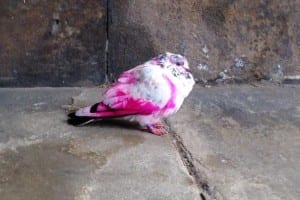
by Pigeon Patrol | Jul 28, 2015 | Bird Deterrent Products, Bird Netting, Pigeon Patrol's Services, Pigeon Spikes, Pigeons in the News
Wes Charnock spotted this hot pink pigeon outside St Mary’s Church in Stockport and took pics to post online and find out why it is so coloured.
A pink pigeon spotted in Stockport has been baffling passersby.
 The brightly coloured bird was found this afternoon outside St Mary’s Church in the town centre.
It appears to have had half its feathers dyed an impressive hot pink colour – but the reason behind it is a mystery.
Wes Charnock, 33, spotted the bird as he walked through Stockport town centre this afternoon with his sons.
He posted pictures of it online – with people speculating it could have been dyed to be released at a wedding could be a racing pigeon given a distinctive marking by its owner.
Wes Charnock FacebookWes Charnock spotted this hot pink pigeon outside St Mary’s Church in StockportWes Charnock spotted this hot pink pigeon outside St Mary’s Church in Stockport
Passer-by Wes told the MEN: “I was just walking through Stockport town centre with my kids to buy sausage rolls when we spotted it and they wanted to feed it so it could have something for tea.
“It was outside St Mary’s Church and seemed really tame.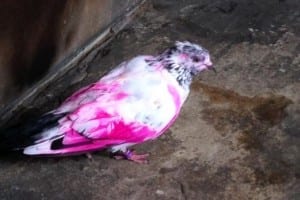
“It didn’t walk away from us like most pigeons do, it was happy to stand a few feet away.
“It did seem tired, so I thought it might have been in a race but I’ve never seen a pigeon dyed pink before.
“I posted pictures online to see what people thought, and they have been suggesting it was used in a wedding or is a racing pigeon.
About Pigeon Patrol:
Pigeon Patrol Products & Services is the leading manufacturer and distributor of bird deterrent (control) products in Canada. Pigeon Patrol products have solved pest bird problems in industrial, commercial, and residential settings since 2000, by using safe and humane bird deterrents with only bird and animal friendly solutions. At Pigeon Patrol, we manufacture and offer a variety of bird deterrents, ranging from Ultra-flex Bird Spikes with UV protection, Bird Netting, 4-S Gel and the best Ultrasonic and audible sound devices on the market today.
Voted Best Canadian wholesaler for Bird Deterrent products four years in a row.
Contact Info: 1- 877– 4– NO-BIRD (www.pigeonpatrol.ca)


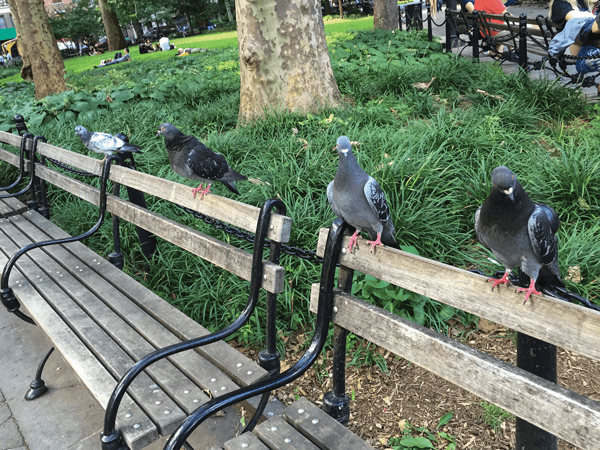 NBC Bird and Pest Control Solution’s Scotland division stepped up to the challenge ahead of them; providing complete pest control services for the entire two week duration of the games. This included servicing fly units in Hampden Park’s catering and restaurant areas, as well as ensuring that over 250 pigeons were ethically moved from the stadium ahead of the athletics.