Tastes Like Chicken

Tastes Like Chicken

squab_vickywasik
squab edible
RM_120321_0117


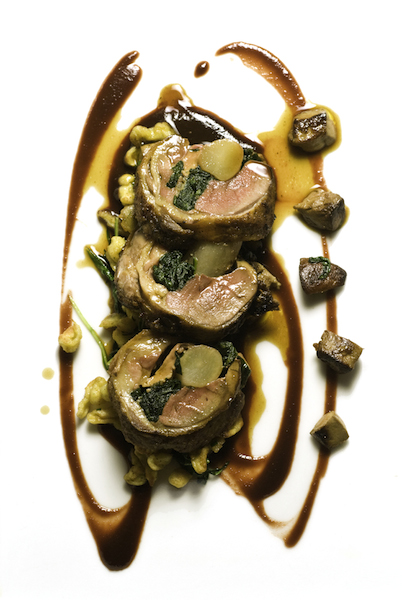
The bird was still steaming as I cut into its succulent red breast. It had spent the day marinating in honey, thyme and vinegar, and now came the roasty aroma and the moment I’d been waiting for: the first moist, silky bite. Surprisingly gamey, the flavor reminded me more of an elk steak than any poultry I’d ever eaten. So this is what pigeon tastes like!

Yes, I served pigeon for dinner, though eaters call it by another name—squab. Long before they were regarded as an urban plague, the hearty little birds served as a staple food and even delectable delicacy, from ancient Egypt to medieval Europe and into modern North America. Only in the past century or so have the birds fallen from culinary grace.

Today, pigeons have found themselves, well, pigeonholed into two groups: the ubiquitous and reviled rat with wings, and a succulent entrée on haute menus. While no New York eater would dream of cooking up the feral fowl, the domestic variety’s pedigree justifies indulging in Thomas Farm’s squab with foie gras–madeira emulsion on Per Se’s $295 winter tasting menu before catching the latest opera. But while they may not flock together, these are indeed birds of a feather.

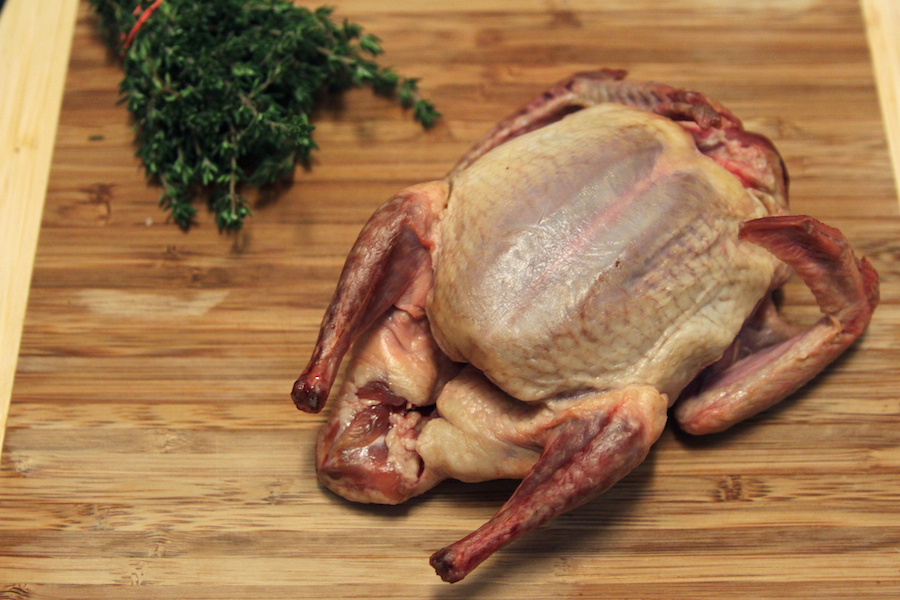
As lamb is to mutton, veal is to beef, and Cornish hen is to chicken, squab is just another name for a young pigeon, harvested when it is plump enough to satiate an empty stomach but tender enough to please the palate. So how did this divide come about? Is there any difference between the sidewalk scourge and their country cousins cooing on upscale organic farms? Does that which we call a squab by any other name still taste as sweet?

Ancient Egyptians kept domesticated pigeons, which doubled as messengers and main courses. Pigeons carrying postal messages regularly announced arriving visitors, according to records from 2900 BCE, and ancient art depicts Queen Nefertiti handing a pigeon to her young daughter while servants roast the birds.

Starting in the Middle Ages, French lords and ladies considered pigeons a delicacy. The bird’s dung made excellent fertilizer, and its rich red breast earned it the nickname “the bird of royalty.” For several centuries, nobles built elaborate dovecotes to attract feral pigeons (doves are the romantic members of the family Columbidae, which they share with pigeons), though their serfs hated them. The lowly peasants had to feed the voracious birds from their own grain yields and clean up their abundant dung. When the Revolution struck in the 1789, many of the dovecotes—which had become a symbol of aristocracy—were destroyed.

Rock pigeons—the species with whom New Yorkers share our streets—made their landing in the United States precisely because of their tastiness. French settlers introduced the birds in the 1600s, helping to expand their natural range of Europe, North Africa and South Asia into the New World. Early Americans also feasted on the local varieties, like the passenger pigeon, which they quickly began munching into extinction. Though numbering in the billions when Europeans first arrived, passenger pigeons were exploited as cheap food in the 19th century; Martha, the world’s last passenger pigeon, died in 1914 at the Cincinnati Zoo.

While Americans had long caught wild squab or tended small farms flocks, the first U.S. commercial breeding facility for squab popped up in 1874, with production ramping up in the years following. By 1907, hundreds of breeding facilities dotted the country, primarily to sell to restaurants. Some chicken farms were even converted to squab operations, while facilities in Bridgeton, New Jersey, alone raised thousands of birds dubbed “Jersey Squab.” The Great Depression brought the price of squab plummeting to that of chicken, pork or beef, which, according to Wendell Levi, author of the 1941 book The Pigeon, “allowed the housewife to include squabs in her family menus.”

But as factory farming spread its wings, a competitor displaced squab from the American menu: chicken. Agricultural economists found that while you can fatten a pigeon, you can fatten a chicken faster, explains Colin Jerolmack, a professor of sociology and environmental studies at NYU who recently authored a book called The Global Pigeon, due to arrive on shelves February 2013. By World War II, the sun had set on squab’s long heyday.

Meanwhile, as squab retreated from the family dinner table, Americans were coming to know the bird not for its plump place on the plate but for its unwanted urban ubiquity.

Jerolmack’s paper “How Pigeons Became Rats” describes an early instance of public pigeon-hating. Up until the 1960s, some parks even had designated pigeon feeding areas, but around that time a NYC park commissioner referenced the “filth and disorder” of Bryant Park brought upon by “winos,” “homosexuals” and pigeons. Public health officials (inaccurately) referenced the birds in connection with diseases, which helped solidify their low status. By 1980, when Woody Allen declared pigeons “rats with wings,” the birds were widely reviled.

“When you go to a restaurant and ask the waiter what squab is, they’re hesitant to answer,” Jerolmack says. “A lot of people think it’s a wild game animal,” he says. But today, the squab served at upscale restaurants and specialty butchers is usually raised on poultry farms.

Ariane Daguin, the famous French tastemaker behind gourmet ingredient supplier D’Artagnan, has helped Americans forget prejudices against fowl and other fauna. (Her father, Michelin-starred chef André Daguin, remains a star for championing magret, the large breast of the Moulard— the duck breed prized for foie gras—served rare.) In New York Daguin is very well known for foie gras, and, to a lesser extent, rabbit—both meats that are beloved in France but have something of a PR problem in America. Pigeon fits that portfolio perfectly, and under her wing, the bird has found favor here, albeit not under that name. Today D’Artagnan provides most fine Manhattan restaurants with their squab, dispatching 1,800 to 2,500 birds per week.

D’Artagnan offers several breeds of squab, but the King breed is their star. “I really fell in love with that when I arrived here because we don’t have that breed in France, and it’s exceptionally plump,” says Daguin. “I think I’ve been raving so much about it that some people in France have now brought it there.”

D’Artagnan sources squab from a cooperative of free-range farms in California. They’re harvested at about 28 days old, when the squabs reach adult size but before their young muscles toughen. “We have a very funny way to test whether the squab are the right age when they arrive at our loading dock,” Daguin says. “We open the cages, and if they fly out, that means they’re too old.”

In addition to their farm-raised squab, D’Artagnan also sells wild birds called wood pigeons. The animals come from Scotland (game hunted on U.S. soil cannot be legally sold) and are a bit smaller and leaner than the domestic squab, tasting of “true wild game,” Daguin says.

In France, dining on little pigeons is still a big thing. And here in the States, she reports a growing demand among chefs but also on the part of home cooks, who order the birds through her Web site. “People are starting to understand how delicate and rich squab is, and how easy it is to cook,” she says.

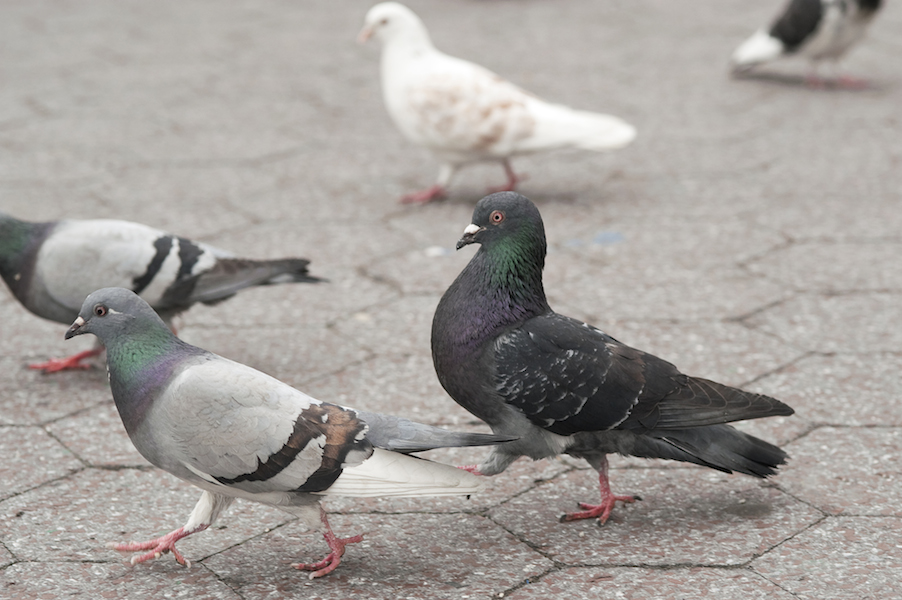
As for the city flocks, Daguin says, “unless you are dying and it’s a survival thing, I would never eat them.” But it’s not disease that makes pigeon a poor fit for dinner. Pigeon plagues are more or less a myth; they carry no more infectious pests than any other bird, including chickens and turkeys. Far more treacherous is the sidewalk birds’ diet. “As soon as wild animals are too close to man, they eat things that man rejects,” Daguin says. Jerolmack points out that feral pigeons could be eating rat poison, metals or battery acid—all things that cooking would not neutralize.

Nonetheless—and you might not want to read this while eating—a recent spate of pigeon nabbing has sparked rumors that some street birds indeed end up under knife and fork. A few enterprising individuals scatter birdseed to attract a feathery flash mob, then snatch the birds up in nets and stuff them into the back of vans. Most seem to wind up on live shooting facilities in Pennsylvania. But during his research, Jerolmack met some of these shady snatchers. “I’ve heard—but cannot confirm—that some street pigeons get sold to live poultry markets,” he says.

At such facilities in East Williamsburg and Bushwick, mostly serving a Hispanic clientele, live pigeons can indeed be found alongside ducks and chickens but the animals’ origins remain unconfirmed. “People know they’re not supposed to be selling street pigeons,” Jerolmack says. “If a poultry market is selling them, they’re selling them to customers who assume they’ve been bred.”

And though some media outlets reported a gang of vagabonds roasting pigeon over an open fire last summer in Prospect Park, officials told Edible that those claims were untrue.

Given the city birds’ trash-can diet, even hardcore locavores will want to leave them be. Instead, for eaters interested in tasting one of mankind’s longtime favorite flavors, L. Simchick butcher in the Upper East Side carries Daguin’s farm-raised birds for $22 a pound, or you can head down to Chinatown where frozen birds go for $7.89, or fresh ones for $14. While you’re in the neighborhood, swing by Columbus Park to see if you can spot one of those infamous pigeon-snatchers, or just to feed the birds.

Source

Pigeon Patrol Products & Services is the leading manufacturer and distributor of bird deterrent (control) products in Canada. Pigeon Patrol products have solved pest bird problems in industrial, commercial, and residential settings since 2000, by using safe and humane bird deterrents with only bird and animal friendly solutions. At Pigeon Patrol, we manufacture and offer a variety of bird deterrents, ranging from Ultra-flex Bird Spikes with UV protection, Bird Netting, 4-S Bird Gel and the best Ultrasonic and audible sound devices on the market today.

Voted Best Canadian wholesaler for Bird Deterrent products ten years in a row.

Contact us at 1- 877– 4– NO-BIRD, (604) 585-9279 or visit our website at www.pigeonpatrol.ca

Pigeon/Pigeon Patrol / Pigeons Roosting / Vancouver Pigeon Control /Bird Spikes / Bird Control / Bird Deterrent / Pigeon Deterrent?  Surrey Pigeon Control / Pest /Seagull deterrent / Vancouver Pigeon Blog / Birds Inside Home / Pigeons in the cities / Ice Pigeons/ What to do about pigeons/ sparrows , Damage by Sparrows, How To Keep Raccoons Away,  Why Are Raccoons Considered Pests/ De-fence / Pigeon Nesting/ Bird Droppings / Pigeon Dropping/ woodpecker control/ Professional Bird Control Company/ Keep The Birds Away/ Birds/rats/ seagull/pigeon/woodpecker/ dove/sparrow/pidgeon control/pidgeon problem/ pidgeon control/flying rats/ pigeon Problems/ bird netting/bird gel/bird spray/bird nails/ bird guard
Habit and Habitat of Pigeon

Habit and Habitat of Pigeon

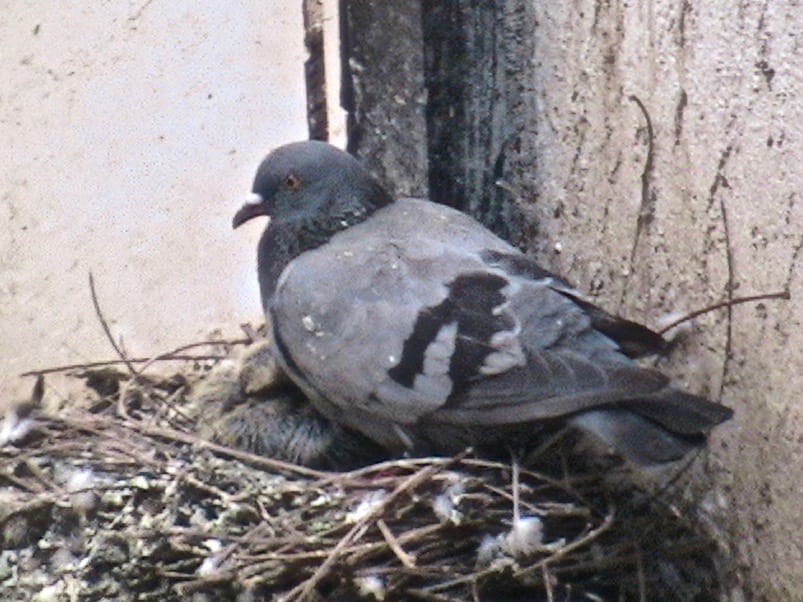
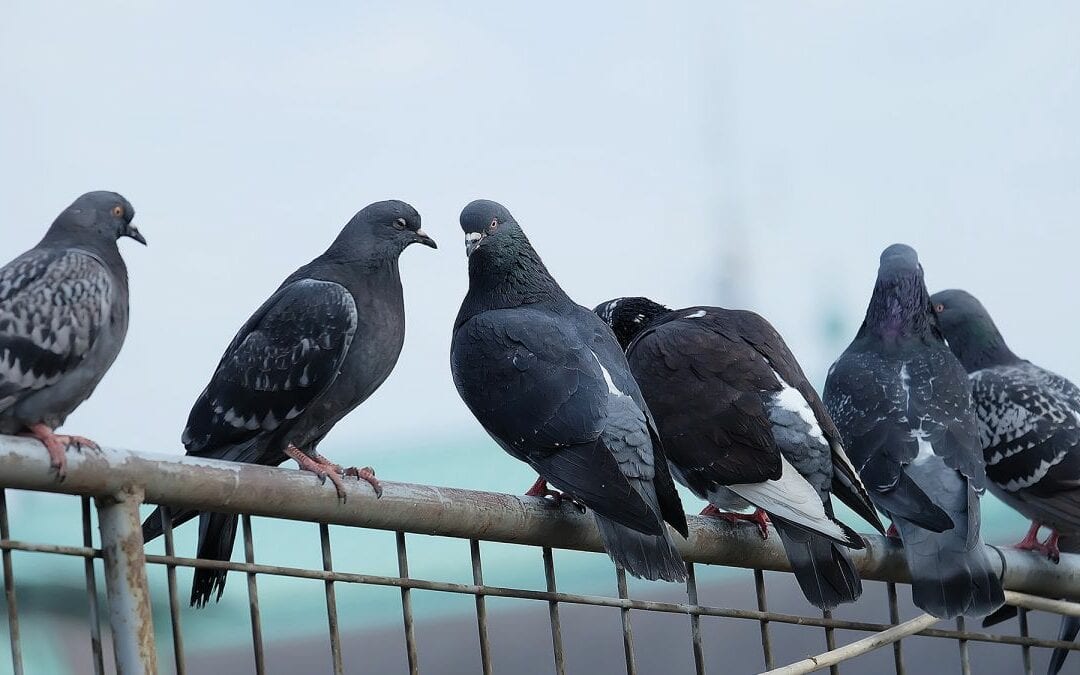
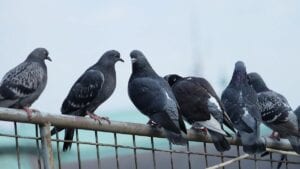
The Blue Rock Pigeon lives in perfect freedom in ledges, fissures and holes of rocks, forts, old buildings and side walls of wells. It prefers to live in those places of towns and cities which have plenty of coarse grains. Thus, their favourite resorts include big buildings, godowns, grain markets, temples, mosques, churches, tombs, railway stations and office buildings. They never nest on trees.

Nature:

The pigeons are inoffensive, harmless, timid and gregarious birds. During breeding season solitary couples make a simple, flat and artless nest of small sticks and thin roots, etc., at all sorts of places where there is some shelter from rain and sun. The eggs are laid in these nests and further development also occurs there. During winter, the pigeons collect into flocks which may be composed of several hundred individuals.

Food and Feeding:

The pigeons are vegetarians, feeding on grains, pulses, seeds of fruits and grasses. Sometimes they feed on insects, snails and slugs probably mistaken for seeds. They regularly leave their places of retreats and settlings during mornings and evenings, and collect into flocks to plunder the nearby fields.

Locomotion:

The pigeons are provided with long powerful wings which are well adapted for swift and strong flight. They walk on their two legs and such kind of walking is called bipedal gait. They walk on ground in search of food with great rapidity. When startled, they rise suddenly by striking the ground with their wings producing a crackling sound.

Sound:

The pigeons do not sing, chirp or screech but produce a characteristic sound which resembles the syllables gootur-goon, gootur-goon.

Family Life:

They lead a monogamous life, i.e., one male lives and copulates with only one female throughout the life.

ADVERTISEMENTS:

Reproduction and Incubation:

The internal fertilisation is performed by copulation in which temporary union of male and female takes place at their cloacal ends, i.e., cloacae of the two oppose each other, and transfer of sperms occurs directly into the urodaeum of female. The pigeons are oviparous, the eggs are laid in the nest and are incubated by the warmth of the parent’s body and hatching occurs after a fortnight.

Parental Care:

The newly hatched youngs are immature, helpless and featherless and are nourished by both parents by a fatty, curdy secretion, the pigeon’s milk, which is secreted in their crop. The parental care and homing instinct are well developed in pigeons.

Distribution:

The Blue Rock Pigeons are widely distributed in Palaearctic (Europe) and Oriental regions (Asia) and North Africa. They are especially plentiful in Palestine city of Israel. In India, two subspecies of Columba livia are namely, Columba livia neglecta is found up to 13,000 feet on the Himalaya.

Another Columba livia intermedia is smaller and darker race, which occurs throughout India. The Indian wild pigeon differs from that of European in having the rump or lower part of the back ash-coloured, while Indian pigeon is white.

Source

Pigeon Patrol Products & Services is the leading manufacturer and distributor of bird deterrent (control) products in Canada. Pigeon Patrol products have solved pest bird problems in industrial, commercial, and residential settings since 2000, by using safe and humane bird deterrents with only bird and animal friendly solutions. At Pigeon Patrol, we manufacture and offer a variety of bird deterrents, ranging from Ultra-flex Bird Spikes with UV protection, Bird Netting, 4-S Bird Gel and the best Ultrasonic and audible sound devices on the market today.

Voted Best Canadian wholesaler for Bird Deterrent products ten years in a row.

Contact us at 1- 877– 4– NO-BIRD, (604) 585-9279 or visit our website at www.pigeonpatrol.ca

Pigeon/Pigeon Patrol / Pigeons Roosting / Vancouver Pigeon Control /Bird Spikes / Bird Control / Bird Deterrent / Pigeon Deterrent?  Surrey Pigeon Control / Pest /Seagull deterrent / Vancouver Pigeon Blog / Birds Inside Home / Pigeons in the cities / Ice Pigeons/ What to do about pigeons/ sparrows , Damage by Sparrows, How To Keep Raccoons Away,  Why Are Raccoons Considered Pests/ De-fence / Pigeon Nesting/ Bird Droppings / Pigeon Dropping/ woodpecker control/ Professional Bird Control Company/ Keep The Birds Away/ Birds/rats/ seagull/pigeon/woodpecker/ dove/sparrow/pidgeon control/pidgeon problem/ pidgeon control/flying rats/ pigeon Problems/ bird netting/bird gel/bird spray/bird nails/ bird guard
When Pigeons Flock, Who’s in Command?

When Pigeons Flock, Who’s in Command?

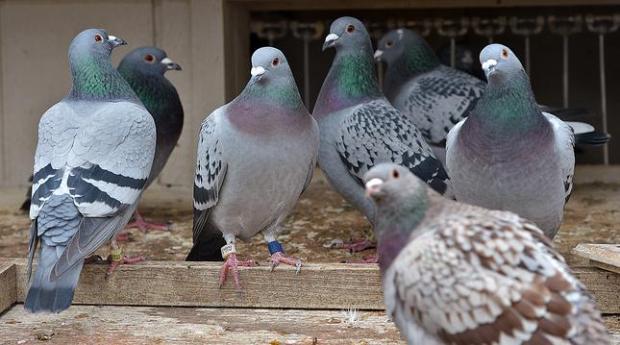
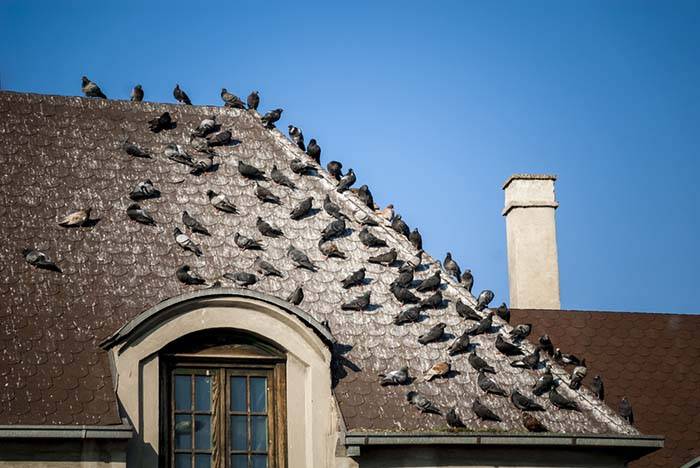
That flock of pigeons flying overhead may look like a chaotic cloud of birds, but it’s more like an airborne hierarchy. By strapping tiny global positioning system (GPS) backpacks onto the birds, researchers have found that a flock follows several leaders at any given time in flight. But the flock’s leadership can change so that even low-ranking birds sometimes get a chance to command. The findings could shed light on how other groups of animals behave en masse, such as herds of wildebeest, schools of fish, and even crowds of humans.

Flocks of birds are one of the most common sights in everyday life, but many aspects of the animals’ behavior remain poorly understood. Why, for example, do flocks suddenly change directions and then change directions again within a few seconds? Why do birds in flight suddenly stop to rest on a certain stretch of telephone wire? And lacking any threat or sudden disturbance, why do flocks on the ground spontaneously take to the air?

To find some of the answers, researchers exploited a bit of 21st century technology. A team lead by statistical physicist Tamás Vicsek of Eötvös University in Hungary outfitted a trained flock of 13 homing pigeons with tiny GPS receivers that could determine each individual bird’s position every 0.2 seconds. Then they sent as many as 10 members of the flock out on 15 test flights. The journeys included four flights of about 15 kilometers back to the birds’ roost and 11 flights roaming freely around their home base outside Budapest. The researchers tracked each bird’s directional changes and how often those changes either followed or were copied by its flockmates.

In today’s issue of Nature, the team reports that the flight patterns showed a definite hierarchy, with most or all of the birds consistently copying changes in direction by the flock’s leaders, which almost always flew in front. If, for example, a leading bird suddenly swerved to the right, its followers copied its move within about 0.4 seconds—an amount of time considered too long to be reflexive.

However, the data also revealed that the leaders weren’t always the same, even within a single flight. And sometimes, even the birds at the bottom of the pecking order would lead the flock for brief periods. The arrangement made each flight more egalitarian, but the researchers think the reason might be more evolutionarily than politically driven. It’s possible that this type of group decision-making is more accurate or beneficial than others, says zoologist and co-author Dora Biro of the University of Oxford in the United Kingdom. Perhaps the individuals in the flocks stand a better chance of survival if they sometimes participate in guiding the group rather than constantly submitting to a single leader, she says.

Another curiosity was that the lower-ranking birds most often flew behind and to the right of the leaders. The researchers think this relates to the structure of the birds’ brains, in which the left side handles spatial tasks and the right side governs social recognition. Therefore, anything the birds see with their left eye (which is processed by the right side of the brain) tends to yield a quicker social response.

The findings could help explain group behavior of other animals, such as schooling fish, says evolutionary biologist Iain Couzin of Princeton University. There’s a “fascinating balance” between democratic and hierarchical control in the pigeon flocks, he says. And this sophisticated study reveals the link between the birds’ brain hemispheres and how they gather information during their flights. It achieves “a deeper understanding of coordinated control in animal groups,” he says.

Source

Pigeon Patrol Products & Services is the leading manufacturer and distributor of bird deterrent (control) products in Canada. Pigeon Patrol products have solved pest bird problems in industrial, commercial, and residential settings since 2000, by using safe and humane bird deterrents with only bird and animal friendly solutions. At Pigeon Patrol, we manufacture and offer a variety of bird deterrents, ranging from Ultra-flex Bird Spikes with UV protection, Bird Netting, 4-S Bird Gel and the best Ultrasonic and audible sound devices on the market today.

Voted Best Canadian wholesaler for Bird Deterrent products ten years in a row.

Contact us at 1- 877– 4– NO-BIRD, (604) 585-9279 or visit our website at www.pigeonpatrol.ca

Pigeon/Pigeon Patrol / Pigeons Roosting / Vancouver Pigeon Control /Bird Spikes / Bird Control / Bird Deterrent / Pigeon Deterrent?  Surrey Pigeon Control / Pest /Seagull deterrent / Vancouver Pigeon Blog / Birds Inside Home / Pigeons in the cities / Ice Pigeons/ What to do about pigeons/ sparrows , Damage by Sparrows, How To Keep Raccoons Away,  Why Are Raccoons Considered Pests/ De-fence / Pigeon Nesting/ Bird Droppings / Pigeon Dropping/ woodpecker control/ Professional Bird Control Company/ Keep The Birds Away/ Birds/rats/ seagull/pigeon/woodpecker/ dove/sparrow/pidgeon control/pidgeon problem/ pidgeon control/flying rats/ pigeon Problems/ bird netting/bird gel/bird spray/bird nails/ bird guard
Police in India take pigeon into custody after bird found with note threatening PM

Police in India take pigeon into custody after bird found with note threatening PM

Police in India took a pigeon into custody Monday after the bird was found carrying a warning note to the country’s Prime Minister Narendra Modi.

According to Agence France-Presse (AFP) news agency, Border Security Force (BSF) officers found the pigeon in the northern state of Punjab, where clashes between Indian and Pakistani troops have intensified.

“We took it into custody last evening,” a police investigator told the news agency. “The BSF found it with a note in Urdu saying something like ‘Modi, we’re not the same people from 1971. Now each and every child is ready to fight against India’.”

The note was apparently signed by the banned Pakistani militant group Lashkar-e-Taiba.

According to English language newspaper The Indian Express, this is the second time in just over a week a pigeon has been found with some sort of note apparently sent from Pakistan.

On Sept. 23, a bird was found in Hoshiarpur district with “some words written in Urdu,” the newspaper reported.

“We are investigating the matter,” inspector Ramesh Kumar told the Express.

Source

Pigeon Patrol Products & Services is the leading manufacturer and distributor of bird deterrent (control) products in Canada. Pigeon Patrol products have solved pest bird problems in industrial, commercial, and residential settings since 2000, by using safe and humane bird deterrents with only bird and animal friendly solutions. At Pigeon Patrol, we manufacture and offer a variety of bird deterrents, ranging from Ultra-flex Bird Spikes with UV protection, Bird Netting, 4-S Bird Gel and the best Ultrasonic and audible sound devices on the market today.

Voted Best Canadian wholesaler for Bird Deterrent products ten years in a row.

Contact us at 1- 877– 4– NO-BIRD, (604) 585-9279 or visit our website at www.pigeonpatrol.ca

Pigeon/Pigeon Patrol / Pigeons Roosting / Vancouver Pigeon Control /Bird Spikes / Bird Control / Bird Deterrent / Pigeon Deterrent?  Surrey Pigeon Control / Pest /Seagull deterrent / Vancouver Pigeon Blog / Birds Inside Home / Pigeons in the cities / Ice Pigeons/ What to do about pigeons/ sparrows , Damage by Sparrows, How To Keep Raccoons Away,  Why Are Raccoons Considered Pests/ De-fence / Pigeon Nesting/ Bird Droppings / Pigeon Dropping/ woodpecker control/ Professional Bird Control Company/ Keep The Birds Away/ Birds/rats/ seagull/pigeon/woodpecker/ dove/sparrow/pidgeon control/pidgeon problem/ pidgeon control/flying rats/ pigeon Problems/ bird netting/bird gel/bird spray/bird nails/ bird guard
Pigeon ‘backpacks’ track flock voting

Pigeon ‘backpacks’ track flock voting

(PhysOrg.com) — Pigeon flocks are guided by a flexible system of leadership in which almost every member gets a ‘vote’ but the votes of high-ranking birds carry more weight, a new study has shown.

Scientists used GPS ‘backpacks’ to record the flight paths of individual pigeons and then analysed interactions between the birds. Their findings could help us understand the collective behaviour of other animals, including humans.

A report of the research, carried out by scientists from Oxford University and Eötvös University, Hungary, is published in this week’s Nature.

‘We are all aware of the amazing aerobatics performed by flocks of birds but how such flocks decide where to go and whether decisions are made by a dominant leader or by the group as a whole has always been a mystery,’ said Dr Dora Biro of Oxford University’s Department of Zoology, an author of the paper. ‘We found that, whilst most birds have a say in decision-making, a flexible system of ‘rank’ ensures that some birds are more likely to lead and others to follow.’

As part of the study, miniature GPS loggers weighing just 16g were fitted into custom-made backpacks carried by flocks of up to 10 homing pigeons. These enabled scientists to, for the first time, explore spatial and temporal relationships between individual birds and the movement decisions they made at the scale of a fraction of a second.

The team measured shifts in the flight direction of each bird every 0.2 seconds and tried to ‘line up’ these changes across different birds in the flock to determine who initiated any given change in direction and who followed (and with what time delay). The research revealed unexpectedly well-defined hierarchies within flocks, with a spectrum of different levels of leadership which in turn determined the influence individuals had on other birds and on the flock as a whole.

‘Crucially, these hierarchies are flexible in the sense that the leading role of any given bird can vary over time, while nonetheless remaining predictable in the long run,’ Dr Biro said. ‘This dynamic, flexible segregation of individuals into leaders and followers – where even the lower-ranking members’ opinions can make a contribution – may represent a particularly efficient form of decision-making.’

‘Whether such effects come from some individuals being more motivated to lead or being inherently better navigators, perhaps with greater navigational knowledge, is an intriguing question we don’t yet have an answer to.’

The team also discovered that a bird’s position in the flock matched its position in the hierarchy, with individuals nearer the front more likely to be responsible for decisions. Additionally, they found that followers responded more quickly to those flying on their left, confirming observations in the laboratory that suggest birds process social information – such as tracking and responding to the movements of other  – predominantly through input that the brain receives from the left eye.

The researchers believe their findings could help unravel the decision-making process in many other groups of animals. Further studies may reveal how such a sophisticated leadership strategy confers evolutionary advantage on individuals over a strategy based on a single leader or one in which all members contribute equally to decision-making.

Source

Pigeon Patrol Products & Services is the leading manufacturer and distributor of bird deterrent (control) products in Canada. Pigeon Patrol products have solved pest bird problems in industrial, commercial, and residential settings since 2000, by using safe and humane bird deterrents with only bird and animal friendly solutions. At Pigeon Patrol, we manufacture and offer a variety of bird deterrents, ranging from Ultra-flex Bird Spikes with UV protection, Bird Netting, 4-S Bird Gel and the best Ultrasonic and audible sound devices on the market today.

Voted Best Canadian wholesaler for Bird Deterrent products ten years in a row.

Contact us at 1- 877– 4– NO-BIRD, (604) 585-9279 or visit our website at www.pigeonpatrol.ca

Pigeon/Pigeon Patrol / Pigeons Roosting / Vancouver Pigeon Control /Bird Spikes / Bird Control / Bird Deterrent / Pigeon Deterrent?  Surrey Pigeon Control / Pest /Seagull deterrent / Vancouver Pigeon Blog / Birds Inside Home / Pigeons in the cities / Ice Pigeons/ What to do about pigeons/ sparrows , Damage by Sparrows, How To Keep Raccoons Away,  Why Are Raccoons Considered Pests/ De-fence / Pigeon Nesting/ Bird Droppings / Pigeon Dropping/ woodpecker control/ Professional Bird Control Company/ Keep The Birds Away/ Birds/rats/ seagull/pigeon/woodpecker/ dove/sparrow/pidgeon control/pidgeon problem/ pidgeon control/flying rats/ pigeon Problems/ bird netting/bird gel/bird spray/bird nails/ bird guard