by Pigeon Patrol | Sep 4, 2014 | Bird Deterrent Products, Bird Netting, Pigeon Patrol's Services, Pigeons in the News, UltraSonic Bird Control
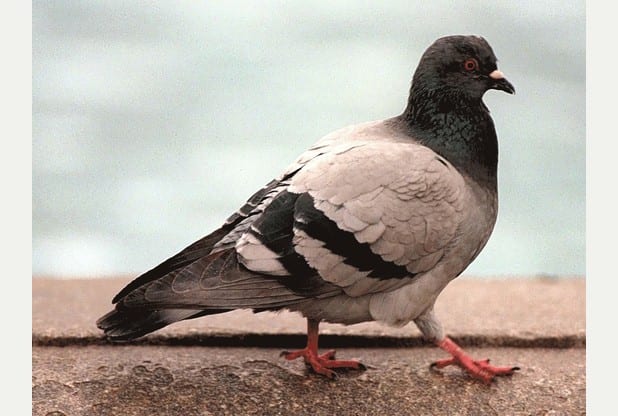
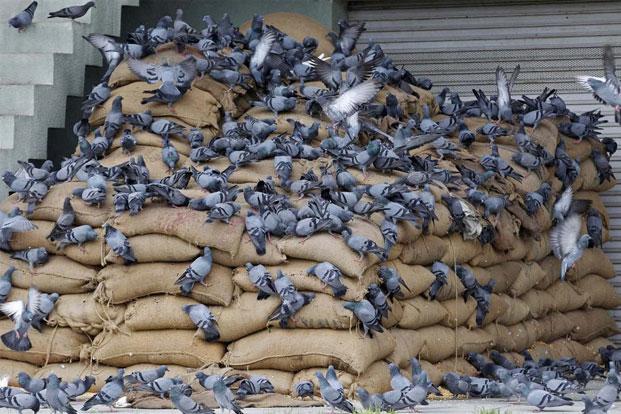
Ed Berube sits in his motorized scooter in the middle of Kennedy Park every nice day he can. As he digs into his giant bag filled with unshelled peanuts, pigeons begin to flock around him.
Jerk Pigeon Guy
Ed Berube, who many know as “Birdman,” feeds pigeons in Kennedy Park in Lewiston on Monday afternoon
“There’s the birdman with his flock,” said a person walking past him Monday afternoon.
But it’s the human flock Berube is really trying to reach.
“I use the birds and peanuts to open the door to talk about Christ,” he said. “I was born again 28 years ago,” he said, standing straight up out of his chair.
He has chronic breathing problems, so he gets short of breath walking. When he’s not with his “girlfriend,” a 1,400cc motorcycle parked just up the street, he is motoring around town on his scooter looking for somebody with whom to share his love of Jesus.
“I was trouble as a kid. I was run out of town in Massachusetts where I grew up,” he said. “They told my mother to take me away or they would send me away.”
He and his mother moved to Richmond, and he took jobs in the woods and on farms. He eventually moved to Lewiston to work in the Libbey Mill until it closed.
“I was just going on with life, drinking, drugging and all that. On Sunday, my wife would go to church and I’d start drinking. They kept inviting me to come, and when I finally did, I warned the pastor that he didn’t know what he was dealing with,” Berube said.
“It took about 17 months, but I finally felt the spirit kicking into gear. And then, it was like a light switch just flipped on,” he said.
Berube recited Scripture, then pulled out a zippered case with books and clippings in it. He thumbed through a Bible and challenges people to read the verses and not become changed.
“I just want to kick their spirit into gear,” he said, as he reached for another handful of peanuts for the pigeons circling closer and cooing.
About Pigeon Patrol:
Pigeon Patrol Products & Services is the leading manufacturer and distributor of bird deterrent (control) products in Canada. Pigeon Patrol products have solved pest bird problems in industrial, commercial, and residential settings since 2000, by using safe and humane bird deterrents with only bird and animal friendly solutions. At Pigeon Patrol, we manufacture and offer a variety of bird deterrents, ranging from Ultra-flex Bird Spikes with UV protection, Bird Netting, 4-S Gel and the best Ultrasonic and audible sound devices on the market today.
Voted Best Canadian wholesaler for Bird Deterrent products four years in a row.
Contact Info: 1- 877– 4– NO-BIRD (www.pigeonpatrol.ca)

by Pigeon Patrol | Sep 4, 2014 | 4-S Gel Bird repellent, Animal Deterrent Products, Bird Deterrent Products, Bird Netting, Pigeon Spikes, Pigeons in the News, UltraSonic Bird Control
 Reigate firefighters flew into action in the town centre to rescue a pigeon caught up in rooftop netting.
The four-man crew, led by Crew Commander Steve Arnold, closed the High Street temporarily in order to get a ladder up to the roof of Boots opticians, where the bird had got stuck in netting placed there to prevent pigeons getting into the roof spaces, last Wednesday afternoon (June 25).
The fire service was called in by the RSPCA.
A Surrey Fire and Rescue Service spokesman said: “Animal welfares is just one of the many roles that the Surrey Fire and Rescue Service responds to, though full risk assessments are made and our role is to assist and support the RSPCA in such events.”
He said: “After cordoning the area off for safety, the crew pitched a 13.5-metre ladder and after several attempts, released the pigeon successfully.”
He said along with Crew Commander Arnold, the efforts of firefighters Horsfall, Smith and Sharpe were all cheered.
“The pigeon was seen by many onlookers, who cheered in appreciation as it flew away, relatively unharmed,” he said.
The rescue was one of the last call-outs for Crew Commander Arnold, who was taking early retirement last week after a 25-year career in the fire service.
About Pigeon Patrol:
Pigeon Patrol Products & Services is the leading manufacturer and distributor of bird deterrent (control) products in Canada. Pigeon Patrol products have solved pest bird problems in industrial, commercial, and residential settings since 2000, by using safe and humane bird deterrents with only bird and animal friendly solutions. At Pigeon Patrol, we manufacture and offer a variety of bird deterrents, ranging from Ultra-flex Bird Spikes with UV protection, Bird Netting, 4-S Gel and the best Ultrasonic and audible sound devices on the market today.
Voted Best Canadian wholesaler for Bird Deterrent products four years in a row.
Contact Info: 1- 877– 4– NO-BIRD (www.pigeonpatrol.ca)
by Pigeon Patrol | Sep 4, 2014 | Bird Deterrent Products, Bird Netting, Pigeon Patrol's Services, Pigeon Spikes, Pigeons in the News
 A new pathogen has been discovered by scientists investigating major die-offs of pigeons native to North America, according to studies led by the University of California, Davis, and the California Department of Fish and Wildlife.Scientists were able to implicate this new parasite, along with the ancient parasite Trichomonas gallinae, in the recent deaths of thousands of Pacific Coast band-tailed pigeons. The die-offs occurred during multiple epidemics in California’s Central Coast and Sierra Nevada mountain ranges. Scientists named the new pathogen Trichomonas stableri.
Avian trichomonosis is an emerging and potentially fatal disease that creates severe lesions that can block the esophagus, ultimately preventing the bird from eating or drinking, or the trachea, leading to suffocation. The disease may date back to when dinosaurs roamed the earth, as lesions indicative of trichomonosis were found recently in T-Rex skeletons. The disease may also have contributed to the decline of the passenger pigeon, whose extinction occurred exactly 100 years ago.
Epidemics of the disease can result in the death of thousands of birds in a short amount of time. An outbreak in Carmel Valley killed an estimated 43,000 birds in 2007.
“The same parasite species that killed band-tailed pigeons during the outbreaks were also killing the birds when there weren’t outbreaks,” said lead author Yvette Girard, a postdoctoral scholar with the Wildlife Health Center in the UC Davis School of Veterinary Medicine at the time of the studies. “This indicates there may be other factors at play in the die-offs.”
“We are now investigating what triggers these die-offs, which may be caused by the congregation of infected and vulnerable birds during certain environmental conditions, or even spillover from another nearby species,” said principal investigator Christine Johnson, a professor with the UC Davis Wildlife Health Center.
Between winter 2011 and spring 2012, there were eight mortality events—defined as more than five dead birds found in the same geographic area during the same time frame. The study said trichomonosis was confirmed in 96 percent of dead, sick or dying birds examined at seven of the mortality events. This disease was also found in:
- 36 percent of band-tailed pigeons at wildlife rehabilitation centers
- 11 percent of hunter-killed band-tailed pigeons
- 4 percent of the birds caught live and released
“What makes this disease more troublesome for band-tailed pigeons is their low reproductive rate—about one chick per year—and also that these events are occurring in the wintertime,” said co-author Krysta Rogers, an environmental scientist with the California Department of Fish and Wildlife. “That means almost all the birds we’re losing during events are adult birds. They’re being killed before they have the ability to reproduce in the spring.”
Mortality events in band-tailed pigeons have been reported in California at least since 1945, but have increased during the last decade, with outbreaks reported in six of the last 10 years.
“Going into the study, we expected to find a single, highly virulent species of Trichomonas in birds sampled at outbreaks,” Girard said. “Having two species killing birds at these large-scale mortality events is surprising.”
Necropsies of the birds were conducted at the California Animal Health and Food Safety Laboratory at UC Davis and the Wildlife Investigations Laboratory at the California Department of Fish and Wildlife.
Both studies were funded by the California Department of Fish and Wildlife and the U.S. Fish and Wildlife Service.
About Pigeon Patrol:
Pigeon Patrol Products & Services is the leading manufacturer and distributor of bird deterrent (control) products in Canada. Pigeon Patrol products have solved pest bird problems in industrial, commercial, and residential settings since 2000, by using safe and humane bird deterrents with only bird and animal friendly solutions. At Pigeon Patrol, we manufacture and offer a variety of bird deterrents, ranging from Ultra-flex Bird Spikes with UV protection, Bird Netting, 4-S Gel and the best Ultrasonic and audible sound devices on the market today.
Voted Best Canadian wholesaler for Bird Deterrent products four years in a row.
Contact Info: 1- 877– 4– NO-BIRD (www.pigeonpatrol.ca)
by Pigeon Patrol | Aug 7, 2014 | Bird Deterrent Products, Pigeon Spikes, Pigeons in the News, UltraSonic Bird Control
 BATHURST Regional Council has not ruled out resorting to using birds of prey in an effort to control the pigeon problem in the central business district.
Council has had discussions with Dubbo City Council regarding its success in using falcons to encourage pest species to leave the main shopping precinct.
A report to tomorrow night’s ordinary monthly meeting updates council on how Bathurst’s pest bird management strategy has fared since it was adopted in 2012.
One of the recommendations of the plan was to introduce a co-ordinated pigeon control program involving council facilities and businesses in the CBD.
Council conducted a successful program during 2012-2013, when 1089 pigeons were removed from council and private properties.
According to the report, council’s environmental staff have discussed with staff from Dubbo City Council that city’s recent trial using native birds of prey.
“Dubbo has a problem with starlings nesting in trees in the main street, causing $12,000 of annual clean-up costs,” the report states.
“They engaged a falconry company to conduct a trial using four different predator bird species that would fly in the area with the intention of moving the starlings on.
The program was moderately successful for two of the birds used though more trials are needed to determine if the program would work on an ongoing basis.
“This may or may not work in the Bathurst context in relation to pigeons as they are impacting across a broader area and moving the birds from one place to another may not reduce the issue.
“Council staff will continue to receive updates regarding the Dubbo trial to determine if a similar program could be conducted locally.”
The report also notes that pigeon control efforts have also continued in 2013-14 with a targeted trapping program in Machattie Park.
However, this was largely unsuccessful as pigeons are attracted to the high volumes of artificial food supply at the duck ponds and therefore could not be enticed to the trapping area.
“Since then, council has recently commenced a trapping program at the Post Office building, the TAFE complex and at one private building in the CBD,” the report states. “These three sites have the highest populations and therefore have been targeted first before the program moves onto activities at other CBD properties.”
In other pest bird initiatives, council hosted a community Indian Myna workshop, attended by local and regional residents as well as staff from Bathurst and Orange councils.
Presentations were given by the Clarence Valley Indian Myna group and the Pest Cooperative Research Centre’s Mynascan project coordinator.
Thirty Indian myna traps were distributed on the day (for a small cost) so that interested community members could remove these pest birds from their area.
Council staff will continue to implement the Pest Bird Management Plan as required and as funding and resources permit.
About Pigeon Patrol:
Pigeon Patrol Products & Services is the leading manufacturer and distributor of bird deterrent (control) products in Canada. Pigeon Patrol products have solved pest bird problems in industrial, commercial, and residential settings since 2000, by using safe and humane bird deterrents with only bird and animal friendly solutions. At Pigeon Patrol, we manufacture and offer a variety of bird deterrents, ranging from Ultra-flex Bird Spikes with UV protection, Bird Netting, 4-S Gel and the best Ultrasonic and audible sound devices on the market today.
Voted Best Canadian wholesaler for Bird Deterrent products four years in a row.
Contact Info: 1- 877– 4– NO-BIRD (www.pigeonpatrol.ca)
by Pigeon Patrol | Aug 7, 2014 | 4-S Gel Bird repellent, Bird Deterrent Products, Pigeon Patrol's Services, Pigeon Spikes, Pigeons in the News, UltraSonic Bird Control
 US – University of California Davis researchers have identified the cause of death in wild band-tailed pigeons connected to newly discovered parasite.
Researchers at UC Davis and the California Department of Fish and Wildlife have identified trichomonosis as a key factor in winter die-offs and population decline of bandtailed pidgeons, a native migratory game bird. (Dianne Ricky/courtesy photo)
A new pathogen has been discovered by scientists investigating major die-offs of pigeons native to North America, according to studies led by the University of California, Davis, and the California Department of Fish and Wildlife.
Scientists were able to implicate this new parasite, along with the ancient parasite, Trichomonas gallinae, in the recent deaths of thousands of Pacific Coast band-tailed pigeons. The die-offs occurred during multiple epidemics in California’s Central Coast and Sierra Nevada mountain ranges. Scientists named the new pathogen, Trichomonas stableri.
Avian trichomonosis is an emerging and potentially fatal disease that creates severe lesions that can block the esophagus, ultimately preventing the bird from eating or drinking, or the trachea, leading to suffocation. The disease may date back to when dinosaurs roamed the earth, as lesions indicative of trichomonosis were found recently in T-Rex skeletons. The disease may also have contributed to the decline of the passenger pigeon, whose extinction occurred exactly 100 years ago.
Epidemics of the disease can result in the death of thousands of birds in a short amount of time. An outbreak in Carmel Valley killed an estimated 43,000 birds in 2007.
“The same parasite species that killed band-tailed pigeons during the outbreaks were also killing the birds when there weren’t outbreaks,” said lead author Yvette Girard, a postdoctoral scholar with the Wildlife Health Center in the UC Davis School of Veterinary Medicine at the time of the studies. “This indicates there may be other factors at play in the die-offs.”
“We are now investigating what triggers these die-offs, which may be caused by the congregation of infected and vulnerable birds during certain environmental conditions, or even spill-over from another nearby species,” said principal investigator Christine Johnson, a professor with the UC Davis Wildlife Health Center.
Between winter 2011 and spring 2012, there were eight mortality events – defined as more than five dead birds found in the same geographic area during the same time frame. The study said trichomonosis was confirmed in 96 per cent of dead, sick or dying birds examined at seven of the mortality events. This disease was also found in 36 per cent of band-tailed pigeons at wildlife rehabilitation centres, 11 per cent of hunter-killed band-tailed pigeons and four per cent of the birds caught live and released.
“What makes this disease more troublesome for band-tailed pigeons is their low reproductive rate – about one chick per year – and also that these events are occurring in the wintertime,” said co-author Krysta Rogers, an environmental scientist with the California Department of Fish and Wildlife. “That means almost all the birds we’re losing during events are adult birds. They’re being killed before they have the ability to reproduce in the spring.”
Mortality events in band-tailed pigeons have been reported in California at least since 1945 but have increased during the last decade, with outbreaks reported in six of the last 10 years.
“Going into the study, we expected to find a single, highly virulent species of Trichomonas in birds sampled at outbreaks,” Girard said. “Having two species killing birds at these large-scale mortality events is surprising.”
Necropsies of the birds were conducted at the California Animal Health and Food Safety Laboratory at UC Davis and the Wildlife Investigations Laboratory at the California Department of Fish and Wildlife.
Both studies were funded by the California Department of Fish and Wildlife and the US Fish and Wildlife Service.
About Pigeon Patrol:
Pigeon Patrol Products & Services is the leading manufacturer and distributor of bird deterrent (control) products in Canada. Pigeon Patrol products have solved pest bird problems in industrial, commercial, and residential settings since 2000, by using safe and humane bird deterrents with only bird and animal friendly solutions. At Pigeon Patrol, we manufacture and offer a variety of bird deterrents, ranging from Ultra-flex Bird Spikes with UV protection, Bird Netting, 4-S Gel and the best Ultrasonic and audible sound devices on the market today.
Voted Best Canadian wholesaler for Bird Deterrent products four years in a row.
Contact Info: 1- 877– 4– NO-BIRD (www.pigeonpatrol.ca)