by Pigeon Patrol | Sep 4, 2014 | Bird Deterrent Products, Bird Netting, Pigeon Patrol's Services, Pigeon Spikes, Pigeons in the News
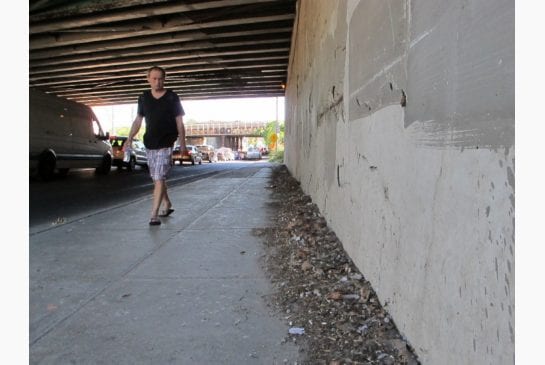
 PIGEONS are making life difficult for people who say the droppings they leave underneath a railway bridge are a safety risk and so dirty they make worshippers reluctant to go to a nearby mosque.
Now councillors and residents in Maindee, Newport, are calling on Network Rail to install netting to stop the birds nesting.
Many worshippers at the Shahporan Bangladeshi Jam’e Mosque just off Chepstow Road have to walk underneath the bridge to get to prayers.
In Islam, there is a requirement that people are clean before they come into the mosque or begin to pray. But some feel the dirty bridge makes this difficult, while others say the pigeon prevalence is dangerous, as people have slipped over on the droppings.
Abbas Meah, 75, who has lived in Maindee since 1962, said the pigeons were causing problems for people going to mosque.
“People must walk through pigeon mess on both sides of the bridge,” he said. “I have spoken to our local MP. If they just put a net up that would help; that’s all we’re asking for. People can’t pray like this.”
Majid Rahman, councillor for Victoria ward, said: “The walls are grubby with pigeon mess. It’s a health and safety issue. Someone badly hurt their hand as a result of droppings on a metal grate. We’re looking to have a meeting with Network Rail.”
Fellow councillor Christine Jenkins said: “They clean it but as soon as they do, the mess is there again. It’s time Network Rail took responsibility for their bridge. It’s dangerous – someone is going to slip on it.”
A Network Rail spokesperson said: “Network Rail has a responsibility to taxpayers to ensure that it spends its limited public funds wisely.“When looking at the problem and nuisance we know pigeons cause, we look at the scale of the problem and undertake a risk assessment to make an informed judgement. We cannot justify the expense of netting as we don’t believe there is a statutory nuisance.”
About Pigeon Patrol:
Pigeon Patrol Products & Services is the leading manufacturer and distributor of bird deterrent (control) products in Canada. Pigeon Patrol products have solved pest bird problems in industrial, commercial, and residential settings since 2000, by using safe and humane bird deterrents with only bird and animal friendly solutions. At Pigeon Patrol, we manufacture and offer a variety of bird deterrents, ranging from Ultra-flex Bird Spikes with UV protection, Bird Netting, 4-S Gel and the best Ultrasonic and audible sound devices on the market today.
Voted Best Canadian wholesaler for Bird Deterrent products four years in a row.
Contact Info: 1- 877– 4– NO-BIRD (www.pigeonpatrol.ca)

by Pigeon Patrol | Sep 4, 2014 | Bird Deterrent Products, Bird Netting, Pigeon Patrol's Services, Pigeon Spikes, Pigeons in the News
 Rufus the Hawk reports for duty weighing 625 grams.
Ten grams more and he’s too sedentary. Any lighter, and he ceases being the non-lethal deterrent Wimbledon contracts him to be and roams farther afield for mouse, snake or hare.
But if Rufus arrives at his optimum weight, he need only soar over centre court a few times to earn his hand-fed reward of raw chicken bits.
The mere sight of his one metre wingspan is enough to shoo away the pigeons that might otherwise land on the court during a critical point, deposit droppings in the Royal Box or roost in the eaves to feast on grass-seed all winter, as if the sod were a buffet table.
A 6-year-old Harris Hawk with prodigious self-esteem, Rufus is just one of several hundred actors in the meticulously choreographed dance that unfolds between dawn and 10.30am daily in London throughout the Wimbledon fortnight.
From strawberry-hullers to bomb-sniffing English Springer Spaniels, every man and beast has a task before the All England Club’s wrought-iron gates open to the tennis-mad public. And every task – whether mowing, measuring, marking, pruning, watering, soaring, sniffing, sweeping, scrubbing or polishing – has its appointed time for completion.
No detail is overlooked. Everything must be just so at the most esteemed of the four Grand Slams. A ticket to Wimbledon, after all, constitutes an invitation to a private club that opens to royals and commoners alike for two weeks each year to watch the world’s best players in the most pristine setting in sports.
“It’s all about the details,” says Lucy Tomlinson, 21, a member of Wimbledon’s daytime housekeeping staff, which from 7.30am onward restocks the loos with soap and hand towels, polishes the banisters, scrubs scuff marks from the entryways and wipes away beads of water left by the power-washing of ticket-holders’ seats.
“We make sure everything is absolute perfection!”
Neil Stubley, the head groundsman, starts his day with a 5.30am check of the forecast. Based on that, he directs his staff when to deflate the translucent covers on the 41 grass courts so they can be rolled up and stowed and the sod watered if the daily measurements of its hardness indicate there’s a need.
All of Wimbledon’s courts are oriented in a north-south direction. A specific groundskeeper is assigned to each court for the tournament’s duration. And each mows the rye grass to precisely 8 millimetres each morning, in exactly the same pattern of alternating stripes.
Every cutting is captured by the mower; even a stray snippet of grass could cause a player to slip.
“If Roger or Andy or Rafa goes out onto any of the practice courts in the morning and then comes out to any of the match courts, they should play exactly the same because we have controlled the moisture, the grass species and the cutting,” explains Stubley, who supervises a staff of 32 groundskeepers and gardeners.
Then come pairs of groundskeepers who mark the lines with titanium dioxide and set up the nets.
By that point, roughly 9am, David Spearing has started work at the golf course across Church Road that doubles as a camping ground for the thousands of fans in the queue for tickets.
Wimbledon’s honorary chief steward, Spearing has the privilege of informing the campers over a loudspeakers at 7.30am the number of tickets available for public sale that day and handing out the wristbands that guarantee entry to centre court, court 1 or the grounds in general.
It is but one of his duties. The other is sitting in the players’ guest box on centre court. Wimbledon is the lone major that seats the relatives, coaches and friends of both players in the same box. And Spearing, expert in protocol and discretion, is on hand to greet, seat, and on the rarest occasion, mediate.
“It’s basically an honour to have the job, rather than any particular ability,” says Spearing, who sits in the corner of the 39-seat box, with the top seed’s 19 guests to his right and the lower seed’s 19 guests to his left.
“Being pleasant is easy.”
Based on wags, few enjoy their early morning rounds more than dogs tasked with sniffing potential explosives. A mix of spaniels and retrievers, they scamper up and down the walkways, peer under benches and poke into trash bins positively quivering with excitement over the prospect of finding something that warrants a prize. At Wimbledon, naturally, that prize is a fuzzy yellow tennis ball.
Dogs, however, are one of the few sights that unsettle Rufus. So handler Imogen Davis, whose parents and five siblings breed and train raptors for a living, does her best to steer the hawk clear of Wimbledon’s canines. It’s not always easy, given that Rufus’s vision is 10 times better than her own.
“If Rufus was at one end of a football pitch, and a newspaper was at the other end, Rufus could read the headline!” Davis says by way of illustration.
“If he could read.”
One could get the impression Rufus can indeed read from his Twitter account, @RufusTheHawk, which reveals a raptor of cracking wit and considerable ego. Among his recent tweets: “Chasing pigeons is an art form, like poetry or twerking. And I, Rufus, am an artist.”
And, “The reason Sharapova is so loud when she serves is because she wants to scare away pigeons to be more like me.”
Apart from the sight of dogs, nothing rattles Rufus. Not the sound of Wimbledon’s lawn mowers. Not the sound of leaf blowers. Not even the fire alarm that gets a full-song test each morning at 9.35am.
It’s followed at 9.45am by a call over the public-address system for all staff and contractors to remove all vehicles and carts from the grounds in preparation for the opening of the gates, 45 minutes away.
And the pace of activity picks up.
Gardeners deadhead petunias and pluck yellowed leaves from ferns and hydrangeas at Centre Court’s South Entrance, where guests of the Royal Box enter.
The 250 ball boys and girls start arriving at Gate 13. They form a single-file line and march up the steps of St. Mary’s Walk without uttering a word, the only sound the pad of 500 sneakers on the pavement.
Aged 14 to 18, the schoolchildren have trained for this duty since late January, schooled by gym teacher Sarah Goldson in how to properly roll tennis balls between points, how to raise their right hand before feeding the ball to the server and, above all, how to stay still during play.
“They can move their eyes, and they can wriggle their toes,” Goldson says.
“But that’s about it.”
They also must wear their uniform correctly. Shoelaces must be tied in double knots. Shirts must be tucked in; trousers worn at the waist, not sagging in any manner. Water bottles must be tucked on the right side of their backpacks. And for girls, long hair must be tied back.
“Make-up, chewing gum is a big no-no.” Goldson adds.
“Jewellery, definitely not!”
As the ticket holders mass at the gates, the strawberry-sorters’ hands are flying in a chilled catering room tucked behind the grounds’ largest food court. Wearing green fleeces for warmth, a staff of six sits around a table and inspects and hulls the berries. They’re picked at 5am daily at a farm an hour’s drive away and delivered to the grounds by refrigerated trucks.
No scales are needed for the portioning out; it’s 10 strawberries per little plastic bowl. And roughly 8600 bowls, or “punnets,” are consumed daily.
Outside the sun inches higher in sky. The clock shows 10.25am, the next cue for Wimbledon’s public-address announcer.
“Attention ladies and gentlemen, we will shortly be opening the gates,” he advises.
“In the interest of your own and others’ safety, please do not run.”
In five minutes’ time, everything is in its place. The dogs have exited with their minders. The ball boys and girls have assumed their posts. Two towels have been placed on each player’s chair on every court. The air smells of petunias in full bloom.
And Rufus, having secured his realm for another day, has slipped on the custom leather hood that signals naptime and a job well done to Wimbledon’s brave hawk.
About Pigeon Patrol:
Pigeon Patrol Products & Services is the leading manufacturer and distributor of bird deterrent (control) products in Canada. Pigeon Patrol products have solved pest bird problems in industrial, commercial, and residential settings since 2000, by using safe and humane bird deterrents with only bird and animal friendly solutions. At Pigeon Patrol, we manufacture and offer a variety of bird deterrents, ranging from Ultra-flex Bird Spikes with UV protection, Bird Netting, 4-S Gel and the best Ultrasonic and audible sound devices on the market today.
Voted Best Canadian wholesaler for Bird Deterrent products four years in a row.
Contact Info: 1- 877– 4– NO-BIRD (www.pigeonpatrol.ca)
by Pigeon Patrol | Sep 2, 2014 | Bird Deterrent Products, Bird Netting, Pigeon Patrol's Services, Pigeon Spikes, Pigeons in the News, UltraSonic Bird Control
 PESKY pigeons are creating a stink in Coulsdon town centre because they’ve managed to find a way around the bird-proof rail bridge in the town.
Residents’ associations have had complaints from people about the problem, which means the pavement in the town centre is often covered in slimy pigeon droppings.
The bridge, over Brighton Road and next to the town’s station, has been plagued by the pests nesting and perching despite having anti-bird mesh fitted.
Charlie King, chairman of East Coulsdon Residents’ Association said the street used to be steam-cleaned regularly, but that was no longer the case.
“It’s getting worse and worse. It’s a health risk, it’s dirty and filthy and not good for kids.
“The bridge needs improved pigeon proofing. They’ve got some iron mesh but the pigeons can get through.”
Peter Appleford, from Coulsdon West Residents’ Association agreed.
“They make a hell of a mess on the pavement, especially when it rains, it’s really horrible. There’s slime right all over the pavement, it’s really slippery and if anyone was to fall on that and get it in their face or in a cut it would be quite nasty.
“The council used to clean it regularly but with cost cutting, they only seem to do that when it was reported. I must say that when we do report it they clean it very well, but when they do that the pigeons seem to react and make even more of a mess than they did before.
“The only long-term solution is to make it pigeon proof again.”
Mr Appleford added he had been in contact with Network Rail, the owner of the bridge, about the issue last Monday, August 11. It said it would look into it.
About Pigeon Patrol:
Pigeon Patrol Products & Services is the leading manufacturer and distributor of bird deterrent (control) products in Canada. Pigeon Patrol products have solved pest bird problems in industrial, commercial, and residential settings since 2000, by using safe and humane bird deterrents with only bird and animal friendly solutions. At Pigeon Patrol, we manufacture and offer a variety of bird deterrents, ranging from Ultra-flex Bird Spikes with UV protection, Bird Netting, 4-S Gel and the best Ultrasonic and audible sound devices on the market today.
Voted Best Canadian wholesaler for Bird Deterrent products four years in a row.
Contact Info: 1- 877– 4– NO-BIRD (www.pigeonpatrol.ca)
by Pigeon Patrol | Aug 6, 2014 | Animal Deterrent Products, Bird Deterrent Products, Pigeon Spikes, Pigeons in the News
DALLAS (AP) — United Airlines is defending the poisoning of birds at Houston’s biggest airport, saying it was done for health and safety reasons. But the airline said Wednesday that it didn’t tell its contractor how to control the airport’s bird population, and will ask the firm to consider other methods the next time.
 The contractor laid out corn kernels laced with a bird-killing nerve agent at Bush Intercontinental Airport. People who work around the airport reported seeing grackles and pigeons fall to the ground and spin around as they died.
The bait manufacturer, Avitrol Corp., says a lethal dosage causes birds to show distress — including alarm cries and trembling — that frightens away other birds. It usually causes death within an hour, the company says.
Airports commonly take steps to shoo away birds, which can be sucked into jet engines and cause a loss of power. In 2009, US Airways pilot Chesley Sullenberger safely ditched his Airbus A320 into the Hudson River after hitting a flock of Canada geese during the climb from New York’s LaGuardia Airport.
United spokeswoman Mary Clark said in a statement that the airline works with the airport on abatement programs “to reduce the health and safety risks posed by birds on airport property” and to “provide a clean and safe environment for our customers and employees.”
Clark said United hired a contractor, Texas Bird Services, which is experienced at removing birds from airports. She said the company complied with all regulations while laying bait at terminals and a maintenance hangar at Bush airport.
United will work with the contractor to consider alternate methods, Clark said. Texas Bird Services, which lists American Airlines and Delta Air Lines as references on its website, did not immediately respond to a request for comment.
Bush airport spokeswoman Katena Carvajales said the company’s work was reviewed Tuesday by officials from the U.S. Fish and Wildlife Service and found to be within guidelines. She said controlling wildlife is important for safety and sanitation.
John Hadidian, a senior scientist at the Humane Society of the United States, said it would have been better for the airport to use netting, take away food sources, or use loud noises to deter the birds.
The biggest threat to aircraft is often larger birds such as geese. A group of U.S. agencies including the Federal Aviation Administration recommends steps such as limiting bird-friendly features like ponds and the use of technology to harass birds. The FAA is evaluating portable radar systems for tracking birds.
An FAA database lists more than 80 cases of planes colliding with wildlife — from sparrows and pigeons to cattle egrets — at Bush airport last year. Two planes were damaged — a United Boeing 737 was left with minor damage and a private business jet suffered substantial damage.
About Pigeon Patrol:
Pigeon Patrol Products & Services is the leading manufacturer and distributor of bird deterrent (control) products in Canada. Pigeon Patrol products have solved pest bird problems in industrial, commercial, and residential settings since 2000, by using safe and humane bird deterrents with only bird and animal friendly solutions. At Pigeon Patrol, we manufacture and offer a variety of bird deterrents, ranging from Ultra-flex Bird Spikes with UV protection, Bird Netting, 4-S Gel and the best Ultrasonic and audible sound devices on the market today.
Voted Best Canadian wholesaler for Bird Deterrent products four years in a row.
Contact Info: 1- 877– 4– NO-BIRD (www.pigeonpatrol.ca)


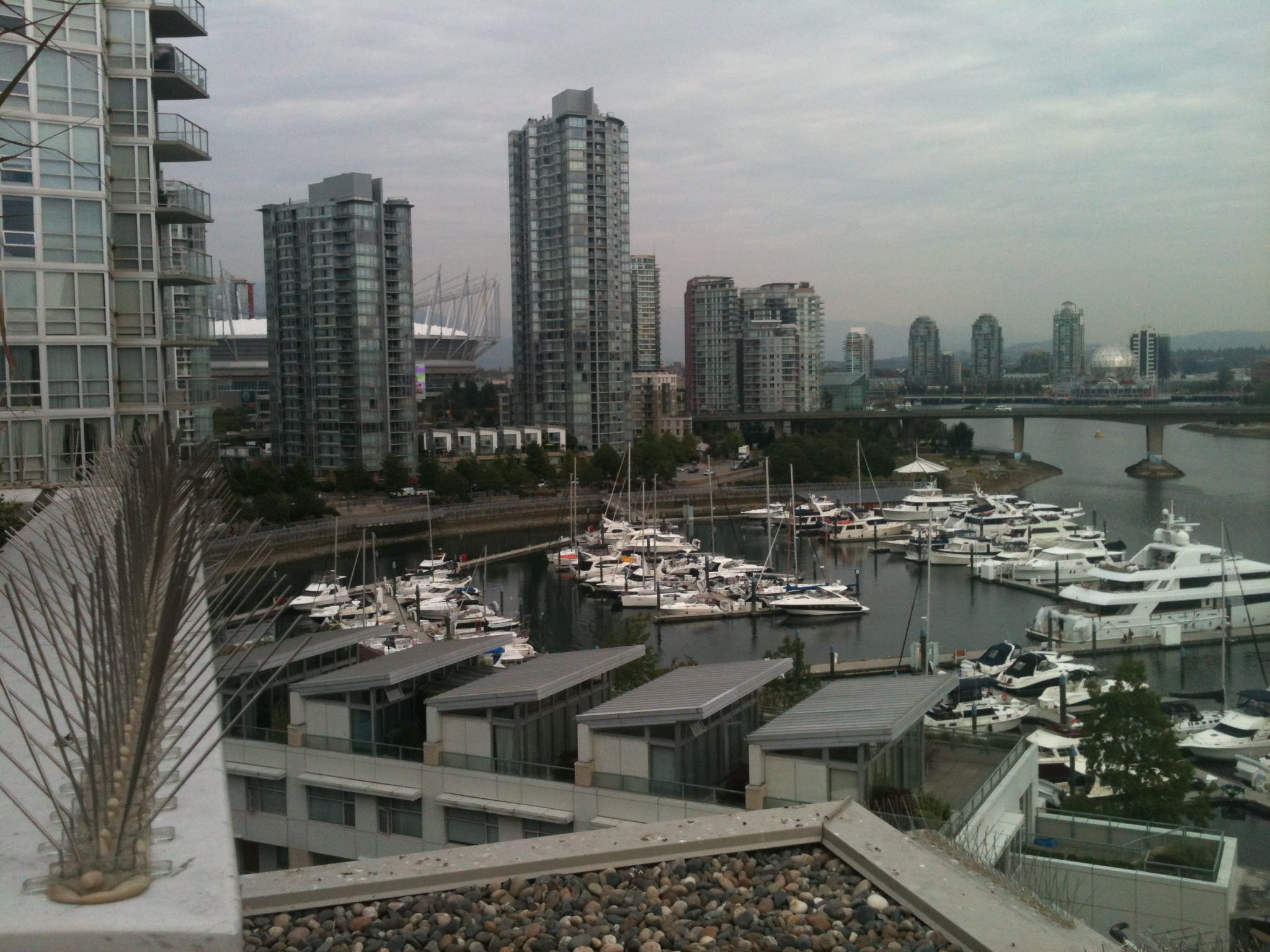 PIGEONS are making life difficult for people who say the droppings they leave underneath a railway bridge are a safety risk and so dirty they make worshippers reluctant to go to a nearby mosque.