by Pigeon Patrol | Apr 18, 2023 | history of pigeons, MBCA, pet bird, Pigeon Control, Pigeon Droppings, Pigeon Patrol's Services, Pigeon Predators
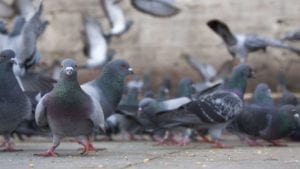
When travelling in groups, animals frequently have to make decisions on the direction of travel. These decisions can be based on consensus, when all individuals take part in the decision (i.e. democratic decision; social information), or leadership, when one member or a minority of members make the decision (i.e. despotic decision; personal information). Here we investigated whether decision-making on the navigation of small flocks is based on democratic or despotic decisions. Using individual and flock releases as the experimental approach, we compared the homing performances of homing pigeons that fly singly and in groups of three. Our findings show that although small groups were either governed (i.e. when individuals in the flock had age differences) or not (i.e. when individuals in the flock had the same age) by leaders, with concern to decision-making they were all ruled by democratic decisions. Moreover, the individual homing performances were not associated with leadership. Because true leaders did not assume right away the front position in the flock, we suggest that as in human groups, starting from a central position is more effective as it allows leaders to not only transmit their own information but also to average the tendencies of the other group members. Together, the results highlight the importance of democratic decisions in group decision-making.
Source
Pigeon Patrol Products & Services is the leading manufacturer and distributor or bird deterrent (control) products in Canada. Pigeon Patrol products have solved pest bird problems in industrial, commercial, and residential settings since 2000, by using safe and humane bird
deterrents with only bird and animal friendly solutions. At Pigeon Patrol, we manufacture and offer a variety of bird deterrents, ranging from Ultra-flex Bird Spikes with UV protection, Bird Netting, 4-S Bird Gel and the best Ultrasonic and audible sound devices on the market today.
Voted Best Canadian wholesaler for Bird Deterrent products ten years in a row.
Contact us at 1 877-4-NO-BIRD,(604) 585-9279 or visit our website at www.pigeonpatrol.ca
Pigeon/Pigeon Patrol / Pigeons Roosing / Vancouver Pigeon Control / Bird Spikes / Bird Control / Bird Deterrent / PIgeon Deterrent / Surrey Pigeon Control / Pest / Seagull deterrent / Vancouver Pigeon Blog / Birds Inside Home / Pigeons in the cities / Ice Pigeons / What to do about pigeons / sparrows, Damage by Sparrows, How to Keep Raccoons Away, Why Are Raccoons Considered Pests / De-fence / Pigeon Nesting / Bird Droppings / Pigeon Dropping / woodpecker control / Professional Bird Control Company / Keep The Birds Away / Birds/rats/seagull/pigeon/woodpecker/dove/sparrow/pidgeon control/pidgeon problem/pidgeon control/flying rats/pigeon problems/ bird netting/bird gel/bird spray/bird nails/bird guard
by Pigeon Patrol | Mar 23, 2023 | Columbidae, Doves, history of pigeons, MBCA, pet bird, Pigeon Control, Pigeon Droppings, Pigeon Patrol's Services
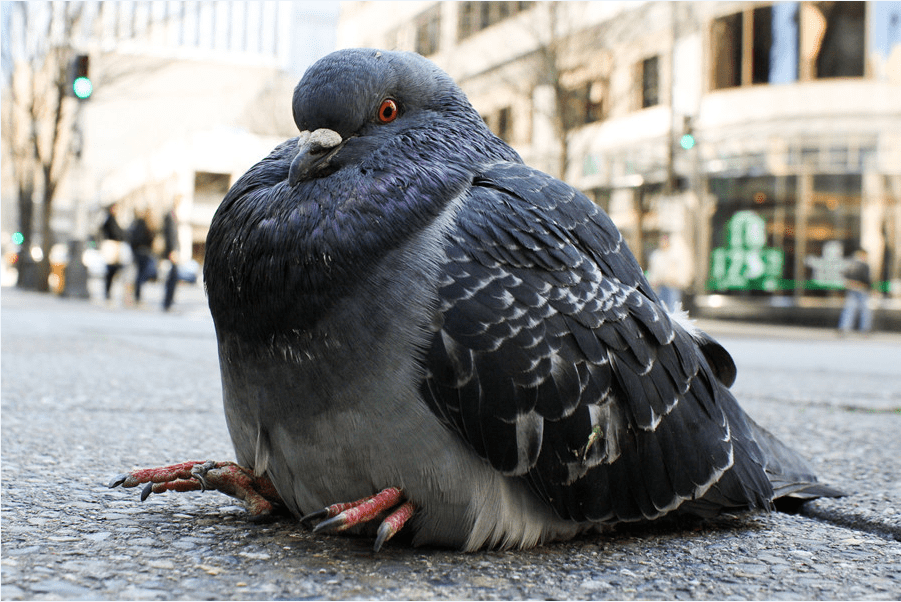
A recent first detection of pigeon aviadenovirus-1 and pigeon circovirus co-infection associated with Young Pigeon Disease Syndrome (YPDS) in a pigeon flock in Turkey, prompted a study focused on documenting the distribution of Pigeon aviadenovirus (PiAdV-1 and PiAdV-2), Pigeon circovirus (PiCV), Columbid alphaherpesvirus 1 (pigeon herpesvirus (PiHV)) and Fowl aviadenovirus (FAdV) in the country. These viruses were selected as they are associated with severe disease in pigeons across the world. A total of 192 cloacal swabs were collected from young (<1 year old) pigeons from 16 different private pigeon flocks across Turkey, between 2018 and 2021 as part of routine diagnostic sampling. PiCV genetic material was the most frequently detected 4/16 (25%), PiAdV-1 and CoHV-1 DNA were both found in one flock each, while neither PiAdV-2 and FAdV were detected in any of the studied pigeon flocks. PiCV and PiHV genetic material were both detected in the same pigeon flock’s cloacal samples as a co-infection with the identification of PiHV being a first in Turkey.
Source
Pigeon Patrol Products & Services is the leading manufacturer and distributor or bird deterrent (control) products in Canada. Pigeon Patrol products have solved pest bird problems in industrial, commercial, and residential settings since 2000, by using safe and humane bird
deterrents with only bird and animal friendly solutions. At Pigeon Patrol, we manufacture and offer a variety of bird deterrents, ranging from Ultra-flex Bird Spikes with UV protection, Bird Netting, 4-S Bird Gel and the best Ultrasonic and audible sound devices on the market today.
Voted Best Canadian wholesaler for Bird Deterrent products ten years in a row.
Contact us at 1 877-4-NO-BIRD,(604) 585-9279 or visit our website at www.pigeonpatrol.ca
Pigeon/Pigeon Patrol / Pigeons Roosing / Vancouver Pigeon Control / Bird Spikes / Bird Control / Bird Deterrent / PIgeon Deterrent / Surrey Pigeon Control / Pest / Seagull deterrent / Vancouver Pigeon Blog / Birds Inside Home / Pigeons in the cities / Ice Pigeons / What to do about pigeons / sparrows, Damage by Sparrows, How to Keep Raccoons Away, Why Are Raccoons Considered Pests / De-fence / Pigeon Nesting / Bird Droppings / Pigeon Dropping / woodpecker control / Professional Bird Control Company / Keep The Birds Away / Birds/rats/seagull/pigeon/woodpecker/dove/sparrow/pidgeon control/pidgeon problem/pidgeon control/flying rats/pigeon problems/ bird netting/bird gel/bird spray/bird nails/bird guard
by Pigeon Patrol | Mar 16, 2023 | Bird Spike, Pigeon Droppings, Pigeon Patrol's Services, Pigeon Predators, Pigeon Spikes, Pigeons, Pigeons in the News
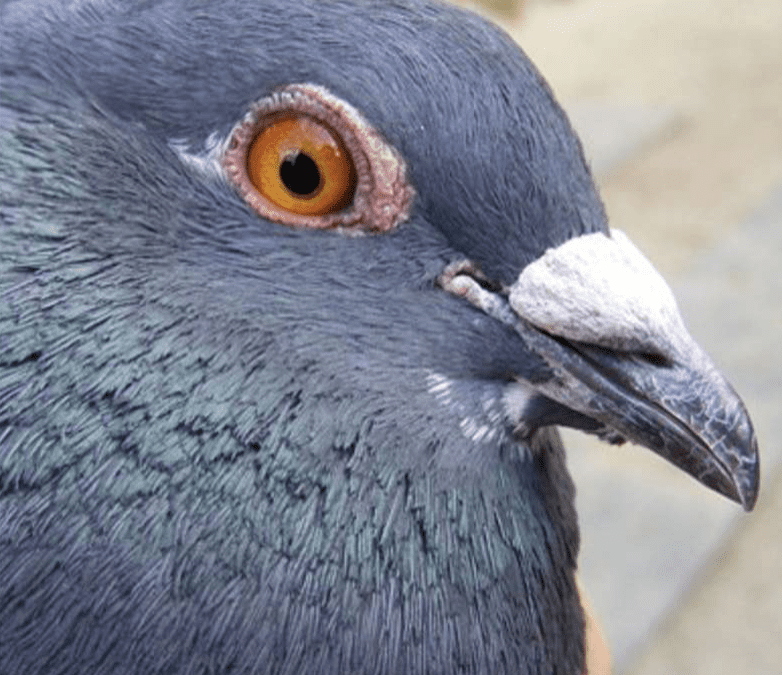
Pigeons in the United Kingdom have become a target of a terrible disease called the Pigeon Paramyxovirus (PPMV) or Newcastle’s Disease. It results in neurological symptoms, including trembling wings and a violently twisted neck. The affected pigeons become reluctant to move and can’t fly. They also have green feces. The disease is fatal.
A JSPCA Animal Shelter spokesperson reported that the shelter had increased the number of grounded pigeons in the last few weeks. Many affected birds had neurological symptoms, such as a twisted neck, circling, or inability to stand. The spokesperson added that these symptoms are signs of pigeon paramyxovirus that affects poultry, doves and pigeons and is invariably fatal.
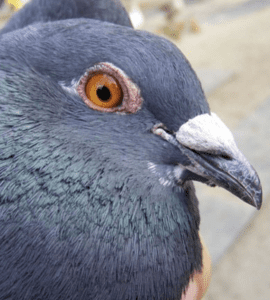
PPMV is a notifiable disease in captive birds. It does not apply to wild birds. The affected birds die within a few days, and there is no treatment for the disease. PPMV is highly infectious and can spread through feces and other excretions of the affected birds. Surviving birds will shed the virus, becoming a risk to other birds. So, at JSPCA, the infected birds are humanely euthanised. Since the PPMV virus survives better in cold and wet months, the disease’s clusters are usually found at this ..
Is PPMV highly infectious?
PPMV is highly infectious, spreading through the affected bird’s feces and other secretions.
Pigeon Patrol Products & Services is the leading manufacturer and distributor or bird deterrent (control) products in Canada. Pigeon Patrol products have solved pest bird problems in industrial, commercial, and residential settings since 2000, by using safe and humane bird
deterrents with only bird and animal friendly solutions. At Pigeon Patrol, we manufacture and offer a variety of bird deterrents, ranging from Ultra-flex Bird Spikes with UV protection, Bird Netting, 4-S Bird Gel and the best Ultrasonic and audible sound devices on the market today.
Voted Best Canadian wholesaler for Bird Deterrent products ten years in a row.
Contact us at 1 877-4-NO-BIRD,(604) 585-9279 or visit our website at www.pigeonpatrol.ca
Pigeon/Pigeon Patrol / Pigeons Roosing / Vancouver Pigeon Control / Bird Spikes / Bird Control / Bird Deterrent / PIgeon Deterrent / Surrey Pigeon Control / Pest / Seagull deterrent / Vancouver Pigeon Blog / Birds Inside Home / Pigeons in the cities / Ice Pigeons / What to do about pigeons / sparrows, Damage by Sparrows, How to Keep Raccoons Away, Why Are Raccoons Considered Pests / De-fence / Pigeon Nesting / Bird Droppings / Pigeon Dropping / woodpecker control / Professional Bird Control Company / Keep The Birds Away / Birds/rats/seagull/pigeon/woodpecker/dove/sparrow/pidgeon control/pidgeon problem/pidgeon control/flying rats/pigeon problems/ bird netting/bird gel/bird spray/bird nails/bird guard
by Pigeon Patrol | Mar 6, 2023 | MBCA, pet bird, Pigeon Control, Pigeon Droppings, Pigeon Patrol's Services, Pigeon Predators
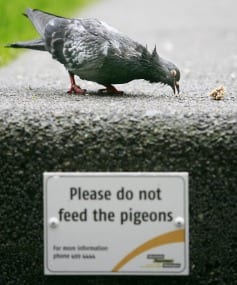
In January 2019, a child died in a Scottish hospital after developing a fungal infection caused by exposure to pigeon droppings. An elderly patient also died in the same hospital of another condition that was exacerbated by exposure to pigeon droppings. It was determined that both patients were exposed to the contaminants via the ventilation system, which was found to contain pigeon droppings. These deaths brought to the forefront a question that many people who are living with pigeon infestations have: in addition to being disruptive, are pigeons actually dangerous? Here are the facts you need to know.
Pigeon droppings contain bacteria and fungi that can cause disease.
Exposure to pigeon droppings can lead to a number of different diseases. Some of the most common infections associated with pigeons are:
· E. coli: E. coli infections are usually the result of pigeon droppings being present in water or in food that is later consumed. This infection causes nausea, abdominal cramps, fever, and vomiting.
· Histoplasmosis: This is a dangerous fungal infection that affects the lungs, or rarely, other parts of the body. It causes flu-like symptoms, including fever, shortness of breath, chest pain, fatigue, and loss of appetite. It can be fatal in severe cases.
· Cryptococcus: This is another fungal infection that affects the lungs and can spread to the brain. In its early stages, it can cause a cough, chest pain, fever, and shortness of breath. When it spreads to the lungs, it causes headaches, neck pain, changes in behavior, confusion, and sensitivity to light. It can also be fatal.
· Psittacosis: Psittacosis is a bacterial infection that causes fever, headaches, a rash, and can lead to pneumonia, if left untreated.
· Candidiasis: This fungal infection can affect multiple parts of the body, including the mouth, lungs, urogenital tract, and skin. This infection may require prolonged periods of antifungal medications to treat.
· Salmonellosis: Pigeon droppings may contain the bacteria salmonella, which can cause this infection. Typically, people are exposed to these bacteria when pigeon droppings come into contact with food or food preparation surfaces. This infection causes nausea, vomiting, and abdominal cramps.
Pigeons also carry other potential health risks.
It is not just the droppings of pigeons that are dangerous. Pigeons themselves can carry mites and fleas, which can then attach to your pets or enter your home, causing skin irritation and itchiness. They can also spread infections through bites that are dangerous to both people and pets.
Pigeons can also carry West Nile virus. Although people are unlikely to contract West Nile virus directly from pigeons, it is still important to avoid removing any dead pigeons from your property without the help of a professional for this reason.
People with weakened immune systems are most at risk.
The infections that pigeons are likely to transmit do not affect everyone at the same rate. Many healthy adults are able to fight off infections caused by exposure to bacteria and fungi from pigeon droppings. If they do become ill, then they are likely to have very mild infections.
However, although it is always possible for someone who is healthy to become very ill from these conditions, other people are more at risk. Infants and children are more likely to experience severe symptoms when they are exposed to a disease via pigeon droppings. People who are immuno-compromised, such as people with HIV or who are undergoing chemotherapy, also have a higher risk of developing severe symptoms and complications. Lastly, the elderly are prone to severe symptoms from pigeon-related diseases.
Even without exposure to a disease, some people may have allergy symptoms, including respiratory problems, rashes, and itchiness, as a result of a pigeon infestation near their home or business.
For safety reasons, only professionals should handle pigeon control.
If you have a pigeon infestation, it’s important to deal with the issue as soon as possible. However, trying to get rid of pigeons and clean up their droppings on your own is not safe. Pigeon control professionals are trained in safe management techniques and have the proper equipment required to clean up after a pigeon infestation safely.
One of the biggest risks of cleaning up pigeon droppings on your own is that you could release dust into the air that contains bacteria and fungi that cause infection. Not only would you be at risk from inhaling the bacteria and fungi yourself, but you could also inadvertently introduce the contaminants into the HVAC system in your home, allowing them to spread into your indoor air and putting your family at risk.
Source
Pigeon Patrol Products & Services is the leading manufacturer and distributor or bird deterrent (control) products in Canada. Pigeon Patrol products have solved pest bird problems in industrial, commercial, and residential settings since 2000, by using safe and humane bird
deterrents with only bird and animal friendly solutions. At Pigeon Patrol, we manufacture and offer a variety of bird deterrents, ranging from Ultra-flex Bird Spikes with UV protection, Bird Netting, 4-S Bird Gel and the best Ultrasonic and audible sound devices on the market today.
Voted Best Canadian wholesaler for Bird Deterrent products ten years in a row.
Contact us at 1 877-4-NO-BIRD,(604) 585-9279 or visit our website at www.pigeonpatrol.ca
Pigeon/Pigeon Patrol / Pigeons Roosing / Vancouver Pigeon Control / Bird Spikes / Bird Control / Bird Deterrent / PIgeon Deterrent / Surrey Pigeon Control / Pest / Seagull deterrent / Vancouver Pigeon Blog / Birds Inside Home / Pigeons in the cities / Ice Pigeons / What to do about pigeons / sparrows, Damage by Sparrows, How to Keep Raccoons Away, Why Are Raccoons Considered Pests / De-fence / Pigeon Nesting / Bird Droppings / Pigeon Dropping / woodpecker control / Professional Bird Control Company / Keep The Birds Away / Birds/rats/seagull/pigeon/woodpecker/dove/sparrow/pidgeon control/pidgeon problem/pidgeon control/flying rats/pigeon problems/ bird netting/bird gel/bird spray/bird nails/bird guard
by Pigeon Patrol | Feb 25, 2023 | MBCA, pet bird, Pigeon Control, Pigeon Droppings, Pigeon Patrol's Services, Pigeon Predators
Why do species die out? This is the overarching question being asked by many leading researchers. Knowing more about what leads to a species’ becoming extinct could enable us to do something about it. The passenger pigeon is a famous example and the species has been studied extensively.
The passenger pigeon (Ectopistes migratorius) was once found in huge numbers in North America. Records tell of passing flocks that darkened the skies for several days at a time. The species may have peaked at five billion individuals. A more conservative estimate is three billion.
Within a short time, the species disappeared completely.
“Given the huge size of the population, it’s simply amazing that the species disappeared so quickly,” says Tom Gilbert.
Gilbert is a professor at the University of Copenhagen’s Centre for GeoGenetics, but he also has a part-time position as an adjunct professor at the Norwegian University of Science and Technology (NTNU).
The human role
The history of the passenger pigeon is interesting, partly because it can tell us something about how and why species become extinct.
Native Americans also relied on passenger pigeons for food. But at least in parts of the passenger pigeons’ range, people had learned to harvest the species at a sustainable level that didn’t threaten to eradicate it.
It was common in some parts of North America to only eat young pigeons that were hunted at night, since this did not seem to scare away the adult birds or prevent them from re-nesting.
But starting around 1500, a more aggressive variant of humans came to the continent with the arrival of Europeans. The hunt for passenger pigeons grew and culminated in a massive hunt for the species throughout the 1800s, before the species finally collapsed and disappeared.
So were the Europeans then really the ones to blame for the collapse?
Already headed to oblivion?
In 2014, a study in published in the scientific journal PNAS strongly suggested that humans were simply the final straw in destroying a species that was already vulnerable and headed to oblivion.
The researchers asserted that despite their enormous numbers, the passenger pigeons were already in trouble. The population of the species varied greatly, similar to lemmings, but over a longer period of time.
When the Europeans arrived, the species was already in a strong decline. The population was plummeting long before Europeans arrived, and perhaps Europeans even contributed to a short-term increase in numbers.
Studies of the genetic variation of the species using an investigative method called PSMC formed the background for these assertions. And now we have to concentrate a bit.
From one to many
All of an individual’s genes are called a genome. You have a genome, your mom has her own genome, your dog has one and the neighbour’s cat has yet another. These can be broken down into chromosomes and genes and base pairs, but you only have a single genome.
So, all of your chromosomes and genes are found in this one genome, but at the same time this genome is unique to just you and only you. Unless, that is, you have an identical twin or are a termite or belong to another species where the individuals are largely identical clones. (In the last case, it’s remarkable that you can read this.)
Here is the crux of the matter:
The PSMC method can use the information in the genes of a single individual of a species to map the history of the species.
You should therefore be able to see how the species developed over many generations, and estimate how many individuals there were at any given time, all based on a single genome.
Humans partially off the hook
Using this method, researchers found that the number of passenger pigeons was in free fall even before the arrival of the Europeans.
Although the species might not have become extinct, it would have shrunk significantly in any case, maybe to only a few hundred thousand individuals.
People were just the final factor in their demise. We may have pushed the passenger pigeons off the cliff, but the species was already on its way there.
So — according to the researchers behind the study in PNAS — it wasn’t just the Europeans’ fault.
It sounds almost too good to be true that you can come up with something so definitive based on information from just one or a few individuals. And in this case it is — at least if we’re to believe a new study that has recently been published in the journal Science.
Ineffective for passenger pigeons
The problem is that the PSMC method can’t be used on passenger pigeons. The new research in Science provides completely different results.
Leading molecular biologist Beth Shapiro is the main author of the Science article, and Tom Gilbert is one of the study’s contributors.
PSMC is based on the assumption that genetic variations occur relatively evenly all along the chromosomes that constitute the genome. That is, genetic changes are equally likely to occur at the ends of a chromosome as in the middle. But this turns out not to be the case for this species.
“Passenger pigeons don’t have the variation patterns that we’d expect, because of the strong selection on genes that appear to have been important throughout the species’ history. So it doesn’t work to use PSMC in this case,” said Gilbert.
In passenger pigeons, most of the genetic diversity was found at the ends of the chromosome. The middle of the chromosome showed little variation from one generation to the next as a result of the selection on these genes.
This fact may not sound revolutionary, but it yields completely different results if you try to read the history of the species based on the genome of a single individual.
You have to take into account that variations are greatest in certain parts of the chromosome rather than evenly distributed throughout. This makes the PSMC method unusable in this context.
Used another method
The researchers behind the article in Science didn’t use the PSMC method. Instead, they used mitochondrial DNA from 41 passenger pigeons as their starting point. Now we have to concentrate again.
Your DNA is not your only inheritance. Mitochondrial DNA is a distinct, separate inheritance found in certain cells called mitochondria.
Regular DNA is a combination of the inheritance from your father and mother. But mitochondrial DNA is only transmitted from your mother. Variations in mitochondrial DNA also occur due to mutations, and happen relatively consistently over time.
This is a different point of departure for understanding how a species develops over time, and the results can be quite different from those generated using the PSMC method.
In addition, the study presented in Science analysed the entire genomes from four passenger pigeons and compared them with two genomes from band-tailed pigeons (Patagioenas fasciata), one of the closest relatives of the passenger pigeon.
The final result was that the new study ended up with completely different answers about the passenger pigeons and why the species met its demise.
Genetic diversity
The new study is interesting for several reasons. It tells us about the genetic diversity of the passenger pigeon, but also supports an entirely different explanation for the species’ extinction.
Scientists previously believed that the larger the population of a species is, the more genetically diverse it will be. But this theory has turned out to be wrong, as the recent passenger pigeon research has shown.
According to the article in Science, the large population size appears to have enabled passenger pigeons to adapt and evolve more quickly and thus remove harmful mutations.
In species with fewer individuals, chance can cause a less beneficial mutation to persist, but chance plays less of a role in species with greater numbers of individuals.
“Mutations that provide a major evolutionary benefit would spread rapidly,” says Gilbert.
The fact that beneficial mutations became incredibly dominant so quickly simply led to the disappearance of other genetic variants.
This in turn led to the genetic diversity in the passenger pigeon being surprisingly low in relation to the number of individuals. This may have made the species more vulnerable to changes.
But that was not why the passenger pigeon died out.
Our mistake
“The passenger pigeon died out because of people,” is Gilbert’s short version.
The passenger pigeon wasn’t in trouble prior to Europeans arrival in North America. Nothing suggests that the species was struggling in any way.
Perhaps this isn’t that surprising. In the 19th century passenger pigeons were so numerous that there were contests to shoot as many of them as possible during a certain period of time. In one competition, the winner had shot 30 000 birds.
If nothing else, the story of the passenger pigeon has contributed to a greater understanding that even prolific species can become extinct.
Something to learn
The large grasshopper Melanoplus spretus from the western United States suffered the same fate. It went from a population of several trillion to zero in a few decades, possibly because farmers destroyed its breeding grounds. In Norway and across the whole of the North Atlantic, the great auk (Pinguinus impennis) died out after people harvested them in large numbers.
People ate passenger pigeons in huge amounts, but they were also killed because they were perceived as a threat to agriculture. As Europeans migrated across North America, they thinned out and eliminated the large forests that the pigeons depended on. The pigeons lived primarily on acorns.
As the species was already dying out, 250,000 birds — the last big flock — were shot on a single day in 1896. That same year, the last passenger pigeon was observed in Louisiana. It was also shot.
The pigeons were probably dependent on a large flock size to reproduce. Their instincts didn’t work when only a few individuals remained here and there.
The last passenger pigeon died in the Cincinnati Zoo in 1914.
Source
Pigeon Patrol Products & Services is the leading manufacturer and distributor or bird deterrent (control) products in Canada. Pigeon Patrol products have solved pest bird problems in industrial, commercial, and residential settings since 2000, by using safe and humane bird
deterrents with only bird and animal friendly solutions. At Pigeon Patrol, we manufacture and offer a variety of bird deterrents, ranging from Ultra-flex Bird Spikes with UV protection, Bird Netting, 4-S Bird Gel and the best Ultrasonic and audible sound devices on the market today.
Voted Best Canadian wholesaler for Bird Deterrent products ten years in a row.
Contact us at 1 877-4-NO-BIRD,(604) 585-9279 or visit our website at www.pigeonpatrol.ca
Pigeon/Pigeon Patrol / Pigeons Roosing / Vancouver Pigeon Control / Bird Spikes / Bird Control / Bird Deterrent / PIgeon Deterrent / Surrey Pigeon Control / Pest / Seagull deterrent / Vancouver Pigeon Blog / Birds Inside Home / Pigeons in the cities / Ice Pigeons / What to do about pigeons / sparrows, Damage by Sparrows, How to Keep Raccoons Away, Why Are Raccoons Considered Pests / De-fence / Pigeon Nesting / Bird Droppings / Pigeon Dropping / woodpecker control / Professional Bird Control Company / Keep The Birds Away / Birds/rats/seagull/pigeon/woodpecker/dove/sparrow/pidgeon control/pidgeon problem/pidgeon control/flying rats/pigeon problems/ bird netting/bird gel/bird spray/bird nails/bird guard