by Pigeon Patrol | May 3, 2021 | history of pigeons, Pigeon Control, Pigeon Droppings, Pigeon Patrol's Services, Pigeons
There it was, that darned noise again.
Nobody could possibly be happy cleaning pigeon droppings. Yet Arno Penzias and Robert Wilson were being forced to do it. As good scientists they simply could not avoid it, since they had to discount the role of this “white dielectric substance” in the noise that was plaguing their equipment. When they finished with the cleaning and dispatched the pigeons by mail to a faraway place, the noise still did not disappear. And it seemed to come from all directions. The implications of this annoying constant background hum, corresponding to a temperature of only 3 degrees above absolute zero, signified one of the most momentous discoveries in twentieth-century physics, notable even among Nobel Prize-winning discoveries.
Arno Penzias, the German-born physicist who fled from the Nazis with his family in 1939, is at Lindau this year along with his co-recipient Robert Wilson. There are two other physics Nobel laureates this year at Lindau- George Smoot and John Mather. The four men whose work is separated by forty years share a very close connection. Smoot and Mather’s work put the capstone on that of Penzias and Wilson’s. In a way the work of these gentlemen eclipses the work of all Nobel laureates since it deals with something that happened long before any of the others made their discoveries. In fact, it was so long before that it dealt with the beginning of time itself…or so we think. Penzias and Wilson discovered what is called the”cosmic microwave background radiation”, which is nothing less than the notes from the harp that the universe played when it fired up. Just like you can guess the identity of the great conductor Herbert von Karajan from listening to the thundering notes of his performance of Beethoven’s 9th symphony, so can you discern the violent birth throes of the universe from the noise this cosmic cataclysm left behind.
It was noise, quite literally. And it was bothering Penzias and Wilson when they were working on a radio antenna inthe fall of 1964 in a small town called Holmdel in New Jersey. There, Bell Laboratories which owned the instrument had turned it over to Penzias and Wilson for pure science. That was a different age, when companies like BellLabs gave free rein to researchers to pursue their own ideas; in the ensuing decades the institution would produce a steady stream of Nobel laureates,an astonishing feat for an industrial laboratory. But at that point the lab was just getting warmed up.
The antenna was about twenty feet wide and shaped like a horn to minimize reception from the sides. It was originally designed to detect transmitted signals from Echo, the first communications satellite. But now Penzias and Wilson were using it to detect radio waves from celestial bodies. The receiver was tuned to detect only frequencies in the microwave region of the spectrum.
But there it was, that darned noise again. No matter what they did to the antenna, it was steadily humming in the background, like one of those overenthusiastic teenagers deliberately trying to annoy you. Like good scientists, Penzias and Wilson started to eliminate all possible sources of noise they could find. Radio noise could arise from any number of sources. It could come from the ground which was warmed up by the sun. It could arise from the earth’s atmosphere, or from the gas between the stars, or from the emission of molecules in outer space. Noise could be generated by waves bouncing off some of the sharp edges in their antenna. Oneby one the scientists investigated and discounted all these sources. They covered up the sharp edges with aluminum tape. They turned the antenna towards and away from major cities like New York. And of course, finally in desperation, they cleaned up waste from a family of pigeons that was roosting in a small part of the antenna horn. They dispatched these pigeons to the main offices of Bell Labs (like good homing pigeons the birds promptly showed up two days later). The noise still would not disappear. Like constant mumbling from disgruntled voters at a campaign speech, it simply would not die.
The two men were accomplished scientists and they did not doubt their own skills. Penzias had worked with Isidor Rabi (whom we met earlier) and Charles Townes, the inventor of the maser, at Columbia University. Wilson had gotten his PhD. at Caltech a few years ago. Their temperaments also complemented each other. Penzias was a big picture man, trying to tie together facts in an overarching thread. Wilson was much more detail-oriented and could patiently tinker with equipment until he got it right. Together the scientists were confident in their analysis and believed they had discarded all sources of noise. Yet it remained. For the moment they decided to take a break.
It was December of that year, and Penzias was coming back on an airplane from a conference. The “noise problem” was on his mind and he mentioned it to a fellow astronomer named Bernie Burke. A short time later, Burke called Penzias back with some interesting news. He had just seen a manuscript written by a physicist named Jim Peebles at Princeton University along with his supervisor Robert Dicke. The manuscript predicted that because of the intense heat during the birth of the universe, there should exist today a remnant of the Big Bang, which would manifest itself uniformly as steady background radiation. Because of the time elapsed since the Big Bang, the temperature of this radiation should be no more than afew degrees kelvin above absolute zero.
Oh yes, and it should be detectable as constant hiss in a good radio telescope.
I leave it to the students at this year’s Lindau meeting to personally ask Penzias what he must have felt when he heard about the Peebles-Dicke paper from Burke. But it surely must have sent his heart racing. Intrigued, Penzias called Dicke. Dicke’s heart must have raced even more because just then he had been trying to construct his own antenna to detect the cosmic noise that his paper predicted. Dicke promptly got into his car and drove the thirty miles or so from Princeton to check out Penzias and Wilson’s data. When he confirmed its authenticity, he must have felt an intense mix of excitement, amazement and chagrin. He had narrowly missed making the discovery that won Penzias and Wilson the Nobel Prize for physics in 1978.
Penzias and Wilson in front of the Holmdel radio antenna
Sounds from a faraway time
The evolution of the idea of the cosmic microwave background is almost a textbook study of ignorance and triumph, and how experimentalists and theoreticians can sometimes unintentionally delay progress by failing to communicate with one another. The Big Bang theory was proposed by Georges Lemaître, a Belgian Roman Catholic priest, although interestingly the term ‘Big Bang’ was pejoratively coined by a detractor of the theory, Fred Hoyle. Later the theory was developed by the brilliant and colorful Russian physicist, scotch lover and popular science writer George Gamow and his colleagues, Ralph Alpher and Robert Herman. After World War 2, Gamow’s colleagues Alpher and Herman predicted the cosmic microwave background. This was based on their ideas about nucleosynthesis- the formation of elements in the universe.
Robert Herman (left) and Ralph Alpher. In the middle is George Gamow, materializing out of a bottle of ‘Ylem’, the primordial soup from which our universe originated.
Big Bang Theory cosmology is based on Einstein’s theory of gravitation. In 1929 Edwin Hubble had already made the groundbreaking discovery that the universe seemed to be expanding. This meant that at some point back in time it must have been infinitely compressed. Compression means high temperature, in this case, a very high temperature of 10 billion degrees when the universe was only one second old. At this temperature matter as we know it ceases to exist, and the universe consists of a thick boiling broth of subatomic particles and electromagnetic radiation in the form of very high frequency gamma rays. Electromagnetic radiation is emitted and absorbed by all electrically charged particles. When there are a sufficient number of particles, this radiation manifests itself as black-body radiation. Black-body radiation can be defined by a certain value of energy at a given frequency range and thus can be completely fixed by the temperature. At ten billion degrees, there would be massive creation of electrons and positrons from the energy of other moving particles. But after one second, Big Bang theory physics predicts that if the number of photons is larger than the number of matter particles, then the initial black-body radiation will continue to be black-body radiation. The only change in this radiation is that it cools with the expansion of the universe. About 400,000 years after the beginning, an epochal event happened. Stable atoms of hydrogen began to form, and the radiation was ‘decoupled’ from the matter and was left free to wander on its own. Thus, even today, almost fifteen billion years later, space should be filled with black-body radiation left over from the Big Bang. Its temperature should be roughly 3 K.
This at least was what Alpher and Gamow conjectured. But they were not the first ones to think about it. In fact the microwave background had been indirectly observed in the late 1930s and early 40s by American astronomers. These astronomers saw faint signs of light absorption by certain molecules in outer space and concluded that the molecules were somehow being ‘pumped up’ with energy that came from a temperature of 2.3 K. Unfortunately, there was yet no theoretical framework in which this observation could fit, and it became part of the countless number of other details in astronomy. Now, when Gamow, Alpher and Herman formed their ideas, they did not know about this experimental work. Most incredibly, a couple of years later, two Russian physicists published a paper saying that not only should this background exist, but that the best detecting instrument for it would be the radio antenna in Holmdel, New Jersey! As if to cap this circus of ignorance and lack of communication, Penzias, Wilson and Dicke had all not heard of these earlier predictions; somehow unlike the cosmic background, the signal had been lost in the noise. One can only wonder how things would be if this drama were to be enacted today, in the era of the Internet and Email.
Dicke in fact thought he was the first one proposing the cosmic microwave background. His reasoning was fascinating and harkened back to analogies in Hindu and Buddhist philosophies about the creation of the universe. Dicke was a proponent of the ‘oscillating universe’ which posits that the universe has no end or beginning but cycles through time. According to his logic, if the heavy elements had been created through nucleosynthesis, they could not keep on increasing in proportion indefinitely; after all, the observed universe is largely contained of hydrogen and helium and not heavy elements. Thus, at some point the heavy elements would have to be annihilated to make room for the next batch of matter. This annihilation would produce radiation, and it’s this radiation that would manifest itself as the cosmic background. Dicke’s oscillating universe tome is a perfect example of a scientific ‘model’, a conceptual construction that retains some simple aspects of the universe but which can neatly explain a key observation. As with models, Dicke’s prediction of the microwave background does not uniquely depend on the oscillating universe model. In fact it arises perfectly from the modern day theory of the Big Bang.
Dicke was supremely competent for this kind of theorizing. Today he is the underappreciated man in the cosmic microwave background story. Dicke was a genius at electronic devices, working on important radar components at the famous Radiation Laboratory at MIT during the war. In the early 60s, he did a highly accurate measurement proving the equivalence of inertial mass and gravitational mass, a foundational concept of Einstein’s relativity. Dicke’s thirst was not slaked just by doing experiments. He also provided the first quantum theory of the laser. By the mid 60s Dicke was a legend, the Enrico Fermi of his time, highly accomplished in both theory and experiment. As it turned out though, even Dicke could not escape the vagaries of space and time. Robert Henry Dicke died in 1997.
Robert Henry Dicke (1916-1997)
In 1989, a satellite called COBE was launched by NASA that would measure Penzias and Wilson’s microwave background to unprecedented accuracy. Two of the principal scientists in this endeavor were George Smoot and John Mather who are at Lindau this year. The satellite’s measurements of the black body radiation curve were so remarkably accurate that the error bars in the curve which typically extend on top and bottom were almost lost in the signal.
The COBE satellite black-body radiation curve with the data points (red) plotted on the theoretical spectrum (black). The two match up almost perfectly
The COBE satellite followed by the Wilkinson Probe satellite launched in 2001 put the icing on the microwave background cake. The Big Bang theory has attained the status of one of our most highly refined and validated theories, thanks to the work of Smoot, Penzias, Wilson, Mather and many others. It seems only wonderfully fitting that Penzias, Wilson, Smoot and Mather are all attending this year’s meeting, coming full circle and neatly tying together the ends of a story spread over 40 years, which in turn tells the story of moments in time billions of years ago.
George Smoot and John Mather (Physics, 2006)
The story of the microwave background is an exercise in scientific history, demonstrating how ideas can, and sometimes do not, build on top of each other. It would have been interesting to see how the same story would have played out in today’s age, when the barriers to communication have been all but shattered by the availability of hundreds of years of research that can be accessed through the click of a mouse. Scientific ideas are hostage to the same qualities of human fallibility, determination, creativity, and of course, the uncertainties of space and time, as are other aspects of the human experiment. All we can do is persevere.
Pigeon Patrol Products & Services is the leading manufacturer and distributor of bird deterrent (control) products in Canada. Pigeon Patrol products have solved pest bird problems in industrial, commercial, and residential settings since 2000, by using safe and humane bird deterrents with only bird and animal friendly solutions. At Pigeon Patrol, we manufacture and offer a variety of bird deterrents, ranging from Ultra-flex Bird Spikes with UV protection, Bird Netting, 4-S Bird Gel and the best Ultrasonic and audible sound devices on the market today.
Voted Best Canadian wholesaler for Bird Deterrent products ten years in a row.
Contact us at 1- 877– 4– NO-BIRD, (604) 585-9279 or visit our website at www.pigeonpatrol.ca
Pigeon/Pigeon Patrol / Pigeons Roosting / Vancouver Pigeon Control /Bird Spikes / Bird Control / Bird Deterrent / Pigeon Deterrent? Surrey Pigeon Control / Pest /Seagull deterrent / Vancouver Pigeon Blog / Birds Inside Home / Pigeons in the cities / Ice Pigeons/ What to do about pigeons/ sparrows , Damage by Sparrows, How To Keep Raccoons Away, Why Are Raccoons Considered Pests/ De-fence / Pigeon Nesting/ Bird Droppings / Pigeon Dropping/ woodpecker control/ Professional Bird Control Company/ Keep The Birds Away/ Birds/rats/ seagull/pigeon/woodpecker/ dove/sparrow/pidgeon control/pidgeon problem/ pidgeon control/flying rats/ pigeon Problems/ bird netting/bird gel/bird spray/bird nails/ bird guard
by Pigeon Patrol | May 3, 2021 | Bird Law, Bird Spikes, history of pigeons, Pigeons, Pigeons in the News
I admit that topic is a bit off my usual
Brain Sense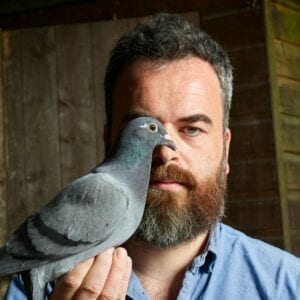
beat, but occasionally a piece of research comes along that is just too intriguing to pass by. Such is the case with a new report out of the University of Kentucky, published this week in the
Proceedings of the Royal Society
(UK). The study’s lead author, psychology professor Thomas Zentall, studied some pigeon gamblers and came up with some intriguing insights into human gamblers.
Zentall and collaborator Jessica Stagner set pigeons up in cages and let the birds peck at lights to obtain rewards of food pellets. If the pigeons pecked on the left, they received a green or a red light; after 10 seconds, the red light yielded 10 pellets but the green light yielded nothing. Because the odds were stacked at 20 percent–which is much more generous than your average casino–the pigeons averaged 2 pellets per peck if they pecked on the left.
If they pecked to the right, however, they saw yellow or blue lights, which both yielded 3 pellets of food per trial. Same every time. Sure thing.
So which would you choose: a guaranteed 3 or the remote possibility of a 10 (with the odds stacked against you)? Seems most pigeons behave like human gamblers. They don’t go for the sure thing. Most of Zentall’s experimental birds consistently chose the left side, apparently motivated by some bird-brained hope that they would receive the 10 pellets, even though 0 was a 4:1 favorite. “It’s more efficient not to gamble, and the likelihood of winning is low, but pigeons do it anyway,” Zentall says. “And so do people.”
“There’s a basic behavioral, biological process involved that probably affects many different species, and it doesn’t require the excitement of a casino, the misunderstanding of the likelihood of winning, social reinforcement or the publicity of winners,” Zentall says. “These factors may help, but that’s not it. Look at the pigeons.”
Zentall is also looking at the pigeons to try to find out why some pigeons, like some people, eschew gambling. (Yes, a few, wise pigeons peck to the right.) “Most of the time, people who aren’t terribly happy with what they’re doing choose to gamble because it’s exciting to them and other things generally aren’t,” says Zentall, and pigeons may be no different. Zentall thinks boredom may be an important motivator for gambling. His pigeons are less likely to gamble after spending time in a room playing with toys and other pigeons.
“We can understand the basis for gambling,” Zentall says, “but why has this evolved in people and in animals?” The answer may lie in the animal’s sense of control. “In nature, probability isn’t constant,” he said. “Animals are attracted to stimuli that make it easy to predict the availability of food and approaching these stimuli often makes their occurrence more likely. In lab conditions, this isn’t the case. . . . In addition, humans remember the wins and not the losses, which has functional value in nature. . . . Animals too, don’t remember where they didn’t find food, but do remember where they did.”
Thus, gambling may have survival value in nature, but not in the casino.
Pigeon Patrol Products & Services is the leading manufacturer and distributor of bird deterrent (control) products in Canada. Pigeon Patrol products have solved pest bird problems in industrial, commercial, and residential settings since 2000, by using safe and humane bird deterrents with only bird and animal friendly solutions. At Pigeon Patrol, we manufacture and offer a variety of bird deterrents, ranging from Ultra-flex Bird Spikes with UV protection, Bird Netting, 4-S Bird Gel and the best Ultrasonic and audible sound devices on the market today.
Voted Best Canadian wholesaler for Bird Deterrent products ten years in a row.
Contact us at 1- 877– 4– NO-BIRD, (604) 585-9279 or visit our website at www.pigeonpatrol.ca
Pigeon/Pigeon Patrol / Pigeons Roosting / Vancouver Pigeon Control /Bird Spikes / Bird Control / Bird Deterrent / Pigeon Deterrent? Surrey Pigeon Control / Pest /Seagull deterrent / Vancouver Pigeon Blog / Birds Inside Home / Pigeons in the cities / Ice Pigeons/ What to do about pigeons/ sparrows , Damage by Sparrows, How To Keep Raccoons Away, Why Are Raccoons Considered Pests/ De-fence / Pigeon Nesting/ Bird Droppings / Pigeon Dropping/ woodpecker control/ Professional Bird Control Company/ Keep The Birds Away/ Birds/rats/ seagull/pigeon/woodpecker/ dove/sparrow/pidgeon control/pidgeon problem/ pidgeon control/flying rats/ pigeon Problems/ bird netting/bird gel/bird spray/bird nails/ bird guard
by Pigeon Patrol | Apr 18, 2021 | history of pigeons, Pigeons
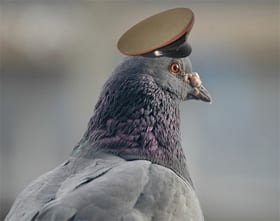
Seventy years ago a carrier pigeon performed the act of “heroism” that saw it awarded the animal’s equivalent of the Victoria Cross – the Dickin Medal. It was the first of of dozens of animals honoured by veterinary charity PDSA during World War II.
On 23 February 1942, a badly damaged RAF bomber ditched into the North Sea.
The crew were returning from a mission over Norway, but their Beaufort Bomber had been hit by enemy fire and crashed into the sea more than 100 miles from home.
Struggling in freezing waters – unable to radio an accurate position back to base – the four men faced a cold and lonely death.
But as the aircraft went down, the crew had managed to salvage their secret weapon – a carrier pigeon. The blue chequered hen bird, called Winkie, was set free in the hope it could fly home to its loft in Broughty Ferry, near Dundee, and so alert air base colleagues to their predicament.
During World War II, carrier pigeons were routinely carried by RAF bombers for this very eventuality, though in an era before GPS and satellite locator beacons, rescue was far from certain.
But Winkie did make it home, after flying 120 miles, and was discovered, exhausted and covered in oil by owner George Ross who immediately informed RAF Leuchars in Fife.
The pigeon was not carrying a message, but the RAF were able to calculate the position of the downed aircraft using the time difference between the plane’s ditching and the arrival of the bird – taking into account the wind direction and even the impact of the oil on Winkie’s feathers to her flight speed.
A rescue mission was launched and the men were found within 15 minutes.
Elaine Pendlebury, from the PDSA, said the carrier pigeon had been released as a “last ditch stand” when the crew realised they had no other options.
“I find it very, very moving really. These people would have died without this pigeon message coming through,” said Ms Pendlebury.
Winkie became the toast of the air base, with a dinner held in her honour. A year later, she became the first animal to receive the Dickin Medal – named after PDSA’s founder Maria Dickin – for “delivering a message under exceptional difficulties”.
More than 60 animals have since received the award, including 18 dogs, three horses and one cat. But pigeons still rule the medal roost, with 32 being given medals, all between 1943 and 1949.
Top secret messages
“It’s very hard for us with mobile phones and emails and things like that to think about the way communication would have happened in the 1940s in wartime,” Ms Pendlebury told BBC Scotland.
“It was very difficult and the pigeons certainly saved numerous lives by flying through really dreadful situations.”
One pigeon, called GI Joe, was an American bird which saved more than 1,000 lives when it got a message through that a village about to be bombed had actually been recaptured by British forces. Another – Mary of Exeter – was used to send top secret messages and received 22 stitches after being injured in the course of her duties.
“I’ve been a veterinary surgeon for quite some time but I find the ones that have won the PDSA Dickin medal, the stories are quite inspiring – above and beyond really,” Ms Pendlebury added.
“The message that’s on the medal is ‘We Also Serve’, which sums it up really.”
Source
Pigeon Patrol Products & Services is the leading manufacturer and distributor of bird deterrent (control) products in Canada. Pigeon Patrol products have solved pest bird problems in industrial, commercial, and residential settings since 2000, by using safe and humane bird deterrents with only bird and animal friendly solutions. At Pigeon Patrol, we manufacture and offer a variety of bird deterrents, ranging from Ultra-flex Bird Spikes with UV protection, Bird Netting, 4-S Bird Gel and the best Ultrasonic and audible sound devices on the market today.
Voted Best Canadian wholesaler for Bird Deterrent products ten years in a row.
Contact us at 1- 877– 4– NO-BIRD, (604) 585-9279 or visit our website at www.pigeonpatrol.ca
Pigeon/Pigeon Patrol / Pigeons Roosting / Vancouver Pigeon Control /Bird Spikes / Bird Control / Bird Deterrent / Pigeon Deterrent? Surrey Pigeon Control / Pest /Seagull deterrent / Vancouver Pigeon Blog / Birds Inside Home / Pigeons in the cities / Ice Pigeons/ What to do about pigeons/ sparrows , Damage by Sparrows, How To Keep Raccoons Away, Why Are Raccoons Considered Pests/ De-fence / Pigeon Nesting/ Bird Droppings / Pigeon Dropping/ woodpecker control/ Professional Bird Control Company/ Keep The Birds Away/ Birds/rats/ seagull/pigeon/woodpecker/ dove/sparrow/pidgeon control/pidgeon problem/ pidgeon control/flying rats/ pigeon Problems/ bird netting/bird gel/bird spray/bird nails/ bird guard
by Pigeon Patrol | Apr 18, 2021 | history of pigeons, Pigeons
Authorities in the Spanish city of Cádiz have come up with a plan for their booming pigeon population – relocating some 5,000 birds.
The city is plagued by thousands of the birds and their associated waste – but officials did not want to poison them.
Instead, the plan is to capture thousands of pigeons and relocate them hundreds of miles away in a different region – and hope they do not return.
Local officials said it was a “more respectful and sustainable” solution.
Speaking to local newspaper Diario de Cádiz, councillor Álvaro de la Fuente said “managing the population of existing pigeons does not imply the eradication of them within the urban area.”
Instead, he said a “logical balance” between the birds, humans, and other city-dwelling species was the goal.
The common pigeon is known for its location awareness – the famous homing pigeon used to carry war-time messages is a variant of the species.
But unlike their trained counterparts, the wild birds are often happy to settle in one local area – and officials in Cádiz hope that will be the case when all 5,000 pigeons are placed in their new home.
The thousands of birds to be relocated will be trapped, catalogued, and tested before being carried at least 170 miles (275km) away for release. Every bird will also get a health check along the way.
But pigeons breed quickly – so the city plans to print thousands of leaflets reminding the public not to overfeed the remaining flock, which helps to inflate the population.
In London’s Trafalgar Square, where the tradition of deliberately feeding the birds was immortalised in Disney’s Mary Poppins film, the birds flocked in great numbers until the early 2000s.
A combination of banning the feed sellers and a hefty fine on those who feed the flock anyway was part of the solution – while the introduction of hawks was another.
Today, a professional falconer accompanies a Harris hawk or peregrine falcon to Trafalgar Square several times a week – a natural predator which warns off the less welcome, smaller bird.
The same technique is used at a number of other London landmarks including BBC Broadcasting House and the Wimbledon tennis complex. It scares the birds away from one area and disperses them more widely – but does not affect the actual population much.
Source
Pigeon Patrol Products & Services is the leading manufacturer and distributor of bird deterrent (control) products in Canada. Pigeon Patrol products have solved pest bird problems in industrial, commercial, and residential settings since 2000, by using safe and humane bird deterrents with only bird and animal friendly solutions. At Pigeon Patrol, we manufacture and offer a variety of bird deterrents, ranging from Ultra-flex Bird Spikes with UV protection, Bird Netting, 4-S Bird Gel and the best Ultrasonic and audible sound devices on the market today.
Voted Best Canadian wholesaler for Bird Deterrent products ten years in a row.
Contact us at 1- 877– 4– NO-BIRD, (604) 585-9279 or visit our website at www.pigeonpatrol.ca
Pigeon/Pigeon Patrol / Pigeons Roosting / Vancouver Pigeon Control /Bird Spikes / Bird Control / Bird Deterrent / Pigeon Deterrent? Surrey Pigeon Control / Pest /Seagull deterrent / Vancouver Pigeon Blog / Birds Inside Home / Pigeons in the cities / Ice Pigeons/ What to do about pigeons/ sparrows , Damage by Sparrows, How To Keep Raccoons Away, Why Are Raccoons Considered Pests/ De-fence / Pigeon Nesting/ Bird Droppings / Pigeon Dropping/ woodpecker control/ Professional Bird Control Company/ Keep The Birds Away/ Birds/rats/ seagull/pigeon/woodpecker/ dove/sparrow/pidgeon control/pidgeon problem/ pidgeon control/flying rats/ pigeon Problems/ bird netting/bird gel/bird spray/bird nails/ bird guard
by Pigeon Patrol | Apr 18, 2021 | history of pigeons
South Africa ranks as one of the top birding destinations in the world, offering an unbeatable combination of variety of birds, well developed transport systems, and a user-friendly and supportive birding tourism industry.
Birders from around the world come to experience both the great variety of typically African birds, migrants, and endemics – those birds found only in South Africa. These birders enjoy excellent birding, whether they are with an organised commercial birding tour or are touring independently.
Of the 850 or so species that have been recorded in South Africa, about 725, or 85%, are resident or annual visitors, and about 50 of these are endemic or near- endemic to South Africa, and can only be seen in the country.
Apart from the resident birds, South Africa hosts a number of African migrants such as cuckoos and kingfishers, as well as birds from the Arctic, Europe, Central Asia, China and Antarctica during the year.
The birding seasons
The southern winter tends to be dry over much of the country, but wet in the extreme southwest around Cape Town. At this time, excellent birding can be had in the bushveld and lowveld areas of the northeast, complemented by outstanding game viewing, while huge numbers of seabirds that breed on sub-Antarctic islands move north.
Pelagic trips, especially those run out of Cape Town, offer the chance to see large numbers of albatrosses, shearwaters, petrels and storm-petrels.
The spring season brings the first of the breeding migrants from further north in Africa, and also heralds the start of the breeding season for the resident species. As the weavers and bishops emerge from their winter browns, so the cuckoos arrive from warmer parts and the breeding season bursts into action.
With the progression of spring into summer, the non-breeding migrants start to arrive from distant climes, mainly from Europe. Are these South African birds that have gone overseas to breed, or overseas birds that come to South Africa for the northern winter?
Well, arguably the former, for two reasons: firstly, they spend more time in South Africa than on the breeding grounds, and secondly, the breeding grounds only became available fairly recently in evolutionary terms, following the last ice age.
At this time of the year birding reaches its peak, with widespread breeding activity and most of the migrant species around. It is no co-incidence that BirdLife South Africa organises its Birding Big Day, when teams around the country compete to see the most birds in a day, during November.
The summer highs continue into the New Year, until migrants start to leave during April and winter is not far away.
Key birding areas
The endemics, those birds found only in South Africa, are obviously one of the major attractions for birders visiting the country. Many of these endemic species are found in the grasslands, mountains, arid interior and southwestern regions.
The following areas offer exceptional birding experiences, but really great birding can be had in many other parts of the country at any time of year.
Wakkerstroom: The central grasslands are a key area for birders, holding a number of special grassland and wetland species, and one of the most visited towns is Wakkerstroom, close to where Mpumalanga, the Free State and KwaZulu-Natal meet. It is an area of high grassland, marshes, hills and mountain forest patches.
Wakkerstroom is visited by most of the birding tours that come to South Africa and as a result has well-developed facilities, including resident guides.
The special birds of this area are Rudd’s and Botha’s larks, yellow-breasted and African rock pipits, the bush blackcap, blue and white-bellied korhaans, Stanley’s bustard, the blue, grey-crowned and wattled cranes, the southern bald ibis, and the white-winged flufftail.
Cape Town: The Western Cape is another much-visited region with great birding, great wines, great scenery, great whales and great white sharks! Apart from the pelagic trips, which are good all year but best in winter, the province holds a large number of endemics and the best wader watching in the country.
The endemics include fynbos specials such as the orange-breasted sunbird, the Cape sugarbird, the Cape siskin, the protea seedeater and the hottentot buttonquail. The Cape rockjumper is found on the craggy mountainsides, Knysna and Victoria’s warblers in the damper valleys, and a variety of larks in the dry interior.
The West Coast National Park, which includes the Langebaan Lagoon, attracts huge numbers of waders from their Arctic breeding grounds during the southern summer, and is particularly important for the curlew sandpiper.
The Langebaan Lagoon is surrounded by the heath-like strandveld where the black harrier, southern black korhaan, and a variety of smaller birds such as the grey tit, Cape penduline tit and Layard’s titbabbler, are found.
Close to Cape Town, the Cape of Good Hope National Park offers excellent birding for species such as the hottentot buttonquail and a variety of seabirds, while the nearby Boulders Beach National Park at Simonstown has an accessible and thriving African penguin colony.
Zululand: The north-eastern part of KwaZulu-Natal is one of the most species-rich areas of South Africa, with a tropical feel and spectacular birds to match. The rich mosaic of forests, marshes, freshwater lagoons, flooded grasslands, tidal estuaries and acacia woodland supports a fantastic array of birds.
Specials of the area include the Woodward’s (green) barbet, known only from the Ngoye forest, the palmnut vulture, the African broadbill, Neergaard’s sunbird, Rudd’s apalis, Delegorgue’s pigeon, the Knysna and Livingstone’s turacos, and the southern banded snake eagle.
Birding facilities are exceptionally well developed in this region, as the Zululand Birding Route is centred on Eshowe. The Dlinza Forest in Eshowe has recently opened a forest boardwalk that takes you into the canopy, and from there you can eyeball canopy species such as Delegorgue’s pigeon, the grey cuckooshrike and the crowned Eagle. You can also peer down on the secretive spotted ground thrush.
Lowveld: This area is the low-lying tropical region in the northeast, largely taken up by the Kruger National Park, and bounded in the west by the Drakensberg escarpment. The low-lying bush areas hold large populations of game and birds typical of such African game reserves.
Raptors of many species occur here in good numbers, including the martial eagle, the tawny eagle, the brown snake eagle, the African hawk eagle and, in summer, Walhberg’s eagle, the steppe eagle and the lesser spotted eagle.
Other large and conspicuous species include the saddlebilled stork, the southern ground hornbill, the ostrich and the kori bustard. Along the western edge of the lowveld, the escarpment supports many forest- and cliff-dwelling species, including the taita falcon, the bat hawk and the cape parrot.
Gauteng: Despite being the most heavily developed area in South Africa, Gauteng offers exceptional birding for visitors who have some time to spare. Around 350 different species can be seen within easy reach of Johannesburg and Pretoria, and a wide range of habitats are easily accessible.
Of particular interest are: Marievale, a large wetland in the southeast; Suikerbosrand, a hilly area to the south; the Magaliesberg mountains to the north (actually in North West, but within easy striking distance of both Johannesburg and Pretoria); the Witwatersrand Botanical Gardens to the west; and the Dinokeng bushveld area north-east of Pretoria.
Even within the cities a great variety of birds may be found, and garden lists often exceed 100 species. Common species in the towns include the hadeda ibis, the red-eyed dove, the speckled pigeon, the grey loerie (or “go-away bird”), the bokmakerie, the green woodhoopoe, the black-collared barbet, the olive thrush and the Cape robin.
Birding facilities
Many of the hundreds of nature reserves and game reserves throughout South Africa provide excellent opportunities for birders of all descriptions. These facilities include trails, hides, information sheets and checklists, and trained bird guides.
In some areas specific birding facilities have been established, the Zululand Birding Route being a good example. In this case there is a central office that offers advice on itinerary planning and booking, including accommodation and the services of guides.
BirdLife South Africa operates a birding centre at Wakkerstroom and offers accommodation and local guides.
Local guides and birding experts can be hired in many places. Some companies offer specialist birding tours, lasting from a few hours to a couple of weeks. Pelagic trips to see the seabirds are offered mainly out of Cape Town and Durban.
Source
Pigeon Patrol Products & Services is the leading manufacturer and distributor of bird deterrent (control) products in Canada. Pigeon Patrol products have solved pest bird problems in industrial, commercial, and residential settings since 2000, by using safe and humane bird deterrents with only bird and animal friendly solutions. At Pigeon Patrol, we manufacture and offer a variety of bird deterrents, ranging from Ultra-flex Bird Spikes with UV protection, Bird Netting, 4-S Bird Gel and the best Ultrasonic and audible sound devices on the market today.
Voted Best Canadian wholesaler for Bird Deterrent products ten years in a row.
Contact us at 1- 877– 4– NO-BIRD, (604) 585-9279 or visit our website at www.pigeonpatrol.ca
Pigeon/Pigeon Patrol / Pigeons Roosting / Vancouver Pigeon Control /Bird Spikes / Bird Control / Bird Deterrent / Pigeon Deterrent? Surrey Pigeon Control / Pest /Seagull deterrent / Vancouver Pigeon Blog / Birds Inside Home / Pigeons in the cities / Ice Pigeons/ What to do about pigeons/ sparrows , Damage by Sparrows, How To Keep Raccoons Away, Why Are Raccoons Considered Pests/ De-fence / Pigeon Nesting/ Bird Droppings / Pigeon Dropping/ woodpecker control/ Professional Bird Control Company/ Keep The Birds Away/ Birds/rats/ seagull/pigeon/woodpecker/ dove/sparrow/pidgeon control/pidgeon problem/ pidgeon control/flying rats/ pigeon Problems/ bird netting/bird gel/bird spray/bird nails/ bird guard
by Pigeon Patrol | Dec 27, 2020 | 4-S Gel Bird repellent, Animal Deterrent Products, Bird Deterrent Products, Bird Netting, history of pigeons, Pigeons
What Are Dovecotes?
Dovecotes, Commonly known as:
Pigeon houses, columbaria, culver houses, pigeon cotes, dove houses
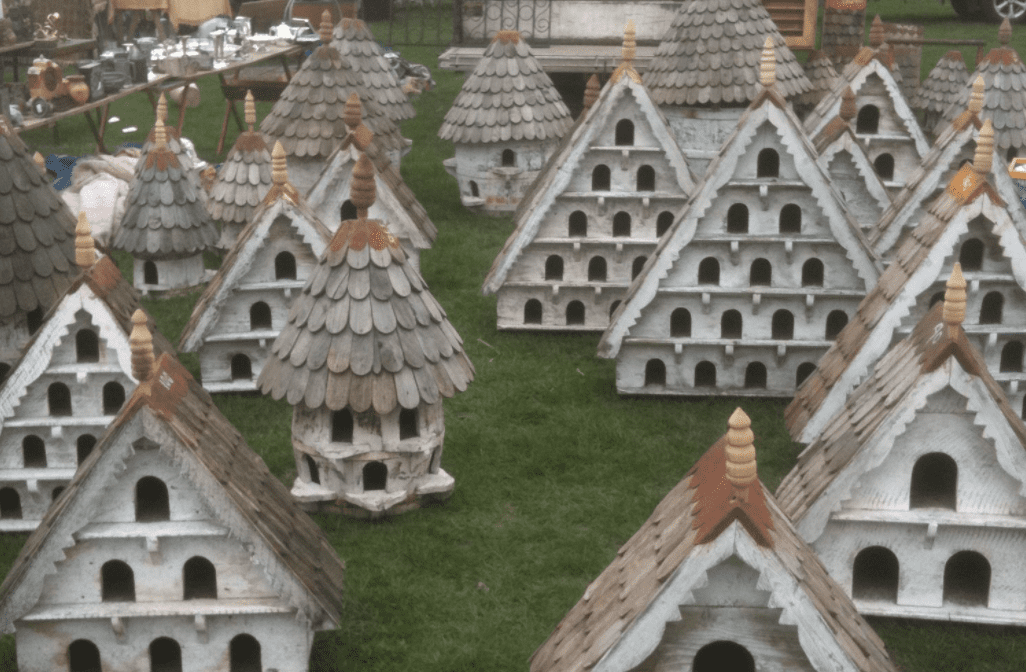
A dovecote or dovecot, doocot or columbarium is a structure intended to house pigeons or doves. Dovecotes may be free-standing structures in a variety of shapes, or built into the end of a house or barn. They generally contain pigeonholes for the birds to nest.

Widcombe Manor Farm Dovecote
Dovecotes were a common sight throughout Britain and across mainland Europe between the 16th and 19th centuries, but today few remain and of those that do, many are now in ruins. Dovecotes are specially constructed pigeon houses where pigeons were kept for a variety of purposes, but in the main as a source of food. Other uses for the domesticated pigeon were as quarry for falconry and as a target for shooting matches that were common in the 19th century and in which as many as 120 birds were shot for sport in each match. Dovecotes can be constructed of virtually any material (although early dovecotes were constructed exclusively of stone) and can be free-standing structures or provided as part of an existing structure or as a ‘lean-to’ addition.

Ancient Dovecote at Embleton
The earliest dovecotes may have been introduced to Britain by the Romans based on the fact that pigeon rearing was common in Italy with dovecotes being provided close to villas and farmsteads for the purpose of food. Over half a century ago C.D. Chalmers suggested that a number of unexplained foundations on Roman sites in Britain were the remains of ancient dovecotes, but his views have never been corroborated. Due to the lack of any firm evidence that dovecotes were introduced into Britain by the Romans it is likely that it was the Normans that first introduced the dovecote and as a result domesticated the rock dove from which the feral pigeon of today is descended.
One of the earliest British examples is believed to be a 12th century dovecote that was uncovered during archaeological works in Raunds, Northamptonshire. This early dovecote is circular and commonly known as a ‘rubblestone dovecote’. A number of these early rubblestone dovecotes, dating back to the 12th and 13th centuries, have been uncovered throughout southern England in recent years and with quite a significant geographical spread ranging from Devon in the south-west through to Lincolnshire in the east. These early dovecotes were built mainly to service the culinary needs of monasteries, castles and manors but were the sole preserve of the wealthy and almost certainly beyond the means of the poor. In Medieval and Norman times the building of a dovecote was a feudal right restricted to lords of the manor, abbots and barons with these privileges eventually extending down to the humble parish priest. Today very few of these structures remain intact.

Much Marcle Dovecote
It was in the 16th century that dovecotes became popular in Britain with a huge variety of different designs and types being constructed. Ancient dovecotes are believed to be round in shape but later in the 17th century square, rectangular and octagonal dovecotes were built, some with incredibly intricate designs. Further designs and types include ‘lectern’ dovecotes, ‘in and out’ dovecotes, ‘polygon’ dovecotes and even caves have been adapted for the keeping of domesticated pigeons. Lectern dovecotes are shaped like a reading desk, hence their common name, and normally consisted of a 4-sided building with a single pitched roof with raised parapet walls on 3 sides. In and out dovecotes, sometimes known as Irish dovecotes, consisted of tiers of breeding cubicles together with perching ledges that were built into the exterior wall of a house or building. Polygon dovecotes (polygon, in this context, meaning a building with more than 5 sides) are more often than not octagonal structures ranging dramatically in size and often housing large numbers of birds. Caves, both coastal and inland, have been used to house domestic pigeons but their use is less common than the conventional dovecote.

Breeding Cubicles,
Shobdon Court Dovecote
The interior of a dovecote is usually a large open space with the breeding cubicles or ledges being offered in rows around the internal walls. Pigeons would enter the dovecote in a variety of ways, depending on the size, shape and type of structure, with the most common entry/exit point (known as the flight entrance) being provided beneath a cupola on the roof of the structure. The birds would be encouraged to roost and breed within the structure and as pigeons are quite prolific breeders, bringing up to 8 young into the world each year, competition for breeding cubicles would be high.
As the main purpose of a dovecote was to provide food, and as the pigeon squab (or chick) was seen as a delicacy, squabs would be ‘farmed’ when they achieved a certain age and size (normally 4 weeks of age). In the 16th century eating pigeon meat became much more popular with ‘pigeon pie’ becoming a delicacy and often described as ‘food fit for kings’ – this rather dispels the myth that pigeons are disease carriers! As a result of this popularisation, pigeon meat not only graced the tables of the monarchy and the rich, it became a standard food for the masses and it was commonly said that every family should eat squab at least once a week. Some squab ‘farms’ were believed to house anything from 10,000 to 30,000 birds to satisfy this demand.

Cross-section of
Classic Dovecote
In order to access breeding cubicles and remove squabs an ingenious system had to be designed based on the inaccessibility of nests and the sheer height and size of some of the larger dovecotes. For smaller dovecotes a free-standing ladder was used for access but for larger structures a ‘potence’ was used, although more commonly for round rather than square or rectangular dovecotes. The potence consisted of a large vertical wooden pole situated in the centre of the interior and which was pivoted both at the base and at the top, allowing the pole to rotate 360°. Several lateral arms were joined to the vertical post at right angles to which ladders were attached. As the main pole was rotated the lateral arms and ladders also rotated around the interior allowing access to all the breeding cubicles.

Dovecote at Godminster
Although the provision of food was the main purpose of the dovecote, there was one interesting and highly valued by-product that had a dual purpose – pigeon guano! Pigeon guano was, and still is, considered to be one of the finest fertilisers in the world and was a highly prized commodity as a result. In the Middle East (where eating pigeon flesh was forbidden) dovecotes were built simply to provide manure for growing fruit and this practice continued for centuries. In France, Italy and Spain guano was used extensively on hemp crops and for the fertilisation of vineyards and in England it was considered to be an extremely potent manure. It was often said that pigeon guano was worth 10 loads of other sorts (manure).

Dovecote at Weetwood Hall
In the 16th century pigeon guano was sought after for a different reason – it was found to contain saltpetre, which was used for the manufacture of gunpowder. This secret was brought across from Germany and sold for a payment of £300, which would have been a huge sum in those days. This dramatically changed the role of the dovecote in light of the fact that guano was potentially valued more highly than the birds themselves and to protect this resource armed guards were often placed outside dovecotes to stop thieves stealing the guano. Production of saltpetre from pigeon guano ended in the late 18th century when it was found to be naturally occurring in South America.

Dovecote at Kings Pyon
Although the commercial use of dovecotes died out in the 19th century with many magnificent examples being allowed to fall into disrepair due to neglect, they have experienced something of a re-birth in the 21st century with dovecotes being used for the control of the feral pigeon, a direct descendent of the domesticated dovecote bird. Dovecotes and pigeon lofts are now commonly used for the control of the feral pigeon in towns and cities all over the world, with the notable exception of the USA.
The principle of using a dovecote (or pigeon loft) as a pigeon control option was pioneered by the Pigeon Control Advisory Service International (PiCAS International) and can be loosely described as a form of birth control. Pigeons are encouraged into a dovecote by the provision of a dedicated public feeding area, sited immediately beside the dovecote, where the public will be asked to feed the birds at the same time as being asked to cease feeding elsewhere. Pigeons will then take up residence in the dovecote (based on the close proximity of a good reliable food source) and once breeding starts all eggs are removed, as laid, and replaced with dummy eggs. Where a pigeon loft is used for the purpose of control rather than a dovecote the facility would be sited on the roof of a building or even within the roof of a building, rather than at ground level. Pigeons would be encouraged into the loft by the provision of food and once breeding starts eggs would be removed and replaced in the same way as with a dovecote facility.

Bailiffscourt Dovecote
This humane, effective and cost effective method of control is rapidly replacing the extreme use of lethal control, commonly used to control pigeon populations in the 21st century. Schemes using dovecotes, or artificial breeding facilities as they are now commonly known, have achieved staggering results where provided as a control option, often reducing pigeon flock size by as much as 50% and in some cases by as much as 95%. Pigeons will readily use a dovecote facility for the purposes of breeding and providing that some basic rules are followed this method of control, based on a concept that is more than 1000 years old, will provide any property owner or local government body with a cheap, popular and highly effective means of controlling feral pigeon populations. Source
About Pigeon Patrol:
Pigeon Patrol Products & Services is the leading manufacturer and distributor of bird deterrent (control) products in Canada. Pigeon Patrol products have solved pest bird problems in industrial, commercial, and residential settings since 2000, by using safe and humane bird deterrents with only bird and animal friendly solutions. At Pigeon Patrol, we manufacture and offer a variety of bird deterrents, ranging from Ultra-flex Bird Spikes with UV protection, Bird Netting, 4-S Gel and the best Ultrasonic and audible sound devices on the market today.
Contact us at 1- 877– 4– NO-BIRD, (604) 585-9279 or visit our website at www.pigeonpatrol.ca
Pigeon / Pigeon Patrol / Pigeons Roosting / Vancouver Pigeon Patrol / Bird Control / Surrey Pigeon Control / Pest / Vancouver Pigeon Blog / Birds Inside Home / Pigeons in the cities / Ice Pigeons/ What to do about pigeons/ most common types of sparrows , Damages Caused by Sparrows, How To Keep Raccoons Away, de-fence, What Are Dovecotes?