by Pigeon Patrol | May 10, 2021 | Bird Law, Pigeon Droppings, Pigeon Patrol's Services, Pigeon Spikes, Pigeons
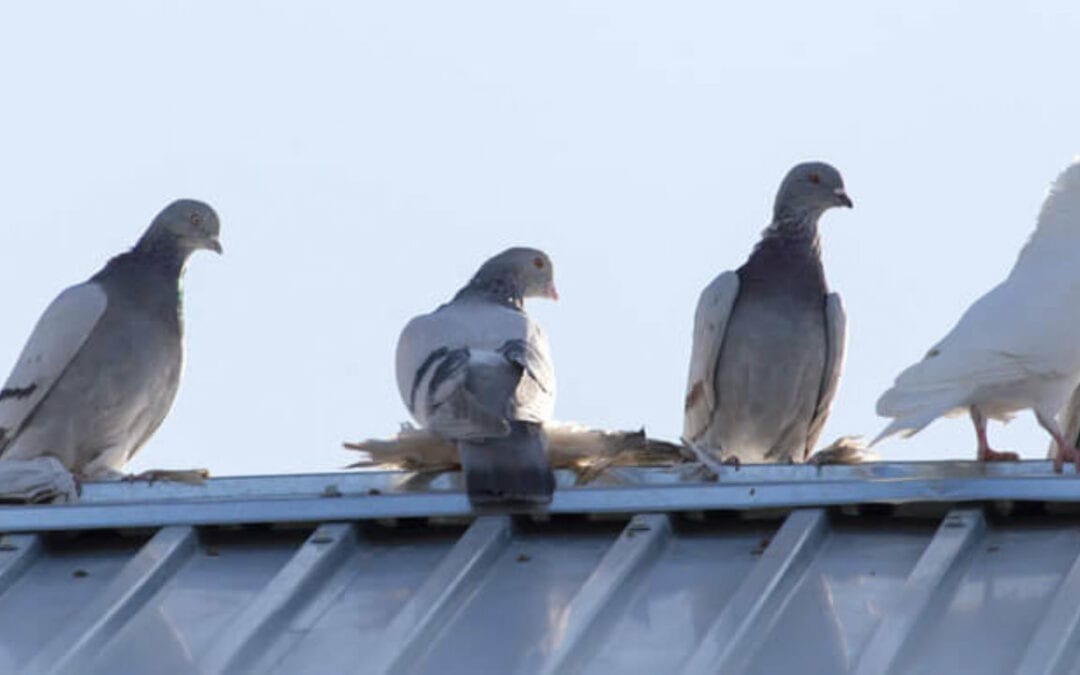
Pigeons are bad news. While most homeowners don’t think twice about a few birds sitting on top of their home’s roof, they should when it comes to these “flying rats.” Pigeons can be a destructive pest, and their nests and droppings can damage your roof.
When you have pigeons on your roof, call KY-KO Pest Prevention to schedule your free pest inspection here in the Valley. We’re experts in humane pigeon control and removal, and we’ll get rid of the birds without any mess or fuss.
Dealing with pigeons on your roof
Unless you’re a business or commercial space, most homeowners don’t see pigeons as that big of a problem, or a threat like scorpions or rodents are. However, even if they’re not inside your home, pigeons can do serious damage.
1. Pigeon droppings are bad for your roof
Pigeon droppings naturally have high acidity, which actually is the case with most bird droppings. In fact, the acid content in them is so strong that it can cause damage to most roofing materials, particularly the underlayment of your roof.
If these droppings are left on the roof to accumulate, they’ll add to the wear-and-tear experienced by your roof. Here in Phoenix, your roof is already under assault from the elements, including the summer sun and the monsoon rains. Let KY-KO help you with pigeon problems, so that your home has one less thing to worry about.
2. Pigeon nests block water from moving off your roof
In addition to the problems caused by pigeon droppings, these birds also build their nests in roof drains, corners, and rain gutters. When the rain comes, these nests act as dams, blocking water from moving off of your roof and leading to the accumulation of water, wastage, and debris.
Severe cases of this issue can lead to roof collapses, as the continuous accumulation of water and dirt on the roof adds to the weight. The presence of pooled water is also not good for your roof’s structural integrity.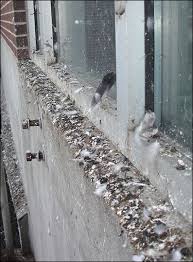
3. Pigeons will make a mess of your home and yard
For anyone who has parked their car in a public place and come back hours later to a mess, you know what this means. Left unchecked, pigeons will not only make a mess of your roof, but also your yard, your landscaping, your cars in the driveway—you get the idea.
Don’t have your home be the one on the block with obvious pigeon problems. Call KY-KO, and we’ll work on implementing a safe and humane way to keep pigeons away from your home.
For humane pigeon control and removal
Never take a pigeon infestation lightly. Given enough time, these birds can cause serious damage to your roof if you do not deal with them at the right time.
Source
Pigeon Patrol Products & Services is the leading manufacturer and distributor of bird deterrent (control) products in Canada. Pigeon Patrol products have solved pest bird problems in industrial, commercial, and residential settings since 2000, by using safe and humane bird deterrents with only bird and animal friendly solutions. At Pigeon Patrol, we manufacture and offer a variety of bird deterrents, ranging from Ultra-flex Bird Spikes with UV protection, Bird Netting, 4-S Bird Gel and the best Ultrasonic and audible sound devices on the market today.
Voted Best Canadian wholesaler for Bird Deterrent products ten years in a row.
Contact us at 1- 877– 4– NO-BIRD, (604) 585-9279 or visit our website at www.pigeonpatrol.ca
Pigeon/Pigeon Patrol / Pigeons Roosting / Vancouver Pigeon Control /Bird Spikes / Bird Control / Bird Deterrent / Pigeon Deterrent? Surrey Pigeon Control / Pest /Seagull deterrent / Vancouver Pigeon Blog / Birds Inside Home / Pigeons in the cities / Ice Pigeons/ What to do about pigeons/ sparrows , Damage by Sparrows, How To Keep Raccoons Away, Why Are Raccoons Considered Pests/ De-fence / Pigeon Nesting/ Bird Droppings / Pigeon Dropping/ woodpecker control/ Professional Bird Control Company/ Keep The Birds Away/ Birds/rats/ seagull/pigeon/woodpecker/ dove/sparrow/pidgeon control/pidgeon problem/ pidgeon control/flying rats/ pigeon Problems/ bird netting/bird gel/bird spray/bird nails/ bird guard
by Pigeon Patrol | May 10, 2021 | Bird Deterrent Products, Bird Law, Bird Netting, Bird Spikes, Columbidae, Pigeon Predators, Pigeon Spikes
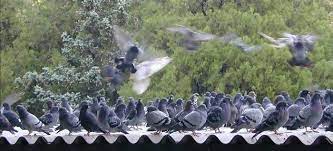
Most of us love having backyard birds to watch and to feed. The music of songbirds is a sure sign of spring. On the other hand, bird damage to lawns can be extensive. If you’re finding small holes in your grass and you see a lot of birds around, the damage is probably caused by birds foraging for food. There are some ways you can keep birds from digging up lawn and grass. Read on to learn more.
Why are Birds Digging up my Lawn?
It’s not hard to identify bird damage to lawns. If you see a lot of birds in your yard and you find small, about one-inch (2.5-cm.) holes in the turf, it’s most likely bird-related damage. What are birds digging for in your lawn? The phenomenon of birds digging holes in lawns has an easy explanation: food. They’re looking for tasty snacks, so if you’re seeing a lot of bird damage, it means you have an insect problem. Basically, your lawn is the best restaurant around because it has so many bugs. Birds are simply foraging for grubs, worms, and insects. The good news about this is that the grubs and insects will actually do more damage to your lawn than the birds will, and the birds are helping you control the population.
How to Keep Birds from Digging up Lawn
If you want to avoid the bird damage of small holes all over your lawn, you have to get rid of the insect pests. To get rid of your bug problem, invest in a pesticide, preferably something natural. You can either have it applied by a professional lawn company or you can do it yourself. It is important to time the application. If you have grubs, for instance, you need to apply in late spring or early summer. It’s also important to time application to avoid harming the birds. Apply the pesticide in late afternoon so it will be dry by the next morning when the birds reappear to search for breakfast. If you prefer not to have birds at all around your property, there is little you can do but you can try using a few scare tactics that may keep the birds away.
Source
Pigeon Patrol Products & Services is the leading manufacturer and distributor of bird deterrent (control) products in Canada. Pigeon Patrol products have solved pest bird problems in industrial, commercial, and residential settings since 2000, by using safe and humane bird deterrents with only bird and animal friendly solutions. At Pigeon Patrol, we manufacture and offer a variety of bird deterrents, ranging from Ultra-flex Bird Spikes with UV protection, Bird Netting, 4-S Bird Gel and the best Ultrasonic and audible sound devices on the market today.
Voted Best Canadian wholesaler for Bird Deterrent products ten years in a row.
Contact us at 1- 877– 4– NO-BIRD, (604) 585-9279 or visit our website at www.pigeonpatrol.ca
Pigeon/Pigeon Patrol / Pigeons Roosting / Vancouver Pigeon Control /Bird Spikes / Bird Control / Bird Deterrent / Pigeon Deterrent? Surrey Pigeon Control / Pest /Seagull deterrent / Vancouver Pigeon Blog / Birds Inside Home / Pigeons in the cities / Ice Pigeons/ What to do about pigeons/ sparrows , Damage by Sparrows, How To Keep Raccoons Away, Why Are Raccoons Considered Pests/ De-fence / Pigeon Nesting/ Bird Droppings / Pigeon Dropping/ woodpecker control/ Professional Bird Control Company/ Keep The Birds Away/ Birds/rats/ seagull/pigeon/woodpecker/ dove/sparrow/pidgeon control/pidgeon problem/ pidgeon control/flying rats/ pigeon Problems/ bird netting/bird gel/bird spray/bird nails/ bird guard
by Pigeon Patrol | May 10, 2021 | Bird Law, Bird Spikes, Pigeon Control, Pigeon Droppings, Pigeon Patrol's Services
Color of Pigeons
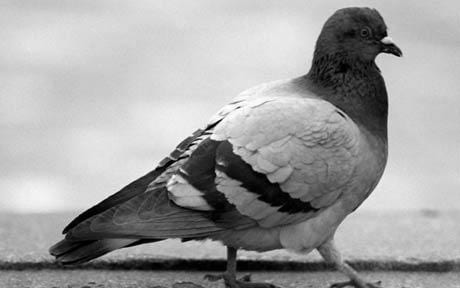
Usually bluish-gray with black bands and reddish feet.
What does a pigeon look like?
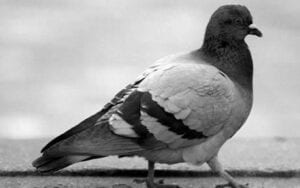
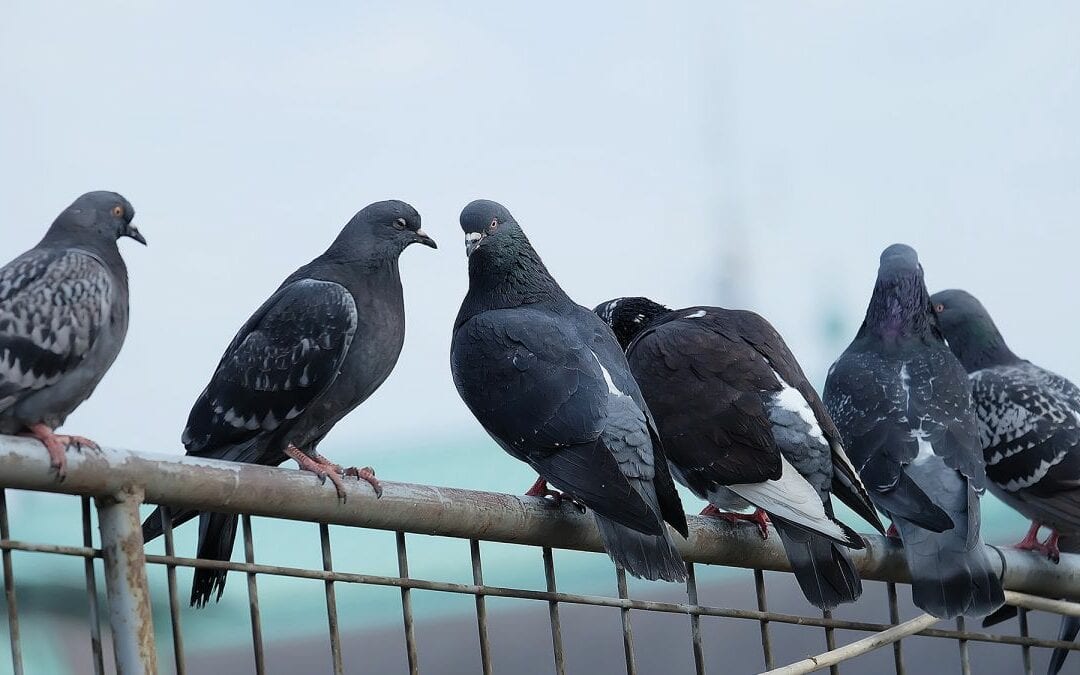
Pigeons have broad and pointed wings, with small heads and short legs. They also have a wide and rounded tail. Their coat is blueish grey. They have a soft voice with guttural series of rolling coos.
Where are pigeons found?
Originally found wild in Europe, North Africa, and western Asia, feral pigeons have become established in cities around the world. The lack of adequate sanitation, deliberate feeding of the birds by humans, and “cliff-type” nesting sites on older buildings are the principal factors that attract pigeons to cities.
They will inhabit roofs, ledges, drain spouts, lofts, attics, caves, etc. They also frequent parks and sidewalks, where they become habituated to people feeding them. Pigeons are mainly creatures of habit and tend to feed, nest, and roost in the same place day after day.
Pigeons are a pest in most urban areas in the US. On the West Coast our local pest control specialists find pigeons affect many of our customers in cities such as Boise, Roseburg, Salinas, Spokane, Novato, and Palm Springs.
What do pigeons eat?
These bird-brained beauties also eat livestock manure; they’re not picky, and actually pretty disgusting. (But please don’t feed the birds. They do carry diseases.) Other favorite treats include seeds, grains, some fruits and green feed; but will feed on insects.
Pigeon life span
Pigeons pair for life, which may last for 15 years or longer. In urban environments, they may live for 3-4 years. Pigeons have a hearing range close to humans, but they have a poor sense of taste and smell. Remember—they eat manure. They also exhibit distinct behavioral patterns like nesting, feeding, roosting, and loafing. Nesting and roosting sites (places where they sleep or rest) may occur in the same area or be as far as 5 miles apart.
Breeding occurs year-round with 1-2 eggs per batch. The eggs hatch after 17-19 days of incubation, and young pigeons will leave the nest after 4 to 6 weeks. More eggs may be laid before the first young are gone. An adult pigeon eats about one pound of food a week. Pigeons, their nests, and droppings are of major concern because 50 or more diseases and ectoparasites are associated with them.
Diseases spread by pigeons
Pigeons are of great medical concern because more than 50 diseases and ectoparasites are associated with them, which leads to their description by non-romantics as flying rodents. Pigeon nests and droppings will also lead to dermestid beetles, flies, clothes moths, and stored product pest infestations within buildings.
-
Asthma – bird dropping can dry up and become dust. Once inhaled, this can trigger asthma attacks.
-
Salmonella – also known as food poisoning, but droppings can lead to the contamination of food.
-
Listeriosis, histoplasmosis, cryptococcosis – all fungal diseases that can come from growing on pigeon droppings.
-
Diseases from parasites – pigeons often carry ticks and fleas which can lead to things like Lyme disease and other illnesses associated with those pests.
Signs of a pigeon problem
How do you know if you have just a few pigeons or if you have a serious problem? Well, there are signs that the pigeons around your property may be causing problems. They include:
-
Large numbers of birds – just take a look around your property and see how many pigeons there are. Once one decides to set up shop, others are likely to follow. Are there a lot of birds on the ground? Are there more roosting above? Are people having trouble just walking through the area because of the number of birds?
-
Nesting material – pigeons use sticks, twigs, branches, leaves and even garbage to make up their nests. Is there an increased number of this material lying around? Pigeons are not famous for their neatness, so if there is an increase of debris, it could be from too many pigeons trying to nest.
-
Droppings – pigeons are rather notorious for the deposits that they leave behind. Are there so many that it makes it hard to walk? If so, time to call in the pros.
How to keep pigeons away
Got pigeon issues? Due to the problems that can come with these birds, you should have an infestation addressed right away. There are ways to keep pigeons away, such as spikes. Read more about these techniques below. Plus, you should make sure pigeons cannot get to standing water or food on your property. Get rid of garbage or food that has been spilled, so pigeons may find a spot less appealing.
Pigeon control methods
There are many techniques for excluding pigeons from an infested structure. Exclusion strategies include structural modification, bird netting, plastic and metal spikes, monofilament and steel lines, and trapping. In addition, gels, paste, and liquids can also be used for excluding the birds from the structure.
Structural modification: Birds like to land on flat surfaces. When the building ledges are angled (45 degrees), it prevents birds from landing on building edges. Sheet metals, styrofoam blocks, wood, stone, and other materials can be used to give the desired angle.
Bird netting: There are several types of bird nettings that can be used for exclusion. In general, netting provides the best long-term control in keeping the birds out of a structure. In warehouses and commercial buildings where bird activity is a major concern, bird nets can be used to prevent the birds from getting into overhead pipes, roof air conditioning units can be netted off from the birds, etc.
Plastic and metal spikes: Spikes can be used as a physical barrier in preventing the birds from landing on an area, such as perching on ledges and beams of buildings. Spikes have sharp pointed edges extending out at angles. They can be installed around ledges, roof peaks, eaves, window sills, or any places that are prone to roosting. Because netting and spikes are more effective long-term control methods, they are the preferred methods.
Pigeon repellent
Pigeon repellents are available in different formulations such as gel, paste and liquids. They differ considerably in cost, effectiveness, and texture (thick and tacky, jelly like or viscous).
Choose the one that works best based on the experience. These repellents are not non-toxic and because of their “sticky” properties cause the birds to move elsewhere.
How to get rid of pigeons
If you’re dealing with pigeons, you should contact a pest professional to figure out how to eliminate these pests. As you may have noticed, pigeons can get droppings on buildings, damaging the appearance of these structures. Their droppings can also pollute zones of human activity as well as food. A Western Exterminator expert can ascertain how to handle the situation and help you know how to inhibit these birds for the future.
Bird control solutions from Western Exterminator
Pigeons aren’t the only birds home and business owners need to be concerned about. Seagulls and starlings are known to cause damage and spread disease as well. With proper identification, our specialists can create bird control plans specifically made for you to ensure your property is bird-free.
Pigeon Patrol Products & Services is the leading manufacturer and distributor of bird deterrent (control) products in Canada. Pigeon Patrol products have solved pest bird problems in industrial, commercial, and residential settings since 2000, by using safe and humane bird deterrents with only bird and animal friendly solutions. At Pigeon Patrol, we manufacture and offer a variety of bird deterrents, ranging from Ultra-flex Bird Spikes with UV protection, Bird Netting, 4-S Bird Gel and the best Ultrasonic and audible sound devices on the market today.
Voted Best Canadian wholesaler for Bird Deterrent products ten years in a row.
Contact us at 1- 877– 4– NO-BIRD, (604) 585-9279 or visit our website at www.pigeonpatrol.ca
Pigeon/Pigeon Patrol / Pigeons Roosting / Vancouver Pigeon Control /Bird Spikes / Bird Control / Bird Deterrent / Pigeon Deterrent? Surrey Pigeon Control / Pest /Seagull deterrent / Vancouver Pigeon Blog / Birds Inside Home / Pigeons in the cities / Ice Pigeons/ What to do about pigeons/ sparrows , Damage by Sparrows, How To Keep Raccoons Away, Why Are Raccoons Considered Pests/ De-fence / Pigeon Nesting/ Bird Droppings / Pigeon Dropping/ woodpecker control/ Professional Bird Control Company/ Keep The Birds Away/ Birds/rats/ seagull/pigeon/woodpecker/ dove/sparrow/pidgeon control/pidgeon problem/ pidgeon control/flying rats/ pigeon Problems/ bird netting/bird gel/bird spray/bird nails/ bird guard
by Pigeon Patrol | May 10, 2021 | Bird Law, Columbidae, history of pigeons, MBCA, pet bird
In any pigeon race there will be a number of competitors which lose their way and are unable to find their way back home and these are refered to as strays. There can be a number of reasons for this occuring with the most common being injury, fatigue, and adverse weather conditions. Sometimes strong winds can blow a race bird off its normal flight path and add considerably to the time and distance needed to make the trip home. This can lead to fatigue and with pigeon races in Australia generally being between 100 and 1000 kilometres it is understandable that they sometimes need to stop for a rest. Unfortunately a tired racing pigeon makes easy prey for many animals, those stopping in a backyard can encounter pet cats and dogs while those stopping in rural areas can encounter foxes. Birds of prey are the major cause of injury to racing pigeons, although collisions with unseen power lines can also cause serious injuries.
So what should you do if you find a lost race bird?
1/ Firstly give it a drink of water.
2/ Something to eat. Racing pigeons (unlike feral pigeons) only eat grain. A bird seed mixture of any type available from supermarkets will be quite suitable. Racing Pigeons generally will not eat bread or other scraps.
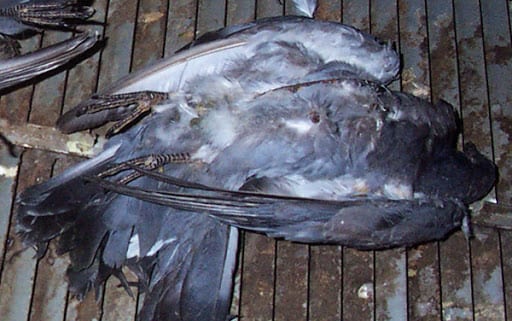
3/ Check the pigeon for injuries. Often physical injuries will be quite obvious but be sure to check under the wings as these can often hide serious wounds.
4/ Rest. After food, water, and a couple of days rest, a racing pigeon can be released and will in many cases have recovered sufficiently to complete its journey home.
5/ My pigeon keeps coming back, what should I do? Even after rest and food, there can be internal injuries that can prevent a bird from continuing its way home. If this happens check the birds legs. If it is a racing pigeon it will have at least one band or ring on its leg. One of these rings will be hard and plastic coated and will carry information which will allow you to find the birds owner. Quite often the ring will have the name of the town the pigeon has originated from and the phone number of someone in that area for you to contact. Before phoning the contact number on the ring make sure you make a note of the other information on the ring. This other information will include a series of letters, a year, and a number for example VHA 2010 1234. In this case the VHA would stand for Victorian Homing Association, 2010 is the year the pigeon was born, and 1234 is the pigeons identification number.
6/ If your ring does not have a phone number on it then check this list of contacts for someone in your area
http://www.anpa.com.au/found-a-lost-pigeon/
7/ If your pigeon does not have a ring on its leg then it is not a racing pigeon. It may be someones pet or a feral pigeon.
Pigeon Patrol Products & Services is the leading manufacturer and distributor of bird deterrent (control) products in Canada. Pigeon Patrol products have solved pest bird problems in industrial, commercial, and residential settings since 2000, by using safe and humane bird deterrents with only bird and animal friendly solutions. At Pigeon Patrol, we manufacture and offer a variety of bird deterrents, ranging from Ultra-flex Bird Spikes with UV protection, Bird Netting, 4-S Bird Gel and the best Ultrasonic and audible sound devices on the market today.
Voted Best Canadian wholesaler for Bird Deterrent products ten years in a row.
Contact us at 1- 877– 4– NO-BIRD, (604) 585-9279 or visit our website at www.pigeonpatrol.ca
Pigeon/Pigeon Patrol / Pigeons Roosting / Vancouver Pigeon Control /Bird Spikes / Bird Control / Bird Deterrent / Pigeon Deterrent? Surrey Pigeon Control / Pest /Seagull deterrent / Vancouver Pigeon Blog / Birds Inside Home / Pigeons in the cities / Ice Pigeons/ What to do about pigeons/ sparrows , Damage by Sparrows, How To Keep Raccoons Away, Why Are Raccoons Considered Pests/ De-fence / Pigeon Nesting/ Bird Droppings / Pigeon Dropping/ woodpecker control/ Professional Bird Control Company/ Keep The Birds Away/ Birds/rats/ seagull/pigeon/woodpecker/ dove/sparrow/pidgeon control/pidgeon problem/ pidgeon control/flying rats/ pigeon Problems/ bird netting/bird gel/bird spray/bird nails/ bird guard
by Pigeon Patrol | May 3, 2021 | Bird Deterrent Products, Bird Law, pet bird, Pigeon Droppings, Pigeon Spikes, Pigeons
Many types of birds are attracted to swimming pools. As a result, swimmers might come in contact with bird droppings (poop) while in the pool. If you find bird droppings in the pool, there are a few simple steps you can take to disinfect the water and keep birds away from the pool.
Can bird droppings in the pool spread germs to swimmers?
Many germs that might be found in bird droppings can infect humans. Duck and goose droppings, in particular, might contain germs such as E. coli, Salmonella, Campylobacter, or Cryptosporidium (“Crypto” for short).
Most germs in bird droppings are killed by chlorine within minutes in a well-maintained pool.
The germ Crypto, however, has a tough outer shell that allows it to survive for a long time in the environment. Crypto can survive for days even in properly chlorinated pools. Currently, CDC is not aware of any evidence of Crypto being spread directly from birds to humans.
What should I do if I find bird droppings in the pool?
Pool operators and owners should respond to finding bird droppings in the pool the same way they would respond to finding formed human feces (poop) in the pool. The Healthy Swimming Program’s Fecal Incident Response Recommendations Cdc-pdf[PDF – 4 pages] provide step-by-step guidance on how to properly decontaminate the water in these situations.
Follow these steps to remove bird droppings and disinfect the water:
-
Close the pool to swimmers.
-
Put on disposable gloves.
-
Remove the bird droppings using a net or bucket. Do not vacuum the droppings from the pool.
-
Clean off any debris or dirt from the item used to remove the bird droppings.
-
Disinfect the item used to remove the droppings by immersing it in the pool during the 30-minute disinfection time described below.
-
Remove and dispose of gloves.
-
Wash your hands thoroughly with soap and water immediately.
-
Raise the free chlorine concentration to, or maintain it at, 2 parts per million (ppm); maintain the pH level at 7.5 or less; keep the temperature at 77°F (25°C) or higher. The free chlorine and pH should remain at these levels for 30 minutes.
-
Confirm that the filtration system is operating properly.
How can I keep birds away from the pool area?
The following steps can help encourage birds, other than ducks and geese (more information on ducks and geese is provided below), to leave the swimming pool area:
-
Remove plants that produce edible nuts, fruits, and berries.
-
Remove bird feeders.
-
Trim or remove trees and shrubs to limit branches hanging around or over the pool that can be used by roosting birds.
How can I keep ducks and geese away from the pool area?
Do not feed ducks or geese; providing food attracts them and encourages them to return. Many types of ducks and geese eat grass, so reducing the area of grass lawns around the swimming pool or putting up barriers that prohibit movement between swimming pools and grass lawns, such as fences and hedges, might also help. Removing domestic ducks and geese from the pool area can also help decrease the likelihood that wild ducks and geese will be attracted to the area.
The U.S. Department of Agriculture has additional information on how to manage ducks and geese (also known as waterfowl) in their document Assistance with Waterfowl Damage. Cdc-pdf[PDF – 3 pages]External
What can I do to get rid of ducks and geese already in the pool area?
In the United States, most birds, including ducks and geese, are protected by the Federal Migratory Bird Treaty Act and state laws. Local laws might also apply. Therefore, legal options for dealing with birds are limited and may require a permit. Consult the U.S. Fish and Wildlife ServicesExternal and your state wildlife agencyExternal for more information.
Pigeon Patrol Products & Services is the leading manufacturer and distributor of bird deterrent (control) products in Canada. Pigeon Patrol products have solved pest bird problems in industrial, commercial, and residential settings since 2000, by using safe and humane bird deterrents with only bird and animal friendly solutions. At Pigeon Patrol, we manufacture and offer a variety of bird deterrents, ranging from Ultra-flex Bird Spikes with UV protection, Bird Netting, 4-S Bird Gel and the best Ultrasonic and audible sound devices on the market today.
Voted Best Canadian wholesaler for Bird Deterrent products ten years in a row.
Contact us at 1- 877– 4– NO-BIRD, (604) 585-9279 or visit our website at www.pigeonpatrol.ca
Pigeon/Pigeon Patrol / Pigeons Roosting / Vancouver Pigeon Control /Bird Spikes / Bird Control / Bird Deterrent / Pigeon Deterrent? Surrey Pigeon Control / Pest /Seagull deterrent / Vancouver Pigeon Blog / Birds Inside Home / Pigeons in the cities / Ice Pigeons/ What to do about pigeons/ sparrows , Damage by Sparrows, How To Keep Raccoons Away, Why Are Raccoons Considered Pests/ De-fence / Pigeon Nesting/ Bird Droppings / Pigeon Dropping/ woodpecker control/ Professional Bird Control Company/ Keep The Birds Away/ Birds/rats/ seagull/pigeon/woodpecker/ dove/sparrow/pidgeon control/pidgeon problem/ pidgeon control/flying rats/ pigeon Problems/ bird netting/bird gel/bird spray/bird nails/ bird guard
by Pigeon Patrol | May 3, 2021 | Bird Law, Bird Spikes, history of pigeons, Pigeons, Pigeons in the News
I admit that topic is a bit off my usual
Brain Sense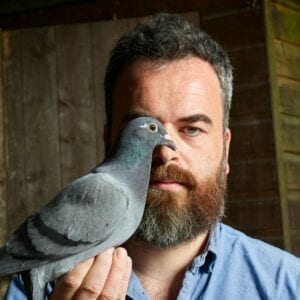
beat, but occasionally a piece of research comes along that is just too intriguing to pass by. Such is the case with a new report out of the University of Kentucky, published this week in the
Proceedings of the Royal Society
(UK). The study’s lead author, psychology professor Thomas Zentall, studied some pigeon gamblers and came up with some intriguing insights into human gamblers.
Zentall and collaborator Jessica Stagner set pigeons up in cages and let the birds peck at lights to obtain rewards of food pellets. If the pigeons pecked on the left, they received a green or a red light; after 10 seconds, the red light yielded 10 pellets but the green light yielded nothing. Because the odds were stacked at 20 percent–which is much more generous than your average casino–the pigeons averaged 2 pellets per peck if they pecked on the left.
If they pecked to the right, however, they saw yellow or blue lights, which both yielded 3 pellets of food per trial. Same every time. Sure thing.
So which would you choose: a guaranteed 3 or the remote possibility of a 10 (with the odds stacked against you)? Seems most pigeons behave like human gamblers. They don’t go for the sure thing. Most of Zentall’s experimental birds consistently chose the left side, apparently motivated by some bird-brained hope that they would receive the 10 pellets, even though 0 was a 4:1 favorite. “It’s more efficient not to gamble, and the likelihood of winning is low, but pigeons do it anyway,” Zentall says. “And so do people.”
“There’s a basic behavioral, biological process involved that probably affects many different species, and it doesn’t require the excitement of a casino, the misunderstanding of the likelihood of winning, social reinforcement or the publicity of winners,” Zentall says. “These factors may help, but that’s not it. Look at the pigeons.”
Zentall is also looking at the pigeons to try to find out why some pigeons, like some people, eschew gambling. (Yes, a few, wise pigeons peck to the right.) “Most of the time, people who aren’t terribly happy with what they’re doing choose to gamble because it’s exciting to them and other things generally aren’t,” says Zentall, and pigeons may be no different. Zentall thinks boredom may be an important motivator for gambling. His pigeons are less likely to gamble after spending time in a room playing with toys and other pigeons.
“We can understand the basis for gambling,” Zentall says, “but why has this evolved in people and in animals?” The answer may lie in the animal’s sense of control. “In nature, probability isn’t constant,” he said. “Animals are attracted to stimuli that make it easy to predict the availability of food and approaching these stimuli often makes their occurrence more likely. In lab conditions, this isn’t the case. . . . In addition, humans remember the wins and not the losses, which has functional value in nature. . . . Animals too, don’t remember where they didn’t find food, but do remember where they did.”
Thus, gambling may have survival value in nature, but not in the casino.
Pigeon Patrol Products & Services is the leading manufacturer and distributor of bird deterrent (control) products in Canada. Pigeon Patrol products have solved pest bird problems in industrial, commercial, and residential settings since 2000, by using safe and humane bird deterrents with only bird and animal friendly solutions. At Pigeon Patrol, we manufacture and offer a variety of bird deterrents, ranging from Ultra-flex Bird Spikes with UV protection, Bird Netting, 4-S Bird Gel and the best Ultrasonic and audible sound devices on the market today.
Voted Best Canadian wholesaler for Bird Deterrent products ten years in a row.
Contact us at 1- 877– 4– NO-BIRD, (604) 585-9279 or visit our website at www.pigeonpatrol.ca
Pigeon/Pigeon Patrol / Pigeons Roosting / Vancouver Pigeon Control /Bird Spikes / Bird Control / Bird Deterrent / Pigeon Deterrent? Surrey Pigeon Control / Pest /Seagull deterrent / Vancouver Pigeon Blog / Birds Inside Home / Pigeons in the cities / Ice Pigeons/ What to do about pigeons/ sparrows , Damage by Sparrows, How To Keep Raccoons Away, Why Are Raccoons Considered Pests/ De-fence / Pigeon Nesting/ Bird Droppings / Pigeon Dropping/ woodpecker control/ Professional Bird Control Company/ Keep The Birds Away/ Birds/rats/ seagull/pigeon/woodpecker/ dove/sparrow/pidgeon control/pidgeon problem/ pidgeon control/flying rats/ pigeon Problems/ bird netting/bird gel/bird spray/bird nails/ bird guard