by Pigeon Patrol | Feb 22, 2022 | history of pigeons, MBCA, pet bird, Pigeon Control, Pigeon Droppings, Pigeon Patrol's Services
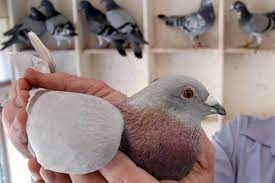
Pirates, predators, power lines and poor luck — they brave it all for hundreds of miles, while carrying along the million-dollar hopes of the haves and have-nots. Pigeons are the new thoroughbreds in China and everyone has taken notice — breeders in Europe and even the feed industry in the United States.
Pigeon racing goes back hundreds of years and probably a lot longer. The races are held in countries across the globe, but the sport is at fever pitch in China. From Vice: “Twenty years ago — sort of a poor man’s delicacy, but now with the new Chinese economy, it’s become a rich man’s play thing.”
China’s nouveau riche love designer handbags, the finest wine, and sleek cars — but they’re also quick to slap down bags of cash on a pigeon. Money is swirling around Chinese pigeon racing, and the torrent shows no signs of abatement. In 2011, a Chinese entrepreneur payed $200,000 for a pigeon — Blue Prince — at PiPa, the world’s premier pigeon auction house located in Belgium. PiPa sold 218 pigeons that day — for an astounding $1.8 million.
And in 2013, PiPa sold Bolt (named after Olympic sprinter Usain Bolt) to another Chinese businessman for $400,000. An entire lot of 530 Belgian-bred pigeons went for almost $6 million that day, with nine of the 10 most expensive birds headed to China or Taiwan. (In 2009, The Telegraph reported that Chinese mafia gangs were hitting Belgian pigeon coops and stealing the prized birds. “Rather than attempting to smuggle their prey abroad, criminals will kill the pigeons and cut of their identifying rings to be used on much less valuable birds bred in Asia.”)
Blue Prince, Bolt and the other auction birds weren’t bought to race; they are strictly for breeding. As PiPa’s Ya Minna told The Independent, “A pigeon is a far better investment than a fine bottle of vintage wine. You can breed it; it will have children and grandchildren.”
Pigeons may look ordinary, but the actual races are a subculture of chaos. With entry fees ranging from a $200-$1,000, several thousand birds are loaded onto a communal truck and the trek to the starting line begins. The winner will not be the first pigeon to return. The birds are all banded with GPS locators and when they arrive home at their individual coops, a scanner records the arrival time and the winner is determined according to which pigeon flew home at the highest average speed. (This is a sport tailor-made for hijinks and corruption.)
The long haul home
The truck may drive 500-700 miles away, and then the birds are released as the marathon begins. Pigeon pirates are on alert, hoping to catch returning birds to sell on the black market; hawks are always on the prowl; bad weather may claim birds; and disorientation may be a factor.
This is no horse race with a two-minute hurtle towards euphoria or dejection; it’s a dry-mouth game of patience for the pigeon owners and bettors. The wait will last hours; and depending on whether it gets dark and the pigeons roost, it may lapse into the next day.
When the birds arrive home (the strongest birds will fly 600 miles without stopping), the tabulations are made, and the results are announced over the Internet and text. The winners gloat and count their cash; the losers lick their wounds; and the breeding begins.
With the glut of cash in Chinese pigeon racing, the U.S. feed industry has taken note. Jos Zamzow, Meridian, Idaho, believes his family company, Dynamite Marketing, has perfected a high-performance pigeon feed. The News Tribune reports that Zamzow’s first test shipments of the feed concoction will arrive in Taiwan this summer. “After they start winning races, we expect there will be significant demand … pigeon racing is popular all over Asia.”
Zamzow already markets pet and pork feed in Taiwan. “Now Zamzow is betting that Dynamite can transform Idaho-grown safflower and corn — and a top-secret, blood-boosting brew of mushroom powder and yeast cell wall extract it makes in its 102-year-old feed mill — into an annual export business worth up to $15 million.”
Spiraling pigeon auction prices, criminal bird gangs, and a mad gambling boom — a fitting backdrop for a capitalist sport once banned by Chairman Mao.
Source
Pigeon Patrol Products & Services is the leading manufacturer and distributor of bird deterrent (control) products in Canada. Pigeon Patrol products have solved pest bird problems in industrial, commercial, and residential settings since 2000, by using safe and humane bird deterrents with only bird and animal friendly solutions. At Pigeon Patrol, we manufacture and offer a variety of bird deterrents, ranging from Ultra-flex Bird Spikes with UV protection, Bird Netting, 4-S Bird Gel and the best Ultrasonic and audible sound devices on the market today.
Voted Best Canadian wholesaler for Bird Deterrent products ten years in a row.
Contact us at 1- 877– 4– NO-BIRD, (604) 585-9279 or visit our website at www.pigeonpatrol.ca
Pigeon/Pigeon Patrol / Pigeons Roosting / Vancouver Pigeon Control /Bird Spikes / Bird Control / Bird Deterrent / Pigeon Deterrent? Surrey Pigeon Control / Pest /Seagull deterrent / Vancouver Pigeon Blog / Birds Inside Home / Pigeons in the cities / Ice Pigeons/ What to do about pigeons/ sparrows , Damage by Sparrows, How To Keep Raccoons Away, Why Are Raccoons Considered Pests/ De-fence / Pigeon Nesting/ Bird Droppings / Pigeon Dropping/ woodpecker control/ Professional Bird Control Company/ Keep The Birds Away/ Birds/rats/ seagull/pigeon/woodpecker/ dove/sparrow/pidgeon control/pidgeon problem/ pidgeon control/flying rats/ pigeon Problems/ bird netting/bird gel/bird spray/bird nails/ bird guard
by Pigeon Patrol | Feb 22, 2022 | 4-S Gel Bird repellent, Animal Deterrent Products, Bird Deterrent Products, Bird Law, Bird Netting
Anyone who has lived in an urban environment has seen stringfoot pigeons; many wonder how the feet of these birds come to be bound and twisted, but few people seem to realize that something can be done to alleviate the suffering of these beautiful birds. Although I am a recent arrival to the world of destringing pigeons, this practice is certainly not a new phenomenon. The most perfunctory online search reveals a variety of stories from at least the last few decades of individuals who undertake pigeon destringing, and there are undoubtedly countless other individuals whose destringing activities have gone completely unnoticed and unheralded.
Not long ago I came across the intriguing case of British author and critic Naomi Lewis, noted for her animal advocacy and her pigeon rescue efforts. It isn’t clear precisely when her pigeon destringing efforts started. She moved with her family to London’s Red Lion Square in 1935 and lived there until her death in 2009; her apartment became a haven for injured creatures and famously off limits to visitors, although “she was once observed releasing a convalescent pigeon from one of the windows.”[i]An article from the London Times in 1995 commented on the plight of stringfoot pigeons in the city, and on Lewis’ activities — when the article was written, Lewis was already in her 80s: “The writer Naomi Lewis goes round London with a small pair of scissors especially to help them. She has become expert at spotting pigeons in this plight, pouncing on them, picking them up, and cutting them free.”[ii]More recently, an author once acquainted with Lewis noted her passion for rescuing stringfoot pigeons: “Luckily for them, she knew where they were. During her hours of cycling around and wandering the streets, distributing bird seed, she had learned where the crippled ones lived. Imagine her patience – the endless searching, trudging, scattering, waiting, day after day, until she eventually caught them.”[iii]The image of Lewis, an elderly, “diminutive, velvet-clad woman,”[iv]bicycling and trudging about London in search of stringfoot pigeons is compelling and inspiring. Perhaps part of what draws me to the story of Lewis is that articles that mention her (including her obituaries) suggest, in the nicest way possible, that she was quite an eccentric, and her attraction to urban pigeons seems to be one of the factors that contributed to this assessment of her character. We who love pigeons are keenly aware that this love is often equated with eccentricity.
Judging by the reactions I have seen among people on the street who witness the process of pigeon destringing, it is an activity generally perceived as eccentric, and at first the reasons it is needed and done are difficult for observers to grasp. But once these somewhat confused and often skeptical bystanders understand what is going on and why, they are just as often supportive of efforts on behalf of pigeons and some are even anxious to participate. The evidence before their eyes helps to convince observers of both the beauty of these birds and our responsibility to help them. The destringing of urban pigeons can be seen as much more, therefore, than simply an effort to assist wild creatures to have lives free of suffering. It is one more way that we pigeon champions can help to normalize the public perception of all pigeons as valued and valuable creatures.
The Destringing Process in Action
What is the experience of destringing a pigeon like, and how is it done? There are many others who have been destringing for years, have handled countless stringfoot pigeons, and are so much more well-qualified than I to discuss this experience. With apologies, therefore, for my inexperience, I’d like to recount one of my own destringing experiences in San Francisco as a way of introducing the destringing process in general.
- Finding a stringfoot pigeon
Last week, a Muni failure forced me off the train at Church and Duboce. I had my destringing kit with me; I was headed for the Embarcadero, where there is a large population of stringfoot pigeons. Walking towards Market Street, I passed the Safeway parking lot and caught a glimpse of a pigeon flock there, browsing, preening, and flirting. Just in case, I stopped to check on them — and immediately spotted a beautiful white and grey girl with string on her feet, her feet bound together, barely able to walk.
- Catching the stringfoot pigeon
A crucial aspect of the destringing process is, of course, catching the pigeon. This is an acquired skill (one I am still working on), that requires much practice and patience. For those living in cities that are fortunate enough to have Stringfoot Pigeon groups, one of the best ways to learn how to catch pigeons is one-on-one expert coaching. Destringers seem to each develop their own approach to catching birds. For myself, I find that the position and disposition of the pigeon are the most important factors. I have the greatest likelihood of success if the pigeon is facing towards me (can’t easily fly away); is hemmed in by other birds; and has shifted its attention from me to the food I am dropping. After three tries and almost giving up all hope, I managed to catch this white and grey stringfoot girl.
- Destringing
The actual destringing can range from a simple process, when the string or hair is easy to see, loosely wound, and easily removed, to a monumental challenge when the material is voluminous, woven in complex layers, deeply embedded in the foot, or has already caused a lot of tissue damage and deformity. Although each case is very different, at the most basic level the process involves spraying the foot with something like Vetricyn to clean, loosen, and soften the fibers, dirt, and any dead tissue; and then very gently loosening, cutting, and unwinding fibers from the foot. Unwinding when possible instead of simply cutting helps to ensure that no hair or thread remains embedded in the skin. Fortunately for me and for this pretty pigeon, her string — which looked like a combination of twine and dental floss — was easy to see and remove, although cutting into her foot quite deeply.
- Releasing the pigeon
Of course, once the pigeon’s feet are free and disinfected, the pigeon should be released back where caught and, if possible, in sight of her flock, who she will want to join quickly in order to recount her unpleasant adventure.
- Why we do it, when we shouldn’t, and how you can help
One of the factors that motivates me to destring stringfoot pigeons seems so self-evident that it almost goes without saying: these pigeons cannot remove string from their own feet. If you take a moment to really consider this simple fact, however, the enormity of it can be overwhelming. To realize this fact is to accept the knowledge that each and every stringfoot pigeon will live their entire lives in ever-increasing pain, acquiring infections, losing digits and feet, and becoming unable to perform the basic activities required to live, unless a human sees their need, picks them up, and frees their feet.
Alongside the recognition of this need, destringers also have to realize their own limitations. Even in the brief time I have been destringing, I have seen heartbreaking examples of pigeons with deformed and painful stringfeet who I simply could not catch. The numerous destringers who have more experience than I must have countless such stories. Jodie Foreman, who started the “San Francisco Pigeons – Stringfoot help” group and several groups in other US cities, told me that when she is out but does not have her destringing kit with her, she tries to resist looking at pigeons (I believe she now carries her kit at all times!). Although it is hard to resist, there is no advantage to catching a stringfoot pigeon if one is unprepared to destring, and destringers advocate against removing any pigeon from its flock, its mate, and possibly its babies.
There are many resources available for anyone interested in helping to free the feet of these beautiful birds. The facebook group “San Francisco Pigeons – Stringfoot help” (and groups in Denver, Chicago, Washington, Seattle, and Los Angeles) provides a wealth of information about finding, catching, destringing, and the complex issues that can arise in the destringing process. Experienced destringers on these forums give generously of their time to answer questions, give advice, and provide training.
There are few forms of wildlife rescue that demand as little from the rescuer as destringing stringfoot pigeons. If you are willing to do some research, buy a handful of supplies, and you have a bit of time, you can doubtless find stringfoot pigeons in need of help near you, regardless of where you are. And it is difficult to imagine another rescue activity that can provide the same level of instantly transformative relief from pain and disability, and lasting impact on quality of life, as freeing the feet of these gentle and beautiful creatures.
Source
Pigeon Patrol Products & Services is the leading manufacturer and distributor of bird deterrent (control) products in Canada. Pigeon Patrol products have solved pest bird problems in industrial, commercial, and residential settings since 2000, by using safe and humane bird deterrents with only bird and animal friendly solutions. At Pigeon Patrol, we manufacture and offer a variety of bird deterrents, ranging from Ultra-flex Bird Spikes with UV protection, Bird Netting, 4-S Bird Gel and the best Ultrasonic and audible sound devices on the market today.
Voted Best Canadian wholesaler for Bird Deterrent products ten years in a row.
Contact us at 1- 877– 4– NO-BIRD, (604) 585-9279 or visit our website at www.pigeonpatrol.ca
Pigeon/Pigeon Patrol / Pigeons Roosting / Vancouver Pigeon Control /Bird Spikes / Bird Control / Bird Deterrent / Pigeon Deterrent? Surrey Pigeon Control / Pest /Seagull deterrent / Vancouver Pigeon Blog / Birds Inside Home / Pigeons in the cities / Ice Pigeons/ What to do about pigeons/ sparrows , Damage by Sparrows, How To Keep Raccoons Away, Why Are Raccoons Considered Pests/ De-fence / Pigeon Nesting/ Bird Droppings / Pigeon Dropping/ woodpecker control/ Professional Bird Control Company/ Keep The Birds Away/ Birds/rats/ seagull/pigeon/woodpecker/ dove/sparrow/pidgeon control/pidgeon problem/ pidgeon control/flying rats/ pigeon Problems/ bird netting/bird gel/bird spray/bird nails/ bird guard
by Pigeon Patrol | Feb 16, 2022 | Bird Spikes, Columbidae, Doves, history of pigeons, MBCA, pet bird, Pigeon Control
It’s no secret big cities have pigeon problems. Toronto is no exception. Like rats in the middle ages, the disease-carrying vermin spent the past decade running amok and increasing their numbers. It was my job to try and keep Toronto’s ever-growing pigeon population in check. Thankfully, I came across an article about a pilot project where researchers replaced pigeon eggs with wooden substitutes. The birds, too stupid to know the difference, spent months caring for the fake eggs instead of producing more. The project was a huge success, and the pigeon population decreased significantly in a short amount of time. It sounded like the perfect plan, so I implemented the solution in my city.
What I didn’t count on was for those fake eggs to hatch, and for the abominations inside to be released into the world.

Clint, my partner, came in one morning carrying a large wooden crate with straw poking out of every crevice.
“Looks like Christmas came early this year,” he said, “What is this stuff?”
I excitedly walked over, helping him set the box down on a workbench.
“This,” I said, prying it open to reveal its contents, “is the solution to our pigeon problem.”
Reaching inside, I took one of the eggs. I was a little disappointed to see that they weren’t wooden, as promised. Instead, they were thin, light, and hollow like those cheap plastic Easter eggs. It wasn’t close to what I was expecting.
Oh well, that’s what you get for ordering off of Ebay, I thought.
Clint took a handful of the eggs.
“These are the replicas you ordered? They don’t feel remotely the same as the real deal.”
We were well aware of what the eggs felt like. Up until then, the only way to decrease the pigeon population was to sneak into their nests and steal the eggs. It was a futile, temporary solution, because the birds would just lay new eggs once they realized theirs were gone. That’s what made the idea of using substitutes so damn good.
“It’s fine, Clint. They don’t have to fool us, they just have to fool the pigeons. This’ll work, trust me,” I answered.
I was right: the pigeons fell for it, hook, line, and sinker.
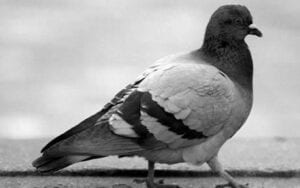
A few months passed, and we started seeing a decline in the amount of younger birds in the area. I can’t tell you how proud I was of what I’d done. I’d found a safe, environmentally friendly way of dealing with the flying rats, at the cheap cost of a few hundred dollars and an elevator trip to pigeon nesting grounds atop high-rise rooftops around the city.
The problems started about three months in. Clint and I were inspecting nests on opposite sides of the city. I was halfway up the building when Clint called me.
“Yo,” I answered.
The sound of wind could be heard in the background. Evidently, Clint had reached his destination.
“Hey. Some of our eggs broke,” he announced.
The elevator came to a stop, doors swinging open to let me off. I stepped out and made my way to a small staircase leading to the rooftop.
“We’ll just have to replace them. No big deal,” I answered nonchalantly.
There had been a few violent storms since our last inspection, and I figured the eggs must have fallen from the nests and shattered on impact. See, this is why wood would have been better, I grumbled to myself, as I exited onto the rooftop for my inspection.
“Well, fuck,” I said.
“What?” answered Clint.
Most of my eggs were broken, too. The strange thing was that they were still tucked in the nests, right were we’d left them. Had the pigeons figured out our ploy and attacked the replicas? Were the fake eggs too frail to survive our harsh Canadian weather?
I groaned.
“It’s the same here. We’re going to have to start over,” I told him, defeated.
Clint laughed.
“It’s all good, we can hatch a new plan.”
I paused for a moment.
“Did you just-” I began, but he interrupted.
“Just look on the sunny side up of things, yeah?”
Puns. At a time like this. Puns.
“Don’t yolk with me,” I replied, with a sigh.
We couldn’t leave the nests unattended for too long, otherwise all our progress would go down the drain. I sent Clint to replace the broken eggs with what was left from our original order. In the meantime, I searched online for anyone selling wooden eggs. Unfortunately, the cheapest – and fastest shipper – was the person we’d ordered from the first time around. We needed these eggs quickly, and our budget was pretty tight. I figured I’d order the subpar eggs one more time. If they lasted long enough for city officials to see the plan was working nicely, I was sure I could convince them to increase our budget so we could order better supplies next fiscal year.
Just to be sure the pigeons weren’t attacking our fake eggs, I also set up a security camera on one of the rooftops. I needed to know if they’d gotten wise to our ruse, though I highly doubted they had the mental capacity to do so. Still, the project would prove fruitless if the birds weren’t fooled by our cheap imitations, so it was best to keep an eye out.
Over the course of the following weeks, I started getting strange reports about small animals behaving in a bizarre manner. Frankly, I didn’t pay much attention to them, at first. They sounded a little insane, to tell the truth. One woman claimed she’d seen a pigeon climb a tree. She said he crawled up the bark like a squirrel. Another report stated that a chipmunk had been seen attacking – and killing – a neighborhood dog. Another witness called in about an injured cat, but when he investigated, all he found was a pelt.
By the time I read the fifth report, I was starting to get a little worried. What was even more troubling to me was that these reports were coming from all over the city. If it had been confined to a single neighborhood, I would have suspected an outbreak of rabies, or a new disease of some sort. But the reports were coming in from all around Toronto and its suburbs, which span an extremely large area. How could anything spread so quickly? It had to be something else.
I was just about to do a bit of research on the subject when Clint came in, wearing a scowl.
“Broke. Shitty fucking eggs broke again,” he grumbled, throwing himself on his chair.
I forced a grin.
“Crack a smile, would ya?”
He tossed his worksheet on the table.
“That was an egg-cellent pun,” he replied, releasing a single chuckle.
“You remember to bring the footage?” I asked him.
He unzipped his coat and reached into his pocket for an SD card, “Gotcha covered. Movie time!” he chirped.
We uploaded the footage and took a look.
Pigeons.
Pigeons sitting on their nests.
Pigeons preening.
Pigeons flapping their wings at one another.
A squirrel.
A squirrel getting chased away by birds.
More pigeons.
It must have been the dullest security tape in the world. The kind of footage that even David Attenborough’s lovely voice wouldn’t be able to save. We fast-forwarded through days of pigeons doing pigeon-y things. Never once did they show any violence towards our replica eggs.
Clint had dozed off by the time something finally happened on-screen. The only reason I was still conscious was due to the copious amount of coffee I’d ingested that morning.
It was dead of night. In the video, at least. One of the birds flew off its egg and perched itself on the nest, peering inside. This is it, I thought, leaning closer to the screen. I figured he’d attack the egg, but I was wrong.
I watched as the video soundlessly continued, and something cracked open the egg – from the inside. My jaw gaped open. This wasn’t possible: the eggs were plastic shells. The only explanation was that we’d missed one real egg somewhere in the bunch. Yeah, that had to be it. I was witnessing the birth of a baby pigeon, nothing weird.
Except baby pigeons don’t look like smoke.
A puff of dark air came out of the egg. The pigeon, head inches from it, inhaled the gassy substance. It reared back and stood completely still for about a minute, before falling over. I watched as it started thrashing violently, like it was having a seizure. Then, from its beak spewed some kind of chunky liquid that evaporated as soon as it hit the air. The pigeon’s body seemed to deflate like a balloon, as though the creature was being hollowed out. I was left staring incredulously at the flat, immobile husk of what had once been a pigeon.
Suddenly, the pigeon’s chest bulged out and the animal regained its form. At least, sort of. Its proportions were all wrong: its wings were bloated and angled oddly, most of its girth was in its neck rather than stomach, and its midsection had stretched out unnaturally. It was like looking at an animal pelt draped over the wrong mound. Like a lunatic taxidermist’s cruel experiment. The abomination of nature jerked its head towards the ledge. It twisted onto his back, legs contorting and dislocating in such a way as to be able to reach the ground. From its throat, I could see stump-like arms stretching out, clawing at the cement rooftop. In quick and jagged movements, the creature skittered over the edge, and disappeared from view.
I was shocked, unable to believe what I had seen. I had to watch and re-watch the video several times, before it occurred to me to wake Clint up. He grumbled unhappily, rubbed his tired eyes, and looked at me.
“You won’t believe this,” I uttered.
I rewound the footage and pressed play. His eyes widened with the same disgusted disbelief as mine. Even on my fifth viewing, I couldn’t wrap my head around it.
“This is bad,” he said.
“… I know,” I answered.
After watching the video a few more times, we went home. I think we both hoped a good night’s sleep would help clear our minds. Maybe, upon reviewing the tape, we’d realize we were mistaken. Maybe it was a trick of the light? Unlikely, but we could only hope.
Clint was already at work when I came in. His eyes were glued to the screen.
“Watching it again?” I asked.
“Not exactly,” he replied, “… I … kept going.”
I approached the desk and peered at the monitor.
“Kept going?” I questioned.
His face was pale and his eyes weighed down by large bags. How long had he been here? Had he come in extra early?
“There was two days left of footage on the card,” he explained.
“And you went through it?”
“Yeah…”
“Did you see…more of those things?”
Clint pressed his lips together, “Yeah…and…some of them came back,” he explained.
I raised my eyebrows, looking closer at the screen. I noticed something odd about one of the nests. There were multiple eggs resting in the sunlight. They were neither genuine pigeon eggs, nor replicas. They were too big for that.
Clint pointed to the batch, his hand trembling.
“It laid them,” he murmured.
I felt a flush of nervous energy climb up my spine like an elevator, and then turned to the reports I’d been reading the day before. Were the eggs at the center of it all?
“We need to call the authorities,” I uttered shakily.
“We ARE the authorities,” he replied, his voice sounding frantic.
I paced around the room. Back and forth, back and forth, like a pendulum.
“It laid them.”
The phone rang, interrupting my anxious march. It was another report of odd animal behavior. This time, the culprit was a deer. In a spooked and almost disgusted tone of voice, the woman on the line explained that she’d seen a deer slithering along the river. She said its body was sideways, but its head was upright. Oh god, I thought. What ever those things were, they could affect larger animals. While I tried to comfort the worried caller, I heard something from Clint’s workstation.
Crack
I turned around, only to see a puff of smoke rising towards my coworker. Near his keyboard was a cracked shell, just like the ones on the rooftop. Without a word, Clint bolted to the bathroom, holding a hand over his mouth as though about to puke. I dropped the phone and ran over to the door. It was locked.
“Clint … are you okay?”
Silence.
Silence.
Silence.
All of a sudden, I heard him heaving violently. A sound of moist gurgling and boiling water erupted from the bathroom. Terrified of what would happen if Clint got out, I pushed the heavy workbench in front of the door. I stood in terrified silence as the noise came to a stop. Was Clint now lying as flat as a pancake against the porcelain throne? Would it turn into some sort of bastardization of a human body, like what happened to the pigeon?
Silence.
Silence.
Silence.
BANG
Clint threw himself against the door violently. Just one blow nearly threw the thing off its hinges. Again and again, he slammed himself against the surface, causing the workbench I’d placed in front of it to slowly inch away. All I could do was push myself against it to try and keep the door closed. My only thoughts were to keep him from escaping, for my own safety. I knew he’d attack me if I let him out. I just knew it.
The sound came to an unexpected halt, allowing me to breathe a sign of relief. Maybe he’d expired. Maybe that thingneeded fresh air to survive. Whatever the reason, I thought I was safe.
But then, I heard a crash. The window. I’d forgotten all about the bathroom window.
He’s out there now. Him, and those other mutated atrocities. I don’t know what they are or what they want. All I know is that they’re roaming the city right now, doing god knows what. Most of them probably look like pigeons, but they can be anyone or anything. I just hope someone figures out how to stop them because, at last count, there were over 700 of those cursed eggs planted around Toronto. Now that I know these things can reproduce, god knows how many more eggs might be out there.
Update 1:
He came back…
I should have known he’d come back.
He warned me before: he said the creatures on our recording returned to its nest to lay their eggs. Those monsters seemed to have the salmon mentality: going back to their place of birth when it came time to reproduce.
Too busy answering a slew of panicked calls – all the while panicking myself – I didn’t hear him when he came in through the front door. Thankfully, I caught a shape from the corner of my eyes. Without even finishing my sentence, I dropped the phone and locked myself in the maintenance closet, praying he hadn’t seen me.
Outside the thin wooden door, the room was quiet.
If he was breathing, I couldn’t hear it. His footsteps were just as silent. Had I overreacted? I hadn’t actually seen Clint, just a shadow in my peripheral vision. Maybe it was my imagination. I needed to know, so I knelt down, peered through the crack under the door, and closed an eye to get a better look.
I wish I hadn’t. I wish I could erase that thing from my mind, to preserve Clint’s memory as the man I knew him to be. Not that. Anything but that.
What I saw was a mess of flesh inching along the floor like a slug. I couldn’t figure out what was facing up: his back or his chest. His spineless torso had folded over, bringing his arms nearly perfectly in-line with his legs. His head, now completely shapeless, lay flat at his midsection. His mouth reminded me of the figure in Munch’s famous painting, The Scream. His greyed eyes stared at me, but I could tell, as he continued to slither towards his desk, that they were useless decorations.
He disappeared from view.
Then, came a horrid sound: a squishy and gooey noise that reminded me of the old slime ball toys I used to play with as a child. It lasted a few moments, stopped, started again, and then stopped for good.
Shaking in my boots, I remained concealed in my dark prison all day, ignoring repeated hunger pangs and my own instinct to run. I couldn’t afford the risk of being caught. As day shifted into night, I began to wonder if I could sneak past him. On our security tape, I’d seen normal pigeons sitting on nearby nests, seemingly unfazed by the creature. Maybe Clint wouldn’t attack me. I had to take the chance: I couldn’t hide forever.
As quietly as I could, I swung the door open and stepped into the office. The thing wearing Clint’s skin was gone.
Thank god, I thought.
Out of morbid curiosity, I glanced at his workstation, where I’d heard the unsettling noises earlier. There were two massive eggs sitting on his desk, coated in a viscous substance. I didn’t even want to think of the implications. I didn’t want to know out of which orifice he’d laid them. I wanted nothing to do with this anymore.
I ran out of the office, to my car, and drove straight to Kingston.
I’m not going back. I will never go back. Someone else will have to deal with this situation.
Update 2:
I thought I could get away from them, but now, I’m not so sure. Maybe I’m imagining it, but the pigeons outside look … odd. Not as disproportionate and disfigured as what I saw in Toronto, but … there’s something wrong about the way they move.
I think those things are learning to better mimic the shape of what they’re possessing. And now, they’ve spread.
Source
Pigeon Patrol Products & Services is the leading manufacturer and distributor of bird deterrent (control) products in Canada. Pigeon Patrol products have solved pest bird problems in industrial, commercial, and residential settings since 2000, by using safe and humane bird deterrents with only bird and animal friendly solutions. At Pigeon Patrol, we manufacture and offer a variety of bird deterrents, ranging from Ultra-flex Bird Spikes with UV protection, Bird Netting, 4-S Bird Gel and the best Ultrasonic and audible sound devices on the market today.
Voted Best Canadian wholesaler for Bird Deterrent products ten years in a row.
Contact us at 1- 877– 4– NO-BIRD, (604) 585-9279 or visit our website at www.pigeonpatrol.ca
Pigeon/Pigeon Patrol / Pigeons Roosting / Vancouver Pigeon Control /Bird Spikes / Bird Control / Bird Deterrent / Pigeon Deterrent? Surrey Pigeon Control / Pest /Seagull deterrent / Vancouver Pigeon Blog / Birds Inside Home / Pigeons in the cities / Ice Pigeons/ What to do about pigeons/ sparrows , Damage by Sparrows, How To Keep Raccoons Away, Why Are Raccoons Considered Pests/ De-fence / Pigeon Nesting/ Bird Droppings / Pigeon Dropping/ woodpecker control/ Professional Bird Control Company/ Keep The Birds Away/ Birds/rats/ seagull/pigeon/woodpecker/ dove/sparrow/pidgeon control/pidgeon problem/ pidgeon control/flying rats/ pigeon Problems/ bird netting/bird gel/bird spray/bird nails/ bird guard