by Pigeon Patrol | Jan 31, 2020 | 4-S Gel Bird repellent, Animal Deterrent Products, Bird Deterrent Products, Bird Spike, Bird Spikes, Pigeon Control, Pigeon Patrol's Services, Pigeon Spikes, UltraSonic Bird Control
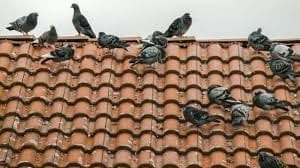
Pigeons are as integral to city living as traffic and pollution, and perhaps as annoying and potentially dangerous. These birds can cause property damage and carry diseases. However, there are humane ways to minimize or keep pigeons off your property. Find out how, together with some alleged solutions that simply don’t work or are not recommended.
The problems with pigeons
Pigeons often carry salmonella and other diseases. Their nests may harbor bird mites, bed bugs and other biting, disease-carrying insects. Because pigeon droppings are highly acidic, they can damage car paint and buildings. According to the New York City Department of Health and Mental Hygiene, pigeon droppings often carry fungi or bacteria that cause the human diseases cryptococcosis, histoplasmosis and psittacosis. Exposure to these diseases happens primarily when cleaning up pigeon droppings.
Solutions that work
You may have noticed that pigeons are everywhere. To keep all pigeons off your property may be unrealistic. You can reduce nesting populations in your immediate area by inspecting your property for nests, and removing nests and eggs every two weeks. More importantly, focus on keeping pigeons out of buildings and other spaces.
- Wire mesh and wire: Screen all soffit vents and other potential entry points with rust-proof wire mesh. University of Florida professor William Kern also recommends suspending a thin wire or mono filament about two inches above a railing or other potential roost, or adding sticky substances, deterring pigeons from resting on the rails.
- Sheet metal: To keep pigeons off ledges and other flat potential roosts, cover them with a sloping piece of sheet metal. A slanted metal board doesn’t make much of a roost.
- Bird netting: Alternatively, use bird netting to seal off spaces above barn rafters and other potential roosts.
- Scare-pigeons: Try the pigeon equivalent of scarecrows. Among the most effective “scare-pigeons” are kites with hawk silhouettes and light Mylar streamers. Both move easily in the wind, scaring off birds. On the other hand, pigeons will quickly grow accustomed to a model owl that sits in one spot for a while.
- Spray pigeons with water: Kern even suggests spraying pigeons with a water hose, but notes that the birds must be sprayed upon arrival, before they start to establish a regular roosting spot. Once they have established a roost, your impromptu showers won’t keep them from going home.
- Pigeon traps: If you fail to exclude pigeons or prevent roosting, you may need to make a trap or buy a commercial trap. Be sure to check each trap at least once a day, and leave water in the trap, to attract more birds and minimize stress on any pigeons that get caught. Immediately release all other birds you were not aiming to catch.
- Humane pest control. Find a pest control expert who specializes in humane solutions to infestation by pigeons and other unwanted creatures.
Solutions that DON’T work
Not every alleged pigeon control works. Here are a few urban legends:
- Loud noises: Loud noises have been suggested for controlling birds, but they are likely to annoy neighbors more than pigeons. City birds are used to city noises, and don’t seem to startle easily.
- Cheap Ultrasonic noises: Ultrasonic noises that humans cannot hear may avoid bothering your neighbors, but Kern notes that some ultrasonic sound waves bounce off objects, creating spots where pigeons can avoid the sound. Also, some ultrasonic devices may damage the hearing of cats and dogs. Although some ultrasonic units has proven to keep pigeons off your property.
- Distress calls: There are no effective distress calls that can be used to target pigeons.
- Poison and chemical repellents: Pigeon poisons and chemical repellents are available, but they are strictly controlled for several reasons. They can kill or sicken other birds or animals, or even somebody’s prized racing pigeon. (Yes, there are pigeon racing clubs. If you trap a tagged pigeon, click here (for information on returning it.)
Full story here
At Pigeon Patrol, we manufacture and offer a variety of bird deterrents, ranging from Ultra-flex Bird Spikes with UV protection, Bird Netting, 4-S Gel and the best Ultrasonic and audible sound devices on the market today.
Contact us at 1- 877– 4– NO-BIRD, (604) 585-9279 or visit our website at www.pigeonpatrol.ca
Bird Gone, Pigeon Gone, Seagull Gone, Pigeon issue, pigeon spikes, 1-877-4NO-BIRD, 4-S Gel, Bird Control, Pigeon Control, bird repellent, Bird Spikes, sonic bird repellent, stainless steel bird spikes, bird spikes Vancouver, Ultra Sonic Bird Control, Bird Netting, Plastic Bird Spikes, Canada bird spike deterrents, Pigeon Pests, B Gone Pigeon, Pigeon Patrol, pest controller, pest control operator, pest control technician, Pigeon Control Products, humane pigeon spikes, pigeon deterrents, pigeon traps, Pigeon repellents, Sound & Laser Deterrents, wildlife control, raccoon, skunk, squirrel deterrent, De-Fence Spikes, Dragons Den, Canada bird spikes, Canada pigeon, pigeon control, pigeon patrol, pigeon. Kill pigeons, crow, starling
by Pigeon Patrol | Jan 31, 2020 | Animal Deterrent Products, Bird Deterrent Products, Bird Netting, Bird Spikes, Pigeon Control, Pigeon Droppings, Pigeon Patrol's Services, Pigeon Spikes, Pigeons in the News
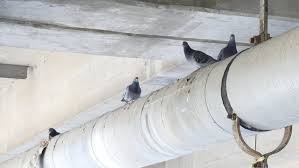
Feed a Pigeon, Breed a Flying RAT
Q: I’ve often heard that it is illegal to feed pigeons in New York, yet I see people doing it all the time. Is there really such a law? And if so, why isn’t it enforced?
A: Despite a common public perception, there is no law that makes pigeon feeding illegal everywhere in the city. That said, the Parks Department posts notices prohibiting feeding in many areas under its control. If you ignore the sign, you may get an Environmental Control Board summons from the parks enforcement patrols or from the Police Department. The usual penalty is the minimum of $50, which you can mail in. You can fight it in court, but you can be fined $100 if you are found guilty.
Even where pigeon feeding is not prohibited, both the Parks and Health Departments discourage the practice, citing litter and rodent problems. A Health Department poster warns: “Feed a Pigeon, Breed a Flying Rat.”
This attitude irks Anna Dove, founder and director of the New York Bird Club. “There is never any left-over feed from people feeding pigeons and other wildlife in the city, so littering is a poor excuse against pigeon feeding,” said Ms. Dove. (Yes, that’s her name; she had it legally changed from Augusta Kugelmas when she founded the club about three years ago.)
“After I feed,” she added, “most of the time I remain in the area to make sure the feed is not swept away by building maintenance people. Every morsel is eaten.”
Source: NY Times
At Pigeon Patrol, we manufacture and offer a variety of bird deterrents, ranging from Ultra-flex Bird Spikes with UV protection, Bird Netting, 4-S Gel and the best Ultrasonic and audible sound devices on the market today.
Contact us at 1- 877– 4– NO-BIRD, (604) 585-9279 or visit our website at www.pigeonpatrol.ca
Bird Gone, Pigeon Gone, Seagull Gone, Pigeon issue, pigeon spikes, 1-877-4NO-BIRD, 4-S Gel, Bird Control, Pigeon Control, bird repellent, Bird Spikes, sonic bird repellent, stainless steel bird spikes, bird spikes Vancouver, Ultra Sonic Bird Control, Bird Netting, Plastic Bird Spikes, Canada bird spike deterrents, Pigeon Pests, B Gone Pigeon, Pigeon Patrol, pest controller, pest control operator, pest control technician, Pigeon Control Products, humane pigeon spikes, pigeon deterrents, pigeon traps, Pigeon repellents, Sound & Laser Deterrents, wildlife control, raccoon, skunk, squirrel deterrent, De-Fence Spikes, Dragons Den, Canada bird spikes, Canada pigeon, pigeon control, pigeon patrol, pigeon. Kill pigeons, crow, starling

by Pigeon Patrol | Jan 31, 2020 | Bird Spikes, Pigeon Control, Pigeon Droppings, Pigeon Patrol's Services, Pigeons in the News
WIMBLEDON, England, July 6 It’s clear skies Thanks to Wayne Davis and his fine-feathered friends, raindrops are the only thing that Wimbledon fans have to worry about dropping from the sky and into their bowls of strawberries and cream.
The All England Club would seem a wonderful place to be a pigeon. There are nooks, crannies and overhangs. There are trees and grass. And, for two weeks out of the year, there is litter and food and people to hassle, which seems to be what pigeons do best.
But there are no pigeons here, save the occasional wayward straggler who, apparently, has only recently arrived from out of town.
Davis stood on the grass-covered terrace atop the Broadcast Center, several stories high, about even with the top of Center Court. From there you could see the tennis courts below, the leafy suburbs that surround them, and downtown London in the distance.
And, above, was one of his Peregrine falcons, circling the sky, issuing a silent warning that being a pigeon and being here is not a good idea.
Davis swung a rope like a lasso. At its end was a meaty piece of quail attached to a leather lure. The falcon, this one named Callisto, dived toward the food and swooped past, like a bull to a matador. After a few passes, Davis dropped the decoy to his feet, and the brown falcon with a speckled chest came down to earth and feasted.
“I’ve been doing this 25 years,” said Davis, smiling at the spectacle of the bird’s flight. “I still think that was brilliant. I enjoyed that.”
Wimbledon began its championship in 1877, and for most of the years since, pigeons have been among those who flocked to watch and socialize. They would eat the grass seed in the spring and nest under the Center Court roof. Every year, workers would try to remove the nests before the tournament. Still, the pigeons would flutter about the courts, and, well, bomb the fans with unpleasant surprises.
“In the old, old days, they probably used to shoot them,” the Wimbledon spokesman Johnny Perkins said of the pigeons in London and at the tennis club. “But in these touchy feely times, they probably decided that wasn’t the best option. This seems to be the best compromise, really.”
Helping Wimbledon limit its spectators to ticket-holding humans was the idea of Davis’s wife. She was watching the tournament on television a few years ago, and saw players shooing pigeons with rackets. So Davis called the All England Club and offered a demonstration of his services. The club liked what it saw, and Davis was hired beginning in 1999.
Davis owns a company called Avian Control Systems. With his small flock of hawks, falcons and owls, he shoos other birds using little more than fright tactics. Lesser birds see his birds soaring around, and they find somewhere else to go.
“Falconer,” Davis said, chewing on a suggestion for his job title. “I like that. I get called bird man, but falconer is nice, isn’t it?”
Davis does much of his work at airports and military airfields, where geese, gulls and other unsuspecting birds can pose safety risks if they find their way into jet engines.
Other clients see birds as a nuisance, not a danger. Davis has contracts with Westminster Abbey and Canary Wharf, a glass-and-steel business district along the Thames. Like the All England Club, they wanted a non-messy way to get rid of the mess-making birds, particularly the feral pigeon, the familiar gray ones common to so many cities.
“In the middle of the city, there are hundreds of thousands of pigeons all around,” Davis said. “All we can do is make it less comfortable for them.”
Pigeons, it seems, have memories that last at least a couple of days. At Wimbledon, Davis and his birds come a few times a week, throughout the year. That is enough to keep them from roosting in the rafters of the show courts “They’re like surrogate cliffs, really,” Davis said and from eating the grass seed when it is planted in the spring across nearly 40 courts.
“It’s analogous to cleaning,” he said. “You solve the problem with an intensive period, and keep it up with maintenance.”
At his country house in Northamptonshire, well north of London, Davis and his birds load into a van before dawn, so that they can do their work before the tennis crowds arrive.
On the roof, with its postcard view, Davis sent the falcon flying. A small bell was attached to its tail, and a radio transmitter to its ankle. It circled and swooped, then lifted like a rocket toward the gray clouds. There was not a pigeon in sight.
And down below, workers were preparing Wimbledon for another day. Somewhere, strawberries were being readied, and vats of cream sat in a cooler. Wimbledon cannot do much about the rain, but it is not fully ceding the skies.
Source from NY Times
At Pigeon Patrol, we manufacture and offer a variety of bird deterrents, ranging from Ultra-flex Bird Spikes with UV protection, Bird Netting, 4-S Gel and the best Ultrasonic and audible sound devices on the market today.
Contact us at 1- 877– 4– NO-BIRD, (604) 585-9279 or visit our website at www.pigeonpatrol.ca
Bird Gone, Pigeon Gone, Seagull Gone, Pigeon issue, pigeon spikes, 1-877-4NO-BIRD, 4-S Gel, Bird Control, Pigeon Control, bird repellent, Bird Spikes, sonic bird repellent, stainless steel bird spikes, bird spikes Vancouver, Ultra Sonic Bird Control, Bird Netting, Plastic Bird Spikes, Canada bird spike deterrents, Pigeon Pests, B Gone Pigeon, Pigeon Patrol, pest controller, pest control operator, pest control technician, Pigeon Control Products, humane pigeon spikes, pigeon deterrents, pigeon traps, Pigeon repellents, Sound & Laser Deterrents, wildlife control, raccoon, skunk, squirrel deterrent, De-Fence Spikes, Dragons Den, Canada bird spikes, Canada pigeon, pigeon control, pigeon patrol, pigeon. Kill pigeons, crow, starling
by Pigeon Patrol | Jan 30, 2020 | Bird Netting, Bird Spike, Pigeon Control, Pigeon Droppings, Pigeon Spikes, Pigeons in the News
At Pigeon Patrol we like to share what we know about pigeons so you know what you are dealing with with this pigeon advisory
Breeding period: All year round
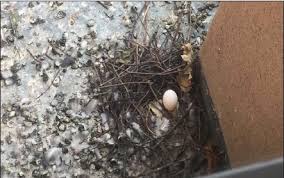
Nest: Rough nest made with twigs usually on or in buildings and never in trees
Number of eggs: 2 white eggs
Incubation period: 18/19 days
Fledging period: 25/32 days (up to 45 days in winter)
Food: Seed eater that will exploit multiple food sources including waste food in urban areas and deliberate feeding by the public.
Click Here to see pigeon related diseases in their droppings
Pigeons are commonly found roosting and breeding in roof voids and attic spaces with property owners often needing to exclude them and block up the entry/exit holes. It is important to be aware that because the pigeon breeds all-year round there is never a safe time to exclude birds when there will not be pigeon squabs (chicks) or flightless juvenile birds in situ. Blocking access holes may result in adult and flightless birds becoming trapped. Apart from the obvious humanitarian implications there are serious health and safety implications for the property owner concerned. If birds die as a result of having been sealed inside a void of any description the decomposing carcasses will become maggot-infested within a matter of days, particularly in summer months.
What you can do to prevent pigeon nuisances:
- Remove all FOOD AND WATER SOURCES from the property
- Remove all BIRD WASTE, feathers and abandoned nesting materials
- Discourage ROOSTING with wire or nylon mesh or other materials
- Maintain property in a clean, nuisance-free condition at all times
- Do NOT feed pigeons
Pigeon Patrol has pioneered highly effective methods of controlling pigeon population in your area please check out our products to see how you can deal with unwanted pigeons in your home today. Stay tuned to learn more with pigeon advisory as we update it through time.
At Pigeon Patrol, we manufacture and offer a variety of bird deterrents, ranging from Ultra-flex Bird Spikes with UV protection, Bird Netting, 4-S Gel and the best Ultrasonic and audible sound devices on the market today.
Contact us at 1- 877– 4– NO-BIRD, (604) 585-9279 or visit our website at www.pigeonpatrol.ca
Bird Gone, Pigeon Gone, Seagull Gone, Pigeon issue, pigeon spikes, 1-877-4NO-BIRD, 4-S Gel, Bird Control, Pigeon Control, bird repellent, Bird Spikes, sonic bird repellent, stainless steel bird spikes, bird spikes Vancouver, Ultra Sonic Bird Control, Bird Netting, Plastic Bird Spikes, Canada bird spike deterrents, Pigeon Pests, B Gone Pigeon, Pigeon Patrol, pest controller, pest control operator, pest control technician, Pigeon Control Products, humane pigeon spikes, pigeon deterrents, pigeon traps, Pigeon repellents, Sound & Laser Deterrents, wildlife control, raccoon, skunk, squirrel deterrent, De-Fence Spikes, Dragons Den, Canada bird spikes, Canada pigeon, pigeon control, pigeon patrol, pigeon. Kill pigeons, crow, starling
Pidgeon Patrol has pioneered highly effective methods of controlling pigeon population in your area please check out our products to see how you can deal with unwanted pidgeons in your home today.
by Pigeon Patrol | Jan 29, 2020 | Bird Deterrent Products, Bird Netting, Pigeon Control, Pigeon Droppings, Pigeon Patrol's Services, Pigeons in the News
THE PIGEON ISSUE
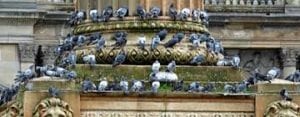
As one wanders through the great piazzas of Italy — the Piazza della Signoria in Florence, Piazza San Pietro in Rome, and the Piazza San Marco in Venice — one cannot help notice the magnificent facades of government buildings and churches, the impressive works of sculpture in marble and bronze, and… the pigeons. They have become tourist attractions in their own right, and for a small fee one can buy a bag of seed and turn oneself into a human bird feeder. The end result is predictable. As food is more than ample, the birds do not leave but multiply (the incubation period for a pigeon egg is a scant 17 to 19 days), and seeking homes nearby, they settle and nest on statues and buildings in close proximity. In turn, the pigeon waste, often inches thick, eats away at their surfaces, causing irreparable damage.
First of all, let me not suggest that Italy is the only country to face serious pigeon infestation. London’s Trafalgar Square is home to an estimated 30,000 flying citizens. Mayor Ken Livingstone actually used pigeon reduction as a campaign platform, effectively planning to starve them out, though his efforts have been thwarted by an animal-rights group, the aptly named Pigeon Alliance Issue.
What to do? A controversial, and by no means long term, solution is to “eliminate” the problem itself, and in fact, more pigeon carcasses have be seen on the streets of Florence in the last year or two. And yet the sale of feed in the piazzas continues, perpetuating a rather cruel and pointless cycle.
Yet if one cannot eliminate the pigeons, it seems that the next best option would be to keep the pigeons off of the statues and buildings altogether. To this end, high-tech solutions, even ridiculous ones, have been sought. Following the technicolor restoration of Maderno’s facade of St. Peters in Rome for the 2000 Jubilee, an electrostatic system was installed to repel the birds. And in a ironic twist, the town of Assisi in Italy has followed suit. Yes, the basilica founded by St. Francis, the saint who preached to the birds, has installed electric wires to discourage pigeons from landing on the 13th century building. They’ve even gone so far as to enact an ordinance that forbids their feeding in public spaces.
Statues have also been given an electric jolt. Most notably, Benvenuto Cellini’s Perseus, which underwent a 3-year long, highly-publicized restoration, complete with video-installation and CD-rom, was returned to its original outdoor location in the Loggia dei Lanzi in 2001, complete with pigeon-deterring wires. These raised electrified braces have also been attached to nearby Giambologna’s Rape of the Sabine, seemingly to no effect, since birds can still be found perched safely upon the desperate woman’s head. Clearly the aesthetic results are less than ideal, though in other cases riskier treatments have been applied, as in the case of the monument to Lord Nelson in Trafalgar Square, where the statue has been coated with what has been described as “anti-pidgeon gel”. At the very least, sculptures are covered with microcrystalline wax, as in the case of Bandinelli’s Giovanni delle Bande Nere, situated in the major pigeon colony of Piazza San Lorenzo, where the unfinished facade of the church has become some of the best avian real-estate in the city.
There are less-invasive alternatives. Protective netting can be mounted over architectural reliefs and the like to prevent occupation by birds. In Trafalgar Square, air horns have also been employed to scatter the animals, exchanging bird pollution for noise pollution.
In reality it seems that there are only two reasonable solutions to the pigeon issue. One has been implemented for quite some time, and is practical only in terms of sculpture, which is to move the originals inside. This not only has the benefit of “guano protection,” but also of preventing damage to works by other forms of environmental pollution. To have undergone the intensive restoration to the Perseus, only to subject it to the same conditions, is absurd, and only assures us that future interventions will be required, ad infinitum.
For architecture, the same solution cannot be implemented, but several protective measures seem feasible. For one, even if the complete cessation of pigeon-feeding has been deemed inhumane, at least the migration of the birds to a less urban area would suffice. In other words, should one want to feed the birds, it would be welcomed in a park, not a stones-throw from a major monument. And finally the caretakers of these monuments must commit to a plan of good old-fashioned washings on a regular basis, so that major, and inevitably harmful, interventions do not become necessary.
By Denise Budd from Source
About Pigeon Patrol
Pigeon Patrol Products & Services is the leading manufacturer and distributor of bird deterrent (control) products in Canada. Pigeon Patrol products have solved pest bird issues in industrial, commercial, and residential settings since 2000, by using safe and humane bird deterrents with only bird and animal friendly solutions.
At Pigeon Patrol, we manufacture and offer a variety of bird deterrents, ranging from Ultra-flex Bird Spikes with UV protection, Bird Netting, 4-S Gel and the best Ultrasonic and audible sound devices on the market today.
Contact us at 1- 877– 4– NO-BIRD, (604) 585-9279 or visit our website at www.pigeonpatrol.ca
Bird Gone, Pigeon Gone, Seagull Gone, Pigeon issue, pigeon spikes, 1-877-4NO-BIRD, 4-S Gel, Bird Control, Pigeon Control, bird repellent, Bird Spikes, sonic bird repellent, stainless steel bird spikes, bird spikes Vancouver, Ultra Sonic Bird Control, Bird Netting, Plastic Bird Spikes, Canada bird spike deterrents, Pigeon Pests, B Gone Pigeon, Pigeon Patrol, pest controller, pest control operator, pest control technician, Pigeon Control Products, humane pigeon spikes, pigeon deterrents, pigeon traps, Pigeon repellents, Sound & Laser Deterrents, wildlife control, raccoon, skunk, squirrel deterrent, De-Fence Spikes, Dragons Den, Canada bird spikes, Canada pigeon, pigeon control, pigeon patrol, pigeon. Kill pigeons, crow, starling