by Pigeon Patrol | Nov 2, 2020 | Animal Deterrent Products, Bird Deterrent Products, history of pigeons, Pigeon Control, Pigeon Patrol's Services
Feral pigeons are the number one urban pest bird, creating a mess and causing damage where they roost, creating a need for pigeon control. Pigeons are descendants of domesticated European homing pigeons, so they have a varied diet and feel at ease making their homes in man-made structures, here is some of the pigeon identifications.
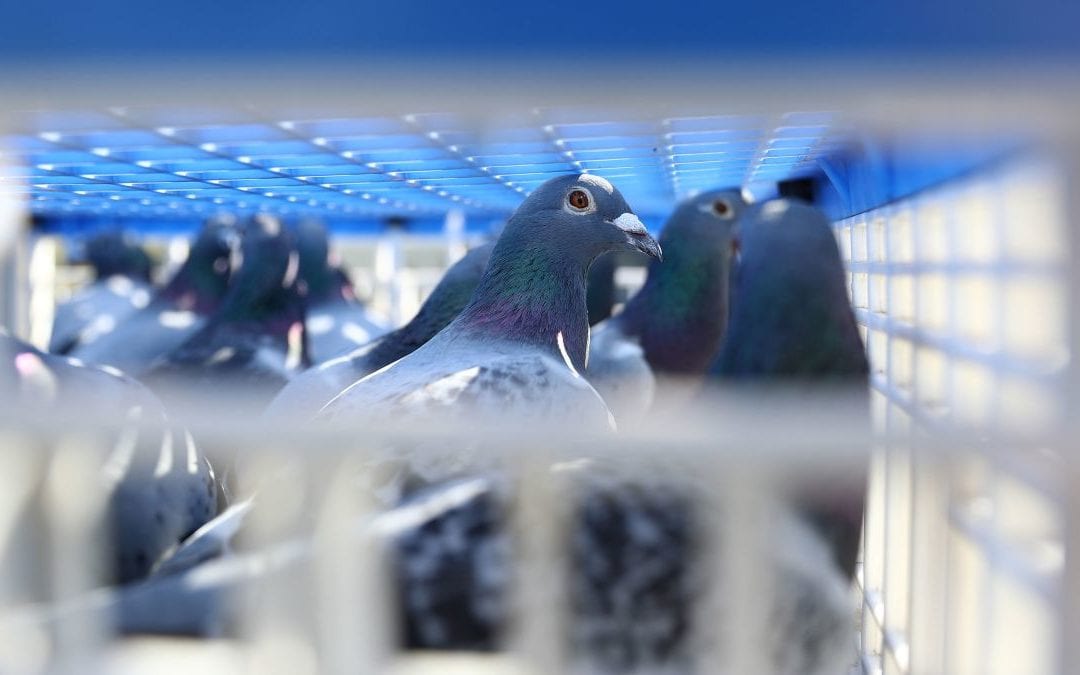
Generally blue-grey in color, with iridescent feathers on the head and neck, problem pigeons often have markings in black, white or brown on the wings and neck. A short neck and small head characterize the standard pigeon; their short legs, hind toes and level front allow for both easy perching on pipes and ledges or walking on flat surfaces. Pigeons generally nest in small, flat areas away from the ground such as building ledges, air conditioning units or window sills. Occasionally pigeons may even lay eggs directly on a protected ledge.
Damage Caused by Pigeon Problems
Pigeon control is important due to the damage and disease problems these problem birds often create. The uric acid in pigeon feces is highly corrosive and can cause extensive damage to metals and other substrates it sits on for long periods. Debris from flocks of problem pigeons often build up, backing up gutters and drains which can cause flooding and roof damage.
Nesting materials and other debris has caused failures in machinery, especially rooftop air conditioning units which are a prime nesting spot for pigeons. Other frequent pigeon problems include slip and fall liability from feces or debris, plus an unclean, dirty company image. The bacteria, fungal agents and ectoparasites found in pigeon droppings are responsible for a host of serious diseases, including histoplasmosis, encephalitis, salmonella, meningitis, toxoplasmosis and more. Many companies also retain significant clean up costs due to the pigeon problems they don’t resolve.
Source
About Pigeon Patrol:
Pigeon Patrol Products & Services is the leading manufacturer and distributor of bird deterrent (control) products in Canada. Pigeon Patrol products have solved pest bird problems in industrial, commercial, and residential settings since 2000, by using safe and humane bird deterrents with only bird and animal friendly solutions. At Pigeon Patrol, we manufacture and offer a variety of bird deterrents, ranging from Ultra-flex Bird Spikes with UV protection, Bird Netting, 4-S Gel and the best Ultrasonic and audible sound devices on the market today.
Contact us at 1- 877– 4– NO-BIRD, (604) 585-9279 or visit our website at www.pigeonpatrol.ca
Bird Gone, Pigeon Gone, Seagull Gone, Pigeon problems, pigeon spikes, 1-877-4NO-BIRD, 4-S Gel, Bird Control, Pigeon Control, bird repellent, Bird Spikes, sonic bird repellent, stainless steel bird spikes, bird spikes Vancouver, Ultra Sonic Bird Control, Bird Netting, Plastic Bird Spikes, Canada bird spike deterrents, Pigeon Pests, B Gone Pigeon, Pigeon Patrol, pest controller, pest control operator, pest control technician, Pigeon Control Products, humane pigeon spikes, pigeon deterrents, pigeon traps, Pigeon repellents, Sound & Laser Deterrents, wildlife control, raccoon, skunk, squirrel deterrent, De-Fence Spikes, Dragons Den, Canada bird spikes, Canada pigeon, pigeon control, pidgon patrol, pidgon. Kill pigeons, crow, starling, Pigeon Habitat, pigeon identifications
by Pigeon Patrol | Nov 2, 2020 | Animal Deterrent Products, Bird Deterrent Products, Bird Spike, Pigeon Patrol's Services, Pigeon Spikes
Why You Should Use Bird Spikes
You have a bird problem and want to get rid of them. Pigeon Patrol has got you covered with our Bird Spikes. Why? Keep on reading to find out why you should use bird spikes.
What
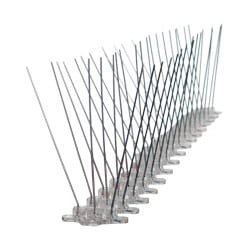
A bird control spike, is an object consisting of long, needle-like rods used for bird control. They come in a variety of styles and sizes but they work in the same way. Bird control spikes can be attached to building ledges, street lighting, roofs, commercial signage & anywhere else birds can possibly land on to prevent wild or feral birds from perching or roosting.
Why
These spikes make it difficult if not impossible for the bird to land or walk in the area with spikes. They will bring to harm to the bird but will make them uncomfortable that they will have to leave the area. These spikes have glue tracks and screw holes, the spikes can safely be attached to almost any surface. Source
Pigeon Patrol
At Pigeon Patrol, we offer stainless steel bird spikes. Steel spikes offer unique benefits. Not only are they less visible and blend in with a building’s architecture better than plastic spikes, steel spikes also come with a longer guarantee and are able to withstand direct sunlight and higher temperatures Ultra-flex Bird Spikes, prevents birds from landing or roosting on rooftops, ledges, and other surfaces. It comes in either a 5 inch or 8 inch spread and is virtually invisible when installed. The spikes come in 2-foot lengths and measures 4½ inches in height.
- Base made with UV protected recyclable polycarbonate.
- Spikes made with stainless steel,
4½ inches in height.
- Ultra flexible for pipes, beams, signs and light poles.”
- Install with screws, caulking or cable ties
- Spikes come in 2 ft sections with a 10-year warranty
Contact Us For Any Questions!
(604) 585-9279
About Pigeon Patrol:
Pigeon Patrol Products & Services is the leading manufacturer and distributor of bird deterrent (control) products in Canada. Pigeon Patrol products have solved pest bird problems in industrial, commercial, and residential settings since 2000, by using safe and humane bird deterrents with only bird and animal friendly solutions. At Pigeon Patrol, we manufacture and offer a variety of bird deterrents, ranging from Ultra-flex Bird Spikes with UV protection, Bird Netting, 4-S Gel and the best Ultrasonic and audible sound devices on the market today.
Contact us at 1- 877– 4– NO-BIRD, (604) 585-9279 or visit our website at www.pigeonpatrol.ca
Bird Gone, Pigeon Gone, Seagull Gone, Pigeon problems, 1-877-4NO-BIRD, 4-S Gel, Bird Control, Pigeon Control, bird repellent,, sonic bird repellent, stainless steel , bird spikes Vancouver, Ultra Sonic Bird Control, Bird Netting, Canada bird deterrents, Pigeon Pests, B Gone Pigeon, Pigeon Patrol, pest controller, pest control operator, pest control technician, Pigeon Control Products, humane pigeon, pigeon deterrents, pigeon traps, Pigeon repellents, Sound & Laser Deterrents, wildlife control, raccoon, skunk, squirrel deterrent, De-Fence Spikes, Dragons Den, Canada bird spikes, Canada pigeon, pigeon control, pigeon patrol, pigeon. Kill pigeons, crow, starling, Pigeon Habitat, Pigeon identifications,
by Pigeon Patrol | Jan 31, 2020 | 4-S Gel Bird repellent, Animal Deterrent Products, Bird Deterrent Products, Bird Spike, Bird Spikes, Pigeon Control, Pigeon Patrol's Services, Pigeon Spikes, UltraSonic Bird Control
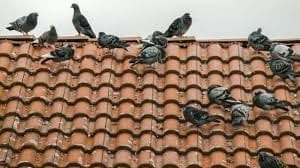
Pigeons are as integral to city living as traffic and pollution, and perhaps as annoying and potentially dangerous. These birds can cause property damage and carry diseases. However, there are humane ways to minimize or keep pigeons off your property. Find out how, together with some alleged solutions that simply don’t work or are not recommended.
The problems with pigeons
Pigeons often carry salmonella and other diseases. Their nests may harbor bird mites, bed bugs and other biting, disease-carrying insects. Because pigeon droppings are highly acidic, they can damage car paint and buildings. According to the New York City Department of Health and Mental Hygiene, pigeon droppings often carry fungi or bacteria that cause the human diseases cryptococcosis, histoplasmosis and psittacosis. Exposure to these diseases happens primarily when cleaning up pigeon droppings.
Solutions that work
You may have noticed that pigeons are everywhere. To keep all pigeons off your property may be unrealistic. You can reduce nesting populations in your immediate area by inspecting your property for nests, and removing nests and eggs every two weeks. More importantly, focus on keeping pigeons out of buildings and other spaces.
- Wire mesh and wire: Screen all soffit vents and other potential entry points with rust-proof wire mesh. University of Florida professor William Kern also recommends suspending a thin wire or mono filament about two inches above a railing or other potential roost, or adding sticky substances, deterring pigeons from resting on the rails.
- Sheet metal: To keep pigeons off ledges and other flat potential roosts, cover them with a sloping piece of sheet metal. A slanted metal board doesn’t make much of a roost.
- Bird netting: Alternatively, use bird netting to seal off spaces above barn rafters and other potential roosts.
- Scare-pigeons: Try the pigeon equivalent of scarecrows. Among the most effective “scare-pigeons” are kites with hawk silhouettes and light Mylar streamers. Both move easily in the wind, scaring off birds. On the other hand, pigeons will quickly grow accustomed to a model owl that sits in one spot for a while.
- Spray pigeons with water: Kern even suggests spraying pigeons with a water hose, but notes that the birds must be sprayed upon arrival, before they start to establish a regular roosting spot. Once they have established a roost, your impromptu showers won’t keep them from going home.
- Pigeon traps: If you fail to exclude pigeons or prevent roosting, you may need to make a trap or buy a commercial trap. Be sure to check each trap at least once a day, and leave water in the trap, to attract more birds and minimize stress on any pigeons that get caught. Immediately release all other birds you were not aiming to catch.
- Humane pest control. Find a pest control expert who specializes in humane solutions to infestation by pigeons and other unwanted creatures.
Solutions that DON’T work
Not every alleged pigeon control works. Here are a few urban legends:
- Loud noises: Loud noises have been suggested for controlling birds, but they are likely to annoy neighbors more than pigeons. City birds are used to city noises, and don’t seem to startle easily.
- Cheap Ultrasonic noises: Ultrasonic noises that humans cannot hear may avoid bothering your neighbors, but Kern notes that some ultrasonic sound waves bounce off objects, creating spots where pigeons can avoid the sound. Also, some ultrasonic devices may damage the hearing of cats and dogs. Although some ultrasonic units has proven to keep pigeons off your property.
- Distress calls: There are no effective distress calls that can be used to target pigeons.
- Poison and chemical repellents: Pigeon poisons and chemical repellents are available, but they are strictly controlled for several reasons. They can kill or sicken other birds or animals, or even somebody’s prized racing pigeon. (Yes, there are pigeon racing clubs. If you trap a tagged pigeon, click here (for information on returning it.)
Full story here
At Pigeon Patrol, we manufacture and offer a variety of bird deterrents, ranging from Ultra-flex Bird Spikes with UV protection, Bird Netting, 4-S Gel and the best Ultrasonic and audible sound devices on the market today.
Contact us at 1- 877– 4– NO-BIRD, (604) 585-9279 or visit our website at www.pigeonpatrol.ca
Bird Gone, Pigeon Gone, Seagull Gone, Pigeon issue, pigeon spikes, 1-877-4NO-BIRD, 4-S Gel, Bird Control, Pigeon Control, bird repellent, Bird Spikes, sonic bird repellent, stainless steel bird spikes, bird spikes Vancouver, Ultra Sonic Bird Control, Bird Netting, Plastic Bird Spikes, Canada bird spike deterrents, Pigeon Pests, B Gone Pigeon, Pigeon Patrol, pest controller, pest control operator, pest control technician, Pigeon Control Products, humane pigeon spikes, pigeon deterrents, pigeon traps, Pigeon repellents, Sound & Laser Deterrents, wildlife control, raccoon, skunk, squirrel deterrent, De-Fence Spikes, Dragons Den, Canada bird spikes, Canada pigeon, pigeon control, pigeon patrol, pigeon. Kill pigeons, crow, starling
by Pigeon Patrol | Jan 30, 2020 | Bird Deterrent Products, Bird Netting, Bird Spikes, Pigeon Droppings, Pigeon Patrol's Services, Pigeons in the News, UltraSonic Bird Control
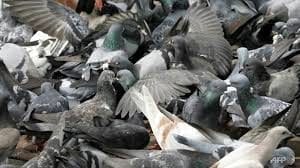
Is Hutchinson facing growing pigeon problems? The experts agree: There are definitely more pigeons in Hutchinson these days.
And with the increased population comes growing pigeon problems related both to public health and property maintenance.
Pigeons plague the Reno County Courthouse, several churches and most of the downtown area.
Many people are resigned that pigeons are a natural addition to any tall building, but some Hutchinson business owners are taking a stand.
Last week, Advance Pest Control performed a “baiting” of pigeons in the downtown area.
Advance was hired by a coalition of business owners – who have remained anonymous to The Hutchinson News – who sought to reduce the pigeon population downtown because of health concerns and property damage.
In the baiting, toxic corn was strategically placed about the downtown area.
The birds who eat the bait eventually die but first display intoxicated behavior.
“Basically, this behavior is a stress signal to the other birds, which leave the area because they sense that something is not right,” said Jeff Wells, vice president of Advance. “So it results in a great reduction in population in a specific area because of the birds who take a toxic dose as well as the repellency issue.”
The baiting has resulted in a reduced population of pigeons downtown, but Wells said he has noticed that there are more birds roosting on nearby buildings that weren’t baited.
Health, property concerns
Pigeon droppings aren’t just a nuisance or an extra chore for property owners. Because they are acidic, they actually cause property damage, eating through metal and deteriorating signs and other metal objects at a rapid rate.
The biggest growing pigeon problems, though, comes in cleaning the droppings.
Pigeon fecal matter is a breeding ground for a spore called histoplasmosis, which can cause an infection that leads to respiratory disease, according to the Centers for Disease Control and Prevention. The infection, if it affects other organs, can be fatal if untreated.
Workers cleaning up the droppings cause histoplasmosis spores to become airborne and are infected when they breathe them in.
Pigeons are also known to carry or transmit pigeon ornithosis, encephalitis, Newcastle disease, cryptococcosis, toxoplasmosis, salmonella food poisoning and several other diseases, according to the Kansas Department of Wildlife and Parks.
For that reason, the Kansas Department of Agriculture files the use of certain pigeon-control products under the category of public health and safety.
It’s a problem not lost on local businesses.
Next week, workers trained in safely removing pigeon waste will clean piles of pigeon droppings from the Fox Theatre marquee, which is being eroded by the waste, said board president Greg Payton.
Payton added that some theater employee illnesses have been blamed on the droppings.
Birds not protected
Pigeons are not protected by Kansas law, meaning property owners are free to dispose of them as they wish, Wells said.
But until the recent baiting, little has been done over the past seven years to control the pigeon population, which has led to the increase Hutchinson is seeing now, Wells said.
“The population has definitely increased,” Wells said. “There’s no question about that.”
In 2001, a baiting occurred, although it wasn’t performed by Advance, Wells said. A reduction in the pigeon population followed, but then the pigeon population was generally left alone except for some property owners putting up spikes or other roosting deterrents.
“These birds breed so quickly that the population explodes when nothing is done to limit them,” Wells aid.
Even some pigeon enthusiasts seem to understand the need for the population control.
“I don’t know the real solution,” said Mel Voth, a Garden City man who raises homing pigeons. “There are ways to divert them to other places, but I think a lot of folks feel like the baiting is the easiest way to reduce the population.”
Wells said there will always be a struggle between people who want pigeons eliminated and those who believe it’s wrong to kill them off, but he believes there can be a healthy compromise.
“Ultimately, we are trying to protect public health and safety, not eliminate a species of birds,” he said. “I place the safety of my kids above the population of pigeons. When the population reaches a certain point, it becomes an issue and something needs to be done.”
Source of the Story
About Pigeon Patrol
Pigeon Patrol Products & Services is the leading manufacturer and distributor of bird deterrent (control) products in Canada. Pigeon Patrol products have solved pest bird issues in industrial, commercial, and residential settings since 2000, by using safe and humane bird deterrents with only bird and animal friendly solutions.
At Pigeon Patrol, we manufacture and offer a variety of bird deterrents, ranging from Ultra-flex Bird Spikes with UV protection, Bird Netting, 4-S Gel and the best Ultrasonic and audible sound devices on the market today.
Contact us at 1- 877– 4– NO-BIRD, (604) 585-9279 or visit our website at www.pigeonpatrol.ca
Bird Gone, Pigeon Gone, Seagull Gone, Pigeon issue, pigeon spikes, 1-877-4NO-BIRD, 4-S Gel, Bird Control, Pigeon Control, bird repellent, Bird Spikes, sonic bird repellent, stainless steel bird spikes, bird spikes Vancouver, Ultra Sonic Bird Control, Bird Netting, Plastic Bird Spikes, Canada bird spike deterrents, Pigeon Pests, B Gone Pigeon, Pigeon Patrol, pest controller, pest control operator, pest control technician, Pigeon Control Products, humane pigeon spikes, pigeon deterrents, pigeon traps, Pigeon repellents, Sound & Laser Deterrents, wildlife control, raccoon, skunk, squirrel deterrent, De-Fence Spikes, Dragons Den, Canada bird spikes, Canada pigeon, pigeon control, pigeon patrol, pigeon. Kill pigeons, crow, starling
by Pigeon Patrol | Jan 30, 2020 | Bird Netting, Bird Spikes, Pigeon Control, Pigeon Droppings, Pigeon Patrol's Services, Pigeon Spikes, Pigeons in the News
The New Pigeon Wars. Rats with wings, or majestic streetwise bird? It’s a debate that’s raged almost as long as New York City has been called that. And this week, the war of pigeon between the two sides boiled over again.
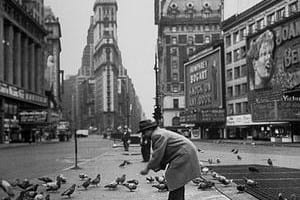
A man feeds the pifeons in Times Square in 1949 (and was probably beaten a short time later.)
Pigeon wars started when the exclusive University Club had its feathers ruffled. It wanted to drape its storied building in netting, to protect it from pigeon poo, which eats away at stone and metal. But the Landmarks Commission said it would have to wait for approval, as it would be a “visible change” to the land marked Italian Renaissance building’s facade. As if the crap wasn’t a “visible change” enough.
Meanwhile, over on East 93rd Street, there was a scuffle involving longtime pigeon activist Anna Dove and her neighbor, who snatched away her bag of seed after he saw her feeding the pigeons on the sidewalk. The police were summoned.
“It’s disgusting,” said her nemesis, retired teacher Arthur Schwartz. “She’s feeding the rats.”
And with the live pigeon-shooting state championships in Pennsylvania coming up, it’s almost guaranteed that there will be an increase in demand of pigeon-poaching — New York City is a favorite spot for trapping them and transporting them to be used as live targets. The animal-rights activists will be out with their cameras and signs to stop them.
No matter which side you’re on, one things for certain — by the end, things are going to get a little birdbrained.
“It’s not the pigeons that are the problem, it’s the number of them,” says Andrew D. Blechman, author of “Pigeons: The Fascinating Saga of the World’s Most Revered and Reviled Bird.” “They’re gentle creatures. The problem is that they get in our face, just like we get in each other’s faces.”
No one one’s quite sure of how many pigeons are in New York City. One adage is “one pigeon per person,” which would put their numbers at about 7 million. They each produce about 25 pounds of waste per year.
Pigeons love cities because of the many ledges, windowsills, eaves and rooftops available for them to roost in, which mimics their natural habitat of high cliffs. Pigeon pairings are monogamous, often mating for life, and both parents raise the babies — called squab — for a time, sitting on the eggs in shifts.
The pigeon includes about 298 species of bird, but the Rock Dove is the most common to the New York area, according to the Parks Department. The grey, bobbing-headed birds usually have purple-green iridescence around the neck area. They’re the scruffiest members of the dove family — although “dove” usually connotes the pure white symbols of peace, not the pizza scavengers of city streets. (Just say they’ve been pigeonholed.)
“If they were white,” Blechman says, “people would love them.”
Blame the French for our pigeon problems. The little pluckers first arrived in the early 1600s with French settlers who used them for meat. They were easy to raise — they could be kept in a barn, where they’d perch on the rafters, and young pigeons served as a good source of protein.
But they soon escaped their confines and went feral.
City life agreed with them and allowed them to flourish — and in some cases, over-flourish. Their natural predators, like falcons and hawks, aren’t found here in great numbers.
Courtney Humphries, author of “Superdove: How the Pigeon Took Manhattan . . . And the World,” concedes that pigeon are pilloried partly because of their “persistence. They nest on the buildings we consider our territory, and they don’t like to be moved.”
The average city pigeon has a lifespan of three to five years. With all the food scattered throughout the garbage cans and sidewalks — plus well-meaning human feeders — they spend less time looking for grub, which leaves more time for mating.
“The biggest problem is the people who overfeed them,” says Blechman. “Every city has about a dozen of them, and they’re the ones who cause the [overpopulation] problem.”
He suggests that if you want to feed the birds, hand out just a teaspoon full of birdseed for a flock. “It’s just enough to give them a little extra energy while they’re out trying to find their own food.”
“If nobody fed pigeons, I think things would look a lot different,” agrees Humphries, who says that human feeders end up creating dense flocks. “A lot of the problem with pigeons comes from people.”
If you can’t freeze the hearts of little old ladies, though, you could try eating them (the pigeons, that is). Squab — baby pigeons that haven’t flown yet — is on the menu at many restaurants around the city, particularly French. They’re “basically the milk-fed veal of the sky,” says Blechman — tender, mostly dark meat, and one of the only poultry that can be eaten rare. (Pigeons produce their own milk-like substance, which they feed to their young by regurgitation.)
Pigeon pot pie was a huge colonial favorite. Today, try the Squab and Foie Croustillant at the Modern, Danny Meyer’s restaurant at the Museum of Modern Art.
*
Unless the appetite for squab skyrockets, New York’s options are few. Avicide — poisoning birds — was made illegal in 2000, when the state Legislature passed a bill outlawing the use of “flock dispersal agents” like Avitrol in cities with more than 1 million people.
Before that, property managers regularly hired pest control services to dole out Avatrol to flocks of pigeons.
“In theory, you would mix it with feed, and when one pigeon ate some of the treated food, they would begin to suffer from neurological toxicity,” explained Stephanie Boyles, wildlife expert at the Humane Society of the United States. “When their flockmates saw them suffering, it would prompt them to leave the area.”
In practice, however, overdosing often led to large numbers of birds convulsing and writhing in pain on the street before their deaths. Welcome to New York!
The last major flare-up of pigeon wars was in 2007, when City Councilman Simcha Felder released a report plaintively titled, “Curbing the Pigeon Conundrum.”
Claiming that their droppings carried a host of diseases like histoplasmosis, he proposed a $1,000 fine to anyone feeding them, as well as curbing their numbers through birth control (a measure that cities like Los Angeles have adopted, although some argue that it’s unsustainable), and appointing a city “Pigeon Czar” to oversee other pigeon-control issues.
The NYC Department of of Health and Mental Hygiene maintains that contact with their droppings only poses a small health risk, and that “routine cleaning of droppings (e.g. from windowsills) does not pose a serious health risk to most people,” although disposable gloves are a good idea.
The Humane Society came out against the anti-feeding fine because they weren’t sure it would actually make a difference in reducing flocks, said Boyles. “We still suggest working with communities to create places where pigeons are welcome, and discouraging them where they’re not.”
While Felder’s bill didn’t fly, it was only one of many efforts to keep pigeons clipped.
In 2006, pigeon loitering was so dense near the Army Recruitment Center in Times Square, speakers were set up to broadcast sounds of falcons and pigeons being attacked, in hopes of scaring them away. In 2003, they had so overwhelmed Bryant Park that the operators invited a falconer and his hawk to the park for a week to scare away (not eat) the pigeons.
In 2007, the MTA installed Bird-B-Gone on some of its elevated stations along the 7 line, as well as others. The electronic system zapped birds that got too close.
In the ’80s, plastic owls were a big seller. Today, a slightly more high-tech version, called the RoboHawk, moves its head, wings, and makes what its creators hope are pigeon-threatening sounds.
Every so often, a politician considers reviving an overall anti-feeding bill, since, for now, it’s only illegal in city parks where signs are posted (the fine is usually $50).
Some cling to the hope that the city will come to its senses and declare war. Because they’re a non-native species, pigeons are not protected by either the Federal Migratory Birds Act or New York state laws. Can anyone say hunting season?
It’s got to be done mafia-style, though. Culling is only a temporary solution — as with most wild birds, quick breeding will put their numbers back to pre-cull figures within weeks, according to Pigeon Control Advisory Service.
*
But spare a thought, pigeon haters, for your majestic foe. Pigeons have more qualities than you think.
Although city birds aren’t particularly active, pigeons are built to be athletes — a trained bird can fly up to 60 miles per hour, and they can stay in the air for 500 miles. They’re meant for flying long distances, and have “homing” instincts, which means they will naturally find their way back.
This talent is why they were literally drafted into the United States Army Pigeon Service.
A million served in both world wars, where they delivered messages across enemy lines and saved thousands of soldiers’ lives. One pigeon, Cher Ami, won a French medal for his bravery for flying through gunfire, finally delivering the message dangling from what was left of his foot. He’s now stuffed and in the Smithsonian.
The army’s Pigeon Breeding and Training Center was based at Fort Monmouth, NJ, and opened in 1917. Many of its “Pigeoneers” were “basically just boys out of Brooklyn, and they’d just bring their best birds,” Humphries says. (The training center was closed in 1957 when the Army stopped using them as messengers.)
Keeping pigeons on rooftops — and racing them — used to be much more popular. Who can forget Marlon Brando’s character in the 1954 film “On the Waterfront” shouting up to his friend Joey, “I got one of your birds!” right before Joey “accidentally” falls off the roof?
The city is full of equally vocal bird-lovers.
“They animate our lives,” argues Blechman, who says that despite writing a book on pigeons, he is not a “bird person,” and admits to having eaten them before. He’s come around, though. “You look out the window and you can have a pigeon land on your windowsill, and the same one will come back every day, and at the same time.
“What would the lonely, the unemployed, and the elderly do every day if it weren’t for pigeons?”
The Internet is atwitter with kooky pigeon fans. There’s a pigeon appreciation society on Facebook. On photo-sharing site Flickr, there’s a group called The Global Pigeon Art Appreciation Society.
“You are not alone,” the site reads. “Many artists have been inspired by pigeons.”
There is also a city listserv called “New York Pigeon People,” where members discuss how to rescue birds and share pigeon news.
You can eat them, race them, breed them, feed them, but you can’t escape them, whether you consider them the most misunderstood creatures of the flying community or the world’s worst bird. As Blechman put it, “We’re just going to have to learn to co-exist.”
The Source from NY Post
About Pigeon Patrol
Pigeon Patrol Products & Services is the leading manufacturer and distributor of bird deterrent (control) products in Canada. Pigeon Patrol products have solved pest bird issues in industrial, commercial, and residential settings since 2000, by using safe and humane bird deterrents with only bird and animal friendly solutions.
At Pigeon Patrol, we manufacture and offer a variety of bird deterrents, ranging from Ultra-flex Bird Spikes with UV protection, Bird Netting, 4-S Gel and the best Ultrasonic and audible sound devices on the market today.
Contact us at 1- 877– 4– NO-BIRD, (604) 585-9279 or visit our website at www.pigeonpatrol.ca
Bird Gone, Pigeon Gone, Seagull Gone, Pigeon issue, pigeon spikes, 1-877-4NO-BIRD, 4-S Gel, Bird Control, Pigeon Control, bird repellent, Bird Spikes, sonic bird repellent, stainless steel bird spikes, bird spikes Vancouver, Ultra Sonic Bird Control, Bird Netting, Plastic Bird Spikes, Canada bird spike deterrents, Pigeon Pests, B Gone Pigeon, Pigeon Patrol, pest controller, pest control operator, pest control technician, Pigeon Control Products, humane pigeon spikes, pigeon deterrents, pigeon traps, Pigeon repellents, Sound & Laser Deterrents, wildlife control, raccoon, skunk, squirrel deterrent, De-Fence Spikes, Dragons Den, Canada bird spikes, Canada pigeon, pigeon control, pigeon patrol, pigeon. Kill pigeons, crow, starling