by Pigeon Patrol | Jun 4, 2014 | Bird Deterrent Products, Bird Netting, Pigeons in the News, UltraSonic Bird Control
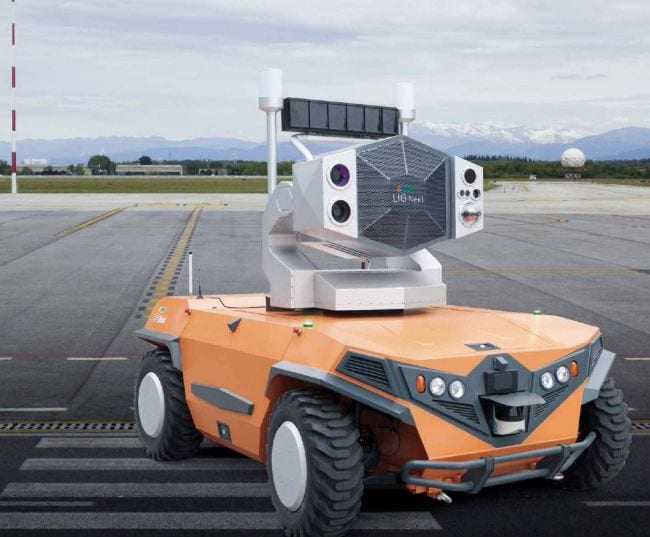
 LIG Nex1, a South Korean defense company, said Tuesday that it would showcase a variety of defense products ranging from robots to military products during an exhibition at KINTEX from June 1 to 4 in Ilsan, Gyeonggi Province.
It will introduce the company’s mobile bird deterrent robots, better known as “the bird strike,” which are used at civilian and military airports to prevent birds from colliding with airplanes.
Also, the company will feature electronic full-body wearables allowing soldiers to easily carry heavy-duty military equipment and march long distances, as well as products and solutions for guided weapons systems.
“The company will continue to develop (new technologies) in a partnership with the military for the (benefit of the) country, and aim to gain attention from overseas,” said LIG Nex1 CEO Lee Hyo-koo.
About Pigeon Patrol:
Pigeon Patrol Products & Services is the leading manufacturer and distributor of bird deterrent (control) products in Canada. Pigeon Patrol products have solved pest bird problems in industrial, commercial, and residential settings since 2000, by using safe and humane bird deterrents with only bird and animal friendly solutions. At Pigeon Patrol, we manufacture and offer a variety of bird deterrents, ranging from Ultra-flex Bird Spikes with UV protection, Bird Netting, 4-S Gel and the best Ultrasonic and audible sound devices on the market today.
Voted Best Canadian wholesaler for Bird Deterrent products four years in a row.
Contact Info: 1- 877– 4– NO-BIRD (www.pigeonpatrol.ca)
by Pigeon Patrol | May 6, 2014 | Bird Deterrent Products, Pigeons in the News
by Pigeon Patrol | May 4, 2014 | Bird Deterrent Products, Pigeons in the News, UltraSonic Bird Control
 The lethal control of birds is prohibited under the The Wildlife and Countryside Act 1981 unless the species concerned is listed under the relevant section of the Act. Although specific licences are required for some methods of lethal control, such as the use of stupefying baits, the most commonly controlled species of pest birds (such as the feral pigeon) are allowed to be killed under a General Licence. This means that providing an ‘authorised person’ undertakes the culling and providing that the culling is undertaken in accordance with the guidelines laid down by the General Licence, a specific application to kill is not required. All licences are issued and overseen by The Department for Environment, Food and Rural Affairs (DEFRA) including the General Licence.
Lethal control has been used as a ‘quick-fix’ means of reducing pigeon numbers for as long as there has been a need to control the species. The pest control industry has historically recommended lethal controls alongside the provision of anti-perching and bird exclusion products in an effort to maximise relief for those experiencing pigeon-related problems. Although the installation of anti-perching products (and some bird exclusion products) will resolve a vast majority of pigeon-related problems without the need for additional controls, many pest control companies still recommend lethal control either as a complementary service or as a stand-alone control.
Based on the evidence that culled birds are replaced within a matter of weeks following a cull, culling cannot be used, under any circumstances, to reduce flock size in anything other than the short-term. If a property owner is expected to undertake a cull every few weeks in order to protect his/her property, the cost of the service would be prohibitive. Even in light of these facts, culling is still widely recommended and used by the pest control industry as a method of control. The following methods are commonly used to cull pigeons:
Cage Trap for Killing Pigeons
A suitable area is identified in which to site the trap that is easy to access for the pest control contractor and which is considered to be in an area of high pigeon activity. Other criteria, such as finding a site that is not overlooked, is equally important as the general public find the sight of trapped birds extremely distressing. The cage trap is then baited with pigeon corn for approximately 7 days, allowing pigeons’ free access to enter the trap, feed and then exit the trap. This process is designed to make the birds feel safe whilst feeding within the trap so that after 7 days when the trap is set, the maximum number of birds will be caught. The trap has a two-way door which, when set, allows the pigeon to enter the trap but not to exit it. The trap is then visited once a day and any birds within the trap are removed and either killed on the site or removed live, normally in a sack and taken away to be gassed.
Cage trapping is also highly labour intensive, resulting in higher costs to the client due to the fact that the law states that as a minimum, cage traps must be inspected once every 24 hours. Although the law is quite clear on this point, not all contractors comply with this legislation and empty their traps every 24 hours. If the contractor fails to inspect and empty their traps every 24 hours they run the risk of prosecution, as does the client upon whose site the traps are located. There is also a legal requirement to provide food and water in cage traps but again, not all contractors comply with this aspect of the legislation. 
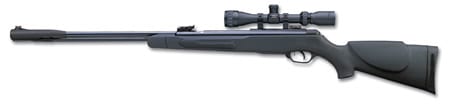
Rifle Used for Killing Pigeons
Shooting operations are normally undertaken at night with daytime shoots only being used in agricultural applications or for specialised urban applications. In urban applications, pigeons are usually shot at night and in their roosting sites because the birds are unable to fly away when the shooting starts, as they would if shoots were undertaken in daylight hours. The major problem inherent with shooting operations is the inability of the shooter to recover and dispatch injured birds. It is virtually impossible to kill a pigeon outright with an air weapon and therefore a majority of birds are simply shot and injured. Because pigeons normally roost at height and because when shot, a pigeon will be pushed backwards with the impact of the pellet entering the body, very few injured pigeons actually fall to the ground. This means that injured birds cannot be dispatched humanely, as is required by law, to prevent suffering taking place, rendering this method of lethal control inhumane. A pigeon can survive for weeks with a pellet lodged in its body and will suffer a slow and lingering death as a result. Also, in situations where a majority of the seriously injured birds cannot be humanely dispatched, the property owner upon who’s site the shooting has taken place will inevitably experience unpleasant smells and maggot infestations as birds die in their roosting places.
About Pigeon Patrol:
Pigeon Patrol Products & Services is the leading manufacturer and distributor of bird deterrent (control) products in Canada. Pigeon Patrol products have solved pest bird problems in industrial, commercial, and residential settings since 2000, by using safe and humane bird deterrents with only bird and animal friendly solutions. At Pigeon Patrol, we manufacture and offer a variety of bird deterrents, ranging from Ultra-flex Bird Spikes with UV protection, Bird Netting, 4-S Gel and the best Ultrasonic and audible sound devices on the market today.
Voted Best Canadian wholesaler for Bird Deterrent products four years in a row.
Contact Info: 1- 877– 4– NO-BIRD (www.pigeonpatrol.ca)
The information on this blog is for personal use only. Content for this blog obtained from other websites is not being used for any commercial reasons whatsoever as per the copyright statement on the Pigeon Control Resource Centre’s website. http://www.pigeoncontrolresourcecentre.org/ Special thanks for the people and companies that helped gather this information. This information is to be used for reference only.
by Pigeon Patrol | May 4, 2014 | 4-S Gel Bird repellent, Bird Deterrent Products, Bird Netting, Pigeon Patrol's Services, Pigeon Spikes, Pigeons in the News, UltraSonic Bird Control
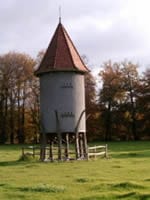
 The use of artificial breeding facilities (ABFs) such as dovecotes or pigeon lofts as a method of pigeon control is becoming increasingly popular in Europe with many users experiencing astonishing results. This control was pioneered by the Pigeon Control Advisory Service (PiCAS International) in the 1970s as a means of humanely and naturally controlling pigeon flock size without the need to resort to invasive and ineffective lethal controls. In the 1980s the scientific world took an interest in the use of ABFs to control pigeon populations with research* proving conclusively that lethal controls, when used on pigeons, were not only ineffective but may actually have the effect of increasing pigeon flock size. The same research found that ABFs were a highly effective means of reducing pigeon flock size.
The use of ABFs as a method of pigeon control is one of the most effective and cost-effective methods of reducing the impact of entrenched area-wide pigeon-related problems for property owners. The principle of this method of control is to provide an artificial breeding facility in which pigeons are encouraged to roost and breed and from which newly laid eggs are removed and substituted with dummy eggs. When eggs are removed they must always be replaced with dummy eggs to ensure that the hen bird does not continue to produce more eggs. If the hen does lay and re-lay every time her eggs are removed this may result in a calcium deficiency in the bird and as the goal is a small and healthy flock of pigeons, health-related issues must be prioritised. ABFs come in two forms; loft-type facilities that would normally be provided on or in a building anddovecote facilities that might be provided in a public park or in similar urban areas where pigeons can be accommodated and tolerated without causing problems.
About Pigeon Patrol:
Pigeon Patrol Products & Services is the leading manufacturer and distributor of bird deterrent (control) products in Canada. Pigeon Patrol products have solved pest bird problems in industrial, commercial, and residential settings since 2000, by using safe and humane bird deterrents with only bird and animal friendly solutions. At Pigeon Patrol, we manufacture and offer a variety of bird deterrents, ranging from Ultra-flex Bird Spikes with UV protection, Bird Netting, 4-S Gel and the best Ultrasonic and audible sound devices on the market today.
Voted Best Canadian wholesaler for Bird Deterrent products four years in a row.
Contact Info: 1- 877– 4– NO-BIRD (www.pigeonpatrol.ca)
The information on this blog is for personal use only. Content for this blog obtained from other websites is not being used for any commercial reasons whatsoever as per the copyright statement on the Pigeon Control Resource Centre’s website. http://www.pigeoncontrolresourcecentre.org/ Special thanks for the people and companies that helped gather this information. This information is to be used for reference only.
by Pigeon Patrol | May 4, 2014 | Bird Deterrent Products, Bird Netting, Pigeon Patrol's Services, Pigeon Spikes, UltraSonic Bird Control
 Tips for Effective Bird Control Management
Bird nests should be removed prior to using any Bird Deterrent. If there is a nesting situation involved. If birds are in trees, and nests cannot be physically removed, products need to be in the trees with the birds in order to have any desired effect!
Some electronic products work immediately! Actually, in some cases, the electronics DO produce immediate and dramatic results. BUT, as a general rule, and considering the thousands of situations and environments it may take several days and patience for the product to affect the birds. Again, in cases of nests, the continued existence of the bird nests, especially in the spring, will be an instinctive magnet for the birds.
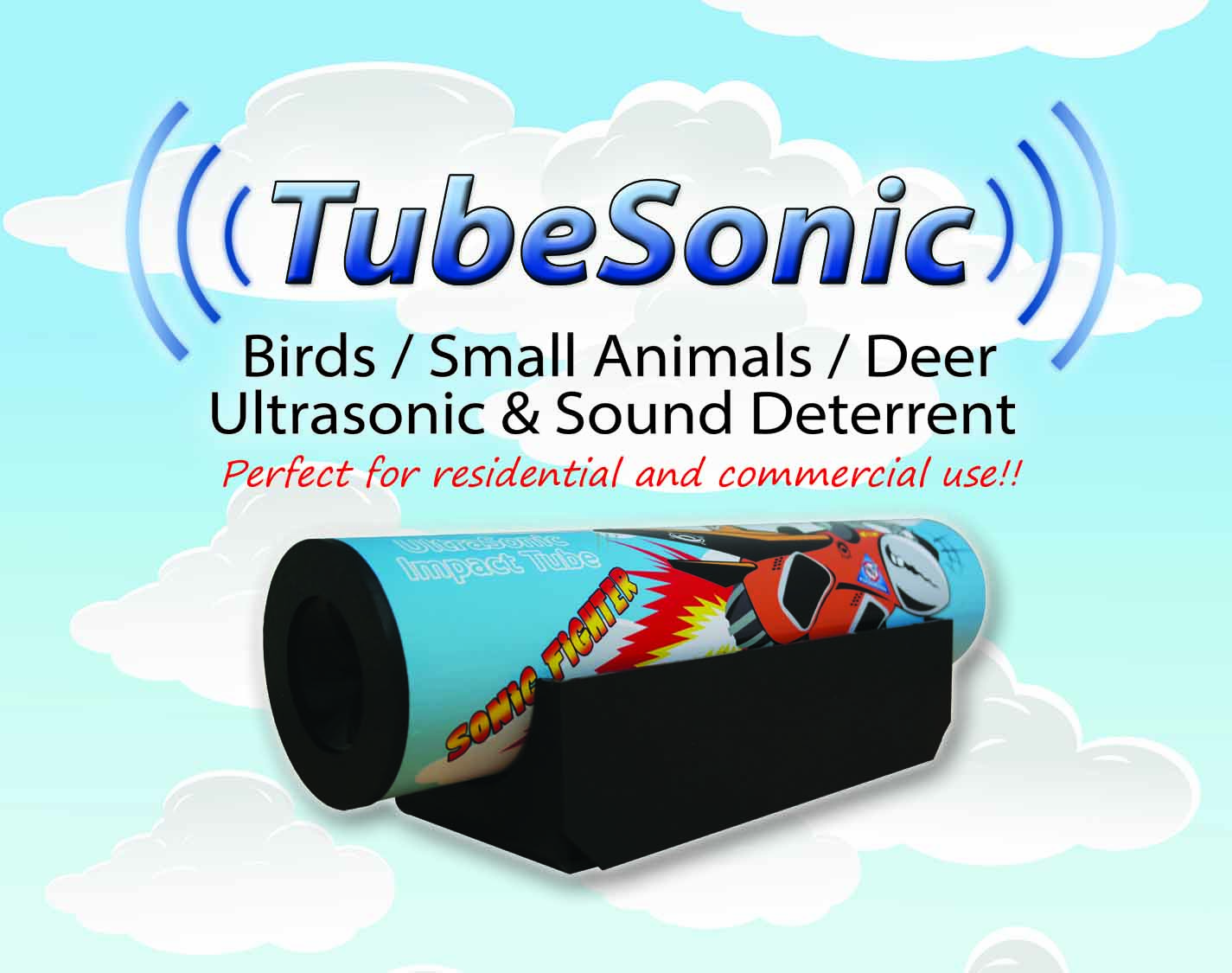
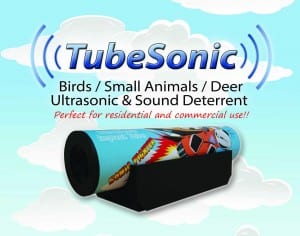
Electronic products need to be installed at the correct level. In order for the electronic product to work most effectively, the birds must be exposed proximately and consistently to the sounds whether they are ultrasonic sounds (silent to humans) or the occasional sonic sounds (natural sounds of predator birds like hawks and falcons and bird distress signals). This means that the speaker of a given system must be all the way up at the level of the birds and the birds ideally should be exposed to the sounds at a reasonable distance for a good deal of the time to break their particular habit.
Some electronic bird control devices can control 100% of the birds 100% of the time in 100% of applications! However there are simply too many environments and contributing factors which may determine how well an electronic repeller works, how fast it takes effect and what percentage of the problem a given repeller is capable of solving.
Sound devices are designed, in part, to change behavior patterns of birds. The systems are programmed by the user and the programming is there so it can be altered frequently or periodically to continue to chase the birds. Nest removal may have to be more frequent than once to help the longevity of the control program.
Survey the birds. Gather specific data as to the type and population of birds, length of time of their residence, flight and time patterns, entries, exits and favorite areas, and nesting, feeding and roosting habits.
Survey your property. Discover what the birds find attractive about your area (food, shelter, hidden recesses…), and whether the same conditions prevail in neighboring properties. Note overhangs or foliage above current infestations.
Remove all inducements. Before installing any product, make sure to clean the area of all evidence of birds: nests, fledglings, droppings, dead birds, and the residual scent. (Adult birds are likely to return to their young in order to protect them or to assist them in leaving the area.) Also remove food spillage, garbage, nesting material and other items that may be appealing to birds.
Maintain a clean and changing environment. For maximum effectiveness, periodically clean the area of nests, debris and droppings. This should be done often on a new installation to ensure that birds do not try to return to their old habits.
Install early. It is always best to install a product before “bird season” begins; it is easier to keep the birds away than to rout them out once they have already established a living pattern.
 Consider alternate locations. Make educated guesses as to where the birds will go when they are repelled from their current infestation. It may be very easy for birds to relocate to the other side of a roof or warehouse, an adjacent loading dock or a nearby gutter or pipe. Products should be applied to, or installed in, these adjacent areas as well.
About Pigeon Patrol:
Pigeon Patrol Products & Services is the leading manufacturer and distributor of bird deterrent (control) products in Canada. Pigeon Patrol products have solved pest bird problems in industrial, commercial, and residential settings since 2000, by using safe and humane bird deterrents with only bird and animal friendly solutions. At Pigeon Patrol, we manufacture and offer a variety of bird deterrents, ranging from Ultra-flex Bird Spikes with UV protection, Bird Netting, 4-S Gel and the best Ultrasonic and audible sound devices on the market today.
Voted Best Canadian wholesaler for Bird Deterrent products four years in a row.
Contact Info: 1- 877– 4– NO-BIRD (www.pigeonpatrol.ca)
The information on this blog is for personal use only. Content for this blog obtained from other websites is not being used for any commercial reasons whatsoever. Special thanks for the people and companies that helped gather this information. This information is to be used for reference only.