by Pigeon Patrol | Sep 18, 2023 | 4-S Gel Bird repellent, Animal Deterrent Products, Bird Deterrent Products, Bird Law, Bird Netting
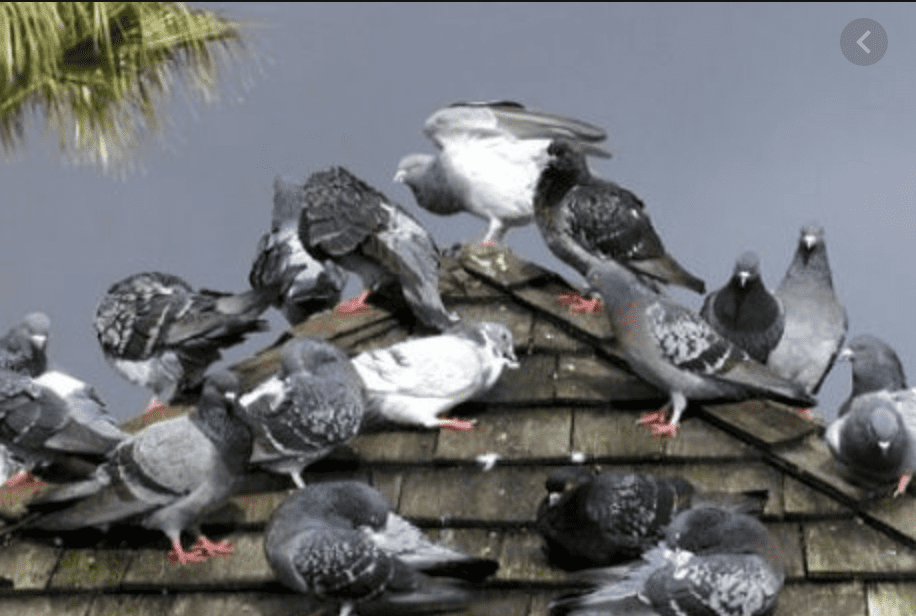
Pigeons can present a number of problems and hazards, especially when they congregate in large numbers. Their droppings are not only unsightly, they are also dangerous and corrosive. In this post we look at practical steps that can be taken to get rid of problematic pigeons.
Pigeon Pest Control and the Law
Before considering various techniques to eradicate the presence of pigeons its important to be aware of the UK law regarding wild birds. This is legislated by the Department of Environment, Food and Rural Affairs (DEFRA) and detailed in the Wildlife and Countryside Act 1981 (Chapter 69).
This states that wild birds, along with their nests and eggs, are protected by UK law making it illegal to destroy or interfere with them, except under licence. If a licence is obtained, non-lethal methods of pigeon pest control should always be considered first as lethal methods have been found to be totally ineffective. Killing off existing pest pigeons simply reduces the competition for food and shelter prompting the remaining pigeons to increase their breeding rates to compensate.
People troubled by pigeons building nests and laying eggs often ask: How can I remove a pigeon’s nest? While the humane solution may appear to be relocating the nest to a more suitable location, the nest and eggs are protected by the Wildlife and Countryside Act from 1981, so moving them is against the law.
What is a Feral Pigeon?
Feral pigeons are all descended from domestic pigeons which were originally bred from rock doves whose natural habitat is seaside cliffs and mountains. Rock doves, domestic pigeons and feral pigeons are all the same species.
People often want to know if Feral Pigeons and Wood Pigeons are the same. Wood pigeons are the largest amongst the pigeon family. They are fatter than feral pigeons and prefer a diet of leaves, berries and fruits. They also prefer to construct their nests in quiet woodland and park areas and therefore don`t tend to become pests.
Where do Pigeons Nest?
Feral pigeons have readily adapted their nesting habits from the seaside cliffs and mountains, preferred by rock doves, to our urban environments. The birds will roost and nest on almost any horizontal surface that provides a small amount of shelter. Ledges, balconies, rooftops and empty buildings are all typical nesting sites.
Feral pigeons tend to build their flimsy platform nests from twigs but will also use whatever is available, such as rubbish and pieces of plastic. Peak breeding season is between March and July but nest building will often begin in February.
How Many Eggs Does a Pigeon Lay?
Its interesting to note that pigeons are monogamous and will mate for life. Female pigeons reach sexual maturity after just 7 months and 8 to 12 days after mating will lay between 1 and 3 eggs, typically 2. The eggs are incubated for around 19 days and the hatched pigeon chicks (squabs) are fledged and leave the nest after around 30 to 37 days.
Pigeons can breed at any time of year but peak reproduction takes place in the spring and autumn.
How Long Does a Pigeon Live For?
In captivity pigeons have been known to live as long as 15 years. But in urban environments a pigeon lifespan of around 2 to 3 years is more common.
Do Pigeons Carry Diseases?
People often want to know, are pigeons dirty and do they carry disease? Pigeons can carry a range of diseases that include salmonellosis, tuberculosis and ornithosis which can potentially infect humans. In fact pigeons are known to carry in excess of 60 pathogens which is common in wild birds.
Dead pigeon caracasses, pigeon droppings and nesting materials can also contain a variety of mites and insects which may cause disease, skin irritation and allergic reactions.
Does Pigeon Poop Damage Buildings?
Pigeon droppings are not only unsightly, dangerously slippery and infectious they can also damage buildings. The acid content in pigeon droppings can lead to the deterioration of soft stone, causing long term damage. Accumulated pigeon droppings can be difficult and expensive to remove without causing further damage.
Pigeon Control Methods
It should be noted that one of the most effective ways to restrict the size of pigeon flocks in any location is to control the availability of food. Limited food supply will reduce the number of new birds arriving at a site and suppress breeding.
As noted, under UK law, shooting pigeons isn’t allowed without a licence. Similarly, baiting and poisoning pest pigeons isn’t allowed and can present risks for other animals. Trapping problem pigeons is another tactic that might be considered but is recognised as ineffective and expensive and should only ever be carried out by professionals.
What is the Best Pigeon Deterrent?
To avoid the health risks associated with pigeons along with the mess and potential property damage they cause we often need to discourage and prevent them from from roosting or nesting on or around our homes and property. Legal restrictions mean that only humane, harmless techniques can be employed, so what are the best available pigeon deterrents?
What Do Pigeons Hate?
As noted, pigeons avoid areas where there is poor food supply so this needs to be considered. They also dislike the presence of birds of prey and they don’t like strong aromas such as cinnamon or hot pepper. And like all birds, pigeons are sensitive to fire and can see the ultraviolet light emitted by burning materials which they will naturally avoid.
Minimising the availability of food combined with spraying areas with strong smells can be an effective deterrent tactic.
Pigeon Repellent Gel
Pigeon repellent gel is also known as Bird Free Fire Gel and Bird Free Optical Gel. Its an extensively proven material that prevents all birds, including pigeons, from nesting and roosting where they are not welcome.
The gel is formulated from natural oils and food grade ingredients which, in combination, emit UV light that looks like a naked flame to birds. Locating small containers of this exceptional material in areas where pigeons like to land and roost has an immediate effect. Birds see the gel as a naked flame and their natural instinct is to keep away. In addition, the gel is formulated with a mild peppermint and black pepper aroma which acts as a further deterrent.
Bird Free Fire Gel is available in convenient preloaded dishes along with fixings to securely attach the dishes to pipes, railings and other perches favoured by pigeons.
Anti Bird Netting
Anti-bird netting is also known as pigeon netting, bird control netting or simply bird netting. Netting provides a highly effective anti-bird barrier but is often considered unsightly. Its commonly used to protect:
- Fruit trees and bushes
- Balconies
- Outdoor eating areas
- Courtyards
- Patios
- Signage
- Car parking areas
Bird Deterrent Pigeon Wire
Parallel wire bird-deterrent systems provide an alternative to bird netting. Lengths of parallel steel wires are installed in areas to which pigeons are naturally attracted, such as rooftops, balconies and eves. Pigeons will seek alternative areas to roost and build their nests when they encounter these wires.
Anti Bird Spikes
Anti bird spikes are a well known, highly effective anti bird device. They are simply strips of harmless spikes mounted in areas where pest pigeons like to land. When they encounter the spikes, they steer clear.
Anti pigeon spikes5 are made from lightweight polycarbonate while anti-seagull spikes are made from tougher stainless steel that can withstand seagull beaks. Gutter fixing clips make it quick and easy to install these effective pigeon deterrent spikes where pigeons like to perch.
Birds of Prey and Decoys
As previously noted, pigeons don’t like dominant birds of prey and will avoid their territories. Using birds of prey for pest control is marketed as a green, natural and humane tactic as it is considered to be non-lethal. But since raptors cannot be trained not kill the target species and the majority of raptors used for pigeon control are not their natural predators this technique shouldn’t really be considered as ‘natural’. Another important consideration when using birds of prey to dispel problematic pigeons is that it`s generally employed for short term bird clearance, for example at football grounds and sports arenas.
A genuinely safe, humane alternative is to use replica raptors. Replicas of hawks, falcons, owls and other birds of prey have long been used as bird repellents in a variety of situations.
How to Get Rid of Pigeons from Your Roof
If you are troubled by pigeons congregating on a rooftop a variety of techniques can be used to keep them away. As noted, if the birds have created nests and laid eggs you will need to wait until the chicks have fledged before taking steps to keep the pest pigeons away.
Containers filled with pigeon repellent fire gel distributed around the rooftop areas favoured by the birds has been found to be highly effective and easy to install.
Anti bird netting covering the whole rooftop area is highly effective but can be tricky to install and must be maintained. Similarly, parallel anti bird wires can be effective along ledges, guttering and rooftop edges. And anti-bird spikes work well when mounted along favoured perch areas.
How to Get Rid of Pigeons from Your Balcony
People like to make the most of their balconies, especially in the warmer months. But pest pigeons can turn balconies into dangerous health hazards.
One of the most effective techniques to protect a balcony from pest birds is to shroud the whole balcony in anti bird netting. But obviously many people will consider this tactic to be unsightly, especially during the warmer months when they want to use their balconies. The deployment of bird repellent fire gel in small dishes, distributed along the balcony rail and wherever birds are inclined to land, has been found to be highly effective in keeping balconies free from pest pigeons.
How to Get Rid of Pigeons Under Solar Panels
More and more homes are installing solar power with rooftop mounted solar panels. These installations naturally attract the attention of pest pigeons who are seeking safe locations to build their nests and raise their young.
Bird Free Fire gel has been successfully deployed around many solar panel installations, effectively preventing problem pigeons from establishing their nests.
Source
Pigeon Patrol
Pigeon Patrol Products & Services is the leading manufacturer and distributor of bird deterrent (control) products in Canada. Pigeon Patrol products have solved pest bird problems in industrial, commercial, and residential settings since 2000, by using safe and humane bird deterrents with only bird and animal -friendly solutions. At Pigeon Patrol, we manufacture and offer a variety of bird deterrents, ranging from Ultra-flex Bird Spikes with UV protection, Bird Netting, 4-S Bird Gel and the best Ultrasonic and audible sound devices on the market today.
Canada’s top wholesaler for bird deterrent products for twelve consecutive years.
Contact us at 1- 877– 4– NO-BIRD, (604) 585-9279 or visit our website at https://www.pigeonpatrol.ca/
Bird Gone, Pigeon Gone, Pigeon problems, pigeon spikes, 1-877-4NO-BIRD, 4-S Gel, Bird Control, Pigeon Control, bird repellent, Bird Spikes, sonic bird repellent, stainless steel bird spikes, bird spikes Vancouver, Ultra Sonic Bird Control, Bird Netting, Plastic Bird Spikes, Canada bird spike deterrents, Pigeon Pests, B Gone Pigeon, Pigeon Patrol, pest controller, pest control operator, pest control technician, Pigeon Control Products, humane pigeon spikes, pigeon deterrents, pigeon traps, Pigeon repellents, Sound & Laser Deterrents, wildlife control, raccoon, skunk, squirrel deterrent, De-Fence Spikes, Dragons Den, Pigeon, Pigeon Patrol, Pigeons Roosting, Vancouver Pigeon Control, Bird Spikes, Bird Control, Bird Deterrent, Pigeon Deterrent, Surrey Pigeon Control, Pest, Seagull deterrent Vancouver Pigeon Blog, Birds Inside Home De-fence, Pigeon Nesting, Bird Droppings, Pigeon Dropping, woodpecker control, Keep The Birds Away, Birds/rats, seagull, pigeon, woodpecker, dove, sparrow, pidgeon control, pidgeon problem, pidgeon control, flying rats, pigeon Problems, bird netting, bird gel, bird spray, bird nails, bird guard, Pigeon control, Bird deterrents, Pigeon deterrents, Bird control, solutions, Pigeon prevention, Pigeon repellent, Bird proofing, Pest bird management, Pigeon spikes, Bird netting, Humane bird control, Bird exclusion, Urban bird control, Anti-roosting devices, Pigeon removal, Bird barriers
by Pigeon Patrol | Sep 11, 2023 | Bird Spike, Pigeon Predators, Pigeon Spikes, Pigeons, Pigeons in the News, Raccoons, Sparrows, UltraSonic Bird Control
Chicago ranks as the deadliest city in the United States for birds, according to a recent study by the Cornell Lab of Ornithology.
People might think that a larger city like New York would be guilty of more bird-window collisions than Chicago, but an unfortunate combination of building structures and geographical placement proves to be deadlier than size.
“It’s not just the size of the city, it also has to do with how bright the city is and also where the birds are flying themselves.” said Kyle Horton, the lead researcher on the study which evaluated 125 cities for their bird-killing potential.
Every fall, billions of birds will fly from the northern United States and Canada to the tropics and in the spring those birds return from their tropical vacation, according to the Cornell Chronicle.
Chicago is positioned on one of the primary flight paths, Horton said. It is the nation’s deadliest city for birds during both the spring and fall migrations. Other Great Lakes regional cities in the study’s top 20: Minneapolis (sixth spring, seventh fall), Detroit (13th spring, 15th fall), Indianapolis (16th spring, 13th fall).
Annette Prince witnesses this flight and its casualties firsthand. She is the director of the Chicago Bird Collision Monitors, a volunteer-based conservation project that has been protecting and recovering birds that are killed and injured in downtown Chicago during these mass migrations since 2003.
“They’re birds that certainly cannot afford to be having collisions as an additional reason to have their species reduced,” Prince said.
The decline of these species doesn’t only affect local populations and ecosystems. Migratory bird populations are an important part of a global environment, she said.
“Chicago is in the fortunate position to enjoy a huge migration of birds every spring and fall,” Prince said. “They’re following a pathway that they’ve used for thousands of years, before there was ever a city here.”
What was once a lakefront that travel-weary migrating birds could easily navigate and find pitstops offering food and rest is now a maze of lights, reflections and invisible yet deadly obstacles. This results in 5,000 dead birds per square-mile in Chicago, Prince said.
And that’s a low estimate. The volunteers at Chicago Bird Collision Monitors can’t find every crime scene when there are so many, and there are plenty that could be tampered with by passing pedestrians, cars, or a wandering cat or dog, Prince said.
Windows are often the perpetrator of these deaths, but lights act as a productive accomplice.
“It’s not necessarily that the lights are killing birds,” Horton said. “It’s that the lights seem to attract birds, it disorients them and elevates their risk of colliding with structures.”
To reduce the risk of bird-window collisions, Horton encourages those who live in or work in buildings to turn off or dim unneeded lights. This is especially relevant at 7 p.m. to 8 p.m. for three to four weeks of spring and fall, which is when the majority of birds would be moving through the city, said Horton.
Reducing lights can decrease bird-window collisions, but building-designers and homeowners can also make changes to the windows themselves without living in a building devoid of natural light.
“The glass has to have some sort of visual noise, something that alerts the birds to the presence of a surface instead of an opening,” Prince said.
This visual noise could be decorations such as hanging banners, cords, ribbons, or sunshades in front of the window. It could also be modifications to the window itself like window films, decals, etchings, or use of glass that isn’t as reflective or transparent. Further information on measures and products that can be used to make windows less susceptible to bird-window collisions can be found on the websites of the Chicago Bird Collision Monitors and the American Bird Conservancy.
“We have the tools to make things safer for birds,” said Prince. “It’s just a question of people saying that it matters enough that we will do it.”
Migratory birds have been declining for decades and the lack of awareness of the importance of these options is a major setback in their use, said Pamela Rasmussen, an assistant professor in Michigan State University’s College of Natural Science.
“Everyone just wants nice shiny skyscrapers,” she said. “They have no idea what they’re doing to the bird population.”
Researchers are developing a glass with nanotechnology that birds can see but people can’t, she said.
Local ordinances could increase awareness. To make downtown Chicago safer for birds, Alderman Brian Hopkins introduced the Chicago Bird-Friendly Building Ordinance earlier this year.
It would limit the amount of transparent or reflective glass on the exterior of buildings and specify glass that provides visual noise in situations that are proven hazardous for birds. It would also limit the amount, location and timing of exterior lighting and reduce the interior lighting visible from outside for all newly constructed buildings and any buildings that undertake a major renovation. More information can be found at the bird-friendly Chicago website.
Representatives of the Illinois Environmental Council, American Bird Conservancy and the Lincoln Park Zoo recently testified in support of the measure, according to the Office of the City Clerk.
But high-rise buildings within large urban centers aren’t the only bird hazards out there.
“A skyscraper certainly will on average kill more birds than a single residential home,” Horton said. “But…if you sum up all of the mortality that happens at low-rise buildings it’s substantially more than what would happen at a city level.”
So consider turning that porch light out or making your security lights motion-activated. It might save more than just electricity costs.
Source
Pigeon Patrol
Pigeon Patrol Products & Services is the leading manufacturer and distributor of bird deterrent (control) products in Canada. Pigeon Patrol products have solved pest bird problems in industrial, commercial, and residential settings since 2000, by using safe and humane bird deterrents with only bird and animal -friendly solutions. At Pigeon Patrol, we manufacture and offer a variety of bird deterrents, ranging from Ultra-flex Bird Spikes with UV protection, Bird Netting, 4-S Bird Gel and the best Ultrasonic and audible sound devices on the market today.
Canada’s top wholesaler for bird deterrent products for twelve consecutive years.
Contact us at 1- 877– 4– NO-BIRD, (604) 585-9279 or visit our website at https://www.pigeonpatrol.ca/
Bird Gone, Pigeon Gone, Pigeon problems, pigeon spikes, 1-877-4NO-BIRD, 4-S Gel, Bird Control, Pigeon Control, bird repellent, Bird Spikes, sonic bird repellent, stainless steel bird spikes, bird spikes Vancouver, Ultra Sonic Bird Control, Bird Netting, Plastic Bird Spikes, Canada bird spike deterrents, Pigeon Pests, B Gone Pigeon, Pigeon Patrol, pest controller, pest control operator, pest control technician, Pigeon Control Products, humane pigeon spikes, pigeon deterrents, pigeon traps, Pigeon repellents, Sound & Laser Deterrents, wildlife control, raccoon, skunk, squirrel deterrent, De-Fence Spikes, Dragons Den, Pigeon, Pigeon Patrol, Pigeons Roosting, Vancouver Pigeon Control, Bird Spikes, Bird Control, Bird Deterrent, Pigeon Deterrent, Surrey Pigeon Control, Pest, Seagull deterrent Vancouver Pigeon Blog, Birds Inside Home De-fence, Pigeon Nesting, Bird Droppings, Pigeon Dropping, woodpecker control, Keep The Birds Away, Birds/rats, seagull, pigeon, woodpecker, dove, sparrow, pidgeon control, pidgeon problem, pidgeon control, flying rats, pigeon Problems, bird netting, bird gel, bird spray, bird nails, bird guard, Pigeon control, Bird deterrents, Pigeon deterrents, Bird control, solutions, Pigeon prevention, Pigeon repellent, Bird proofing, Pest bird management, Pigeon spikes, Bird netting, Humane bird control, Bird exclusion, Urban bird control, Anti-roosting devices, Pigeon removal, Bird barriers
by Pigeon Patrol | Sep 11, 2023 | Bird Netting, Bird Spikes, Doves, history of pigeons, MBCA, pet bird, Pigeon Control
The pigeon problem in Kirkland Lake is so bad, police felt the need to issue a news release this morning warning residents to follow the law when dealing with them.
The town started renting out traps to residents today to capture pigeons, and police say that trappers will be responsible for the disposal of the birds, which includes a ban on throwing them in the garbage for curbside pickup. Successful trappers will instead have to take the pigeons for burial at the town dump.
“The OPP want to inform the residents that it is each individual’s responsibility to educate themselves on this topic and to ensure that they are acting within the laws, regulations and town by-laws,” says Constable Adam Gauthier.
The problem started, says Ashley Bilodeau, Kirkland Lake’s Manager of Planning and Land Development, when a few bird lovers started feeding the pigeons.
“We have a couple of residents that have been obnoxiously feeding pigeons to the point where we have some serious problem areas, so we passed a no-feeding bylaw back in the fall,” she told BayToday. “However, there is one individual who just continues to feed them despite the bylaw and has been charged. There’s been a few charges laid around town but there is one individual who is causing more headaches than normal.”
The fine for feeding is steep at $100, and that’s down from the $250 the town wanted to charge but the province wouldn’t allow it.
“So we’re trying to find different ways to combat the issue because it’s now causing problems to people’s properties and vehicles because there are so many of them.”
Bilodeau says the town has checked with the MNRF and it’s not illegal to kill pigeons although you are required to have a small game licence in order to trap and kill pigeons.
The town has not placed a limit on the number of pigeons people can capture, but police warn folks can’t use their guns to shoot the birds because discharging a firearm is prohibited within the Town of Kirkland Lake,
Bilodeau says poop is the problem.
“They’re also causing damage to buildings by trying to build nesting areas,” she adds. “We’ve got four traps here and people can come in and put in a deposit and take the trap for 10 days, and when they bring it back they get their money back.”
Pigeons were originally bred from the wild rock dove, which naturally inhabits sea-cliffs and mountains according to Wikipedia, so the bird finds the ledges of buildings to be a substitute for sea cliffs.
They have become abundant in towns and cities throughout the world. Due to their abilities to create large amounts of excrement and to carry disease, combined with crop and property damage, pigeons are largely considered a nuisance with steps being taken in many municipalities to lower their numbers or completely eradicate them.
Source
Pigeon Patrol
Pigeon Patrol Products & Services is the leading manufacturer and distributor of bird deterrent (control) products in Canada. Pigeon Patrol products have solved pest bird problems in industrial, commercial, and residential settings since 2000, by using safe and humane bird deterrents with only bird and animal -friendly solutions. At Pigeon Patrol, we manufacture and offer a variety of bird deterrents, ranging from Ultra-flex Bird Spikes with UV protection, Bird Netting, 4-S Bird Gel and the best Ultrasonic and audible sound devices on the market today.
Canada’s top wholesaler for bird deterrent products for twelve consecutive years.
Contact us at 1- 877– 4– NO-BIRD, (604) 585-9279 or visit our website at https://www.pigeonpatrol.ca/
Bird Gone, Pigeon Gone, Pigeon problems, pigeon spikes, 1-877-4NO-BIRD, 4-S Gel, Bird Control, Pigeon Control, bird repellent, Bird Spikes, sonic bird repellent, stainless steel bird spikes, bird spikes Vancouver, Ultra Sonic Bird Control, Bird Netting, Plastic Bird Spikes, Canada bird spike deterrents, Pigeon Pests, B Gone Pigeon, Pigeon Patrol, pest controller, pest control operator, pest control technician, Pigeon Control Products, humane pigeon spikes, pigeon deterrents, pigeon traps, Pigeon repellents, Sound & Laser Deterrents, wildlife control, raccoon, skunk, squirrel deterrent, De-Fence Spikes, Dragons Den, Pigeon, Pigeon Patrol, Pigeons Roosting, Vancouver Pigeon Control, Bird Spikes, Bird Control, Bird Deterrent, Pigeon Deterrent, Surrey Pigeon Control, Pest, Seagull deterrent Vancouver Pigeon Blog, Birds Inside Home De-fence, Pigeon Nesting, Bird Droppings, Pigeon Dropping, woodpecker control, Keep The Birds Away, Birds/rats, seagull, pigeon, woodpecker, dove, sparrow, pidgeon control, pidgeon problem, pidgeon control, flying rats, pigeon Problems, bird netting, bird gel, bird spray, bird nails, bird guard, Pigeon control, Bird deterrents, Pigeon deterrents, Bird control, solutions, Pigeon prevention, Pigeon repellent, Bird proofing, Pest bird management, Pigeon spikes, Bird netting, Humane bird control, Bird exclusion, Urban bird control, Anti-roosting devices, Pigeon removal, Bird barriers
y/bird nails/bird guard
by Pigeon Patrol | Dec 27, 2020 | Bird Deterrent Products, Bird Spikes, Columbidae, Doves, Pigeons, Pigeons in the News
Facts About the Pigeon

- Pigeons are incredibly complex and intelligent animals. They are one of only a small number of species to pass the ‘mirror test’ – a test of self recognition. They can also recognise each letter of the human alphabet, differentiate between photographs, and even distinguish different humans within a photograph.
- Some pigeons can pass the mirror test after training in the prerequisite behaviors. In 1981, American psychologist B. F. Skinner found that pigeons are capable of passing a highly modified mirror test after extensive training. In the experiment, a pigeon was trained to look in a mirror to find a response key behind it, which the pigeon then turned to peck to obtain food. Thus, the pigeon learned to use a mirror to find critical elements of its environment. Next, the pigeon was trained to peck at dots placed on its feathers; food was, again, the consequence of touching the dot. The latter training was accomplished in the absence of the mirror. The final test was placing a small bib on the pigeon—enough to cover a dot placed on its lower belly. A control period without the mirror present yielded no pecking at the dot. When the mirror was revealed, the pigeon became active, looked in the mirror and then tried to peck on the dot under the bib. However, untrained pigeons have never passed the mirror test.
- Pigeons are renowned for their outstanding navigational abilities. They use a range of skills, such as using the sun as a guide and an internal ‘magnetic compass’. A study at Oxford University found that they will also use landmarks as signposts and will travel along man-made roads and motorways, even changing direction at junctions.
- Pigeons are highly sociable animals. They will often be seen in flocks of 20-30 birds.
- Pigeons mate for life, and tend to raise two chicks at the same time.
- Both female and male pigeons share responsibility of caring for and raising young. Both sexes take turn incubating the eggs and both feed the chicks ‘pigeon milk’ – a special secretion from the lining of the crop which both sexes produce.
- Pigeons have excellent hearing abilities. They can detect sounds at far lower frequencies than humans are able to, and can thus hear distant storms and volcanoes.
- Despite the social perception as dirty and disease-ridden, pigeons are actually very clean animals and there is very little evidence to suggest that they are significant transmitters of disease.
- Pigeons and humans have lived in close proximity for thousands of years. The first recordings of this date back to Mesopotamis, modern Iraq, in 3000bc.
- Although pigeon droppings are seen by some as a problem in modern society, a few centuries ago pigeon guano was seen as extremely valuable. It was viewed as the best available fertiliser and armed guards would even stand by dovecotes (pigeon houses) to stop others taking the droppings.
- Pigeons can fly at altitudes up to and beyond 6000 feet, and at an average speed of 77.6 mph. The fastest recorded speed is 92.5 mph.
- Pigeons are fed by many members of different religions including Muslims, Hindus and Sikhs for spiritual reasons. Some older Sikhs will ceremoniously feed them in honour of Guru Gobind Singh, a high priest who was renowned as a friend to pigeons.

About Pigeon Patrol:
Pigeon Patrol Products & Services is the leading manufacturer and distributor of bird deterrent (control) products in Canada. Pigeon Patrol products have solved pest bird problems in industrial, commercial, and residential settings since 2000, by using safe and humane bird deterrents with only bird and animal friendly solutions. At Pigeon Patrol, we manufacture and offer a variety of bird deterrents, ranging from Ultra-flex Bird Spikes with UV protection, Bird Netting, 4-S Gel and the best Ultrasonic and audible sound devices on the market today.
Contact us at 1- 877– 4– NO-BIRD, (604) 585-9279 or visit our website at www.pigeonpatrol.ca
Pigeon / Pigeon Patrol / Pigeons Roosting / Vancouver Pigeon Patrol / Bird Control / Surrey Pigeon Control / Pest / Vancouver Pigeon Blog / Birds Inside Home / Pigeons in the cities / Ice Pigeons/ What to do about pigeons/ most common types of sparrows , Damages Caused by Sparrows, How To Keep Raccoons Away, de-fence, Facts About the Pigeon
by Pigeon Patrol | Dec 7, 2020 | Bird Deterrent Products, Bird Netting, Bird Spikes, Pigeon Spikes, Pigeons in the News, Sparrows
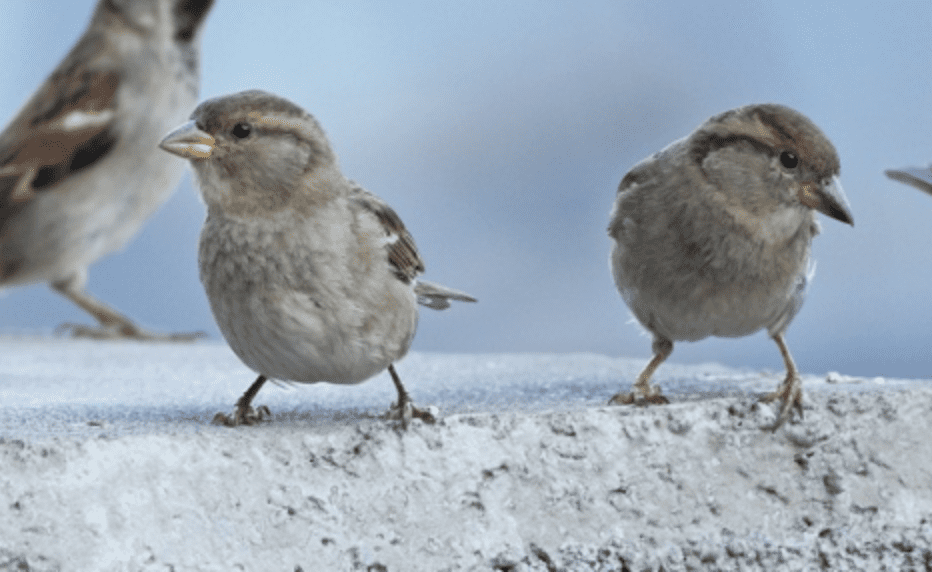
Do Sparrow Cause Damage?
Damages Caused by Sparrows
- The sparrows are a host of some parasites and diseases. They are the source of dissemination of diseases like Chlamydiosis, Salmonellosis, Mycoplasma diseases, protozoal diseases and internal parasites like roundworms and tapeworms.
- Sparrows are recorded to possess bacterial pathogens which are common to humans like Salmonella and Escherichia coli. They serve as a reservoir host to transmit diseases to humans.
- They also host avian pox and avian malaria which spreads to the native birds.
- The sparrows are infested by a number of external parasites like mites, fleas or ticks.
- Localized damage to the grain fields can be done by sparrows as the feed in large numbers over a small area.
- Sparrows can damage the crops by feeding on seedlings, seeds, flowers and fruits.
- They interfere with the production of livestock especially poultry by contaminating their feed.
- Bird droppings can cause damage to the roofs as they are very acidic in nature. They may cause damage to the machinery like air conditioner equipment’s, industrial machinery and may pose a health risk to workers. They also pose dangerous health risks to workers.
- Bird droppings can ruin plastics, chemical, and liquids when they are being manufactured.
- They enter through broken or unsealed holes into the attics of houses, apartments, and buildings. They construct their nests in such places and ruin the whole area with their bodily wastes.
- Sparrow’s nests may cause blockage of the drainage systems along with damage to the roofs.
House sparrows consume grains in fields and in storage. Localized damage can be considerable since sparrows often feed in large numbers over a small area. Sparrows damage crops by pecking seeds, seedlings, buds, flowers, vegetables, and maturing fruits. They interfere with the production of livestock, particularly poultry, by consuming and contaminating feed.
Because they live in such close association with humans, they are a factor in the dissemination of diseases (chlamydiosis, coccidiosis, erysipeloid, Newcastle’s, parathypoid, pullorum, salmonellosis, transmissible gastroenteritis, tuberculosis, various encephalitis viruses, vibriosis, and yersinosis), internal parasites (acariasis, schistosomiasis, taeniasis, toxoplasmosis, and trichomoniasis), and household pests (bed bugs, carpet beetles, clothes moths, fleas, lice, mites, and ticks).
House sparrow droppings and feathers create janitorial problems, as well as hazardous, unsanitary, and odoriferous situations inside and outside of buildings and sidewalks under roosting areas.
Damage can also be caused by the pecking of rigid foam insulation inside buildings. The bulky, flammable nests of house sparrows are a potential fire hazard. The chattering of the flock on a roost is an annoyance to nearby human residents.
Habitat
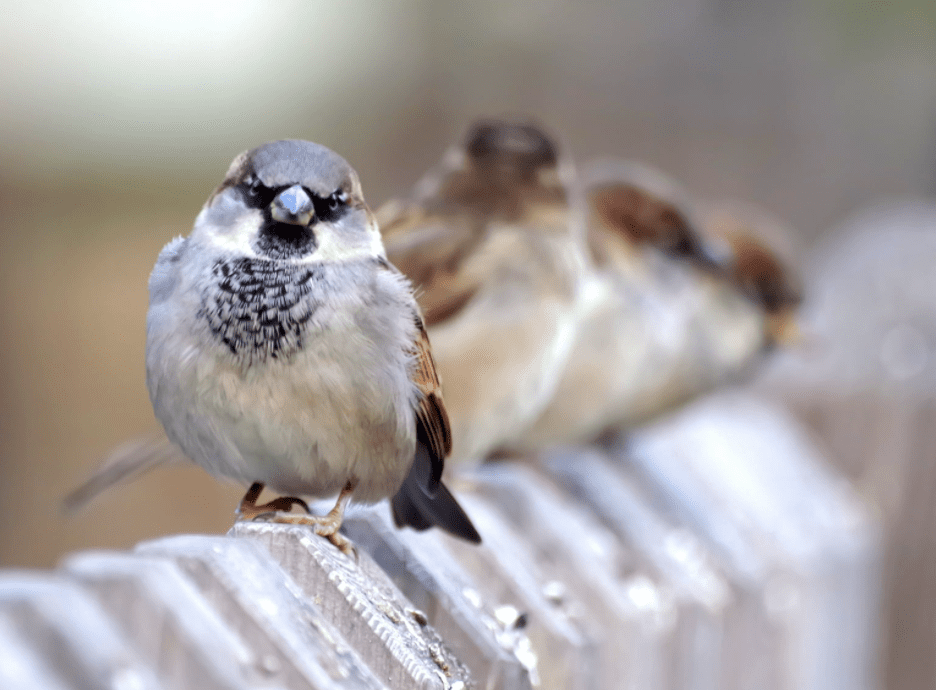
The house sparrow is found in nearly every habitat except dense forests, alpine, and desert environments. Sparrows typically prefer human-altered habitats, particularly farm and grassy areas. It is the most common bird in most urban areas.
Food Habits
House sparrows are primarily granivorous. Plant materials (grain, fruit, seeds, and garden plants) make up 96% of the adult diet. The remainder consists of insects, earthworms, and other animal matter.
Garbage, bread crumbs, and refuse from fast-food restaurants can support sparrow populations in urban habitats.
About Pigeon Patrol:
Pigeon Patrol Products & Services is the leading manufacturer and distributor of bird deterrent (control) products in Canada. Pigeon Patrol products have solved pest bird problems in industrial, commercial, and residential settings since 2000, by using safe and humane bird deterrents with only bird and animal friendly solutions. At Pigeon Patrol, we manufacture and offer a variety of bird deterrents, ranging from Ultra-flex Bird Spikes with UV protection, Bird Netting, 4-S Gel and the best Ultrasonic and audible sound devices on the market today.
Contact us at 1- 877– 4– NO-BIRD, (604) 585-9279 or visit our website at www.pigeonpatrol.ca
Pigeon / Pigeon Patrol / Pigeons Roosting / Vancouver Pigeon Patrol / Bird Control / Surrey Pigeon Control / Pest / Vancouver Pigeon Blog / Birds Inside Home / Pigeons in the cities / Ice Pigeons/ What to do about pigeons/ most common types of sparrows , Damages Caused by Sparrows