by Pigeon Patrol | Jun 4, 2014 | Bird Deterrent Products, Bird Netting, Pigeon Spikes, Pigeons in the News, UltraSonic Bird Control
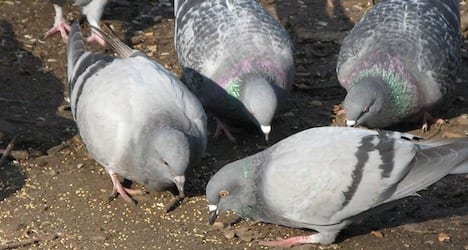
 A Harris hawk has been released into the skies above Watford town centre to terrify pigeons away from the newly revamped Parade.Officials said the hawk, called Angel, has been trained not to maul the pigeons but only scare them away and described the method as the most “humane” available.
“Harris hawks are relatively timid and will not hunt anything much bigger or faster than them, but they will make urban pigeons feel suitably unwelcome.”
Alongside its aerial assault, the council is also mounting an information campaign against town centre pigeons.
“By flying a Harris Hawk trained not to harm the pigeons, just deter them, we’ve found an effective but humane method of pest control.”
Officers have been handing out leaflets encouraging people not to feed pigeons and the council has also commissioned a video, which compares the bird to rats.
The anti-pigeon initiative comes as the redevelopment of The Parade nears completion. Part of the project will see the northern end of the pedestrianised area de-cluttered and opened up to be used for cultural events.
About Pigeon Patrol:
Pigeon Patrol Products & Services is the leading manufacturer and distributor of bird deterrent (control) products in Canada. Pigeon Patrol products have solved pest bird problems in industrial, commercial, and residential settings since 2000, by using safe and humane bird deterrents with only bird and animal friendly solutions. At Pigeon Patrol, we manufacture and offer a variety of bird deterrents, ranging from Ultra-flex Bird Spikes with UV protection, Bird Netting, 4-S Gel and the best Ultrasonic and audible sound devices on the market today.
Voted Best Canadian wholesaler for Bird Deterrent products four years in a row.
Contact Info: 1- 877– 4– NO-BIRD (www.pigeonpatrol.ca)
by Pigeon Patrol | May 6, 2014 | Bird Deterrent Products, Pigeons in the News
by Pigeon Patrol | May 4, 2014 | 4-S Gel Bird repellent, Bird Deterrent Products, Bird Netting, Pigeon Patrol's Services, Pigeon Spikes, Pigeons in the News, UltraSonic Bird Control
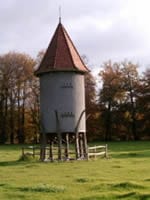
 The use of artificial breeding facilities (ABFs) such as dovecotes or pigeon lofts as a method of pigeon control is becoming increasingly popular in Europe with many users experiencing astonishing results. This control was pioneered by the Pigeon Control Advisory Service (PiCAS International) in the 1970s as a means of humanely and naturally controlling pigeon flock size without the need to resort to invasive and ineffective lethal controls. In the 1980s the scientific world took an interest in the use of ABFs to control pigeon populations with research* proving conclusively that lethal controls, when used on pigeons, were not only ineffective but may actually have the effect of increasing pigeon flock size. The same research found that ABFs were a highly effective means of reducing pigeon flock size.
The use of ABFs as a method of pigeon control is one of the most effective and cost-effective methods of reducing the impact of entrenched area-wide pigeon-related problems for property owners. The principle of this method of control is to provide an artificial breeding facility in which pigeons are encouraged to roost and breed and from which newly laid eggs are removed and substituted with dummy eggs. When eggs are removed they must always be replaced with dummy eggs to ensure that the hen bird does not continue to produce more eggs. If the hen does lay and re-lay every time her eggs are removed this may result in a calcium deficiency in the bird and as the goal is a small and healthy flock of pigeons, health-related issues must be prioritised. ABFs come in two forms; loft-type facilities that would normally be provided on or in a building anddovecote facilities that might be provided in a public park or in similar urban areas where pigeons can be accommodated and tolerated without causing problems.
About Pigeon Patrol:
Pigeon Patrol Products & Services is the leading manufacturer and distributor of bird deterrent (control) products in Canada. Pigeon Patrol products have solved pest bird problems in industrial, commercial, and residential settings since 2000, by using safe and humane bird deterrents with only bird and animal friendly solutions. At Pigeon Patrol, we manufacture and offer a variety of bird deterrents, ranging from Ultra-flex Bird Spikes with UV protection, Bird Netting, 4-S Gel and the best Ultrasonic and audible sound devices on the market today.
Voted Best Canadian wholesaler for Bird Deterrent products four years in a row.
Contact Info: 1- 877– 4– NO-BIRD (www.pigeonpatrol.ca)
The information on this blog is for personal use only. Content for this blog obtained from other websites is not being used for any commercial reasons whatsoever as per the copyright statement on the Pigeon Control Resource Centre’s website. http://www.pigeoncontrolresourcecentre.org/ Special thanks for the people and companies that helped gather this information. This information is to be used for reference only.
by Pigeon Patrol | May 4, 2014 | Bird Deterrent Products, Bird Netting, Pigeon Patrol's Services, Pigeon Spikes, UltraSonic Bird Control
 Tips for Effective Bird Control Management
Bird nests should be removed prior to using any Bird Deterrent. If there is a nesting situation involved. If birds are in trees, and nests cannot be physically removed, products need to be in the trees with the birds in order to have any desired effect!
Some electronic products work immediately! Actually, in some cases, the electronics DO produce immediate and dramatic results. BUT, as a general rule, and considering the thousands of situations and environments it may take several days and patience for the product to affect the birds. Again, in cases of nests, the continued existence of the bird nests, especially in the spring, will be an instinctive magnet for the birds.
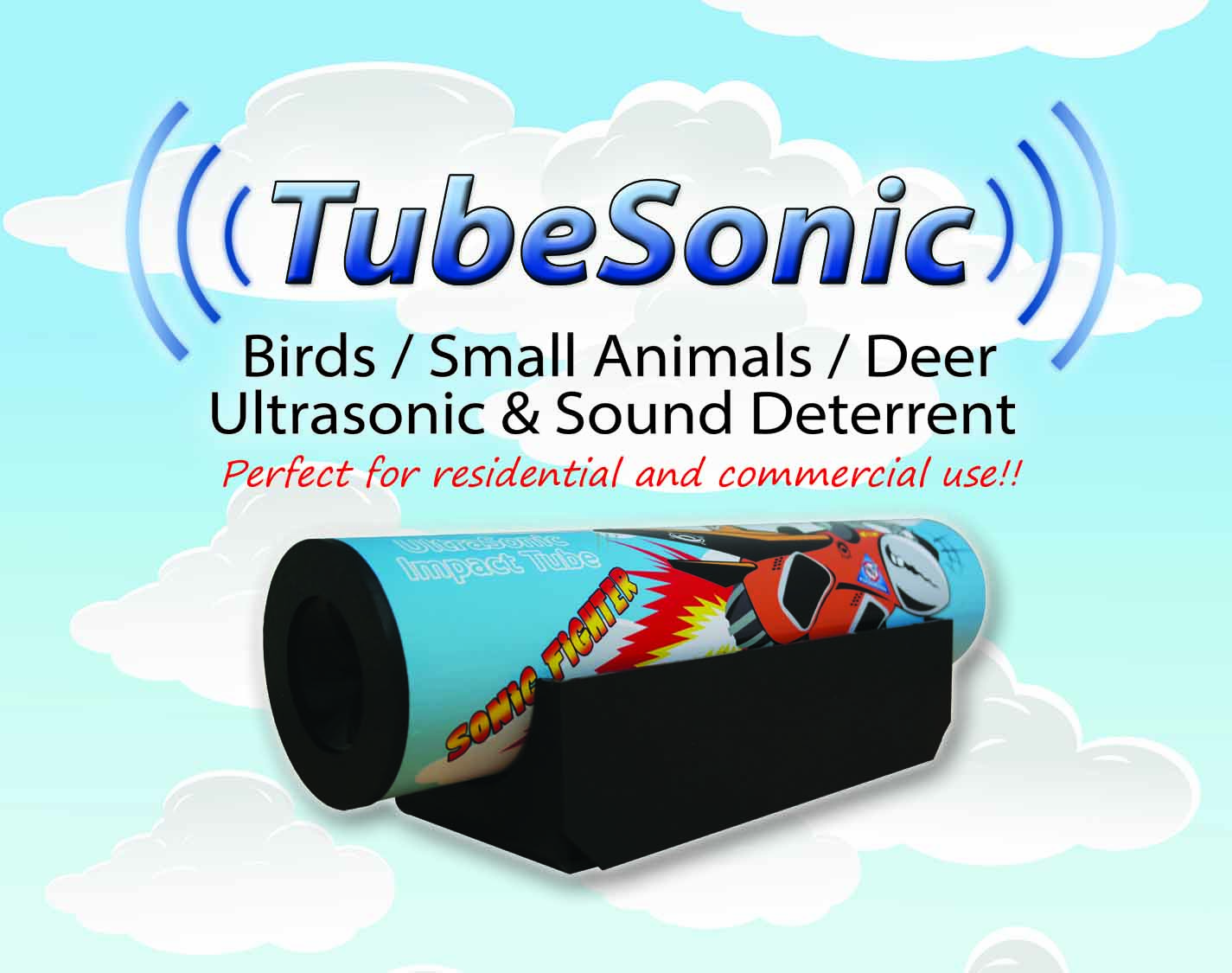
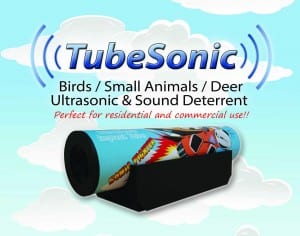
Electronic products need to be installed at the correct level. In order for the electronic product to work most effectively, the birds must be exposed proximately and consistently to the sounds whether they are ultrasonic sounds (silent to humans) or the occasional sonic sounds (natural sounds of predator birds like hawks and falcons and bird distress signals). This means that the speaker of a given system must be all the way up at the level of the birds and the birds ideally should be exposed to the sounds at a reasonable distance for a good deal of the time to break their particular habit.
Some electronic bird control devices can control 100% of the birds 100% of the time in 100% of applications! However there are simply too many environments and contributing factors which may determine how well an electronic repeller works, how fast it takes effect and what percentage of the problem a given repeller is capable of solving.
Sound devices are designed, in part, to change behavior patterns of birds. The systems are programmed by the user and the programming is there so it can be altered frequently or periodically to continue to chase the birds. Nest removal may have to be more frequent than once to help the longevity of the control program.
Survey the birds. Gather specific data as to the type and population of birds, length of time of their residence, flight and time patterns, entries, exits and favorite areas, and nesting, feeding and roosting habits.
Survey your property. Discover what the birds find attractive about your area (food, shelter, hidden recesses…), and whether the same conditions prevail in neighboring properties. Note overhangs or foliage above current infestations.
Remove all inducements. Before installing any product, make sure to clean the area of all evidence of birds: nests, fledglings, droppings, dead birds, and the residual scent. (Adult birds are likely to return to their young in order to protect them or to assist them in leaving the area.) Also remove food spillage, garbage, nesting material and other items that may be appealing to birds.
Maintain a clean and changing environment. For maximum effectiveness, periodically clean the area of nests, debris and droppings. This should be done often on a new installation to ensure that birds do not try to return to their old habits.
Install early. It is always best to install a product before “bird season” begins; it is easier to keep the birds away than to rout them out once they have already established a living pattern.
 Consider alternate locations. Make educated guesses as to where the birds will go when they are repelled from their current infestation. It may be very easy for birds to relocate to the other side of a roof or warehouse, an adjacent loading dock or a nearby gutter or pipe. Products should be applied to, or installed in, these adjacent areas as well.
About Pigeon Patrol:
Pigeon Patrol Products & Services is the leading manufacturer and distributor of bird deterrent (control) products in Canada. Pigeon Patrol products have solved pest bird problems in industrial, commercial, and residential settings since 2000, by using safe and humane bird deterrents with only bird and animal friendly solutions. At Pigeon Patrol, we manufacture and offer a variety of bird deterrents, ranging from Ultra-flex Bird Spikes with UV protection, Bird Netting, 4-S Gel and the best Ultrasonic and audible sound devices on the market today.
Voted Best Canadian wholesaler for Bird Deterrent products four years in a row.
Contact Info: 1- 877– 4– NO-BIRD (www.pigeonpatrol.ca)
The information on this blog is for personal use only. Content for this blog obtained from other websites is not being used for any commercial reasons whatsoever. Special thanks for the people and companies that helped gather this information. This information is to be used for reference only.
by Pigeon Patrol | May 1, 2014 | 4-S Gel Bird repellent, Animal Deterrent Products, Bird Deterrent Products, Bird Netting, Pigeon Spikes, UltraSonic Bird Control
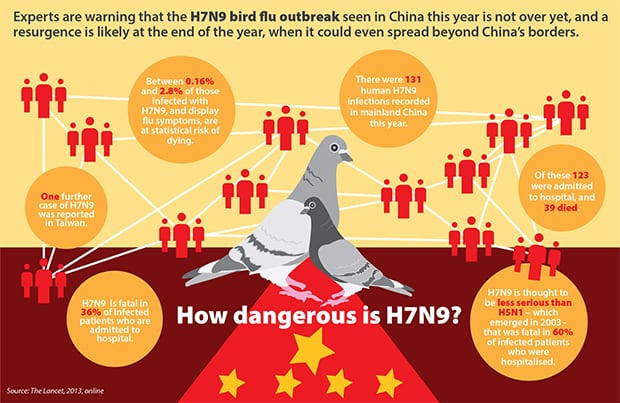
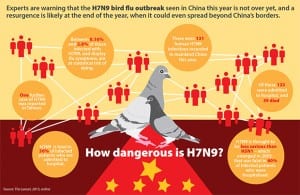
 More than 60 transmissible diseases (some of which are fatal) are associated with geese, pigeons, starlings and house sparrows. For example:
Histoplasmosis is a respiratory disease that may be fatal. It results from a fungus growing in dried bird droppings.
Candidiasis is a yeast or fungus infection spread by pigeons. The disease affects the skin, the mouth, the respiratory system, the intestines and the urogenital tract, especially the vagina. It is a growing problem for women, causing itching, pain and discharge.
Cryptococcosis is caused by yeast found in the intestinal tract of pigeons and starlings. The illness often begins as a pulmonary disease and may later affect the central nervous system. Since attics, cupolas, ledges, schools, offices, warehouses, mills, barns, park buildings, signs, etc. are typical roosting and nesting sites, the fungus is apt to found in these areas.
St. Louis Encephalitis, an inflammation of the nervous system, usually causes drowsiness, headache and fever. It may even result in paralysis, coma or death. St. Louis encephalitis occurs in all age groups, but is especially fatal to persons over age 60. The disease is spread by mosquitoes which have fed on infected house sparrow, pigeons and house finches carrying the Group B virus responsible for St. Louis encephalitis.
Salmonellosis often occurs as “food poisoning” and can be traced to pigeons, starlings and sparrows. The disease bacteria are found in bird droppings; dust from droppings can be sucked through ventilators and air conditioners, contaminating food and cooking surfaces in restaurants, homes and food processing plants.
Besides being direct carriers of disease, nuisance birds are frequently associated with over 50 kinds of ectoparasites, which can work their way throughout structures to infest and bite humans. About two-thirds of these pests may be detrimental to the general health and well-being of humans and domestic animals. The rest are considered nuisance or incidental pests. A few examples of ectoparasites include:
Chicken mites (Dermanyssus gallinae) are known carriers of encephalitis and may also cause fowl mite dermatitis and acariasis. While they subsist on blood drawn from a variety of birds, they may also attack humans. They have been found on pigeons, starlings and house sparrows.
Yellow mealworms (Tenebrio molitor), perhaps the most common beetle parasites of people in the United States, live in pigeon nests. It is found in grain or grain products, often winding up in breakfast cereals, and may cause intestinal canthariasis and hymenolespiasis.
West Nile Virus while West Nile is technically not transmitted to humans from birds, humans can get infected by the bite of a mosquito who has bitten an infected bird. The obvious lesson is that the fewer birds there are in any given area, the better. This translates into a smaller chance of an infected bird in that area, a smaller chance of a mosquito biting an infected bird and then biting a human.
About Pigeon Patrol:
Pigeon Patrol Products & Services is the leading manufacturer and distributor of bird deterrent (control) products in Canada. Pigeon Patrol products have solved pest bird problems in industrial, commercial, and residential settings since 2000, by using safe and humane bird deterrents with only bird and animal friendly solutions. At Pigeon Patrol, we manufacture and offer a variety of bird deterrents, ranging from Ultra-flex Bird Spikes with UV protection, Bird Netting, 4-S Gel and the best Ultrasonic and audible sound devices on the market today.
Voted Best Canadian wholesaler for Bird Deterrent products four years in a row.
Contact Info: 1- 877– 4– NO-BIRD (www.pigeonpatrol.ca)