by Pigeon Patrol | May 19, 2016 | 4-S Gel Bird repellent, Animal Deterrent Products, Bird Deterrent Products, Bird Netting
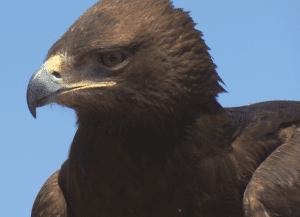
 Marlborough Falcon Trust handler, Rob Lawry, is using Tappe the falcon on the campus at University of Canterbury to scare away pigeons as a humane pest control measure.
The University of Canterbury (UC) hopes a native falcon will eradicate hundreds of pigeons plaguing the campus.
In its latest move to reduce the pigeon population, a karearea bird – as pictured on the $20 banknote – has been trained to make territorial flights to scare off flocks of pest birds from buildings and the campus.
Marlborough Falcon Trust handlers Vikki Smith and Rob Lawry have been free-flying the specially bred one-year-old karearea, called Tappe, in what is believed to be the first programme of its kind in New Zealand.
Hundreds of pigeons are plaguing the University of Canterbury campus.
UC engineering services manager Rob Oudshoorn said the pigeon problem had “escalated dramatically” since the quakes when central city roosting spots were pulled down.
Combined with an abundance of food from the ruined city and the campus’ proximity to town, the university’s pigeon population has ballooned into the hundreds and affects more than 20 buildings.
The falcon is the university’s latest innovation to solve the problem after unsuccessful attempts using electric fencing, spikes and controlled culling with slug guns, Oudshoorn said.
Marlborough Falcon Trust handler Rob Lawry hopes Tappe, a karearea bird, will stop University of Canterbury’s pigeon problem.
Excrement is the biggest problem the birds bring as it piles around doors, windows, footpaths, and roofs, he said. Where pigeon numbers are high, buildings deteriorate more rapidly and the spread of disease increases.
“And depending on the scale of it, it can become quite an issue. In the extreme if it’s left there for a long period of time, those piles of excrement bring in maggots, and the excrement itself is pretty toxic too really.”
With a population of around 6000, karearea are rare. They are a natural predator to pigeons, which use avoidance and escape as a natural defence.
The natural bird control technique is used around the world, including Dubai, airports and London’s Trafalgar Square.
Lawry said the birds are trained to fly to a lure held by an instructor, rather than to capture birds.
“As the falcon comes rocketing towards the lure I pass it behind me in the direction I want it to travel, and so he goes up high in that direction. When he goes high the pigeons will go ‘I’m out of here because there’s a falcon here’. But at that point if there’s a really slow pigeon the falcon might get it.”
Lawry said Tappe had responded well to training at UC and would expand the program
About Pigeon Patrol:
Pigeon Patrol Products & Services is the leading manufacturer and distributor of bird deterrent (control) products in Canada. Pigeon Patrol products have solved pest bird problems in industrial, commercial, and residential settings since 2000, by using safe and humane bird deterrents with only bird and animal friendly solutions. At Pigeon Patrol, we manufacture and offer a variety of bird deterrents, ranging from Ultra-flex Bird Spikes with UV protection, Bird Netting, 4-S Gel and the best Ultrasonic and audible sound devices on the market today.
Voted Best Canadian wholesaler for Bird Deterrent products four years in a row.
Contact Info: 1- 877– 4– NO-BIRD (www.pigeonpatrol.ca)
by Pigeon Patrol | May 13, 2016 | Animal Deterrent Products, Bird Netting, Pigeon Spikes, Pigeons in the News
 Each year, thousands of Arizona residents email or call Rosie Romero’s radio show with questions about everything from preventing fires in their chimneys to getting rid of tree roots invading their sewer system. His goal is to provide answers that suit the specific lifestyle wherever someone lives in Arizona.
Q: I’m interested in having a solar electrical system built on my roof. But I’m wondering what experience the solar industry has had with birds that try to nest under the panels. I have a sloped roof. Would it be harder for nests to be built in that situation?
A: Most of the time when birds try to nest under solar panels, it’s usually in the case of flat roofs. Generally, a frame is put up to deter birds from nesting. In addition, there are wire-mesh devices that can clip onto solar panels to keep doves and pigeons out. Plastic bird netting can be used as well.
Q: I have a foam roof on my home in Tucson and my air conditioner is on top of that roof, along with my ductwork. The ducts that come down into the house have been insulated with foam as well. But recently, my roof has sprung a leak around the air conditioner. Roofers have told me that to fix the leak, I have to take off the entire foam roof. Why can’t I just take off one section of the foam and then patch that area with new foam? The roofer says I can’t because new foam won’t stick to the old.
A: I can understand what you’re trying to say, and actually it does seem as if you should be able to do that. However, if the elastomeric coating that is on top of the foam has been sunburned, it might be impossible to get the foam patch to stick. You should get a second opinion on your situation from a qualified, experienced foam-roofing company.
Q: Does a person who climbs up on your roof to inspect the damage need to have a license or do they have to have some kind of certification? In other words, can my neighbor go up and inspect my flat roof to tell me what is wrong and where my leak is coming from?
A: Obviously, anyone can go up on your roof to check out what’s going on, and that person doesn’t need a license or certification. But I wouldn’t send just anyone up there; you need a licensed contractor who has a significant amount of experience. For one thing, flat roofs are tough to troubleshoot, because water can travel from one spot on a roof to another to leak into your house. Although walking around on a flat roof can be easier, one misstep on a sloped roof can lead to a fall or other injury. And sometimes just walking on a roof can do quite a bit of damage.
Keep in mind that if there is a problem on a roof that needs fixing and that fix requires $1,000 worth of work, then the repair has to be done by a company licensed by the state registrar of contractors.
About Pigeon Patrol:
Pigeon Patrol Products & Services is the leading manufacturer and distributor of bird deterrent (control) products in Canada. Pigeon Patrol products have solved pest bird problems in industrial, commercial, and residential settings since 2000, by using safe and humane bird deterrents with only bird and animal friendly solutions. At Pigeon Patrol, we manufacture and offer a variety of bird deterrents, ranging from Ultra-flex Bird Spikes with UV protection, Bird Netting, 4-S Gel and the best Ultrasonic and audible sound devices on the market today.
Voted Best Canadian wholesaler for Bird Deterrent products four years in a row.
Contact Info: 1- 877– 4– NO-BIRD (www.pigeonpatrol.ca)

by Pigeon Patrol | May 11, 2016 | Animal Deterrent Products, Bird Deterrent Products, Bird Netting
 A MUM intends to fight an on-the-spot £50 fine for feeding pigeons in the city centre after claiming she had no idea it was an offence.
Claire Jenkins admitted doing that near Topshop in Oxford Street when confronted by a litter enforcement officer, but said that it only involved little scraps of bread.
“I bought a frankfurter for me and a burger for my 16-year-old son from one of the street outlets,” said Mrs Jenkins, of Clos Trafle, Gowerton. “We eat them on the bench there. We had little scraps left. I put mine on the bench and he put his on the ground. We walked to a bin to put our napkins in and when we turned around a warden said it was classified as litter. I thought he was joking. I live in Gowerton and never come into Swansea. I said I didn’t know about it and didn’t see any signs.”
Mrs Jenkins said she was given a £50 fixed penalty rising to £75 if not paid with seven days, and leading to a magistrates court appearance if the latter was not paid within 14 days.
Seagull feeding fines dropped because religions could be offended, but Swansea says not
“I found it degrading,” she said. “I was feeding crumbs. I didn’t know it was classed as an offence.”
A Swansea Council spokesman said: “We launched a city-wide campaign in the summer to encourage the public to put leftover food in the bin and not throw it on the ground for birds. This was following a request by city centre businesses whose customers say they have been plagued by seagulls that are causing a nuisance, particularly when people are consuming food.
“The feedback we received from visitors has been very positive. Posters have been put up on bins in the city centre advising shoppers of the penalties for littering and our message is that if you don’t drop litter you won’t face the fine.”
About Pigeon Patrol:
Pigeon Patrol Products & Services is the leading manufacturer and distributor of bird deterrent (control) products in Canada. Pigeon Patrol products have solved pest bird problems in industrial, commercial, and residential settings since 2000, by using safe and humane bird deterrents with only bird and animal friendly solutions. At Pigeon Patrol, we manufacture and offer a variety of bird deterrents, ranging from Ultra-flex Bird Spikes with UV protection, Bird Netting, 4-S Gel and the best Ultrasonic and audible sound devices on the market today.
Voted Best Canadian wholesaler for Bird Deterrent products four years in a row.
Contact Info: 1- 877– 4– NO-BIRD (www.pigeonpatrol.ca)
by Pigeon Patrol | May 9, 2016 | Animal Deterrent Products, Bird Deterrent Products, Bird Netting, Pigeon Spikes
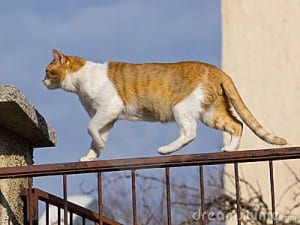
 The Village of Lancaster has taken preventive measures to halt an increase in the feral cat and rat population.
The Village Board passed a resolution on Monday accepting trap, neuter and return programs as viable and acceptable population control tools for the cats.
Where’s the story?
PointsMentioned Map7 Points Mentioned
Board members voted unanimously to allow people to go into areas affected by large populations of feral and free-roaming cats, trap them, spay or neuter them, and set them free. The groups humanely trap the cats and vaccinate them before they are released back into the areas where they were found.
Historically, the practice has been to trap the animals and kill them.
However, under what the village is calling the TNR program, the animals will act as placeholders, occupying territory and living their lives without more cats moving into the area. The existing cats will not have the means to reproduce if trapped, limiting the growth of population.
“In lieu of destroying feral cats, they are going to be gathered, neutered and released back to where they were found,” said Village Attorney Arthur Herdzik, who wrote the resolution. “Studies indicate that destroying them creates a vacuum that other cats fill. There is also a cruelty issue.”
Under the resolution, the trapping of cats is now legal in the village and residents are encouraged to participate.
The board was approached by Feral Cat FOCUS Inc., an all-volunteer, not-for-profit company that deals with cat populations in this manner for the safety of the animals and of the people who live in the affected neighborhoods.
“[FOCUS] approached me. It is a humane way to treat cats. They aren’t taken to a shelter. The Erie County Legislature is endorsing this,” said village Trustee Russell W. Sugg. “Groups like FOCUS will educate the public. There is no cost to the village.”
According to FOCUS, the group has already performed 60 to 70 recent procedures on cats in the Lancaster area.
Buffalo, Williamsville, Springville and West Seneca have recently passed similar legislation.
The village has also seen an increase in activity from rat populations.
According to Shawn Marshall, the village’s code enforcement officer, he has received around 75 calls from residents complaining about rats since he took the job in June.
“The downtown business district area has had problems for years now.” said Marshall.
Rats have become more active and are attracted to dog feces, open garbage cans, leaf and firewood piles, and vacant structures.
At this time, the village does not have lidded garbage totes for trash collection.
According to Marshall, the totes would have to be provided by the Town of Lancaster and the cost to provide the totes to residents would be in the millions of dollars as the current fleet of trucks is not fitted with tote lifts.
Residents can prevent any possible rat infestation by cleaning up leaf piles, lifting firewood piles off the ground, getting lidded garbage cans and regularly cleaning up any waste from pets and disposing of it properly.
If residents have a rat issue, they can contact the Erie County Health Department, which will bait the rats for disposal.
According to Marshall, the county will take care of the problem in about a week.
Marshall is no stranger to rats. Near his home on Como Park Boulevard near Aurora Street, he had a problem at the beginning of November. He returned home one night to see a rat on one of his decorative Halloween pumpkins.
Marshall said all he can do is direct people to the county Health Department.
Residents can contact the Erie County Health Department by calling 858-7690.
About Pigeon Patrol:
Pigeon Patrol Products & Services is the leading manufacturer and distributor of bird deterrent (control) products in Canada. Pigeon Patrol products have solved pest bird problems in industrial, commercial, and residential settings since 2000, by using safe and humane bird deterrents with only bird and animal friendly solutions. At Pigeon Patrol, we manufacture and offer a variety of bird deterrents, ranging from Ultra-flex Bird Spikes with UV protection, Bird Netting, 4-S Gel and the best Ultrasonic and audible sound devices on the market today.
Voted Best Canadian wholesaler for Bird Deterrent products four years in a row.
Contact Info: 1- 877– 4– NO-BIRD (www.pigeonpatrol.ca)
by Pigeon Patrol | May 8, 2016 | 4-S Gel Bird repellent, Animal Deterrent Products, Bird Deterrent Products, Bird Netting, Pigeon Spikes
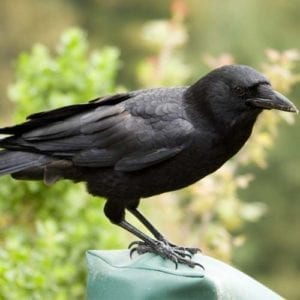
 Back in February, the BBC posted a story about a Seattle girl who got gifts from crows. She was brought bolts, beads, buttons, earrings, and bones, among other things. It was also revealed that she feeds these animals. The essence of the story, the reason it went viral, is it so perfectly, in the popular imagination, captured an innocent relationship between a child and the wild. The birds understood her and she understood them. Like all children, she had not become a human (experienced) yet. She still had a primal connection with the animal kingdom.
But even this paradise proved to be short-lived. By August, the neighbors of the girl were suing her family for attracting all manner of wild urban life to their upscale Seattle neighborhood, Portage Bay. Crows, pigeons, squirrels, and even rats, they claimed, had all learned about this girl and her generosity. Seagulls were seen as flying from Elliot Bay to Portage Bay with the certainty that the main problem of life will be solved there. The neighbors claimed that, as a consequence, the shit of these synanthropic animals spoiled their properties. They wanted $200,000 in damages. Now the girl’s family is fighting back, claiming their daughter’s feeding has not attracted rats and gulls.
What to make of this situation? I asked my favorite writer and thinker on crows, Lyanda Lynn Haupt (she wrote Crow Planet: Essential Wisdom from the Urban Wilderness), for her view on the escalating tensions in Portage Bay. She responded with a lovely and insightful letter:
I think that many people long for a sense of connection with wild animals. This story served up evidence of such a possibility, and it captured everyone’s imagination. Plus, let’s face it—that little girl is cute as pie. No wonder social media went crazy. Did the crow really bring gifts to the girl? Some crows do gather shiny bits of this and that—gum wrappers, thumb tacks, shells, foil, bright red berries—and cache them in one place. Little collections of treasure. I can see how this action could be interpreted as the bringing of gifts to the little girl with the food, and there is little harm in imagining this to be so. That said, there is no reason to be feeding crows. They are already flourishing in the urban environment, and the neighbors are right—the amount of food it takes to bring in that many crows can make a mess and invite even more problematical urban wildlife. Even in this little video there are squirrels and pigeons. Whether there is evidence of rats or not, they are common visitors to urban bird feeders, even much smaller ones.
The neighbors are freaking out a bit. It is not “The Birds.” No one is going to get sick. And hanging dead crows on your porch (legal or not) to deter the neighbors and their crow visitors is just creepy. But lots of crows and pigeons and food and mess around? I agree, not good. Loud, annoying. And not in line with a deeper understanding of what helps and what harms urban wildlife. To live well alongside urban wildlife and our human neighbors: Keep cat and dog food inside (so as not to attract rodents, raccoons, coyotes, and crows). Close up entrance holes to keep animals from entering to shelter or nest. And if you do feed birds: just small feeders for small birds, cleaned scrupulously, with seeds that fall beneath cleaned up daily. Better would be to plant native trees and shrubs with seeds and berries that local birds love. I think it is a beautiful privilege to live alongside wild creatures close to home. But we need to do it with some grace and wisdom.
I think the story is sticking around so long because of the winning combination: cute girl with pet wild birds and lawsuit!
There is one more thing. I think if the crow feeder was a boy, the neighborhood may not have been so aggressive and filed a lawsuit. What is seen as annoying in a girl is often registered as a gift in a boy.
About Pigeon Patrol:
Pigeon Patrol Products & Services is the leading manufacturer and distributor of bird deterrent (control) products in Canada. Pigeon Patrol products have solved pest bird problems in industrial, commercial, and residential settings since 2000, by using safe and humane bird deterrents with only bird and animal friendly solutions. At Pigeon Patrol, we manufacture and offer a variety of bird deterrents, ranging from Ultra-flex Bird Spikes with UV protection, Bird Netting, 4-S Gel and the best Ultrasonic and audible sound devices on the market today.
Voted Best Canadian wholesaler for Bird Deterrent products four years in a row.
Contact Info: 1- 877– 4– NO-BIRD (www.pigeonpatrol.ca)
by Pigeon Patrol | May 7, 2016 | 4-S Gel Bird repellent, Animal Deterrent Products, Bird Netting, Pigeon Patrol's Services
 A warehouseman died from lung cancer caused by birds pecking the asbestos roof of a store where he used to work, an inquest heard.
For 12 years the deadly dust floated down on Anthony Jones, who got a job at the cash and carry when he was 15 but left three decades ago.
He was killed this year, aged 57, by mesothelioma – a type of lung cancer whose only known cause is asbestos fibres.
Mr Jones had said after being told he had terminal cancer: “I can’t recall ever working with or near asbestos.
“My exposure was most likely at the firm’s ex-premises in Gloucester, as I was told there was always a problem with birds pecking the asbestos-based roof.”
GNSThe cash’n carry warehouse where Anthony Jones workedDeadly: The cash and carry warehouse where Anthony Jones worked
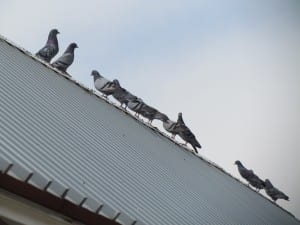
Fibres: Pigeons pecking the asbestos roof were a constant problem
Daily Mirror Campaign Asbestos time bomb logoCall for action: The Daily Mirror has been running the Asbestos Timebomb campaign
A post-mortem on the bachelor, of Frampton on Severn, found 19,355 asbestos fibres per gram of dry lung tissue, a level consistent with work exposure.
Coroner Katy Skerrett recorded a verdict of death due to industrial disease and said: “It’s not the type of employment where you’d expect to be exposed to asbestos.”
The victim’s sister Margaret Ball, 72, said after the Gloucester inquest: “This dust was floating down on him all that time at work and seems that is why he got this terrible disease years later.”
About Pigeon Patrol:
Pigeon Patrol Products & Services is the leading manufacturer and distributor of bird deterrent (control) products in Canada. Pigeon Patrol products have solved pest bird problems in industrial, commercial, and residential settings since 2000, by using safe and humane bird deterrents with only bird and animal friendly solutions. At Pigeon Patrol, we manufacture and offer a variety of bird deterrents, ranging from Ultra-flex Bird Spikes with UV protection, Bird Netting, 4-S Gel and the best Ultrasonic and audible sound devices on the market today.
Voted Best Canadian wholesaler for Bird Deterrent products four years in a row.
Contact Info: 1- 877– 4– NO-BIRD (www.pigeonpatrol.ca)