by Pigeon Patrol | Aug 18, 2016 | Animal Deterrent Products, Bird Deterrent Products, Bird Netting, Pigeon Patrol's Services
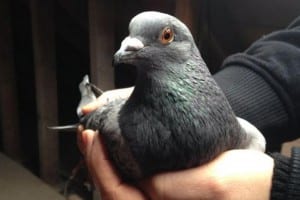
 A pigeon poacher who grabs his prey by hand in a Soho park and sells them to Manhattan merchants claims he’s just a misunderstood bird lover.
“I’ve been poaching pigeons on and off for about 40 years in New York City,” said the unapologetic poacher, who spoke to The Post on the condition of anonymity. “It’s pretty good money; I’ll make $5 a pigeon.
“I’ll sit on a park bench and throw out some food,” he continued. “Within seconds a bunch of pigeons will gather, and with both hands I’ll grab about five at a time around their necks and put them in a black garbage bag. I don’t use a net, my bare hands work fine.
“Pigeons are easy to catch,” the birdman explained. “When pigeons walk around, it’s easy for string to get tangled up around their feet. It cuts off their circulation. That’s why you see so many with missing toes.
“Those are the easiest to catch.”
He nabs his birds in broad daylight and occasionally encounters a disgusted animal-lover.
“I do get confronted by people who’ll come up to me and say, ‘What are you going to do with those pigeons?’
“Have sex with them,” is his usual retort.
“Then they’ll leave me alone,” he said.
The poacher explained how the pigeon market in New York City — home to an estimated 1 million of the birds — works: A client will call him to place an order for 10 to 20 pigeons, he said, and will place orders up to a half-dozen times a year. One order always comes right before the Chinese Lunar New Year.
‘With both hands I’ll grab about five at a time around their necks and put them in a black garbage bag. I don’t use a net, my bare hands work fine’
– pigeon poacher
“In Chinatown they will do a ceremony where they release the pigeons into the wild,” he said. “In their religion, they think it’s bad karma to take from the earth without replenishing it. So this is their way of replenishing the earth.”
Jenny Wong, a spokesperson for the Chinatown Community Cultural Center, claimed to have no knowledge of such a practice.
The poacher also said he sells the birds to “poultry markets” but would not name them.
He admits the pigeon-poaching black market often leads to the birds being sold to rural hunting and shooting clubs for target practice. But he claims he does not sell to those places.
The poacher, without a hint of irony, spoke of pigeons as rat-like creatures before blurting, “I’m a bird lover. I’m a member of the American Mason Pigeon Association.” The Post could find no such group.
Even no-kill birdnapping is a crime, legally and morally, say animal-rights advocates.
“It’s a Class A misdemeanor and it’s punishable for up to a year in jail and a fine of up to $2,000,” said Elinor Molbegott, counsel for the Humane Society of New York. “All birds, including pigeons, are entitled to protection.”
About Pigeon Patrol:
Pigeon Patrol Products & Services is the leading manufacturer and distributor of bird deterrent (control) products in Canada. Pigeon Patrol products have solved pest bird problems in industrial, commercial, and residential settings since 2000, by using safe and humane bird deterrents with only bird and animal friendly solutions. At Pigeon Patrol, we manufacture and offer a variety of bird deterrents, ranging from Ultra-flex Bird Spikes with UV protection, Bird Netting, 4-S Gel and the best Ultrasonic and audible sound devices on the market today.
Voted Best Canadian wholesaler for Bird Deterrent products four years in a row.
Contact Info: 1- 877– 4– NO-BIRD (www.pigeonpatrol.ca)

by Pigeon Patrol | Aug 10, 2016 | Animal Deterrent Products, Bird Deterrent Products, Pigeon Patrol's Services
 Bald eagles aren’t just an iconic national symbol south of the border — here in Toronto, they’re the noble and brave protectors of garbage dumps.
Local landfills are plagued by garbage-eating seagulls. They harm themselves by eating unnatural food sources and can harm the environment by carrying trash outside the landfill.
The city’s eco-friendly solution to that problem? Massive birds of prey that swoop in and scare the seagulls away.
“We train these raptors to chase the gulls away,” said Stephen Bucciarelli, president of Predator Bird Services Inc. “It’s essentially their job to do it. But to them it’s not going to work, they just have fun all day flying around.”
This one-year-old bald eagle is just one of the predatory birds that scares seagulls away from Toronto landfills. It’s still young and will grow to have a white feathered head as it becomes mature.
Falconry is a practice that dates back thousands of years. The predatory birds, including hawks and falcons, were trained to catch prey as food for humans before guns became a common tool in hunting.
Within the last 40 years, companies like Bucciarelli’s have used falconry as a form of bird control.
“We’ve learned how to manage these birds so they are really comfortable at work and effective at it,” he said.
A one-year-old bald eagle is one of the predators that soars across Toronto landfills.
Stephen Bucciarelli is president of Predator Bird Services Inc. The company trains birds of prey to scare away other, smaller birds.
“He’s just learning the ropes of flying in the wind and he’s doing really well,” Bucciarelli said, adding that the eagle and its winged colleagues are so effective at their job that gulls don’t even frequent the landfills anymore — they’ve learned to stay far away.
It’s a win-win because the seagulls don’t know what’s good for them, he said.
“It’s not good for birds to eat unnatural food sources, so if we’re scaring them…they’re going to be eating from natural sources like fish rather than things leftover from humans,” Bucciarelli said.
Seagulls that are harming the environment and themselves by eating unnatural food sources at landfills better watch out. This bald eagle is serious about protecting city territory.
About Pigeon Patrol:
Pigeon Patrol Products & Services is the leading manufacturer and distributor of bird deterrent (control) products in Canada. Pigeon Patrol products have solved pest bird problems in industrial, commercial, and residential settings since 2000, by using safe and humane bird deterrents with only bird and animal friendly solutions. At Pigeon Patrol, we manufacture and offer a variety of bird deterrents, ranging from Ultra-flex Bird Spikes with UV protection, Bird Netting, 4-S Gel and the best Ultrasonic and audible sound devices on the market today.
Voted Best Canadian wholesaler for Bird Deterrent products four years in a row.
Contact Info: 1- 877– 4– NO-BIRD (www.pigeonpatrol.ca)
by Pigeon Patrol | Aug 9, 2016 | Animal Deterrent Products, Bird Deterrent Products, Pigeon Patrol's Services
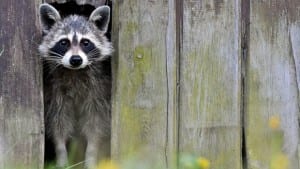
 Don’t blame the raccoons for this one.
At least one of Toronto’s new supposedly raccoon-proof green bins has been chewed up a week after it was wheeled out in Scarborough.
Brad Gates of Gates Wildlife tells Moore in the Morning it looks to him that this is the work of either a squirrel or a rat.
The bite marks on the bin’s plastic lid tell the tale.
The city’s response to the chewed up bin? Try a home remedy: sprinkle a bit of hot sauce on the lid.
“It is not indestructible,” Jim McKay, general manager of solid waste services, says of the new bin.
He says the unique part of the new bin is the locking lid. The rest of it is pretty standard.
McKay says the plastic is basically the same material and thickness as the old bins, which also had squirrel problems.
He does not sound too concerned, adding that only 0.5 per cent of the old bins would have to be replaced each year due to animal damage.
Gates adds there will be pockets of Toronto more overrun by squirrels where the new green bins will be “rendered useless”.
But Gates says there is not much that can guarantee rodents stay out.
“We see raccoons and squirrels chew through metal all the time in our business,” he warns. “As long as they can get an edge to start to open up a hole, they will begin to chew on it.”
Mayor John Tory, who has been a part of two staged photo ops in the last year to show off the new bins joked about the breach on twitter.
Speaking on the Moore in the Morning roundtable councillor Shelley Carroll says city staff has some explaining to do.
“We guaranteed to people that you gotta do the change-out, the locking mechanism will keep out the raccoons. How did they not know about this?”
The city is paying a California firm $31-million for a 10-year contract to replace and maintain Toronto’s 500,000 green bins.
About Pigeon Patrol:
Pigeon Patrol Products & Services is the leading manufacturer and distributor of bird deterrent (control) products in Canada. Pigeon Patrol products have solved pest bird problems in industrial, commercial, and residential settings since 2000, by using safe and humane bird deterrents with only bird and animal friendly solutions. At Pigeon Patrol, we manufacture and offer a variety of bird deterrents, ranging from Ultra-flex Bird Spikes with UV protection, Bird Netting, 4-S Gel and the best Ultrasonic and audible sound devices on the market today.
Voted Best Canadian wholesaler for Bird Deterrent products four years in a row.
Contact Info: 1- 877– 4– NO-BIRD (www.pigeonpatrol.ca)
by Pigeon Patrol | Aug 3, 2016 | Animal Deterrent Products, Bird Deterrent Products, Pigeon Patrol's Services
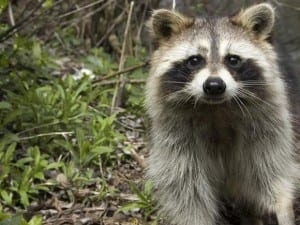
 Pigeons, squirrels, raccoons and deer all have something in common in the City of Victoria’s downtown and environs: They are not to be fed.
The topic has come into the public eye thanks to a photo making the rounds on the Internet. In it, a woman chats to a pair of staffers from Victoria Animal Control Services while surrounded by about 50 pigeons.
Another 30 to 40 birds roost in nearby trees during their conversation, which took place on a Pandora Avenue boulevard near Vancouver Street.
Under a city bylaw, it is illegal to intentionally feed or leave out food for deer, raccoons, squirrels and feral rabbits.
Within the downtown area — an area roughly bounded by Bay Street, the legislature, the harbour and Cook Street — pigeons, crows and gulls may not be fed.
Violators are subject to a fine of $125.
The woman was not issued a ticket.
According to the city, she was merely advised of the regulations.
The animal-control officers went to the area after receiving complaints from residents, said a city spokeswoman.
“There have been growing concerns about the increasing number of pigeons in the area due to daily feeding at this location,” Katie Hamilton said.
“It is resulting in increased noise and bird excrement on neighbouring properties.”
A bylaw against feeding pigeons and other animals was put in place “because of the potential negative impacts in a compact downtown,” she said.
About Pigeon Patrol:
Pigeon Patrol Products & Services is the leading manufacturer and distributor of bird deterrent (control) products in Canada. Pigeon Patrol products have solved pest bird problems in industrial, commercial, and residential settings since 2000, by using safe and humane bird deterrents with only bird and animal friendly solutions. At Pigeon Patrol, we manufacture and offer a variety of bird deterrents, ranging from Ultra-flex Bird Spikes with UV protection, Bird Netting, 4-S Gel and the best Ultrasonic and audible sound devices on the market today.
Voted Best Canadian wholesaler for Bird Deterrent products four years in a row.
Contact Info: 1- 877– 4– NO-BIRD (www.pigeonpatrol.ca)

by Pigeon Patrol | Jul 27, 2016 | Animal Deterrent Products, Pigeon Patrol's Services, Pigeon Spikes
 Police arrested a Gonzales man accused of attempted strong-arm robbery after a foot chase Monday in a residential neighborhood near Sunnyslope Road.
Police arrested Elliot Turpin, 25, on suspicion of residential burglary and attempted strong-arm robbery after a foot chase and neighborhood search, according to a statement from Hollister police.
According to the statement:
On the morning of February 22, 2015, officers responded to two separate theft-related calls in the 1400 block of Sunnyslope Rd. and Diablo Rd. One of those incidents was an attempted strong-arm robbery. Officers conducted investigations and were following up on leads in those cases.
At 11:00 am officers were called to a nearby neighborhood in the 1600 block of Bodega Ct. Officers responded to a report of an interrupted residential burglary. Officers descended on the area and located a suspect, later identified as Elliot Turpin, jumping fences away from the victim’s house towards neighboring residences. Officers purusued Turpin on foot over fences and through backyards. Respondin officers, with the assistance of deputies from the San Benito County Sheriff’s Office, surrounded the neighborhood and began conducting a yard-to-yard search for Turpin. Turpin continued trying to evade officers by jumping between backyards, but he was soon cornered and arrested without further incident.
Officers were able to link Turpin to the theft related incidents earlier in the day, along with fresh residential burglaries. Turpin is on probation in Monterey County for a prior burglary conviction.
Turpin was booked at the San Benito County Jail on charges of burglary, attempted robbery, possession of stolen property, resisting arrest, and probation violations.
About Pigeon Patrol:
Pigeon Patrol Products & Services is the leading manufacturer and distributor of bird deterrent (control) products in Canada. Pigeon Patrol products have solved pest bird problems in industrial, commercial, and residential settings since 2000, by using safe and humane bird deterrents with only bird and animal friendly solutions. At Pigeon Patrol, we manufacture and offer a variety of bird deterrents, ranging from Ultra-flex Bird Spikes with UV protection, Bird Netting, 4-S Gel and the best Ultrasonic and audible sound devices on the market today.
Voted Best Canadian wholesaler for Bird Deterrent products four years in a row.
Contact Info: 1- 877– 4– NO-BIRD (www.pigeonpatrol.ca)
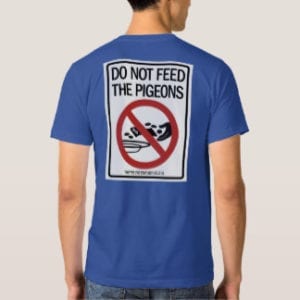
by Pigeon Patrol | Jul 25, 2016 | Animal Deterrent Products, Pigeon Patrol's Services, Pigeons in the News
 People offering grains to feral Common Pigeons (Columba livia) at designated kabutarkhanas or illegitimate feeding places are a common sight these days. It may seem to be a noble deed and is also perceived to be so by many. Hundreds of pigeon-lovers are seen flocking around the grain sellers to purchase the grains to be fed to the pigeons. Mostly such feeding stations are adjacent to places of worship. There are many people who have created mini feeding stations in the balconies, on the window ledges or terraces.
A large number of people feed pigeons for religious reasons, thinking that by feeding pigeons they are helping the birds and perhaps this helps in washing away their sins. People also believe that feeding pigeons brings prosperity to those who feed them. There are others who feed pigeons thinking that pigeons are hungry, need food and would not survive unless fed by them. Grains are purchased and literally scattered in heaps for the pigeons to feed. Such artificial feeding has led to overpopulation of pigeons that is much beyond the carrying capacity of any place.
AT A GLANCE
The global population estimation of Common Pigeons is c.26,00,00,000 (as per BirdLife International and IUCN).
In one of the citizen science programmes launched to monitor common bird species of India, Common Pigeon topped the list with House Crow following at number two.
It is quite obvious that pigeons are doing very well in cities like Mumbai, thanks to the compassion of many citizens.
Do you wonder what keeps the populations of bird species in the wild balanced, be it a pigeon or an eagle? Food chain, to a great extent, regulates relative abundance of each species based on their reproduction, deaths and predator-prey relationship. In case of feral pigeons, in cities like Mumbai, there is a problem of plenty. In the wild, the Common Pigeon (previously known as the Blue Rock Pigeon) is seen around cliffs and rocky areas, which they prefer for nesting. However, in cities and towns their preference for naturally occurring cliffs has been replaced by parapets, AC compressor units and any such flat surface in city buildings where pigeons seek shelter. Due to the constant availability of food, pigeons have started nesting throughout the year; unlike in the wild where nesting season coincides with the food availability in nature. Predatory birds help in keeping the population of pigeons in control by feeding on them in the wild. But unfortunately urbanisation has practically wiped out the predatory birds from most city limits.
Had it been not for our compassionate feeding, the pigeons would have survived anyway but in lesser numbers, enough to be sustained on the natural food availability in and around the cities. By providing them with ready food, pigeons in cities have lost their natural ability to scavenge and survive on their own. Scavenging for food is an important exercise for wild birds that they must indulge in. Such ‘compassionate’ feeding may attract birds (and also rodents like rats and mice) close to you but may also result in nutritional deficiencies in birds. Let the birds decide what they wish to feed on instead of us deciding what they should feed on!
The population explosion of pigeons in cities and towns is a serious trend that is slated to grow in future as there is no dearth of food offered to them and nesting sites in cities. Lots of pigeons around may make some people happy but doctors and veterinarians have often expressed concerns over this issue and advise refraining from feeding pigeons.
Dr Alice Bacon at Fraser and Fraser Vets Ltd, Dingwall, Scotland.
Many people enjoy feeding and watching wild birds, but are unaware that their actions may inadvertently cause more harm than good; supplementary feeding supports unnaturally large pigeon populations, and this over-crowding can cause disease outbreaks in pigeons, other wild birds and humans.”
Keeping leftover food or other food stuff in the balcony for other species of ‘hungry’ birds should also be reassessed and probably discouraged. Veterinarians warn that such bird feeders may act as a nodal point of disease spread to other species of birds for emerging diseases of infectious nature.
Dr Olga Nicolas of Vallcalent Wildlife Rescue Centre in Spain.
It may have a zoonotic risk like Salmonella, Chlamydia, hemoparasites though hippoboscid flies etc.”
As the faecal matter gets dried up it forms fomites which could travel in air facilitating spread of infection. Symptoms of coughing, rhinitis, arthritis and headache could easily be encountered. People in the vicinity of pigeons and their droppings are at the highest risk of catching infection. Other species of birds are at great risk of mutually getting infected as well and it would make the infection to persist for longer. On the other hand, birds quickly get used to our food, which obviously is not their natural food. Also, birds not feeding naturally might affect the ecological food chain as they may not eat the fruit which only germinates when it passes through that bird’s intestine. Our ignorance in these matters can have serious consequences that we may not be even aware of. Then why should we interfere with their routine of scavenging for food? “The natural balance of wildlife populations is very sensitive, and we must be careful of how our interactions affect them”, says Dr Bacon.
Don’t get discouraged as a bird lover! You certainly have a role to play as there are many ways of helping in the conservation of birds. Misplaced compassion is not conservation and often does not help. Planting, nurturing and protecting plant species that provide shade, perches, nesting places, fruits and flowers for wild birds is a more sustainable and a logical way to help in bird conservation than artificially feeding wild birds. There are several other ways of getting involved in the conservation of birds. But of course, it requires you to move out of the comfort of your homes and venture out into the wilderness.
As long-term measures, getting involved in wildlife conservation agencies in personal capacity as volunteers, supporting the community at the fringe of protected areas and organising nature clubs and awareness trails on bird conservation for students, are options which you could consider to make an impact on overall bird conservation.
We sincerely appeal to the concerned authorities to take note of the potential health hazards and ecological ramifications associated with feral pigeons and take immediate steps to close down the kabutarkhanas and other pigeon feeding stations. The surplus population of feral pigeons will thus move out elsewhere in the quest for food. Use of some anti-fertility drug or some such means to control the population growth among the pigeons without harming them could also be an option to be considered in controlling the growing pigeon populations.
Dr Barbara Vogler from National Reference Centre for Poultry and Rabbit Diseases, University of Zurich, Switzerland.
The problem of city pigeons is well recognised in Switzerland since many years. Most people are aware that they should not feed pigeons and commonly only elderly people still do it and we do have population control programmes in Bern and Zurich.”
Anti-fertility drugs, if given orally as meals, would have to be assessed for their impact on other birds too as consumption by other bird species can’t be totally ruled out. Impact of such anti-fertility drugs would need to be assessed for any possible toxic effects down the food chain too. In the larger interest of pigeons and humans, people from all communities should come together to sensitively address this problem.
Kedar Gore is a biologist and wildlife conservationists by profession for over two decades. Dr. Naveen Pandey is veterinarian with an expertise and experience in rescue and treatment of wildlife species
About Pigeon Patrol:
Pigeon Patrol Products & Services is the leading manufacturer and distributor of bird deterrent (control) products in Canada. Pigeon Patrol products have solved pest bird problems in industrial, commercial, and residential settings since 2000, by using safe and humane bird deterrents with only bird and animal friendly solutions. At Pigeon Patrol, we manufacture and offer a variety of bird deterrents, ranging from Ultra-flex Bird Spikes with UV protection, Bird Netting, 4-S Gel and the best Ultrasonic and audible sound devices on the market today.
Voted Best Canadian wholesaler for Bird Deterrent products four years in a row.
Contact Info: 1- 877– 4– NO-BIRD (www.pigeonpatrol.ca)