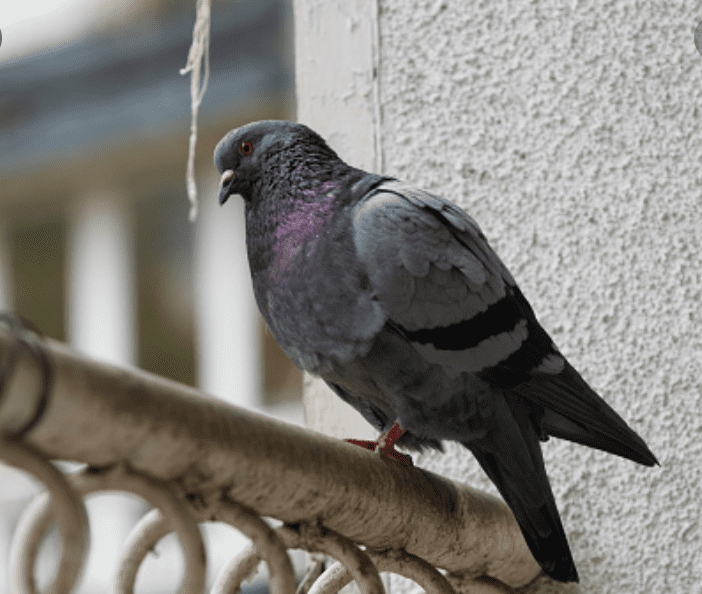
by Pigeon Patrol | May 9, 2023 | history of pigeons, MBCA, pet bird, Pigeon Control, Pigeon Droppings, Pigeon Patrol's Services, Pigeon Predators, Pigeon Spikes
For a month the researchers had traversed slender mountain ridges, crossed and re-crossed rivers that roared through canyons cloaked in tropical forest, and endured bloodthirsty mosquitoes and leeches, all in search of something that probably didn’t exist. They had just hours left for searching before they had to leave Fergusson Island, off the east coast of Papua New Guinea. Expedition co-leader Jordan Boersma reckoned their chance of success was less than 1 percent.
Winded from a climb, he plopped down on a lush hillside to catch his breath and began looking through images on the camera traps he’d just collected, not expecting to find anything. “Suddenly I was confronted with this image of what at that time felt like a mythical creature,” says Boersma, a postdoctoral researcher at the Cornell Lab of Ornithology. “It was, without exaggeration, the most surreal moment of my life.”
The camera’s display was tiny, but there was no mistaking the creature it showed: the Black-naped Pheasant-Pigeon, a species that hasn’t been documented by scientists since it was first described in 1882.
“To find something that’s been gone for that long, that you’re thinking is almost extinct, and then to figure out that it’s not extinct, it feels like finding a unicorn or a Bigfoot,” says John C. Mittermeier, director of the lost birds program at American Bird Conservancy and a co-leader of the eight-member expedition. “It’s extraordinarily unusual.”
The stunning late-September rediscovery could not have happened without guidance from local hunters with intimate knowledge of the island’s forests, the researchers say, demonstrating the invaluable role of Indigenous communities in ongoing efforts to relocate species lost to Western science. With its existence confirmed, the Black-naped Pheasant-Pigeon is almost certainly the most endangered bird in New Guinea, which underscores the urgent need to protect its habitat on Fergusson, a rugged, 555-square-mile island that, while largely undeveloped, faces pressure from logging companies.
“This is a huge discovery,” says Bulisa Iova, an expedition member and acting chief curator of the National Museum and Art Gallery in Papua New Guinea. “I have studied birds for many years, and to be part of this team to discover this lost species is a highlight for me.”
The expedition was part of The Search for Lost Birds, a collaboration between BirdLife International, Re:wild, and American Bird Conservancy, which funded the trip. The initiative aims to rediscover more than 150 avian species that haven’t been declared extinct but also have not been seen for at least a decade.
A chicken-size, ground-dwelling pigeon, the Black-naped Pheasant-Pigeon was among around 20 “lost” birds that have not been documented for more than a century. It’s one of four pheasant-pigeon species found around New Guinea, and lives only on Fergusson Island. (Some authorities consider the four varieties to be subspecies.)
Boersma previously searched for the Black-naped Pheasant-Pigeon in 2019 with Jason Gregg, a conservation biologist and Audubon magazine contributor, and local biologist Doka Nason. While the trio did not find the bird on that trip, they did turn up five bird species not previously known to live on Fergusson, which suggested there were significant gaps in what ornithologists knew about the island’s birdlife. And when they spoke with hunters, they heard reports of a bird whose description could only belong to the pheasant-pigeon.
The researchers returned to Fergusson with a larger team in early September, determined to establish trust and work closely with the island’s Indigenous inhabitants to find the species. Day after day they hiked the steep terrain, stopping to interview locals and sleeping in villages or camping in the forest. Hunters in the first few communities were unfamiliar with the large bird the researchers described. But when the team reached the remote western slope of Mt. Kilkerran, they began to meet villagers who recognized the species and referred to it by the name Auwo.
Finally, in the village of Duda Ununa, a hunter named Augustin Gregory told the researchers where he had seen the bird. He described a call that matched those of New Guinea’s other pheasant-pigeon species, which don’t live on Fergusson. And he showed the team an area, on a ridge 3,200 feet above sea level and covered in thick vegetation, where their motion-triggered camera traps were likely to snap the elusive bird. Nason, who grew up in Papua New Guinea near Fergusson, and who Boersma describes as “the most impressive field biologist I’ve worked with anywhere,” selected a spot and set up the camera.
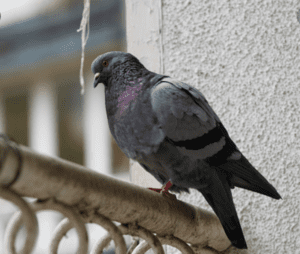
With its vantage limited by dense understory, the site wasn’t a typical one for a camera trap, the scientists say, but the images proved it was the right one. “Unmistakable,” Gregg, an expedition co-leader, says of first seeing the photos. “Tons of mixed emotions. Everything from solemn relief of burden to fist-pumping and screaming.”
Only days later, with time to scroll through everything the traps had captured, did the team realize that another camera had recorded video of a pheasant-pigeon. Given that the images were taken several kilometers apart, they almost certainly show two individuals.
Now that scientists know the Black-naped Pheasant-Pigeon still exists, the focus becomes keeping the critically endangered species from going extinct. As with other once-lost birds, its population is likely very small and seriously imperiled. Logging by international corporations appears to be a growing threat, and introduced predators such as feral cats could take a toll on the pheasant-pigeon as they have on other endemic island birds, according to Gregg. Sustaining the long-lost species will require learning more about its behavior and population status and launching conservation projects to protect its habitat, all with Fergusson Island residents in a leading role.
“Knowing what we know about bird extinction and conservation on islands around the world, we can expect that the combination of logging and introduced species, especially introduced mammals, is going to have an impact,” Gregg says. “This land and the fate of any conservation work that happens on this land is completely up to the communities that live there and own the land.”
Beyond Fergusson Island’s luxuriant forests, the rediscovery of the Black-naped Pheasant-Pigeon raises hopes that future expeditions will turn up other species lost to science but known all along to local experts. “The way this was always going to work is that we just really lean into local knowledge and put our faith in our local partners,” Boersma says. “That’s what delivered this incredible moment for us.”
Source
Pigeon Patrol Products & Services is the leading manufacturer and distributor or bird deterrent (control) products in Canada. Pigeon Patrol products have solved pest bird problems in industrial, commercial, and residential settings since 2000, by using safe and humane bird
deterrents with only bird and animal friendly solutions. At Pigeon Patrol, we manufacture and offer a variety of bird deterrents, ranging from Ultra-flex Bird Spikes with UV protection, Bird Netting, 4-S Bird Gel and the best Ultrasonic and audible sound devices on the market today.
Voted Best Canadian wholesaler for Bird Deterrent products ten years in a row.
Contact us at 1 877-4-NO-BIRD,(604) 585-9279 or visit our website at www.pigeonpatrol.ca
Pigeon/Pigeon Patrol / Pigeons Roosing / Vancouver Pigeon Control / Bird Spikes / Bird Control / Bird Deterrent / PIgeon Deterrent / Surrey Pigeon Control / Pest / Seagull deterrent / Vancouver Pigeon Blog / Birds Inside Home / Pigeons in the cities / Ice Pigeons / What to do about pigeons / sparrows, Damage by Sparrows, How to Keep Raccoons Away, Why Are Raccoons Considered Pests / De-fence / Pigeon Nesting / Bird Droppings / Pigeon Dropping / woodpecker control / Professional Bird Control Company / Keep The Birds Away / Birds/rats/seagull/pigeon/woodpecker/dove/sparrow/pidgeon control/pidgeon problem/pidgeon control/flying rats/pigeon problems/ bird netting/bird gel/bird spray/bird nails/bird guard
by Pigeon Patrol | May 9, 2023 | Bird Spike, Pigeon Predators, Pigeon Spikes, Pigeons, Pigeons in the News, Raccoons, Sparrows, UltraSonic Bird Control
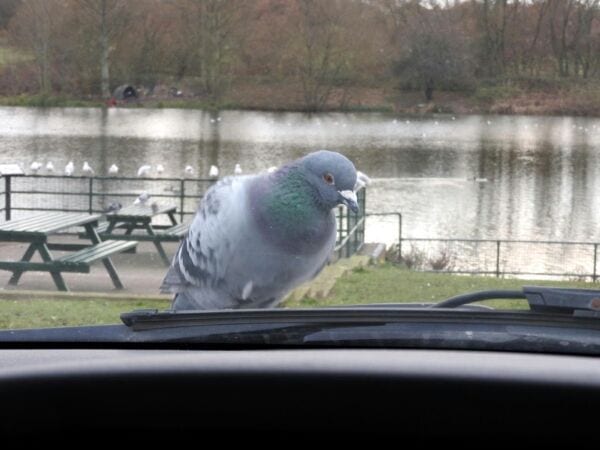
Two patients have died at a hospital after contracting a fungal infection linked to pigeon droppings.
The individuals are thought have caught the airborne disease at the Queen Elizabeth University hospital in Glasgow after inhaling the fungus cryptococcus, typically found in soil and pigeon droppings.
NHS Greater Glasgow and Clyde (NHSGGC), which runs the hospital, has launched an investigation into the outbreak. It said the likely source of the pigeon droppings was a non-public room, thought to contain machinery, which has now been cleaned.
NHSGGC said “control measures” had been introduced, which is understood to mean equipment to filter the air in some parts of the hospital, and that some patients, including children, who may be vulnerable to the disease have received medication, which was proving effective.
The health board said that the second patient who died was elderly and the death was due to an unrelated matter. It said it could not share further details of the case because of patient confidentiality.
Teresa Inkster, NHSGGC lead consultant for infection control, said: “Cryptococcus lives in the environment throughout the world. It rarely causes infection in humans. People can become infected with it after breathing in the microscopic fungi, although most people who are exposed to it never get sick from it.”
She said there had been no further cases since control measures were put in place. “We are continuing to monitor the air quality and these results are being analysed. It remains our priority to ensure a safe environment for patients and staff,” she added.
Portable air filters have been installed to help reassure “vulnerable patients”, NHSGGC said, adding that the organism is “harmless to the vast majority of people and rarely causes disease in humans”. A group of hospital patients are being moved within the hospital “due to their clinical diagnosis and ongoing treatment”.
Source
Pigeon Patrol Products & Services is the leading manufacturer and distributor or bird deterrent (control) products in Canada. Pigeon Patrol products have solved pest bird problems in industrial, commercial, and residential settings since 2000, by using safe and humane bird
deterrents with only bird and animal friendly solutions. At Pigeon Patrol, we manufacture and offer a variety of bird deterrents, ranging from Ultra-flex Bird Spikes with UV protection, Bird Netting, 4-S Bird Gel and the best Ultrasonic and audible sound devices on the market today.
Voted Best Canadian wholesaler for Bird Deterrent products ten years in a row.
Contact us at 1 877-4-NO-BIRD,(604) 585-9279 or visit our website at www.pigeonpatrol.ca
Pigeon/Pigeon Patrol / Pigeons Roosing / Vancouver Pigeon Control / Bird Spikes / Bird Control / Bird Deterrent / PIgeon Deterrent / Surrey Pigeon Control / Pest / Seagull deterrent / Vancouver Pigeon Blog / Birds Inside Home / Pigeons in the cities / Ice Pigeons / What to do about pigeons / sparrows, Damage by Sparrows, How to Keep Raccoons Away, Why Are Raccoons Considered Pests / De-fence / Pigeon Nesting / Bird Droppings / Pigeon Dropping / woodpecker control / Professional Bird Control Company / Keep The Birds Away / Birds/rats/seagull/pigeon/woodpecker/dove/sparrow/pidgeon control/pidgeon problem/pidgeon control/flying rats/pigeon problems/ bird netting/bird gel/bird spray/bird nails/bird guard
by Pigeon Patrol | May 2, 2023 | history of pigeons, MBCA, pet bird, Pigeon Control, Pigeon Droppings, Pigeon Patrol's Services, Pigeon Predators
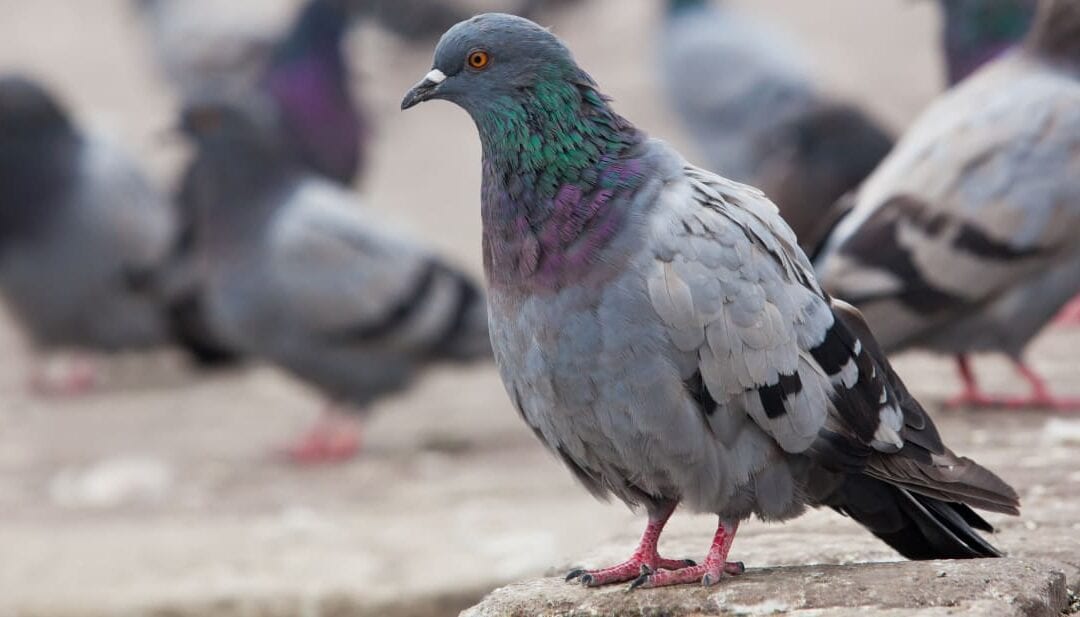
Kristyn Wong-Tam doesn’t hate pigeons.
But the councillor for Toronto Centre (Ward 13) has watched constituents fight pigeons for long enough, having fielded numerous complaints over the years from people and businesses forced to buy netting to keep the birds off balconies and window ledges and anything else that can act as a perch or nesting area.
“I do think we’ve reached a tipping point in Toronto,” says the councillor, who has often spotted people feeding pigeons random food in places where people and birds congregate, like Yonge-Dundas Square.
“I’ve seen people take out a loaf of bread and throw it on Bay Street.”
Wong-Tam believes that people are acting out of genuine concern for the birds, or to ensure food doesn’t go to waste. In fact, the discarded food also attracts vermin.
When Toronto council meets this week, Wong-Tam intends to introduce a member’s motion asking that the city examine the possibility of banning feeding pigeons anywhere in the city, in public and private spaces, in order to control the pigeon population.
Currently, the city of Toronto parks bylaw prohibits feeding wildlife or depositing food for wildlife in parks, but there is no such restriction elsewhere. As a result, pigeons crowd public spaces like sidewalks, plazas, boulevards and laneways where they can find discarded food and are also fed by people.
In fact, the lack of enforcement of the bylaw in parks has even rendered some green space unusable, according to Wong-Tam’s motion.
Only two tickets for feeding wildlife in parks were issued in 2020, according to the city.
The lack of control means business is booming for David Szabo, owner of Pigeon Tom, a firm specializing in bird control. Cleaning up after pigeons, and protecting balconies and buildings from pigeons is most of his business.
Nesting pigeons love concrete balconies, and they can quickly coat patio furniture, barbecues and stored bicycles in droppings that are difficult and sometimes impossible to clean effectively.
“It literally drives people crazy because they’re so loud,” says Szabo. “They’re always cooing, especially early in the morning at 6 or 7 a.m.”
Because the birds return to nest in the place where they were born, the situation can quickly spiral out of control, Szabo says. Then there are the people who never go out on their balconies at all.
“In some cases, the person just never went out on the balcony for like five or six years, and it’s so bad you can’t open the door.”
Pigeon experts agree that feeding pigeons people-food, or large quantities of birdseed, isn’t good for the birds or the people who have to live with them. It leads to overpopulation and a buildup of unsightly and corrosive droppings, among other problems.
“People think that they’re feeding the birds, oftentimes they’re feeding the rats,” says pigeon expert Elizabeth Carlen, a post-doctoral research fellow at the Living Earth Collaborative at Washington University in St. Louis.
Carlen has studied pigeon populations from Boston to Washington, D.C.
“I have seen many places where people have dropped birdseed, thinking they are feeding the birds, and right behind it will be a rat burrow.”
Cities, with their proliferation of concrete balconies and windowsills and ledges, are just like the rock cliffs pigeons populate in nature, says Andrew Blechman, author of “Pigeons: The Fascinating Saga of the World’s Most Revered and Reviled Bird.”
“They like our cities because pigeons don’t do trees, they do cliffs. It’s a concrete jungle and that’s how they like it.”
Pigeons and people have enjoyed a symbiotic relationship since at least Mesopotamia, says Blechman. Pigeons have been a source of food, kept as pets, flown for sport and trained to assist in warfare — including a Canadian pigeon named Beachcomber, who won a medal for flying across the foggy English Channel to Britain to deliver news of the landing at Dieppe.
Colin Jerolmack, author of “The Global Pigeon,” has observed people feeding pigeons in parks for hours at a time.
“Many socially marginalized people — people who are homeless or elderly — fed the pigeons and out of it developed pet-like relationships that were very meaningful to them,” says Jerolmack.
“It may sound crazy, but pigeons do have different personalities and they would recognize the feeders and sit on their shoulders and wrists and show them affection.”
Also kids love pigeons and it is often their first close encounter with wildlife if they live in the city, Jerolmack says.
Jerolmack, Carlen and Blechman agree the solution is not to ban feeding pigeons, mostly because a ban is unlikely to work.
Blechman says that the people most likely to be feeding pigeons the most know it’s wrong, but they can’t help themselves. They’re obsessed. They’re up at 4 a.m., dumping an entire bag of birdfeed for the pigeons. They’re hard to catch.
“If you’re going to feed a pigeon, feed responsibly — a teaspoon or a tablespoon of bird-feed, that’s it,” says Blechman, who favours public education campaigns.
Keeping a pigeon as a pet is allowed in Toronto, as long as it is kept exclusively on private property, but Wong-Tam says people feeding wild pigeons from their homes can also create a problem for the neighbourhood if it draws flocks of birds.
The city receives about 60 complaints a year related to pigeons, including pet pigeons, wild pigeons and pigeon droppings, under various bylaws, according to data supplied by the city.
Other forms of population control are more likely to work better than a poorly enforced ban, say experts.
Blechman says some cities control their pigeon populations by building coops on top of buildings, feeding the birds where they roost. The eggs laid there are not allowed to hatch.
He finds it hard not to respect pigeons. They are gentle, monogamous and they raise their offspring together. They like humans. They can fly 900 kilometres at a stretch, at an average speed of 95 km/h, from a place they’ve never been to their home, like laser missiles.
“Pigeons have been beloved all through human history. It’s only the last 60 years that people have been nagging on them,” Blechman says.
“Cities can be awfully concrete, it’s awfully nice to see something that we’re not in control of, that’s a piece of nature, like a squirrel, like a bird, like a pigeon,” Blechman adds. “They animate our lives and that’s why people like to sit on a bench and feed them a piece of crust.”
Source
Pigeon Patrol Products & Services is the leading manufacturer and distributor or bird deterrent (control) products in Canada. Pigeon Patrol products have solved pest bird problems in industrial, commercial, and residential settings since 2000, by using safe and humane bird
deterrents with only bird and animal friendly solutions. At Pigeon Patrol, we manufacture and offer a variety of bird deterrents, ranging from Ultra-flex Bird Spikes with UV protection, Bird Netting, 4-S Bird Gel and the best Ultrasonic and audible sound devices on the market today.
Voted Best Canadian wholesaler for Bird Deterrent products ten years in a row.
Contact us at 1 877-4-NO-BIRD,(604) 585-9279 or visit our website at www.pigeonpatrol.ca
Pigeon/Pigeon Patrol / Pigeons Roosing / Vancouver Pigeon Control / Bird Spikes / Bird Control / Bird Deterrent / PIgeon Deterrent / Surrey Pigeon Control / Pest / Seagull deterrent / Vancouver Pigeon Blog / Birds Inside Home / Pigeons in the cities / Ice Pigeons / What to do about pigeons / sparrows, Damage by Sparrows, How to Keep Raccoons Away, Why Are Raccoons Considered Pests / De-fence / Pigeon Nesting / Bird Droppings / Pigeon Dropping / woodpecker control / Professional Bird Control Company / Keep The Birds Away / Birds/rats/seagull/pigeon/woodpecker/dove/sparrow/pidgeon control/pidgeon problem/pidgeon control/flying rats/pigeon problems/ bird netting/bird gel/bird spray/bird nails/bird guard
by Pigeon Patrol | May 2, 2023 | Bird Spike, Pigeon Predators, Pigeon Spikes, Pigeons, Pigeons in the News, Raccoons, Sparrows, UltraSonic Bird Control
Pigeon pirates are illegally catching the birds on the streets of Manhattan to sell them out of state gun clubs to be killed for sport, animal rights activists claim after two incidents were reported this month.
On the morning of January 16, Hell’s Kitchen residents Susan Tang and her husband, Nicholas, witnessed two men in a Dodge Caravan bearing New York plates as they tossed seeds along 10th Avenue between 58th and 59th streets, according to the New York Post.
The poachers ended up capturing about 50 pigeons with nets before throwing them into the van and fleeing the scene.
‘We followed the van as much as we could to try to focus on the license plate, which was obscured by a plastic cover of some sort,’ Susan Tang told the Post.
‘The driver was aware he was being followed and was blowing red lights and almost struck a group of pedestrians.’
While it has been illegal to capture and sell pigeons for years in New York City, punishment for the crime was not streamlined until 2019, when a new bill made it a misdemeanor punishable by up to a year in jail and a $1000 fine.
A permit is required in order to trap pigeons citywide.
The couple, who took a photo of the van prior to losing sight of it, filed a complaint with both 311 and the state Department of Environmental Conservation, as well as notified the NYPD.
‘It was over and done with from start to finish in 20 seconds,’ Tang recalled.
‘It was deeply disturbing. I’m a born and raised New Yorker. I love everything about this city. The pigeons are as New York City as you can possibly get.’
According to Tang, investigators with the Department of Environmental Conservation already ‘know the suspect’s name and address and located the van complete with tons of feathers and pigeon poop inside.’
‘I have told him that my husband and I will testify if the case progresses,’ she added.
Source
Pigeon Patrol Products & Services is the leading manufacturer and distributor or bird deterrent (control) products in Canada. Pigeon Patrol products have solved pest bird problems in industrial, commercial, and residential settings since 2000, by using safe and humane bird
deterrents with only bird and animal friendly solutions. At Pigeon Patrol, we manufacture and offer a variety of bird deterrents, ranging from Ultra-flex Bird Spikes with UV protection, Bird Netting, 4-S Bird Gel and the best Ultrasonic and audible sound devices on the market today.
Voted Best Canadian wholesaler for Bird Deterrent products ten years in a row.
Contact us at 1 877-4-NO-BIRD,(604) 585-9279 or visit our website at www.pigeonpatrol.ca
Pigeon/Pigeon Patrol / Pigeons Roosing / Vancouver Pigeon Control / Bird Spikes / Bird Control / Bird Deterrent / PIgeon Deterrent / Surrey Pigeon Control / Pest / Seagull deterrent / Vancouver Pigeon Blog / Birds Inside Home / Pigeons in the cities / Ice Pigeons / What to do about pigeons / sparrows, Damage by Sparrows, How to Keep Raccoons Away, Why Are Raccoons Considered Pests / De-fence / Pigeon Nesting / Bird Droppings / Pigeon Dropping / woodpecker control / Professional Bird Control Company / Keep The Birds Away / Birds/rats/seagull/pigeon/woodpecker/dove/sparrow/pidgeon control/pidgeon problem/pidgeon control/flying rats/pigeon problems/ bird netting/bird gel/bird spray/bird nails/bird guard
by Pigeon Patrol | May 2, 2023 | Bird Spike, Pigeon Droppings, Pigeon Patrol's Services, Pigeon Predators, Pigeon Spikes, Pigeons, Pigeons in the News
Pigeon Patrol Products & Services is the leading manufacturer and distributor or bird deterrent (control) products in Canada. Pigeon Patrol products have solved pest bird problems in industrial, commercial, and residential settings since 2000, by using safe and humane bird
deterrents with only bird and animal friendly solutions. At Pigeon Patrol, we manufacture and offer a variety of bird deterrents, ranging from Ultra-flex Bird Spikes with UV protection, Bird Netting, 4-S Bird Gel and the best Ultrasonic and audible sound devices on the market today.
Voted Best Canadian wholesaler for Bird Deterrent products ten years in a row.
Contact us at 1 877-4-NO-BIRD,(604) 585-9279 or visit our website at www.pigeonpatrol.ca
Pigeon/Pigeon Patrol / Pigeons Roosing / Vancouver Pigeon Control / Bird Spikes / Bird Control / Bird Deterrent / PIgeon Deterrent / Surrey Pigeon Control / Pest / Seagull deterrent / Vancouver Pigeon Blog / Birds Inside Home / Pigeons in the cities / Ice Pigeons / What to do about pigeons / sparrows, Damage by Sparrows, How to Keep Raccoons Away, Why Are Raccoons Considered Pests / De-fence / Pigeon Nesting / Bird Droppings / Pigeon Dropping / woodpecker control / Professional Bird Control Company / Keep The Birds Away / Birds/rats/seagull/pigeon/woodpecker/dove/sparrow/pidgeon control/pidgeon problem/pidgeon control/flying rats/pigeon problems/ bird netting/bird gel/bird spray/bird nails/bird guard
by Pigeon Patrol | Apr 26, 2023 | history of pigeons, MBCA, pet bird, Pigeon Control, Pigeon Droppings, Pigeon Patrol's Services, Pigeon Predators
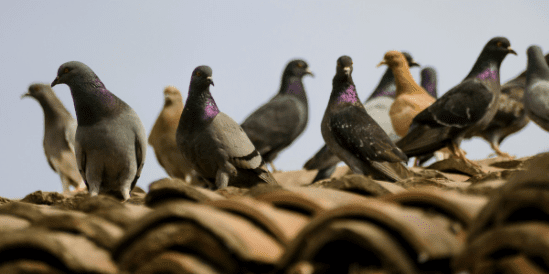
Pigeons like to land, roost, nest, and make a mess of your roof and they’re not easy to get rid of. Persistence, bird deterrents, and bird exclusion is the key.
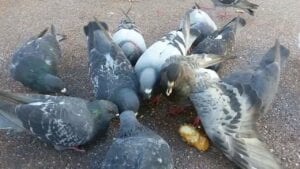
Get rid of pigeons on the roof by removing food and water
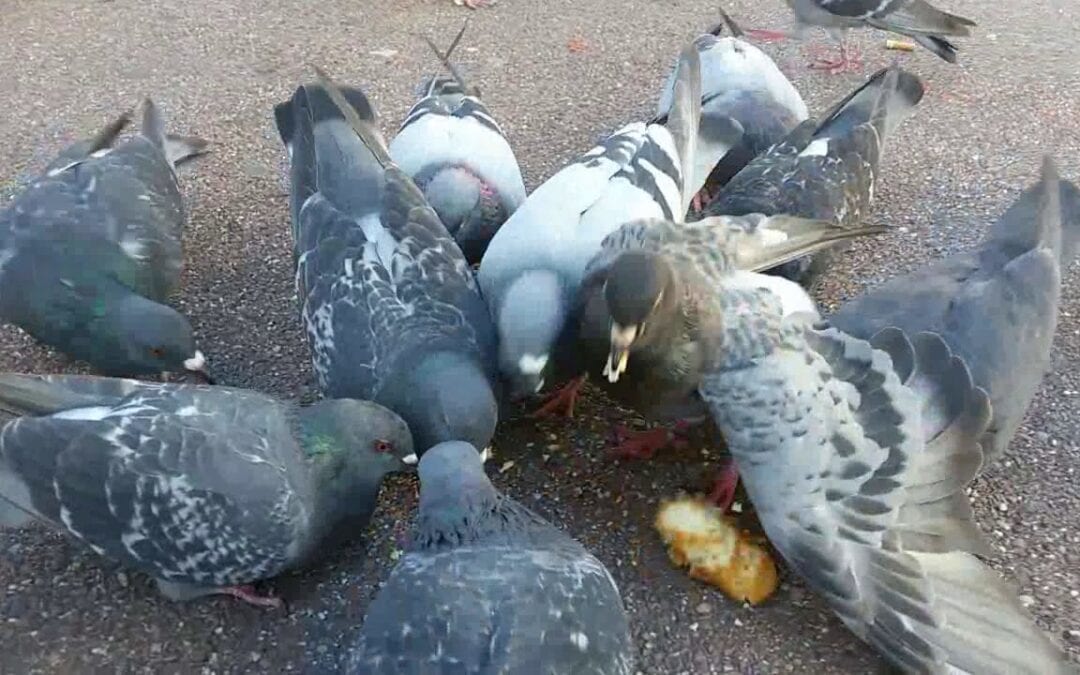
Remove all food and water sources and never feed the pigeons! In addition, don’t let your neighbors feed the pigeons. The pigeons can eat at your neighbors and nest on your roof!
Pigeons mainly like to eat seeds and grains such as oats, wheat, corn, cereal, sorghum, rice, beans, barley, millet, peas, and sunflower. They also like to eat food scraps left behind by people, including bread crumbs and popcorn. Birdseed is their favorite because it contains a variety of seeds and grains.
When grains or seeds aren’t available pigeons will eat fruit, greens, and occasionally insects, earthworms, and snails. They especially like apples, grapes, berries, lettuce, spinach, and sprouted seeds.
Pigeons need a constant water source. If water isn’t readily available they will leave to find a more suitable place to live. They can find water in birdbaths, gutters, pools, decorative water fountains, puddles, ponds, streams, and even leaves after a rain storm.
Easy to use deterrents to get rid of pigeons on the roof
Aluminum foil, bird deterrent tape, shiny Mylar balloons, wind propelled shiny spinning objects, and plastic decoy scare owls are scary objects to pigeons. Place scary objects on the roof, under the eves, or on the patio. Pigeons don’t like or feel comfortable with scary objects next to their nesting area. They would rather live in a more peaceful environment. One thing to remember, when installing scary objects, is to move them around on a regular basis. Objects that stay in one position don’t scare pigeons.
Wind chimes may deter pigeons. You can give it a try. Pigeons have sensitive hearing and the noise from wind chimes can actually hurt their ears. Pigeons don’t particularly like to nest where loud noises come and go.
Sticky bird gel can also deter pigeons. Apply the sticky gel to your roof where the pigeons are landing and roosting. The gel will make the area uncomfortable for the pigeons to roost.
Metal bird spikes to get rid of pigeons on the roof
Metal anti bird perching spikes can be effective in the right circumstance. They can work pretty well depending on the location you put them. Install them on rooftop edges, ledges, chimneys, and anywhere you see the pigeons land, roost, or nest. Metal bird spikes are mostly maintenance free and can be a permanent solution to deter pigeons from your roof.
Metal anti-perching spikes are harder to install and are not aesthetically appealing.
Wire screens or mesh to get rid of pigeons on the roof
Exclusion is the best solution to pigeon problems in alcoves, around chimneys, under solar panels, on vents, and many other places on the roof. Exclusion with wire bird screen and mesh do offer a permanent solution to pigeon nesting problems.
Solar panels are generally raised 5-12 inches above shingled or tiled roofs, thus creating a void between the panel and the roof. Pigeons can easily go underneath the panel to nest, poop, and make a noticeable and destructive mess. Most, if not all, rooftops that have solar panels need to have pigeons excluded from getting under the solar panels.
Installing wire bird screens or mesh can be difficult and hazardous. It requires being on the roof with tools, a lot of bending over (which is physically demanding), cutting the wire to the proper dimensions, and stapling or screwing on the wire. It is not advised for a home or business owner to install wire screens or mesh because it isn’t safe. You can fall off the roof and get seriously injured or die. To use this method, please hire a professional bird control company.
Bird netting to get rid of pigeons on the roof
If your roof is large and flat, bird netting is an excellent method to use to keep pigeons off your roof. It physically blocks the birds from the roof. If the birds can’t get on the roof, they can’t roost or nest. Bird netting is an exclusion method primarily used for large commercial bird and pigeon control.
A professional bird control operator should install bird netting. If not installed correctly the pigeons can still land on the area and get trapped, as well as other birds. This is cruel. Please hire a professional bird control company for bird netting. It will cost money but it is the safest and most humane way to have bird netting installed.
Remove bird nesting materials and droppings
It is important to remove all pigeon nesting and feces prior to excluding pigeons. Nesting materials and droppings left on the roof will continue to cause damage.
If the roof has a pitch, using a power washer is generally the best way to get rid of pigeon waste. Put a tarp on the ground next to the roof to catch the debris as it is rinsed off the roof. It will be much easier to clean up the pigeon feces on the ground if it is contained on a tarp. Wear a mask to prevent inhaling fumes from pigeon feces and wet the feces down before rinsing off. Histoplasmosis is zoonotic disease that can be found in pigeon feces. Zoonotic diseases are caused by harmful germs like viruses, bacteria, parasites, and fungi that are spread between animals and people.
If the roof is flat, you will have to wet the roof down (to prevent spreading contaminants and disease through the air), then rake and sweep up the pigeon waste prior to rinsing. Again, wear a mask to prevent inhaling fumes from pigeon feces.
Please be careful or better yet, call a professional. Using a power washer on the roof can be slippery and dangerous. Inhaling noxious pigeon feces can cause disease – it is a biohazard.
Importance of discouraging pigeons from nesting on your roof
Pigeons spread disease. There are over 60 diseases birds and their droppings can carry. Some of the diseases from pigeon droppings include salmonella, toxoplasmosis, cryptococcosis, St Louis encephalitis, E.coli, and more. In addition, fungus can grow in pigeon droppings which can cause histoplasmosis. Histoplasmosis is a respiratory disease that may be fatal. Pigeons are also carriers of pests including fleas, mites, ticks, and lice as well as West Nile virus. All of these diseases can pose a serious threat to human health.
Property damage is a big concern with pigeon nesting and droppings. Nests can clog gutters, ventilation pipes, chimneys, and damage electrical equipment. Damaged electrical wires from pigeon nests can even lead to fires. Pigeon droppings are very acidic. The droppings can actually eat away at the roof structure and cause roof leakage.
Pigeon droppings are unsightly. Nobody likes to see or walk on pigeon droppings.
People can slip and fall where pigeon droppings accumulate. When pigeon feces are fresh or rained on it is slippery.
Call a professional
Installing wire bird spikes, wire screens, wire mesh, or bird netting is difficult and hazardous. People can, and do, fall off roofs. People who fall off roofs get seriously injured and even die. It is best to call a professional bird control company when using these methods. Companies that specialize in removing and excluding bird pests (like pigeons) have the know how and safety equipment to get rid of pigeons in a safe and efficient manner from rooftops, alcoves, solar panels, chimneys, window sills, and other areas.
Source
Pigeon Patrol Products & Services is the leading manufacturer and distributor or bird deterrent (control) products in Canada. Pigeon Patrol products have solved pest bird problems in industrial, commercial, and residential settings since 2000, by using safe and humane bird
deterrents with only bird and animal friendly solutions. At Pigeon Patrol, we manufacture and offer a variety of bird deterrents, ranging from Ultra-flex Bird Spikes with UV protection, Bird Netting, 4-S Bird Gel and the best Ultrasonic and audible sound devices on the market today.
Voted Best Canadian wholesaler for Bird Deterrent products ten years in a row.
Contact us at 1 877-4-NO-BIRD,(604) 585-9279 or visit our website at www.pigeonpatrol.ca
Pigeon/Pigeon Patrol / Pigeons Roosing / Vancouver Pigeon Control / Bird Spikes / Bird Control / Bird Deterrent / PIgeon Deterrent / Surrey Pigeon Control / Pest / Seagull deterrent / Vancouver Pigeon Blog / Birds Inside Home / Pigeons in the cities / Ice Pigeons / What to do about pigeons / sparrows, Damage by Sparrows, How to Keep Raccoons Away, Why Are Raccoons Considered Pests / De-fence / Pigeon Nesting / Bird Droppings / Pigeon Dropping / woodpecker control / Professional Bird Control Company / Keep The Birds Away / Birds/rats/seagull/pigeon/woodpecker/dove/sparrow/pidgeon control/pidgeon problem/pidgeon control/flying rats/pigeon problems/ bird netting/bird gel/bird spray/bird nails/bird guard