by Pigeon Patrol | Aug 17, 2021 | pet bird, Pigeon Control, Pigeon Droppings, Pigeon Patrol's Services, Pigeon Predators, Pigeon Spikes
If I say the word ‘pigeon’, it will conjure up an image in your head. In an urban environment this will probably be a ‘rat with wings’. However, if I say the word ‘dove’, you may well think of the second day of Christmas or Pablo Picasso’s ‘Dove of Peace’, a modern interpretation of an Early Christian symbol. Doves are seen as positive, but pigeons need to work on their public image.
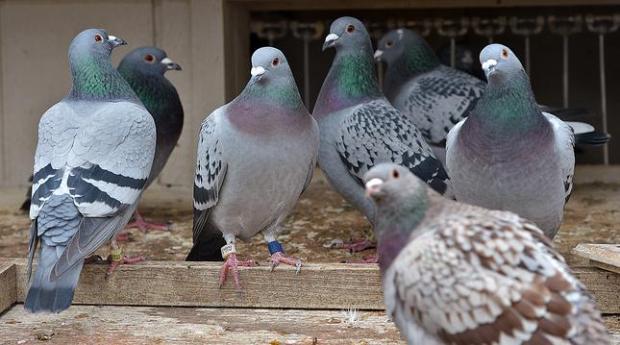
The truth is many of what we Londoners call pigeons are in fact doves. The feral pigeons we see in Trafalgar Square are actually rock doves. To quote the RSPB, “there is no strict division between pigeons and doves.”
It’s easy to see why a rock dove would find our urban environment attractive. In many ways, our high-rise office buildings are a perfect substitute for a cliff face. This makes them ideal places to roost and nest and, being in an urban environment, they are also protected from many of their natural predators.
Are Pigeons Dangerous?
When you hear a pigeon coo it is hard to imagine that they can present a threat to human health. Unfortunately, this isn’t the case.
The British Pest Control Association recently published a study that found nearly 50% of feral pigeons were carrying Chlamydia psittaci. This can lead to ornithoses in humans, a nasty disease with symptoms that include chills, fever, sweating, severe weakness, headache, blurred vision, pneumonia and, in extreme cases, possible death.
In January 2019, pigeon droppings were also thought to be a “contributing factor” in the death of a child at a Glasgow hospital. Other pigeon related diseases include Histoplasmosis, Toxoplasmosis, and infections related to the Campylobacter, E. coli and Salmonella pathogens.
Pigeons are not themselves dangerous, but the pathogens contained within their faecal waste can be dangerous to humans.
What Are the Chances of Getting These Diseases?
In fact, pigeon-related diseases are uncommon in the UK, which is not the case in other countries, including the US. Unless you are directly dealing with pigeon nests or waste, it is unlikely you will encounter the pathogens that cause the diseases. When we deal with pigeons, we always wear the right personal protective equipment (PPE) to ensure we are protected from these pathogens.
For most Londoners, the main problem is that pigeons are a nuisance. Roosting birds defecate down buildings, making them look dirty. For a business, this doesn’t give the right impression. Imagine you must choose between two restaurants – one is clean and the other has pigeon guano down its front – you are going to choose the clean restaurant because its façade suggests an attention to detail and cleanliness.
Pigeon waste can also create a slipping hazard. Businesses and property managers have a duty of care to ensure their buildings and surrounding areas are safe. A pavement covered in guano can be slippery, which could result in injury.
How Do We Get Rid of Pigeons?
Firstly, it is important to remember, “all wild birds and their eggs in the UK are rightfully protected by law under the Wildlife and Countryside Act 1981.” It is strongly recommended that you do not attempt to deal with the problem yourself.
Secondly, these birds are often roosting in inaccessible places as a form of protection. It is therefore dangerous to try to reach them without the proper equipment and specialised training.
There are two main things you can do to protect your property from pigeons.
- Cut off their food supply – pigeons like an easy meal and so if you remove food sources they will move elsewhere. In your garden, this means removing food that has fallen on to the floor, ensuring bin lids are shut and covering compost heaps. Also, discourage people who think it is okay to feed them!
- Stop them roosting – there are multiple methods available, including netting and spikes. The intention isn’t to harm the bird, simply to make them move somewhere else.
Again, it should be emphasised that accessing the places where bird proofing measures need to be installed can be difficult and dangerous. It is therefore highly advisable to seek fully insured, well-trained professional help if you have a pigeon problem.
Source
Pigeon Patrol Products & Services is the leading manufacturer and distributor of bird deterrent (control) products in Canada. Pigeon Patrol products have solved pest bird problems in industrial, commercial, and residential settings since 2000, by using safe and humane bird deterrents with only bird and animal friendly solutions. At Pigeon Patrol, we manufacture and offer a variety of bird deterrents, ranging from Ultra-flex Bird Spikes with UV protection, Bird Netting, 4-S Bird Gel and the best Ultrasonic and audible sound devices on the market today.
Voted Best Canadian wholesaler for Bird Deterrent products ten years in a row.
Contact us at 1- 877– 4– NO-BIRD, (604) 585-9279 or visit our website at www.pigeonpatrol.ca
Pigeon/Pigeon Patrol / Pigeons Roosting / Vancouver Pigeon Control /Bird Spikes / Bird Control / Bird Deterrent / Pigeon Deterrent? Surrey Pigeon Control / Pest /Seagull deterrent / Vancouver Pigeon Blog / Birds Inside Home / Pigeons in the cities / Ice Pigeons/ What to do about pigeons/ sparrows , Damage by Sparrows, How To Keep Raccoons Away, Why Are Raccoons Considered Pests/ De-fence / Pigeon Nesting/ Bird Droppings / Pigeon Dropping/ woodpecker control/ Professional Bird Control Company/ Keep The Birds Away/ Birds/rats/ seagull/pigeon/woodpecker/ dove/sparrow/pidgeon control/pidgeon problem/ pidgeon control/flying rats/ pigeon Problems/ bird netting/bird gel/bird spray/bird nails/ bird guard
by Pigeon Patrol | Aug 17, 2021 | MBCA, pet bird, Pigeon Control, Pigeon Droppings, Pigeon Patrol's Services, Pigeon Predators
1. Reuters used them: The world’s most famous news agency was founded in 1850 and employed 45 feathered messengers.
2. They read maps: Their homing skills are still a mystery, but a 10-year Oxfor university study concluded they use roads to navigate, even turning corners at junctions.
3. They were the original email: in the early 1800s, the Rothschilds set up a network of pigeon lofts at all their European financial houses.
4. The Queen loves them: Not only does Her Majesty fancy them, but Mike Tyson is a fan. Plus, Maurizio Gucci once spent $10,000 on an American pigeon.

5. They’re clever: Pigeons are one of the only nine amimals (and the only non-mammal) that can recognise itself in a mirror.
6. They bob their heads for a reason: Their side-mounted eyes give them monocular vision, unlike the binocular vision of humans and owls, so they bob for depth perception.

7. They’re holy: Many religious groups, including Hindus, Muslims, and Sikhs, feed pigeons for religious reasons. Remember that the next time you shoo one.
8. They’re heroes: Several pigeons have been decorated in wartime, saving thousands of lives by delivering urgent messages under fire.
9. Their waste is invaluable: in the 16th, 17th and 18th centuries pigeon excrement was a valuable fertiliser protected by armed guards.
10. They’re precious: The world’s most expensive pigeon was bought by a British stud farm for £106,000.
Source
Pigeon Patrol Products & Services is the leading manufacturer and distributor of bird deterrent (control) products in Canada. Pigeon Patrol products have solved pest bird problems in industrial, commercial, and residential settings since 2000, by using safe and humane bird deterrents with only bird and animal friendly solutions. At Pigeon Patrol, we manufacture and offer a variety of bird deterrents, ranging from Ultra-flex Bird Spikes with UV protection, Bird Netting, 4-S Bird Gel and the best Ultrasonic and audible sound devices on the market today.
Voted Best Canadian wholesaler for Bird Deterrent products ten years in a row.
Contact us at 1- 877– 4– NO-BIRD, (604) 585-9279 or visit our website at www.pigeonpatrol.ca
Pigeon/Pigeon Patrol / Pigeons Roosting / Vancouver Pigeon Control /Bird Spikes / Bird Control / Bird Deterrent / Pigeon Deterrent? Surrey Pigeon Control / Pest /Seagull deterrent / Vancouver Pigeon Blog / Birds Inside Home / Pigeons in the cities / Ice Pigeons/ What to do about pigeons/ sparrows , Damage by Sparrows, How To Keep Raccoons Away, Why Are Raccoons Considered Pests/ De-fence / Pigeon Nesting/ Bird Droppings / Pigeon Dropping/ woodpecker control/ Professional Bird Control Company/ Keep The Birds Away/ Birds/rats/ seagull/pigeon/woodpecker/ dove/sparrow/pidgeon control/pidgeon problem/ pidgeon control/flying rats/ pigeon Problems/ bird netting/bird gel/bird spray/bird nails/ bird guard
by Pigeon Patrol | Aug 9, 2021 | Pigeon Droppings, Pigeon Patrol's Services, Pigeon Predators, Pigeon Spikes, Pigeons, Pigeons in the News
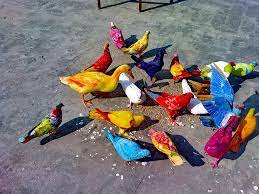
We learn that there are five senses (sight, hearing, touch, smell and taste). And we say that there is the “sixth sense,” meaning intuition or a hunch. But there is a physiological seventh sense that detects magnetic fields and, in some species, an eighth sense that detects electrical fields, and perhaps other senses still to be discovered.
Many animals (and plants!) have magnetoreception: birds, turtles, mice, bats, ants, lobsters, bees, newts, fishes, to list a few examples. The capability is also present in bacteria and may be a basic sense in virtually all organisms. However, it is one thing to demonstrate experimentally that an organism is able to sense and respond to magnetic fields, but it is quite another thing to learn how, or if, the magnetic sense is used by the organism.
A real-life function of magnetic sense is known in many animals. For instance, homing pigeons use magnetic sense to locate their home roost. Migratory birds use magnetoreception as well as celestial cues to find the way between nesting and wintering grounds. Sea turtles use this sense to find their nesting beaches and their hatchlings use it, along with light, to find their way to the sea. Some salamanders and toads use magnetic sense to orient themselves to the shore of a pond or to locate their home pond. Certain ants and bees use magnetic (and other clues) to navigate between their nests and food sources. Salmon use magnetic clues, with odor clues, to navigate back to their ‘home’ streams to spawn. An electrical sense of sharks interacts with magnetic sense, allowing them to orient themselves in the ocean.
The plot thickens, however, as researchers discovered magnetic reception and responses at all stages of fish development. For instance, magnetic fields affect the movement of sperm and their success in fertilizing eggs, as well as the size of the resulting embryos and their orientation. The behavior, orientation, heart rates and hormonal activities of larvae and fry are affected by magnetic fields too. The biological significance of these responses apparently remains to be determined.
And what about magnetic sense in plants, which don’t move around? Experiments have shown effects of magnetic fields on such features as flowering time, seed germination and seedling growth, photosynthesis, the behavior of pollen and roots, and enzyme activity. But the importance of these responses in the real world is anything but clear.
How does magnetoreception work? Only the briefest, most simplistic explanation can fit in the space of this essay. The earth’s main magnetic field has three features that can provide information to suitable receptors. The field varies in intensity, which varies with location and the horizontal or vertical orientation of the force. Another feature is called “inclination,” referring to the distance from the surface to the depths of the earth; inclination is very steep near the poles and flatter near the equator, so it gives an index of distance from the poles (i.e., latitude). The field also can provide a compass direction; the declination of a compass indicates deviation from the North Pole/South Pole axis of rotation of the earth (related, roughly, to longitude, and depending on latitude). In addition to the main field, there are local anomalies, commonly caused by magnetized rock.
How do animals sense those magnetic features? Some animals have tiny particles of magnetic material in their beaks, snouts, brains or elsewhere. Another way involves a protein called cryptochrome, found in both animals (including humans) and plants, which undergoes a complex reaction allowing detection of magnetic inclination. In bird eyes, cryptochrome is activated by blue light and may create a filter for light falling on the retina, making a pattern that changes when a bird moves its head, changing the angle between head and magnetic field. There are other possibilities too. In any case, any information gleaned from magnetic features has to be related to an internal map or some other point of reference, if it is to be used for orientation and navigation.
Note that the magnetic sense is so sensitive that it can work over very small distances, such as when a bird moves its head. It has also been invoked as a possible explanation for how foxes orient that marvelous jump as they pounce with their front feet on a rodent under the snow.
Source
Pigeon Patrol Products & Services is the leading manufacturer and distributor of bird deterrent (control) products in Canada. Pigeon Patrol products have solved pest bird problems in industrial, commercial, and residential settings since 2000, by using safe and humane bird deterrents with only bird and animal friendly solutions. At Pigeon Patrol, we manufacture and offer a variety of bird deterrents, ranging from Ultra-flex Bird Spikes with UV protection, Bird Netting, 4-S Bird Gel and the best Ultrasonic and audible sound devices on the market today.
Voted Best Canadian wholesaler for Bird Deterrent products ten years in a row.
Contact us at 1- 877– 4– NO-BIRD, (604) 585-9279 or visit our website at www.pigeonpatrol.ca
Pigeon/Pigeon Patrol / Pigeons Roosting / Vancouver Pigeon Control /Bird Spikes / Bird Control / Bird Deterrent / Pigeon Deterrent? Surrey Pigeon Control / Pest /Seagull deterrent / Vancouver Pigeon Blog / Birds Inside Home / Pigeons in the cities / Ice Pigeons/ What to do about pigeons/ sparrows , Damage by Sparrows, How To Keep Raccoons Away, Why Are Raccoons Considered Pests/ De-fence / Pigeon Nesting/ Bird Droppings / Pigeon Dropping/ woodpecker control/ Professional Bird Control Company/ Keep The Birds Away/ Birds/rats/ seagull/pigeon/woodpecker/ dove/sparrow/pidgeon control/pidgeon problem/ pidgeon control/flying rats/ pigeon Problems/ bird netting/bird gel/bird spray/bird nails/ bird guard
by Pigeon Patrol | Aug 9, 2021 | Doves, history of pigeons, MBCA, pet bird, Pigeon Control, Pigeon Droppings
For thousands of years, humans have bred rock doves (a.k.a. pigeons) to travel home over massive distances. These domesticated pigeons have helped us fight wars, find shipwrecks, and deliver blood samples. But despite our long partnership, we have yet to understand exactly how they navigate hundreds of miles back to their roost. New research shows that they may, in part, be sniffing their way home.
To navigate, scientists believe that birds use both a map and a compass. The compass—the sun or the Earth’s magnetic field—tells pigeons where, say, south is. The map, which tells them home is south, could come from odors carried on winds around a pigeon’s home perch, reports German ornithologist Hans Wallraff, of the Max Planck Institute for Ornithology, in the journal Biogeosciences.
Earlier research revealed that impairing a pigeon’s sense of smell disorients the bird so that they cannot return to their home site. Wallraff’s meticulous study of air samples surrounding a pigeons’ roost suggests that odors offer consistent location cues. He believes that this can allow birds to learn to associate a given direction with a scent. So when they’re traveling and detect a certain odor—whether the sharp scent of seawater, ripe reek of the local dump, or mouth-watering aroma of a bakery—they build a mental map of the area using their olfactory memories.
In fact, the scent trail may be so strong that pigeons can navigate by it alone, Wallraff’s new model shows. Wallraff input data from his previous air sampling work, which included 46 odorous chemical compounds from 96 sites surrounding the pigeons’ home. He then modeled whether virtual birds could learn to navigate using these odoriferous signals. He found that over evolutionary time, birds become more sensitive to scents and can in fact use these pungent clues to travel home.
Although he has yet to determine which odorous chemical clues are most important, Wallraff’s findings reveal how avian olfaction may enable a bird to successfully traverse more than 1,000 miles, which is nothing to sniff at.
Source
Pigeon Patrol Products & Services is the leading manufacturer and distributor of bird deterrent (control) products in Canada. Pigeon Patrol products have solved pest bird problems in industrial, commercial, and residential settings since 2000, by using safe and humane bird deterrents with only bird and animal friendly solutions. At Pigeon Patrol, we manufacture and offer a variety of bird deterrents, ranging from Ultra-flex Bird Spikes with UV protection, Bird Netting, 4-S Bird Gel and the best Ultrasonic and audible sound devices on the market today.
Voted Best Canadian wholesaler for Bird Deterrent products ten years in a row.
Contact us at 1- 877– 4– NO-BIRD, (604) 585-9279 or visit our website at www.pigeonpatrol.ca
Pigeon/Pigeon Patrol / Pigeons Roosting / Vancouver Pigeon Control /Bird Spikes / Bird Control / Bird Deterrent / Pigeon Deterrent? Surrey Pigeon Control / Pest /Seagull deterrent / Vancouver Pigeon Blog / Birds Inside Home / Pigeons in the cities / Ice Pigeons/ What to do about pigeons/ sparrows , Damage by Sparrows, How To Keep Raccoons Away, Why Are Raccoons Considered Pests/ De-fence / Pigeon Nesting/ Bird Droppings / Pigeon Dropping/ woodpecker control/ Professional Bird Control Company/ Keep The Birds Away/ Birds/rats/ seagull/pigeon/woodpecker/ dove/sparrow/pidgeon control/pidgeon problem/ pidgeon control/flying rats/ pigeon Problems/ bird netting/bird gel/bird spray/bird nails/ bird guard
by Pigeon Patrol | Aug 3, 2021 | pet bird, Pigeon Control, Pigeon Droppings, Pigeon Patrol's Services, Pigeon Predators
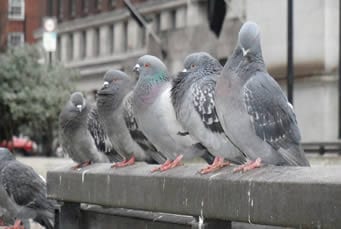
Of all the birds in the world, the pigeon draws the most ire. Despite their reputation as brainless “rats with wings,” though, they’re actually pretty brilliant (and beautiful) animals. A new study adds more evidence that the family of birds known as pigeons are some of the smartest birds around, as Quartz alerts us.
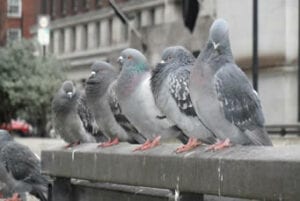
In addition to being able to distinguish English vocabulary from nonsense words, spot cancer, and tell a Monet from a Picasso, pigeons can understand abstract concepts like space and time, according to the new study published in Current Biology. Their brains just do it in a slightly different way than humans’ do.
Researchers at the University of Iowa set up an experiment where they showed pigeons a computer screen featuring a static horizontal line. The birds were supposed to evaluate the length of the line (either 6 centimeters or 24 centimeters) or the amount of time they saw it (either 2 or 8 seconds). The birds perceived “the longer lines to have longer duration, and lines longer in duration to also be longer in length,” according to a press release. This suggests that the concepts are processed in the same region of the brain—as they are in the brains of humans and other primates.
But that abstract thinking doesn’t occur in the same way in bird brains as it does in ours. In humans, perceiving space and time is linked to a region of the brain called the parietal cortex, which the pigeon brains lack entirely. So their brains have to have some other way of processing the concepts.
The study didn’t determine how, exactly, pigeons achieve this cognitive feat, but it’s clear that some other aspect of the central nervous system must be controlling it. That also opens up the possibility that other non-mammal animals can perceive space and time, too, expanding how we think of other animals’ cognitive capabilities.
Source
Pigeon Patrol Products & Services is the leading manufacturer and distributor of bird deterrent (control) products in Canada. Pigeon Patrol products have solved pest bird problems in industrial, commercial, and residential settings since 2000, by using safe and humane bird deterrents with only bird and animal friendly solutions. At Pigeon Patrol, we manufacture and offer a variety of bird deterrents, ranging from Ultra-flex Bird Spikes with UV protection, Bird Netting, 4-S Bird Gel and the best Ultrasonic and audible sound devices on the market today.
Voted Best Canadian wholesaler for Bird Deterrent products ten years in a row.
Contact us at 1- 877– 4– NO-BIRD, (604) 585-9279 or visit our website at www.pigeonpatrol.ca
Pigeon/Pigeon Patrol / Pigeons Roosting / Vancouver Pigeon Control /Bird Spikes / Bird Control / Bird Deterrent / Pigeon Deterrent? Surrey Pigeon Control / Pest /Seagull deterrent / Vancouver Pigeon Blog / Birds Inside Home / Pigeons in the cities / Ice Pigeons/ What to do about pigeons/ sparrows , Damage by Sparrows, How To Keep Raccoons Away, Why Are Raccoons Considered Pests/ De-fence / Pigeon Nesting/ Bird Droppings / Pigeon Dropping/ woodpecker control/ Professional Bird Control Company/ Keep The Birds Away/ Birds/rats/ seagull/pigeon/woodpecker/ dove/sparrow/pidgeon control/pidgeon problem/ pidgeon control/flying rats/ pigeon Problems/ bird netting/bird gel/bird spray/bird nails/ bird guard
by Pigeon Patrol | Jul 27, 2021 | Bird Deterrent Products, Bird Law, Pigeon Control, Pigeon Droppings, Pigeon Patrol's Services, Pigeon Predators
If it makes you feel any better, humans aren’t the only animals that forget things. Researchers have found that homing pigeons do the same. The new findings, they add, suggest an underlying continuity across the human and animal world in how the brain works.
The knack of remembering and forgetting is the brain’s way of filtering information to manage its limited storage capacity. For example, you briefly store information about trees and cars around you in your working memory, but if someone tells you to focus on a speeding truck, your brain uses a process called executive control to remember that object longer. Meanwhile, you forget the others. In humans, this filtering is performed by the prefrontal cortex.
To test whether the avian brain has a similar filtering mechanism, Michael Colombo, a neuroscientist at the University of Otago, New Zealand, and colleagues subjected homing pigeons to a memory test. First, the researchers trained the birds to know that a high tone means they should remember an object, while a low tone means they can forget it. They then showed the birds one of two shapes (circles or dots) or colors (blue and green). After a bird pecked three times at the image, the researchers sounded a tone. Birds that heard the remember cue fired up neurons in a region of their brain analogous to the human prefrontal cortex (as measured via implanted electrodes), Colombo’s team reports today in PLos Biology. And those birds did, in fact, remember the objects: 79% of the time, they correctly pecked at the original object again when shown multiple images 3 seconds later. In contrast, birds that heard the forget cue did not exhibit sustained activation of the same brain area, and only in about 44% of cases did the birds correctly identify the original object. Thus, the researchers argue the birds use a similar mechanism as humans to filter their memories.
Source
Pigeon Patrol Products & Services is the leading manufacturer and distributor of bird deterrent (control) products in Canada. Pigeon Patrol products have solved pest bird problems in industrial, commercial, and residential settings since 2000, by using safe and humane bird deterrents with only bird and animal friendly solutions. At Pigeon Patrol, we manufacture and offer a variety of bird deterrents, ranging from Ultra-flex Bird Spikes with UV protection, Bird Netting, 4-S Bird Gel and the best Ultrasonic and audible sound devices on the market today.
Voted Best Canadian wholesaler for Bird Deterrent products ten years in a row.
Contact us at 1- 877– 4– NO-BIRD, (604) 585-9279 or visit our website at www.pigeonpatrol.ca
Pigeon/Pigeon Patrol / Pigeons Roosting / Vancouver Pigeon Control /Bird Spikes / Bird Control / Bird Deterrent / Pigeon Deterrent? Surrey Pigeon Control / Pest /Seagull deterrent / Vancouver Pigeon Blog / Birds Inside Home / Pigeons in the cities / Ice Pigeons/ What to do about pigeons/ sparrows , Damage by Sparrows, How To Keep Raccoons Away, Why Are Raccoons Considered Pests/ De-fence / Pigeon Nesting/ Bird Droppings / Pigeon Dropping/ woodpecker control/ Professional Bird Control Company/ Keep The Birds Away/ Birds/rats/ seagull/pigeon/woodpecker/ dove/sparrow/pidgeon control/pidgeon problem/ pidgeon control/flying rats/ pigeon Problems/ bird netting/bird gel/bird spray/bird nails/ bird guard