by Ryan Ponto | Nov 9, 2016 | Bird Deterrent Products, Bird Netting, Pigeon Spikes
Sane New Yorkers regard them as rats with wings, and they make use of the many tools to combat pigeon on their property. But things get complicated when a neighboring property owner doesn’t care that pigeons are emitting toxic piles of excrement in a shared space between buildings.
Such was the case on the Upper West Side, where pigeons set up housekeeping on a grocery store’s outdoor air vents and cooling system. Residents of a co-op that shares a courtyard with the grocery store hired an exterminator, but the nests remain. The store’s management did not respond to calls. What’s a co-op board to do?
“The mere presence of pigeon droppings in the courtyard is an unsanitary condition” and could be grounds for a violation, Kempshall McAndrew, a real estate lawyer at Anderson Kill, tells the New York Times’ Ask Real Estate column. The board should keep the courtyard free of pigeon droppings in case an inspector visits.
Beyond that, McAndrew advises the co-op board to call the Department of Health and Mental Hygienedirectly, bypassing 311. The board should photograph the area, documenting the nests as the source of the problem. It should also keep records of calls to the grocery store and of the exterminator’s efforts.
If such measures fail? The board could sue the grocery store for an injunction and for monetary damages.
About Pigeon Patrol:
Pigeon Patrol Products & Services is the leading manufacturer and distributor of bird deterrent (control) products in Canada. Pigeon Patrol products have solved pest bird problems in industrial, commercial, and residential settings since 2000, by using safe and humane bird deterrents with only bird and animal friendly solutions. At Pigeon Patrol, we manufacture and offer a variety of bird deterrents, ranging from Ultra-flex Bird Spikes with UV protection, Bird Netting, 4-S Gel and the best Ultrasonic and audible sound devices on the market today.
Voted Best Canadian wholesaler for Bird Deterrent products four years in a row.
Contact Info: 1- 877– 4– NO-BIRD (www.pigeonpatrol.ca)
by Ryan Ponto | Nov 7, 2016 | Bird Netting, Pigeon Spikes
Miami police are looking for a man who stole pricey pigeons from a store while wearing a bucket on his head. The store’s owner says the same thing happened in May and if it continues, he’ll be out of business. Surveillance footage shows the robber searching through cages inside a gate before he finds the birds he wants. He collects the animals in one enclosure and then sets up a ladder to escape. Outside in the parking lot, he climbs a fence before falling off a ladder with the birds in hand.
About Pigeon Patrol:
Pigeon Patrol Products & Services is the leading manufacturer and distributor of bird deterrent (control) products in Canada. Pigeon Patrol products have solved pest bird problems in industrial, commercial, and residential settings since 2000, by using safe and humane bird deterrents with only bird and animal friendly solutions. At Pigeon Patrol, we manufacture and offer a variety of bird deterrents, ranging from Ultra-flex Bird Spikes with UV protection, Bird Netting, 4-S Gel and the best Ultrasonic and audible sound devices on the market today.
Voted Best Canadian wholesaler for Bird Deterrent products four years in a row.
Contact Info: 1- 877– 4– NO-BIRD (www.pigeonpatrol.ca)
by Ryan Ponto | Nov 2, 2016 | Bird Netting, UltraSonic Bird Control
A couple of weeks ago I answered a letter from Greg Thornbury, who thought he was seeing a peregrine falcon flying around high-rise building where he works in Concord.
I checked with Glenn Stewart at the Santa Cruz Predatory Bird Research Group, who said he wasn’t aware of any peregrines in that area, but that it was very possible.
Stewart says peregrines can thrive in developed areas because of the plentiful supply of pigeons. The tall buildings also mimic the cliffs that peregrines prefer for nesting sites. There are pergrines on Mount Diablo that often are seen in Lime Ridge Open Space that stretches from the base of the mountain in Walnut Creek into Concord.
Thornbury was able to get a photo of the bird and Stewart identified it as an adult peregrine falcon.
“It is a wonderful thing that a person can take a picture like this from a downtown office building,” Stewart says. “Gives a whole new meaning to urban wildlife.”
The Concord peregrine may nest on Mount Diablo, but come into the city to feed during the winter.
DEAR JOAN: I thoroughly enjoyed reading the letters about the foods some animals crave. As the wife of a veterinarian and a veterinary hospital owner for over 30 years, I have answered many emergency calls concerning ingested items.
With the holiday season coming, I would like to add some non-food items that we personally come across this time of year.
Never leave rubberbands, plastic foam peanuts, ribbon (especially the curling type), pieces of plastic or tinsel lying around. Once we treated a dog, a Lab, that had eaten a string of Christmas tree lights. All of these and much more can cause serious harm to pets, and frequently the lodged item will require emergency surgery, not a very merry event this time of year.
In addition, on the days after Thanksgiving and Christmas, we see turkey, ham and garbage overdoses. Please hide your leftovers!
May I add a few words in defense of veterinarians and their “exorbitant” bills? Nothing frustrates a veterinarian more than the Sunday afternoon emergency call when the owner says the animal has been sick since Friday and it may have eaten something bad. All a vet can offer at this point, without support staff, is a recommendation to the best emergency clinic in the area. It takes several employees to help x-ray and assist an emergency surgery. Veterinary emergency clinic services are life-saving, but expensive.
A veterinarian completes the same amount of schooling as an M.D., but unlike R.D.s (real doctors, as we jokingly call them), a veterinarian also must have the skills of a surgeon, a radiologist, a pharmacist and a pediatrician, just to name a few.
They must be able to diagnose and treat many different species, and that explains why a veterinary hospital, unlike a doctors’ office, is a full-service hospital, complete with a surgical suite, in-house lab, x-ray, pharmacy, and specialty pet food store. No one wants to drive their unhappy pets around to specialists, and my personal co-pay on my health insurance is just about the same as our office call.
About Pigeon Patrol:
Pigeon Patrol Products & Services is the leading manufacturer and distributor of bird deterrent (control) products in Canada. Pigeon Patrol products have solved pest bird problems in industrial, commercial, and residential settings since 2000, by using safe and humane bird deterrents with only bird and animal friendly solutions. At Pigeon Patrol, we manufacture and offer a variety of bird deterrents, ranging from Ultra-flex Bird Spikes with UV protection, Bird Netting, 4-S Gel and the best Ultrasonic and audible sound devices on the market today.
Voted Best Canadian wholesaler for Bird Deterrent products four years in a row.
Contact Info: 1- 877– 4– NO-BIRD (www.pigeonpatrol.ca)
by Ryan Ponto | Oct 31, 2016 | Bird Netting
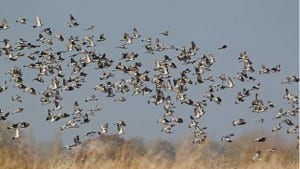
 FALL IS WILD GAME SEASON in France, and discerning diners at Parisian outposts like L’Ami Jean, La Régalade and Spring come especially for the composed dishes of just-hunted, rich-tasting game. That one might bite into one’s mallard or grouse and land on stray birdshot is perhaps a badge of honor, proof that what’s on your plate has a woodsier back story than the steak. And palombe, or wood pigeon, has a better back story than most. “As a chef, you want something that tastes delicious, but also that’s coherent and has its own tradition,” says Daniel Rose, who serves it rare-roasted at his First Arrondissement restaurant Spring during the bird’s month-and-a-half season from mid-October to the end of November. Generally grayer than its close cousin, the standard pigeon, with distinctive white marks on its neck and wings, the wild-caught palombe is more delicately gamy and less rich. Rose serves his with braised foie gras and cabbage, and a purée of smoked beet. At L’Ami Jean, Stéphane Jégo goes a more traditional route, roasting the birds with thyme and garlic, or stewed in salmi, a mixture of giblets, wine and foie gras. “Wild palombe brings a rustic, old-fashioned moment to the table,” Rose notes. “It evokes the deliciousness of nature and cooking on an open fire.”
While palombe has always been popular along the west coast of France, its more abundant recent appearances on Parisian menus is in keeping with the contemporary trend, led by the foraging Danish chef René Redzepi, of a re-emergence of back-to the-forest romanticism and a championing of traditional foodways.
On the palombe’s annual migration south — from northeastern Europe through western France and into Spain — there is one spot where hunting the bird has been done the same way for hundreds of years. In the Basque Country straddling the border between France and Spain, the tall peaks and narrow byways of the Pyrenees bottleneck the palombes, making the flocks denser and easier to track. Through the centuries, the annual hunt has become intimately intertwined with local life, in ways that tracking wild boar or deer, which requires isolation and a more masterful skill level, cannot hope to replicate.
Unlike in the rest of France, where villages are emptying out due to urban migration, here, whitewashed split-timber hamlets dot the velvety mountainsides, and close, intergenerational family networks are doing better than most. Every fall, local men of all ages are stricken with what Hervé Etchemendy, who comes from the village of Lecumberry, calls “the blue fever,” taking off work to disperse throughout the peaks of the Pyrenees to hunt. “When October arrives,” he says, “work isn’t too productive. We’re constantly looking to the sky. We’ve all had the fever since we were little.”
THERE ARE two traditional methods of hunting palombe here: with shotguns or with a more complicated, older practice called la chasse au filet, which combines nets, horns and paddles, and has been performed at least since the 16th century and possibly long before that. There are nine net-hunting sites in the Pyrenees, the only region in the world where this type of chasse au filet is practiced, and there will never be more. The number of installations is rigidly controlled by the regional governments, and rights are reserved for lifetime inhabitants of the villages: You have to be born there.
Net setups vary by locale. Etchemendy’s is a compound of three distinct stations up and down the mountainside, and the hunters divide themselves between them. Uppermost are the lookouts, with large white sheets. “Their job is to send the birds down,” says Etchemendy, which they accomplish by vigorously waving the sheets to startle them. They also blow brass horns, to alert the next station a mile downhill. There, in one of six tiny ramshackle cabins perched 50 feet in the air — accessible by a dangerously rickety ladder — the second group awaits. After the horn sounds, they blow loud whistles to alert the next group and simultaneously hurl white wooden paddles, rapid-fire, at the birds. They’re hoping to cause the palombes to lower their flight pattern — enough that when they come to the last station, several hundred yards farther downhill, they will fly into a ring of nets, raised on pulleys. The necks of the birds are then snapped.
Etchemendy and his fellow net hunters choose this method for “the challenge between the birds and man,” he explains, outsmarting nature rather than blasting it into submission.
American hunters will recognize the blasting, and the majority of the hunters in Basque Country do too. This more common practice has its own time-honored rituals. “It’s like a vacation where we rediscover our childhoods,” says Eric Ospital, one of France’s most prestigious charcutiers, who comes from the foothills near Biarritz. “In the same way that we built little cabins when we were kids, only now they’re furnished with stoves and beer and a TV to watch rugby in the afternoon.” Depending on the weather and variations in the palombe’s migratory pattern, “you could wait a week to even see a bird, but it’s not a big deal,” Ospital says. “You’re outside of time.” Jean-François Larramendy, who has brought Ospital and Jégo along to observe on hunting trips, adds, “It’s not about killing,” though of course that happens. “It’s about spending time with friends, boss and worker shoulder to shoulder.”
Every year, Larramendy, the owner of a local bar in the resort town of Anglet, organizes a group of friends from his village of origin, Villefranque, to spend a month in an isolated cabin near the Pic de Béhorléguy. “I started hunting with my father when I was little, and my grandmother used to put big white sheets out on the yard to tell us when it was time to come home,” Larramendy says as we charge up the mountain to a friend’s shack, a former lean-to that is now kitted out with bunk beds, a shower and stove, shelves of aspirin, 70-millimeter cartridges and a massive wood table covered in a plastic cloth, where hunters spend evenings playing mus, a pokerlike game thought to have originated in Spanish Basque Country. The game’s reliance on bluffing makes for especially animated evenings, fueled by multiple glasses of Ricard and water — the amount consumed in inverse proportion to the amount of palombes in the sky. By all accounts, there are fewer passing through the area than there used to be. The local paper had only counted 155,000 two weeks into the season.
When we arrive, it’s overcast and the other hunters, ranging in age from 40 to 84, are mostly focused on their bowls of beef and mutton stew, and making a dent in the many cases of wine they’ve hauled up for the month. Since even under ideal conditions the birds are only visible from sunrise, which takes place around 8 a.m. at this time of year, until midafternoon it’s more about waiting than hunting. The men are identically dressed in camouflage polar fleece, though one, Peio Amestoy, has added a dapper silk foulard tied ascot style and a loden green beret, patting after-shave on his cheeks after freshening up with a straight razor. “Please don’t say that all Basques are savages,” he entreated.
WHAT MOST HUNTERS catch is mainly eaten or shared with friends, though for some it’s a business. There is even one restaurant in French Basque Country that has its own nets. On the afternoon I stop in to the Hôtel Restaurant du Col d’Osquich, its vast dining hall, with old timber beams and a massive hearth, has welcomed several busloads of tourists from Charente-Maritime, several hours north.
The restaurant’s chef, Pantxoa Idiart, trained alongside Stéphane Jégo under the notoriously tough Yves Camdeborde, of the Paris bistro Le Comptoir. He invites us into the kitchen while he prepares our palombe au capucin, roasted bird basted with a cone of flaming pork fat, causing the delicate skin to bubble and crisp up.
Back in the dining room, as it’s delivered to our table, the owner sets up the afternoon’s entertainment. Mounting a chair to approach two tame palombes, each chained to a perch, he bears a glass of water from which they guzzle when he whistles a command. As the cognac and plum brandy are passed around, groups of locals in black berets strike up traditional Basque songs. A table of old ladies next to us sniff dismissively at the spectacle, returning to their game of mus.
About Pigeon Patrol:
Pigeon Patrol Products & Services is the leading manufacturer and distributor of bird deterrent (control) products in Canada. Pigeon Patrol products have solved pest bird problems in industrial, commercial, and residential settings since 2000, by using safe and humane bird deterrents with only bird and animal friendly solutions. At Pigeon Patrol, we manufacture and offer a variety of bird deterrents, ranging from Ultra-flex Bird Spikes with UV protection, Bird Netting, 4-S Gel and the best Ultrasonic and audible sound devices on the market today.
Voted Best Canadian wholesaler for Bird Deterrent products four years in a row.
Contact Info: 1- 877– 4– NO-BIRD (www.pigeonpatrol.ca)
by Ryan Ponto | Oct 30, 2016 | Bird Netting
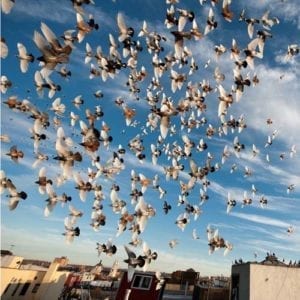
 The ninth annual event will be held at on Nov. 19 at the Eastern Greenwich Civic Center in Old Greenwich.
Here is more information about the event from the organizers: “The show has large entries of pigeons in many breeds, a wide variety of breeds on display, large pigeon for-sale areas, several large vendors, great selections of food, and a tremendous number of visitors and buyers of products and pigeons. 2016 looks to be as large or larger than last year.”
Entries will be accepted for the following breeds: Show Racers, German Beauty Homers and Racing Homers. Other breeds will be accepted, but need a special form for entry.
About Pigeon Patrol:
Pigeon Patrol Products & Services is the leading manufacturer and distributor of bird deterrent (control) products in Canada. Pigeon Patrol products have solved pest bird problems in industrial, commercial, and residential settings since 2000, by using safe and humane bird deterrents with only bird and animal friendly solutions. At Pigeon Patrol, we manufacture and offer a variety of bird deterrents, ranging from Ultra-flex Bird Spikes with UV protection, Bird Netting, 4-S Gel and the best Ultrasonic and audible sound devices on the market today.
Voted Best Canadian wholesaler for Bird Deterrent products four years in a row.
Contact Info: 1- 877– 4– NO-BIRD (www.pigeonpatrol.ca)

by Ryan Ponto | Oct 29, 2016 | Bird Netting
 Humidifier sterilizers were big sellers back in early 2000s, but Pigeon, a Korean household product maker, refused to manufacture them.
The company examined the necessity of the product, questioning whether the customers would want the product consistently and whether they would last in the years to come. Pigeon also looked into the origin of the substances used in the product and discovered they were not the outcome of a lengthy research and development process, but a chemical compound mostly supplied by OEM companies.
“We chose not to release the product, focusing on the possibility of the substances being inhaled by humans,” the company said in a statement Sunday. Pigeon is one of only a few households product companies not mentioned in the recent toxicity scandal surrounding companies that sold toxic disinfectants, resulting hundreds of death.
There has not been a single boycott sparked over its products, as they are made on the company’s founding philosophy that prioritizes nature and consumer safety, the firm said.
None of Pigeons’ products contain the harmful substances CMIT and MIT, according to a government report on all household biocide products sold in the country. The study was conducted following a report which found toxic chemicals in daily household goods, including toothpastes.
According to Pigeon, its multipurpose antibacterial cleaner Bisol only kills harmful germs, wiping away 99.9 percent of some 50 different germs that are responsible for food poisoning, diarrhea and more in less than 3 minutes.
Bisol-line products, made with substances approved by the US Food and Drug Administration, were the first in Korea to acquire the Korea Testing and Research Institute’s validation for safety and sterilization.
“Sticking with the brand’s eco-friendly formula and founding philosophy, we will continue efforts to produce safe household goods, as the pioneer and forerunner in local household products market,” a company official said.
In order to offer a variety of goods that are safe for consumers to use, the brand has ramped up its production line.
Its newly released hand sanitizer, dehumidifying agent and bleach are made with a self-developed formula, which the brand researched for 3 years. Pigeon also plans to roll out mild products for babies by the end of this year, the company said.
Fabric softener and detergent that the firm will unveil next month have obtained an atopic eczema certification from Korea Atopy Association.
About Pigeon Patrol:
Pigeon Patrol Products & Services is the leading manufacturer and distributor of bird deterrent (control) products in Canada. Pigeon Patrol products have solved pest bird problems in industrial, commercial, and residential settings since 2000, by using safe and humane bird deterrents with only bird and animal friendly solutions. At Pigeon Patrol, we manufacture and offer a variety of bird deterrents, ranging from Ultra-flex Bird Spikes with UV protection, Bird Netting, 4-S Gel and the best Ultrasonic and audible sound devices on the market today.
Voted Best Canadian wholesaler for Bird Deterrent products four years in a row.
Contact Info: 1- 877– 4– NO-BIRD (www.pigeonpatrol.ca)