by Pigeon Patrol | Nov 11, 2015 | 4-S Gel Bird repellent, Bird Netting, Pigeon Spikes, Pigeons in the News, UltraSonic Bird Control
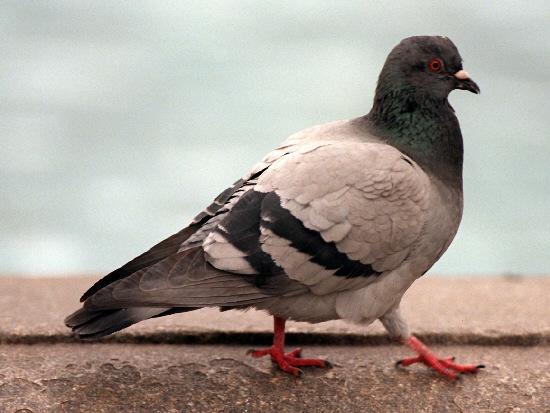
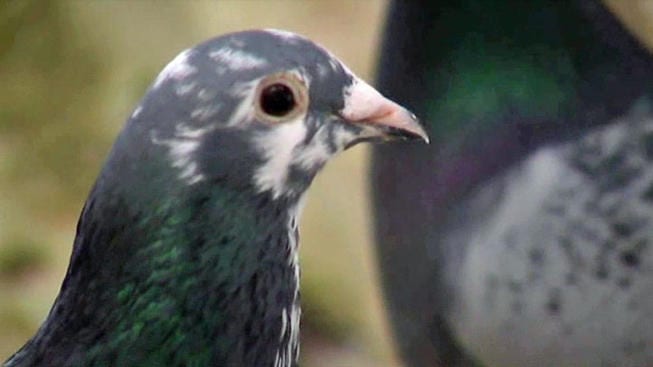
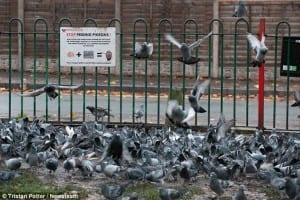
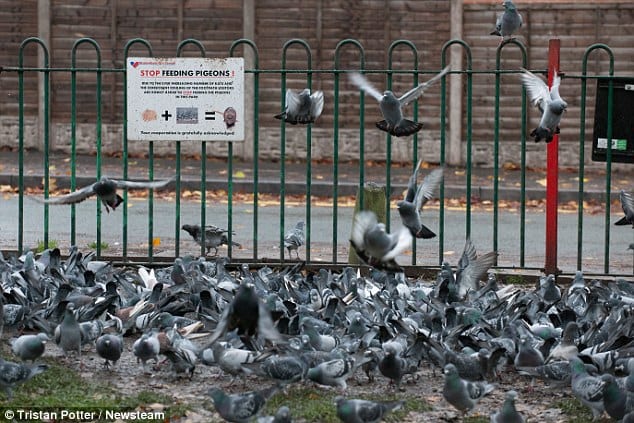
 Pigeons have been ruffling the feathers of more and more people in recent years.
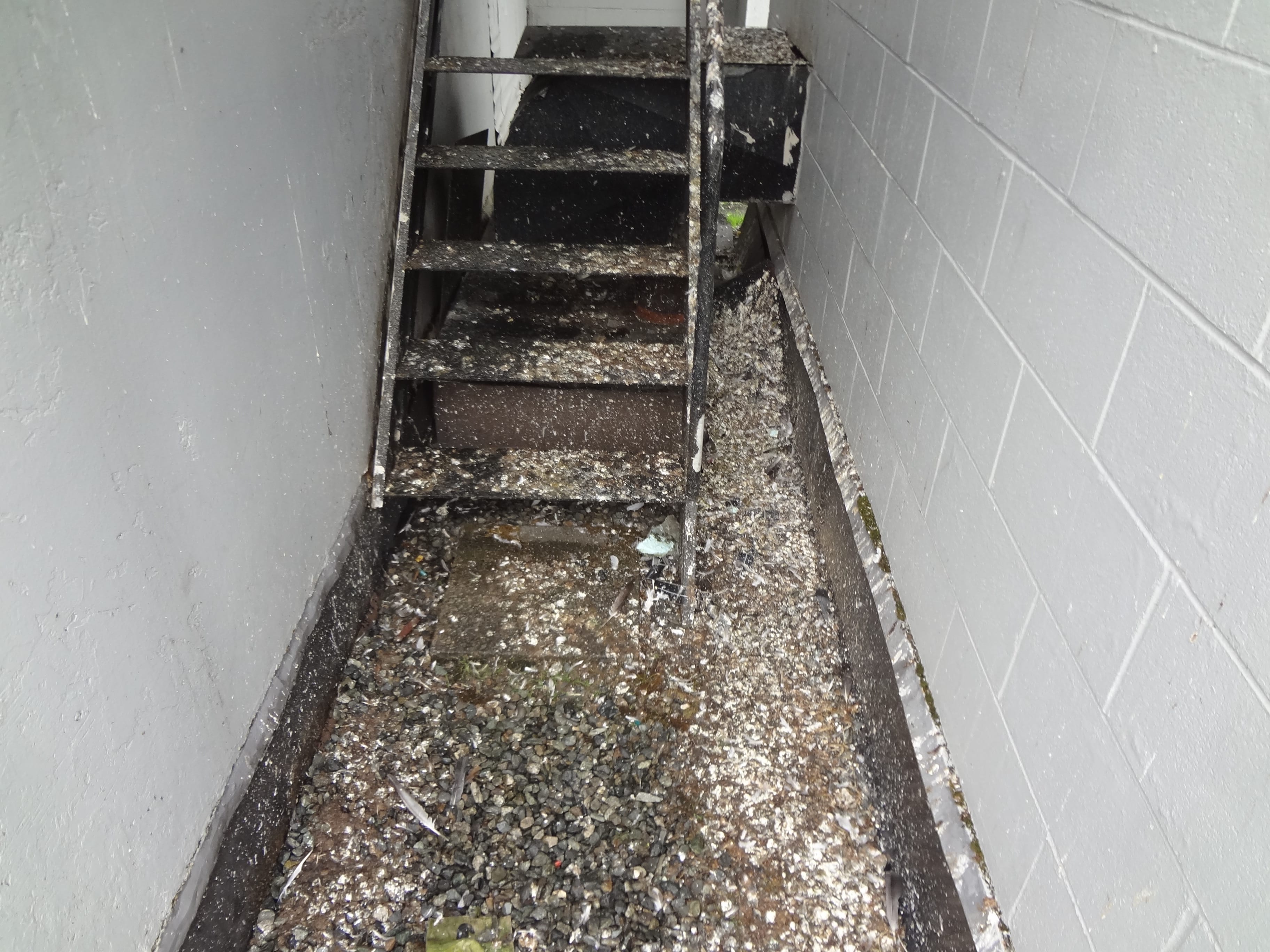
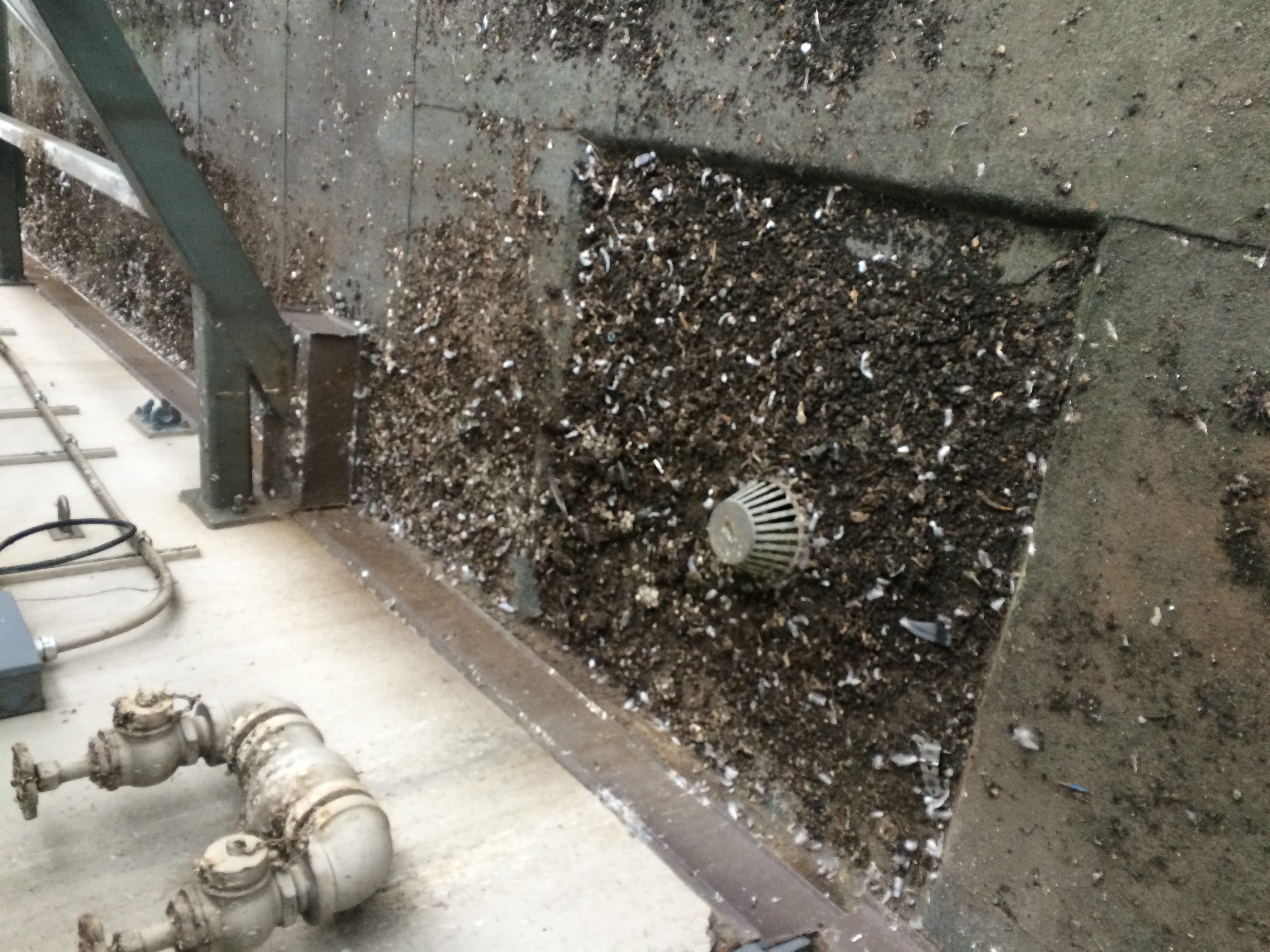
Last year, the Agri-Food and Veterinary Authority (AVA) received 2,490 complaints about them – mostly about hygiene, environmental issues resulting from their droppings, and concerns over diseases and people feeding them.
The increase has largely been attributed to AVA’s First Responder Protocol implemented in 2012, which includes a 24-hour hotline for reports of animal-related issues.
The Straits Times Forum has also received letters about pigeons pecking on food scraps at coffee shops and hawker centres.
Junior college student Ng J-Cyn said Ghim Moh market is a particular hot spot. Pigeons fly within “inches of diners to peck at crumbs or food waste on the floor”, said the 16-year-old, who is concerned about them spreading diseases. She added: “They also contribute to a very negative dining experience.”
Fellow Forum contributor, Ms Lee Kay Yan, 41, believes the pigeon population will explode unless people stop feeding them.
She said: “Three to five pigeons don’t cause a nuisance but a flock of them do.”
The feeding of pigeons has been banned since 1973 and those caught flouting the rules are fined up to $500. Last year, 60 people were caught doing it, up from just 10 in 2011.
One of the diseases pigeons can spread is psittacosis, a bacterial infection of the lungs with pneumonia-like symptoms.
The bacteria become airborne when the bird droppings dry up and can be inhaled by humans.
Dr Christina Low, medical director of SMG Medical, said the health risk to most people is low, although infants, the elderly and individuals who have low immunity “are more vulnerable”.
She advised people to wash their hands thoroughly before meals and reduce pigeon attacks by clearing unfinished food and dirty crockery.
The National Environment Agency (NEA) requires all food shop operators to clean tables promptly and cover rubbish bins. Those who fail to clean tables, for example, can be fined $300 and given four demerit points.
As for Ghim Moh market, the NEA said it has asked the table- cleaning contractor to step up the clearing of tables and crockery.
The agency added that it has so far received only one complaint about pigeons at the market.
Nationwide, it received 35 pigeon-related complaints last year and 36 the year before.
The AVA said it responds to pigeon-related feedback by working with the relevant parties, such as town councils and the NEA.
While poison bait is traditionally used for heavily infested areas that need fast elimination of the birds, a spokesman for pest firm Pest Solute said the use of netting at roof gaps, spikes or a type of sticky gel on window ledges to prevent the birds from nesting is more commonly used.
Food areas are a little trickier and need a combination of these measures, according to Ms Gloria Ngoi, business development manager at bird control firm Mastermark.
These methods, however, are not sustainable if people continue to feed the birds, said Forum writer Ms Lee.
“Preventive measures are better, through good design of buildings to prevent roosting and entry by birds.
About Pigeon Patrol:
Pigeon Patrol Products & Services is the leading manufacturer and distributor of bird deterrent (control) products in Canada. Pigeon Patrol products have solved pest bird problems in industrial, commercial, and residential settings since 2000, by using safe and humane bird deterrents with only bird and animal friendly solutions. At Pigeon Patrol, we manufacture and offer a variety of bird deterrents, ranging from Ultra-flex Bird Spikes with UV protection, Bird Netting, 4-S Gel and the best Ultrasonic and audible sound devices on the market today.
Voted Best Canadian wholesaler for Bird Deterrent products four years in a row.
Contact Info: 1- 877– 4– NO-BIRD (www.pigeonpatrol.ca)

by Pigeon Patrol | Nov 10, 2015 | 4-S Gel Bird repellent, Bird Deterrent Products, Bird Netting, Pigeons in the News, UltraSonic Bird Control
DEAR JOAN: I am writing about a barking dog problem, and it’s not what you think.
We live in a very quiet neighborhood and are retired, so we are home a lot. Our next-door neighbors have two small dogs that usually spend all day in their backyard. Surprisingly, they tend to be very quiet for a couple of “ankle-biters.” They only bark briefly when somebody walks past, or in response to a dog on the other side of their fence, or for other normal reasons.
About once a day they go bonkers when their owner comes home (they know the sound of his car), but that only lasts for a minute at most, and the way they carry on actually makes me laugh.

Cute is cute, but a dog’s barking can lead to trouble. (Jill Johnson/Fort Worth Star-Telegram)
Somebody nearby has complained about these dogs to the county and our neighbor has now gotten two letters notifying him to keep them quieter. He is doing his best to improve the situation, but cannot confer with whoever complained because they took the coward’s way out and never attempted to meet with him directly.
How can our neighbor defend himself and his dogs? We are the residents most affected by the barking, and we do not mind. There are plenty of other dogs in the area that bark more than these two, and for no particular reason.
Can the county do anything to take away his dogs? Shouldn’t the county survey all the neighbors to determine the seriousness of the problem, rather than rely on one person’s anonymous complaint? It is kind of surprising to me that I am taking the side of the dog owner, but I am steaming mad that somebody is being a cowardly jerk.
Barbara Hill
El Cerrito
DEAR BARBARA: The county is obligated to notify the owner when someone makes a complaint about excessive noise, but for a full investigation to be launched, two or more people, living in different households within 300 feet of the barking dog, must make complaints.
The law defines excessive noise as being “so continuously or incessantly as to unreasonably disturb the peace or quiet.”
Whether the county is officially investigating or not, it would behoove your neighbor to be proactive. If it is determined that the dogs are a nuisance, they may be taken away and euthanized. The owner also can face fines and fees. Plus, keeping dogs as quiet as possible is the good neighbor and responsible pet owner thing to do.
I’d recommend leaving the dogs indoors, where their barking would be muted. If that’s not possible, there are many anti-barking devices on the market.
First Alert recently sent me its Bark Genie automatic ultrasonic bark deterrent unit to try with my yappy dog. The device emits a high-pitched sound when it detects barking.
It stopped my dog in mid-bark, but it also made him not want to be inside the house when it was turned on. He moped around like I’d taken his favorite toy away from him. I’m now experimenting with the company’s handheld device.
The devices can be placed outdoors, and considering what’s at stake, trying them would be a good idea. There also are anti-bark collars that emit ultrasonic sounds or release a spray of citronella. Personally, I wouldn’t use a shock collar.
You also can write a letter of support, outlining your experience. Your testimony could be important if nuisance charges are filed.
About Pigeon Patrol:
Pigeon Patrol Products & Services is the leading manufacturer and distributor of bird deterrent (control) products in Canada. Pigeon Patrol products have solved pest bird problems in industrial, commercial, and residential settings since 2000, by using safe and humane bird deterrents with only bird and animal friendly solutions. At Pigeon Patrol, we manufacture and offer a variety of bird deterrents, ranging from Ultra-flex Bird Spikes with UV protection, Bird Netting, 4-S Gel and the best Ultrasonic and audible sound devices on the market today.
Voted Best Canadian wholesaler for Bird Deterrent products four years in a row.
Contact Info: 1- 877– 4– NO-BIRD (www.pigeonpatrol.ca)
by Pigeon Patrol | Nov 6, 2015 | Bird Netting, Pigeon Patrol's Services, Pigeons in the News, UltraSonic Bird Control
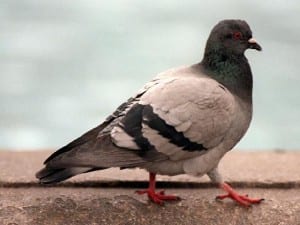
 NORTH PEKIN — The Village Board on Monday approved an ordinance that will allow residents to own chickens, rabbits, pigeons and doves in the village limits, and another ordinance that prohibits other farm animals.
Trustees Suzan Tisdale, Gene Wamsley, Russ Blumenstock, Alex Lambie and Kathe Curless voted in favor of the ordinances. Trustee Kenney Simmons was absent. Both ordinances take effect immediately.
The first ordinance requires residents wishing to keep chickens, rabbits, pigeons and doves to obtain a free permit from the village. A resident may have only six chickens, 12 pigeons or doves, and 12 rabbits. Permits only will be issued to residents of single family lots. The housing for the animals must be 10 feet from the rear property line and side property line of a lot. The pens cannot be in the side or front yard. The shelter must be kept clean, the ordinance said.
The pens and shelters must be covered and ventilated to protect the animals from bad weather. Electric service to the structure cannot be provided by an electrical extension cord. Storage vessels containing feed for the animals must be impervious to pests and vermin, the ordinance said.
Violations of the ordinance will result in a fine of $50 to $300. For each subsequent violation, the homeowner can be fined not less that $100 nor more than $500. A separate offense means each and every day the violation continues, the ordinance said.
The board also approved an ordinance prohibiting horses, bees, cattle, sheep, ponies, goats, mules, pigs, swine, hogs, ducks, geese, roosters, minks, foxes, or any other livestock, poultry or wild or vicious animals dangerous to humans. If such an animal is found in the possession of a resident it will be confiscated. If a police officer deems the animal an immediate danger to a human, it can be killed by the officer. The owner can be responsible for the cost of impounding or killing the animal.
Mayor Steve Flowers, who only votes if a super majority or a tie-breaking vote is needed, said Tuesday there have been multiple requests over the past few years for the village to allow chickens and other animals. The board thought it was appropriate to allow residents to have such animals to “offset food bills” because of the economy. He said there was no opposition to the two ordinances.
Flowers said the ordinance protects residents as well by requiring that all of the animals be kept in pens. He said the village does not want free-roaming chickens.
The village researched the Tazewell County ordinance and those of other municipalities and came up with the document passed Monday, said Flowers.
About Pigeon Patrol:
Pigeon Patrol Products & Services is the leading manufacturer and distributor of bird deterrent (control) products in Canada. Pigeon Patrol products have solved pest bird problems in industrial, commercial, and residential settings since 2000, by using safe and humane bird deterrents with only bird and animal friendly solutions. At Pigeon Patrol, we manufacture and offer a variety of bird deterrents, ranging from Ultra-flex Bird Spikes with UV protection, Bird Netting, 4-S Gel and the best Ultrasonic and audible sound devices on the market today.
Voted Best Canadian wholesaler for Bird Deterrent products four years in a row.
Contact Info: 1- 877– 4– NO-BIRD (www.pigeonpatrol.ca)
by Pigeon Patrol | Nov 4, 2015 | Bird Netting, Pigeon Patrol's Services, Pigeon Spikes, Pigeons in the News, UltraSonic Bird Control
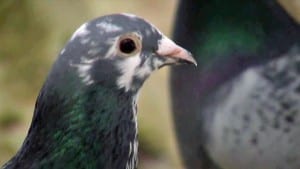
 As many as 10,000 band-tailed pigeons may have died in California this winter, according to Krysta Rogers, an environmental scientist with the California Department of Fish and Wildlife (CDFW). Hard numbers are difficult to produce, because birds are difficult to monitor, but these estimates are based on reports of dead birds submitted by the public.
Band-tailed pigeons are California’s only native pigeon.
They are the West Coast version of the passenger pigeon, which was once the most abundant bird in North America, but it was hunted to extinction. Millions of band-tailed pigeons used to inhabit California but almost became extinct, and much of their habitat was destroyed. They were eventually protected by the Migratory Bird Treaty Act of 1918.
Band-tailed pigeons are not listed as endangered. The pigeons spend their winters in the higher elevations of California’s mountain ranges before migrating in early spring to the northernmost regions of Northern California, Oregon, Washington and British Columbia.
The sudden increase in mortality is disturbing and sad, especially because the closest living relative to the extinct passenger pigeon has been struggling for decades to recover from rampant hunting, habitat loss and other environmental problems.
Blame Non-Native Species and the Drought
The CDFW blames the deaths on Avian Trichomonosis, a disease caused by a single-celled microscopic protozoan parasite believed to have co-evolved with the common rock pigeon, which was introduced from Europe. It causes lesions to form in infected birds’ mouths and throats. The birds, which subsist largely on acorns that they swallow whole, are unable to move food down their throats and starve or can even suffocate.
What a horrible way to die.
Scientists believe that water sources, like bird feeders and stagnant pools, may play a role, and especially in the current drought conditions in California.
“These events seem to be more common in winters with less precipitation, so I do suspect there is some weather component in these mortality events,” Rogers said. “When you have large flocks and there is a disease like this circulating, and you have stagnant pools and puddles and not much flowing water, the parasite can become more concentrated in that small amount of water and the disease is going to spread more easily.”
As a result, California wildlife authorities are asking residents to take down bird baths and feeders if they spot sick or dead birds in their yards as experts closely monitor the massive die-off.
Destruction by Non-Native Species
I am reminded of what happened in New Zealand, a country I visited a month ago.
For millions of years, there were no land mammals in the country, so New Zealand birds evolved in isolation. Free from attack and competition from mammals, many birds became flightless ground-dwellers.
Migrating to New Zealand around 1250–1300, Polynesians brought kiore (the Pacific rat) and other animals. That spelled doom for those flightless birds.
The first birds to become extinct, within a century or two after human arrival, were the largest – all species of moa, both species of goose, and both adzebill species. Being flightless, all were quite easy to hunt and catch, yielding large quantities of meat. Their slow breeding rate meant they were lost faster than they could be replaced.
The list of New Zealand species known to have become extinct since human settlement includes one bat, at least 51 birds, three frogs, three lizards, one freshwater fish, four plant species, and a number of invertebrates
Then came the second wave of destruction. Europeans came in the late 18th century, bringing rats, cats, stoats, weasels and ferrets. The rabbit was introduced as a food and game animal by European settlers and by the 1870s, it was becoming a serious threat to the newly developed farming economy.
Farmers began demanding the introduction of mustelids (including stoats) to control the rabbit plague. Warnings about the dangers to bird life from stoats were given by scientists in New Zealand and Britain. However, the warnings were ignored and stoats began to be introduced from Britain in the 1880s. Within six years, drastic declines in bird populations were noticed.
The destruction in New Zealand continues.
And now the pattern is repeating itself in California, this time with the European-introduced rock pigeon potentially wiping out the native band-tailed pigeon.
How sad that tales of non-native species causing destruction keep repeating themselves around the world.
About Pigeon Patrol:
Pigeon Patrol Products & Services is the leading manufacturer and distributor of bird deterrent (control) products in Canada. Pigeon Patrol products have solved pest bird problems in industrial, commercial, and residential settings since 2000, by using safe and humane bird deterrents with only bird and animal friendly solutions. At Pigeon Patrol, we manufacture and offer a variety of bird deterrents, ranging from Ultra-flex Bird Spikes with UV protection, Bird Netting, 4-S Gel and the best Ultrasonic and audible sound devices on the market today.
Voted Best Canadian wholesaler for Bird Deterrent products four years in a row.
Contact Info: 1- 877– 4– NO-BIRD (www.pigeonpatrol.ca)
by Pigeon Patrol | Nov 3, 2015 | Animal Deterrent Products, Bird Deterrent Products, Bird Netting, Pigeon Patrol's Services, Pigeons in the News, UltraSonic Bird Control
 SAN FRANCISCO (CBS SF) — The owners of a San Francisco tofu company agreed in a consent decree filed in federal court Tuesday to cease operations until the U.S. Food and Drug Administration determines the company is selling clean and sanitary food.
The consent decree concerning the Fong Kee Tofu Co. Inc. was filed in the court of U.S. Magistrate Kandis Westmore in Oakland.
The settlement stems from a civil lawsuit filed against the company and owners Yan Hui Fong, Jen Ying Fong and Suny Fong on Jan. 23 by the U.S. Justice Department at the request of the FDA. The lawsuit alleged that unsanitary conditions at the company were causing its products to become adulterated.
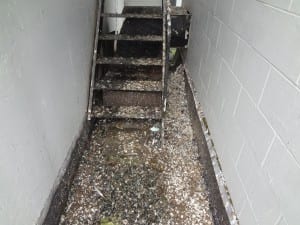
It alleged that FDA inspectors last year observed pigeons on top of plastic-wrapped raw soybean pallets, insects flying around the area used to process firm tofu, lack of proper handwashing by employees, and residue on equipment that was supposed to have been cleaned.
Kasie Lee, a lawyer for the company and its owners, could not immediately be reached for comment.
Acting Assistant U.S. Attorney General Joyce Branda said in a statement, “Fong Kee Tofu was repeatedly informed that the sanitation practices at its facility were deficient.”
“The failure to make sure that its facility was operating under sanitary conditions could be a serious risk to the public health and needed to be remedied,” Branda said.
The company’s products include firm tofu, soft tofu, fried tofu balls, soybean cake and soy drinks made from soybeans from Missouri, according to the lawsuit.
The company and owners agreed in the consent decree to be bound by a permanent injunction that requires them to stop preparing, manufacturing, packaging and selling the products.
If they wish to resume operations, they must hire an outside sanitation expert, labeling expert and auditor to develop and monitor a program for preparing uncontaminated and correctly labeled food. The experts can be three separate people or the same person.
The company cannot resume its business until it receives written authorization from the FDA. It would then be subject to FDA inspections without prior notice, under the injunction.
About Pigeon Patrol:
Pigeon Patrol Products & Services is the leading manufacturer and distributor of bird deterrent (control) products in Canada. Pigeon Patrol products have solved pest bird problems in industrial, commercial, and residential settings since 2000, by using safe and humane bird deterrents with only bird and animal friendly solutions. At Pigeon Patrol, we manufacture and offer a variety of bird deterrents, ranging from Ultra-flex Bird Spikes with UV protection, Bird Netting, 4-S Gel and the best Ultrasonic and audible sound devices on the market today.
Voted Best Canadian wholesaler for Bird Deterrent products four years in a row.
Contact Info: 1- 877– 4– NO-BIRD (www.pigeonpatrol.ca)
by Pigeon Patrol | Oct 24, 2015 | Bird Netting, Pigeon Patrol's Services, Pigeon Spikes, Pigeons in the News
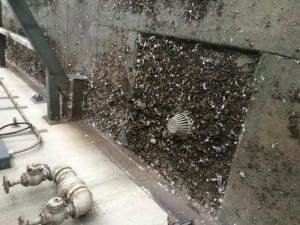
 50 years ago: Pesky pigeons: “The Delaware River Joint Toll Bridge Commission agreed to consider eliminating a pigeon nuisance at its two bridges between Easton and Phillipsburg. The commission is studying proposals by pigeon control firms to chase the birds from the bridge area. Because of immense accumulations of pigeon droppings, the bridges have to be sandblasted and repainted every several years. The Northampton Street bridge was sandblasted to raw steel and repainted last year. The Bushkill Street bridge was last repainted in 1955. There is an accumulation of 4-5 inches of pigeon droppings on the 550-foot span.”
About Pigeon Patrol:
Pigeon Patrol Products & Services is the leading manufacturer and distributor of bird deterrent (control) products in Canada. Pigeon Patrol products have solved pest bird problems in industrial, commercial, and residential settings since 2000, by using safe and humane bird deterrents with only bird and animal friendly solutions. At Pigeon Patrol, we manufacture and offer a variety of bird deterrents, ranging from Ultra-flex Bird Spikes with UV protection, Bird Netting, 4-S Gel and the best Ultrasonic and audible sound devices on the market today.
Voted Best Canadian wholesaler for Bird Deterrent products four years in a row.
Contact Info: 1- 877– 4– NO-BIRD (www.pigeonpatrol.ca)


 Pigeons have been ruffling the feathers of more and more people in recent years.