by Pigeon Patrol | Jun 14, 2021 | history of pigeons, MBCA, pet bird, Pigeon Control, Pigeon Droppings, Pigeon Patrol's Services, Pigeon Predators
The passenger pigeon (Ectopistes migratorius) is an extinct pigeon that was once widespread throughout North America. It was possibly the world’s most abundant bird in those times with the total population of almost three billion. The extinction of a bird that was once numbered in millions leaves biologists to wonder how it went extinct. The passenger pigeon is also called wild pigeon.
Passenger Pigeon Facts
- The overall length of an adult male was about 39 to 41 cm (15.4 to 16.1 in) and they weighed up to 260 and 340 g (9 and 12 oz).
- Adult females averaged 38 to 40 cm (14.9 to 15.7 in) in head-body length. It had dull colored feathers as compared to males down. However the female had a brown forehead that looked like a crown.
- Adult males had 175–210 mm (6.8–8.2 in) long tail females had 150–200 mm (5.9–7.8 in).
- The bird’s tarsus measured about 26–28 mm (1–1.1 in).
- The measurement of the male’s wing was about 196–215 mm (7.7–8.4 in) and it had 15–18 mm (0.6–0.7 in) long bill. The size of the bill was same in both males and females.
- Like many other pigeon species, the passenger pigeon was mainly recognized by its bluish-gray head and neck. There are iridescent feathers on the sides of the neck and they are bright brown to golden green in color. It goes bright when the light shines on it.
- The passenger pigeon’s tail had got some blackish spots that were clearly visible when the bird was flying.
- The legs and feet were red but the pigeon’s was completely black.
- Young pigeon appeared more like an adult female (in physical features) but unlike female it did not have spots on its wings.
- They had long pointed wings which were extremely helpful in flying fast. Passenger pigeons were adapted to not only fly fast but it could also maneuver itself rather quickly. Today pigeons lack this ability.Geographic Range & Habitat
- The passenger pigeon had occupied much of the North America including Atlantic coast in the east, Rocky Mountains, Great Plains, north of Mississippi, and south of Canada.
- They had made homes in primary habitats like deciduous forests. Passenger pigeons used to prefer forests that were abundant in white oaks.
- A large number of pigeons used to breed in the southern Ontario, Georgia, Oklahoma, Great Lakes states, North Carolina, Gulf Coast, northern Florida, and southern Pennsylvania. Passenger pigeon’s range extended as far as Bermuda, Mexico, Cuba, Ireland, and France.
- Passenger pigeons were noisy birds and they used to produce loud alarm calls such as cluck cluck or sometimes harsh sound like “kee-kee-kee-kee” or “tete! tete! tete!”.
- It was thought to be highly migratory traveling hours searching for food. The bird had long inspired the 19th century observers as it flew in flocks that could number in billions.
- The passenger pigeon’s flock was so enormous that one could not see the hint of sky while they flew.
- Pigeons used to fly as high as 1,300 ft (400 m) above the ground.
- During migration the speed at which the passenger pigeon used to travel was 62 mph (100 km/h).
- It had got the ability to maneuver itself in a narrow space and could also fly fast while going through the forests. However fast they might be in the air, passenger pigeons walked awkwardly on land.
- In those times passenger pigeons were believed to be social of all birds.
- When the entire flock needed to roost they found dense forests where the tree branches were thick enough to support the strain of million birds. Individual pigeons piled up on one another instead of sitting just next to it. As it turned out, if the branch was not strong it could break and the birds fell on land.
- They used to bathe in shallow water such as small ponds, streams, or lakes. Passenger pigeons typically bathe minutes after the day breaks.
- They used to drink once a day.
- The average lifespan of passenger pigeons was 15 years in captivity.
Feeding Ecology & Diet
- Passenger pigeons used to rely on mast that was produced from the trees of oaks and beeches. However they had a varied diet that changed seasonally.
- Passenger pigeon’s diet included grapes, mulberries, acorns, chestnuts, cherries, beechnuts, dogwoods, and pokeberries.
- In winter they relied more on nuts while in summer fruits made up much of their diet.
- Passenger pigeons also ate insects and invertebrates including worms, caterpillars, buckwheat, and snails.
- They are believed to fly 62 to 81 mi (100 to 130 km) a day from their roosting sites. Some of them could even travel 100 miles in a day.
- It could also hold many grains of corn or chestnuts in its crop. Passenger pigeons were able to eat 0.1 kg (0.22 lb) of acorns each day.
Reproductive Biology
- The nesting period lasted about 28 – 42 days. Biologists aren’t clear precisely how many times they used to mate in a year.
- Passenger pigeons used to gather on the breeding grounds from March to May.
- They had large colonies that could expand to thousands of acres but the average size was 120 acres (49 ha).
- The female chose a nesting site while the male held responsible for bringing materials and building a nest. It could take 2 – 4 days to build a complete nest. The male usually made nests with twigs.
- Nests were located 6.5 and 66 ft (2.0 and 20.1 m) above the ground and measured 6 in (15 cm) in width. The height of the nest was 2.4 in (6.1 cm) and the bowl was 0.75 in (1.9 cm) deep.
- Passenger pigeons used to mate for life.
- A female laid 1 – 2 white oval-shaped eggs. Eggs measured about 1.56 in (40 mm) by 32 in (34 mm) in size.
- Both parents incubated the eggs that lasted 12 – 14 days.
- Hatchlings were born blind and they are fed by parents for up to two weeks.
- The duration of a passenger pigeon’s nesting cycle is about one month.
- Predators of passenger pigeons were American weasels, raccoons, wolves, mountain lions, owls, hawks, bobcats, bears, American martens, and foxes. Cooper’s hawk was thought to be the main predator which could catch passenger pigeons in flight.
Pigeon Patrol Products & Services is the leading manufacturer and distributor of bird deterrent (control) products in Canada. Pigeon Patrol products have solved pest bird problems in industrial, commercial, and residential settings since 2000, by using safe and humane bird deterrents with only bird and animal friendly solutions. At Pigeon Patrol, we manufacture and offer a variety of bird deterrents, ranging from Ultra-flex Bird Spikes with UV protection, Bird Netting, 4-S Bird Gel and the best Ultrasonic and audible sound devices on the market today.
Voted Best Canadian wholesaler for Bird Deterrent products ten years in a row.
Contact us at 1- 877– 4– NO-BIRD, (604) 585-9279 or visit our website at www.pigeonpatrol.ca
Pigeon/Pigeon Patrol / Pigeons Roosting / Vancouver Pigeon Control /Bird Spikes / Bird Control / Bird Deterrent / Pigeon Deterrent? Surrey Pigeon Control / Pest /Seagull deterrent / Vancouver Pigeon Blog / Birds Inside Home / Pigeons in the cities / Ice Pigeons/ What to do about pigeons/ sparrows , Damage by Sparrows, How To Keep Raccoons Away, Why Are Raccoons Considered Pests/ De-fence / Pigeon Nesting/ Bird Droppings / Pigeon Dropping/ woodpecker control/ Professional Bird Control Company/ Keep The Birds Away/ Birds/rats/ seagull/pigeon/woodpecker/ dove/sparrow/pidgeon control/pidgeon problem/ pidgeon control/flying rats/ pigeon Problems/ bird netting/bird gel/bird spray/bird nails/ bird guard
by Pigeon Patrol | Jun 14, 2021 | Bird Spikes, Columbidae, Doves, Pigeon Predators, Pigeon Spikes, Pigeons, Pigeons in the News
Getting rid of pigeons on your own isn’t easy. These pest birds have an inbred homing instinct that makes them feel attached to their established roosting and nesting sites. Plus, mating pairs can hatch as many as four broods a year, so a small pigeon problem can quickly turn into a disaster. Pigeons will resort to laying eggs on bare surfaces if need be, so getting rid of pigeons isn’t as simple as removing their nests. Fortunately, Bird Barrier offers a number of high-quality pigeon control products that can effectively resolve any type of pigeon problem.
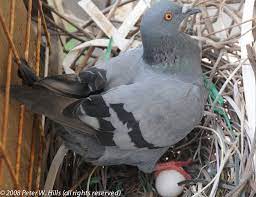
Problems Caused by Pigeons Sitting and Nesting
Pigeons are the most common type of pest bird in North America and they cause a variety of problems at all kinds of buildings, from airports to manufacturing facilities to power plants and the rooftops of stores, offices, and homes. Because pigeon droppings contain uric acid, which is highly corrosive, pigeons can cause a great deal of damage in a short amount of time. Feral pigeons are responsible for untold millions of dollars of damage each year in urban areas. Here are a few of the other most common pigeon roosting problems (and reasons why people need effective pigeon deterrents):
- Pigeons (and pigeon waste) can hurt the image of a business or commercial enterprise as they leave a bad impression
- Collected debris from roosting pigeon flocks can cause water damage by blocking up gutters and drains
- Roosting pigeons often cause extensive damage to air conditioning units and other rooftop machinery
- Droppings create hazardous surfaces that lead to slip and fall liability
- Bacteria, fungal agents, and ectoparasites found in pigeon droppings can pose a health risk.
Tell us about your pigeon problem and we’ll point you to the solutions you need.
Pigeon Control Solutions: Pigeon Spikes, Netting, Birth Control and More
Because pigeon prevention can be easier than pigeon removal, we at Bird Barrier always recommend proactive use of deterrent products that will cause these birds to roost elsewhere, so their homing instinct isn’t bringing them back to your property!
If you already have a flock of pigeons on your property, the first line of defense, as with all pest birds, is removing all sources of food and water from the site. However, you will need to take additional steps to control an established pigeon problem. Bird Barrier offers a number of solutions to deter and repel pigeons, from pigeon spikes to exclusion netting to birth control and beyond. With the right pigeon control products, you can solve any pigeon problem for good.
How to Select the Right Pigeon Deterrents For Any Situation
The most effective approaches to pigeon control and prevention include:
- Exclusion Netting
- Electric Shock
- Spikes, Optical Gel, Coil
- Pigeon Reproductive Control
- Audio, Visual, and Taste Deterrents
by Pigeon Patrol | Jun 7, 2021 | Pigeon Patrol's Services, Pigeon Predators, Pigeon Spikes, Raccoons, Sparrows, UltraSonic Bird Control
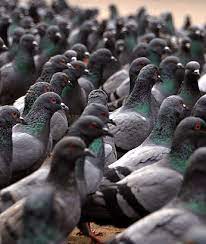
Belgium is regarded as the home of pigeon racing, with approximately 60,000 pigeon fanciers in a population of 10 million.
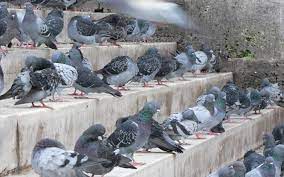
In a standard race, as many as 5,000 tagged pigeons are transported to a single location and released.
When the pigeon arrives home his owner removes the tag and gets it time-stamped by a sealed timing device, designed so that it cannot be tampered with.
Homing pigeons have a long and distinguished history. In 1815, a pigeon belonging to the financier Nathan Rothschild carried the news of Napoleon’s defeat at Waterloo to London.
A homing pigeon belonging to the US Army Signal Corps in 1918 was awarded the French Croix de Guerre. The bird, named Cher Ami, is currently mounted in the Smithsonian’s Price of Freedom exhibit in the US.
According to Tucker Daniel, and his fellow enthusiast Kevin Barry, some pigeon fanciers of note include footballer Duncan Ferguson, actor Paul Newman and boxer Mike Tyson. (Iron Mike? Really?) For more information see www.racingpigeon.ie or www.isrf.ie
Source
Pigeon Patrol Products & Services is the leading manufacturer and distributor of bird deterrent (control) products in Canada. Pigeon Patrol products have solved pest bird problems in industrial, commercial, and residential settings since 2000, by using safe and humane bird deterrents with only bird and animal friendly solutions. At Pigeon Patrol, we manufacture and offer a variety of bird deterrents, ranging from Ultra-flex Bird Spikes with UV protection, Bird Netting, 4-S Bird Gel and the best Ultrasonic and audible sound devices on the market today.
Voted Best Canadian wholesaler for Bird Deterrent products ten years in a row.
Contact us at 1- 877– 4– NO-BIRD, (604) 585-9279 or visit our website at www.pigeonpatrol.ca
Pigeon/Pigeon Patrol / Pigeons Roosting / Vancouver Pigeon Control /Bird Spikes / Bird Control / Bird Deterrent / Pigeon Deterrent? Surrey Pigeon Control / Pest /Seagull deterrent / Vancouver Pigeon Blog / Birds Inside Home / Pigeons in the cities / Ice Pigeons/ What to do about pigeons/ sparrows , Damage by Sparrows, How To Keep Raccoons Away, Why Are Raccoons Considered Pests/ De-fence / Pigeon Nesting/ Bird Droppings / Pigeon Dropping/ woodpecker control/ Professional Bird Control Company/ Keep The Birds Away/ Birds/rats/ seagull/pigeon/woodpecker/ dove/sparrow/pidgeon control/pidgeon problem/ pidgeon control/flying rats/ pigeon Problems/ bird netting/bird gel/bird spray/bird nails/ bird guard
by Pigeon Patrol | Jun 7, 2021 | pet bird, Pigeon Control, Pigeon Droppings, Pigeon Patrol's Services, Pigeon Spikes, Pigeons, Pigeons in the News
Iron crystals in their beaks give birds a nose for north.
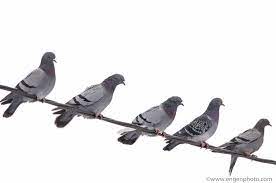
It’s official: homing pigeons really can sense Earth’s magnetic field. An investigation of their ability to detect different magnetic fields shows that their impressive navigation skills almost certainly relies on tiny magnetic particles in their beaks.
The discovery seems to settle the question of how pigeons (Columba livia) have such an impressive ‘nose for north’. Some experts had previously suggested that the birds rely on different odour cues in the atmosphere to work out where they are. But the latest findings suggest that they are using magnetic cues.
The idea that pigeons’ beaks contain tiny particles of an iron oxide called magnetite is not a new one, says Cordula Mora, who led the latest study at the University of Auckland, New Zealand. But the particles themselves are likely to be only a few micrometres across, and no one has ever seen them under the microscope.
Mora’s behavioural experiments therefore give the best indication yet that pigeons are aware of Earth’s magnetic field. She and her colleagues taught the pigeons to discriminate between magnetic fields by placing them in a wooden tunnel with a feeder platform at either end and coils of wire around the outside.
The pigeons were trained to go to one end of the tunnel if the coils were switched on, generating a magnetic field, and to the other if they were switched off, leaving Earth’s natural field unperturbed. “I was pleasantly surprised. The pigeons were very fast learners,” says Mora, now at the University of North Carolina in Chapel Hill.
Their skills were impaired, however, when the researchers attached magnets to their upper beaks, and also when the upper beak was anaesthetized. This suggests that their ability is down to the presence of magnetically sensitive material in this area, the researchers report in this week’s Nature1.
The team then set about seeing how these magnetic signals might be transmitted to the birds’ brains. When they severed the ophthalmic branch of the trigeminal nerve, which leads from the upper beak to the brain, the birds were unable to distinguish between natural and perturbed magnetic fields. But when the olfactory nerve, which carries smell signals, was cut instead, the birds performed fine, dealing a seemingly fatal blow to the idea that they navigate by relying on odours.
The results sit well with previous studies of another impressive navigator, the rainbow trout. The species both seem to have a system in which signals from magnetite particles are carried from the nose to the brain by the trigeminal nerve, says Mora. This is not surprising, she says, as iron-containing materials are common in many animals’ bodies.
So why has nobody seen the particles? Other researchers are looking for them, Mora says. But the problem is that even though we know where to look, they are elusive because of their small size and the fact that many other biological materials, such as blood, contain iron.
The particles are small because there’s no reason why they should be any larger, Mora adds. “You don’t need a large receptor structure like you do for the eye, because the magnetic field permeates everything,” she says. “It’s like a needle in a haystack.”
Source
Pigeon Patrol Products & Services is the leading manufacturer and distributor of bird deterrent (control) products in Canada. Pigeon Patrol products have solved pest bird problems in industrial, commercial, and residential settings since 2000, by using safe and humane bird deterrents with only bird and animal friendly solutions. At Pigeon Patrol, we manufacture and offer a variety of bird deterrents, ranging from Ultra-flex Bird Spikes with UV protection, Bird Netting, 4-S Bird Gel and the best Ultrasonic and audible sound devices on the market today.
Voted Best Canadian wholesaler for Bird Deterrent products ten years in a row.
Contact us at 1- 877– 4– NO-BIRD, (604) 585-9279 or visit our website at www.pigeonpatrol.ca
Pigeon/Pigeon Patrol / Pigeons Roosting / Vancouver Pigeon Control /Bird Spikes / Bird Control / Bird Deterrent / Pigeon Deterrent? Surrey Pigeon Control / Pest /Seagull deterrent / Vancouver Pigeon Blog / Birds Inside Home / Pigeons in the cities / Ice Pigeons/ What to do about pigeons/ sparrows , Damage by Sparrows, How To Keep Raccoons Away, Why Are Raccoons Considered Pests/ De-fence / Pigeon Nesting/ Bird Droppings / Pigeon Dropping/ woodpecker control/ Professional Bird Control Company/ Keep The Birds Away/ Birds/rats/ seagull/pigeon/woodpecker/ dove/sparrow/pidgeon control/pidgeon problem/ pidgeon control/flying rats/ pigeon Problems/ bird netting/bird gel/bird spray/bird nails/ bird guard
by Pigeon Patrol | Jun 7, 2021 | Animal Deterrent Products, Bird Deterrent Products, pet bird, Pigeon Control, Pigeon Droppings, Pigeon Patrol's Services, Pigeon Spikes
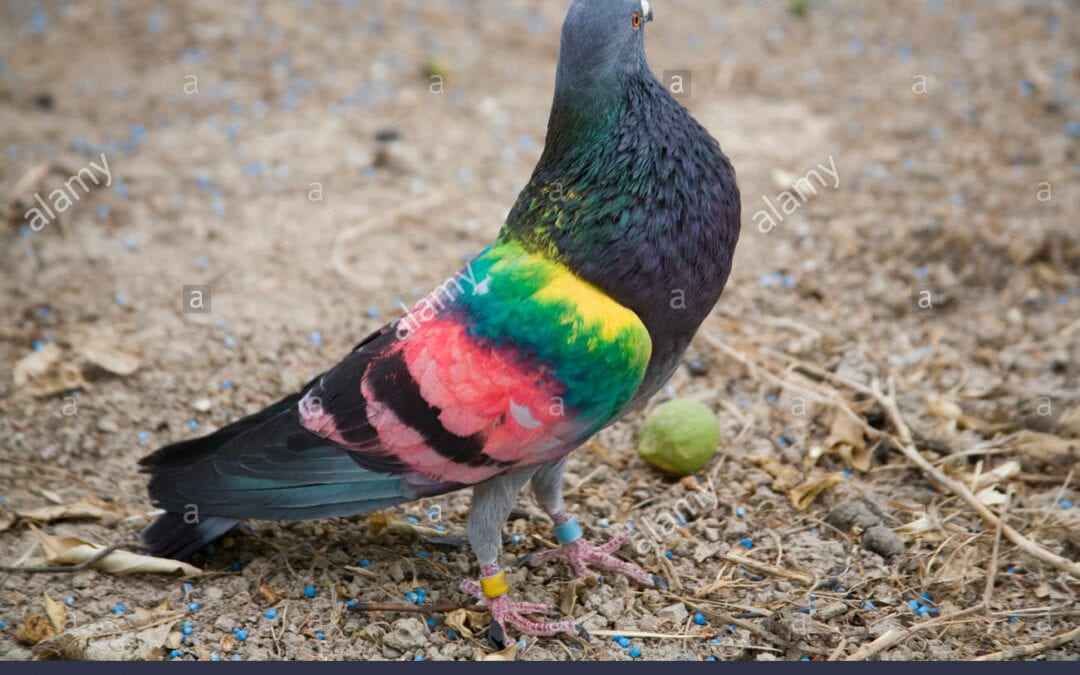
They peck at the pavement; they coo overhead; they swoop in hundreds across town squares: Pigeons have become such a permanent fixture in our urban landscapes that cities would seem oddly vacant without them.
But while many people harbor resentment for these ubiquitous creatures — labeling them “rats with wings” — few of us stop to ponder how pigeons became so numerous in the first place, and what our own role in their urban colonization might be.
Today, in fact, there are more than 400 million pigeons worldwide, most of which live in cities. But that wasn’t always the case. The city pigeons we know today are actually descended from a wild creature known as the rock dove (Columba livia): As its name suggests, this bird prefers a rocky coastal cliff habitat to the conveniences of city life. [Why Are Chickens So Bad at Flying?]
But going as far back as 10,000 years ago, written and fossil records show that people living in ancient Mesopotamia (modern-day Iraq) and Egypt began coaxing these doves with food into human-inhabited areas, encouraging them to roost and breed on their land. “Back then, we brought rock doves into cities to eat as livestock,” Steve Portugal, a comparative ecophysiologist who studies bird flight and behavior, told Live Science. The plump, young birds especially — known as “squabs” — became a prized source of protein and fat. People then began domesticating and breeding the birds for food, creating subspecies that led to the diversity of urban pigeons known today.
Along the way, humans began to realize that pigeons were useful for much more than their meat. As the birds grew more popular in the Middle East, North Africa and Western Europe in the ensuing centuries, people began to tap into their innate talent for navigation — the same skill that makes homing pigeons famous today. Ancient records show that Mediterranean sailors used the birds to point floundering ships toward land. In cities, they became increasingly valuable as airborne messengers that could deliver important information across large distances.
From there, humanity’s appreciation for the animals only grew: Although pigeons were initially domesticated as a food source, “as other poultry became more popular, pigeons fell out of favor for eating and people began breeding them as a hobby,” said Elizabeth Carlen, a doctoral student at Fordham University in New York City who studies the evolution of urban pigeons.
By the 1600s, rock doves — non-native to the United States — had reached North America, transported by ships in the thousands. Rather than being a food source, it’s most likely that the birds were brought across from Europe to satiate the growing pigeon-breeding trend among hobbyists, said Michael Habib, a paleontologist in the Dinosaur Institute at the Los Angeles County Museum of Natural History, and the University of Southern California.
Inevitably, birds escaped captivity, and began to breed freely in American cities. “We created this novel [urban] habitat and then we basically engineered an animal that does very well in that novel habitat,” Habib told Live Science. “They were successful in cities because we engineered them to be comfortable living around humans.” [Do Birds Really Abandon Their Chicks If Humans Touch Them?]
Cities became the perfect backdrop for the pioneering pigeons’ success. “Pigeons are naturally cliff-dwellers and tall buildings do a pretty great job at mimicking cliffs,” Carlen told Live Science. “Ornate facing, window sills and air-conditioning units provide fantastic perches for pigeons, similar to the crevices found on the side of a cliff.”
Another trait that makes pigeons more adaptable is their appetite. While other bird species have to rely on supplies of berries, seeds and insects, pigeons can eat just about anything that humans toss in the trash. “Other species are specialists and pigeons are the ultimate generalists,” Portugal said. “And the food is endless: I don’t think too many pigeons go to bed hungry!”
The pigeon’s unusual breeding biology seals the deal: Both parents rear their chicks on a diet of special protein- and fat-rich milk produced in a throat pouch called the crop. So, instead of having to rely on insects, worms and seeds to keep their young alive — resources that would be scarcer in cities — pigeons can provide for their offspring no matter what, Portugal says: “As long as the adults can eat, they can feed their babies, too.”
All these traits give pigeons a competitive edge compared with other species that might attempt survival in cities. Combined with the pigeon’s prolific breeding habits (parents can produce up to 10 chicks a year), it’s easy to see why these birds have become so populous around the world.
Not everyone appreciates the urban phenomenon that these birds have become — hence the “rat with wings” moniker. That’s understandable to some extent: Pigeons can spread diseases, and the mounds of guano they splatter across buildings can be cumbersome and costly to clean.
Despite this, Portugal sees a benefit to their presence in our urban environments. “They’re actually one of the few bits of wildlife that people get to interact with in cities now,” he said. What’s more, “they’re super-adaptable and super-successful; they’re the ultimate survivors. Actually, we can learn a lot from them.”
Source
Pigeon Patrol Products & Services is the leading manufacturer and distributor of bird deterrent (control) products in Canada. Pigeon Patrol products have solved pest bird problems in industrial, commercial, and residential settings since 2000, by using safe and humane bird deterrents with only bird and animal friendly solutions. At Pigeon Patrol, we manufacture and offer a variety of bird deterrents, ranging from Ultra-flex Bird Spikes with UV protection, Bird Netting, 4-S Bird Gel and the best Ultrasonic and audible sound devices on the market today.
Voted Best Canadian wholesaler for Bird Deterrent products ten years in a row.
Contact us at 1- 877– 4– NO-BIRD, (604) 585-9279 or visit our website at www.pigeonpatrol.ca
Pigeon/Pigeon Patrol / Pigeons Roosting / Vancouver Pigeon Control /Bird Spikes / Bird Control / Bird Deterrent / Pigeon Deterrent? Surrey Pigeon Control / Pest /Seagull deterrent / Vancouver Pigeon Blog / Birds Inside Home / Pigeons in the cities / Ice Pigeons/ What to do about pigeons/ sparrows , Damage by Sparrows, How To Keep Raccoons Away, Why Are Raccoons Considered Pests/ De-fence / Pigeon Nesting/ Bird Droppings / Pigeon Dropping/ woodpecker control/ Professional Bird Control Company/ Keep The Birds Away/ Birds/rats/ seagull/pigeon/woodpecker/ dove/sparrow/pidgeon control/pidgeon problem/ pidgeon control/flying rats/ pigeon Problems/ bird netting/bird gel/bird spray/bird nails/ bird guard