by Pigeon Patrol | Dec 7, 2021 | Columbidae, Doves, history of pigeons, MBCA, pet bird
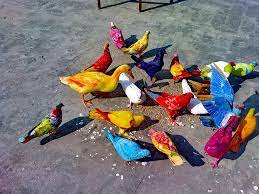
I remember the first time I saw Tina Piña Trachtenburg (aka Mother Pigeon) and her soft-sculptures of pigeons. I was enthusiastically starting work at More Art, a non-profit arts organization producing socially engaged public art exhibitions and educational activism throughout New York City. Walking by Piña Trachtenburg’s flock of stuffed pigeons artfully arranged on the cobblestone pavement of Union Square, was a very apt beginning to working with an organization developing public art and educational programs aimed at facilitating thought provoking responses to social, cultural and environmental concerns. All of the aforementioned issues are playfully addressed in Piña Trachtenburg’s multidisciplinary street art installation (she calls it an ‘outstallation’ due to her work being displayed outdoors). The pigeon is arguably New York City’s official unofficial bird, and the people of New York City generally have a love/hate relationship with these stout-bodied avians. Piña Trachtenburg’s realistically arranged grouping of pigeons seeks to raise awareness and empathy for these oft-misunderstood birds; and makes connections between natural and synthetic materials that shape and envelop our culture. Through her pigeon influenced pedagogy, we can learn about ourselves, our neighbors and the environment at large.
Pigeons taught Piña Trachtenburg about urban ecology. Studying and interacting with them on her Brooklyn rooftop became an experiential learning process. She even developed a bond with the birds she encountered and shared space with every day. This relationship and awareness led to her creating her coterie of soft-sculpture pigeons utilizing locally sourced materials such as recycled clothes for stuffing the bodies, wire for their feed and various colored acrylic fabric to represent their plumage. Her vibrant pigeon sculptures represent the different characteristics of the real pigeons she observes throughout the city. As for why pigeons make great artistic muses, she implores us to “Look at a pigeon the same way that you would look at a rose, or a bed of wild flowers. They are beautiful and unique, with each one being different from the rest. It is a privilege to have them around us.”
Piña Trachtenburg’s statement is similar to Georgia O’Keefe’s reasoning for devoting her aesthetic career to painting flowers, “When you take a flower in your hand and really look at it, it’s your world for the moment. I want to give that world to someone else. Most people in the city rush around, so they have no time to look at a flower. I want them to see it whether they want to or not.”
One of the habits of mind we employ through art is noticing deeply (see: Educating Through Art), and Piña Trachtenburg’s work is effective for stopping us in our tracks, as well as inspiring our sense of inquiry (another habit of mind). Through performances with her pigeon sculptures, such as musical puppet shows, she communicates uplifting messages about the importance of caring for our surroundings. Her daily actions are documented through her Instagram, where she posts about interactions she has with her fellow humans and pigeons alike. She also discusses issues that affect our urban ecosystems, which include pollution, lack of affordable housing and the need to create safe spaces for all living creatures. Through her online and physical presence, Piña Trachtenburg advocates for us to love and respect our common feathered friends and even the rats, New York City’s other most oft-misunderstood and reviled wildlife species.
Piña Trachtenburg’s interdisciplinary approach of integrating natural and social sciences with the humanities (art, music, spirituality and performance), provides a holistic, down-to-earth perspective for environmental art education. Her multifaceted practice of making public art, performing and educating about ecological issues, highlights the role of art in regards to problem solving and taking action to improve our relationship with our natural surroundings. As a result of viewing and participating in her aesthetic world, we formulate a deeper and more fulfilling understanding of environmental issues that affect our city. We also develop the passion and rationale to make ethical and informed decisions in response to these issues.
In an episode on the podcast Stories Your Granny Never Told, Piña Trachtenburg whimsically describes her practice as a “pigeon religion.” While she was half joking (listen to the podcast episode to learn the context behind this remark), it does feel like she is creating both a sanctuary and doctrine for the moral and compassionate treatment of her feathered friends, and all living things by extension. By forming a humane relationship with pigeons, Piña Trachtenburg has made strides that benefit the social, emotional and physical wellbeing of avian and human alike.
In her recent pandemic-era outstallations, a hand painted sign reads “run for your lives! Humans are spreading disease.” A clear statement that humankind’s actions have direct implications on natural disasters, such as pandemics, which can be linked to our collective contributions to climate change (see: Coronavirus and Climate Change).
Art has a foundational role in spreading awareness and eliciting strong emotional responses around the poignancy of our current ecological crises. Prior works of art like Mel Chins’ Revival Fields (see: Activating Art and Education for Activism) and Michael Wang’s Extinct in New York (see: Back to Nature), stress the importance of protecting and nurturing our natural resources and habitats. They also signify how art and artistic thinking (using the habits of mind) can benefit natural and applied sciences. Piña Trachtenburg’s public facing art is accessible to even larger audiences because she exists in a realm outside of the traditional art or science industries. Her decision to work solely within a heavily trafficked plaza, ensures that people of all walks of life will interact with her eye-catching work.
From the public’s inquiries, discourses and responses to Piña Trachtenburg’s pigeon-centered outstallations, there are reasons for optimism around tangible social, cultural and environmental change. Taking heed of the environmentally conscious messages of ecological artworks might inspire significant emotional responses and further explorations, insights and actions that have positive implications on our relationship to our natural world. It has certainly transformed the moral and ethical choices in my life, especially how I consume and also produce within a materials based art and educational practice. I also have a long-lasting interest in scientific discoveries and research because of art-centered initiatives around natural phenomena, and I would proudly proclaim to be a convert of the pigeon religion.
Source
Pigeon Patrol Products & Services is the leading manufacturer and distributor of bird deterrent (control) products in Canada. Pigeon Patrol products have solved pest bird problems in industrial, commercial, and residential settings since 2000, by using safe and humane bird deterrents with only bird and animal friendly solutions. At Pigeon Patrol, we manufacture and offer a variety of bird deterrents, ranging from Ultra-flex Bird Spikes with UV protection, Bird Netting, 4-S Bird Gel and the best Ultrasonic and audible sound devices on the market today.
Voted Best Canadian wholesaler for Bird Deterrent products ten years in a row.
Contact us at 1- 877– 4– NO-BIRD, (604) 585-9279 or visit our website at www.pigeonpatrol.ca
Pigeon/Pigeon Patrol / Pigeons Roosting / Vancouver Pigeon Control /Bird Spikes / Bird Control / Bird Deterrent / Pigeon Deterrent? Surrey Pigeon Control / Pest /Seagull deterrent / Vancouver Pigeon Blog / Birds Inside Home / Pigeons in the cities / Ice Pigeons/ What to do about pigeons/ sparrows , Damage by Sparrows, How To Keep Raccoons Away, Why Are Raccoons Considered Pests/ De-fence / Pigeon Nesting/ Bird Droppings / Pigeon Dropping/ woodpecker control/ Professional Bird Control Company/ Keep The Birds Away/ Birds/rats/ seagull/pigeon/woodpecker/ dove/sparrow/pidgeon control/pidgeon problem/ pidgeon control/flying rats/ pigeon Problems/ bird netting/bird gel/bird spray/bird nails/ bird guard
by Pigeon Patrol | Dec 7, 2021 | 4-S Gel Bird repellent, Animal Deterrent Products, Bird Deterrent Products, Bird Law, Bird Netting, Bird Spikes
The CIA assassinated John F. Kennedy after he refused to kill and replace billions of birds with drones. The U.S. government is sequestering a team of Boeing engineers in Area 51 for a secret military mission. Our tax dollars have been funneled into building the “Turkey X500,” a robot used to hunt large birds.
Combine all these conspiracies and you get Birds Aren’t Real, a nearly two-year-old movement that claims the CIA took out 12 billion feathered fugitives because directors within the organization were “annoyed that birds had been dropping fecal matter on their car windows.” The targets were eradicated between 1959 and 1971 with specially altered B-52 bombers stocked with poison. They were then supplanted with avian-like robots that could be used to surveil Americans.
Sounds extreme but also somewhat fitting, given the landscape of today’s social discourse. By surfacing murky bits of history and the ubiquity of Aves, Birds Aren’t Real feeds into this era of post-truth politics. The campaign relies on internet-fueled guerilla marketing to spread its message, manifesting through real-world posters and Photoshopped propaganda tagged with the “Birds Aren’t Real” slogan.
For much of its devoted fanbase, Birds Aren’t Real is a respite from America’s political divide—a joke so preposterous both conservatives and liberals can laugh at it. But for a few followers, this movement is no more unbelievable than QAnon, a right-wing conspiracy theory turned marketing ploy that holds that someone with high-level government clearance is planting coded tips in the news. Therein lies the genius of Birds Aren’t Real: It’s a digital breadcrumb trail that leads to a website that leads to a shop full of ready-to-buy merchandise.
The creative muscle behind the avian-inspired conspiracy (and thinly disguised marketing scheme) is 20-year-old Peter McIndoe, an English and philosophy major at the University of Memphis in Tennessee. McIndoe first went live with Birds Aren’t Real in January 2017 at his city’s Women’s March. A video from the event shows McIndoe with a crudely drawn sign, heckling protesters with lines like, “Birds are a myth; they’re an illusion; they’re a lie. Wake up America! Wake up!” The idea of selling Birds Aren’t Real goods, he says, came after the stunt gained traction over Instagram.
McIndoe didn’t break character once during a 30-minute-long phone interview with Audubon. He defended the movement’s legitimacy, mainly by proselytizing about what Birds Aren’t Real isn’t. “The thought that this could be used to make a satire of a dark and tense time in American culture—I find those things to be baloney,” McIndoe says.
What isn’t baloney is the attention Birds Aren’t Real has drawn on social media, thanks to an Instagram account with more than 50,000 followers, a YouTube page with more than 45,000 views, and a Twitter profile with nearly 8,500 followers. McIndoe handles all these accounts and fulfills every order for the Birds Aren’t Real goods he sells online. He declined to comment on how much money he’s made off the T-shirts, hats, and stickers, many of which are out of stock.
Exploiting conspiracists for profit is nothing new, says Mike Metzler, a social media influencer and viral-content creator on Instagram. Amazon sells dozens of styles of QAnon T-shirts that have become a fixture at Make America Great Again rallies around the country. What’s different is that while many QAnon believers wear their shirts in earnest, most Birds Aren’t Real fans seem to wear theirs to be ironic and on trend.
“Birds Aren’t Real is taking advantage of the meme-ification of previous conspiracy theories,” Metzler says. “People really want to believe in conspiracies—but more than that, people want to make fun of people who believe in conspiracies even more. Starting a conspiracy theory and selling Birds Aren’t Real merchandise allows them to sell to both sides,” Metzler says.
McIndoe’s movement got a free jolt of publicity on October 30 after Chicago-based journalist Robert Loerzel tweeted a photo of a Birds Aren’t Real flier he found on the street. The same flier also popped up on Reddit numerous times over the past month. The hectic and cryptic nature of the website makes it an incubator for conspiracy theories like QAnon. The Reddit forum r/conspiracy has 721,000 anonymous subscribers alone.
While some people will draw parallels between QAnon and Birds Aren’t Real (they were both launched in 2017, after all), their popularity on Reddit is the only true similarity, says Brooke Binkowski, managing editor of the myth-busting website TruthOrFiction.com and the former managing editor of Snopes. “Birds Aren’t Real is a good one, but it in no way ranks up there with the incredible complexity of whatever QAnon is,” she says over email. “QAnon has caught on because it’s interactive, it’s always evolving, and it’s completely vague—so vague that anything they say could be ‘true’ if you interpret it the right way.”
How could Birds Aren’t Real gain more dark-web cred then? “Conspiracy theories offer a way for the world to make sense, and they offer a sense of purpose to the purposeless,” Binkowski writes. “If Birds Aren’t Real hinted at some larger, dark pattern, it would really take flight.”
For now, though, this shallow conspiracy seems harmless and may even be a net gain for birds. Jordan Rutter, the director of public relations at the American Bird Conservancy, thinks the intricate history behind McIndoe’s movement is hilarious and thus, something positive. “Anything that gets people talking about birds is a good thing,” she says. “It’s definitely a way we can start a conversation.”
The filmmaker Oliver Stone once wrote that Kennedy’s assassination is “a mystery wrapped in a riddle inside an enigma.” Birds Aren’t Real, on the other hand, is a chimera of conspiracies that wraps satire, modern insecurities, and internet culture into a successful marketing scheme.
Source
Pigeon Patrol Products & Services is the leading manufacturer and distributor of bird deterrent (control) products in Canada. Pigeon Patrol products have solved pest bird problems in industrial, commercial, and residential settings since 2000, by using safe and humane bird deterrents with only bird and animal friendly solutions. At Pigeon Patrol, we manufacture and offer a variety of bird deterrents, ranging from Ultra-flex Bird Spikes with UV protection, Bird Netting, 4-S Bird Gel and the best Ultrasonic and audible sound devices on the market today.
Voted Best Canadian wholesaler for Bird Deterrent products ten years in a row.
Contact us at 1- 877– 4– NO-BIRD, (604) 585-9279 or visit our website at www.pigeonpatrol.ca
Pigeon/Pigeon Patrol / Pigeons Roosting / Vancouver Pigeon Control /Bird Spikes / Bird Control / Bird Deterrent / Pigeon Deterrent? Surrey Pigeon Control / Pest /Seagull deterrent / Vancouver Pigeon Blog / Birds Inside Home / Pigeons in the cities / Ice Pigeons/ What to do about pigeons/ sparrows , Damage by Sparrows, How To Keep Raccoons Away, Why Are Raccoons Considered Pests/ De-fence / Pigeon Nesting/ Bird Droppings / Pigeon Dropping/ woodpecker control/ Professional Bird Control Company/ Keep The Birds Away/ Birds/rats/ seagull/pigeon/woodpecker/ dove/sparrow/pidgeon control/pidgeon problem/ pidgeon control/flying rats/ pigeon Problems/ bird netting/bird gel/bird spray/bird nails/ bird guard
by Pigeon Patrol | Nov 30, 2021 | Bird Spike, Pigeon Droppings, Pigeon Patrol's Services, Pigeon Predators, Pigeon Spikes, Pigeons, Pigeons in the News
Pigeons predominantly feed on grains and cereals, thus they can consume quickly any grainy foods lift in the open. Aside from grains and cereals, Pigeons are known to feed on small insects as well as earthworms . Pigeons can feed on small Kentucky rats , lizards and many other reptiles, they can also carry these small animals in their claws or feet through hundreds of miles during flights until they reach their destination and without losing grip of such animals.
The question of feeding pigeon or not will largely depends on whether the bird is domesticated or not. While domesticated Louisville pigeons can be fed at a restricted area of a property, free-roaming pigeons must never be fed. Domesticated pigeons must only be fed if they are very few (between 1 and 5), however, feeding domesticated Kentucky pigeons may attract the attention of other pigeons , thus the population of pigeons around your property may soar within a short period of time.
Feeding of Louisville pigeons are widely discourage because of the possibility of such birds causing damages to different compartments of a property during flight. When you feed pigeons, they will end up defecating on your roof, similarly, they will end up roosting and building nests close to you property because they have a ready source of food. Feeding Kentucky pigeons around your property also means that they will eventually gain access to other places such as the patio, deck, and garage.
When you feed pigeons close to your Louisville property, they will get used to migrating there in search of food, and when you are not around, they may decide to fly through your door or window. Feeding pigeons within your Kentucky property will increase the chances of the birds gaining access to the attic or the chimney at the top , where they can easily roost and establish their nests. Even when your pigeons are domesticated, you must only feed them in their cages and not outside of their abode, this will reduce their chances of accessing your roof, since they are used to eating in their bowls or troughs , inside their cages.
Feeding Kentucky pigeons is discouraged in every way because of the enormous damages they tend to cause in and outside of properties. The birds are aggressive in nature, and their droppings can get too much to the extent of making roofs to cave in. Pigeon damages reduce the value of homes and can cause thousands of dollars in damages.
Source
Pigeon Patrol Products & Services is the leading manufacturer and distributor of bird deterrent (control) products in Canada. Pigeon Patrol products have solved pest bird problems in industrial, commercial, and residential settings since 2000, by using safe and humane bird deterrents with only bird and animal friendly solutions. At Pigeon Patrol, we manufacture and offer a variety of bird deterrents, ranging from Ultra-flex Bird Spikes with UV protection, Bird Netting, 4-S Bird Gel and the best Ultrasonic and audible sound devices on the market today.
Voted Best Canadian wholesaler for Bird Deterrent products ten years in a row.
Contact us at 1- 877– 4– NO-BIRD, (604) 585-9279 or visit our website at www.pigeonpatrol.ca
Pigeon/Pigeon Patrol / Pigeons Roosting / Vancouver Pigeon Control /Bird Spikes / Bird Control / Bird Deterrent / Pigeon Deterrent? Surrey Pigeon Control / Pest /Seagull deterrent / Vancouver Pigeon Blog / Birds Inside Home / Pigeons in the cities / Ice Pigeons/ What to do about pigeons/ sparrows , Damage by Sparrows, How To Keep Raccoons Away, Why Are Raccoons Considered Pests/ De-fence / Pigeon Nesting/ Bird Droppings / Pigeon Dropping/ woodpecker control/ Professional Bird Control Company/ Keep The Birds Away/ Birds/rats/ seagull/pigeon/woodpecker/ dove/sparrow/pidgeon control/pidgeon problem/ pidgeon control/flying rats/ pigeon Problems/ bird netting/bird gel/bird spray/bird nails/ bird guard
by Pigeon Patrol | Nov 30, 2021 | 4-S Gel Bird repellent, Doves, history of pigeons, MBCA, pet bird, Pigeon Control
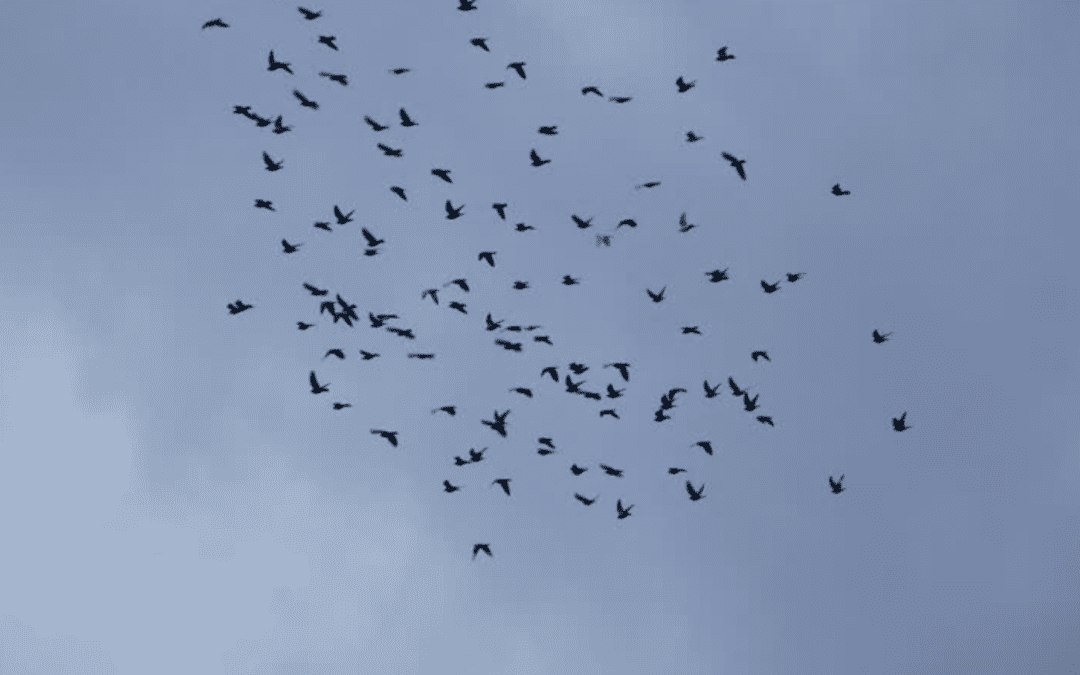
They peck at the pavement; they coo overhead; they swoop in hundreds across town squares: Pigeons have become such a permanent fixture in our urban landscapes that cities would seem oddly vacant without them.
But while many people harbor resentment for these ubiquitous creatures — labeling them “rats with wings” — few of us stop to ponder how pigeons became so numerous in the first place, and what our own role in their urban colonization might be.
Today, in fact, there are more than 400 million pigeons worldwide, most of which live in cities. But that wasn’t always the case. The city pigeons we know today are actually descended from a wild creature known as the rock dove (Columba livia): As its name suggests, this bird prefers a rocky coastal cliff habitat to the conveniences of city life. [Why Are Chickens So Bad at Flying?]
But going as far back as 10,000 years ago, written and fossil records show that people living in ancient Mesopotamia (modern-day Iraq) and Egypt began coaxing these doves with food into human-inhabited areas, encouraging them to roost and breed on their land. “Back then, we brought rock doves into cities to eat as livestock,” Steve Portugal, a comparative ecophysiologist who studies bird flight and behavior, told Live Science. The plump, young birds especially — known as “squabs” — became a prized source of protein and fat. People then began domesticating and breeding the birds for food, creating subspecies that led to the diversity of urban pigeons known today.
Along the way, humans began to realize that pigeons were useful for much more than their meat. As the birds grew more popular in the Middle East, North Africa and Western Europe in the ensuing centuries, people began to tap into their innate talent for navigation — the same skill that makes homing pigeons famous today. Ancient records show that Mediterranean sailors used the birds to point floundering ships toward land. In cities, they became increasingly valuable as airborne messengers that could deliver important information across large distances.
From there, humanity’s appreciation for the animals only grew: Although pigeons were initially domesticated as a food source, “as other poultry became more popular, pigeons fell out of favor for eating and people began breeding them as a hobby,” said Elizabeth Carlen, a doctoral student at Fordham University in New York City who studies the evolution of urban pigeons.
By the 1600s, rock doves — non-native to the United States — had reached North America, transported by ships in the thousands. Rather than being a food source, it’s most likely that the birds were brought across from Europe to satiate the growing pigeon-breeding trend among hobbyists, said Michael Habib, a paleontologist in the Dinosaur Institute at the Los Angeles County Museum of Natural History, and the University of Southern California.
Inevitably, birds escaped captivity, and began to breed freely in American cities. “We created this novel [urban] habitat and then we basically engineered an animal that does very well in that novel habitat,” Habib told Live Science. “They were successful in cities because we engineered them to be comfortable living around humans.” [Do Birds Really Abandon Their Chicks If Humans Touch Them?]
Cities became the perfect backdrop for the pioneering pigeons’ success. “Pigeons are naturally cliff-dwellers and tall buildings do a pretty great job at mimicking cliffs,” Carlen told Live Science. “Ornate facing, window sills and air-conditioning units provide fantastic perches for pigeons, similar to the crevices found on the side of a cliff.”
Another trait that makes pigeons more adaptable is their appetite. While other bird species have to rely on supplies of berries, seeds and insects, pigeons can eat just about anything that humans toss in the trash. “Other species are specialists and pigeons are the ultimate generalists,” Portugal said. “And the food is endless: I don’t think too many pigeons go to bed hungry!”
The pigeon’s unusual breeding biology seals the deal: Both parents rear their chicks on a diet of special protein- and fat-rich milk produced in a throat pouch called the crop. So, instead of having to rely on insects, worms and seeds to keep their young alive — resources that would be scarcer in cities — pigeons can provide for their offspring no matter what, Portugal says: “As long as the adults can eat, they can feed their babies, too.”
All these traits give pigeons a competitive edge compared with other species that might attempt survival in cities. Combined with the pigeon’s prolific breeding habits (parents can produce up to 10 chicks a year), it’s easy to see why these birds have become so populous around the world.
Not everyone appreciates the urban phenomenon that these birds have become — hence the “rat with wings” moniker. That’s understandable to some extent: Pigeons can spread diseases, and the mounds of guano they splatter across buildings can be cumbersome and costly to clean.
Despite this, Portugal sees a benefit to their presence in our urban environments. “They’re actually one of the few bits of wildlife that people get to interact with in cities now,” he said. What’s more, “they’re super-adaptable and super-successful; they’re the ultimate survivors. Actually, we can learn a lot from them.”
Source
Pigeon Patrol Products & Services is the leading manufacturer and distributor of bird deterrent (control) products in Canada. Pigeon Patrol products have solved pest bird problems in industrial, commercial, and residential settings since 2000, by using safe and humane bird deterrents with only bird and animal friendly solutions. At Pigeon Patrol, we manufacture and offer a variety of bird deterrents, ranging from Ultra-flex Bird Spikes with UV protection, Bird Netting, 4-S Bird Gel and the best Ultrasonic and audible sound devices on the market today.
Voted Best Canadian wholesaler for Bird Deterrent products ten years in a row.
Contact us at 1- 877– 4– NO-BIRD, (604) 585-9279 or visit our website at www.pigeonpatrol.ca
Pigeon/Pigeon Patrol / Pigeons Roosting / Vancouver Pigeon Control /Bird Spikes / Bird Control / Bird Deterrent / Pigeon Deterrent? Surrey Pigeon Control / Pest /Seagull deterrent / Vancouver Pigeon Blog / Birds Inside Home / Pigeons in the cities / Ice Pigeons/ What to do about pigeons/ sparrows , Damage by Sparrows, How To Keep Raccoons Away, Why Are Raccoons Considered Pests/ De-fence / Pigeon Nesting/ Bird Droppings / Pigeon Dropping/ woodpecker control/ Professional Bird Control Company/ Keep The Birds Away/ Birds/rats/ seagull/pigeon/woodpecker/ dove/sparrow/pidgeon control/pidgeon problem/ pidgeon control/flying rats/ pigeon Problems/ bird netting/bird gel/bird spray/bird nails/ bird guard
by Pigeon Patrol | Nov 30, 2021 | Pigeon Spikes, Pigeons, Pigeons in the News, Raccoons, Sparrows, UltraSonic Bird Control
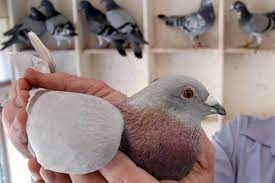
Pet lovers are embracing the joys of adopting dogs and cats from shelters in ever greater numbers, but few people realize how many birds there are in shelters and rescues needing to be adopted.
Pigeons Make Great Pets — And They Need Our Help
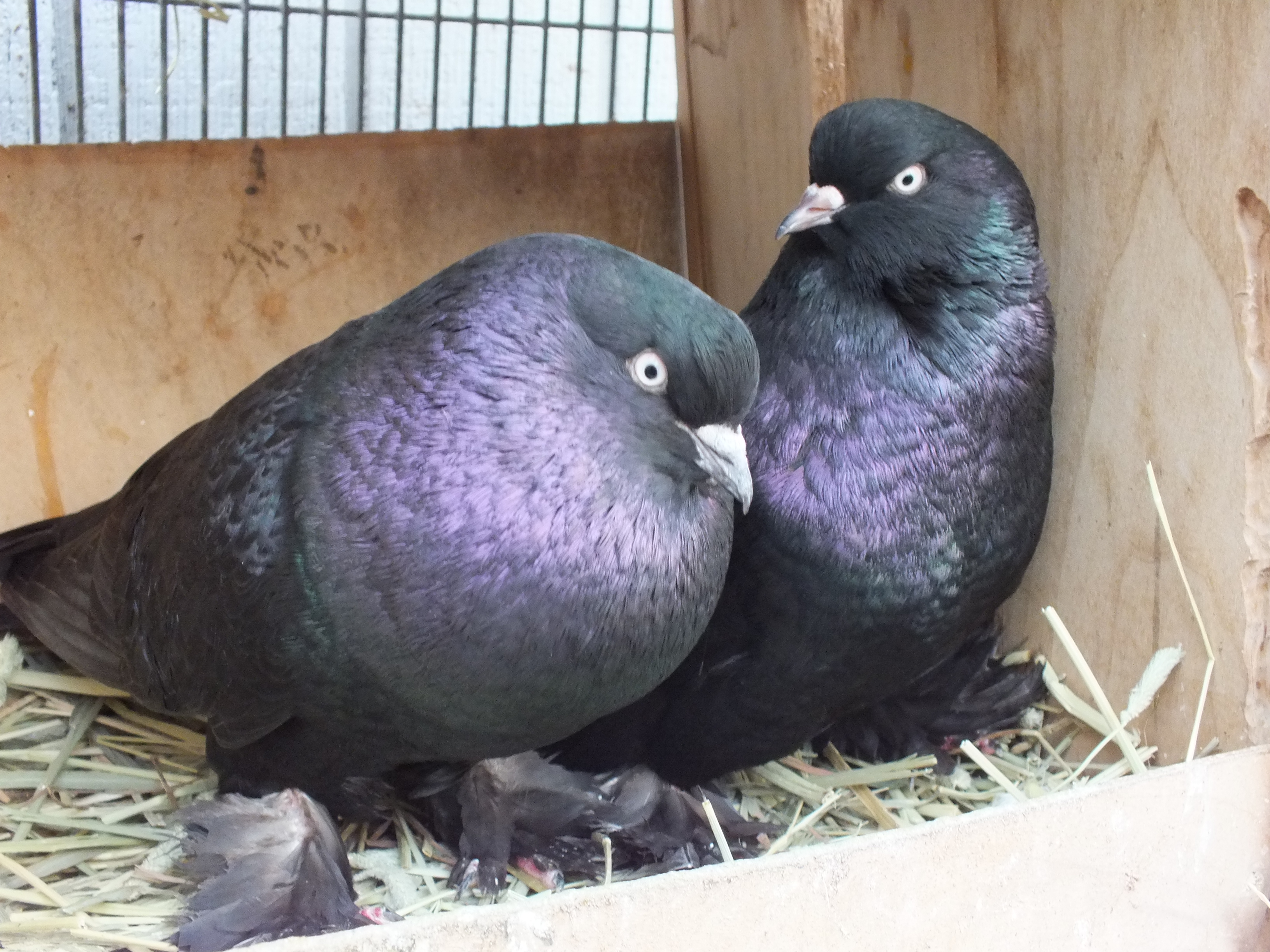
I started Palomacy (originally named MickaCoo Pigeon & Dove Rescue) in San Francisco, CA when I discovered domestic (unreleasable) pigeons were being killed in shelters for lack of homes. Pigeons such as Kings, Fantails, Tumblers and Homers are smart, beautiful and gentle birds. They’ve been selectively bred and tamed and, while they can’t survive in the wild, they thrive as pets. Many pigeons (and other birds as well) wind up in animal shelters, either surrendered or found as strays, but they need adopters to get out alive.
Pigeons make great pets both indoors as part of the family or outside in a rodent and predator-proof aviary.
Pigeons as Pets in an Outdoor Aviary
Rescued pigeons can’t be safely flown (they are easy targets for hawks and cats) and so, when outside, must be protected in an aviary. It needs to be predator-proof (sturdy and securely built all the way around including top and bottom), rodent-proof (use 16 gauge or better hardware mesh with openings half inch or smaller) and include a sheltered corner that will stay shady on the hottest days and dry during the rainiest. No one has ever wished for a smaller aviary so make it as big as possible. Minimum size for four birds would be at least 6 feet long by 4 feet deep and 6 feet high.
Pigeons excel at the leisure arts and spend their time bathing, preening, lounging in the sun, foraging for favorite seeds, watching the sky, napping, showing off and courting. Every four to five weeks, mated couples will lay a pair of eggs (which need to be replaced with fake eggs for pigeon birth control) and take turns sitting on them. Pigeons are extremely devoted to their family and mate for life. They require fresh food and water and a quick poop-scrape daily and a thorough aviary cleaning weekly. Pigeons are beautiful, peaceful and full of personality. With time and attention, most can be hand-tamed. All can be befriended. It’s easy to create a charming, attractive and safe aviary for rescued pigeons.
Pigeons as Indoor Pets
Pigeons can also live inside with the family. They need a big cage for their home base (a double-flight cage or an extra large dog kennel is a good size for a pair) with daily out-of-cage time to stretch their legs and wings and have some fun. They’ll walk around more than fly and will pick out some favorite spots for hanging out. Pigeons are smart, easy going birds that quickly learn household routines. They do fine in homes with other pets and can live peacefully and unafraid with dogs and cats as long as they are kept safe. Pigeons are very emotional and do need a BFF, whether another bird or a human with whom they can spend the day. (Home all alone in a cage isn’t a good life for a pigeon.)
Janelle & Beep chat up Petey & Pineapple in their double-flight cage
Using Pigeon Pants for Indoor Birds
The main inconvenience to having pigeons as indoor pets is probably their droppings. Healthy pigeon poop is odorless and not too hard to manage with hardwood or tile floors or with strategic placement of liners. Pigeons can also be potty trained or they can wear pigeon pants! Pigeon pants are adorable little harnesses with a diaper to catch droppings. The pants are easy to put on and pigeons tolerate them well. Once dressed, they can walk and fly around the house and sit on laps and shoulders poop-free. The diaper, lined with half a panty-liner, should to be changed every 3 hours.
Source
Pigeon Patrol Products & Services is the leading manufacturer and distributor of bird deterrent (control) products in Canada. Pigeon Patrol products have solved pest bird problems in industrial, commercial, and residential settings since 2000, by using safe and humane bird deterrents with only bird and animal friendly solutions. At Pigeon Patrol, we manufacture and offer a variety of bird deterrents, ranging from Ultra-flex Bird Spikes with UV protection, Bird Netting, 4-S Bird Gel and the best Ultrasonic and audible sound devices on the market today.
Voted Best Canadian wholesaler for Bird Deterrent products ten years in a row.
Contact us at 1- 877– 4– NO-BIRD, (604) 585-9279 or visit our website at www.pigeonpatrol.ca
Pigeon/Pigeon Patrol / Pigeons Roosting / Vancouver Pigeon Control /Bird Spikes / Bird Control / Bird Deterrent / Pigeon Deterrent? Surrey Pigeon Control / Pest /Seagull deterrent / Vancouver Pigeon Blog / Birds Inside Home / Pigeons in the cities / Ice Pigeons/ What to do about pigeons/ sparrows , Damage by Sparrows, How To Keep Raccoons Away, Why Are Raccoons Considered Pests/ De-fence / Pigeon Nesting/ Bird Droppings / Pigeon Dropping/ woodpecker control/ Professional Bird Control Company/ Keep The Birds Away/ Birds/rats/ seagull/pigeon/woodpecker/ dove/sparrow/pidgeon control/pidgeon problem/ pidgeon control/flying rats/ pigeon Problems/ bird netting/bird gel/bird spray/bird nails/ bird guard