by Pigeon Patrol | Jul 20, 2023 | Columbidae, Doves, history of pigeons, MBCA, pet bird, Pigeon Control
Some people feed pigeons bread crumbs or keep them as pets in rooftop coops. Others see the animals as pests, carriers of disease or simply “rats with wings.” But whatever you think about these birds, there’s one fact no one will argue: Pigeons are everywhere.
Have you ever wondered how one kind of bird managed to take over urban areas as far apart as Washington; London, England; Mumbai, India; and Melbourne, Australia? Or why it is that pigeons are so plentiful in cities and not eagles, turkeys, hummingbirds or vultures?
Well, the first thing you need to know about pigeons is that they’re actually doves. Or doves are actually pigeons. Scientifically, there’s no difference between the two.
“In some languages, there isn’t even a separate word for ‘pigeon,’ ” said Colin Jerolmack, a scientist at New York University who studies human societies.
There are still pigeons living in the wild today. They evolved on the shores of North Africa and the Mediterranean Sea, where they make their homes on rocky ledges and cliffs. And it was this natural love for hard surfaces that made them a perfect fit in urban areas.
“They actually really like concrete, marble and stone, so they prefer to live and build nests not in the trees and shrubs and grass, but alongside buildings,” said Jerolmack, who wrote a book called “The Global Pigeon.”
But perhaps the biggest reason you’ll find pigeons in cities around the world is because humans brought them there.
At least as long as 5,000 years ago, the people of an ancient Middle Eastern civilization known as Mesopotamia started putting out houses for these birds. As the birds became more tame, people began breeding them for food in areas where other wild animals had become scarce.
Later, people learned that they could also use pigeons to carry written messages over long distances, thanks to the birds’ homing instinct.
“You can take a street pigeon in D.C. and drive it down to North Carolina and release it, and, more often than not, it’ll find its way home,” Jerolmack said.
As you can see, pigeons can be quite useful. It’s been only in the past 80 to 100 years that people started disliking the birds, Jerolmack said. And much of the dislike comes from misunderstanding.
For example, there’s really no solid evidence that pigeons pass diseases on to people. And once you get to know them, you might change the way you think.
Did you know that pigeons mate for life, for instance? Or that once their chicks hatch, both parents take turns feeding their young a liquid produced in their digestive tract called “crop milk?”
Anyway, humans have only themselves to blame for the pigeons cooing on every corner.
“We bred them and domesticated them, and kept them in cities as we developed cities,” Jerolmack said. “So they’ve always been here, from the beginning.”
Source
Pigeon Patrol Products & Services is the leading manufacturer and distributor or bird deterrent (control) products in Canada. Pigeon Patrol products have solved pest bird problems in industrial, commercial, and residential settings since 2000, by using safe and humane bird
deterrents with only bird and animal friendly solutions. At Pigeon Patrol, we manufacture and offer a variety of bird deterrents, ranging from Ultra-flex Bird Spikes with UV protection, Bird Netting, 4-S Bird Gel and the best Ultrasonic and audible sound devices on the market today.
Voted Best Canadian wholesaler for Bird Deterrent products ten years in a row.
Contact us at 1 877-4-NO-BIRD,(604) 585-9279 or visit our website at www.pigeonpatrol.ca
Pigeon/Pigeon Patrol / Pigeons Roosing / Vancouver Pigeon Control / Bird Spikes / Bird Control / Bird Deterrent / PIgeon Deterrent / Surrey Pigeon Control / Pest / Seagull deterrent / Vancouver Pigeon Blog / Birds Inside Home / Pigeons in the cities / Ice Pigeons / What to do about pigeons / sparrows, Damage by Sparrows, How to Keep Raccoons Away, Why Are Raccoons Considered Pests / De-fence / Pigeon Nesting / Bird Droppings / Pigeon Dropping / woodpecker control / Professional Bird Control Company / Keep The Birds Away / Birds/rats/seagull/pigeon/woodpecker/dove/sparrow/pidgeon control/pidgeon problem/pidgeon control/flying rats/pigeon problems/ bird netting/bird gel/bird spray/bird nails/bird guard
by Pigeon Patrol | Jul 20, 2023 | Bird Spike, Pigeon Predators, Pigeon Spikes, Pigeons, Pigeons in the News, Raccoons, Sparrows, UltraSonic Bird Control
Sick of sea gulls? Petrified of pigeons? Bothered by birds? Have you been stepping in excessive amounts of bird poo around your home or business?
This guide is packed full of everything you need to know about bird management in the UK. The guide includes why we sometimes have to control birds, how to deter birds, and how to get rid of them if you have an infestation.
Whether you’re thinking about doing some DIY bird control or you’re looking to enlist the help of a professional bird management company, this guide is for you.
We love British birds. Every wild bird and their eggs in the UK is rightfully protected by law under the Wildlife and Countryside Act 1981.
There are hundreds of species of birds in the UK. Having birds visit your garden is a wonderful treat, and we’re all happy to see them.
Unfortunately, a few species of birds come into direct conflict with humans when they take roost in or around our homes or businesses. These birds can cause real problems, including excessive nuisance and public health concerns.
Urban birds such as gulls and pigeons are great opportunists. Handed a ready food source and sheltered nesting site, these birds can grow rapidly and what initially attracted a few birds can soon become a thriving colony.
That’s when a professional can step in and help you control and manage pest birds.
The dangers: why control birds?
Pathogens and diseases
There are more than 110 pathogens reportedly carried by pigeons, and there is plenty of research to suggest other wild birds pass on diseases to humans.
Some of the more common diseases and pathogens that birds can spread:
| Air-borne diseases |
Food-borne disease |
| Chlamydia psittaci (Ornithosis) |
Salmonella spp. |
| Cryptococcus neoformans |
Escherichia coli |
| Histoplasma capsulatum |
Campylobacter jejuni |
| Allergenic particles (bird fancier’s lung) |
Listeria monocytogenes |
|
Vibrio cholerae |
In 2019, two patients died in a Glasgow hospital who had contracted a cryptococcal fungal infection which was subsequently linked to pigeon droppings.
Diseases can be transmitted from bird droppings and the birds themselves.
When dry, pigeon droppings can become airborne in small particles, which can lead to respiratory complaints.
You should always wear appropriate personal protective equipment (PPE) when cleaning up bird droppings.
Food-borne bacteria can be spread to humans if you have poor food hygiene standards or come into direct contact with droppings (wash your hands straight away)!
Pigeons, gulls, house sparrows and starlings have the potential to carry food-borne diseases – it is therefore essential to keep them away from food manufacturers and distributors.
Safety concerns
All bird droppings can be slippery and can cause a serious risk on pavements, particularly under roosting birds.
As funny as it might seem to see a gull steal someone’s chips at the seaside, gulls can pose a serious safety concern.
During the breeding season, gulls have been known to attack people unprovoked. Gulls have the potential to startle and even draw blood when they attack.
All birds have the potential to cause real problems on airfields. When birds are sucked into plane engines (bird strikes) – while rarely fatal – they can cause damage to aircraft and emergency landings.
Damage to property and brickwork
Bird droppings are acidic and can corrode and erode metals, stonework and brickwork.
Nesting materials birds use can block chimneys, flues and guttering, causing possible issues with carbon monoxide and damage to buildings as water overflows from blocked gutters.
Buildings covered in fouling looks unpleasant, can smell, and projects a poor image of a business, potentially ruining an organisation’s reputation. If customers spot evidence of a bird infestation on your premises, they may not want to do business with you.
A professional pest management company can help protect your building using proofing and bird deterrent measures.
Secondary insect infestations
Where birds go, so too go the parasites that live on them. Bird mites, ticks, fleas and beetles can all cause complicated secondary infestations.
If you have a current or past problem with birds, you may find you’ll suffer from a parasite infestation too.
These little critters can quickly multiply into thousands, leaving you feeling overwhelmed.
The relentless biting, itching, crawling sensation and lack of sleep are the physical symptoms that can propagate a whole host of secondary mental health issues.
Bird mites are parasitic arthropods feed on living organisms. It is the female mite that needs a blood meal to reproduce viable eggs. They are attracted to mammals by receptors for moisture, heat and CO2, and they often bite humans when their original food source has gone – like when the young birds leave the nest.
If you have a parasite issue because of a bird infestation, contact a professional pest management company as soon as possible.
Birds around businesses
If you have birds roosting in and around your business then you’ll want to seek professional help as soon as possible.
In the UK, allowing birds to infest a food business violates the Food Safety (General Food Hygiene) Regulations 1995, and could result in prosecution of the food company.
If you don’t address health and safety hazards, you could be putting your staff and customers at risk.
By investing in a professional bird management contract, you can save money in the long run by reducing damage to your property or stock.
The reputational damage caused by a bird infestation can be catastrophic. Bird droppings make any business appear unclean and imply a state to disrepair.
Would you choose to use a company covered in dangerous poo?
Find a professional to help stop bird infestations at your work and protect your business today.
Birds control licences and the law
The Wildlife and Countryside Act 1981 protects all wild birds, their nests and eggs.
However, specific exemptions permit certain species to be controlled by particular methods for specific reasons.
This exemption is given in the way of a wildlife licence issued by Natural England, Natural Resources Wales, Scottish Natural Heritage or Department of Agriculture, Environment and Rural Affairs.
General licences are issued to allow certain actions to be carried out that would otherwise be illegal under the legislation, without the need for people to apply for a specific licence.
Individual licences are sometimes granted for specific situations not covered by a general license. These do need to be applied for.
The law only allows competent people such as professional pest controllers to deal with certain species.
You should always consult with a professional before you consider any form of bird control measures, as the list of birds that are considered pests can change regularly.
You can be prosecuted in the UK if you illegally interfere with a bird, it’s nests or eggs and you’re not doing under a wildlife licence.
Signs of a bird infestation
What do you need to look out for to spot a bird infestation? Some bird species like pigeons and gulls have adapted to live around us.
By their nature, birds will normally be at height keeping away from us.
Here are the seven signs that you have a bird problem:
- Spotting lots of birds settling on roofs or ledges
- Loud bird noises and cries from young chicks
- Finding nesting materials thrown about your home of business
- Damaged stock from pecking
- Bird fouling/droppings
- Blocked guttering and drainage systems with feathers and nest materials
- Secondary infestations from bird parasites (such as bird mites).
Types of birds that can be a pest
While most species of birds coexist with humans and rarely come into conflict with us, some species of birds in certain situations are considered pests.
It’s important to note that even species typically considered “pest birds” are protected by law.
Control of feral pigeon (Columba livia)
The feral pigeon is a widespread pest bird found in cities, towns and rural settings in the UK and around the world.
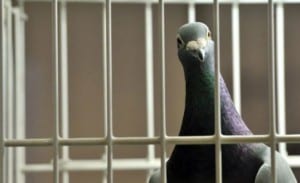
Pigeons can harbour a large variety of diseases and insects on their bodies. Its nests and fouling are also public health concerns.
Biology of a pigeon
Feral pigeons originally descended from domesticated rock doves. The population is supported by escaped racing pigeons.
Pigeons usually make their nests in bridges, buildings or any structures with easily accessible shelter.
Males and females help build nests out of grass, twigs, features and even litter such as plastics and wire. The nests can be quite large and quickly become thick with droppings.
Depending on breeding conditions, pigeons can have up to seven broods (birds produced at one hatching) in their breeding season between March and July.
Two eggs hatch in around 18 days. With access to enough food, the young pigeons will become independent adults in just 30 days.
More eggs can be hatched before the young have even left the nest, meaning a population can quickly grow.
Wild pigeons will live up to four years, relying on human food scraps and spillages, or taking from newly sown farmland.
Behaviour of a pigeon
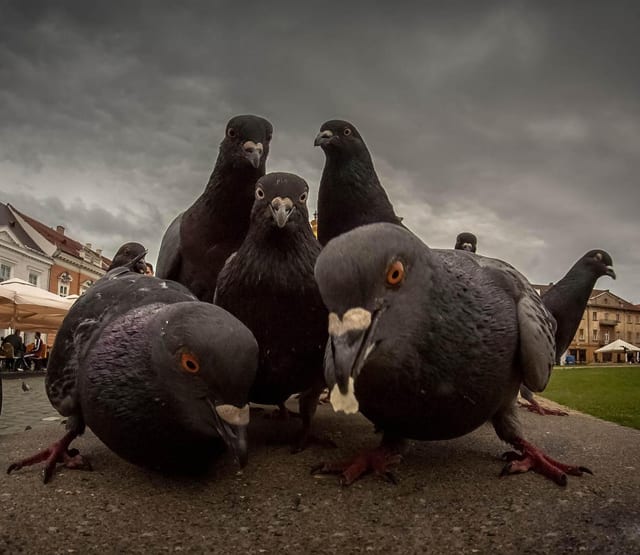
You’ll often see pigeons in town centres feeding in huge flocks, ranging in size from 50 to 400-plus birds.
Pigeons have a social order, so the more dominant birds feed first and get the best breeding sites.
Management and control of pigeons
The best way to get rid of pigeons is to remove a food source.
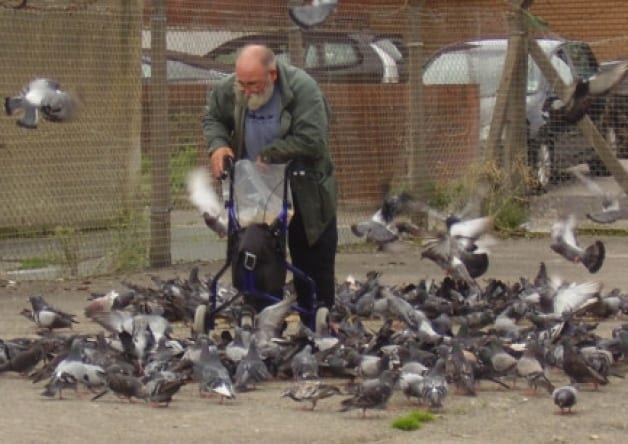
Cover bins, clean up spillages and restrict access to food. Most importantly – don’t feed the pigeons!
Proofing with nets, spikes and mesh can stop pigeons perching and roosting in structures.
Scaring techniques rarely work with pigeons. Visual and audio scaring doesn’t tend to work very well or for very long. Pigeons adapt very quickly to new things.
Flying birds of prey regularly can be useful.
Lethal control can be an option when a bird has entered a food premises or overcome the proofing measures.
Culling pigeons to reduce flock sizes is rarely successful unless access to food is restricted, otherwise population numbers soon recover. This should only ever be done as a last resort and in accordance with a wildlife licence (general or individual) issued by an appropriate government department.
How to prevent and deter birds
All urban birds require is:
- A nesting/ roosting sites (eg balconies, window ledges and roof areas of surrounding buildings)
- A reliable food source.
Removing bird food sources or blocking off sites where they perch or roost is the best way to prevent birds causing a problem.
The number of birds attracted to an area will depend on what food is available.
All of these methods of proofing have their merits and some can offer a stronger and more lasting deterrent, but as with any method of control, they may become less effective over an extended period of time.
Flying a bird of prey can be a great way of deterring birds from a certain area.
For a heavy bird infestation, your professional contractor may have to employ methods of control such as egg and nest removal, shooting, trapping or flying of predatory birds.
Therefore if birds are being fed, more will be attracted to that area, so food sources must be kept to a minimum. Keep your bin lids closed and cover compost bins.
Source
Pigeon Patrol Products & Services is the leading manufacturer and distributor or bird deterrent (control) products in Canada. Pigeon Patrol products have solved pest bird problems in industrial, commercial, and residential settings since 2000, by using safe and humane bird
deterrents with only bird and animal friendly solutions. At Pigeon Patrol, we manufacture and offer a variety of bird deterrents, ranging from Ultra-flex Bird Spikes with UV protection, Bird Netting, 4-S Bird Gel and the best Ultrasonic and audible sound devices on the market today.
Voted Best Canadian wholesaler for Bird Deterrent products ten years in a row.
Contact us at 1 877-4-NO-BIRD,(604) 585-9279 or visit our website at www.pigeonpatrol.ca
Pigeon/Pigeon Patrol / Pigeons Roosing / Vancouver Pigeon Control / Bird Spikes / Bird Control / Bird Deterrent / PIgeon Deterrent / Surrey Pigeon Control / Pest / Seagull deterrent / Vancouver Pigeon Blog / Birds Inside Home / Pigeons in the cities / Ice Pigeons / What to do about pigeons / sparrows, Damage by Sparrows, How to Keep Raccoons Away, Why Are Raccoons Considered Pests / De-fence / Pigeon Nesting / Bird Droppings / Pigeon Dropping / woodpecker control / Professional Bird Control Company / Keep The Birds Away / Birds/rats/seagull/pigeon/woodpecker/dove/sparrow/pidgeon control/pidgeon problem/pidgeon control/flying rats/pigeon problems/ bird netting/bird gel/bird spray/bird nails/bird guard
by Pigeon Patrol | Jul 6, 2023 | Bird Spike, Pigeon Predators, Pigeon Spikes, Pigeons, Pigeons in the News, Raccoons, Sparrows, UltraSonic Bird Control
A number of pigeons found dead in traps along SkyTrain routes in Vancouver have sparked concern from the public, but the pest control company that runs these traps says it has nothing to do with neglect.
Commuter Zahra Ahmdz started a petition against transit operator TransLink in the summer of 2021 after noticing the traps inside the Stadium-Chinatown station on her way to work, and what she said was very clearly multiple dead pigeons inside.
“It was very, very shocking. I didn’t think this would happen in Canada,” she said.
The traps are one of several methods TransLink uses to control the population of pigeons at SkyTrain stations, but the birds are never supposed to die inside. TransLink hires a pest control company to check the traps once a week, ensure there is adequate food and water inside and humanely kill any birds captured.
Media relations advisor Thor Diakow said it’s possible some pigeons did die inside the cages last summer, as TransLink was between pest control companies and didn’t maintain the cages itself in the meantime.
Ahmdz said the problem didn’t stopped there though.
Photos she said she took in March and May appear to show more dead pigeons inside the cages. And Ahmdz said after she complained to TransLink and the BC SPCA, small barriers were erected making it more difficult for her to see the birds.
“This is cruelty,” Ahmdz said.
Pest control company claims no neglect
The pest control company in charge of the cages disagrees. Atlas Pest And Wildlife Control has been working for TransLink since around November or December 2021, according to its president Raymond Arthurs. He readily admitted that they sometimes find pigeons dead inside the cages during their weekly checks, but said it’s not because of neglect on their part.
“Sometimes a hawk will get inside and kill them,” Arthurs said. “That’s kind of all natural.”
As for the barriers, Arthurs said they’re partially to stop people from tampering with the cages and partially to protect the birds from water dripping from the ceiling or other elements.
He said if the weather drops below zero, they leave the cages open as they know the water bowls inside will freeze over. They don’t have a system in place yet for hot weather, as they haven’t worked a summer for TransLink yet, Arthurs added.
He said he couldn’t comment on the exact number of pigeons that have died in his company’s cages. They keep weekly records of their activities, but Arthurs said only TransLink can decide who to provide them to. TransLink agreed to give them to Black Press Media, but said they weren’t available at the time of publication.
A move toward birth control
Both emphasized that they are starting to move away from traps and towards birth control methods.
The BC SPCA pushed TransLink to pilot test OvoControl birth control in several stations for 18 months in 2019 and 2020 after similar complaints about trapped pigeons were brought forward.
BC SPCA chief scientific officer Sara Dubois said the results were exactly what they expected – the population stabilized. She said she was disappointed when TransLink chose not to continue with the long-term solution.
More than a year later though, Diakow said TransLink is now recommitting to the method and will have permanent OvoControl dispensers in some SkyTrain stations come summer.
TransLink also uses bird spikes, netting and low-charge electric strips to deter pigeons from roosting in stations. Diakow said their main concern is the potential for bacterial infections from the birds’ droppings, but that pigeons are also one of a number of animals that regularly set off TransLink’s highly sensitive intrusion alarms.
In 2021, Diakow said wildlife set off the alarms 544 times, resulting in between 12 and 20 hours of transit delays. He said it’s impossible to know how many pigeons alone were responsible for.
Feeding wildlife is feeding the problem
He and Dubois said a large part of the problem is people drawing the pigeons to the stations.
“There’s these regulars that always show up and feed the birds,” Diakow said.
Often times, he said they do so just off TransLink property, so staff can’t actually do anything about it.
Dubois said she’s hopeful Vancouver’s new bylaw banning feeding wildlife in city parks could help, though. She said she’d like to see TransLink work with bylaw on solutions.
Diakow said they’re looking into putting up signage at the stations.
Source
Pigeon Patrol Products & Services is the leading manufacturer and distributor or bird deterrent (control) products in Canada. Pigeon Patrol products have solved pest bird problems in industrial, commercial, and residential settings since 2000, by using safe and humane bird
deterrents with only bird and animal friendly solutions. At Pigeon Patrol, we manufacture and offer a variety of bird deterrents, ranging from Ultra-flex Bird Spikes with UV protection, Bird Netting, 4-S Bird Gel and the best Ultrasonic and audible sound devices on the market today.
Voted Best Canadian wholesaler for Bird Deterrent products ten years in a row.
Contact us at 1 877-4-NO-BIRD,(604) 585-9279 or visit our website at www.pigeonpatrol.ca
Pigeon/Pigeon Patrol / Pigeons Roosing / Vancouver Pigeon Control / Bird Spikes / Bird Control / Bird Deterrent / PIgeon Deterrent / Surrey Pigeon Control / Pest / Seagull deterrent / Vancouver Pigeon Blog / Birds Inside Home / Pigeons in the cities / Ice Pigeons / What to do about pigeons / sparrows, Damage by Sparrows, How to Keep Raccoons Away, Why Are Raccoons Considered Pests / De-fence / Pigeon Nesting / Bird Droppings / Pigeon Dropping / woodpecker control / Professional Bird Control Company / Keep The Birds Away / Birds/rats/seagull/pigeon/woodpecker/dove/sparrow/pidgeon control/pidgeon problem/pidgeon control/flying rats/pigeon problems/ bird netting/bird gel/bird spray/bird nails/bird guard
by Pigeon Patrol | Jul 6, 2023 | Bird Spike, Pigeon Droppings, Pigeon Patrol's Services, Pigeon Predators, Pigeon Spikes, Pigeons
Pigeons are often referred to as ‘rats with wings’ and like rats they have adapted well to live side by side with humans in our environment. Vast amounts of buildings and structures provide the perfect perch for pigeons to rest and our food waste and crops provide a healthy supply of food as they will eat anything they can find. Our lifestyle has eliminated any potential predators or competitors so pigeons have been allowed to thrive.
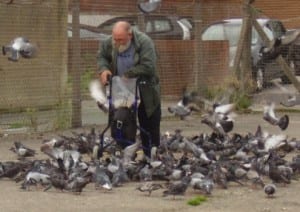
Before you try and deal with a pigeon problem on your own it is important to remember that they are not just your average pest! It requires a level of skill, expertise and a bit of imagination. A control method that works in one instance will not necessarily work in another. This is why it often requires several strategies used in unison. Whether you want to give it a go yourself or just see what options there are you will find all the pigeon control methods you need to know below.
Pigeon Control
Live Pigeon Traps – This is a highly recommended control method. Bob traps work well in most cases. Use a bait, wheat or corn will do, the birds will enter the trap through a one-way door so once inside they can’t get back out. Leave a few pigeons inside the trap as this will encourage more of these social birds into the trap. Only try this method if you are willing to kill the birds once they are caught because releasing them will not solve the problem. Call a professional pest control company if you are unsure.
Exclusion – Exclusion also known as pigeon proofing involves modifying your property to make it inaccessible to pigeons, no place to land means no pigeons! Pigeon spikes, bird slopes, bird netting, bird wires, electrified tracks and wiring can all be effective at deterring pigeons. It requires a level of skill to install thee product so it’s important to remember this before you run off to the shops and buy one of these proofing methods. Pigeon proofing can be expensive but it is also very effective and the short-term cost can save you a lot of money in the long run so it is important that they are installed properly.
Pigeon Repellents – This is a control method that makes a pigeons roosting area inhospitable without causing any harm to the bird. They are often in gel or liquid form, usually, soft, sticky or hot. It irritates the birds when they land making them fly off and find somewhere else. This is a good quick fix; these products are cheap and easy to use. However, the downside is it is only a temporary fix and can be a mess job.
Source
Pigeon Patrol Products & Services is the leading manufacturer and distributor or bird deterrent (control) products in Canada. Pigeon Patrol products have solved pest bird problems in industrial, commercial, and residential settings since 2000, by using safe and humane bird
deterrents with only bird and animal friendly solutions. At Pigeon Patrol, we manufacture and offer a variety of bird deterrents, ranging from Ultra-flex Bird Spikes with UV protection, Bird Netting, 4-S Bird Gel and the best Ultrasonic and audible sound devices on the market today.
Voted Best Canadian wholesaler for Bird Deterrent products ten years in a row.
Contact us at 1 877-4-NO-BIRD,(604) 585-9279 or visit our website at www.pigeonpatrol.ca
Pigeon/Pigeon Patrol / Pigeons Roosing / Vancouver Pigeon Control / Bird Spikes / Bird Control / Bird Deterrent / PIgeon Deterrent / Surrey Pigeon Control / Pest / Seagull deterrent / Vancouver Pigeon Blog / Birds Inside Home / Pigeons in the cities / Ice Pigeons / What to do about pigeons / sparrows, Damage by Sparrows, How to Keep Raccoons Away, Why Are Raccoons Considered Pests / De-fence / Pigeon Nesting / Bird Droppings / Pigeon Dropping / woodpecker control / Professional Bird Control Company / Keep The Birds Away / Birds/rats/seagull/pigeon/woodpecker/dove/sparrow/pidgeon control/pidgeon problem/pidgeon control/flying rats/pigeon problems/ bird netting/bird gel/bird spray/bird nails/bird guard
by Pigeon Patrol | Jul 6, 2023 | Bird Law, Bird Netting, Bird Spikes, Columbidae, Doves, Pigeon Droppings, Pigeon Patrol's Services
A team of scientists and conservationists has rediscovered the elusive Black-naped Pheasant-Pigeon, a large, ground-dwelling pigeon that only lives on Fergusson Island, a rugged island in the D’Entrecasteaux Archipelago off of eastern Papua New Guinea. Like other pheasant-pigeons, the Black-naped Pheasant-Pigeon has a broad and laterally compressed tail, which, along with its size, makes it closely resemble a pheasant. The bird has been observed several times over the years by local hunters, but the newly taken photographs and video are the first time the bird has been documented by scientists since 1882, when it was first described. Ornithologists know very little about the species, but believe that the population on Fergusson is very small and decreasing.
The research team photographed the pheasant-pigeon with a remote camera trap at the end of a month-long search of Fergusson.
“When we collected the camera traps, I figured there was less than a one-percent chance of getting a photo of the Black-naped Pheasant-Pigeon,” said Jordan Boersma, postdoctoral researcher at Cornell University and co-leader of the expedition team. “Then as I was scrolling through the photos, I was stunned by this photo of this bird walking right past our camera.”
“After a month of searching, seeing those first photos of the pheasant-pigeon felt like finding a unicorn,” added John C. Mittermeier, Director of the Lost Birds program at ABC and co-leader of the expedition. “It is the kind of moment you dream about your entire life as a conservationist and birdwatcher.”
The expedition team — which included local Papua New Guineans working with Papua New Guinea National Museum, Cornell Lab of Ornithology, and American Bird Conservancy — arrived on Fergusson in early September 2022. They spent a month traveling around the island, interviewing local communities to identify locations to set up camera traps in hopes of finding the pheasant-pigeon. The steep, mountainous terrain on Fergusson Island made searching for the bird extremely challenging.
“It wasn’t until we reached villages on the western slope of Mt. Kilkerran that we started meeting hunters who had seen and heard the pheasant-pigeon,” said Jason Gregg, conservation biologist and a co-leader of the expedition team. “We became more confident about the local name of the bird, which is ‘Auwo,’ and felt like we were getting closer to the core habitat of where the Black-naped Pheasant-Pigeon lives.”
The expedition was the first-ever camera trapping study conducted on Fergusson Island. The team placed 12 camera traps on the slopes of Mt. Kilkerran, Fergusson’s highest mountain, and deployed an additional eight cameras in locations where local hunters had reported seeing the pheasant-pigeon in the past.
“When we finally found the Black-naped Pheasant-Pigeon, it was during the final hours of the expedition,” said Doka Nason, the member of the team who set up the camera trap that eventually photographed the lost bird. “When I saw the photos, I was incredibly excited.”
A local hunter named Augustin Gregory in the village of Duda Ununa west of Mt. Kilkerran provided a breakthrough lead on where to find the bird. Gregory reported seeing the pheasant-pigeon on multiple occasions in an area with steep ridges and valleys and described hearing the bird’s distinctive calls.
Following Gregory’s advice, the team set up cameras in an area of dense forest. A camera placed on a ridge at 3,200 feet (1,000 meters) near the Kwama River above Duda Ununa eventually captured the Black-naped Pheasant-Pigeon walking on the forest floor two days before the team was scheduled to leave the island.
Several members of the team have attempted to find the Black-naped Pheasant-Pigeon before. A two-week survey in 2019 by Boermsa, Gregg, and Nason didn’t find any traces of the bird, though it did gather reports from local hunters of a bird that could have been the pheasant-pigeon. The results from that survey helped to determine locations for the team to search in 2022.
“The communities were very excited when they saw the survey results, because many people hadn’t seen or heard of the bird until we began our project and got the camera trap photos,” said Serena Ketaloya, a conservationist from Milne Bay, Papua New Guinea. “They are now looking forward to working with us to try to protect the pheasant-pigeon.”
The team’s findings suggest that the pheasant-pigeon is likely to be extremely rare. The rugged and inaccessible forest where they rediscovered the species could be the last stronghold for the species on the island.
“This rediscovery is an incredible beacon of hope for other birds that have been lost for a half century or more,” said Christina Biggs, Manager for the Search for Lost Species at Re:wild. “The terrain the team searched was incredibly difficult, but their determination never wavered, even though so few people could remember seeing the pheasant-pigeon in recent decades.”
“As well as giving hope for searches for other lost species, the detailed information collected by the team has provided a basis for conservation of this extremely rare bird, which must indeed be highly threatened, together with the other unique species of Fergusson Island,” said Roger Safford, Senior Program Manager for Preventing Extinctions at BirdLife International.
The expedition was supported by American Bird Conservancy (ABC) and The Search for Lost Birds, a collaboration between BirdLife International, ABC, and Re:wild. The Search for Lost Birds identified the pheasant-pigeon for an expedition after a global review revealed it was one of a few bird species that have been lost to science for more than a century.
The full expedition team consisted of Jordan Boermsa, Jason Gregg, Doka Nason, Serena Ketaloya, Elimo Malesa, Bulisa Iova, Cosmo Le Breton, and John C. Mittermeier. The expedition was funded by ABC and The Search for Lost Birds, with a grant from Cosmo Le Breton, who helped to support the team in the field as a research assistant.
Source
Pigeon Patrol Products & Services is the leading manufacturer and distributor or bird deterrent (control) products in Canada. Pigeon Patrol products have solved pest bird problems in industrial, commercial, and residential settings since 2000, by using safe and humane bird
deterrents with only bird and animal friendly solutions. At Pigeon Patrol, we manufacture and offer a variety of bird deterrents, ranging from Ultra-flex Bird Spikes with UV protection, Bird Netting, 4-S Bird Gel and the best Ultrasonic and audible sound devices on the market today.
Voted Best Canadian wholesaler for Bird Deterrent products ten years in a row.
Contact us at 1 877-4-NO-BIRD,(604) 585-9279 or visit our website at www.pigeonpatrol.ca
Pigeon/Pigeon Patrol / Pigeons Roosing / Vancouver Pigeon Control / Bird Spikes / Bird Control / Bird Deterrent / PIgeon Deterrent / Surrey Pigeon Control / Pest / Seagull deterrent / Vancouver Pigeon Blog / Birds Inside Home / Pigeons in the cities / Ice Pigeons / What to do about pigeons / sparrows, Damage by Sparrows, How to Keep Raccoons Away, Why Are Raccoons Considered Pests / De-fence / Pigeon Nesting / Bird Droppings / Pigeon Dropping / woodpecker control / Professional Bird Control Company / Keep The Birds Away / Birds/rats/seagull/pigeon/woodpecker/dove/sparrow/pidgeon control/pidgeon problem/pidgeon control/flying rats/pigeon problems/ bird netting/bird gel/bird spray/bird nails/bird guard