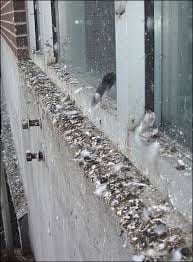
Feral pigeons (Columbia livia) are not harmless birds. Many potential infections of humans silently exist in pigeons which are not apparent. They have the potential for transmission of over 30 diseases to humans plus another ten to domestic animals. Environmental pollution from pigeon droppings is quite evident. Air pollution involves more than noxious gases from automobile exhausts and belching smokestacks. One serious air pollutant is air-borne fungi, which are agents for infectious diseases. There is much information written about the problem, but it remains primarily in the professional journals and technical references, neatly stacked away on library shelves. The objective of this paper is to provide a brief account of the major diseases and to assess their importance. Feral pigeons have been identified with mycotic, bacterial, protozoal, chlamydial, rickettsial, and parasitic diseases as well as dermatosis (Weber 1979). MYCOTIC diseases are not transmitted from humans to humans. Perhaps this is why they do not make the headlines. The fungi causing the diseases are acquired by inhaling the fruiting bodies or spores along with particles of dust. The fungi live saprophytically in feces and soil. Aspergillosis is caused by Aspergillus fumagatus. The fungus produces toxins which poison the victim’s blood. Pigeons assist the spread of the spores in airborne dust. Blastomycosis is caused by Blastomyces dermatitidus. It primarily affects the lungs; the main route of infection is by inhalation of spores. The organism has been isolated from pigeon manure. Candidiasis is caused by Candida spp., chiefly C. albicans. Nearly one-fourth of all mycotic deaths are caused by this yeast. It often affects the mouth, respiratory system, intestines, and urogenital tract, especially the vagina. Incidence of candidiasis (yeast infection) in women is an increasing problem. The discomfort of the itching, pain, and discharge caused by the growth of this fungus is.
ignificant enough to warrant the elimination of pigeons which are one of the three wild birds most frequently infected with Candida. Cryptococcosis is caused by a systemic pathogenic yeast called Cryptococcosus neoformans. No organ or tissue of the body is exempt. It very frequently involves the brain covering as cryptococcal meningitis. One Indianapolis victim spent 91 days in the hospital with cryptococcosis. The yeast is carried in the intestinal tract of pigeons and deposited in their feces (Newberry 1967). One Kansas City survey showed that 93% of the pigeon coops were infected. Histoplasmosis is caused by Histoplasma capsulatum. It is interesting to note that the disease was suggested at one time as a biological warfare agent because of its airborne route (Furcolow, personal communication, 1960). It is probably the second most significant fungus disease. The “summer flu” that midwesterners used to get is now thought to have been histoplasmosis (Personal communication, American Lung Association, 1974). It is basically a pulmonary disease but may extend to the liver, lymph nodes, and spleen. The organism may disseminate to the blood and bone marrow and be fatal. It may lodge in the eye to cause ocular histoplasmosis. Twenty-two cases were reported to the Indiana Board of Health in 1976. Pigeon feces fertilize the soil in such a way as to give the fungus competitive advantage over other soil microorganisms. The largest outbreak ever recorded occurred in Indianapolis during the winter of 1978-79 with over 450 confirmed cases. There were 18 deaths. BACTERIAL DISEASES identified with pigeons are listed. Erysipeloid generally starts in a break in the skin and is accompanied with a sensation of burning, throbbing pain, and intense itching. It is caused by Erysipelothrus insidiosis. Pigeons are involved in its transmission. Listeriosis is caused by Listeria monocytogenes. It causes changes in the cells of the nervous system. It may cause conjunctivitis, endocarditis, and skin infections. It can also cause meningitis in newborns, abortions, premature delivery, stillbirths, and death. The organism has been isolated from pigeons. Parteurellosis is caused by a highly contagious bacteria, Pasteurella multicida. The 157 disease may be divided in four groups of syndromes: 1) infection of the upper respiratory tract as nasal discharge or conjuntivitis, 2) infection of the lower respiratory tract as bronchitis or pneumonia, 3) infecton of internal organs as appendicitis or inflammation of the urinary tract, 4) abscessed wound infections. Pigeons can spread the bacteria through their droppings or nasal discharge. The organism can live as long as a month in pigeon manure or three months in a dead pigeon. Salmonellosis is more than food poisoning. Gastroenteritis is the most common manifestation. Enteric fever or septicemia may follow several weeks later as a relapse. Septicemias often terminate fatally. Persistent infections are less common but very important. There may be an abscess or local infection as arthritis, bronchopneumonia, endocarditis, meningitis, osteomyelitis, or pyeleonephritis. Pigeons are important in the spread of salmonellae, since the bacteria are left wherever the pigeons defecate (MÜller 1965). They trample back and forth through their copious excretion on window ledges and air intake vents. Dusts to contaminate food or homes enter through air conditioners and ventilators. The most common salmonella Isolated from pigeons is Salmonella typhimurum var. Copenhagen, which is found in about 2% of pigeon feces (MÜller 1965). Yersiniosis is a plague-like disease by Yersinia pseudotuberculosos and Y. enterocolitica. The disease is clinically indistinguishable from appendicitis. Both diseases cause fever, nausea, headache, hard and painful stomachs. Because of the similarity, there were 32 school children hospitalized in Oneida County, New York in September 1976. Fourteen were reported to have had unnecessary appendectomies. Y.enterocolitica serotype 8 was isolated from the ill children. It was first isolated from pigeons in 1916. Transmission may be through the feces, eggs, or ticks of pigeons (Hubert 1972). PROTOZOAN diseases include American trypansomiasis, toxoplasmosis, and trichomoniasis. American trypanosomiasis is caused by Trypanosoma cruzi. There is no vaccine, effective treatment, or cure for the disease. It is transmitted through the feces of infected triatimid bugs, as the pigeon kissing bug (Triatoma rubrofasciata). The bugs tend to feed at night while the victim is asleep the bug defecates during or soon after engorgement, and most human infections occur when the bug feces are rubbed into eyes or mucous membranes following a bite. Toxoplasmosis may be one of the most widespread zoonotic diseases in the United States. It is caused by Toxoplasma gondii. It has been shown to cause abortions in women (W.J. Schneider, personal communication, 1977). The organism seems to have an affinity for brain tissue; it may cause mental retardation and death. Pigeons frequently transmit toxoplasmosis through fecal contamination, respiratory droplets, eye secretions, contact with infected tissue, or through ectoparasites. Trichomoniasis is caused by Trichomonas gallinae. It may affect the genital tract. Pigeons are considered the primary host, with about 80-90% of the adults infected. VIRAL diseases include encephalitis, meningitis, and Newcastle. Eastern equine encephalomyelitis (EEE) is the most deadly of the North American arbovirus diseases. It has been known to cause mental retardation, convulsions, and paralysis. The mortality rate may be around 60%. Pigeons are considered an amplifying host for the virus (Fothergill et. al. 1938). St. Louis encephalitis (SLE) affects the nervous system, ranging from complete recovery to disorganization, paralysis, coma, and death. The mortality rate is usually 5-10%, in some cases up to 33%. Pigeons, English sparrows, and house finches are the three birds labeled as main reservoirs of SLE. West Nile encephalitis ranges from mild to fatal Infections. The virus has been isolated from pigeons. Western equine encephalomyelitis is much more present and dangerous than most people think. The fatality rate has been between 5 and 15%. Children under one year of age may never recover from an infection of the virus, often becoming total vegetables. Pigeons are one of the amplifying hosts (W.F. Rathel, personal communication, 1977). Meningitis causes as inflammation of the brain and its covering. Pigeons are subject to meningo-encephalitis. Newcastle disease often involves conjunctivitis, lacrimation, and a mild influenza-like infection. Pigeons are the third largest common carrier; the virus has been detected in their feces. CHLAMYDIAL and RICKETTSIAL diseases. Chlamydiosis, caused by Chlamydia psittiaci, is a generalized infectious disease that causes a flu-like respiratory infection with high fever, severe headache, and generalized aches and pains. Mortality is usually 158 restricted to the old, the weak, or those with concurrent disease. Pigeons are the most common and consistent source of all known hosts (Terskiph 1961). Over half of the pigeon population is or has been infected. Q fever is caused by Coxiella burnetti. It is characterized by a sudden onset of pneumonitis, sometimes causing death. Pigeons are involved as carriers (Syrcuek et al. 1956). Investigators have isolated C. burnetti from the Kidneys of a large number of pigeons. The disease can be transmitted by infected ticks, ingestion, or by inhalation of dust contaminated with the organism. PARASITIC WORMS include cestodes and trematodes. Taeniasis by large tapeworm is caused by Taenia saginata, with specimens up to 50 feet having been recovered. Pigeons have been incriminated as potential vectors. Schistosomiasis, one of the most prevalent diseases throughout the world, is caused by a water-borne trematode. Pigeons are associated with flukes in the watery areas where they exist. Other pigeon associated trematodes include Echinoparyphium paraulum, Echinoparyphium recurvatum, Echinostoma revolutum, Haplorchis pulimio, and Hypoderaeum conoideum. DERMATOSIS. Acariasis is caused by infection of mites. Bird mites were responsible for a case of pruritis in a North Carolina hospital. The mites originated in a pigeon nest in the ventilator.
About Pigeon Patrol:
Pigeon Patrol Products & Services is the leading manufacturer and distributor of bird deterrent (control) products in Canada. Pigeon Patrol products have solved pest bird problems in industrial, commercial, and residential settings since 2000, by using safe and humane bird deterrents with only bird and animal friendly solutions. At Pigeon Patrol, we manufacture and offer a variety of bird deterrents, ranging from Ultra-flex Bird Spikes with UV protection, Bird Netting, 4-S Gel and the best Ultrasonic and audible sound devices on the market today.
Contact us at 1- 877– 4– NO-BIRD, (604) 585-9279 or visit our website at www.pigeonpatrol.ca
Bird Gone, Pigeon Gone, Seagull Gone, Pigeon problems, pigeon spikes, 1-877-4NO-BIRD, 4-S Gel, Bird Control, Pigeon Control, bird repellent, Bird Spikes, sonic bird repellent, stainless steel bird spikes, bird spikes Vancouver, Ultra Sonic Bird Control, Bird Netting, Plastic Bird Spikes, Canada bird spike deterrents, Pigeon Pests, B Gone Pigeon, Pigeon Patrol, pest controller, pest control operator, pest control technician, Pigeon Control Products, humane pigeon spikes, pigeon deterrents, pigeon traps, Pigeon repellents, Sound & Laser Deterrents, wildlife control, raccoon, skunk, squirrel deterrent, De-Fence Spikes, Dragons Den, Canada bird spikes, Canada pigeon, pigeon control, pidgon patrol, pidgon. Kill pigeons, crow, starling
The Standing Policy Committee on Environment, Utilities and Corporate Services on Monday reviewed a report prepared in response to a request by Living Sky Wildlife Rehabilitation.
The centre asked the city to stop using the neurotoxin, saying it’s an inhumane way to control pests.
Around 2,300 pigeons put down, 635,000 kg of feces cleaned from Saskatoon bridge
According to a description on Avitrol’s website, the product works by causing “behaviours similar to an epileptic seizure.”
“This may include flying erratically, vocalizing, trembling, dilation of the pupils and other symptoms,” the description says.
Witnessing these behaviours can encourage unaffected birds to leave a location.
“Flocks can be frightened away from sites little or no mortality.”
According to the report, Avitrol is no longer used in other cities including Halifax, San Francisco and New York.
The committee heard how in the past the city used Avitrol to remove pests, but currently there are no sites where the city or its contractors are using the poison.
However the city does not have anything in writing that bans private use of Avitrol.
City hall to pursue pest management strategy for Saskatoon
Concern is raised over the city’s use of neurotoxins to control pigeon populations
PHIL TANK, SASKATOON STARPHOENIX
About Pigeon Patrol:
Pigeon Patrol Products & Services is the leading manufacturer and distributor of bird deterrent (control) products in Canada. Pigeon Patrol products have solved pest bird problems in industrial, commercial, and residential settings since 2000, by using safe and humane bird deterrents with only bird and animal friendly solutions. At Pigeon Patrol, we manufacture and offer a variety of bird deterrents, ranging from Ultra-flex Bird Spikes with UV protection, Bird Netting, 4-S Gel and the best Ultrasonic and audible sound devices on the market today.
Contact us at 1- 877– 4– NO-BIRD, (604) 585-9279 or visit our website at www.pigeonpatrol.ca
Bird Gone, Pigeon Gone, Pigeon problems, pigeon spikes, 1-877-4NO-BIRD, 4-S Gel, Bird Control, Pigeon Control, bird repellent, Bird Spikes, sonic bird repellent, stainless steel bird spikes, bird spikes Vancouver, Ultra Sonic Bird Control, Bird Netting, Plastic Bird Spikes, Canada bird spike deterrents, Pigeon Pests, B Gone Pigeon, Pigeon Patrol, pest controller, pest control operator, pest control technician, Pigeon Control Products, humane pigeon spikes, pigeon deterrents, pigeon traps, Pigeon repellents, Sound & Laser Deterrents, wildlife control, raccoon, skunk, squirrel deterrent, De-Fence Spikes, Dragons Den.
There are over 400 species of pigeons in the world, and each species has its own curious trait. For homing pigeons, it’s always knowing the way back from which they came. For a USD professor who raises them, it’s figuring out which way to go.
Kandy Noles Stevens is an adjunct professor and STEM Specialist teaching physical science for elementary in the School of Education at USD. The recipient of the 2019 Graduate Excellence in Teaching at USD, she’s also studying to gain her doctoral degree.
Stevens grew up as the only girl in a crowd of cousins who led her to muddy riverbanks to catch frogs and tadpoles. In high school, despite an upbringing in nature, Stevens had no intention of entering the field of science. Until someone told her she couldn’t.
“My first day of my high school physics class, the teacher said something about how only the boys were going to succeed in the class and none of us girls were going to be able to finish the class,” Stevens said. “I didn’t realize it at the time, but as I got older and was able to look back, it was in that moment that a scientist was born. Because I was going to prove him wrong.”
And prove him wrong she did. She went to work as a chemist for the United States Agriculture Department, and later, became a teacher herself. Now, when Stevens isn’t teaching at USD, she’s teaching at Southwest Minnesota State University in Marshall, Minnesota, where she and her family live.
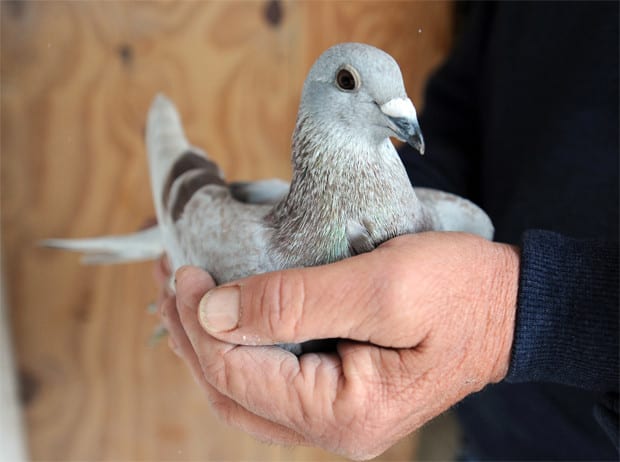
Kandy Noles Stevens holds a homing pigeon outside her home in Marshall, Minnesota. Stevens commutes to Vermillion once a week to teach physical science for elementary in the School of Education. Lauren Soulek | The Volante
It’s also the place where, eleven years ago, tragedy struck them. On Feb. 19, 2008 at 3:25 p.m., on a highway north of Cottonwood, Minnesota, roughly 15 miles north of Marshall, a minivan blew through a stop sign and broadsided a school bus returning children home after a school day. The bus flipped on its side, and as a result, injured fourteen people and killed four.
Three of Steven’s four children were on the bus. Two of them survived. One did not.
“Out of that experience, I learned a lot about grief and grieving,” Stevens, whose daughter is now enrolled at SMSU and son at USD, said. “I was asked by a local pastor’s wife if I could share some of the things that the community did well to support my family and in areas that they could improve.”
From that, Stevens added ‘author’ to her list of titles. In “The Red Bird Sings the Song of Hope and Other Stories of Love,” published in 2016, she documents how those around her helped her family through the grief, and offers an idea of what grieving people wish others knew.
Before healing through words, though, she healed through birds — homer pigeons, to be exact.
As her second son endured surgeries from the wreck, he wanted to occupy his time with raising chickens. Because their community had strict laws behind raising farm animals in town, they instead raised pigeons.
“He had been through so much that it seemed like a crazy, whack-a-doodle thing at the time,” Stevens said. “It was a great way to do something productive and to give ourselves something to think about other than all of the negative things we were dealing with.”
Though a theory on why homing pigeons know how to navigate over vast distances, some scientists say they use earth’s magnetic field as a guide.
The pigeons provided a type of therapy for the family. Her son had a new getaway and Stevens, described as “nurturing” and “a mother figure” by Annaliese Howe, a third-year elementary education major, had new birds to nest and to learn from.
“Learning that life cycle and seeing the flight patterns and just the sound of them coming home, it’s really kind of a neat thing,” Stevens said.
Stevens has spoken nationally about her book and the process of overcoming grief. She’s also morphed the message into her own education by helping schools understand how trauma impacts students and student learning.
“Stay curious,” the mother, professor, scientist, student and pigeon-raiser tells them, “and don’t let anything stand in your way.”
“I think all of the things that I have done in life has been because I’ve been curious about something,” Stevens said. “That really is the hallmark of a true scientist, to be able to just have that natural wonder about the world and to always want to learn more.”
USD professor Kandy Noles Stevens talks the science behind homing pigeons. Lauren Soulek | The Volante
Pigeon fun facts:
When you see dove releases at weddings or funerals, they are actually white homing pigeons. Doves don’t know how to come home like pigeons do. This is what the Stevens family raises their pigeons for.
Pigeons were used to send messages back and forth from the field to headquarters in both of the World Wars. Multiple pigeons, including Blackie and GI Joe, were awarded medals of honor for their service.
Pigeons mate for life and can breed up to eight times a year, having two babies each time.
The pigeons you are probably most familiar with as bopping around town or hanging out on farms are called either barn pigeons or feral pigeons.
About Pigeon Patrol:
Pigeon Patrol Products & Services is the leading manufacturer and distributor of bird deterrent (control) products in Canada. Pigeon Patrol products have solved pest bird problems in industrial, commercial, and residential settings since 2000, by using safe and humane bird deterrents with only bird and animal friendly solutions. At Pigeon Patrol, we manufacture and offer a variety of bird deterrents, ranging from Ultra-flex Bird Spikes with UV protection, Bird Netting, 4-S Gel and the best Ultrasonic and audible sound devices on the market today.
Contact us at 1- 877– 4– NO-BIRD, (604) 585-9279 or visit our website at www.pigeonpatrol.ca
Bird Gone, Pigeon Gone, Pigeon problems, pigeon spikes, 1-877-4NO-BIRD, 4-S Gel, Bird Control, Pigeon Control, bird repellent, Bird Spikes, sonic bird repellent, stainless steel bird spikes, bird spikes Vancouver, Ultra Sonic Bird Control, Bird Netting, Plastic Bird Spikes, Canada bird spike deterrents, Pigeon Pests, B Gone Pigeon, Pigeon Patrol, pest controller, pest control operator, pest control technician, Pigeon Control Products, humane pigeon spikes, pigeon deterrents, pigeon traps, Pigeon repellents, Sound & Laser Deterrents, wildlife control, raccoon, skunk, squirrel deterrent, De-Fence Spikes, Dragons Den.
Pigeon in New York City (file / credit: STAN HONDA/AFP/Getty Images)
EOGHAN MacCONNELL
HAND-REARED live pigeons were coated in poison, tethered to the ground and used to kill two wild buzzards near the Tipperary-Offaly border, according to BirdWatch Ireland.
BirdWatch volunteers were horrified to discover the two dead buzzard chicks beside three poisonous tethered pigeons near Roscrea.
BirdWatch Ireland Development Officer Niall Hatch said the banned insecticide Carbofuran used to kill the buzzards is so toxic “a quarter of a teaspoonful is enough to kill a fully grown adult”.
“There is a really serious public safety issue here as well,” he said, “whoever is responsible for planting the poison took a real risk themselves”. Had the pigeons been found by children who attempted to rescue them, “you could be reporting on an even worse story today,” he added.
No motive has yet been established. Buzzards eat rabbits, crows, magpies, rats and mice. They will occasionally feed on a dead lamb, but are incapable of killing a lamb, said Mr Hatch.
An indigenous bird, the buzzard was absent in Ireland from the late 19th century until 1933, when a pair bred in Co Antrim. The species has spread slowly down from the north through the 20th century and is now established in almost every county in Ireland.
BirdWatch Ireland say this was a particularly abhorrent incident.
The live hand-reared pigeons were tethered to the ground as bait, their bodies coated with poison and their wings clipped to prevent any chance of escape.
A day after the dead buzzards were found last month, another live, poison-coated pigeon was discovered tethered in the same area.
The buzzards’ nest in Roscrea was being monitored by two young volunteers from BirdWatch Ireland’s Raptor Conservation Project since early spring. They had been charting the progress of the three young buzzard chicks.
One volunteer said: “we had been watching them all summer and it was sickening to see them killed like that for no reason”.
The farmer on whose land the birds were nesting said: “they have not caused me or any of the other farmers in the area any problems whatsoever. I gave nobody permission to come on my land and lay down poison, and whoever did so was trespassing,” he said.
In October 2010, laws were passed making it illegal to use poison to kill birds or animals, with the exception of rats and mice.
An investigation has been launched and anyone with information is urged to contact the National Parks and Wildlife Service on 057 91 37811 or Birr Garda station on 057 91 69710.
About Pigeon Patrol:
Pigeon Patrol Products & Services is the leading manufacturer and distributor of bird deterrent (control) products in Canada. Pigeon Patrol products have solved pest bird problems in industrial, commercial, and residential settings since 2000, by using safe and humane bird deterrents with only bird and animal friendly solutions. At Pigeon Patrol, we manufacture and offer a variety of bird deterrents, ranging from Ultra-flex Bird Spikes with UV protection, Bird Netting, 4-S Gel and the best Ultrasonic and audible sound devices on the market today.
Contact us at 1- 877– 4– NO-BIRD, (604) 585-9279 or visit our website at www.pigeonpatrol.ca
Bird Gone, Pigeon Gone, Pigeon problems, pigeon spikes, 1-877-4NO-BIRD, 4-S Gel, Bird Control, Pigeon Control, bird repellent, Bird Spikes, sonic bird repellent, stainless steel bird spikes, bird spikes Vancouver, Ultra Sonic Bird Control, Bird Netting, Plastic Bird Spikes, Canada bird spike deterrents, Pigeon Pests, B Gone Pigeon, Pigeon Patrol, pest controller, pest control operator, pest control technician, Pigeon Control Products, humane pigeon spikes, pigeon deterrents, pigeon traps, Pigeon repellents, Sound & Laser Deterrents, wildlife control, raccoon, skunk, squirrel deterrent, De-Fence Spikes, Dragons Den.
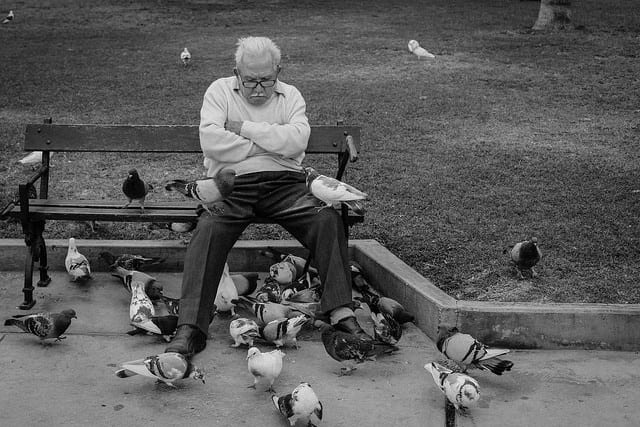
£2,000 court bill for woman who overfed pigeons and gulls
A Trowbridge woman has been ordered to pay £2,000 in court fees and fines for overfeeding pigeons and gulls in her back garden over a period of two years.
Maureen Francis of Langford Road in the town breached a community protection order which restricted the amount of food she left out for the birds to a single bird feeder.
She was convicted in her absence at Salisbury magistrates and fined £500 and ordered to pay £1,600 in costs. Don’t let this happen to you!
About Pigeon Patrol:
Pigeon Patrol Products & Services is the leading manufacturer and distributor of bird deterrent (control) products in Canada. Pigeon Patrol products have solved pest bird problems in industrial, commercial, and residential settings since 2000, by using safe and humane bird deterrents with only bird and animal friendly solutions. At Pigeon Patrol, we manufacture and offer a variety of bird deterrents, ranging from Ultra-flex Bird Spikes with UV protection, Bird Netting, 4-S Gel and the best Ultrasonic and audible sound devices on the market today.
Contact us at 1- 877– 4– NO-BIRD, (604) 585-9279 or visit our website at www.pigeonpatrol.ca
tags: Bird Gone, Pigeon Gone, Pigeon problems, pigeon spikes, 1-877-4NO-BIRD, 4-S Gel, Bird Control, Pigeon Control, bird repellent, Bird Spikes, sonic bird repellent, stainless steel bird spikes, bird spikes Vancouver, Ultra Sonic Bird Control, Bird Netting, Plastic Bird Spikes, Canada bird spike deterrents, Pigeon Pests, B Gone Pigeon, Pigeon Patrol, pest controller, pest control operator, pest control technician, Pigeon Control Products, humane pigeon spikes, pigeon deterrents, pigeon traps, Pigeon repellents, Sound & Laser Deterrents, wildlife control, raccoon, skunk, squirrel deterrent, De-Fence Spikes, Dragons Den.



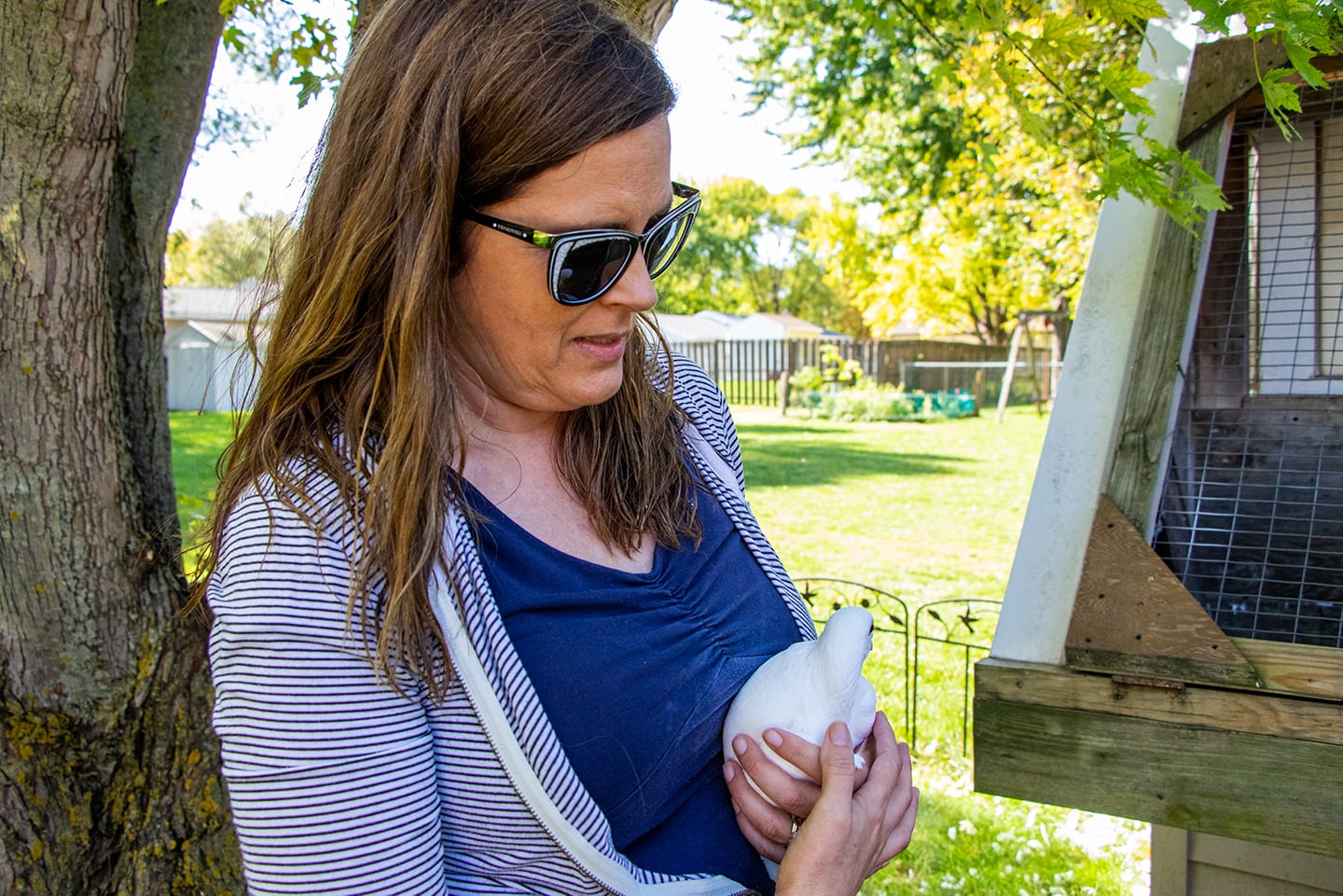
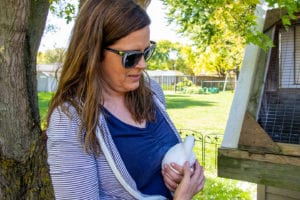

 Kandy Noles Stevens holds a homing pigeon outside her home in Marshall, Minnesota. Stevens commutes to Vermillion once a week to teach physical science for elementary in the School of Education. Lauren Soulek | The Volante
 Though a theory on why homing pigeons know how to navigate over vast distances, some scientists say they use earth’s magnetic field as a guide.