The politicians are seated in a semi-circle at a meeting of the council. One by one, they raise their voices as part of the deliberation. “I believe it is time we took a position on this,” says a black-blazered woman. “It’s not an industry that I want to support,” a second woman, wearing dark-rimmed glasses, reads into the official record.
“It’s time,” concludes the mayor, donning the heavy chain that is the insignia of his office, “to end the practice in our community.”
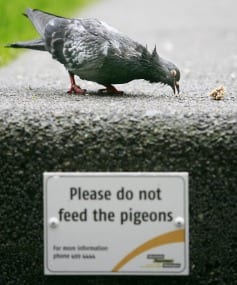
It is a fall meeting of the District of North Vancouver’s city council and they are discussing whether people should be allowed to keep pigeons. Councillors Lisa Muri, in the blazer, and Megan Curren, with the glasses, ultimately vote with the mayor in favour of an outright pigeon ban.
Coun. Matthew Bond, one of those who votes against, says skeptically, “I don’t necessarily see this as a good use of our time.” But the bylaw passes, four to two.
Something smells, though. Only one property in the community is known to harbour pet pigeons. Only one complaint about pigeons, dating back several years, is known to be active. Only one city councillor has recused herself from the discussion. “I have been in a situation like this,” Coun. Betty Forbes says, at the same meeting. “So I’m stepping aside.”
One plus one plus one equals . . . a conflict of interest?
Documents obtained by the CBC under access-to-information seem to bolster that view of events. The “situation” was that Forbes lived next-door to pigeons. That she did not like pigeons. And that after complaining to the city as a private citizen to no avail, she took matters into her own hands; after being elected to council in 2018, in an email to two fellow councillors, she requested a bylaw banning residents from keeping the birds.
Emails viewed by Maclean’s suggest that during the spring, Muri initiated a process to change the district’s pigeon ownership rules, and kept Forbes up to date on its progress. But the whole project has since run into trouble because it turns out Kulwant Dulay, Forbes’ neighbour, cares deeply about his pigeons. He cares enough to go to court.
His petition to B.C. Supreme Court, dated Dec. 4, seeks to have the bylaw declared illegal and set aside. It relies heavily on the CBC’s reporting, referencing emails between Forbes and Muri earlier this year that appear to reveal a plot to hatch the bylaw.
Dulay is arguing that Forbes’s involvement was “biased and bad faith and acting in a conflict of interest,” says Camille Chisholm, a lawyer representing the pigeon enthusiast. The district has retained its own lawyers and was expected to respond in January.
The same week as Dulay’s petition was filed, the District of North Vancouver announced it was tasking former B.C. privacy commissioner David Loukidelis with investigating how the pigeon ban came to be. His review, the district announced, will assess the “awareness” of conflict-of-interest rules by councillors. The process is expected to take a couple of months.
Dulay, Chisholm adds, has kept homing pigeons as pets for years—including during his time in India before he immigrated to Canada. “My neighbours in the front and back, everybody loves my pigeons,” says Dulay, adding that other than Forbes’s, he hasn’t had a complaint in 17 years. “Everybody comes to my house and looks at them. It looks cool, them flying around.” Some have names. One is called “Big Boss.” His favourite pigeon is blue and white. He said it always comes to his hand.
Dulay keeps his 15 birds in a coop that’s about as tall as the backyard fence and roomy enough for him to enter and move around. During the warmer months, he lets them out to fly around the neighbourhood, including over other people’s yards. He said they always return.
Lately, he has wondered whether Forbes has a problem with him, not his pigeons. He said she “never talks” to him, and notes that he has never complained about her two barking dogs, though he believes he might have reason to.
His across-the-street neighbour, meanwhile, has spoken in his support. “I’ve had opportunity to go over and see the coop,” Krista Page told council on Nov. 18. ”It is clean. There’s no foul smell. I’ve never met neighbours that keep a tidier driveway and home and everything.” Page noted there have been no complaints from the Dulays’ other next-door neighbour, adding: “I just feel that this is very much a misuse of power.”
Forbes declined an interview request from Maclean’s but insisted in an email that there is “another set of correct facts” to the story. “However, because the mayor has requested an inquiry of all council and himself,” the email added, “I am unable to make any comments at this time.”
Her only public response came at the end of the same meeting Krista Page attended. “If I have erred in any way,” she said, “I assure council and the community that it was done inadvertently and in good faith with my understanding, as a new councillor, of the conflict-of-interest rules.”
Muri echoed Forbes in an email to Maclean’s, saying: “We are currently reviewing the process of this bylaw, so it would be inappropriate for me to comment.” But a response to the petition later filed in court by her lawyers denies the councillor was aware of any interest Forbes could’ve had in a pigeon ban beyond one “in common with electors of the municipality generally.”
The submission argues that neither councillor stood to gain financially from the bylaw and doubles down on the councillors’ position that the ban is legitimate and serves to protect residents from current and future pigeon keepers who might “adversely impact them or their property.”
To some, this is more than a dispute between neighbours. Givo Hassko, who is on the board of the Vancouver Poultry & Fancy Pigeon Association, told council in November he believed this was a test case for corruption in Canadian politics writ large. “If there are no consequences to how council goes to change bylaws here locally or Canada-wide,” he said, “then anyone—anyone—would get a green light.”
Hassko set up a GoFundMe to help with Dulay’s legal fees. At the time of writing, it had raised $700. A single commenter named Wayne, who pitched in $55, offered this input: “It is important that pigeons are not homeless.”
Pigeon Patrol Products & Services is the leading manufacturer and distributor or bird deterrent (control) products in Canada. Pigeon Patrol products have solved pest bird problems in industrial, commercial, and residential settings since 2000, by using safe and humane bird
deterrents with only bird and animal friendly solutions. At Pigeon Patrol, we manufacture and offer a variety of bird deterrents, ranging from Ultra-flex Bird Spikes with UV protection, Bird Netting, 4-S Bird Gel and the best Ultrasonic and audible sound devices on the market today.
Voted Best Canadian wholesaler for Bird Deterrent products ten years in a row.
Contact us at 1 877-4-NO-BIRD,(604) 585-9279 or visit our website at www.pigeonpatrol.ca
Pigeon/Pigeon Patrol / Pigeons Roosing / Vancouver Pigeon Control / Bird Spikes / Bird Control / Bird Deterrent / PIgeon Deterrent / Surrey Pigeon Control / Pest / Seagull deterrent / Vancouver Pigeon Blog / Birds Inside Home / Pigeons in the cities / Ice Pigeons / What to do about pigeons / sparrows, Damage by Sparrows, How to Keep Raccoons Away, Why Are Raccoons Considered Pests / De-fence / Pigeon Nesting / Bird Droppings / Pigeon Dropping / woodpecker control / Professional Bird Control Company / Keep The Birds Away / Birds/rats/seagull/pigeon/woodpecker/dove/sparrow/pidgeon control/pidgeon problem/pidgeon control/flying rats/pigeon problems/ bird netting/bird gel/bird spray/bird nails/bird guard
A native green and bronze wood pigeon with a taste for fermented fruit has been named the 2018 bird of the year in New Zealand.
The kererū is endemic to the country and can be found in both the North and South islands, living in cities as well as rural areas. Although quiet and reclusive by nature, kererū have earned a reputation as the drunkest bird in New Zealand, and been known to fall from trees after consuming rotting fruit left lying on the ground. During the summer when fruit is in abundance drunk kererū are sometimes taken to wildlife centres to sober up.
Described by conservation group Forest and Bird as “clumsy, drunk, gluttonous and glamorous,” the Kererū population is not endangered, but is vulnerable to attacks by predators such as feral cats and stoats, and also competes with possums for food.
Kererū play a vital role in dispersing the seeds of native New Zealand species such as karaka, miro, tawa and taraire across large areas, because they are one of the few birds large enough to swallow the fruit whole.
It was the clear leader in the poll, with 5,833 votes. The kākāpō came second with 3,772 and the Kakī or black stilt, an extremely rare bird that is raised by hand, coming third with 2,995 votes.
The kererū has been known to fall out of the occasional tree. Photograph: Ross Land/Getty Images
The competition, organised by Forest and Bird, is in its 14th year, and pits the country’s rare and endangered birds against one another. No bird has won twice, and this year saw the highest voter turnout on record, despite 2,000 votes being discarded after they were found to be fraudulent and originating from Australia.
More than 48,000 votes were cast this year, up from 41,000 in 2017.
Overseas celebrity endorsements from Stephen Fry for the kākāpō, and comedian Bill Bailey for the takahē upped the stakes in this year’s competition, with bird of the year also featuring on Tinder for the first time, with Shelly the kakī, or black stilt, attracting 500 matches across the country.
Although she voted for the black petrel (tāiko), prime minister Jacinda Ardern quickly offered the kererū her congratulations.
“The kererū is one of our most recognisable birds, it is often heard before it is seen,” Forest & Bird’s Megan Hubscher told Radio NZ. “It is one of our few birds that is doing OK. Only one in five of New Zealand’s native birds are increasing in number or stable, 80% are decreasing. But the kererū is doing pretty well.”
Hubscher said there were some regions of the country where kererū was not doing well – including Northland – and this was largely down to poor predator control.
However in other parts of the country where populations are thriving – such as the capital city of Wellington – road signs warn motorists to be careful because of flying kererū, which can cause serious damage because of their size and weight.
Kererū used to be hunted for their meat and feathers, but they are now protected and it is illegal to hunt them.
Some Māori tribes are given permission by the department of conservation to use the bones and feathers of kererū for cultural reasons, and reports ofthe birds being eaten for special occasions arise occasionally.
There are 168 bird species in New Zealand and about a third are threatened with extinction, with dozens more on the endangered list. Some species have dwindled to a few hundred individuals tucked away in isolated pockets of the country.
Pigeon Patrol Products & Services is the leading manufacturer and distributor or bird deterrent (control) products in Canada. Pigeon Patrol products have solved pest bird problems in industrial, commercial, and residential settings since 2000, by using safe and humane bird
deterrents with only bird and animal friendly solutions. At Pigeon Patrol, we manufacture and offer a variety of bird deterrents, ranging from Ultra-flex Bird Spikes with UV protection, Bird Netting, 4-S Bird Gel and the best Ultrasonic and audible sound devices on the market today.
Voted Best Canadian wholesaler for Bird Deterrent products ten years in a row.
Contact us at 1 877-4-NO-BIRD,(604) 585-9279 or visit our website at www.pigeonpatrol.ca
Pigeon/Pigeon Patrol / Pigeons Roosing / Vancouver Pigeon Control / Bird Spikes / Bird Control / Bird Deterrent / PIgeon Deterrent / Surrey Pigeon Control / Pest / Seagull deterrent / Vancouver Pigeon Blog / Birds Inside Home / Pigeons in the cities / Ice Pigeons / What to do about pigeons / sparrows, Damage by Sparrows, How to Keep Raccoons Away, Why Are Raccoons Considered Pests / De-fence / Pigeon Nesting / Bird Droppings / Pigeon Dropping / woodpecker control / Professional Bird Control Company / Keep The Birds Away / Birds/rats/seagull/pigeon/woodpecker/dove/sparrow/pidgeon control/pidgeon problem/pidgeon control/flying rats/pigeon problems/ bird netting/bird gel/bird spray/bird nails/bird guard
That pigeon in your neighborhood may not be your typical bird. Seattle Animal Control Officer Kevin Mack reports several “banded” pigeons found in the city recently.
“We’ve received at least two banded racing pigeons in the last couple weeks,” said Mack. “And I’ve had at least three sightings of banded birds that were moving through the city.
“These birds are essentially identical to local feral pigeons you see in the city, Rock Pigeons. But they really are domesticated birds and they usually have owners that want them back.”
People who race pigeons usually have a coop at their residence. They raise the birds, register them with their organization of choice, and then race them.
The race consists of driving the pigeon a pre-determined distance from their coop, setting them loose, and then seeing how long it takes them to return. Some pigeons are better at homing than others so sometimes they get lost on their way back. Other times they get injured or just plain tired.
The American Racing Pigeon Union is one of the most popular pigeon racing groups. You can tell the pigeons belong to someone who belongs to the group because they have bands on their legs with the letters “AU” on them. If you find an AU-banded pigeon
The site also has good information about how to read the information on the band and some links to other organizations for birds with other types of bands.
The pigeon that is being sheltered at the Seattle Animal Shelter is from Jeanerett, Louisiana because its band includes the local club code. “2022” is the bird’s hatch year and the long number found on the other side of the band is the bird’s unique identifier.
Pigeon Patrol Products & Services is the leading manufacturer and distributor or bird deterrent (control) products in Canada. Pigeon Patrol products have solved pest bird problems in industrial, commercial, and residential settings since 2000, by using safe and humane bird
deterrents with only bird and animal friendly solutions. At Pigeon Patrol, we manufacture and offer a variety of bird deterrents, ranging from Ultra-flex Bird Spikes with UV protection, Bird Netting, 4-S Bird Gel and the best Ultrasonic and audible sound devices on the market today.
Voted Best Canadian wholesaler for Bird Deterrent products ten years in a row.
Contact us at 1 877-4-NO-BIRD,(604) 585-9279 or visit our website at www.pigeonpatrol.ca
Pigeon/Pigeon Patrol / Pigeons Roosing / Vancouver Pigeon Control / Bird Spikes / Bird Control / Bird Deterrent / PIgeon Deterrent / Surrey Pigeon Control / Pest / Seagull deterrent / Vancouver Pigeon Blog / Birds Inside Home / Pigeons in the cities / Ice Pigeons / What to do about pigeons / sparrows, Damage by Sparrows, How to Keep Raccoons Away, Why Are Raccoons Considered Pests / De-fence / Pigeon Nesting / Bird Droppings / Pigeon Dropping / woodpecker control / Professional Bird Control Company / Keep The Birds Away / Birds/rats/seagull/pigeon/woodpecker/dove/sparrow/pidgeon control/pidgeon problem/pidgeon control/flying rats/pigeon problems/ bird netting/bird gel/bird spray/bird nails/bird guard
Alarm bells were sounding in the United Kingdom in October. Nope, it wasn’t another economic crisis, but a bout of the so-called “zombie pigeon” disease.#
Pigeons were making odd movements and behaving strangely. They were twisted their necks to unnatural angles, were unable to eat, wandered aimlessly around in circles… Something was happening.
Experts pointed towards the cause: paramyxovirus. The disease, while not fatal to humans, is lethal to aviary animals that contract it.
A number of pigeons had to be euthanised on the Channel island of Jersey. As of October there were no recorded cases of paramyxovirus on the British mainland.
The birds, in addition to the twisted neck, lost weight due to the physical impossibility of eating and walked in circles with clear neurological signs of the brain, as confirmed by the veterinary analyses.
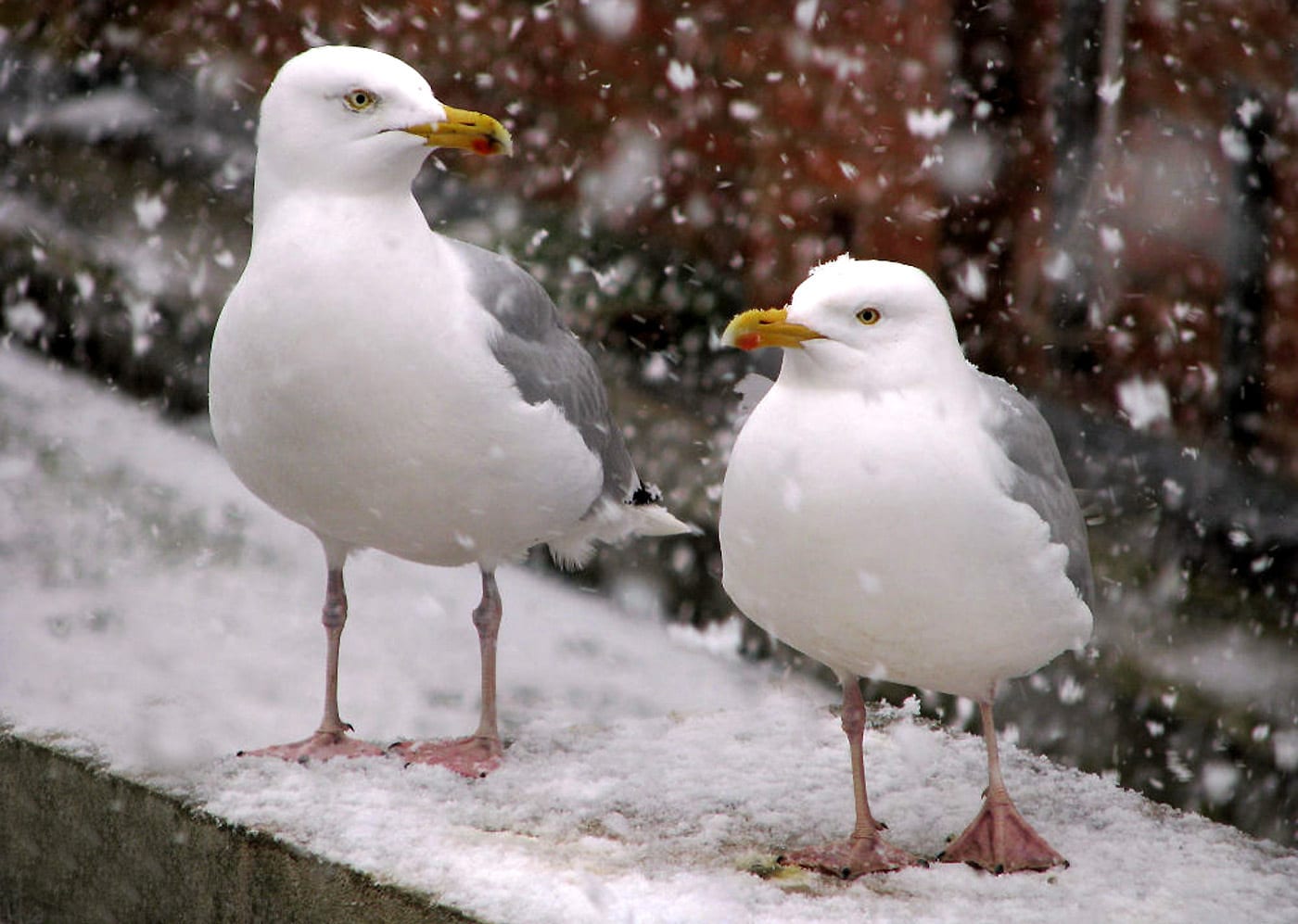
Seagulls in the Snow by Ron Hill Two Gulls loving the snow in an Uckfield Garden !!!
What is paramyxovirus?
The British government last updated their disease guidance for paramyxovirus back in 2018. It states that the disease does not usually affect humans though does affect pigeons, as the images suggest.
Signs of paramyxovirus infection in pigeons may include:
nervous signs, including trembling wings and heads, and twisting of the neck
partial paralysis of wings and legs (birds may fall over on landing and be unable to feed)
They also became thin from not being able to eat and not being able to sit still while they produce green feces.
How can the disease spread?
The disease is spread by direct contact between pigeons and through:
pigeon transporters that have not been adequately cleaned and disinfected
drinking water in lofts and transporters
pigeon fanciers carrying infection on their clothes, hands and feet
JSPCA Animal Shelter told the Mirror that the illness has no treatment “and many birds die within a few days”.
“Any that do survive will continue to shed the virus and be a risk to other birds,” a spokesperson added. “At the JSPCA, affected birds are humanely euthanased.”
This disease cannot affect humans, but it can cause conjunctivitis in those who handle sick birds.
Pigeon Patrol Products & Services is the leading manufacturer and distributor or bird deterrent (control) products in Canada. Pigeon Patrol products have solved pest bird problems in industrial, commercial, and residential settings since 2000, by using safe and humane bird
deterrents with only bird and animal friendly solutions. At Pigeon Patrol, we manufacture and offer a variety of bird deterrents, ranging from Ultra-flex Bird Spikes with UV protection, Bird Netting, 4-S Bird Gel and the best Ultrasonic and audible sound devices on the market today.
Voted Best Canadian wholesaler for Bird Deterrent products ten years in a row.
Contact us at 1 877-4-NO-BIRD,(604) 585-9279 or visit our website at www.pigeonpatrol.ca
Pigeon/Pigeon Patrol / Pigeons Roosing / Vancouver Pigeon Control / Bird Spikes / Bird Control / Bird Deterrent / PIgeon Deterrent / Surrey Pigeon Control / Pest / Seagull deterrent / Vancouver Pigeon Blog / Birds Inside Home / Pigeons in the cities / Ice Pigeons / What to do about pigeons / sparrows, Damage by Sparrows, How to Keep Raccoons Away, Why Are Raccoons Considered Pests / De-fence / Pigeon Nesting / Bird Droppings / Pigeon Dropping / woodpecker control / Professional Bird Control Company / Keep The Birds Away / Birds/rats/seagull/pigeon/woodpecker/dove/sparrow/pidgeon control/pidgeon problem/pidgeon control/flying rats/pigeon problems/ bird netting/bird gel/bird spray/bird nails/bird guard
Researchers led by members of Oxford University’s Department of Biology have found rare colonies of the wild ancestors of common domestic and feral pigeons.
Already extinct in England and Wales, the wild Rock Dove (Columba livia) has been found on secluded Scottish and Irish islands, providing insights into how the domestic pigeon came to be.
“Feral” pigeons originate from escaped domestic birds and can be seen in towns and cities all over the world. These domestic pigeons are descended from wild Rock Doves, who nest in sea caves and mountainous areas.
Despite the success of feral pigeons, the Rock Dove has been declining throughout its global range—which once encompassed vast areas of Africa, Asia and Europe. University of Oxford DPhil student and lead author Will Smith says that “studying the decline of the Rock Dove has been challenging for researchers because of such extensive interbreeding and replacement with feral pigeons.”
Rock Doves now persist in only small, relict populations where feral pigeons have not yet been able to colonize. In fact, due to the interbreeding of feral pigeons and Rock Doves, and their resulting hybrids, many ornithologists believe that there are no truly wild Rock Doves left. However, there are potential colonies in certain places, including, in Europe, the Faroe Islands, parts of the Mediterranean and parts of Scotland and Ireland.
The researchers studied populations of birds thought to be Rock Doves in Scotland and Ireland by analyzing DNA to determine whether the birds were truly wild, and to estimate how much genetic influence from feral pigeons different wild populations had experienced.
Through a combination of expeditions and collaboration with British Trust for Ornithology bird ringers, the research team caught both feral pigeons and putative Rock Doves in places like North Uist (Uibhist a Tuath) in the Outer Hebrides, Orkney, and Cape Clear Island.
The team took feather samples from the birds for DNA analysis. By sequencing the pigeons’ DNA, they were able to show the differences between feral pigeons and Rock Doves, and also measure the degree of interbreeding between the two forms of the species.
The results confirmed that the Rock Doves of the UK and Ireland descended from the undomesticated lineage from which all feral and domestic pigeons originate, with varying degrees of interbreeding. Rock Doves in Orkney have experienced extensive interbreeding with feral pigeons and are at risk of getting hybridized to the point of their extinction as a distinct lineage. In contrast, Rock Doves in the Outer Hebrides remain almost free of feral pigeon influence.
“We identified feral pigeon ancestry in most of the Scottish and Irish Rock Dove populations we sampled, and there have been feral pigeons in Europe for hundreds of years. It was therefore really surprising to discover that the Outer Hebridean Rock Doves showed negligible signs of hybridization,” explained Will Smith.
However, feral pigeons have been reported on these islands with increasing frequency, so it might be that the distribution of wild Rock Doves in the UK continues to shrink as a result.
Recording their distribution and genetic status will help to monitor the remaining Rock Dove populations, and encourage efforts to understand potential relict populations elsewhere.
In the wider context of conservation, increasing understanding of “extinction by hybridization” will help efforts to prevent many other plants and animals, such as the Scottish wildcat, from undergoing the same fate as the Rock Dove.
Pigeon Patrol Products & Services is the leading manufacturer and distributor or bird deterrent (control) products in Canada. Pigeon Patrol products have solved pest bird problems in industrial, commercial, and residential settings since 2000, by using safe and humane bird
deterrents with only bird and animal friendly solutions. At Pigeon Patrol, we manufacture and offer a variety of bird deterrents, ranging from Ultra-flex Bird Spikes with UV protection, Bird Netting, 4-S Bird Gel and the best Ultrasonic and audible sound devices on the market today.
Voted Best Canadian wholesaler for Bird Deterrent products ten years in a row.
Contact us at 1 877-4-NO-BIRD,(604) 585-9279 or visit our website at www.pigeonpatrol.ca
Pigeon/Pigeon Patrol / Pigeons Roosing / Vancouver Pigeon Control / Bird Spikes / Bird Control / Bird Deterrent / PIgeon Deterrent / Surrey Pigeon Control / Pest / Seagull deterrent / Vancouver Pigeon Blog / Birds Inside Home / Pigeons in the cities / Ice Pigeons / What to do about pigeons / sparrows, Damage by Sparrows, How to Keep Raccoons Away, Why Are Raccoons Considered Pests / De-fence / Pigeon Nesting / Bird Droppings / Pigeon Dropping / woodpecker control / Professional Bird Control Company / Keep The Birds Away / Birds/rats/seagull/pigeon/woodpecker/dove/sparrow/pidgeon control/pidgeon problem/pidgeon control/flying rats/pigeon problems/ bird netting/bird gel/bird spray/bird nails/bird guard
A September expedition to Papua New Guinea confirmed via video the existence of the black-naped pheasant pigeon, a critically endangered species that has not been reported for 140 years.
“For much of the trip, it seemed like we had no chance of finding this bird,” said Jordan Boersma, co-leader of the expedition and a postdoctoral researcher at the Cornell Lab of Ornithology. “We were just two days away from the end of our time on Fergusson Island in Papua New Guinea when one of our remote cameras recorded the bird walking around and fanning its tail.”
The group captured the first-ever video and still photos of the bird, a large ground-dwelling species with a rust-colored back, a black head and body, and a bobbing pheasant-like tail. It may only exist far inland on Fergusson Island in hot, extremely rugged geothermal terrain laced with twisty rivers and dense with biting insects and leeches.
“After a month of searching, seeing those first photos of the pheasant pigeon felt like finding a unicorn,” said John C. Mittermeier, director of the Search for Lost Birds project at American Bird Conservancy and a core member of the expedition team. “It’s the kind of moment you dream about your entire life as a conservationist and birdwatcher.”
Almost nothing is known of the black-naped pheasant pigeon apart from two specimens collected in 1882. There are no recordings of its sounds. The researchers think it would likely sound similar to a different pheasant pigeon species on mainland Papua New Guinea—a sound locals compare to the despairing cry of a woman ostracized by her community.
Tapping into Indigenous knowledge was key to the expedition’s success. Doka Nason, a local bird expert, joined the search and advised the team on where to look. Nason set up the camera that eventually recorded the bird. “When I saw the photos, I was incredibly excited,” he said. “I was jumping around yelling, ‘We did it!'”
“It was an experience of a lifetime working with Fergusson Islanders to find the pheasant pigeon and giving talks at schools and villages about our search was a highlight,” said Jason Gregg, a co-leader of the expedition. “Kids were whispering the local name of the bird—Auwo—and everyone was talking about it. I’m so happy we know this species survives, and it opens opportunities to learn even more about the bird and its incredible home.”
But conservationists are concerned. The principal landowner where the bird was found told the search team he’d just signed a deal with a logging company—a move that could threaten the black-naped pheasant pigeon and its habitat. The team is pursuing funding so they can go back to Fergusson and try to find out how many of the species are left.
“The reason I care, why I think we should all care, is that this bird has meant something and continues to mean something to the local people,” Boersma said. “It’s part of their legends and culture. If we lose this species, then its cultural importance will be lost along with the role it plays in this fantastic ecosystem.”
Pigeon Patrol Products & Services is the leading manufacturer and distributor or bird deterrent (control) products in Canada. Pigeon Patrol products have solved pest bird problems in industrial, commercial, and residential settings since 2000, by using safe and humane bird
deterrents with only bird and animal friendly solutions. At Pigeon Patrol, we manufacture and offer a variety of bird deterrents, ranging from Ultra-flex Bird Spikes with UV protection, Bird Netting, 4-S Bird Gel and the best Ultrasonic and audible sound devices on the market today.
Voted Best Canadian wholesaler for Bird Deterrent products ten years in a row.
Contact us at 1 877-4-NO-BIRD,(604) 585-9279 or visit our website at www.pigeonpatrol.ca
Pigeon/Pigeon Patrol / Pigeons Roosing / Vancouver Pigeon Control / Bird Spikes / Bird Control / Bird Deterrent / PIgeon Deterrent / Surrey Pigeon Control / Pest / Seagull deterrent / Vancouver Pigeon Blog / Birds Inside Home / Pigeons in the cities / Ice Pigeons / What to do about pigeons / sparrows, Damage by Sparrows, How to Keep Raccoons Away, Why Are Raccoons Considered Pests / De-fence / Pigeon Nesting / Bird Droppings / Pigeon Dropping / woodpecker control / Professional Bird Control Company / Keep The Birds Away / Birds/rats/seagull/pigeon/woodpecker/dove/sparrow/pidgeon control/pidgeon problem/pidgeon control/flying rats/pigeon problems/ bird netting/bird gel/bird spray/bird nails/bird guard