by Pigeon Patrol | Nov 23, 2021 | history of pigeons, MBCA, pet bird, Pigeon Control, Pigeon Droppings
With bits of DNA extracted from century-old museum specimens, researchers have found a place for the extinct passenger pigeon in the family tree of pigeons and doves, identifying for the first time this unique bird’s closest living avian relatives.
The new analysis, which appears this month in Molecular Phylogenetics and Evolution, reveals that the passenger pigeon was most closely related to other North and South American pigeons, and not to the mourning dove, as was once suspected.
Naturalists have long lamented that one of North America’s most spectacular birds was also one of the first to be driven to extinction. In the early 1800s it was the most abundant bird species on the planet, even though its range was limited to the eastern and central forests of the United States and parts of eastern Canada. Flocks of passenger pigeons were so vast they darkened the sky; it could take days for a flock to pass overhead.
“It must have been unbelievable to see one of these flocks,” said Kevin Johnson, an ornithologist with the Illinois Natural History Survey at the University of Illinois and lead author of the study. “There is nothing in modern times that we can compare it to. The passenger pigeon was very nomadic and it formed these huge flocks, in the millions, and breeding colonies in the millions.”
Passenger pigeons followed their food, settling down in forests that periodically produced a superabundance of acorns and chestnuts. The pigeons nested in dense colonies covering hundreds of acres. This made them easy targets for human predators.
Intensive hunting of the pigeons in the mid-to-late 19th century disrupted their ability to breed, Johnson said. That and habitat destruction led to the bird’s eventual extinction. (The last of her kind, a passenger pigeon named Martha, died in the Cincinnati Zoo in 1914.)
To find the passenger pigeon’s place in the evolutionary history of pigeons and doves, Johnson and his colleagues compared sequences from two of its mitochondrial genes with those of 78 species of pigeons and doves from around the world. (There are more than 300 species of pigeons and doves worldwide.)
“We had two sequences from the mitochondrial genome, which is a separate organelle in the cell that has its own genome,” Johnson said. Mitochondrial genes are plentiful and so are easier to sequence, he said. And the mitochondrial genome evolves more rapidly than the nuclear genome, making it a good target for evolutionary studies.
The researchers first analyzed the available sequence data for all (extant and extinct) pigeons and doves together. Then they focused only on the living species, for which much more genetic information is available. They built a family tree of all living pigeons and doves, and then compared the available gene sequences of the passenger pigeon to those of its relatives to find its place in that tree. Both approaches placed the passenger pigeon on the same place in the tree.
Prior to this study, some believed that the passenger pigeon was most closely related to the mourning dove, a smaller species that also has a relatively long tail, Johnson said.
“But it turns out, based on the DNA, that it’s actually related to the New World big pigeons in a totally different genus,” he said.
The band-tailed pigeon, Patagioenas fasciata, which lives in the western mountainous regions of North and South America, was the passenger pigeon’s geographically nearest relative. Other members of this genus are found in forests in parts of Mexico, Central and South America and the Caribbean.
The passenger pigeon was fairly distinct from its relatives, however, as it belonged to a separate genus, Ectopistes, Johnson said.
“The passenger pigeon is in a monotypic genus, which means there is only one species in that genus: Ectopistes migratorius,” he said. “This bird is pretty diverged from its nearest relatives, meaning it had a unique place in the world. It represented a unique lineage that’s now gone.”
The study team included Dale Clayton, of the University of Utah; John Dumbacher of the California Academy of Sciences and the Smithsonian Conservation Biology Institute; and Robert Fleischer, of the Smithsonian Conservation Biology Institute.
Source
Pigeon Patrol Products & Services is the leading manufacturer and distributor of bird deterrent (control) products in Canada. Pigeon Patrol products have solved pest bird problems in industrial, commercial, and residential settings since 2000, by using safe and humane bird deterrents with only bird and animal friendly solutions. At Pigeon Patrol, we manufacture and offer a variety of bird deterrents, ranging from Ultra-flex Bird Spikes with UV protection, Bird Netting, 4-S Bird Gel and the best Ultrasonic and audible sound devices on the market today.
Voted Best Canadian wholesaler for Bird Deterrent products ten years in a row.
Contact us at 1- 877– 4– NO-BIRD, (604) 585-9279 or visit our website at www.pigeonpatrol.ca
Pigeon/Pigeon Patrol / Pigeons Roosting / Vancouver Pigeon Control /Bird Spikes / Bird Control / Bird Deterrent / Pigeon Deterrent? Surrey Pigeon Control / Pest /Seagull deterrent / Vancouver Pigeon Blog / Birds Inside Home / Pigeons in the cities / Ice Pigeons/ What to do about pigeons/ sparrows , Damage by Sparrows, How To Keep Raccoons Away, Why Are Raccoons Considered Pests/ De-fence / Pigeon Nesting/ Bird Droppings / Pigeon Dropping/ woodpecker control/ Professional Bird Control Company/ Keep The Birds Away/ Birds/rats/ seagull/pigeon/woodpecker/ dove/sparrow/pidgeon control/pidgeon problem/ pidgeon control/flying rats/ pigeon Problems/ bird netting/bird gel/bird spray/bird nails/ bird guard
by Pigeon Patrol | Nov 16, 2021 | Bird Netting, Bird Spikes, Columbidae, Doves, history of pigeons, MBCA
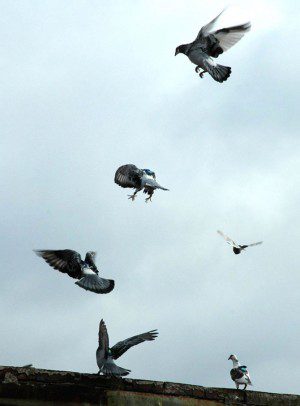
During flight, pigeons in a flock follow the leader.
Pigeons wearing miniature backpacks containing tracking devices have revealed that the birds rapidly shift direction during flight in response to cues from the leading members of their group.
“It is the first study demonstrating hierarchical decision-making in a group of free-flying birds,” says Tamás Vicsek, a biophysicist at Eötvös Loránd University in Budapest who led the study, which is published today in Nature1.
The discovery became possible only recently with the introduction of Global Positioning System (GPS) devices that can collect data at a high rate: five times per second. Vicsek’s team strapped lightweight GPS devices to individual pigeons and tracked flocks of up to 10 birds during free flights lasting around 12 minutes and 15-kilometre homing flights. In total, the GPS logged 32 hours of data and captured 15 group flights. The researchers couldn’t pinpoint individuals’ exact positions within a flock, but were able to accurately compare birds’ directions of motion.
Within flocks, the authors looked first at the behaviour of pairs of birds. For each possible pairing, the team identified a leader — the bird that changed direction first — and a follower, which copied the leader’s motion. Followers reacted very quickly, within a fraction of a second.
Next, the scientists constructed a network of relationships among birds in the group during each flight. They uncovered a robust pecking order: birds higher up the ranks had more influence over the group’s movements, and each individual’s level of influence was consistent across specific free and homing flights.
However, this influence was not always consistent between flights, with some rearrangement occurring among birds at the head of the flock. Vicsek speculates that this may have occurred because an original leader had tired. Co-author Dora Biro, an animal behaviour expert at the University of Oxford, UK, says, “This kind of group decision-making is more complicated than previous models suggested.”
Although pigeons have an almost 340º field of view, the researchers found that the birds at the front of a flock tended to make the navigational decisions. Moreover, birds responded more readily to a leader’s movements if the leader was on their left side. These findings concur with previous work that indicated that social cues entering a bird’s left eye receive preferential processing in the brain2.
“No other study has contributed more to our understanding of collective decision-making in actively homing animals, not by a long shot,” says Todd Dennis, an expert in pigeon navigation at the University of Auckland in New Zealand. He likens the birds’ group behaviour to that of a cabaret dance troupe, in which less-experienced dancers towards the rear correct themselves by watching experts at the front. “The study provides a very important model for how collective behaviour and leadership can be assessed in a range of animal groups,” he says.
The authors say that a hierarchical arrangement may foster more flexible and efficient decision-making compared with that of singly led or egalitarian groups. In future studies, the scientists plan to investigate whether leaders are better navigators, and whether hierarchies persist in larger groups and in other types of social animal. “If it’s true that there’s an evolutionary advantage to making decisions in this way, then there’s absolutely a reason to assume that it could have evolved in other species too,” Biro says.
Source
Pigeon Patrol Products & Services is the leading manufacturer and distributor of bird deterrent (control) products in Canada. Pigeon Patrol products have solved pest bird problems in industrial, commercial, and residential settings since 2000, by using safe and humane bird deterrents with only bird and animal friendly solutions. At Pigeon Patrol, we manufacture and offer a variety of bird deterrents, ranging from Ultra-flex Bird Spikes with UV protection, Bird Netting, 4-S Bird Gel and the best Ultrasonic and audible sound devices on the market today.
Voted Best Canadian wholesaler for Bird Deterrent products ten years in a row.
Contact us at 1- 877– 4– NO-BIRD, (604) 585-9279 or visit our website at www.pigeonpatrol.ca
Pigeon/Pigeon Patrol / Pigeons Roosting / Vancouver Pigeon Control /Bird Spikes / Bird Control / Bird Deterrent / Pigeon Deterrent? Surrey Pigeon Control / Pest /Seagull deterrent / Vancouver Pigeon Blog / Birds Inside Home / Pigeons in the cities / Ice Pigeons/ What to do about pigeons/ sparrows , Damage by Sparrows, How To Keep Raccoons Away, Why Are Raccoons Considered Pests/ De-fence / Pigeon Nesting/ Bird Droppings / Pigeon Dropping/ woodpecker control/ Professional Bird Control Company/ Keep The Birds Away/ Birds/rats/ seagull/pigeon/woodpecker/ dove/sparrow/pidgeon control/pidgeon problem/ pidgeon control/flying rats/ pigeon Problems/ bird netting/bird gel/bird spray/bird nails/ bird guard
by Pigeon Patrol | Nov 16, 2021 | Bird Netting, Bird Spikes, Columbidae, Doves, history of pigeons
Not a Carrier Pigeon, Not a Messenger Pigeon, Not a Rock Pigeon
The passenger pigeon and the rock dove (Columba livia, aka rock pigeon, carrier pigeon, etc) are often confused in the public’s mind but they are not closely related. The dock dove is a Eurasian species that has been semi-domesticated for centuries and has been introduced into North America. They like to nest on ledges, which is one reason they have proliferated in cities around the world in a feral state.
Passenger Pigeons Were Unlike Any Other Bird in the World
in at Least Three Important Ways
The Passenger Pigeon was a bird solely of North America, with the vast majority inhabiting a region from the Gulf States to Hudson’s Bay, and from the Atlantic Ocean to the upper Missouri River. Three things made them unique in all the world:
1) they were the most abundant bird of the continent, if not the world: no one knows for sure how many there were but the most careful figure offered ranges from a low of three billion to a high of five billion individuals;
2) they aggregated in numbers that darkened the sky for as much as three days: individual flights might have exceeded two billion birds; and
3) in literally decades, human actions reduced this incredible bounty to zero, when on September 1, 1914, the last of the species died. Given that it is extinct, very little was known about its relationships to other birds until recently.
Where Passenger Pigeons Belong in the Tree of Life
Scientists divide the vast array of life forms into categories based on the similarities and relationships between organisms. From broadest to narrowest, these categories are Kingdom, Phylum, Class, Order, Family, Genus, species. All the birds of the world are in the Phylum Chordata, Kindom Animalia, Class Aves and then are divided into 26 orders. (based on the taxonomy of James Clements). These orders include the Falconiformes (hawks), Anseriformes (ducks and geese mostly), Strigiformes (owls), and Passeriformes (the largest order of all which includes the perching birds like warblers, swallows, flycatchers, finches, thrushes, and sparrows).
All pigeons are members of the order Columbiformes which have a number of characteristics that together set them apart from other birds. These include a bilobed crop that produces a sort of “milk” that is fed to the chicks (“crop” is a pocket like space near the throat); monogamous mating behavior; the ability to drink by sucking or pumping; and thick feathers set close to the skin. On a general level, pigeons possess stocky bodies with small heads, bills, and feet. (Passenger pigeons were among the sleekest of pigeons). There are 42 genera and 308 recognized species of Columbiformes.
Pigeons of the World: From 8 Pounds to 22 Grams
There is no difference between pigeons and doves: the terms are interchangeable. Pigeons are found throughout the world. Some pigeon species eat mostly fruit, whereas others forage on seeds. The fruit-eating Columbiformes tend to be much more vividly colored than the seed eating ones. The largest species is the Victoria crowned pigeon (Goura victoria) of New Guinea which approaches the size of a turkey and can weigh in excess of 8 pounds. The smallest species are members of the ground dove genus (Columbina): they can be as small as house sparrows and weigh not more than 22 grams.
Until recently, the relationship of Passenger Pigeon with respect to other pigeon species has been simply speculation based on gross plumage characteristics. However, recent genetic data published in 2010 by Johnson and colleagues (Molecular Phylogenetics and Evolution 57:455) show that, despite the gross similarity in appearance to mourning doves and its relatives (the genus Zenaida), the Passenger Pigeon is not closely related to this group of pigeons at all. In fact, its closest relatives are a group of large-bodied pigeons from the New World in the genus Patagioenas, which includes the western Band-tailed Pigeon among others. Even so, scientists believe that Passenger Pigeon is still different enough from other extant pigeons to remain in its unique genus, Ectopistes. Based on an analysis of the evolutionary tree constructed from genetic data, Johnson and colleagues (2010) hypothesized that eons ago an Asian cuckoo dove crossed into North America and provided the ancestor to both Ectopistes and Patagioenas.
Source
Pigeon Patrol Products & Services is the leading manufacturer and distributor of bird deterrent (control) products in Canada. Pigeon Patrol products have solved pest bird problems in industrial, commercial, and residential settings since 2000, by using safe and humane bird deterrents with only bird and animal friendly solutions. At Pigeon Patrol, we manufacture and offer a variety of bird deterrents, ranging from Ultra-flex Bird Spikes with UV protection, Bird Netting, 4-S Bird Gel and the best Ultrasonic and audible sound devices on the market today.
Voted Best Canadian wholesaler for Bird Deterrent products ten years in a row.
Contact us at 1- 877– 4– NO-BIRD, (604) 585-9279 or visit our website at www.pigeonpatrol.ca
Pigeon/Pigeon Patrol / Pigeons Roosting / Vancouver Pigeon Control /Bird Spikes / Bird Control / Bird Deterrent / Pigeon Deterrent? Surrey Pigeon Control / Pest /Seagull deterrent / Vancouver Pigeon Blog / Birds Inside Home / Pigeons in the cities / Ice Pigeons/ What to do about pigeons/ sparrows , Damage by Sparrows, How To Keep Raccoons Away, Why Are Raccoons Considered Pests/ De-fence / Pigeon Nesting/ Bird Droppings / Pigeon Dropping/ woodpecker control/ Professional Bird Control Company/ Keep The Birds Away/ Birds/rats/ seagull/pigeon/woodpecker/ dove/sparrow/pidgeon control/pidgeon problem/ pidgeon control/flying rats/ pigeon Problems/ bird netting/bird gel/bird spray/bird nails/ bird guard
by Pigeon Patrol | Nov 12, 2021 | Columbidae, Doves, history of pigeons, MBCA, pet bird, Pigeon Control
If you have ever been to a park or town with young children in tow, you will know they make a beeline for any group of pigeons. They usually delight in making noise and laughing as they flee, except for the tough one, there is always a Rambo that fears nothing and no-one!
My initial instinct has always been to call the child away, telling them the birds are yukky and carry disease. Have I been doing them an injustice for all of these years?
Are pigeons dirty and should we steer clear of them?
It seems there’s some basis to our assumptions. Pigeons might be classed as dirty as they do indeed carry disease. However, humans and every other living creature also carry disease, even domestic pets such as cats and dogs, and we don’t call them dirty and disease-ridden, do we?
Pigeons carry zoonotic diseases. This means any bacteria that can be passed from human to non-human, and back again. Thousands of other species carry zoonotic disease and pose no significant health risk to humans.
What the professionals say
David Taylor BVMS FRCVS FZS had this to say.
“ In 50 years of professional work as a veterinary surgeon I haven’t seen a single case of zoonosis in a human-related to pigeons. I have seen examples of human disease-related to contact with cats, dogs, cattle, monkeys, sheep, camels, budgies, parrots, cockatoos, aquarium fish, and even dolphins, on many occasions”
This is confirmed by the UK’s Chief Veterinary Officer who stated that there was no risk to human health when asked in the House of Commons, about the 7000+ feral pigeons that congregate daily in Trafalgar Square.
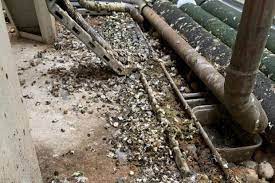
In exceptionally rare cases, people have been known to get ill with mild flu-like symptoms, after coming into contact with the fungus from pigeon droppings. It can be passed in contaminated water droplets or soil. Expert Professor Hugh Pennington maintains this is incredibly rare in the UK and good hand washing hygiene should prevent transmission.
People with compromised immune systems should avoid contact with all bird droppings.
Why Have Pigeons got a Bad Reputation
The Mayor of London launched a bid to prevent feeding the feral pigeons in Trafalgar Square as he felt so strongly about their nuisance value.
Although they pose no major risk to public health, the mess they create and the havoc they wreak makes feral pigeons public enemy number one.
Their bad reputation might be exaggerated, but the sheer amount of pigeons that flock together can be overwhelming. The weight of the birds and their droppings can damage property.
Worst of all, pigeons in towns, gardens, and parks, can bully all of the songbirds that we love, resulting in them looking for other places to feed and nest.
Are Pigeons Good for Anything
If you have ever watched a flock of pigeons, you will have surely noticed that they are not particularly fussy about what they eat. Chips, crisps, and the remnants of burger boxes in the street are a feast for a feral pigeon. They are unpaid street cleaners.
If only chewing gum and cigarette butts were edible, there’d be virtually no need for road sweepers!
Final thoughts…
Are pigeons dirty? No more so than any other wild animal, but the fact that they are so prevalent in almost all parts of the country makes us more aware of them.
Avoiding their droppings, or cleaning it up as quickly as possible, followed by a thorough hand wash, is enough to keep us safe.
If the domestic pigeons are happy to fly around with the feral pigeons and not come into contact with disease, then surely, we needn’t worry too much either.
Source
Pigeon Patrol Products & Services is the leading manufacturer and distributor of bird deterrent (control) products in Canada. Pigeon Patrol products have solved pest bird problems in industrial, commercial, and residential settings since 2000, by using safe and humane bird deterrents with only bird and animal friendly solutions. At Pigeon Patrol, we manufacture and offer a variety of bird deterrents, ranging from Ultra-flex Bird Spikes with UV protection, Bird Netting, 4-S Bird Gel and the best Ultrasonic and audible sound devices on the market today.
Voted Best Canadian wholesaler for Bird Deterrent products ten years in a row.
Contact us at 1- 877– 4– NO-BIRD, (604) 585-9279 or visit our website at www.pigeonpatrol.ca
Pigeon/Pigeon Patrol / Pigeons Roosting / Vancouver Pigeon Control /Bird Spikes / Bird Control / Bird Deterrent / Pigeon Deterrent? Surrey Pigeon Control / Pest /Seagull deterrent / Vancouver Pigeon Blog / Birds Inside Home / Pigeons in the cities / Ice Pigeons/ What to do about pigeons/ sparrows , Damage by Sparrows, How To Keep Raccoons Away, Why Are Raccoons Considered Pests/ De-fence / Pigeon Nesting/ Bird Droppings / Pigeon Dropping/ woodpecker control/ Professional Bird Control Company/ Keep The Birds Away/ Birds/rats/ seagull/pigeon/woodpecker/ dove/sparrow/pidgeon control/pidgeon problem/ pidgeon control/flying rats/ pigeon Problems/ bird netting/bird gel/bird spray/bird nails/ bird guard
by Pigeon Patrol | Nov 12, 2021 | Bird Spikes, Columbidae, Doves, history of pigeons, MBCA, pet bird
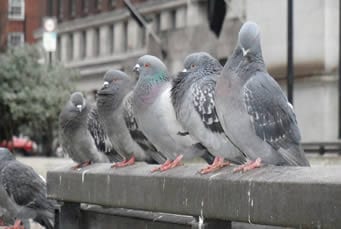
Pigeons in the city eat almost anything but is this good for them? Is human food close enough to what they eat in the wild? What do pigeons eat in the wild?
Pigeons in the wild eat seeds, grains, berries, fruits, and vegetables. these animals are herbivores but if they need to they will eat insects, snails, worms, and small lizards. These foods offer pigeons more concentrated amounts of protein and fat. In the city, pigeons eat bread, french fries and pet food to name a few
It’s true that pigeons are very present in cities around the world today, but these birds do not only live in human settlements. In fact, there was a time when not a single pigeon dwelt in our cities or rural areas.
Pigeons originally came from the wild. This includes coastal areas, cliffs, rock edges, chaparral, rain forests, mangrove forests and arboreal forests
It would seem as though all the pigeons in the world left their natural habitat and moved to the city, but that’s not the case – there are still pigeons in the wild. The question now asked by many is: if pigeons live in the wild, what do they eat there?
What do pigeons eat in the wild?
Pigeons in the wild live off of what nature provides. These birds live in areas where food-producing trees and plants are abundant, and so these birds eat seeds, grains, berries, fruits, and vegetables.
A wild pigeon will also eat insects, snails, worms, and small lizards occasionally. Pigeons are herbivores and shouldn’t be meat-eaters, but since these birds live in the wild, they will eat almost anything they can find if they are hungry enough – especially if it appears edible and defenceless.
Pigeons eating meat can also be a good thing. Pigeons need lots of protein and fat in their diet to stay healthy and strong, they get more concentrated amounts of fat and protein in meat
Unfortunately, living in the wild comes with its disadvantages. These birds live in an environment filled with lots of predators. In addition, a scarcity of food in the wild may lead to starvation for the birds.
What do pigeons eat in urban areas?
Pigeons living around human habitations aren’t as privileged as pigeons in the wild, so they settle for whatever they can find. These birds have been around humans for many decades so they have learned to eat human food.
City pigeons eat grains, corn, wheat, pearl millet, seeds, bread, cookies, french fries, dried peas, cheese, rice, pasta, fried chicken, meat, fish, fruits, dog and cat food to name a few
Sometimes, people feed these birds by offering them something to eat. But this doesn’t happen all the time. In every city, there are people who terribly dislike birds and would never offer them food.
When city pigeons can’t find anything to eat, they resort to scavenging. If you live in a big city, you must have seen pigeons eating from the trash. This is bad for the birds as they can get sick from eating contaminated materials.
What do baby pigeons eat?
In the animal kingdom, mothers are usually the only parent responsible for nursing the young, but this is not so for pigeons.
When a baby pigeon is born, it’s the duty of both parents to feed and care for the young bird. And father pigeons never run from this responsibility.
Baby pigeons are fed crop milk by both parents until they are matured enough to eat solid food.
The crop milk fed to baby pigeons is extremely high in protein, fat, carbohydrate, antioxidants, vitamins, and minerals.
Should you feed pigeons in the wild?
There’s a yes and no to that.
Pigeons in the wild may need our help sometimes. And if we fail to offer them food during periods of food scarcity, they may end up starving to death or ingesting something that harms them.
Feeding pigeons is not something you’re obligated to do, but if you love wildlife, you can offer them healthy food whenever you get the chance.
It’s also important not to overdo this as they could become overly dependent on humans for food. Pigeons living in the wild need to know how to hunt for food themselves, not wait for humans to bring them food.
What should I feed my pet pigeon?
If you own a pet pigeon, you can feed it the following foods:
- Grains
- Seeds
- Vegetables
- Fruits
- Cooked eggs
- Cheese
- Lactose-free yogurt
- Cooked or uncooked rice and pasta (unsalted)
A pigeon’s diet must be diverse. Don’t solely feed your pet pigeon a certain type of food because it loves it. The bird should be fed a balanced diet if it is to stay healthy.
Pigeon feed is the most recommended food to give the birds as they contain balanced amounts of fats, proteins, carbohydrates, vitamins, and minerals.
What not to feed pigeons
Pigeons eat a lot of things but should not be fed everything. Some foods will harm and can kill the birds. Below are foods you should never feed pigeons:
Sugary foods and sugary drinks: Sugary food can cause diabetes in the birds.
Avocado: Avocados contain persin which is toxic to the birds.
Apple: The seeds of apples are bad for the birds as they contain cyanide. The skin could also be coated with pesticides that may harm the birds.
Onion or garlic: Onions and garlic both contain chemicals that can irritate the bird’s mouth, oesophagus, crop and also cause them anaemia.
Chocolates: The theobromine in chocolate is highly toxic to the birds.
Salted foods: Pigeons should not ingest salted foods as the sodium can kill the birds.
Conclusion
Pigeons do not only live in cities; they can also be found in the wild. In the wild, the diet of these birds mainly consists of seeds, grains, fruits, vegetables, insects, and any small animal they can find.
It’s not a bad idea to feed wild pigeons wherever you find them, just don’t do it in excess. And if you’re to feed pigeons, make sure you aren’t giving them food that is harmful to them.
Source
Pigeon Patrol Products & Services is the leading manufacturer and distributor of bird deterrent (control) products in Canada. Pigeon Patrol products have solved pest bird problems in industrial, commercial, and residential settings since 2000, by using safe and humane bird deterrents with only bird and animal friendly solutions. At Pigeon Patrol, we manufacture and offer a variety of bird deterrents, ranging from Ultra-flex Bird Spikes with UV protection, Bird Netting, 4-S Bird Gel and the best Ultrasonic and audible sound devices on the market today.
Voted Best Canadian wholesaler for Bird Deterrent products ten years in a row.
Contact us at 1- 877– 4– NO-BIRD, (604) 585-9279 or visit our website at www.pigeonpatrol.ca
Pigeon/Pigeon Patrol / Pigeons Roosting / Vancouver Pigeon Control /Bird Spikes / Bird Control / Bird Deterrent / Pigeon Deterrent? Surrey Pigeon Control / Pest /Seagull deterrent / Vancouver Pigeon Blog / Birds Inside Home / Pigeons in the cities / Ice Pigeons/ What to do about pigeons/ sparrows , Damage by Sparrows, How To Keep Raccoons Away, Why Are Raccoons Considered Pests/ De-fence / Pigeon Nesting/ Bird Droppings / Pigeon Dropping/ woodpecker control/ Professional Bird Control Company/ Keep The Birds Away/ Birds/rats/ seagull/pigeon/woodpecker/ dove/sparrow/pidgeon control/pidgeon problem/ pidgeon control/flying rats/ pigeon Problems/ bird netting/bird gel/bird spray/bird nails/ bird guard