by Pigeon Patrol | Feb 26, 2020 | 4-S Gel Bird repellent, Animal Deterrent Products, Bird Spike, Pigeon Control, Pigeon Droppings, Pigeons in the News, UltraSonic Bird Control
Zombie pigeon epidemic sparks fears of transmission to humans
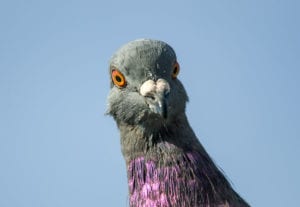
An “epidemic” of pigeon deaths in Moscow has sparked speculation that birds were succumbing to a virus dangerous to human beings. People who came across sick birds paying no attention to cars or passersby described them as “zombie pigeons.”
On Wednesday the Federal Veterinary and Phytosanitary Inspection Service reported that the birds’ abnormal behavior was caused by the so-called “Newcastle disease,” which can spread to humans.
Moscow’s Veterinary Committee said the mass death of pigeons in the capital was due to salmonellа poisoning, an intestinal infection spread among animals and humans. Veterinary specialists detected lesions on the gastrointestinal tracts and livers of the dead birds caused by salmonella, not Newcastle disease, Interfax reported.
Autopsies of dead birds showed that they had all suffered from a common intestinal infection that is not dangerous to humans, said Moscow’s deputy mayor for social issues, Leonid Pechatnikov. Neither the bird flu, dangerous to humans, nor fowl plague or any other diseases threatening people have been found, he said.
Gennady Onishchenko, Russia’s chief sanitary inspector, said that while the word “pigeon epidemic” was often used in the press, he doubted it could described as one. However, he warned that parents should take care if their children could come into contact with sick birds.
“We are especially worried about children’s playgrounds… And if a dead bird is found on the balcony, it must be washed with disinfectant. Doing this, one must be wearing rubber gloves,” Onishchenko said.
Although the birds’ salmonella is not harmful to humans, direct contact with the sick birds should be avoided, veterinarians said.
“The disease poses no risk for humans, provided standard precautions of personal hygiene are observed and direct contact with sick birds is avoided. Activators of avian influenza and psittacosis (an infection that can be transmitted to humans) have not been identified,” the committee said.
Salmonella infections in humans usually resolve in 5-7 days, but a small number of persons with Salmonella develop pain in their joints, irritation of the eyes and painful urination. The so-called Reiter’s syndrome can last for months or years, and can lead to chronic arthritis.
Newcastle disease, which is transmissible to humans, can cause mild conjunctivitis and influenza-like symptoms.
Ornithologists say that the so-called “epidemic” occurs every year, and not only in Moscow. “Most often, it begins in August. This is due to the fact that the breeding season is over, young birds come out with reduced immunity, and they are more susceptible to all infectious diseases,” ornithologist Natalia Anisimova told Russia’s TV Dozhd (Rain).
source
At Pigeon Patrol, we manufacture and offer a variety of bird deterrents, ranging from Ultra-flex Bird Spikes with UV protection, Bird Netting, 4-S Gel and the best Ultrasonic and audible sound devices on the market today.
Contact us at 1- 877– 4– NO-BIRD, (604) 585-9279 or visit our website at www.pigeonpatrol.ca
Bird Gone, Pigeon Gone, Seagull Gone, Pigeon issue, pigeon spikes, 1-877-4NO-BIRD, 4-S Gel, Bird Control, Pigeon Control, bird repellent, Bird Spikes, sonic bird repellent, stainless steel bird spikes, bird spikes Vancouver, Ultra Sonic Bird Control, Bird Netting, Plastic Bird Spikes, Canada bird spike deterrents, Pigeon Pests, B Gone Pigeon, Pigeon Patrol, pest controller, pest control operator, pest control technician, Pigeon Control Products, humane pigeon spikes, pigeon deterrents, pigeon traps, Pigeon repellents, Sound & Laser Deterrents, wildlife control, raccoon, skunk, squirrel deterrent, De-Fence Spikes, Dragons Den, Canada bird spikes, Canada pigeon, pigeon control, pigeon patrol, pigeon. Kill pigeons, crow, starling

by Pigeon Patrol | Feb 5, 2020 | 4-S Gel Bird repellent, Animal Deterrent Products, Bird Deterrent Products, Bird Netting, Bird Spikes, Pigeon Patrol's Services, Pigeon Spikes, Pigeons in the News, UltraSonic Bird Control
Newcastle Disease
What is Newcastle disease and what causes it? Newcastle disease is a contagious viral disease of birds and considered one of the most important poultry diseases worldwide. The disease can vary from mild to severe. A highly contagious and severe form of the disease, called exotic Newcastle disease (END), is so deadly that many birds die suddenly without showing any signs of disease. What animals get Newcastle disease? Both domestic and wild birds can be affected by Newcastle disease. Chickens are very susceptible to the disease. Turkeys, ducks, geese, as well as parrots, pigeons and wild cormorants can also get END. How can my animal get Newcastle disease? Newcastle disease is spread by direct contact with the droppings or respiratory discharges of infected birds. The virus can live for a long time in the environment and can be spread by objects (fomites), such as shoes, clothing, and equipment, that have become contaminated by infected birds. Outbreaks have occurred from the illegal imports of exotic birds. How does Newcastle disease affect my animal? Newcastle disease in birds can vary from no signs of illness to sudden death. Affected birds may have coughing, sneezing, nasal discharge, depression, and diarrhea. Chicken flocks may have a sudden decrease in egg production or produce thin shelled eggs. Signs of severe illness include swelling of the tissues of the head, muscle tremors, drooping wings, twisted head, circling, paralysis or sudden death. Can I get Newcastle disease? Yes. Infection is rare and usually very mild. People in direct contact with infected poultry or other birds can get conjunctivitis (swelling and reddening of the tissues around the eyes. Poultry crews and laboratory workers would be at the greatest risk for potential exposure to the virus during their work. No human cases of Newcastle disease have occurred from eating poultry products. Who should I contact, if I suspect Newcastle disease? In Animals – Contact your veterinarian immediately. Exotic Newcastle disease is not currently found in the U.S.; suspicion of the disease requires immediate attention. In Humans – Contact your physician. Tell him or her you have been in contact with birds with Newcastle disease. How can I protect my animals from Newcastle disease? Prevent your birds from becoming exposed to infected birds. Biosecurity measures, such as cleaning and disinfection of bird-housing facilities and equipment is very important. New introductions or birds returning to the farm should be isolated for several weeks before being placed into the flock. A vaccine is available for birds and is routinely used in poultry flocks. While this can reduce the severity of the disease, it does not completely prevent infection. How can I protect myself from Newcastle disease? When working with birds or poultry, especially when they are ill, wear protective clothing such as gloves, and safety glasses. Wash your hands after contact with birds or poultry. Avoid touching your eyes until your hands have been washed. People working with the virus in laboratories or on vaccination crews should take extra precautions.
Source
At Pigeon Patrol, we manufacture and offer a variety of bird deterrents, ranging from Ultra-flex Bird Spikes with UV protection, Bird Netting, 4-S Gel and the best Ultrasonic and audible sound devices on the market today.
Contact us at 1- 877– 4– NO-BIRD, (604) 585-9279 or visit our website at www.pigeonpatrol.ca
Bird Gone, Pigeon Gone, Seagull Gone, Pigeon issue, pigeon spikes, 1-877-4NO-BIRD, 4-S Gel, Bird Control, Pigeon Control, bird repellent, Bird Spikes, sonic bird repellent, stainless steel bird spikes, bird spikes Vancouver, Ultra Sonic Bird Control, Bird Netting, Plastic Bird Spikes, Canada bird spike deterrents, Pigeon Pests, B Gone Pigeon, Pigeon Patrol, pest controller, pest control operator, pest control technician, Pigeon Control Products, humane pigeon spikes, pigeon deterrents, pigeon traps, Pigeon repellents, Sound & Laser Deterrents, wildlife control, raccoon, skunk, squirrel deterrent, De-Fence Spikes, Dragons Den, Canada bird spikes, Canada pigeon, pigeon control, pigeon patrol, pigeon. Kill pigeons, crow, starling
by Pigeon Patrol | Feb 5, 2020 | 4-S Gel Bird repellent, Animal Deterrent Products, Bird Deterrent Products, Bird Netting, Bird Spikes, Pigeon Droppings, Pigeon Patrol's Services, Pigeon Spikes, Pigeons in the News, UltraSonic Bird Control
With a warm spell of weather predicted, staff from Pigeon Patrol Pest Control are gearing up for more calls to deal with the bird they call the ‘flying rat’.
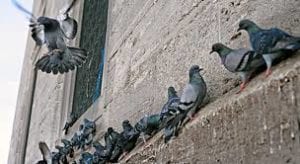
Pigeons take advantage of the warmer weather to sit on outside ledges and pipework while their fouling fall to the floor below, creating a dangerously slippery surface.
Pigeon Patrol: “With pigeons now breeding four or five times a year, compared to two or three times 20 years ago, their numbers are increasing dramatically. The problem is exacerbated by people feeding them and attracting them into town squares where they are fouling on pavements and buildings.
“Pigeons are the most unhygienic and messy birds and actually carry more diseases than rats. They nest on their poo and attract mites. Nearly all pigeons carry the bird mite – a tiny insect that feeds off the bird, but will also makes humans itch and scratch. Pigeon fouling and nest materials also provide a home for many other insects such as clothes moths, carpet beetle and meal worm beetles.
Most of the pest controllers’ work against pigeons tends to be proofing of buildings and light wells, using a variety of techniques including installing nets, sprung wire systems and bird spike repellents.
Pigeon Patrol explained: “If a slipped tile goes unnoticed on a roof, or the louvers slip on a church bell tower, a pair of pigeons can get in and, in a matter of months, there can be hundreds of pigeons living in the loft space. The floor will soon be covered with fouling up to a foot deep.res further ‘natural-style’ habitats for these descendants of the Rock Dove – ll then have health and safety implications for engineers who come to service the equipment.
“Pigeon poo, when it is wet, is not too much of a danger apart from being slippery and the acidity will, of course, burn car paintwork. But when it is dry, as it often is in a loft space, or below sheltered machinery, then the airborne bacteria can become a real problem – affecting anybody that may be susceptible to asthma and other breathing difficulties.”
When pest controllers are called in, wearing special safety gear, they have to remove the birds, the nests and all loose fouling. The places they have to get to are often difficult to access, very restricted, very hot loft spaces that are about four-feet high – which is one of the reasons they dislike pigeons so much.
Pigeon Patrol Products and Services offers a specialist bird control service for facilities and property management companies in London, Sussex. Surrey and Kent, from the initial survey and specification through to the final proofing solution. As registered waste carriers, Pigeon Patrol can carry out full scale removal of bird fouling, as well as contaminated goods and furniture, from infested properties. As well as the feral pigeon, seagulls are becoming a greater problem for property owners and Pigeon Patrol can also offer advice and solutions for these pests as well.
Some facts about pigeons:
• A pigeon aged between 1 and 30 days is called a squab
• A pigeon’s white feathers have no color pigment
• Pigeons can see in color, but can also see ultra-violet light – a part of the light spectrum that humans cannot see
• Most birds take a sip of water and throw their heads back so it trickles down their throat – pigeons suck up water like straws
• In the 16th century, pigeon poo was a highly valued commodity as it was a source of salt petre or Potassium nitrate – a main ingredient of gunpowder! In France, it was also used to fertilise vineyards
• In India, the pigeon post mail service stopped in 2004
• Cher Ami and GI Joe were two famous war hero pigeons…both saved the lives of many soldiers by carrying important messages across enemy lines
• Young pigeons remain in their nests for up to two months…which is why it is only pest controllers who often get to see them!
• Peregrine Falcons are a natural predator of the pigeon…they can dive at up to 200 miles per hour. A pigeon can dive at about 70 miles an hour.
For more info
At Pigeon Patrol, we manufacture and offer a variety of bird deterrents, ranging from Ultra-flex Bird Spikes with UV protection, Bird Netting, 4-S Gel and the best Ultrasonic and audible sound devices on the market today.
Contact us at 1- 877– 4– NO-BIRD, (604) 585-9279 or visit our website at www.pigeonpatrol.ca
Bird Gone, Pigeon Gone, Seagull Gone, Pigeon issue, pigeon spikes, 1-877-4NO-BIRD, 4-S Gel, Bird Control, Pigeon Control, bird repellent, Bird Spikes, sonic bird repellent, stainless steel bird spikes, bird spikes Vancouver, Ultra Sonic Bird Control, Bird Netting, Plastic Bird Spikes, Canada bird spike deterrents, Pigeon Pests, B Gone Pigeon, Pigeon Patrol, pest controller, pest control operator, pest control technician, Pigeon Control Products, humane pigeon spikes, pigeon deterrents, pigeon traps, Pigeon repellents, Sound & Laser Deterrents, wildlife control, raccoon, skunk, squirrel deterrent, De-Fence Spikes, Dragons Den, Canada bird spikes, Canada pigeon, pigeon control, pigeon patrol, pigeon. Kill pigeons, crow, starling
by Pigeon Patrol | Feb 5, 2020 | 4-S Gel Bird repellent, Bird Deterrent Products, Bird Spike, Pigeon Patrol's Services, Pigeon Spikes, Pigeons in the News, UltraSonic Bird Control
LONDON (Reuters Life!) – Scientists studying pigeons have found that the often reviled urban bids that dominate city squares around the world carry two harmful disease-causing bugs that make them a public health hazard.
The findings of the study by a team of researchers in Spain show that although these bacteria can be harmful to humans, they appear to cause no harm to the birds themselves.
As a result, pigeons — often dubbed “rats with wings” by those who suspect them of spreading disease — can act as living “reservoirs” for some harmful bugs, the scientists said.
“Animals that live in close contact with humans can be dangerous reservoirs of human pathogens,” wrote Fernando Esperon from the Animal Health Research Center in Madrid, who led the study. “These birds may therefore pose a public health risk to the human population.”
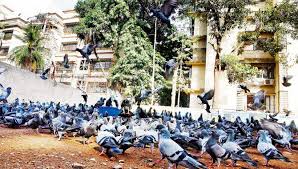
Inhabitants of cities from London to Venice to New York to San Francisco tend to have a love-hate relationship with the millions of urban pigeons that dominate city plazas, street-side cafes and monuments. Their droppings plaster Trafalgar square in London, St Mark’s square in Venice, and Times Square in New York, where they peck endlessly at crumbs or leftover food.
For this study, which was published in the BioMed Central journal Acta Veterinaria Scandinavica, Esperon and colleagues analyzed 118 pigeons captured using gun-propelled nets from urban areas of Madrid to find out the prevalence of certain bacteria known to cause disease in humans.
They found a bug called Chlamydophila psittaci in 52.6 percent of the pigeons captured, and another bug called Campylobacter jejuni in 69.1 percent.
Psittacosis infection in humans often starts with flu-like symptoms and can develop into life-threatening pneumonia. And according to Esperon, bugs from the campylobacter species are one of main causes of acute diarrhea across the world.
“In fact, in many countries such as England and Wales, Canada, Australia and New Zealand, Campylobacter jejuni infection causes more cases of acute diarrhea than infection by salmonella species,” he wrote.
Like other bugs, salmonella bacteria can cause fever, diarrhea, nausea and vomiting in those infected with it.
The scientists said that although the birds themselves did not seem to get sick from the bacteria, they could potentially pass them on the humans.
“These data should be taken into account for pigeon population management,” they wrote.
Source
At Pigeon Patrol, we manufacture and offer a variety of bird deterrents, ranging from Ultra-flex Bird Spikes with UV protection, Bird Netting, 4-S Gel and the best Ultrasonic and audible sound devices on the market today.
Contact us at 1- 877– 4– NO-BIRD, (604) 585-9279 or visit our website at www.pigeonpatrol.ca
Bird Gone, Pigeon Gone, Seagull Gone, Pigeon issue, pigeon spikes, 1-877-4NO-BIRD, 4-S Gel, Bird Control, Pigeon Control, bird repellent, Bird Spikes, sonic bird repellent, stainless steel bird spikes, bird spikes Vancouver, Ultra Sonic Bird Control, Bird Netting, Plastic Bird Spikes, Canada bird spike deterrents, Pigeon Pests, B Gone Pigeon, Pigeon Patrol, pest controller, pest control operator, pest control technician, Pigeon Control Products, humane pigeon spikes, pigeon deterrents, pigeon traps, Pigeon repellents, Sound & Laser Deterrents, wildlife control, raccoon, skunk, squirrel deterrent, De-Fence Spikes, Dragons Den, Canada bird spikes, Canada pigeon, pigeon control, pigeon patrol, pigeon. Kill pigeons, crow, starling
by Pigeon Patrol | Jan 31, 2020 | 4-S Gel Bird repellent, Animal Deterrent Products, Bird Spike, Pigeon Control, Pigeon Droppings, Pigeon Patrol's Services, Pigeon Spikes, Pigeons in the News, UltraSonic Bird Control
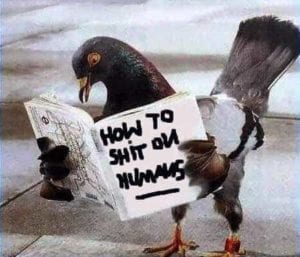
Now that the weather is getting warmer, I’d like to open my windows and get some fresh air in my apartment. The windows and building are filthy grimy and covered with pigeon poop problem on the outside. The ledge and the side of the building are too. If I open the window the soot all blows into our apartment and I don’t even want to know what diseases could come from the poop. Are landlords required to wash the facade of a building? What about windows? I can still see out of them, but just barely. And if a landlord is required to do this, how can I get mine to do it? Our landlord does the bare minimum to maintain our building.
My friend, Emma, is two and a half years old. She’s a big girl now and doesn’t need a diaper. But three or four months ago she could fill a diaper as well as any 6’5″ sailor who ate all the beans in the galley. I’m talking arm pits to knees! Where does it all come from? It’s as if small children are packed with adult-sized digestive systems. Same with pigeons; they generate a remarkable volume of poop given their size. Maybe it’s because they will eat anything, including the bodies of their fallen comrades.
Everyone who lives in a city has a pigeon story. I used to drive an MG convertible. I remember waiting at a stop light on Division Street. I happened to look up and from the steel girder above I noticed a pigeon’s ass maneuvering to drop a bomb. I couldn’t go anywhere! I ended up with what seemed to be a bucket load of shit running down the back of my shirt. Needless to say, I don’t believe any of wives’ tales about pigeon poop bringing good luck.
In fact pigeon poop is dangerous. There are several diseases associated with p-scat. Pigeons are the subjects of eradication programs throughout the world’s large cities.
In San Francisco, we have laws prohibiting the feeding of pigeons. The San Francisco Department of Public Health has a program devoted to dealing with pigeons and their excrement. If you have already complained to the landlord about the problem in writing and he has done nothing, call them.
I am not aware of any specific legal requirement for landlords to wash windows or facades of their buildings. But I’m willing to bet that there are other issues with the building and your apartment, given the lack of maintenance. Take a look around and check to see if there is peeling paint; windows that won’t open (sealed shut with shit?); cracks in the walls; leaks; other safety hazards, etc. If you believe there are violations, inform the landlord in writing. Again, if he doesn’t respond, call a Housing Inspector with the Department of Building Inspection, make a complaint and arrange for an inspection for this pigeon poop problem.
If the landlord tells you there is nothing he can do, maybe he needs a diaper.
Post From: Tenant Lawyers
At Pigeon Patrol, we manufacture and offer a variety of bird deterrents, ranging from Ultra-flex Bird Spikes with UV protection, Bird Netting, 4-S Gel and the best Ultrasonic and audible sound devices on the market today.
Contact us at 1- 877– 4– NO-BIRD, (604) 585-9279 or visit our website at www.pigeonpatrol.ca
Bird Gone, Pigeon Gone, Seagull Gone, Pigeon issue, pigeon spikes, 1-877-4NO-BIRD, 4-S Gel, Bird Control, Pigeon Control, bird repellent, Bird Spikes, sonic bird repellent, stainless steel bird spikes, bird spikes Vancouver, Ultra Sonic Bird Control, Bird Netting, Plastic Bird Spikes, Canada bird spike deterrents, Pigeon Pests, B Gone Pigeon, Pigeon Patrol, pest controller, pest control operator, pest control technician, Pigeon Control Products, humane pigeon spikes, pigeon deterrents, pigeon traps, Pigeon repellents, Sound & Laser Deterrents, wildlife control, raccoon, skunk, squirrel deterrent, De-Fence Spikes, Dragons Den, Canada bird spikes, Canada pigeon, pigeon control, pigeon patrol, pigeon. Kill pigeons, crow, starling
by Pigeon Patrol | Jan 31, 2020 | 4-S Gel Bird repellent, Animal Deterrent Products, Bird Deterrent Products, Bird Spike, Bird Spikes, Pigeon Control, Pigeon Patrol's Services, Pigeon Spikes, UltraSonic Bird Control
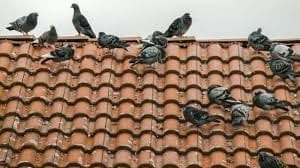
Pigeons are as integral to city living as traffic and pollution, and perhaps as annoying and potentially dangerous. These birds can cause property damage and carry diseases. However, there are humane ways to minimize or keep pigeons off your property. Find out how, together with some alleged solutions that simply don’t work or are not recommended.
The problems with pigeons
Pigeons often carry salmonella and other diseases. Their nests may harbor bird mites, bed bugs and other biting, disease-carrying insects. Because pigeon droppings are highly acidic, they can damage car paint and buildings. According to the New York City Department of Health and Mental Hygiene, pigeon droppings often carry fungi or bacteria that cause the human diseases cryptococcosis, histoplasmosis and psittacosis. Exposure to these diseases happens primarily when cleaning up pigeon droppings.
Solutions that work
You may have noticed that pigeons are everywhere. To keep all pigeons off your property may be unrealistic. You can reduce nesting populations in your immediate area by inspecting your property for nests, and removing nests and eggs every two weeks. More importantly, focus on keeping pigeons out of buildings and other spaces.
- Wire mesh and wire: Screen all soffit vents and other potential entry points with rust-proof wire mesh. University of Florida professor William Kern also recommends suspending a thin wire or mono filament about two inches above a railing or other potential roost, or adding sticky substances, deterring pigeons from resting on the rails.
- Sheet metal: To keep pigeons off ledges and other flat potential roosts, cover them with a sloping piece of sheet metal. A slanted metal board doesn’t make much of a roost.
- Bird netting: Alternatively, use bird netting to seal off spaces above barn rafters and other potential roosts.
- Scare-pigeons: Try the pigeon equivalent of scarecrows. Among the most effective “scare-pigeons” are kites with hawk silhouettes and light Mylar streamers. Both move easily in the wind, scaring off birds. On the other hand, pigeons will quickly grow accustomed to a model owl that sits in one spot for a while.
- Spray pigeons with water: Kern even suggests spraying pigeons with a water hose, but notes that the birds must be sprayed upon arrival, before they start to establish a regular roosting spot. Once they have established a roost, your impromptu showers won’t keep them from going home.
- Pigeon traps: If you fail to exclude pigeons or prevent roosting, you may need to make a trap or buy a commercial trap. Be sure to check each trap at least once a day, and leave water in the trap, to attract more birds and minimize stress on any pigeons that get caught. Immediately release all other birds you were not aiming to catch.
- Humane pest control. Find a pest control expert who specializes in humane solutions to infestation by pigeons and other unwanted creatures.
Solutions that DON’T work
Not every alleged pigeon control works. Here are a few urban legends:
- Loud noises: Loud noises have been suggested for controlling birds, but they are likely to annoy neighbors more than pigeons. City birds are used to city noises, and don’t seem to startle easily.
- Cheap Ultrasonic noises: Ultrasonic noises that humans cannot hear may avoid bothering your neighbors, but Kern notes that some ultrasonic sound waves bounce off objects, creating spots where pigeons can avoid the sound. Also, some ultrasonic devices may damage the hearing of cats and dogs. Although some ultrasonic units has proven to keep pigeons off your property.
- Distress calls: There are no effective distress calls that can be used to target pigeons.
- Poison and chemical repellents: Pigeon poisons and chemical repellents are available, but they are strictly controlled for several reasons. They can kill or sicken other birds or animals, or even somebody’s prized racing pigeon. (Yes, there are pigeon racing clubs. If you trap a tagged pigeon, click here (for information on returning it.)
Full story here
At Pigeon Patrol, we manufacture and offer a variety of bird deterrents, ranging from Ultra-flex Bird Spikes with UV protection, Bird Netting, 4-S Gel and the best Ultrasonic and audible sound devices on the market today.
Contact us at 1- 877– 4– NO-BIRD, (604) 585-9279 or visit our website at www.pigeonpatrol.ca
Bird Gone, Pigeon Gone, Seagull Gone, Pigeon issue, pigeon spikes, 1-877-4NO-BIRD, 4-S Gel, Bird Control, Pigeon Control, bird repellent, Bird Spikes, sonic bird repellent, stainless steel bird spikes, bird spikes Vancouver, Ultra Sonic Bird Control, Bird Netting, Plastic Bird Spikes, Canada bird spike deterrents, Pigeon Pests, B Gone Pigeon, Pigeon Patrol, pest controller, pest control operator, pest control technician, Pigeon Control Products, humane pigeon spikes, pigeon deterrents, pigeon traps, Pigeon repellents, Sound & Laser Deterrents, wildlife control, raccoon, skunk, squirrel deterrent, De-Fence Spikes, Dragons Den, Canada bird spikes, Canada pigeon, pigeon control, pigeon patrol, pigeon. Kill pigeons, crow, starling