by Pigeon Patrol | Feb 16, 2020 | Animal Deterrent Products, Bird Deterrent Products, Bird Spike, Pigeon Control, Pigeon Droppings, Pigeon Patrol's Services, Pigeon Spikes, Pigeons in the News
Neighbors said they’ve done everything they can think of to get this pigeon problems to stop in their Rhawnhurst neighborhood.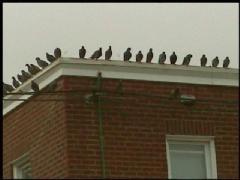
They’ve signed petitions. They’ve helped the City of Philadelphia take the case to court.
And still, every day, to put it bluntly, they’re pooped on by pigeons that flock there daily. That’s why they called the NBC 10 Investigators.
They wait on the wire.
“It’s disgusting,” said neighbor Eleanor Hennessy.
To neighbors, it feels like a nightmare scene right out of the old Alfred Hitchcock movie, “The Birds”,but Pigeon.
One look at the deposits left on an NBC 10 News car gives an idea what all of the screaming is about.
“It’s a crime against us,” said Hennessy’s husband, Francis.
And it has been going on for years.
“We’re out there every day washing our cars. Our dogs are getting pooped on, literally,” Cinque said.
“We couldn’t eat in our yard all summer. Kids next door couldn’t swim in their pool. You can’t hang laundry,” Francis Hennessy said.
“I’m working on a story about the pigeons,” said NBC 10’s Lu Ann Cahn as she approached.
“Oh, look, leave me alone. Go away,” said Karen Partain.
Partain owns the Rhawnhurst row home that has become the pigeon palace on Hartel Avenue.
Her husband, Joe Mutoli, wouldn’t answer the door. City health officials said despite six citations, Mutoli has continued to illegally put out a virtual bird buffet.
A seventh citation was delivered while NBC 10 was there.
Cahn said she was told there’s nothing wrong with a bird feeder. But the city said Mutoli has been told numerous times that he’s not allowed to throw feed on the ground and in a public school yard behind his home.
“His response has been that this is something he can do, and also there has been a lot of confrontation with our officers,” said Tara Derby, of the Philadelphia Animal Welfare Society.
“This is illegal, yes. There’s no way it’s legal. It’s in violation of the animal ordinance,” Derby said.
Experts said the food has caused the pigeon population to explode and the droppings are a health hazard.
“The droppings contain bacteria and viruses,” said William Ferraro, of the Philadelphia Health Department.
“I usually clean right after nap time,” said a local day care operator. “See, they’re circling now.”
The woman said she is constantly cleaning a small playground where the pigeon poop sometimes comes down like rain.
“If I would miss like one or two areas of droppings, of course the kids would find them, they would touch it and put it in their mouths,” said the daycare operator.
If it’s illegal, why can’t the city stop this?
“It’s the million dollar question,” said Eleanor Hennessy.
Neighbors said it’s hard to catch Mutoli throwing pigeon feed and show the city how serious this is.
So, the NBC 10 investigators sat in an undercover van and waited. It’s difficult to see because it was pitch-black outside, but sure enough at 11 p.m. one night, an NBC 10 crew caught Mutoli grab bird feed out of his garage and throw it through the fence of the neighboring schoolyard.
On video, he’s a shadowy figure. But Cahn said she and other crewmembers saw him clearly with their own eyes.
“You’ve continued to spread bird feed on the ground, and you know that’s illegal, right?” Cahn asked Mutoli over the phone.
Mutoli admitted on the phone that he shouldn’t be doing that and said he will stop. He claims he’s trying to move the birds away from his home and slowly wean them off food.
Neighbors said they’ve heard that before, but it never stops.
City officials told Cahn that you can’t throw a guy in prison for feeding pigeons. But as a result of this story and community pressure, NBC 10 has learned Mutoli is being ordered to appear in municipal court next month where he could be fined thousands of dollars.
Source
At Pigeon Patrol, we manufacture and offer a variety of bird deterrents, ranging from Ultra-flex Bird Spikes with UV protection, Bird Netting, 4-S Gel and the best Ultrasonic and audible sound devices on the market today.
Contact us at 1- 877– 4– NO-BIRD, (604) 585-9279 or visit our website at www.pigeonpatrol.ca
Bird Gone, Pigeon Gone, Seagull Gone, Pigeon issue, pigeon spikes, 1-877-4NO-BIRD, 4-S Gel, Bird Control, Pigeon Control, bird repellent, Bird Spikes, sonic bird repellent, stainless steel bird spikes, bird spikes Vancouver, Ultra Sonic Bird Control, Bird Netting, Plastic Bird Spikes, Canada bird spike deterrents, Pigeon Pests, B Gone Pigeon, Pigeon Patrol, pest controller, pest control operator, pest control technician, Pigeon Control Products, humane pigeon spikes, pigeon deterrents, pigeon traps, Pigeon repellents, Sound & Laser Deterrents, wildlife control, raccoon, skunk, squirrel deterrent, De-Fence Spikes, Dragons Den, Canada bird spikes, Canada pigeon, pigeon control, pigeon patrol, pigeon. Kill pigeons, crow, starling

by Pigeon Patrol | Feb 5, 2020 | 4-S Gel Bird repellent, Animal Deterrent Products, Bird Deterrent Products, Bird Netting, Bird Spikes, Pigeon Patrol's Services, Pigeon Spikes, Pigeons in the News, UltraSonic Bird Control
Newcastle Disease
What is Newcastle disease and what causes it? Newcastle disease is a contagious viral disease of birds and considered one of the most important poultry diseases worldwide. The disease can vary from mild to severe. A highly contagious and severe form of the disease, called exotic Newcastle disease (END), is so deadly that many birds die suddenly without showing any signs of disease. What animals get Newcastle disease? Both domestic and wild birds can be affected by Newcastle disease. Chickens are very susceptible to the disease. Turkeys, ducks, geese, as well as parrots, pigeons and wild cormorants can also get END. How can my animal get Newcastle disease? Newcastle disease is spread by direct contact with the droppings or respiratory discharges of infected birds. The virus can live for a long time in the environment and can be spread by objects (fomites), such as shoes, clothing, and equipment, that have become contaminated by infected birds. Outbreaks have occurred from the illegal imports of exotic birds. How does Newcastle disease affect my animal? Newcastle disease in birds can vary from no signs of illness to sudden death. Affected birds may have coughing, sneezing, nasal discharge, depression, and diarrhea. Chicken flocks may have a sudden decrease in egg production or produce thin shelled eggs. Signs of severe illness include swelling of the tissues of the head, muscle tremors, drooping wings, twisted head, circling, paralysis or sudden death. Can I get Newcastle disease? Yes. Infection is rare and usually very mild. People in direct contact with infected poultry or other birds can get conjunctivitis (swelling and reddening of the tissues around the eyes. Poultry crews and laboratory workers would be at the greatest risk for potential exposure to the virus during their work. No human cases of Newcastle disease have occurred from eating poultry products. Who should I contact, if I suspect Newcastle disease? In Animals – Contact your veterinarian immediately. Exotic Newcastle disease is not currently found in the U.S.; suspicion of the disease requires immediate attention. In Humans – Contact your physician. Tell him or her you have been in contact with birds with Newcastle disease. How can I protect my animals from Newcastle disease? Prevent your birds from becoming exposed to infected birds. Biosecurity measures, such as cleaning and disinfection of bird-housing facilities and equipment is very important. New introductions or birds returning to the farm should be isolated for several weeks before being placed into the flock. A vaccine is available for birds and is routinely used in poultry flocks. While this can reduce the severity of the disease, it does not completely prevent infection. How can I protect myself from Newcastle disease? When working with birds or poultry, especially when they are ill, wear protective clothing such as gloves, and safety glasses. Wash your hands after contact with birds or poultry. Avoid touching your eyes until your hands have been washed. People working with the virus in laboratories or on vaccination crews should take extra precautions.
Source
At Pigeon Patrol, we manufacture and offer a variety of bird deterrents, ranging from Ultra-flex Bird Spikes with UV protection, Bird Netting, 4-S Gel and the best Ultrasonic and audible sound devices on the market today.
Contact us at 1- 877– 4– NO-BIRD, (604) 585-9279 or visit our website at www.pigeonpatrol.ca
Bird Gone, Pigeon Gone, Seagull Gone, Pigeon issue, pigeon spikes, 1-877-4NO-BIRD, 4-S Gel, Bird Control, Pigeon Control, bird repellent, Bird Spikes, sonic bird repellent, stainless steel bird spikes, bird spikes Vancouver, Ultra Sonic Bird Control, Bird Netting, Plastic Bird Spikes, Canada bird spike deterrents, Pigeon Pests, B Gone Pigeon, Pigeon Patrol, pest controller, pest control operator, pest control technician, Pigeon Control Products, humane pigeon spikes, pigeon deterrents, pigeon traps, Pigeon repellents, Sound & Laser Deterrents, wildlife control, raccoon, skunk, squirrel deterrent, De-Fence Spikes, Dragons Den, Canada bird spikes, Canada pigeon, pigeon control, pigeon patrol, pigeon. Kill pigeons, crow, starling
by Pigeon Patrol | Feb 5, 2020 | 4-S Gel Bird repellent, Animal Deterrent Products, Bird Deterrent Products, Bird Netting, Bird Spikes, Pigeon Droppings, Pigeon Patrol's Services, Pigeon Spikes, Pigeons in the News, UltraSonic Bird Control
With a warm spell of weather predicted, staff from Pigeon Patrol Pest Control are gearing up for more calls to deal with the bird they call the ‘flying rat’.
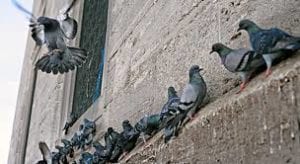
Pigeons take advantage of the warmer weather to sit on outside ledges and pipework while their fouling fall to the floor below, creating a dangerously slippery surface.
Pigeon Patrol: “With pigeons now breeding four or five times a year, compared to two or three times 20 years ago, their numbers are increasing dramatically. The problem is exacerbated by people feeding them and attracting them into town squares where they are fouling on pavements and buildings.
“Pigeons are the most unhygienic and messy birds and actually carry more diseases than rats. They nest on their poo and attract mites. Nearly all pigeons carry the bird mite – a tiny insect that feeds off the bird, but will also makes humans itch and scratch. Pigeon fouling and nest materials also provide a home for many other insects such as clothes moths, carpet beetle and meal worm beetles.
Most of the pest controllers’ work against pigeons tends to be proofing of buildings and light wells, using a variety of techniques including installing nets, sprung wire systems and bird spike repellents.
Pigeon Patrol explained: “If a slipped tile goes unnoticed on a roof, or the louvers slip on a church bell tower, a pair of pigeons can get in and, in a matter of months, there can be hundreds of pigeons living in the loft space. The floor will soon be covered with fouling up to a foot deep.res further ‘natural-style’ habitats for these descendants of the Rock Dove – ll then have health and safety implications for engineers who come to service the equipment.
“Pigeon poo, when it is wet, is not too much of a danger apart from being slippery and the acidity will, of course, burn car paintwork. But when it is dry, as it often is in a loft space, or below sheltered machinery, then the airborne bacteria can become a real problem – affecting anybody that may be susceptible to asthma and other breathing difficulties.”
When pest controllers are called in, wearing special safety gear, they have to remove the birds, the nests and all loose fouling. The places they have to get to are often difficult to access, very restricted, very hot loft spaces that are about four-feet high – which is one of the reasons they dislike pigeons so much.
Pigeon Patrol Products and Services offers a specialist bird control service for facilities and property management companies in London, Sussex. Surrey and Kent, from the initial survey and specification through to the final proofing solution. As registered waste carriers, Pigeon Patrol can carry out full scale removal of bird fouling, as well as contaminated goods and furniture, from infested properties. As well as the feral pigeon, seagulls are becoming a greater problem for property owners and Pigeon Patrol can also offer advice and solutions for these pests as well.
Some facts about pigeons:
• A pigeon aged between 1 and 30 days is called a squab
• A pigeon’s white feathers have no color pigment
• Pigeons can see in color, but can also see ultra-violet light – a part of the light spectrum that humans cannot see
• Most birds take a sip of water and throw their heads back so it trickles down their throat – pigeons suck up water like straws
• In the 16th century, pigeon poo was a highly valued commodity as it was a source of salt petre or Potassium nitrate – a main ingredient of gunpowder! In France, it was also used to fertilise vineyards
• In India, the pigeon post mail service stopped in 2004
• Cher Ami and GI Joe were two famous war hero pigeons…both saved the lives of many soldiers by carrying important messages across enemy lines
• Young pigeons remain in their nests for up to two months…which is why it is only pest controllers who often get to see them!
• Peregrine Falcons are a natural predator of the pigeon…they can dive at up to 200 miles per hour. A pigeon can dive at about 70 miles an hour.
For more info
At Pigeon Patrol, we manufacture and offer a variety of bird deterrents, ranging from Ultra-flex Bird Spikes with UV protection, Bird Netting, 4-S Gel and the best Ultrasonic and audible sound devices on the market today.
Contact us at 1- 877– 4– NO-BIRD, (604) 585-9279 or visit our website at www.pigeonpatrol.ca
Bird Gone, Pigeon Gone, Seagull Gone, Pigeon issue, pigeon spikes, 1-877-4NO-BIRD, 4-S Gel, Bird Control, Pigeon Control, bird repellent, Bird Spikes, sonic bird repellent, stainless steel bird spikes, bird spikes Vancouver, Ultra Sonic Bird Control, Bird Netting, Plastic Bird Spikes, Canada bird spike deterrents, Pigeon Pests, B Gone Pigeon, Pigeon Patrol, pest controller, pest control operator, pest control technician, Pigeon Control Products, humane pigeon spikes, pigeon deterrents, pigeon traps, Pigeon repellents, Sound & Laser Deterrents, wildlife control, raccoon, skunk, squirrel deterrent, De-Fence Spikes, Dragons Den, Canada bird spikes, Canada pigeon, pigeon control, pigeon patrol, pigeon. Kill pigeons, crow, starling
by Pigeon Patrol | Feb 5, 2020 | 4-S Gel Bird repellent, Bird Deterrent Products, Bird Spike, Pigeon Patrol's Services, Pigeon Spikes, Pigeons in the News, UltraSonic Bird Control
LONDON (Reuters Life!) – Scientists studying pigeons have found that the often reviled urban bids that dominate city squares around the world carry two harmful disease-causing bugs that make them a public health hazard.
The findings of the study by a team of researchers in Spain show that although these bacteria can be harmful to humans, they appear to cause no harm to the birds themselves.
As a result, pigeons — often dubbed “rats with wings” by those who suspect them of spreading disease — can act as living “reservoirs” for some harmful bugs, the scientists said.
“Animals that live in close contact with humans can be dangerous reservoirs of human pathogens,” wrote Fernando Esperon from the Animal Health Research Center in Madrid, who led the study. “These birds may therefore pose a public health risk to the human population.”
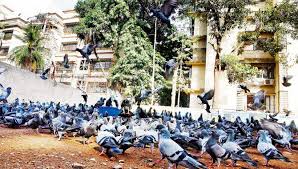
Inhabitants of cities from London to Venice to New York to San Francisco tend to have a love-hate relationship with the millions of urban pigeons that dominate city plazas, street-side cafes and monuments. Their droppings plaster Trafalgar square in London, St Mark’s square in Venice, and Times Square in New York, where they peck endlessly at crumbs or leftover food.
For this study, which was published in the BioMed Central journal Acta Veterinaria Scandinavica, Esperon and colleagues analyzed 118 pigeons captured using gun-propelled nets from urban areas of Madrid to find out the prevalence of certain bacteria known to cause disease in humans.
They found a bug called Chlamydophila psittaci in 52.6 percent of the pigeons captured, and another bug called Campylobacter jejuni in 69.1 percent.
Psittacosis infection in humans often starts with flu-like symptoms and can develop into life-threatening pneumonia. And according to Esperon, bugs from the campylobacter species are one of main causes of acute diarrhea across the world.
“In fact, in many countries such as England and Wales, Canada, Australia and New Zealand, Campylobacter jejuni infection causes more cases of acute diarrhea than infection by salmonella species,” he wrote.
Like other bugs, salmonella bacteria can cause fever, diarrhea, nausea and vomiting in those infected with it.
The scientists said that although the birds themselves did not seem to get sick from the bacteria, they could potentially pass them on the humans.
“These data should be taken into account for pigeon population management,” they wrote.
Source
At Pigeon Patrol, we manufacture and offer a variety of bird deterrents, ranging from Ultra-flex Bird Spikes with UV protection, Bird Netting, 4-S Gel and the best Ultrasonic and audible sound devices on the market today.
Contact us at 1- 877– 4– NO-BIRD, (604) 585-9279 or visit our website at www.pigeonpatrol.ca
Bird Gone, Pigeon Gone, Seagull Gone, Pigeon issue, pigeon spikes, 1-877-4NO-BIRD, 4-S Gel, Bird Control, Pigeon Control, bird repellent, Bird Spikes, sonic bird repellent, stainless steel bird spikes, bird spikes Vancouver, Ultra Sonic Bird Control, Bird Netting, Plastic Bird Spikes, Canada bird spike deterrents, Pigeon Pests, B Gone Pigeon, Pigeon Patrol, pest controller, pest control operator, pest control technician, Pigeon Control Products, humane pigeon spikes, pigeon deterrents, pigeon traps, Pigeon repellents, Sound & Laser Deterrents, wildlife control, raccoon, skunk, squirrel deterrent, De-Fence Spikes, Dragons Den, Canada bird spikes, Canada pigeon, pigeon control, pigeon patrol, pigeon. Kill pigeons, crow, starling

by Pigeon Patrol | Feb 5, 2020 | Animal Deterrent Products, Bird Deterrent Products, Bird Netting, Pigeon Control, Pigeon Droppings, Pigeon Patrol's Services, Pigeon Spikes, Pigeons in the News, UltraSonic Bird Control
Are Urban Vermin, the Most Disease-Ridden Animals?
Infections carried by animals are a rising threat—and those who work with livestock may have the most to fear
In many cities, pigeons—to take one urban animal—are reviled as flying vermin. They whitewash ledges and pick at filthy crumbs in the gutter. And, yes, these, dubbed by some as “rats with wings,” do carry diseases that humans can catch. But so do innumerable wild creatures outside city limits, the animals we eat—even our beloved pets.
Pigeons are guilty of transmitting fungal and bacterial diseases, primarily via their droppings, which pose the greatest risk to those with weakened immune systems. But cast against the recent spread of infectious zoonotic diseases—such as H5N1 bird flu, severe acute respiratory syndrome (SARS) and human immunodeficiency virus (HIV)—experts question the degree of concern over the disease-bearing potential of the birds that have colonized cities the world over.
In principle, any animal can carry a disease that humans could catch. But Marm Kilpatrick, an ecologist at the Consortium for Conservation Medicine in New York City, which studies human-induced environmental change, species health and biodiversity, wrote in an e-mail: “In reality, the vast majority [about 99.999 percent] of pathogens that are carried by animals won’t infect people.”
Even so, zoonotic diseases represent a growing proportion of emerging infectious diseases; two British studies calculated that about 75 percent of emerging infectious diseases are zoonotic. (By comparison, about 60 percent of all human pathogens can infect animals.)
Real rats (the ground-hugging kind) aren’t innocent by any means: Research links them with the reemergence of bubonic plague and typhus. But bats (of whom “winged rats” is more apropos) may be giving the unpopular rodents a run for their infamous reputation. Long associated with rabies, bats gained new notoriety in the 1990s after outbreaks of the Hendra and Nipah viruses killed both humans and livestock in Australia and Southeast Asia, respectively. A few years later SARS terrified the world by taking flight on commercial airlines. The virus left a trail leading back to the live animal markets in China, first to civet cats and subsequently to bats, the latter vector now believed to be the true starting point for the virus.
And, despite increasing urbanization throughout the world, people and wildlife are sharing more infections. In the Hendra and Nipah outbreaks, habitat fragmentation and increased contact between wild bats and domestic animals have been implicated. Bushmeat, particularly that of our close cousins the chimpanzee, has caused Ebola outbreaks in Africa.
In the U.S., prairie dog owners caught monkey pox from their pets. And the reforestation of Northeastern states over the past century has allowed deer populations to boom, spreading Lyme disease.
By comparison, pigeons’ potential for spreading bird flu seems rather minimal. So far most of nearly 220 human deaths caused by the pathogenic H5N1 strain of bird flu have been traced to contact with poultry. And the strain has yet to arrive in North America. If a similar one were to emerge here, the result could be disastrous for industrial farm workers before anyone else, according to Gregory Gray, director of the University of Iowa’s Center for Emerging Diseases.
“Exposure to domestic birds has changed markedly,” he says. In the nation’s confined animal feeding operations (CAFOs)—the industrial operations that have replaced family farms with at minimum 9,000-chicken or 750–large pig facilities—agricultural workers spend much more time in close contact with animals than a farmer would have 50 years ago.
These are potentially the mixing pots for the next flu pandemic, Gray argues. When an outbreak occurs undetected in a facility, viruses can mutate as they cycle through large flocks or herds. Gray and his colleagues have shown farmers, veterinarians and meat processors all had high swine influenza infection rates, and avian veterinarians carry more bird flu.
In 1983 a low-grade bird flu virus, perhaps left by ducks, spread into chicken warehouses in Pennsylvania. There, it mutated from a minor infection to become what Robert Webster, the virologist at the scene, called “Ebola for chickens.”
This outbreak took two years and the destruction of 17 million birds to control. Webster links some of its spread to New York City’s live bird markets, where chickens are packed into cages in close quarters with ducks and geese, natural carriers of bird flu.
Webster believes these markets pose a greater risk than CAFOs in the developed world where so-called “biosecurity” procedures to keep diseases out have been tightened since the emergence of H5N1. “Live bird markets are the breeding place for all pandemic strains in my opinion,” he says, and, despite attempts to purge it, avian influenza continues to show up in American live bird markets.
But for those whose daily animal interaction doesn’t extend beyond shooing squirrels or feeding the dog, the prospect of zoonotic disease shouldn’t keep them awake at night. “Most people should be more afraid to walk into a doctor’s office during flu season,” says Pennsylvania State University avian pathologist Patty Dunn.
As for pigeons: research has shown that even those infected with bird flu actually transmit very little. And they carry so little West Nile virus in their bloodstreams that they are unlikely to infect mosquitoes who could then infect humans, Kilpatrick says, making the birds more likely to slow an epidemic than spread one.
Source
At Pigeon Patrol, we manufacture and offer a variety of bird deterrents, ranging from Ultra-flex Bird Spikes with UV protection, Bird Netting, 4-S Gel and the best Ultrasonic and audible sound devices on the market today.
Contact us at 1- 877– 4– NO-BIRD, (604) 585-9279 or visit our website at www.pigeonpatrol.ca
Bird Gone, Pigeon Gone, Seagull Gone, Pigeon issue, pigeon spikes, 1-877-4NO-BIRD, 4-S Gel, Bird Control, Pigeon Control, bird repellent, Bird Spikes, sonic bird repellent, stainless steel bird spikes, bird spikes Vancouver, Ultra Sonic Bird Control, Bird Netting, Plastic Bird Spikes, Canada bird spike deterrents, Pigeon Pests, B Gone Pigeon, Pigeon Patrol, pest controller, pest control operator, pest control technician, Pigeon Control Products, humane pigeon spikes, pigeon deterrents, pigeon traps, Pigeon repellents, Sound & Laser Deterrents, wildlife control, raccoon, skunk, squirrel deterrent, De-Fence Spikes, Dragons Den, Canada bird spikes, Canada pigeon, pigeon control, pigeon patrol, pigeon. Kill pigeons, crow, starling
by Pigeon Patrol | Feb 5, 2020 | Bird Netting, Bird Spikes, Pigeon Control, Pigeon Patrol's Services, Pigeons in the News, UltraSonic Bird Control
Pet Bird Transmitted Diseases. It may be hard to believe, but your pet bird can make you sick. There are several diseases that birds can transmit to people (these are called zoonotic diseases). For your own health, it is important to understand how to prevent transmission of these diseases.
Simple hygiene can prevent most of the diseases that birds and humans share. If you are conscientious about cleaning up after your bird and always wash your hands after handling your bird or his bowl and toys, it’s very unlikely that you will become ill. Of course, not every bird harbors such infections, but it’s always best to be safe.
Who’s at Risk
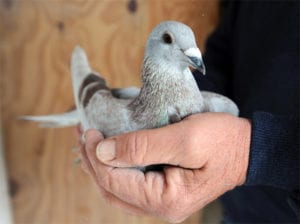
Pigeon in New York City (file / credit: STAN HONDA/AFP/Getty Images)
The risk of getting a disease from your bird is typically highest in people who already have chronic diseases, such as the very young, the elderly, HIV-infected individuals, organ-transplant recipients, and people receiving chemotherapy. People at risk should speak with both their physician and their veterinarian about the relative risks of disease transmitted from pet birds.
The following conditions are some of the more common infections carried by birds:
- Chlamydiosis – Also known as Psittacosis, can be transmitted to humans. In people, the disease causes flu-like symptoms of fever, chills and headache. If left untreated, Psittacosis can cause liver and kidney damage or even meningitis. Note: This Chlamydia is not the same infectious agent that spreads among humans as a sexually transmitted disease.
- Chlamydia infection transmits through feces and infectious particles in the air. Treatment for the infection includes an antibiotic, doxycycline, which doctors and veterinarians use in humans and birds. If you find yourself or other family members coming down with “the flu” and your bird isn’t feeling well, it could be Chlamydia; contact your family doctor and your veterinarian.
In your bird: Psittacosis causes varying severity of illness in birds. Some birds are simply carriers; this is typical in the cockatiel. Other birds may lose their appetite and become emaciated, depressed and may develop difficulty in breathing or diarrhea. Without treatment, most birds die from this disease. Diagnosis requires a panel of tests because no single test can accurately determine whether your bird is infected. You should obtain these tests as part of a pre-purchase examination, especially if there are clinical signs of Psittacosis.
- Avian Tuberculosis – Not often seen in birds, but transmission to people can lead to respiratory infections, swelling of lymph nodes below the jaw and even widespread disease in people with weakened immune systems. The disease can spread through the air or through the feces from infected birds.
In your bird:
Affected birds usually have vague symptoms, such as loss of weight despite a good appetite, dull feather coloring, increase in urine output, diarrhea and anemia. Diagnostic tests aren’t too reliable, but a veterinarian experienced with avian diseases will usually examine the feces for bacteria. Euthanasia of a bird infected with Mycobacteria is necessary due to the potential danger to humans.
- Histoplasmosis – A respiratory infection in people who inhale fungal spores from contaminated soil or dust. The Histoplasma fungus grows on bird feces, so it’s a concern in buildings where large amounts of pigeon droppings collect in roosting sites. While this isn’t a big issue in pet birds, it is prudent not to allow fecal matter to accumulate to the point that mold can grow on it.
- Cryptococcus – Another fungal infection. Though uncommon in pet birds, infection can cause diarrhea, paralysis, nervous-system signs and masses with a gelatinous consistency. Humans can contract this disease when they inhale the dust from dried droppings (most commonly from pigeons). Infection in people can be quite serious leading to meningitis, encephalitis (brain inflammation) or respiratory symptoms.
- Allergic Alveolitus – While not truly a zoonotic disease in the sense that it does not affect birds, bird owners can contract Allergic Alveolitus by inhaling particles of bird dander in the air. Allergic Alveolitus also goes by the names of Pigeon Lung Disease and Parakeet Dander Pneumoconiosis.
- Campylobacteriosis – A bacterial infection that causes gastrointestinal problems. It usually transmits through fecal contamination of food and water. While diarrhea, weight loss, and lethargy are common, Campylobacteriosis can also be present in birds that show no symptoms of illness.
Although this list is not inclusive, it does list the more common diseases that can pass to humans keeping pet birds. Good hygiene practices are the best method of prevention!
Source
At Pigeon Patrol, we manufacture and offer a variety of bird deterrents, ranging from Ultra-flex Bird Spikes with UV protection, Bird Netting, 4-S Gel and the best Ultrasonic and audible sound devices on the market today.
Contact us at 1- 877– 4– NO-BIRD, (604) 585-9279 or visit our website at www.pigeonpatrol.ca
Bird Gone, Pigeon Gone, Seagull Gone, Pigeon issue, pigeon spikes, 1-877-4NO-BIRD, 4-S Gel, Bird Control, Pigeon Control, bird repellent, Bird Spikes, sonic bird repellent, stainless steel bird spikes, bird spikes Vancouver, Ultra Sonic Bird Control, Bird Netting, Plastic Bird Spikes, Canada bird spike deterrents, Pigeon Pests, B Gone Pigeon, Pigeon Patrol, pest controller, pest control operator, pest control technician, Pigeon Control Products, humane pigeon spikes, pigeon deterrents, pigeon traps, Pigeon repellents, Sound & Laser Deterrents, wildlife control, raccoon, skunk, squirrel deterrent, De-Fence Spikes, Dragons Den, Canada bird spikes, Canada pigeon, pigeon control, pigeon patrol, pigeon. Kill pigeons, crow, starling