FEEDING HABITS OF PIGEONS

FEEDING HABITS OF PIGEONS

Pigeons are opportunistic eaters, and their willingness to sample a wide variety of foods makes them relatively common in cityscapes. These flexible birds unquestioningly devour a combination of fruits, vegetables, grains, seeds, insects and waste food, and while their lack of scruples contributes to their population, it can also cause health problems and conflicts within groups.

Non-Picky Eaters

Some species of bird are particular about their diets, but the pigeon isn’t one of them. These birds are opportunists who regularly feast on different types of seeds, grains, fruits and vegetables in the wild. They aren’t herbivores, though — they may also prey on small game like worms, insects and snails. With their short, blunt beaks and stout bodies, pigeons aren’t particularly formidable birds of prey, so they typically favor vegetation over meat.

People Food

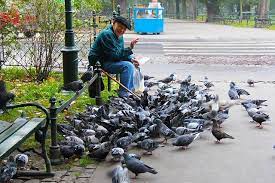
A pigeon’s willingness to eat virtually any type of food he finds makes him a common sight in urban areas. Pigeons are natural scavengers and hang about near groups of people and outdoor eateries in hopes of catching the scraps that fall to the floor. From miniscule crumbs to larger portions, almost nothing is off-limits to the pigeon. Local governments typically discourage purposely feeding these birds, though, as it may cause problems. When pigeons are fed by humans, they generally lose their fear of people and may become nuisances. Feeding may also cause the population to grow unnaturally large, which in turn leads to fighting amongst the birds over resources.

Finding a Meal

Even in large numbers, pigeons prefer to avoid confrontation, and they feed themselves accordingly. These birds generally stay in large, open areas when looking for food, like town squares, landfills, parks and playgrounds. This affords them high visibility and an easy escape should an apparent threat come near. In urban areas, those threats may include cats, rats and birds of prey like the peregrine falcon.

Commercial Mixes

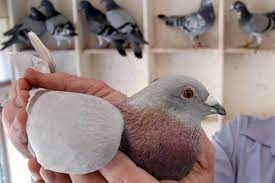
Because pigeons may be kept as pets, competitors for pigeon racing or release doves (which are white homing pigeons), they may also subsist on commercial pigeon food mixes. These seed diets generally contain the variety of grains, seeds and vegetables that optimize the bird’s diet and health, as too much “people food” can be unhealthy. To illustrate the difference that this mixed food can make, a pet pigeon may easily live 15 years or more. In the wild, pigeons typically survive only three years or so.

Source

Pigeon Patrol Products & Services is the leading manufacturer and distributor of bird deterrent (control) products in Canada. Pigeon Patrol products have solved pest bird problems in industrial, commercial, and residential settings since 2000, by using safe and humane bird deterrents with only bird and animal friendly solutions. At Pigeon Patrol, we manufacture and offer a variety of bird deterrents, ranging from Ultra-flex Bird Spikes with UV protection, Bird Netting, 4-S Bird Gel and the best Ultrasonic and audible sound devices on the market today.

Voted Best Canadian wholesaler for Bird Deterrent products ten years in a row.

Contact us at 1- 877– 4– NO-BIRD, (604) 585-9279 or visit our website at www.pigeonpatrol.ca

Pigeon/Pigeon Patrol / Pigeons Roosting / Vancouver Pigeon Control /Bird Spikes / Bird Control / Bird Deterrent / Pigeon Deterrent?  Surrey Pigeon Control / Pest /Seagull deterrent / Vancouver Pigeon Blog / Birds Inside Home / Pigeons in the cities / Ice Pigeons/ What to do about pigeons/ sparrows , Damage by Sparrows, How To Keep Raccoons Away,  Why Are Raccoons Considered Pests/ De-fence / Pigeon Nesting/ Bird Droppings / Pigeon Dropping/ woodpecker control/ Professional Bird Control Company/ Keep The Birds Away/ Birds/rats/ seagull/pigeon/woodpecker/ dove/sparrow/pidgeon control/pidgeon problem/ pidgeon control/flying rats/ pigeon Problems/ bird netting/bird gel/bird spray/bird nails/ bird guard
How did the Pink Pigeon bounce back from just nine birds?

How did the Pink Pigeon bounce back from just nine birds?

There are now 473 Pink Pigeons in the wild © Mauritian Wildlife Foundation

Last year, one of Mauritius’ best-loved birds hit a milestone that delighted the conservation world. In the 2018 Red List update, the Pink Pigeon Nesoenas mayeri was downlisted from Endangered to Vulnerable, building upon the success of 2000, when it was downlisted from Critically Endangered to Endangered. But behind the scenes of this happy news lies over 30 years of gruelling devotion, with conservationists tackling the numerous threats to the pigeon from every possible angle in their bid to bring it back from the brink.

For a while, we were worried it might go the same way as its fellow Mauritian endemic, the Dodo Raphus cucullatus. An even closer relative, the Reunion Pigeon Nesoenas duboisi, went extinct on the neighbouring Reunion Island in the late 18th century thanks to introduced cats and rats. The Pink Pigeon now holds the unenviable title of the last native pigeon in the whole Mascarene archipelago.

Predictably, it was the arrival of humans that heralded the Pink Pigeon’s decline. The species was once widely distributed across Mauritius, but by the 19th century its population had become extremely fragmented and confined to the upland forests. Humans had destroyed native vegetation to the extent that only 1.5% of the original, good-quality forest remained. They also hunted the plump bird and introduced a panoply of predators such as Black Rat Rattus rattus, Small Indian Mongoose Herpestes auropunctatus and Crab-eating Macaque Macaca fascicularis.

From Walter Rothschild's "Extinct Birds" (1907), the Pink Pigeon's famous relative

It wasn’t just animal predators: what little forest remained was soon invaded by non-native plants such as Chinese Guava Psidium cattleianum and the privet species Ligustrum robustum which choke vegetation, preventing the regeneration of native plants. By the mid-1970s, the species had plummeted to a single population of 20 birds in the upland forest of Black River Gorges, an area now known as Pigeon Wood. Just 12 Pink Pigeons remained in 1986, and of the five nesting attempts recorded that year, all were thwarted by rats. The wild population hit an all-time low of nine birds in 1990. The chances for long-term survival of the species looked bleak.

But the Mauritian Wildlife Foundation wasn’t going to let it go without a fight. With help from organisations across the world [see With Thanks, below], we set up an intensive conservation programme starting with captive breeding set up in 1976, followed by the first wild releases in 1987. We now have nine subpopulations centred around our field stations. Six of these are within the Black River Gorges National Park, close to the original Pigeon Wood. A sub-population can be found on the predator-free nature reserve island Ile aux Aigrettes, and two additional subpopulations are being created on private land at Ferney on the east of Mauritius and in Chamarel Ebony Forest in the south west. The purpose of these captive-reared birds is to bolster wild populations, and we encourage the dispersal of birds between the different areas in order to maintain genetic diversity. In total we now have 470 wild Pink Pigeons at these sites, a dramatic improvement compared to the species’ darkest hour.


Captive-bred chicks like these are released to bolster wild populations © MWF

But captive-breeding won’t help unless the wild habitat is made safe for these newcomers. That’s why wild populations are carefully managed using a three-pronged technique. Firstly, every Pink Pigeon is ringed with its own metal ID band and unique plastic colour combination. Each bird can therefore be identified and followed individually. All nests are checked regularly and the results documented. A large dataset has now been collected and continues to grow. This precise information helps us to understand in more depth the factors affecting the survival of the Pink Pigeon, and how to shape our management strategies accordingly.

Another priority is food. The Pink Pigeon is herbivorous, feeding mainly on fruit, leaves and flowers. But its natural habitat is so degraded that the birds are often unable to find enough food to support themselves. In order to supplement their diet, whole wheat and cracked maize is provided at each of the field sites. The food is placed on specially-designed platforms to prevent other species from obtaining it.

The height of the perch and the size of the slot allow only Pink Pigeons to reach the food © MWF

Introduced predators are, without a doubt, a major limiting factor to the survival of this species. Much energy is devoted to removing or controlling them from around the field sites. We are also researching and tackling diseases, in particular trichomonosis, an illness introduced by alien pigeons that can be especially fatal to Pink Pigeon chicks.

In the long term, large areas of forest will need to be restored so that the Pink Pigeon can spread into the uplands and breed in safe nesting sites with fewer predators. But for now, we are working on reinforcing numbers at the recently-created release sites. In order to increase genetic diversity, birds from captive populations in Europe will be repatriated to Mauritius. Research has shown that these birds have genetic variations no longer found in the wild population.

We are constantly seeking to improve our knowledge of the Pink Pigeon’s biology and behaviour, conducting studies into factors limiting the recovery of this species. We have examined the fruiting and flowering of plants that the pigeons feed on which, combined with feeding observations, will enable us to tailor our supplementary feeding more precisely. Ultimately, we have high hopes that all of these measures should enable us to meet our target of 600 wild Pink Pigeons in the next decade.

The future looks bright for other species, too. When working out how to save the Pink Pigeon, some techniques were inspired by previous pigeon rearing projects, but others have been perfected or developed on Mauritius. We can now pass these new techniques on to the rest of the world to help others restore threatened pigeons worldwide. Hundreds of field biologists trained in our methods have gone on to work in important conservation positions elsewhere. They now have the ability to disseminate what they learned globally, ensuring the Pink Pigeon’s success can spread beyond Mauritius’ borders.

Source

Pigeon Patrol Products & Services is the leading manufacturer and distributor of bird deterrent (control) products in Canada. Pigeon Patrol products have solved pest bird problems in industrial, commercial, and residential settings since 2000, by using safe and humane bird deterrents with only bird and animal friendly solutions. At Pigeon Patrol, we manufacture and offer a variety of bird deterrents, ranging from Ultra-flex Bird Spikes with UV protection, Bird Netting, 4-S Bird Gel and the best Ultrasonic and audible sound devices on the market today.

Voted Best Canadian wholesaler for Bird Deterrent products ten years in a row.

Contact us at 1- 877– 4– NO-BIRD, (604) 585-9279 or visit our website at www.pigeonpatrol.ca

Pigeon/Pigeon Patrol / Pigeons Roosting / Vancouver Pigeon Control /Bird Spikes / Bird Control / Bird Deterrent / Pigeon Deterrent?  Surrey Pigeon Control / Pest /Seagull deterrent / Vancouver Pigeon Blog / Birds Inside Home / Pigeons in the cities / Ice Pigeons/ What to do about pigeons/ sparrows , Damage by Sparrows, How To Keep Raccoons Away,  Why Are Raccoons Considered Pests/ De-fence / Pigeon Nesting/ Bird Droppings / Pigeon Dropping/ woodpecker control/ Professional Bird Control Company/ Keep The Birds Away/ Birds/rats/ seagull/pigeon/woodpecker/ dove/sparrow/pidgeon control/pidgeon problem/ pidgeon control/flying rats/ pigeon Problems/ bird netting/bird gel/bird spray/bird nails/ bird guard

When in Venice, please don’t feed the pigeons

When in Venice, please don’t feed the pigeons

A ban on feeding Venice’s famed flocks of pigeons took effect Wednesday. It’s an attempt to control the burgeoning number of birds  blamed for spreading filth and ruining the city’s monuments.

Please don’t feed the pigeons.

A ban on feeding Venice’s famed flocks of pigeons took effect Wednesday. Nineteen pigeon-feed sellers on St. Mark’s Square immediately went out of business. They had long been granted licenses to sell packages of dried corn to tourists wanting snapshots of themselves covered with the birds.

A spokeswoman in Venice said people who feed the pigeons face fines from $80 to $775.

Mayor Massimo Cacciari pushed for the ban in an attempt to control the burgeoning number of pigeons blamed for spreading filth and ruining the city’s glorious facades and monuments.

The pigeon-feed sellers, who said they have been selling their wares on St. Mark’s Square for a century, remained up in arms and protested the ban with placards on their booths aimed at the mayor, including: “Curse the day I voted for you” and “Cacciari, what kind of Venetian are you?”

Source

Pigeon Patrol Products & Services is the leading manufacturer and distributor of bird deterrent (control) products in Canada. Pigeon Patrol products have solved pest bird problems in industrial, commercial, and residential settings since 2000, by using safe and humane bird deterrents with only bird and animal friendly solutions. At Pigeon Patrol, we manufacture and offer a variety of bird deterrents, ranging from Ultra-flex Bird Spikes with UV protection, Bird Netting, 4-S Bird Gel and the best Ultrasonic and audible sound devices on the market today.

Voted Best Canadian wholesaler for Bird Deterrent products ten years in a row.

Contact us at 1- 877– 4– NO-BIRD, (604) 585-9279 or visit our website at www.pigeonpatrol.ca

Pigeon/Pigeon Patrol / Pigeons Roosting / Vancouver Pigeon Control /Bird Spikes / Bird Control / Bird Deterrent / Pigeon Deterrent?  Surrey Pigeon Control / Pest /Seagull deterrent / Vancouver Pigeon Blog / Birds Inside Home / Pigeons in the cities / Ice Pigeons/ What to do about pigeons/ sparrows , Damage by Sparrows, How To Keep Raccoons Away,  Why Are Raccoons Considered Pests/ De-fence / Pigeon Nesting/ Bird Droppings / Pigeon Dropping/ woodpecker control/ Professional Bird Control Company/ Keep The Birds Away/ Birds/rats/ seagull/pigeon/woodpecker/ dove/sparrow/pidgeon control/pidgeon problem/ pidgeon control/flying rats/ pigeon Problems/ bird netting/bird gel/bird spray/bird nails/ bird guard

How did the Pink Pigeon bounce back from just nine birds?

Pigeon birth control program expanded to eight SkyTrain stations

A pilot study to see if feeding pigeons birth control can lower their numbers at Vancouver’s SkyTrain stations has expanded to include eight stations in the region.

The program works by installing a feeder and a camera on TransLink property at stations where there’s a pigeon problem. The feed contains OvoControl, a product that interferes with birds’ eggs’ ability to hatch.

As the birds who call the stations home die of natural causes, researchers and TransLink staff hope there won’t be as many young birds to take their place, and pigeon numbers will decrease over time.

“We think TransLink can be a real leader in humane wildlife control,” Sara Dubois, the BC SPCA’s chief scientific officer, told Daily Hive in a phone interview.

“We’re trying to manage them in a way that’s safe for them and for trains.”

Dubois and the UBC graduate students she’s working with installed the first feeder in January 2019.

Now, the program has been expanded to include eight stations for the study. Four stations feed birds OvoControl, and the other four contain regular food. Over time, the researchers will see whether the birth control significantly reduces pigeon flocks at stations.

It’s still possible for new birds to travel to the stations, Dubois said. But if they stay and eat the birth control consistently, their reproductive abilities will soon be curbed as well.

Pigeons have long caused problems for the transit authority, because their presence on tracks can stop trains and delay customers. Staff also have to spend time cleaning up their excrement from platforms.

Dubois recounted one incident where a pigeon nest caught on fire and service on the Expo Line had to be stopped for several hours.

Previously, TransLink has installed spikes and netting to keep pigeons out, but those methods haven’t been effective. Dubois doesn’t want to see the birds killed, and sees using birth control as an effective way to keep pigeons safe and trains moving.

TransLink and the BC SPCA aren’t revealing which stations have the birth control feeders so that the equipment doesn’t get vandalized. Dubois said that earlier this year they already had one camera and feeder go missing.

If the birth control proves effective, Dubois says it could be a relatively cheap way to reduce the number of birds causing SkyTrain problems.

“It’s really inexpensive compared to the cost of maintenance, cleaning, and trains being down,” she said.

Source

Pigeon Patrol Products & Services is the leading manufacturer and distributor of bird deterrent (control) products in Canada. Pigeon Patrol products have solved pest bird problems in industrial, commercial, and residential settings since 2000, by using safe and humane bird deterrents with only bird and animal friendly solutions. At Pigeon Patrol, we manufacture and offer a variety of bird deterrents, ranging from Ultra-flex Bird Spikes with UV protection, Bird Netting, 4-S Bird Gel and the best Ultrasonic and audible sound devices on the market today.

Voted Best Canadian wholesaler for Bird Deterrent products ten years in a row.

Contact us at 1- 877– 4– NO-BIRD, (604) 585-9279 or visit our website at www.pigeonpatrol.ca

Pigeon/Pigeon Patrol / Pigeons Roosting / Vancouver Pigeon Control /Bird Spikes / Bird Control / Bird Deterrent / Pigeon Deterrent?  Surrey Pigeon Control / Pest /Seagull deterrent / Vancouver Pigeon Blog / Birds Inside Home / Pigeons in the cities / Ice Pigeons/ What to do about pigeons/ sparrows , Damage by Sparrows, How To Keep Raccoons Away,  Why Are Raccoons Considered Pests/ De-fence / Pigeon Nesting/ Bird Droppings / Pigeon Dropping/ woodpecker control/ Professional Bird Control Company/ Keep The Birds Away/ Birds/rats/ seagull/pigeon/woodpecker/ dove/sparrow/pidgeon control/pidgeon problem/ pidgeon control/flying rats/ pigeon Problems/ bird netting/bird gel/bird spray/bird nails/ bird guard

Homing in on the hate: are pigeons pals or pests?

Homing in on the hate: are pigeons pals or pests?

I’m ambivalent about pigeons. Growing up, I ignored them while neighbours fed hundreds on the pavement. I figured as an adult I’d ignore them as they flew past (and often into) the glass walls of my workplace too. What I didn’t anticipate was how much hate I’d see around me for the bird, how quickly and casually they’d be dismissed as stupid, and how gleefully people would refer to them as ‘sky rats’.

Was it always like this? In cave paintings dating from 4500 BCE Iraq, humans seem quite at peace with pigeons. At the Olympics, they still release doves to honour the trained pigeons that once carried race results across Ancient Greece.

In 1850, when the news service Reuters was launched, they had on their staff 45 pigeons trained to transmit headlines and stock updates. Britain had a National Pigeon Service during WWII. Before satellites, pigeons flew into enemy zones with tiny cameras. In 2016, American performance artist Duke Riley trained 2,000 of them to fly, their legs fitted with tiny LEDs, in choreographed formation over Brooklyn, for 30 minutes.

Source

Pigeon Patrol Products & Services is the leading manufacturer and distributor of bird deterrent (control) products in Canada. Pigeon Patrol products have solved pest bird problems in industrial, commercial, and residential settings since 2000, by using safe and humane bird deterrents with only bird and animal friendly solutions. At Pigeon Patrol, we manufacture and offer a variety of bird deterrents, ranging from Ultra-flex Bird Spikes with UV protection, Bird Netting, 4-S Bird Gel and the best Ultrasonic and audible sound devices on the market today.

Voted Best Canadian wholesaler for Bird Deterrent products ten years in a row.

Contact us at 1- 877– 4– NO-BIRD, (604) 585-9279 or visit our website at www.pigeonpatrol.ca

Pigeon/Pigeon Patrol / Pigeons Roosting / Vancouver Pigeon Control /Bird Spikes / Bird Control / Bird Deterrent / Pigeon Deterrent?  Surrey Pigeon Control / Pest /Seagull deterrent / Vancouver Pigeon Blog / Birds Inside Home / Pigeons in the cities / Ice Pigeons/ What to do about pigeons/ sparrows , Damage by Sparrows, How To Keep Raccoons Away,  Why Are Raccoons Considered Pests/ De-fence / Pigeon Nesting/ Bird Droppings / Pigeon Dropping/ woodpecker control/ Professional Bird Control Company/ Keep The Birds Away/ Birds/rats/ seagull/pigeon/woodpecker/ dove/sparrow/pidgeon control/pidgeon problem/ pidgeon control/flying rats/ pigeon Problems/ bird netting/bird gel/bird spray/bird nails/ bird guard