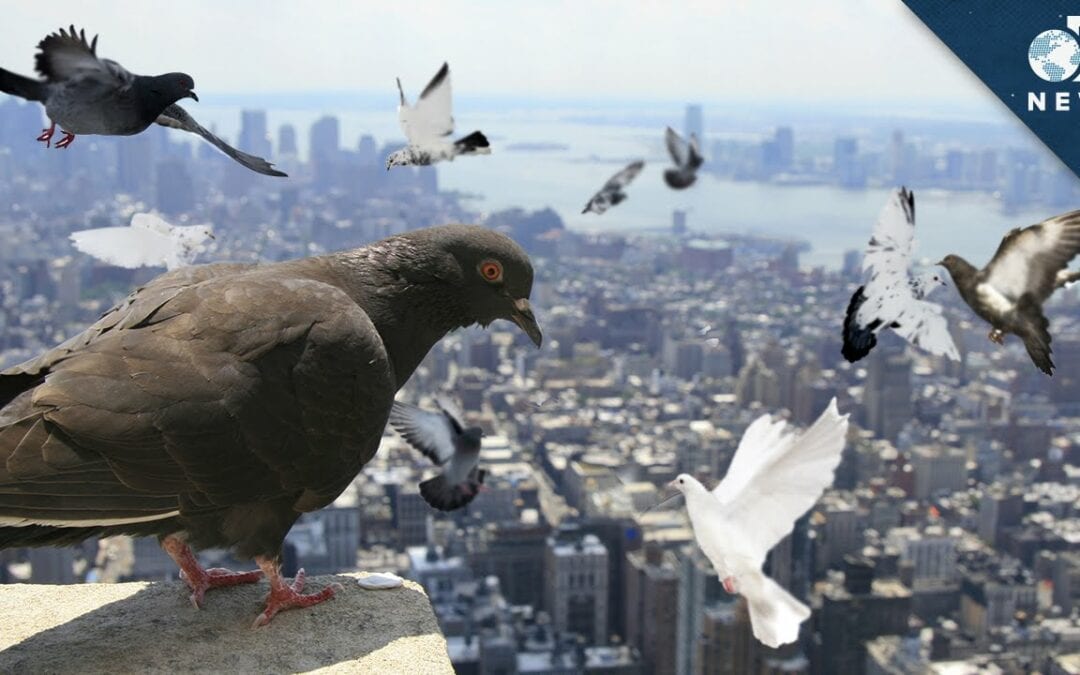
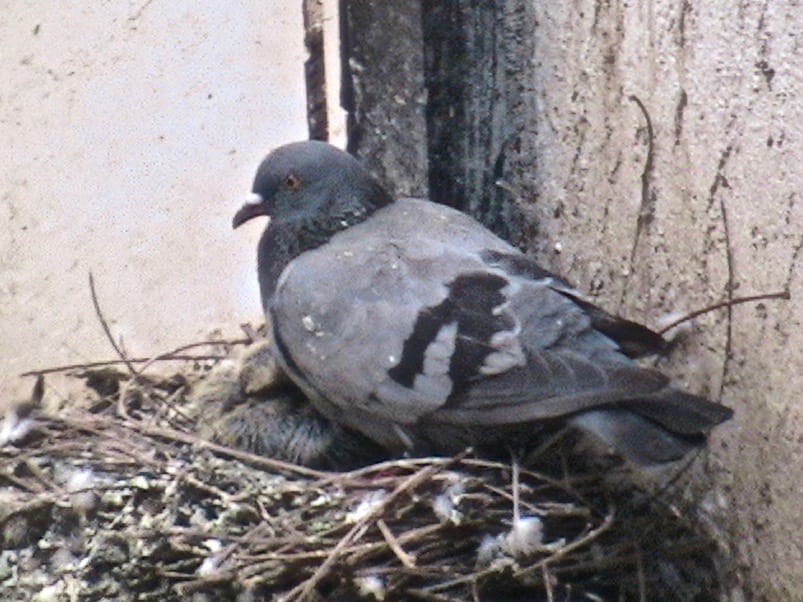
Commonly known as Pigeons, Rock Pigeons are often considered a nuisance by some city officials and some farm businesses.
In cities they congregate in large flocks and can create messes with their droppings.
On farms, eating grains and possible harm to livestock through bacteria and viruses are concerns about these birds.
Many pigeon deterents are available online to prevent nesting in areas they’re not wanted.
Introduced into North America from Europe in the 1600’s, these birds have been associated with humans for thousands of years.
Rock Doves are thought to have been the first domesticated bird, raised for meat as far back as the time of the ancient Egyptians.
Description
Pigeons have different colors due to breeding by humans. They are the descendants of the wild Rock Dove of Europe.
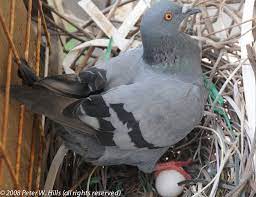
About 13 inches in length with a dark gray head, iridescent neck, with a light gray back and 2 dark wing bars.
Mating – Breeding Habits
Like Mourning Doves, pairs are monogamous, often breeding in consecutive seasons for as long as both birds of a pair live.
Most will attempt to raise several broods each year. Sometimes as many as four or five broods will be raised in a single year.
The breeding season of these birds can be all year provided climate conditions allow. There seems to be some slowing down during the winter months.
Nesting Habits
The nesting habits of Pigeons are a bit unique. The male chooses a site in view of the female, selecting one stick and bringing it back, lays it in front of his mate.
The female who stays at the nesting site accepts the sticks the male brings to her and places them underneath her.
The nest of these birds can be found along building ledges, rafters, beams, under bridges or inside barns.
The nest is saucer-like in shape and made of stems and leaves.
The female may sit on the nest a day or two before the first egg is laid. Generally 2 white eggs are laid.
Both the male and female will incubate but the female will spend the most time on the eggs since she will be on the nest from mid-afternoon to mid-morning.
Incubation last for about 18 days. When the eggs hatch the young are covered in yellow down.
Young pigeons in the nest are referred to as “squabs”
Initially, the squabs are fed what is referred to as crop milk. This is a regurgitated thick liquid food that comes from the parents crops.
At about 10 days the squabs are fed increasing amounts of the food types that adults eat and are no longer dependent on crop milk.
The young will double in size in a day and a half. Making them one of the fastest growing vertebrate in the world.
Within 2 weeks the flight feathers begin to emerge and by week 3 the squabs are covered in feathers.
The tail and full feathering is completed by the 28th day and their weight is that of an adult.
The young will now leave the nest and the male will teach them what they need to know to survive.
This is 10 – 15 days longer than most of our backyard birds.
The female will begin a new clutch and this cycle will repeat about every 30 days when weather cooperates.
Do Pigeons Reuse the Same Nest
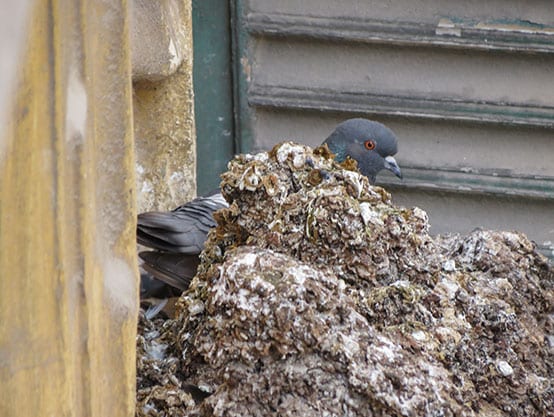
It’s more accurate to say that the same nest site is used as the second and subsequent nest are built on top of the previous nest.
Nest that are several years old can measure out to be as much as 7 inches high and 19 inches wide.
Feeding Habits – What Pigeons Eat
Rock Pigeons feed on the ground. To prevent seed spoilage and to keep the birds healthy a ground feeder is recommended for all ground feeding birds.
The best types of food to offer these birds are properly mixed seeds specifically made for doves and pigeons.
Predators
The primary preadators of pigeons include: man, peregrin falcon, and cats. Nest predators include oppossums, raccoons, crows and owls. Hawks will capture perching birds.
Are Pigeons Smart Birds?
According to Professor Richard J. Herrnstein at the Harvard Psychological Laboratories they are. Pigeons were smart enough to learn all the letters of the english alphabet.
In another study, Pigeons were able to recognize themselves in a mirror. This makes them one of six species and the only non-mammal to be able to do so.
So yes, Pigeons are a pretty smart bird.
What is the Lifespan of Pigeons?
Pigeons may live 3 – 6 years in the wild with the average being 3 – 4 years. In captivity they have lived as long as 15 years depending on the care given to the bird.
Pigeons in History
During the world wars, Homing Pigeons were trained to return to a loft in the UK.
Troops then took the pigeons with them and used them to send messages when radio and written communication were being intercepted.
Pigeon Fun Facts
Pigeons have the ability to see about 26 miles.
When fully feather, adult pigeons have around 10,000 feathers.
There are approximately 400 million pigeons in the world.
Pigeon Patrol Products & Services is the leading manufacturer and distributor of bird deterrent (control) products in Canada. Pigeon Patrol products have solved pest bird problems in industrial, commercial, and residential settings since 2000, by using safe and humane bird deterrents with only bird and animal friendly solutions. At Pigeon Patrol, we manufacture and offer a variety of bird deterrents, ranging from Ultra-flex Bird Spikes with UV protection, Bird Netting, 4-S Bird Gel and the best Ultrasonic and audible sound devices on the market today.
Voted Best Canadian wholesaler for Bird Deterrent products ten years in a row.
Contact us at 1- 877– 4– NO-BIRD, (604) 585-9279 or visit our website at www.pigeonpatrol.ca
Pigeon/Pigeon Patrol / Pigeons Roosting / Vancouver Pigeon Control /Bird Spikes / Bird Control / Bird Deterrent / Pigeon Deterrent? Surrey Pigeon Control / Pest /Seagull deterrent / Vancouver Pigeon Blog / Birds Inside Home / Pigeons in the cities / Ice Pigeons/ What to do about pigeons/ sparrows , Damage by Sparrows, How To Keep Raccoons Away, Why Are Raccoons Considered Pests/ De-fence / Pigeon Nesting/ Bird Droppings / Pigeon Dropping/ woodpecker control/ Professional Bird Control Company/ Keep The Birds Away/ Birds/rats/ seagull/pigeon/woodpecker/ dove/sparrow/pidgeon control/pidgeon problem/ pidgeon control/flying rats/ pigeon Problems/ bird netting/bird gel/bird spray/bird nails/ bird guard
Pigeons may seem harmless, but these pest birds cause millions of dollars in damage every year to buildings, ventilation systems, machinery, statues, roofs, and much more. Bird droppings and nesting materials left by pigeons pose physical problems and health hazards that can become very serious if not corrected quickly making prompt and effective professional bird control is often essential.
Potential Health Hazards:
There are many health risks associated with pigeons and their droppings. The bacteria, fungi, and ectoparasites that they and their droppings harbor are numerous. The four most common ways disease is passed by bird to human are: inhalation of fecal dust, food and water contaminated with bird feces, direct contact with feces, and parasitic transfer.
Pigeon droppings can expose humans to many diseases, including salmonella, Newcastle disease, candidiasis, encephalitis, orthosis, and toxoplasmosis. In addition, they can also carry cryptococcosis, and coccidiodomycosis, which cause meningitis. The droppings may also harbor growth of fungus, which causes histoplasmosis. Fleas, lice, mites, and other pests often live on these birds, hitching a ride to where ever they want to jump off. Pigeons may also attract other pests, such as rats, which feed on dead pigeons and food that well-intentioned bird lovers may scatter for them.
In addition to disease, bird droppings are known for triggering people to slip and fall, which makes it especially important to rid the birds from highly trafficked areas.
Damage Caused by Pigeons:
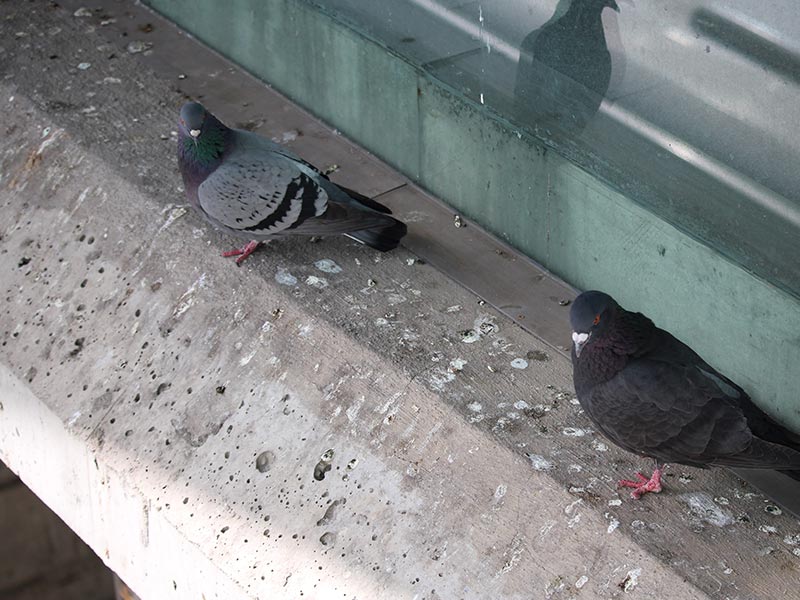
These are messy birds, leaving droppings everywhere they go, particularly near their roost sites. Pigeon droppings are not just gross, they are also full of uric acid which makes them extremely corrosive. The droppings are the direct cause of millions of dollars in damage to buildings and other structures. Particularly vulnerable are painted surfaces, awnings, signs, and other similar surfaces. A tragic example of the corrosiveness of pigeon droppings is the Minnesota bridge accident in 2007, which was found to be the direct result of bird droppings eating away at the metal bridge supports until they weakened.
In addition to the damage cause by their acidic droppings, pigeon nests can also cause damage. Pest birds will often build nests in gutters or on roof corners blocking essential drainage systems. Every year several warehouses experience roof damage, and even collapse, when drainage systems have been blocked and standing water rises just six inches. Bird nests can also block ventilation systems, which not only prevents exhaust of potentially harmful gases, but also has the potential to spread diseases. Fire is also a potential hazard. Nesting materials are usually flammable, consisting of twigs, straw, grasses and dried droppings. When pest birds build their nests inside electric signs or other machinery there is a great risk of fire.
Pigeons are creatures of habit and highly social. Once they have found a cozy spot the will return again and again, bringing along more of their pigeon pals. Prolific breeders, pigeons can hatch several broods a year, sometimes even laying a new clutch before the previous have even hatched. Often our buildings and structures have architectural features such as drain spouts and eaves that make perfect nesting spots for these birds. Pigeons are comfortable around humans and they’re hard to scare away or deter. Once a flock of stubborn unwanted pigeons have set up shop in/on your building, it can be stubbornly resistant to removal, often requiring the services of a pest control or animal control professional. As is true of many pests that invade our homes and businesses, the first step to controlling feral pigeons is to remove their food source.
Tips to deter pigeons:
Don’t feed the pigeons.
Screen drains and gutters to make your property less attractive to pigeons.
Encourage children to pick up spilled food – and teach them NOT to feed pigeons
Keep areas around trash bins and outdoor dining areas clean
Eliminate water sources such as bird baths, over-watered lawns, or kiddy pools.
Pigeon Patrol Products & Services is the leading manufacturer and distributor of bird deterrent (control) products in Canada. Pigeon Patrol products have solved pest bird problems in industrial, commercial, and residential settings since 2000, by using safe and humane bird deterrents with only bird and animal friendly solutions. At Pigeon Patrol, we manufacture and offer a variety of bird deterrents, ranging from Ultra-flex Bird Spikes with UV protection, Bird Netting, 4-S Bird Gel and the best Ultrasonic and audible sound devices on the market today.
Voted Best Canadian wholesaler for Bird Deterrent products ten years in a row.
Contact us at 1- 877– 4– NO-BIRD, (604) 585-9279 or visit our website at www.pigeonpatrol.ca
Pigeon/Pigeon Patrol / Pigeons Roosting / Vancouver Pigeon Control /Bird Spikes / Bird Control / Bird Deterrent / Pigeon Deterrent? Surrey Pigeon Control / Pest /Seagull deterrent / Vancouver Pigeon Blog / Birds Inside Home / Pigeons in the cities / Ice Pigeons/ What to do about pigeons/ sparrows , Damage by Sparrows, How To Keep Raccoons Away, Why Are Raccoons Considered Pests/ De-fence / Pigeon Nesting/ Bird Droppings / Pigeon Dropping/ woodpecker control/ Professional Bird Control Company/ Keep The Birds Away/ Birds/rats/ seagull/pigeon/woodpecker/ dove/sparrow/pidgeon control/pidgeon problem/ pidgeon control/flying rats/ pigeon Problems/ bird netting/bird gel/bird spray/bird nails/ bird guard
For a few accessible pigeon droppings on an open balcony, the basic approach is to gently dampen the material, collect it without creating dust, and clean the surface with a suitable detergent. Disinfection, where appropriate, is a separate step that must follow the product label. Large accumulations, difficult access and enclosed spaces call for professional assessment.
Before starting, check both the condition of the droppings and the balcony surface. Concrete, waterproof coatings, timber and painted metal may need different cleaning products. A method that removes a stain can still damage the finish underneath.
Before Cleaning: Assess the Amount and Location
A few isolated droppings on an accessible outdoor floor are a different task from layers of material beneath a long-established roost. Do not assume that household cleaning equipment is suitable for every situation.
When to Arrange Professional Cleanup
Droppings form a thick layer or cover a large area.
The material is in an enclosed space or around ventilation equipment.
Cleaning would require leaning over a railing, climbing or working at height.
You cannot contain dust, debris or wastewater.
You are unsure about the contamination or the protective equipment required.
If birds are actively nesting, do not disturb the nest or block access to dependent young. Obtain appropriate wildlife advice before cleaning around the nest or installing exclusion equipment.
Why Dust Control Matters
Disturbing contaminated material can release airborne particles. Histoplasmosis is associated with inhaling fungal spores from the environment, including contaminated soil enriched by bird or bat droppings. The presence of a few droppings does not establish that this fungus is present.
How to Clean Small Amounts of Pigeon Poop Off a Balcony
The following guidance is for isolated, accessible deposits on an open balcony. It is not a procedure for a heavily contaminated roost or an enclosed area.
1. Check the Surface and Building Requirements
Identify the floor finish before choosing a cleaner. A balcony that looks like bare concrete may have a waterproof membrane, paint or a protective sealer.
Check the surface manufacturer’s care instructions and, in a rental or strata building, ask the property manager about cleaning restrictions and wastewater handling. Keep water and debris away from neighbouring balconies and public areas below.
2. Prepare the Area and Protective Equipment
Keep children and pets away while you work. Use gloves, closed footwear and clothing that protects exposed skin. Follow cleaning-product instructions for eye protection and other equipment.
Use a gentle application of water to dampen the material without splashing or creating runoff. Allow hardened deposits to soften before attempting removal.
Do not begin by sweeping or breaking up dry deposits. CDC guidance recommends wetting material to reduce dust before collection.
4. Collect the Softened Material
Lift the dampened deposits with disposable towels or a suitable plastic tool, taking care not to damage the finish. Keep the waste contained and follow local disposal requirements.
Do not push droppings over the balcony edge or wash solids into a drain. Do not use a household vacuum to collect the material.
5. Clean the Exposed Surface
Use a detergent approved for the surface, following its dilution instructions. Work gently with a non-abrasive tool and test an inconspicuous area first.
Remove cleaner residue as directed while controlling wastewater. Avoid pressure washing droppings on a residential balcony because it can spread contaminated spray and debris.
6. Finish and Wash Your Hands
Keep people off the area until it is dry and no longer slippery. Clean reusable tools appropriately, remove protective equipment carefully and wash your hands with soap and water.
First determine whether the concrete is bare, sealed, painted or covered by a waterproof coating. Choose a cleaning product approved for that exact surface rather than assuming every concrete cleaner is suitable for a balcony.
Dampen and collect the deposits before working on any remaining mark.
Use the specified dilution and a brush that will not damage the finish.
Test a small, hidden area before treating a visible section.
Check product and coating instructions before using acidic or abrasive cleaners.
Do not flood the balcony or direct dirty water towards adjoining properties.
If a mark remains, establish whether it is a stain or damage to the coating before using a stronger product. Repeated aggressive scrubbing may make a damaged finish worse. Ask your property manager or a surface-care professional when the finish is uncertain.
Cleaning Other Balcony Surfaces
Surface checks before choosing a balcony cleaner
Surface
What to check
Wood or composite decking
Follow the decking manufacturer’s instructions. Avoid sharp scraping tools and unapproved soaking or chemical treatments.
Painted or coated metal
Use a product suitable for the coating. Do not assume that a cleaner safe for bare metal is safe for painted railings.
Tile and grout
Confirm compatibility with both the tile and grout. Natural stone, glazed tile and sealed grout may have different requirements.
Waterproof balcony membrane
Ask the building manager for approved cleaning products and tools. Avoid anything that could puncture or strip the membrane.
Outdoor cushions and fabric
Follow the care label and avoid shaking contaminated fabric. Seek specialist advice for heavily soiled porous items.
Cleaning and Disinfecting Are Different Steps
Cleaning removes dirt and material from a surface. Disinfecting uses an appropriate product to kill specified microorganisms under the conditions stated on its label.
Where disinfection is appropriate, clean first, then use a product approved for the surface and intended use. Follow the required dilution, protective equipment, contact time and rinsing instructions. A fixed waiting time is not suitable for every disinfectant.
Do not assume that vinegar, baking soda or ordinary detergent disinfects the surface. Never mix cleaning chemicals, especially bleach with vinegar, acids or ammonia-based products.
If pigeons keep returning, cleaning alone does not address the landing or roosting site. Look for the surface directly above the recurring mess and note where birds enter or shelter.
Block Access to the Balcony
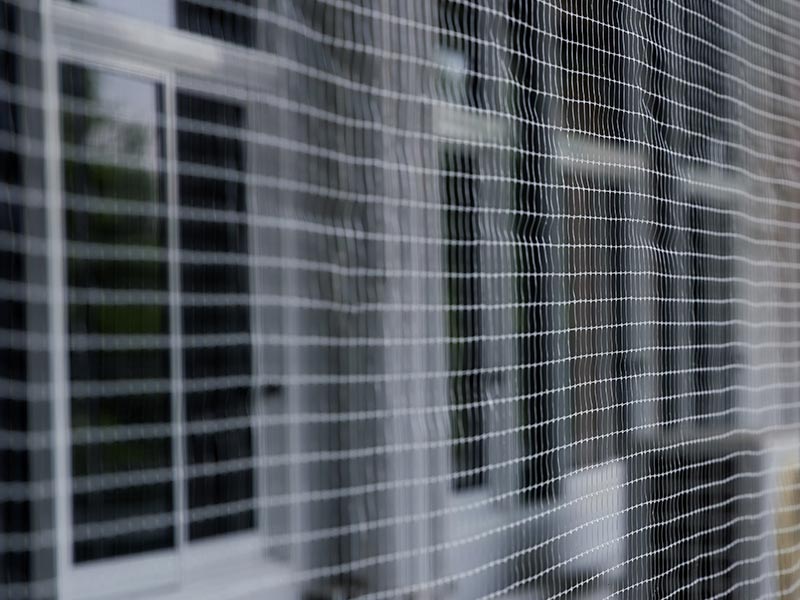
Where pigeons enter and use several parts of the balcony, properly planned bird netting can provide a physical barrier. The installation must account for secure edges, building access and birds already inside the space.
Protect Specific Perching Areas
Where the problem is a particular ledge, bird spikes may be suitable. They protect the covered surface rather than enclosing the entire balcony.
Remove Food and Unnecessary Shelter
Keep accessible food and rubbish contained, and reduce clutter that provides sheltered corners. Check the area regularly so repeat bird activity is noticed before another substantial buildup develops.
How do I clean dried pigeon poop off a concrete balcony?
For a small, accessible deposit, dampen it gently before collection, then clean with a product approved for the concrete or its coating. Avoid dry scraping and sweeping. Thick accumulations or uncertain surface finishes need professional advice.
Can I sweep pigeon droppings off my balcony?
Do not sweep dry pigeon droppings. This can create airborne dust. Dampen small deposits before collecting them, and arrange specialist advice for extensive accumulations.
Does vinegar disinfect pigeon poop?
Do not rely on household vinegar to disinfect an area contaminated by pigeon droppings. Where disinfection is appropriate, clean first and follow the label of a suitable disinfectant.
Can I pressure wash pigeon poop off a balcony?
Avoid pressure washing droppings on a residential balcony. It can spread contaminated spray and debris to nearby areas. Use a controlled cleaning approach for small deposits or arrange specialist cleanup.
When should I hire a professional for pigeon-dropping removal?
Arrange professional assessment for large accumulations, enclosed spaces, unsafe access or situations where dust and wastewater cannot be controlled. People with weakened immune systems should avoid doing this work themselves.
How do I prevent pigeon droppings from returning?
Identify where pigeons land or enter, remove accessible food and consider suitable netting or anti-perching systems. Cleaning removes the existing mess; prevention addresses the birds’ access to the area.
Get Advice on Preventing Repeat Balcony Problems
Once the cleanup has been addressed, Pigeon Patrol can help you explore bird-control products and prevention options for your balcony.
In urbanized areas, pigeons are part of the daily life of city dwellers. We see them strolling on the sidewalks without fear of passers-by and cooing under bridges over passing cars. As such, the pigeon is not really a problematic bird species, but when perched, it can release an impressive amount of droppings on anything below. If you are facing this problem, whether inside or outside your home and want to deal with it, here’s how to clean up pigeon droppings.
Preliminary measures before cleaning pigeon droppings
Cleaning pigeon droppings involves removing the guano from the outside or inside of a building after the animal has been removed. Pigeon droppings are generally not harmful to health, except in extreme cases. On the other hand, they can strongly affect the appearance of a building, cause odours and attract insects. Except in certain unusual situations, you can remove the pigeon droppings yourself, unless the extent of the problem is beyond your control or you are experiencing breathing problems. At such times, it may be appropriate to hire the services of a residential exterminator.
Working on an apartment or condo balcony? Our balcony pigeon-dropping cleanup guide covers concrete and other finishes, controlling runoff and preventing repeat buildup.
Whether the pigeon droppings to be cleaned are on the front of your building or in your attic, the same process can be used. But before you rush to buy products or start cleaning the area, a health and safety risk assessment is essential, especially if the work will be done at height.
It is also recommended to take certain preliminary measures. A face mask, disposable coveralls and rubber gloves must be worn at all times, as well as safety glasses and a good pair of boots.
Products used to kill bacteria in pigeon droppings
There are many cleaning products developed especially for bird droppings. First, there are disinfectants, designed to kill bacteria and organisms, and simple cleaning agents, which, as their name suggests, are simply designed to clean. In most cases, a bucket of hot soapy water containing a little household detergent is a simple but ideal cleaning solution.
Cleaning pigeon droppings is no different from any other thorough cleaning work. With the right equipment, the work will be done quickly. To remove the guano on window sills and the like, a scraper is all you need to remove it. Moisten overly dry guano to soften it before removing it and reduce the amount of dust thrown into the air. Once all pigeon droppings have been scraped and removed from the surface, simply wash the area with a brush and the cleaning solution mentioned above.
What should be done with the excrement next? Small quantities of pigeon guano can be safely disposed of in a domestic or commercial waste bin.
When pigeon droppings become too overwhelming
Urban life means living with a host of animal species, including pigeons. Although this bird is not a threat to human health, the droppings it produces are never desirable, either outside or inside a building. Fortunately, with the right equipment, it is quite easy to remove pigeon droppings.
Pigeon Patrol Products & Services is the leading manufacturer and distributor of bird deterrent (control) products in Canada. Pigeon Patrol products have solved pest bird problems in industrial, commercial, and residential settings since 2000, by using safe and humane bird deterrents with only bird and animal friendly solutions. At Pigeon Patrol, we manufacture and offer a variety of bird deterrents, ranging from Ultra-flex Bird Spikes with UV protection, Bird Netting, 4-S Bird Gel and the best Ultrasonic and audible sound devices on the market today.
Voted Best Canadian wholesaler for Bird Deterrent products ten years in a row.
Contact us at 1- 877– 4– NO-BIRD, (604) 585-9279 or visit our website at www.pigeonpatrol.ca
Pigeon/Pigeon Patrol / Pigeons Roosting / Vancouver Pigeon Control /Bird Spikes / Bird Control / Bird Deterrent / Pigeon Deterrent? Surrey Pigeon Control / Pest /Seagull deterrent / Vancouver Pigeon Blog / Birds Inside Home / Pigeons in the cities / Ice Pigeons/ What to do about pigeons/ sparrows , Damage by Sparrows, How To Keep Raccoons Away, Why Are Raccoons Considered Pests/ De-fence / Pigeon Nesting/ Bird Droppings / Pigeon Dropping/ woodpecker control/ Professional Bird Control Company/ Keep The Birds Away/ Birds/rats/ seagull/pigeon/woodpecker/ dove/sparrow/pidgeon control/pidgeon problem/ pidgeon control/flying rats/ pigeon Problems/ bird netting/bird gel/bird spray/bird nails/ bird guard
In January 2019, a child died in a Scottish hospital after developing a fungal infection caused by exposure to pigeon droppings. An elderly patient also died in the same hospital of another condition that was exacerbated by exposure to pigeon droppings. It was determined that both patients were exposed to the contaminants via the ventilation system, which was found to contain pigeon droppings. These deaths brought to the forefront a question that many people who are living with pigeon infestations have: in addition to being disruptive, are pigeons actually dangerous? Here are the facts you need to know.
Pigeon droppings contain bacteria and fungi that can cause disease.
Exposure to pigeon droppings can lead to a number of different diseases. Some of the most common infections associated with pigeons are:
· E. coli: E. coli infections are usually the result of pigeon droppings being present in water or in food that is later consumed. This infection causes nausea, abdominal cramps, fever, and vomiting.
· Histoplasmosis: This is a dangerous fungal infection that affects the lungs, or rarely, other parts of the body. It causes flu-like symptoms, including fever, shortness of breath, chest pain, fatigue, and loss of appetite. It can be fatal in severe cases.
· Cryptococcus: This is another fungal infection that affects the lungs and can spread to the brain. In its early stages, it can cause a cough, chest pain, fever, and shortness of breath. When it spreads to the lungs, it causes headaches, neck pain, changes in behavior, confusion, and sensitivity to light. It can also be fatal.
· Psittacosis: Psittacosis is a bacterial infection that causes fever, headaches, a rash, and can lead to pneumonia, if left untreated.
· Candidiasis: This fungal infection can affect multiple parts of the body, including the mouth, lungs, urogenital tract, and skin. This infection may require prolonged periods of antifungal medications to treat.
· Salmonellosis: Pigeon droppings may contain the bacteria salmonella, which can cause this infection. Typically, people are exposed to these bacteria when pigeon droppings come into contact with food or food preparation surfaces. This infection causes nausea, vomiting, and abdominal cramps.
Pigeons also carry other potential health risks.
It is not just the droppings of pigeons that are dangerous. Pigeons themselves can carry mites and fleas, which can then attach to your pets or enter your home, causing skin irritation and itchiness. They can also spread infections through bites that are dangerous to both people and pets.
Pigeons can also carry West Nile virus. Although people are unlikely to contract West Nile virus directly from pigeons, it is still important to avoid removing any dead pigeons from your property without the help of a professional for this reason.
People with weakened immune systems are most at risk.
The infections that pigeons are likely to transmit do not affect everyone at the same rate. Many healthy adults are able to fight off infections caused by exposure to bacteria and fungi from pigeon droppings. If they do become ill, then they are likely to have very mild infections.
However, although it is always possible for someone who is healthy to become very ill from these conditions, other people are more at risk. Infants and children are more likely to experience severe symptoms when they are exposed to a disease via pigeon droppings. People who are immuno-compromised, such as people with HIV or who are undergoing chemotherapy, also have a higher risk of developing severe symptoms and complications. Lastly, the elderly are prone to severe symptoms from pigeon-related diseases.
Even without exposure to a disease, some people may have allergy symptoms, including respiratory problems, rashes, and itchiness, as a result of a pigeon infestation near their home or business.
For safety reasons, only professionals should handle pigeon control.
If you have a pigeon infestation, it’s important to deal with the issue as soon as possible. However, trying to get rid of pigeons and clean up their droppings on your own is not safe. Pigeon control professionals are trained in safe management techniques and have the proper equipment required to clean up after a pigeon infestation safely.
One of the biggest risks of cleaning up pigeon droppings on your own is that you could release dust into the air that contains bacteria and fungi that cause infection. Not only would you be at risk from inhaling the bacteria and fungi yourself, but you could also inadvertently introduce the contaminants into the HVAC system in your home, allowing them to spread into your indoor air and putting your family at risk.
Pigeon Patrol Products & Services is the leading manufacturer and distributor of bird deterrent (control) products in Canada. Pigeon Patrol products have solved pest bird problems in industrial, commercial, and residential settings since 2000, by using safe and humane bird deterrents with only bird and animal friendly solutions. At Pigeon Patrol, we manufacture and offer a variety of bird deterrents, ranging from Ultra-flex Bird Spikes with UV protection, Bird Netting, 4-S Bird Gel and the best Ultrasonic and audible sound devices on the market today.
Voted Best Canadian wholesaler for Bird Deterrent products ten years in a row.
Contact us at 1- 877– 4– NO-BIRD, (604) 585-9279 or visit our website at www.pigeonpatrol.ca
Pigeon/Pigeon Patrol / Pigeons Roosting / Vancouver Pigeon Control /Bird Spikes / Bird Control / Bird Deterrent / Pigeon Deterrent? Surrey Pigeon Control / Pest /Seagull deterrent / Vancouver Pigeon Blog / Birds Inside Home / Pigeons in the cities / Ice Pigeons/ What to do about pigeons/ sparrows , Damage by Sparrows, How To Keep Raccoons Away, Why Are Raccoons Considered Pests/ De-fence / Pigeon Nesting/ Bird Droppings / Pigeon Dropping/ woodpecker control/ Professional Bird Control Company/ Keep The Birds Away/ Birds/rats/ seagull/pigeon/woodpecker/ dove/sparrow/pidgeon control/pidgeon problem/ pidgeon control/flying rats/ pigeon Problems/ bird netting/bird gel/bird spray/bird nails/ bird guard


 people to slip and fall, which makes it especially important to rid the birds from highly trafficked areas.