by Pigeon Patrol | Feb 7, 2022 | Pigeon Spikes, Pigeons, Pigeons in the News, Raccoons, Sparrows, UltraSonic Bird Control
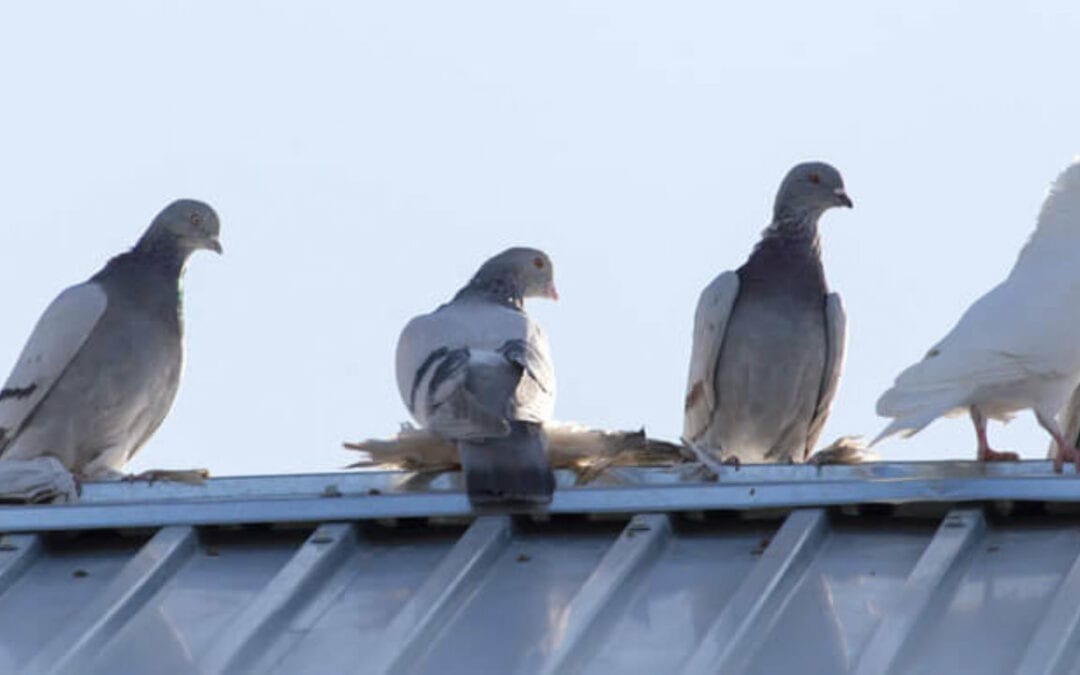
A Toronto resident recorded a video of a man snatching pigeons in the city’s east end and when she tried to report it to officials, she said no one wanted to investigate.
On Sunday morning, Bruna Doberstein was on her way home when she witnessed a man and a child capturing the birds with a net and placing them inside a crowded cage in a parking lot at Lawrence Avenue East and Markham Road. That’s when she decided to take out her phone and start recording.
“I expected he would stop doing it after he saw that I was recording. But he didn’t. He seemed pretty comfortable doing it,” Doberstein told CityNews.
In the video, you can hear Doberstein asking the man why he was trapping the pigeons and that he “can’t do this,” in which he responds “Yes I can. I take them to my farm and I raise them.”
Doberstein said she didn’t buy it.
“He wasn’t being gentle. He was holding the birds by their wings. A person who would raise the birds would be at least careful and keep them safe” she said. “I don’t know the story but I know it’s not good.”
At that moment, Doberstein decided to call the police. She said that while the officer was courteous, she was told that it wasn’t their jurisdiction and they wouldn’t be sending an officer.
Instead they told her to call 311. But she said from past experience, Doberstein didn’t think they would be of any help in this matter.
This wasn’t the first time she witnessed the man capturing a cage full of birds and it also wasn’t the first time she tried reporting on what she witnessed.
“It was the second time I saw this guy. I recognized the truck from almost a year ago in August in the same parking lot.”
She told CityNews that last year she contacted a variety of different municipal and provincial departments with no luck, “I called PAWS (Provincial Animal Welfares services) and The Ministry of Nature and Forestry too and I never heard back.”
This kind of response isn’t unusual, according to Camille Labchuck, animal rights lawyer and executive director of Animal Justice.
“In my experience this is not uncommon when it comes to animal issues and law enforcement agencies,” said Labchuck. “Because a lot of people have authority also means that nobody does, leading to nobody wanting to pick it up and run with it.”
While Labchuck and her team are disappointed that Toronto Animal Services and police didn’t do more, they ultimately had more success with reporting the incident to Provincial Animal Welfare Services and the Ministry of Natural Resources and Forestry.
“PAWS is the agency that took over enforcement from the OSPCA two years back. They are tasked with investigating any animal cruelty problems.” Labchuck explained. Something many people may not be aware of.
Since the OSPCA announced in 2019 it will no longer enforce animal cruelty laws, there has been no clear guidance of who one should contact to report, investigate and enforce animal cruelty laws.
“You got a man roughly handling birds by the wings which is not permitted,” Labchuck said. “To say nothing of the fact that he shouldn’t be interacting with pigeons anyways. They are protected species under the federal Migratory Bird Convention Act”.
The Ministry of Natural Resources and Forestry are in charge of enforcing the wildlife act. Labchuck said there could be a clear violation here as residents can’t interact with native wildlife without a permit.
However, while both departments took down information, neither would accept the video at this stage.
“They both advised that providing the video would be a next step if an enforcement officer requires it. Kind of bizarre as it’s relevant evidence at the outset,” Labchuck said.
In 2015, the illegal trapping of pigeons became a widespread issue in the city of New York after hundreds were believed to be stolen for live pigeon shoots in neighbouring states.
Source
Pigeon Patrol Products & Services is the leading manufacturer and distributor of bird deterrent (control) products in Canada. Pigeon Patrol products have solved pest bird problems in industrial, commercial, and residential settings since 2000, by using safe and humane bird deterrents with only bird and animal friendly solutions. At Pigeon Patrol, we manufacture and offer a variety of bird deterrents, ranging from Ultra-flex Bird Spikes with UV protection, Bird Netting, 4-S Bird Gel and the best Ultrasonic and audible sound devices on the market today.
Voted Best Canadian wholesaler for Bird Deterrent products ten years in a row.
Contact us at 1- 877– 4– NO-BIRD, (604) 585-9279 or visit our website at www.pigeonpatrol.ca
Pigeon/Pigeon Patrol / Pigeons Roosting / Vancouver Pigeon Control /Bird Spikes / Bird Control / Bird Deterrent / Pigeon Deterrent? Surrey Pigeon Control / Pest /Seagull deterrent / Vancouver Pigeon Blog / Birds Inside Home / Pigeons in the cities / Ice Pigeons/ What to do about pigeons/ sparrows , Damage by Sparrows, How To Keep Raccoons Away, Why Are Raccoons Considered Pests/ De-fence / Pigeon Nesting/ Bird Droppings / Pigeon Dropping/ woodpecker control/ Professional Bird Control Company/ Keep The Birds Away/ Birds/rats/ seagull/pigeon/woodpecker/ dove/sparrow/pidgeon control/pidgeon problem/ pidgeon control/flying rats/ pigeon Problems/ bird netting/bird gel/bird spray/bird nails/ bird guard
by Pigeon Patrol | Feb 2, 2022 | MBCA, pet bird, Pigeon Control, Pigeon Droppings, Pigeon Patrol's Services, Pigeon Predators
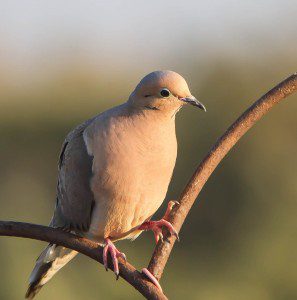
Feeding birds is a wonderful way to help your yard’s avian visitors fuel up for migration and make it through a tough winter. It can also provide great opportunities for wildlife photography and observation. But it’s not enough to set your feeder and forget it. You need to clean it out, or you risk inadvertently causing the birds that visit to get sick. The same goes for birdbaths.
Some of the more common diseases that birds can spread through feeders include house finch eye disease (the colloquial name for mycoplasmal conjunctivitis, which can infect more than just the bird for which it’s named), salmonellosis (caused by salmonella bacteria), aspergillosis (a fungal respiratory disease), and avian pox. If you see a sick bird or one you suspect died from a disease outbreak, don’t pick it up or try to treat it yourself. Instead, follow these tips from the Cornell Lab of Ornithology, or call the National Wildlife Health Center for instructions.
To prevent the spread of illness in the birds that frequent your seed buffet, try these three steps:
Clean feeders regularly
The National Wildlife Health Center recommends cleaning bird baths and feeders with a solution of nine parts water to one part bleach. (If there is visible debris, scrub it off before soaking in the bleach solution.) Dry out the feeder before hanging it back up. Project FeederWatch, a joint effort between Cornell Lab of Ornithology and Birds Canada, recommends cleaning seed feeders every two weeks or so. Double the frequency of cleaning if you suspect disease a-lurking.
Tidy below the feeder
This can mean raking or shoveling up feces and hulls (seed casings)—particularly those that are moldy, wet, or spoiled—and throwing them out, Project Feederwatch recommends. That’ll also help prevent scattered food from attracting rodents. On snow-covered lawns, scraping off a few layers of snow should do the trick.
Pigeon Patrol Products & Services is the leading manufacturer and distributor of bird deterrent (control) products in Canada. Pigeon Patrol products have solved pest bird problems in industrial, commercial, and residential settings since 2000, by using safe and humane bird deterrents with only bird and animal friendly solutions. At Pigeon Patrol, we manufacture and offer a variety of bird deterrents, ranging from Ultra-flex Bird Spikes with UV protection, Bird Netting, 4-S Bird Gel and the best Ultrasonic and audible sound devices on the market today.
Voted Best Canadian wholesaler for Bird Deterrent products ten years in a row.
Contact us at 1- 877– 4– NO-BIRD, (604) 585-9279 or visit our website at www.pigeonpatrol.ca
Pigeon/Pigeon Patrol / Pigeons Roosting / Vancouver Pigeon Control /Bird Spikes / Bird Control / Bird Deterrent / Pigeon Deterrent? Surrey Pigeon Control / Pest /Seagull deterrent / Vancouver Pigeon Blog / Birds Inside Home / Pigeons in the cities / Ice Pigeons/ What to do about pigeons/ sparrows , Damage by Sparrows, How To Keep Raccoons Away, Why Are Raccoons Considered Pests/ De-fence / Pigeon Nesting/ Bird Droppings / Pigeon Dropping/ woodpecker control/ Professional Bird Control Company/ Keep The Birds Away/ Birds/rats/ seagull/pigeon/woodpecker/ dove/sparrow/pidgeon control/pidgeon problem/ pidgeon control/flying rats/ pigeon Problems/ bird netting/bird gel/bird spray/bird nails/ bird guard
by Pigeon Patrol | Feb 2, 2022 | MBCA, pet bird, Pigeon Control, Pigeon Droppings, Pigeon Patrol's Services, Pigeon Predators
Enteric illnesses remain the second largest source of communicable diseases worldwide, and wild birds are suspected sources for human infection. This has led to efforts to reduce pathogen spillover through deterrence of wildlife and removal of wildlife habitat, particularly within farming systems, which can compromise conservation efforts and the ecosystem services wild birds provide. Further, Salmonella spp. are a significant cause of avian mortality, leading to additional conservation concerns. Despite numerous studies of enteric bacteria in wild birds and policies to discourage birds from food systems, we lack a comprehensive understanding of wild bird involvement in transmission of enteric bacteria to humans. Here, we propose a framework for understanding spillover of enteric pathogens from wild birds to humans, which includes pathogen acquisition, reservoir competence and bacterial shedding, contact with people and food, and pathogen survival in the environment. We place the literature into this framework to identify important knowledge gaps. Second, we conduct a meta-analysis of prevalence data for three human enteric pathogens, Campylobacter spp., E. coli, and Salmonella spp., in 431 North American breeding bird species. Our literature review revealed that only 3% of studies addressed the complete system of pathogen transmission. In our meta-analysis, we found a Campylobacter spp. prevalence of 27% across wild birds, while prevalence estimates of pathogenic E. coli (20%) and Salmonella spp. (6.4%) were lower. There was significant bias in which bird species have been tested, with most studies focusing on a small number of taxa that are common near people (e.g. European starlings Sturnus vulgaris and rock pigeons Columba livia) or commonly in contact with human waste (e.g. gulls). No pathogen prevalence data were available for 65% of North American breeding bird species, including many commonly in contact with humans (e.g. black-billed magpie Pica hudsonia and great blue heron Ardea herodias), and our metadata suggest that some under-studied species, taxonomic groups, and guilds may represent equivalent or greater risk to human infection than heavily studied species. We conclude that current data do not provide sufficient information to determine the likelihood of enteric pathogen spillover from wild birds to humans and thus preclude management solutions. The primary focus in the literature on pathogen prevalence likely overestimates the probability of enteric pathogen spillover from wild birds to humans because a pathogen must survive long enough at an infectious dose and be a strain that is able to colonize humans to cause infection. We propose that future research should focus on the large number of under-studied species commonly in contact with people and food production and demonstrate shedding of bacterial strains pathogenic to humans into the environment where people may contact them. Finally, studies assessing the duration and intensity of bacterial shedding and survival of bacteria in the environment in bird faeces will help provide crucial missing information necessary to calculate spillover probability. Addressing these essential knowledge gaps will support policy to reduce enteric pathogen spillover to humans and enhance bird conservation efforts that are currently undermined by unsupported fears of pathogen spillover from wild birds.
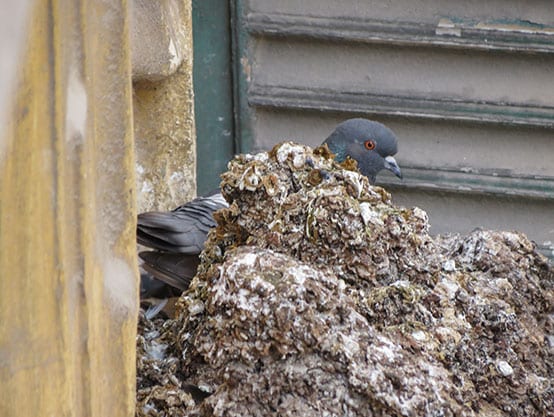
a pigeon bird standing by guano manure
Source
Pigeon Patrol Products & Services is the leading manufacturer and distributor of bird deterrent (control) products in Canada. Pigeon Patrol products have solved pest bird problems in industrial, commercial, and residential settings since 2000, by using safe and humane bird deterrents with only bird and animal friendly solutions. At Pigeon Patrol, we manufacture and offer a variety of bird deterrents, ranging from Ultra-flex Bird Spikes with UV protection, Bird Netting, 4-S Bird Gel and the best Ultrasonic and audible sound devices on the market today.
Voted Best Canadian wholesaler for Bird Deterrent products ten years in a row.
Contact us at 1- 877– 4– NO-BIRD, (604) 585-9279 or visit our website at www.pigeonpatrol.ca
Pigeon/Pigeon Patrol / Pigeons Roosting / Vancouver Pigeon Control /Bird Spikes / Bird Control / Bird Deterrent / Pigeon Deterrent? Surrey Pigeon Control / Pest /Seagull deterrent / Vancouver Pigeon Blog / Birds Inside Home / Pigeons in the cities / Ice Pigeons/ What to do about pigeons/ sparrows , Damage by Sparrows, How To Keep Raccoons Away, Why Are Raccoons Considered Pests/ De-fence / Pigeon Nesting/ Bird Droppings / Pigeon Dropping/ woodpecker control/ Professional Bird Control Company/ Keep The Birds Away/ Birds/rats/ seagull/pigeon/woodpecker/ dove/sparrow/pidgeon control/pidgeon problem/ pidgeon control/flying rats/ pigeon Problems/ bird netting/bird gel/bird spray/bird nails/ bird guard
by Pigeon Patrol | Feb 2, 2022 | MBCA, pet bird, Pigeon Control, Pigeon Droppings, Pigeon Patrol's Services, Pigeon Predators
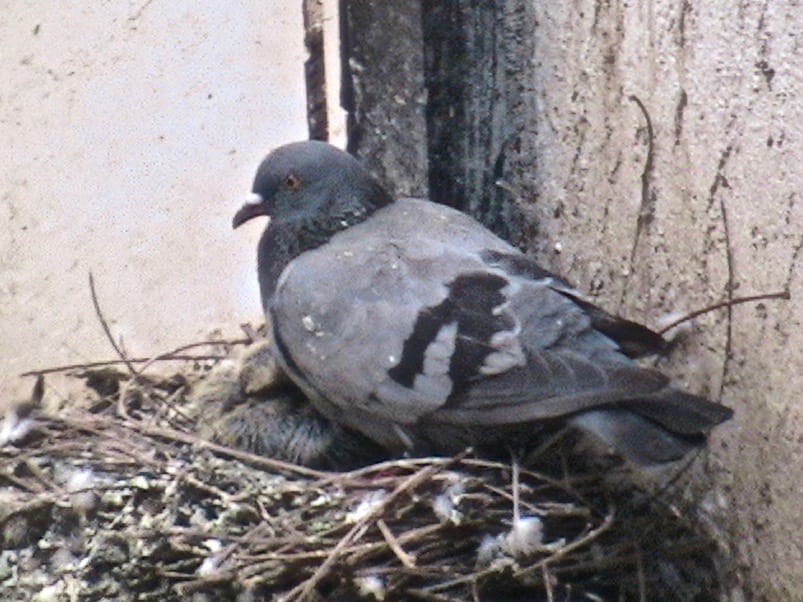
Work with bird or bat droppings can expose workers to some serious, infectious diseases.
Bird and bat droppings
The risk from disturbing small amounts of fresh droppings is very low but grows higher from disturbing large accumulations of concentrated, dried droppings.
Histoplasmosis
Histoplasmosis is an infection caused by a fungus called Histoplasma capsulatum. It is found in soil contaminated with bird (especially pigeon) or bat droppings. People can be infected by inhaling the fungal spores. Young children, the elderly and people who have a medical condition or are undergoing medical treatment that lowers immunity are most at risk.
Cryptococcosis
Cryptococcosis is an infection caused by a fungus called Cryptococcosis neoformans. It is found in the environment, particularly in soil that is contaminated with bird (especially pigeon) droppings. People can be infected by inhaling the fungal spores. Infection is rare in people who are otherwise healthy but those with low immunity are at increased risk. Cryptococcosis commonly causes meningitis (an infection of the brain) but infection can occur in other parts of the body.
Psittacosis
Psittacosis is caused by bacteria called Chlamydia [or Chlamydophilia] psittaci. It is shed in the droppings and respiratory secretions of infected birds, including parrots, pigeons and poultry. People can be infected by inhaling the bacteria. Psittacosis generally causes a mild to moderate respiratory illness with pneumonia, but more severe illness can occur. Young children, the elderly, pregnant women and people who have a medical condition or are undergoing medical treatment that lowers immunity are most at risk.
Gastrointestinal illness
Bird and bat droppings can contain germs that cause gastrointestinal illness with symptoms of nausea, vomiting and diarrhoea. People can be infected if they inadvertently swallow the germs, usually via contaminated hands.
Who is at risk?
Workers who disturb accumulations of dried bird or bat droppings are at risk. For example:
- workers who clean, renovate or demolish buildings, roofs, bridges and other structures where birds or bats roost
- spelunkers (cave explorers) and others who work in caves or other enclosed spaces harbouring birds or bats
- pest control and animal removal specialists
- facilities maintenance workers
- heating, ventilation and air conditioning (HVAC) systems workers
- workers who handle poultry manure
- workers who work with soil or clear foliage in areas harbouring birds or bats.
Managing exposure
Eliminating exposure is the most effective way to protect workers, however this may not always be possible. Where the risk cannot be eliminated, it must be minimised.
Prevent droppings from accumulating
- Deter birds by sealing entry points, modifying roosting or nesting sites and removing food sources. Seek advice from an animal removal or pest control specialist if required.
- Regularly inspect for droppings and clean up promptly.
Cleaning large accumulations of bird and bat droppings
- Where possible, schedule cleaning activities for when the site is not being used and restrict access. Take special care if vulnerable people such as patients, elderly residents or young children could be in the affected area.
- Manage exposure to dust and aerosols from disturbing droppings. For example
- use dust barriers and ventilation controls (e.g. industrial vacuum (PDF, 0.62 MB), HEPA filtration unit)
- seal doors, windows and air vents
- avoid cleaning methods that disperse dust and aerosols (e.g. dry sweeping, high-pressure washer, household vacuum and compressed air)
- wet the droppings by applying a light mist of plain or soapy water and keep wetting the material during its removal to prevent it from drying out.
- Once the droppings are removed, clean the area thoroughly using water and detergent and then apply a disinfectant. Disinfectants require a minimum contact time to be effective. They may not work properly in the presence of organic matter such as droppings, so it is important to clean surfaces before applying disinfectant. Alternatively, use a product that is both a detergent and a disinfectant.
- Place waste in a container that can be securely sealed during storage, transport and disposal.
- Clean contaminated equipment and tools after use.
- Do not reuse contaminated building materials and debris.
- It is unnecessary to test surfaces before or after cleaning because the types of germs found in droppings are widespread in the environment.
- Consider using a professional cleaning service that specializes in removing this type of waste.
Personal hygiene practices
Workers should adopt personal hygiene practices.
- Wash hands thoroughly with soap and water before eating, drinking and smoking, after contact with droppings and after removing personal protective equipment (PPE).
- If using a waterless hand sanitiser make sure it contains an alcohol content of at least 60 per cent, use only on visibly clean hands and wash your hands with soap and water at the first opportunity.
- Check your skin before starting work and cover any cuts and other broken skin with a clean, dry dressing. If you sustain a wound at work, clean and cover it straight away.
- Avoid touching your face and do not eat, drink or smoke when working with droppings.
- Wash or shower after finishing work.
Workers must be provided with washing facilities (PDF, 0.57 MB). This should include clean running water, soap and paper towel or an air hand dryer. Field workers should be provided with portable hand washing facilities. Use handwashing signage to remind workers to wash their hands.
Workers must also be provided with first aid facilities, clean eating facilities and drinking water.
Information, training, instruction and supervision
Provide workers with information about:
- health risks from work with bird and bat droppings
- safe work procedures
- selection and use of PPE
- hand washing practices.
Personal protective equipment
Workers should wear a properly fitted (PDF, 0.86 MB) particulate respirator when disturbing dried bird or bat droppings to prevent inhaling dust and aerosols. For major clean-up work, additional PPE including gloves, protective clothing, safety eyewear and boot covers should be worn. Take care to avoid heat stress when wearing multiple items of PPE, especially when working in hot and humid conditions.
Source
Pigeon Patrol Products & Services is the leading manufacturer and distributor of bird deterrent (control) products in Canada. Pigeon Patrol products have solved pest bird problems in industrial, commercial, and residential settings since 2000, by using safe and humane bird deterrents with only bird and animal friendly solutions. At Pigeon Patrol, we manufacture and offer a variety of bird deterrents, ranging from Ultra-flex Bird Spikes with UV protection, Bird Netting, 4-S Bird Gel and the best Ultrasonic and audible sound devices on the market today.
Voted Best Canadian wholesaler for Bird Deterrent products ten years in a row.
Contact us at 1- 877– 4– NO-BIRD, (604) 585-9279 or visit our website at www.pigeonpatrol.ca
Pigeon/Pigeon Patrol / Pigeons Roosting / Vancouver Pigeon Control /Bird Spikes / Bird Control / Bird Deterrent / Pigeon Deterrent? Surrey Pigeon Control / Pest /Seagull deterrent / Vancouver Pigeon Blog / Birds Inside Home / Pigeons in the cities / Ice Pigeons/ What to do about pigeons/ sparrows , Damage by Sparrows, How To Keep Raccoons Away, Why Are Raccoons Considered Pests/ De-fence / Pigeon Nesting/ Bird Droppings / Pigeon Dropping/ woodpecker control/ Professional Bird Control Company/ Keep The Birds Away/ Birds/rats/ seagull/pigeon/woodpecker/ dove/sparrow/pidgeon control/pidgeon problem/ pidgeon control/flying rats/ pigeon Problems/ bird netting/bird gel/bird spray/bird nails/ bird guard
by Pigeon Patrol | Feb 2, 2022 | Bird Spike, Pigeons, Pigeons in the News, Raccoons, Sparrows, UltraSonic Bird Control
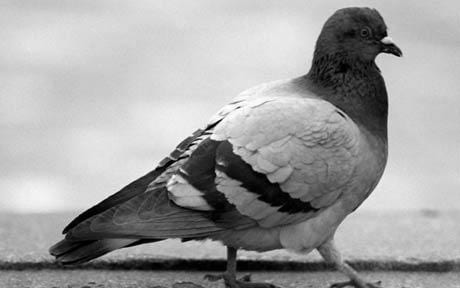
LONDON (Reuters Life!) – Scientists studying pigeons have found that the often reviled urban bids that dominate city squares around the world carry two disease-causing bugs that make them a public health hazard.
The findings of the study by a team of researchers in Spain show that although these bacteria can be harmful to humans, they appear to cause no harm to the birds themselves.
As a result, pigeons — often dubbed “rats with wings” by those who suspect them of spreading disease — can act as living “reservoirs” for some harmful bugs, the scientists said.
“Animals that live in close contact with humans can be dangerous reservoirs of human pathogens,” wrote Fernando Esperon from the Animal Health Research Center in Madrid, who led the study. “These birds may therefore pose a public health risk to the human population.”
Inhabitants of cities from London to Venice to New York to San Francisco tend to have a love-hate relationship with the millions of urban pigeons that dominate city plazas, street-side cafes and monuments. Their droppings plaster Trafalgar square in London, St Mark’s square in Venice, and Times Square in New York, where they peck endlessly at crumbs or leftover food.
For this study, which was published in the BioMed Central journal Acta Veterinaria Scandinavica, Esperon and colleagues analyzed 118 pigeons captured using gun-propelled nets from urban areas of Madrid to find out the prevalence of certain bacteria known to cause disease in humans.
They found a bug called Chlamydophila psittaci in 52.6 percent of the pigeons captured, and another bug called Campylobacter jejuni in 69.1 percent.
Psittacosis infection in humans often starts with flu-like symptoms and can develop into life-threatening pneumonia. And according to Esperon, bugs from the campylobacter species are one of main causes of acute diarrhea across the world.
“In fact, in many countries such as England and Wales, Canada, Australia and New Zealand, Campylobacter jejuni infection causes more cases of acute diarrhea than infection by salmonella species,” he wrote.
Like other bugs, salmonella bacteria can cause fever, diarrhea, nausea and vomiting in those infected with it.
The scientists said that although the birds themselves did not seem to get sick from the bacteria, they could potentially pass them on the humans.
“These data should be taken into account for pigeon population management,” they wrote.
Source
Pigeon Patrol Products & Services is the leading manufacturer and distributor of bird deterrent (control) products in Canada. Pigeon Patrol products have solved pest bird problems in industrial, commercial, and residential settings since 2000, by using safe and humane bird deterrents with only bird and animal friendly solutions. At Pigeon Patrol, we manufacture and offer a variety of bird deterrents, ranging from Ultra-flex Bird Spikes with UV protection, Bird Netting, 4-S Bird Gel and the best Ultrasonic and audible sound devices on the market today.
Voted Best Canadian wholesaler for Bird Deterrent products ten years in a row.
Contact us at 1- 877– 4– NO-BIRD, (604) 585-9279 or visit our website at www.pigeonpatrol.ca
Pigeon/Pigeon Patrol / Pigeons Roosting / Vancouver Pigeon Control /Bird Spikes / Bird Control / Bird Deterrent / Pigeon Deterrent? Surrey Pigeon Control / Pest /Seagull deterrent / Vancouver Pigeon Blog / Birds Inside Home / Pigeons in the cities / Ice Pigeons/ What to do about pigeons/ sparrows , Damage by Sparrows, How To Keep Raccoons Away, Why Are Raccoons Considered Pests/ De-fence / Pigeon Nesting/ Bird Droppings / Pigeon Dropping/ woodpecker control/ Professional Bird Control Company/ Keep The Birds Away/ Birds/rats/ seagull/pigeon/woodpecker/ dove/sparrow/pidgeon control/pidgeon problem/ pidgeon control/flying rats/ pigeon Problems/ bird netting/bird gel/bird spray/bird nails/ bird guard