by Ryan Ponto | Aug 26, 2016 | Bird Netting
 A fire which tore through a South Shields allotment killing 60 pigeons has been confirmed as arson by police. Fire fighters were called to the site in Holder House Way, South Shields, at 12.30am on Tuesday to tackle the blaze. Crews from South Shields, Hebburn, Marley Park and Washington stations, took three hours to extinguish the fire and were called back to the allotment at around 11.40am when the blaze began to smoulder again. Northumbria Police has confirmed the fire was stared deliberately. A spokesman said: “It has now been established the fire was started deliberately and is being treated as arson. “Enquiries are on-going. Any witnesses should ring Northumbria Police on 77 060916 or Crimestoppers anonymously on 0800 555 111.”
About Pigeon Patrol:
Pigeon Patrol Products & Services is the leading manufacturer and distributor of bird deterrent (control) products in Canada. Pigeon Patrol products have solved pest bird problems in industrial, commercial, and residential settings since 2000, by using safe and humane bird deterrents with only bird and animal friendly solutions. At Pigeon Patrol, we manufacture and offer a variety of bird deterrents, ranging from Ultra-flex Bird Spikes with UV protection, Bird Netting, 4-S Gel and the best Ultrasonic and audible sound devices on the market today.
Voted Best Canadian wholesaler for Bird Deterrent products four years in a row.
Contact Info: 1- 877– 4– NO-BIRD (www.pigeonpatrol.ca)

by Ryan Ponto | Aug 25, 2016 | Bird Netting
 At first, Wisconsin’s natural resources agency was just concerned about the thousands of pounds of lead buried in the La Crosse river marsh.
Now, however, the Dept. of Natural Resources has turned its regulatory eyes to other possible contaminants there thanks to three decades of use and abuse by the La Crosse Gun Club.
The club closed up shop in 1963 but only after dropping an estimated 50,000 pounds of lead shot into the water from its skeet-shooting members.
The DNR wants the lead impacts studied.
Now, though, it is also demanding the city to identify possible contamination from some substances in the clay pigeons themselves that is considered carcinogenic.
That study and the lead study are pegged at close to $50,000 and could last nearly a year.
Meanwhile, warnings about eating fish caught from the marsh remain in place.
In 2012, the University of Wisconsin-La Crosse studied lead contaminants in the marsh paid for, in part, from a $60,000 grant from the Environmental Protection Agency. UW-L also kicked in $5,000 in trying to help determine the amount of contamination.
About Pigeon Patrol:
Pigeon Patrol Products & Services is the leading manufacturer and distributor of bird deterrent (control) products in Canada. Pigeon Patrol products have solved pest bird problems in industrial, commercial, and residential settings since 2000, by using safe and humane bird deterrents with only bird and animal friendly solutions. At Pigeon Patrol, we manufacture and offer a variety of bird deterrents, ranging from Ultra-flex Bird Spikes with UV protection, Bird Netting, 4-S Gel and the best Ultrasonic and audible sound devices on the market today.
Voted Best Canadian wholesaler for Bird Deterrent products four years in a row.
Contact Info: 1- 877– 4– NO-BIRD (www.pigeonpatrol.ca)

by Ryan Ponto | Aug 22, 2016 | Bird Netting
 Ben Paraschuk admits the world of pest control isn’t exactly glamorous.
Trapping and removing angry animals or eliminating insect infestations can be tough work that rarely has its red carpet moments. That’s why he was a little surprised when he got a phone call about appearing in the new television series Billy Goes North that stars Billy Bretherton.
Bretherton, who previously was in the A&E program Billy the Exterminator, is a high-energy guy and “quite the character,” according to Paraschuk. He’s known for his love of leather outfits, flamboyant jewelry and his wild hairdos.
“Funnily enough, even before we were working in pest control we had seen his show and we really liked his personality and approach to the animals,” said Paraschuk, who runs Mississauga’s Pest Protection Plus with Anthony Munshaw and Brent Hierons. “It was pretty exciting for us to get a chance to work with him. It’s not a glamorous industry but getting to be on the show with him was great.”
In May, Paraschuk and his team joined Bretherton and the television crew for a day of filming where they visited eight separate raccoon calls in Mississauga and Toronto. It was during a time when raccoons have had their litters of cubs, meaning it’s a busy period for pest companies.
“We had some tight squeezes and had to deal with a lot of angry mothers who are never happy when you’re moving their babies,” said Paraschuk. “But it was fun being around Billy, who’s the Wayne Gretzky of pest control so to speak. We had a great time with him and learned a few of his tips and tricks. It was neat to see how he approached the different situations.”
Bretherton and Paraschuk share similar philosophies when it comes to dealing with animals as they use humane methods to trap the animals before releasing them into the wild.
Meanwhile, Paraschuk hopes his appearance on the show, which debuts this Friday (Sept. 9) on CMT Canada at 9 p.m. with the Pest Protection Plus episode, will also raise awareness among residents about what sort of questions to ask when hiring a pest control company. He said it’s not uncommon to hear of someone removing a mother raccoon but leaving the babies behind, orphaned and alone. That shouldn’t happen when a professional company is hired, he added.
And, while raccoons are undeniably cute to look at, having them living on your property can cause a whole host of problems. Their droppings are harmful to humans and they’re notorious for chewing wires or tearing holes in roofs and walls. Plus, you wouldn’t want your pet fighting with an angry raccoon, he said.
Meanwhile, in the new show Bretherton travels across the country dealing with all manner of animals, from wolves preying on livestock to beavers flooding country roads. He hits big cities and suburbs to small towns, farms and the wilderness in the program.
About Pigeon Patrol:
Pigeon Patrol Products & Services is the leading manufacturer and distributor of bird deterrent (control) products in Canada. Pigeon Patrol products have solved pest bird problems in industrial, commercial, and residential settings since 2000, by using safe and humane bird deterrents with only bird and animal friendly solutions. At Pigeon Patrol, we manufacture and offer a variety of bird deterrents, ranging from Ultra-flex Bird Spikes with UV protection, Bird Netting, 4-S Gel and the best Ultrasonic and audible sound devices on the market today.
Voted Best Canadian wholesaler for Bird Deterrent products four years in a row.
Contact Info: 1- 877– 4– NO-BIRD (www.pigeonpatrol.ca)
by Ryan Ponto | Aug 21, 2016 | Bird Netting
 At first, Sebastopol area resident Nancy Martin and her husband did not know what to make of the frequent booming bird noises they suddenly started hearing in mid-August.
Neither did their neighbors.
“We were walking around the neighborhood and we’d run into people, and they’d say, ‘What’s that noise we’re hearing?’ ” Martin said. “And we would say, ‘I don’t know, maybe hunting.’ ”
But the sounds were going off at very frequent intervals — sometimes as much as 20 per minute — and could last for 13 hours a day, Martin estimated. So hunting-related gunshots didn’t sound quite right.
Then a neighbor emailed with the most likely answer: bird cannons. Vineyards employ the noise-making devices powered by propane to scare away birds that may seek to prey on their valuable crop as harvest approaches.
The use of bird cannons is nothing new, particularly in agriculture-heavy Sonoma County, but Martin, who said she has lived in her neighborhood for 30 years, could not recall ever hearing them before.
“Sometimes, it would be back to back: you’d hear ‘boom’ and then another ‘boom’ right away,” Martin said. “My dog seriously was just shaking.”
Concerns expressed by Martin and several other residents in west Sonoma County highlight a familiar tension in agricultural areas: Growers, empowered by the county’s right-to-farm ordinance, are entitled to protect their crops, but local residents sometimes feel farming disruptions interfere with their quality of life.
John Balletto, owner of Balletto Vineyards and Winery in the Russian River Valley, said his vineyard has not used bird cannons this year because it has not felt very dramatic “bird pressure.” But he knows how bad it can get in other years: Balletto recalled one instance some 15 years ago when he had a 2-acre block of pinot grigio “picked clean” by waxwings.
The damage can add up quickly. A typical vineyard in Sonoma County yields about 3 tons of grapes per acre, or a crop valued at about $7,650 per acre at last year’s average price, according to the U.S. Department of Agriculture.
Balletto acknowledged that complaints from neighbors can arise, and he recommended taking an equally neighborly approach to resolving those conflicts.
“If you have a neighbor that has some concerns, just go have a conversation with that person,” Balletto said. “We’re still able to farm and do stuff, but it’s also important to try to have good neighbor relations.”
Cannons are not the only tool vineyards have at their disposal to defend against birds like starlings and waxwings. One popular option is bird netting, which growers can place over their crops to shield them from winged pests, but that can be a costly and labor-intensive route to take. Balletto said his vineyard is using bird alarms, which emit noises of predatory birds, and has found them to be more effective than cannons so far.
Still others employ actual birds of prey — falcons — to scare off hungry flocks.
With Wine Country’s harvest season gearing up, Lisa Correia, Sonoma County’s assistant agricultural commissioner, said last week that her office had yet to receive any complaints about bird cannons. But she said the commissioner’s office generally works closely with residents and businesses to resolve such issues.
“If somebody isn’t using (bird cannons) properly, then we can usually talk to the grower and get them maybe better educated or informed,” Correia said. “That usually helps create less of a chance of a nuisance being created.”
Solano County officials last year passed an ordinance regulating use of noise-making devices such as bird cannons for agricultural purposes. The ordinance spells out a number of requirements for the devices, including that they cannot be used more than 11 times per hour from 30 minutes after sunrise until 30 minutes after sunset.
Additionally, the ordinance allows for no more than one noise-making device for every 5 acres of land with crops needing protection from damage by birds or other wildlife. Devices within 50 feet of the property line need to be relocated at least 200 feet every four days, and they can’t be directed at residences closer than 400 yards away without rotating automatically and erecting a “sound baffle” between the residence and the device.
While Sonoma County does not have such an ordinance for noise-making devices, it does have recommended guidelines for propane cannons. A copy of the guidelines provided by Correia warns cannons “can and will annoy nearby residents and domestic animals,” and that if a field is surrounded by houses or has a “sensitive neighbor,” cannons may not be a wise choice, pointing to netting, falconry and “general harassment” as other options.
The guidelines further note that birds can rapidly adjust to the noise of cannons and recommend ways that growers should position cannons to maximize their effectiveness. The guidelines also say growers can mitigate noise by putting a plywood backstop behind cannons; warn growers not to use them before sunrise or after sunset; and suggest that the location of cannons be changed frequently and the interval between discharges vary.
Correia said the guidelines have been around for many years, in which time complaints about noise devices at harvest time have declined.
“Frankly, they’ve become a little less relevant because we don’t get as many calls these days,” Correia said. “It’s become less of an issue.”
The same may not be true for Napa County this year. Greg Clark, Napa County’s agricultural commissioner, said his office had heard more complaints about bird cannons than in the past few years, but he was not sure why. Clark said his county does not have a specific ordinance or written guidelines about bird cannons.
Clark said Napa, like Sonoma County, generally takes an educational approach to resolving disputes. That may mean, for instance, informing growers their cannons are firing too often.
Clark said he did not want to minimize the impact birds can have on crops, recalling one instance when a grower’s cannon was firing about every 20 seconds.
“While we stood there and talked, he would see the starlings flying around, and this person would say, ‘See the birds?’ ” Clark said. “You could have that thing firing off every second and the birds would still be there. They’ve gotten used to it.”
Still, Clark said some neighbors also may not fully appreciate what it means to move into an agricultural area, where disruptions, to a certain extent, come with the territory.
Balletto made a similar point.
“At the end of the day, there might be times when we disagree on things,” he said. “But if we don’t bring a crop in, nothing’s sustainable.”
About Pigeon Patrol:
Pigeon Patrol Products & Services is the leading manufacturer and distributor of bird deterrent (control) products in Canada. Pigeon Patrol products have solved pest bird problems in industrial, commercial, and residential settings since 2000, by using safe and humane bird deterrents with only bird and animal friendly solutions. At Pigeon Patrol, we manufacture and offer a variety of bird deterrents, ranging from Ultra-flex Bird Spikes with UV protection, Bird Netting, 4-S Gel and the best Ultrasonic and audible sound devices on the market today.
Voted Best Canadian wholesaler for Bird Deterrent products four years in a row.
Contact Info: 1- 877– 4– NO-BIRD (www.pigeonpatrol.ca)
by Ryan Ponto | Aug 20, 2016 | 4-S Gel Bird repellent, Bird Deterrent Products, Bird Netting
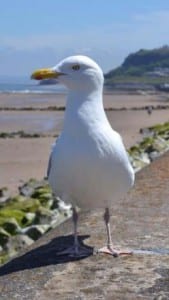
 A VIDEO has been published of a seagull attacking and eating a pigeon in Barrow town centre.
The footage was recorded at around 6.30pm last night in Dalton Road, close to the junction with Cavendish Street.
Most types of seagull are ground-nesting carnivores, which take live food or scavenge opportunistically. There have been calls for action to be taken in Barrow to tackle the number of seagull in the town centre and residential areas.
Seagulls are a hot topic for debate around Barrow as many residents consider the birds to be pests or vermin. Others argue the birds are simply doing what is natural and that we should respect their presence.
Earlier this month, Barrow dad Phil Jackson said his four-year-old daughter will no longer visit the town’s park because of the aggressive nature of the seagulls near the pond. Mr Jackson believes drastic action needs to be taken to tackle the problem, which he believes is blighting the whole of Barrow.
About Pigeon Patrol:
Pigeon Patrol Products & Services is the leading manufacturer and distributor of bird deterrent (control) products in Canada. Pigeon Patrol products have solved pest bird problems in industrial, commercial, and residential settings since 2000, by using safe and humane bird deterrents with only bird and animal friendly solutions. At Pigeon Patrol, we manufacture and offer a variety of bird deterrents, ranging from Ultra-flex Bird Spikes with UV protection, Bird Netting, 4-S Gel and the best Ultrasonic and audible sound devices on the market today.
Voted Best Canadian wholesaler for Bird Deterrent products four years in a row.
Contact Info: 1- 877– 4– NO-BIRD (www.pigeonpatrol.ca)