by Pigeon Patrol | Sep 21, 2021 | 4-S Gel Bird repellent, Animal Deterrent Products, Bird Deterrent Products, Bird Law, Bird Netting, Bird Spikes
Thousands of pigeons released during the opening ceremony of the 1936 Olympic Games pooped on much of the audience after being frightened by ceremonial cannon fire.
Context
Tens of thousands of pigeons were released during the opening ceremony of the 1936 Olympic Games. The claim that these birds pooped on the athletes after they were scared by ceremonial cannon fire originates with a single person: long-distance runner and WWII veteran Louis Zamperini. While it seems that some people truly got pooped on by pigeons during this incident, we can’t determine just how much of the audience was covered in excrement.
As the start of the 2020 Olympics approached in July 2021 (the games were delayed due to the COVID-19 pandemic), an old meme started to make its way around social media about how tens of thousands of pigeons pooped on the audience during the opening ceremonies of the 1936 Olympic Games after they were scared by the noise of a firing cannon:
Generally speaking, there is some truth to this humorous anecdote. It should be noted that the above-displayed picture actually comes from the 1952 Olympics in Helsinki, Finland, not the 1936 games in Germany.
When we first came across the pigeon meme, we had three immediate questions: Were thousands of pigeons released during the opening ceremonies of the 1936 Olympic Games? Did these pigeons actually poop on the audience? And just how devastating was this doo-doo drop?
The answer to the first question is yes, approximately 30,000 pigeons were released during the opening ceremonies of the 1936 Olympic Games. The Star Tribune reported on Aug. 1, 1936, that 30,000 pigeons would be released and cannons would fire once German Chancellor Adolf Hitler announced the start of the games:
We were not able to find any newspaper articles from the 1930s that reported on a mass pooping event. To answer our second question — did the pigeons poop on the audience — we turned to a 2012 documentary produced by PBS about Jesse Owens. While the “American Experience” documentary focuses on Owens’ accomplishments and the historical impact of a Black man dominating the track and field event in front of a Germany chancellor who sought to showcase the superiority of the white race, long-distance runner and World War II veteran Louis Silvie Zamperini (whose life was turned into the 2014 film “Unbroken”) provided a humorous anecdote about another way that Hitler’s Olympics didn’t go as planned.
While we do not doubt Zamperini’s telling of this event, it does not answer our third question: Just how many people were pooped on during this incident? Did they only poop on the people in Zamperini’s vicinity? Furthermore, were the pigeons really scared by the cannon fire or was this just incidental?
Unfortunately, we have not been able to find an answer to these pressing matters.
What we can say is that thousands of pigeons were truly released during the 1936 Olympics (the photo above is from 1952, though) and that this anecdote about pooping pigeons originated with an athlete who was in attendance at these games. Just how messy of a situation this really was, however, we’ll leave up to your imagination.
Source
Pigeon Patrol Products & Services is the leading manufacturer and distributor of bird deterrent (control) products in Canada. Pigeon Patrol products have solved pest bird problems in industrial, commercial, and residential settings since 2000, by using safe and humane bird deterrents with only bird and animal friendly solutions. At Pigeon Patrol, we manufacture and offer a variety of bird deterrents, ranging from Ultra-flex Bird Spikes with UV protection, Bird Netting, 4-S Bird Gel and the best Ultrasonic and audible sound devices on the market today.
Voted Best Canadian wholesaler for Bird Deterrent products ten years in a row.
Contact us at 1- 877– 4– NO-BIRD, (604) 585-9279 or visit our website at www.pigeonpatrol.ca
Pigeon/Pigeon Patrol / Pigeons Roosting / Vancouver Pigeon Control /Bird Spikes / Bird Control / Bird Deterrent / Pigeon Deterrent? Surrey Pigeon Control / Pest /Seagull deterrent / Vancouver Pigeon Blog / Birds Inside Home / Pigeons in the cities / Ice Pigeons/ What to do about pigeons/ sparrows , Damage by Sparrows, How To Keep Raccoons Away, Why Are Raccoons Considered Pests/ De-fence / Pigeon Nesting/ Bird Droppings / Pigeon Dropping/ woodpecker control/ Professional Bird Control Company/ Keep The Birds Away/ Birds/rats/ seagull/pigeon/woodpecker/ dove/sparrow/pidgeon control/pidgeon problem/ pidgeon control/flying rats/ pigeon Problems/ bird netting/bird gel/bird spray/bird nails/ bird guard
by Pigeon Patrol | Sep 14, 2021 | 4-S Gel Bird repellent, Animal Deterrent Products, Bird Deterrent Products, Bird Law, Bird Netting, Bird Spikes
LITTLE ROCK — Missing for months, colorful flocks of birds suddenly reappear.
And they’ve navigated with such precision – despite lengthy journeys with no maps – that they return to the same park, the same yard or even the same tree.
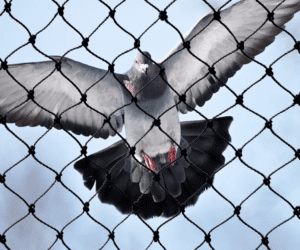
bird netting vancouver
Do they hear their way home?
That’s a new theory proposed by U.S. Geological Survey geophysicist Jon Hagstrum, whose research suggests that birds navigate using earth’s low-frequency sound waves to identify the “address” of home.
“They are imprinting on the characteristic sound” of where they live, he told a crowd at the survey’s headquarters in Menlo Park, Calif. “The terrain has characteristic frequencies. I think that is the sound they are listening to.”
He thinks that birds perceive the world as a vast sonic environment, hearing many frequencies bouncing off different landmarks, such as mountains and buildings, generated by the earth’s movement.
It has long been known that birds use celestial and magnetic compass senses to orient their flight. But how do they determine their location, so they can select the correct homeward bearing? That remains controversial.
Using a body of homing-pigeon data, along with weather records and atmospheric-modeling software, Hagstrum found strong correlations between pigeon races gone haywire and disrupted “infrasonic” waves.
Humans can’t hear infrasound, but birds can. These very low-frequency acoustic waves come from different natural sources, but particularly the subtle tremors of the earth’s crust – so each part of the planet has its own distinct “sonic signature.” And these infrasonic sounds travel thousands of miles, far longer than ordinary sound waves.
The finely calibrated and seasonal pull of migration is a longstanding mystery, especially to those of us who manage to miss well-marked exit ramps on the highway.
A creature weighing mere ounces can fly thousands of miles, through darkness and storm, then land at our modest feeder.
“Site specificity is fascinating,” said Bob Power, director of the Santa Clara County Audubon Society. “Birds return to the exact same backyard, or corner of the park, year after year. Anybody who has had a bird that disappeared for six months, and returned in the exact same spot, has to be puzzled. How do they do that?
“Many, many theories, from many different experts, have been put forth,” he said.
Birds wintering down in South America are unlikely to hear the sounds of their final Bay Area destination thousands of miles away, Hagstrum said. Rather, he proposes that they break up their journey into sections – then fly from one distinctive set of sounds, or “wave points,” to another.
Because they fly in flocks, younger birds learn these distinctive wave points while traveling with their elders. And when they get lost, they circle, perhaps to re-orient what they’re hearing, he said.
Hagstrum was intrigued by pigeon-racing disasters and, in his spare time, decided to investigate what went wrong.
The most infamous incident took place on June 29, 1997, at a celebration of Britain’s Royal Pigeon Racing Association’s 100th anniversary. More than 60,000 trained birds – the best of the best – were released from southern France. Then, the crowd anxiously awaited their arrival home in southern England.
Just a few thousand of the birds were ever seen again.
What happened? Pigeon fanciers fear losing one or two birds, but tens of thousands?
Hagstrum noticed a curious coincidence. That same morning, the Concorde supersonic transport plane was flying across the English Channel en route to New York from Paris. But its departure time was 8:30 a.m.- far earlier than the birds’ 10 a.m. release time.
Phoning the Concorde office, he asked: “Was your plane late that day?” Their response: “Are you a magician?It was two and a half hours late!”
“It was probably the most exciting moment of my career,” he said. “I realized I was onto something.”
He has analyzed three other botched races and also found sources of interrupted infrasonic sound waves.
SIGHT AND SMELL
Other theories hold that sight, smell or magnetism helps orient birds.
While sight and probably smell are useful for local orientation by pigeons, it is unlikely to help long-distance travel, Hagstrum said. Studies show that pigeons can find their lofts even when wearing frosted contact lenses. Secondly, they can’t smell very well. And although wind-borne odors could be brought from afar, it is difficult to imagine how birds, especially in a tail wind, could navigate accurately using odors delivered on variable winds.
He also dismisses the magnetism theory. While the magnetic sense of birds provides an excellent compass for orientation, geomagnetic fields make poor maps, he said. Research shows that pigeons usually depart from the release site in the direction of their home loft – and follow nearly straight-line courses along the way that are inconsistent with magnetic field gradients.
A magnetic map also cannot explain why pigeons have difficulty orienting over large bodies of water. But the infrasonic signals emitted by the earth ’s crust can be confused by similar signals emitted by water waves, he said.
Much work remains to be done, he said. Hagstrum, who studies the earth ’s magnetism in his day job as a geophysicist, hopes to publish the findings of his pigeon hobby in a peer-reviewed scientific journal within a year.
Source
Pigeon Patrol Products & Services is the leading manufacturer and distributor of bird deterrent (control) products in Canada. Pigeon Patrol products have solved pest bird problems in industrial, commercial, and residential settings since 2000, by using safe and humane bird deterrents with only bird and animal friendly solutions. At Pigeon Patrol, we manufacture and offer a variety of bird deterrents, ranging from Ultra-flex Bird Spikes with UV protection, Bird Netting, 4-S Bird Gel and the best Ultrasonic and audible sound devices on the market today.
Voted Best Canadian wholesaler for Bird Deterrent products ten years in a row.
Contact us at 1- 877– 4– NO-BIRD, (604) 585-9279 or visit our website at www.pigeonpatrol.ca
Pigeon/Pigeon Patrol / Pigeons Roosting / Vancouver Pigeon Control /Bird Spikes / Bird Control / Bird Deterrent / Pigeon Deterrent? Surrey Pigeon Control / Pest /Seagull deterrent / Vancouver Pigeon Blog / Birds Inside Home / Pigeons in the cities / Ice Pigeons/ What to do about pigeons/ sparrows , Damage by Sparrows, How To Keep Raccoons Away, Why Are Raccoons Considered Pests/ De-fence / Pigeon Nesting/ Bird Droppings / Pigeon Dropping/ woodpecker control/ Professional Bird Control Company/ Keep The Birds Away/ Birds/rats/ seagull/pigeon/woodpecker/ dove/sparrow/pidgeon control/pidgeon problem/ pidgeon control/flying rats/ pigeon Problems/ bird netting/bird gel/bird spray/bird nails/ bird guard
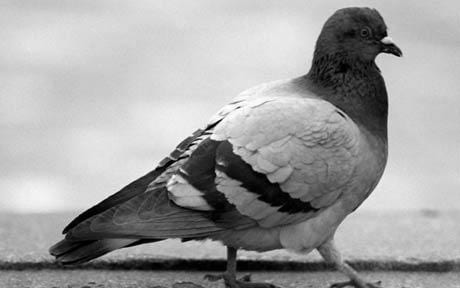
by Pigeon Patrol | Aug 31, 2021 | 4-S Gel Bird repellent, Animal Deterrent Products, Bird Deterrent Products, Bird Law, Bird Netting, Bird Spikes
With bits of DNA extracted from century-old museum specimens, researchers have found a place for the extinct Passenger Pigeon (Ectopistes migratorius) in the family tree of pigeons and doves, identifying this unique bird’s closest living avian relatives for the first time. The new analysis, which appears this month in Molecular Phylogenetics and Evolution, reveals that the Passenger Pigeon was most closely related to other North and South American pigeons, and not to the Mourning Dove, as was previously suspected.
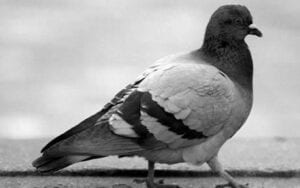
“This research demonstrates the remarkable potential of DNA to answer questions about species that no longer populate our planet,” says Dr. Jack Dumbacher, Curator of Ornithology at the California Academy of Sciences. “The Passenger Pigeon has been extinct for almost 100 years, but with the help of museum specimens and DNA analysis, we’re still learning new information about the bird’s evolutionary history and its place on the tree of life.”
Naturalists have long lamented that one of North America’s most spectacular birds was also one of the first to be driven to extinction by humans. In the early 1800s, the Passenger Pigeon was the most abundant bird species on the planet, even though its range was limited to the eastern and central forests of the United States and parts of eastern Canada. Flocks of Passenger Pigeons included millions of birds—they were so vast that they darkened swaths of the sky up to a mile wide.
Passenger Pigeons followed their food, settling down in forests that periodically produced a superabundance of acorns and chestnuts. The pigeons nested in dense colonies covering hundreds of acres. This made them easy targets for human predators. Intensive pigeon hunting in the mid-to-late 19th century disrupted the birds’ ability to breed. These hunting sprees, coupled with habitat destruction, rapidly drove the Passenger Pigeon to extinction. (The last of her kind, a Passenger Pigeon named Martha, died in the Cincinnati Zoo in 1914.)
To find the Passenger Pigeon’s place in the evolutionary history of pigeons and doves, Dumbacher and his colleagues compared sequences from two of its mitochondrial genes with those of 78 species of pigeons and doves from around the world. Their analysis revealed a surprising result. Most scientists had assumed that the Passenger Pigeon’s closest relative was the Mourning Dove, a smaller species that shared the Passenger Pigeon’s relatively long tail. However, the DNA comparison showed that the extinct bird’s closest living relative is the Band-Tailed Pigeon (Patagioenas fasciata), a bird that is commonly found in California.
North America’s largest pigeon, the Band-Tailed Pigeon is distinguished not only by its large size but by its distinctive coloring, with yellow legs, a patch of iridescent greenish-bronze feathers on its neck, and a yellow bill with a black tip. Despite its large size, the bird is surprisingly adept at feeding on berries and seeds in the tops of trees. In northern California, it is found in mixed evergreen forests and redwood forests.
Source
Pigeon Patrol Products & Services is the leading manufacturer and distributor of bird deterrent (control) products in Canada. Pigeon Patrol products have solved pest bird problems in industrial, commercial, and residential settings since 2000, by using safe and humane bird deterrents with only bird and animal friendly solutions. At Pigeon Patrol, we manufacture and offer a variety of bird deterrents, ranging from Ultra-flex Bird Spikes with UV protection, Bird Netting, 4-S Bird Gel and the best Ultrasonic and audible sound devices on the market today.
Voted Best Canadian wholesaler for Bird Deterrent products ten years in a row.
Contact us at 1- 877– 4– NO-BIRD, (604) 585-9279 or visit our website at www.pigeonpatrol.ca
Pigeon/Pigeon Patrol / Pigeons Roosting / Vancouver Pigeon Control /Bird Spikes / Bird Control / Bird Deterrent / Pigeon Deterrent? Surrey Pigeon Control / Pest /Seagull deterrent / Vancouver Pigeon Blog / Birds Inside Home / Pigeons in the cities / Ice Pigeons/ What to do about pigeons/ sparrows , Damage by Sparrows, How To Keep Raccoons Away, Why Are Raccoons Considered Pests/ De-fence / Pigeon Nesting/ Bird Droppings / Pigeon Dropping/ woodpecker control/ Professional Bird Control Company/ Keep The Birds Away/ Birds/rats/ seagull/pigeon/woodpecker/ dove/sparrow/pidgeon control/pidgeon problem/ pidgeon control/flying rats/ pigeon Problems/ bird netting/bird gel/bird spray/bird nails/ bird guard
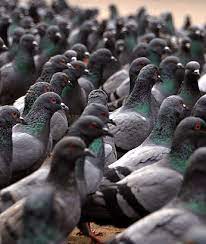
by Pigeon Patrol | Aug 26, 2021 | 4-S Gel Bird repellent, Animal Deterrent Products, Bird Deterrent Products, Bird Law, Bird Netting
Objective: The main objectives of the present study were to investigate the rock pigeon parasitic communities from Iraq as well as reporting on the prevalence and intensity of various infections from both sexes.
Methods: An examination of 128 specimens of the live rock pigeon Columba livia from Iraq was undertaken. The samples were obtained from several localities of Iraq. Blood samples were examined for haemoprotozoa, carcasses were investigated for the ectoparasites throughout their body skins and feathers, and the alimentary canal was examined for protozoans and helminths.
Results: Twenty-seven species of parasites were identified. They comprised 1 Fungi, Candida sp.; 4 Protozoa, Eimeria labbeana, Trichomonas gallinae, Haemoproteus columbae and Plasmodium sp.; 8 Cestoda, 4 of each of the genera Cotugnia and Raillietina; 4 Nematoda, Ascaridia columbae, A. galli, Capillaria obsignata and Synhimantus spiralis; and 10 Arthropoda, the commonest of which were the wing and tail feather louse Columbicola sp. and the pigeon louse fly Pseudolinchia canariensis. Infection indices are provided for each species and in respect to both sexes of the host.
Conclusion: The issue of zoonosis is raised, so is the role of the rock pigeons in acting as a reservoir and spreading some of the disease agents associated with other avian populations including poultry. Seven of the species are newly introduced to the parasitological list of Iraq and for this country the rock pigeon is a new host record for another 9 of the endoparasites that were diagnosed.
Source
Pigeon Patrol Products & Services is the leading manufacturer and distributor of bird deterrent (control) products in Canada. Pigeon Patrol products have solved pest bird problems in industrial, commercial, and residential settings since 2000, by using safe and humane bird deterrents with only bird and animal friendly solutions. At Pigeon Patrol, we manufacture and offer a variety of bird deterrents, ranging from Ultra-flex Bird Spikes with UV protection, Bird Netting, 4-S Bird Gel and the best Ultrasonic and audible sound devices on the market today.
Voted Best Canadian wholesaler for Bird Deterrent products ten years in a row.
Contact us at 1- 877– 4– NO-BIRD, (604) 585-9279 or visit our website at www.pigeonpatrol.ca
Pigeon/Pigeon Patrol / Pigeons Roosting / Vancouver Pigeon Control /Bird Spikes / Bird Control / Bird Deterrent / Pigeon Deterrent? Surrey Pigeon Control / Pest /Seagull deterrent / Vancouver Pigeon Blog / Birds Inside Home / Pigeons in the cities / Ice Pigeons/ What to do about pigeons/ sparrows , Damage by Sparrows, How To Keep Raccoons Away, Why Are Raccoons Considered Pests/ De-fence / Pigeon Nesting/ Bird Droppings / Pigeon Dropping/ woodpecker control/ Professional Bird Control Company/ Keep The Birds Away/ Birds/rats/ seagull/pigeon/woodpecker/ dove/sparrow/pidgeon control/pidgeon problem/ pidgeon control/flying rats/ pigeon Problems/ bird netting/bird gel/bird spray/bird nails/ bird guard
by Pigeon Patrol | Aug 17, 2021 | 4-S Gel Bird repellent, Animal Deterrent Products, Bird Deterrent Products, Bird Law, Bird Netting, Bird Spikes
The number of passenger pigeons went from billions to zero in mere decades, in contrast to conventional wisdom that enormous population size provides a buffer against extinction. Our understanding of the passenger pigeon’s extinction, however, has been limited by a lack of knowledge of its long-term population history. Here we use both genomic and ecological analyses to show that the passenger pigeon was not always super abundant, but experienced dramatic population fluctuations, which could increase its vulnerability to human exploitation. Our study demonstrates that high-throughput–based ancient DNA analyses combined with ecological niche modeling can provide evidence allowing us to assess factors that led to the surprisingly rapid demise of the passenger pigeon.
To assess the role of human disturbances in species’ extinction requires an understanding of the species population history before human impact. The passenger pigeon was once the most abundant bird in the world, with a population size estimated at 3–5 billion in the 1800s; its abrupt extinction in 1914 raises the question of how such an abundant bird could have been driven to extinction in mere decades. Although human exploitation is often blamed, the role of natural population dynamics in the passenger pigeon’s extinction remains unexplored. Applying high-throughput sequencing technologies to obtain sequences from most of the genome, we calculated that the passenger pigeon’s effective population size throughout the last million years was persistently about 1/10,000 of the 1800’s estimated number of individuals, a ratio 1,000-times lower than typically found. This result suggests that the passenger pigeon was not always super abundant but experienced dramatic population fluctuations, resembling those of an “outbreak” species. Ecological niche models supported inference of drastic changes in the extent of its breeding range over the last glacial–interglacial cycle. An estimate of acorn-based carrying capacity during the past 21,000 y showed great year-to-year variations. Based on our results, we hypothesize that ecological conditions that dramatically reduced population size under natural conditions could have interacted with human exploitation in causing the passenger pigeon’s rapid demise. Our study illustrates that even species as abundant as the passenger pigeon can be vulnerable to human threats if they are subject to dramatic population fluctuations, and provides a new perspective on the greatest human-caused extinction in recorded history.
Source
Pigeon Patrol Products & Services is the leading manufacturer and distributor of bird deterrent (control) products in Canada. Pigeon Patrol products have solved pest bird problems in industrial, commercial, and residential settings since 2000, by using safe and humane bird deterrents with only bird and animal friendly solutions. At Pigeon Patrol, we manufacture and offer a variety of bird deterrents, ranging from Ultra-flex Bird Spikes with UV protection, Bird Netting, 4-S Bird Gel and the best Ultrasonic and audible sound devices on the market today.
Voted Best Canadian wholesaler for Bird Deterrent products ten years in a row.
Contact us at 1- 877– 4– NO-BIRD, (604) 585-9279 or visit our website at www.pigeonpatrol.ca
Pigeon/Pigeon Patrol / Pigeons Roosting / Vancouver Pigeon Control /Bird Spikes / Bird Control / Bird Deterrent / Pigeon Deterrent? Surrey Pigeon Control / Pest /Seagull deterrent / Vancouver Pigeon Blog / Birds Inside Home / Pigeons in the cities / Ice Pigeons/ What to do about pigeons/ sparrows , Damage by Sparrows, How To Keep Raccoons Away, Why Are Raccoons Considered Pests/ De-fence / Pigeon Nesting/ Bird Droppings / Pigeon Dropping/ woodpecker control/ Professional Bird Control Company/ Keep The Birds Away/ Birds/rats/ seagull/pigeon/woodpecker/ dove/sparrow/pidgeon control/pidgeon problem/ pidgeon control/flying rats/ pigeon Problems/ bird netting/bird gel/bird spray/bird nails/ bird guard
by Pigeon Patrol | Jul 5, 2021 | 4-S Gel Bird repellent, Animal Deterrent Products, Bird Deterrent Products, Bird Law, Bird Netting, Bird Spikes
A little experiment: What comes to mind when you hear the word “dove”?
Intimations of peace? The promise of hope after long hardship, à la Noah releasing a snow-white bird to gauge the waters of the flood? A kick-ass ice cream bar? Whatever the image, the association is likely positive. Beatific, even.
Now try another word. “Pigeon.”
If you’re like most people — and especially if you’re like most city dwellers — you probably get a bit skeeved out just hearing the word. Pigeons? They might not be vermin — not exactly — but they aren’t too far up the ladder, either. They eat trash. They crap everywhere. Stupid. Filthy. Rats with wings. Right? Sorry, but not quite. In fact, not even close. And thanks to Andrew Blechman’s consistently engaging and surprising new book, “Pigeons,” the seemingly dull, unlovely members of the Columbidae family — or, rather, their idiosyncratic and intensely loyal human proponents — now have a handy arsenal of lively anecdotes and plain old facts (heads up, wisenheimers: Pigeons are doves) with which to defend their long-maligned feathered friends.
Along the way, Blechman takes pains to chronicle the views of people for whom pigeons are, at best, a nuisance and, at worst, a plague. He spends a cold, taxing day in rural Pennsylvania among a community of men, women and children who enthusiastically and unapologetically shoot pigeons for sport, for food and even for charity. He chats with the owner of a South Carolina squab-processing plant for whom the birds are nothing more than meat divinely destined for ovens, frying pans and human gullets. (“All he cares about,” Blechman writes, “are breasts, because that’s where the meat is. ‘I want nice, well-rounded ones,’ he tells me. ‘I want big breasts.'”) And, evidently without having to search too far, Blechman finds and dutifully quotes those who, for reasons as numerous as bread crumbs in St. Mark’s Square, simply despise the red-legged head-bobbers that have learned to live (and, more universally than their human counterparts, thrive) amid the chaos of modern metropolises.
But despite his fair and balanced reporting on the many detractors of, as his book’s subtitle has it, “The World’s Most Revered and Reviled Bird,” make no mistake — Blechman himself is a Columbidae family man. While he was, by his own admission, neither anti- nor pro-pigeon when he began the peripatetic journey traced in the book, something clearly happened during his wanderings through the variegated, far-flung worlds of pigeonistas. Yes, the author dutifully records the myriad arguments for the bird’s obliteration. Sure, he eats fried pigeon, and enjoys it. Admittedly, he readies, aims and fires a shotgun at pigeons, and experiences the thrill of the hunt — or, more exactly, the thrill of standing still and blasting away at birds released from spring-loaded traps. But almost before the reader has settled in and begun to enjoy Blechman’s disarming, conversational style (“Some people like pigeons. But pigeons also piss a lot of people off”), the author’s enthusiasm for his subject starts flying right off the page. One almost pictures him beating imaginary wings as he expounds on the pigeon’s mind-boggling physical attributes and capabilities:
“With hollow bones containing reservoirs of oxygen, a tapered fuselage, giant breast muscles that account for one-third of its body mass, and an ability to function indefinitely without sleep, the rock dove [as many ornithologists have begun referring to the bird] is a feathered rocket built for speed and endurance. If an average up-and-down of the wing takes the bird three feet, then a racer is making roughly 900,000 of those motions during a long-distance race, while maintaining 600 heartbeats per minute — triple its resting rate. The rock dove can reach peak velocity in seconds and maintain it for hours on end. One pigeon was recorded flying for several hours at 110 mph — an Olympian feat by any measure.”
That Blechman repeats, with only slight variations, this litany of athletic gifts throughout the book is one of the few aspects of the tale that grows old. We get it! Pigeons are incredibly fast fliers that can remain on the wing at top speed for hours on end on the avian equivalent of fumes. Is there really anything more of interest to say about the animal? What else has it got? And does the creature actually warrant writing, and reading, a whole book?
Pigeons, it turns out, have lived closely with humans, in a perpetually evolving relationship — first as a handy and docile source of protein, then as an incomparably fast means of transferring information and, finally, as a focus of sport (racing and shooting) and a pastime (show breeding) — for perhaps 10,000 years. They’ve served as symbols of fertility, peace and renewal in religions from Christianity and Judaism to Greek, Babylonian and other Mediterranean and Middle Eastern cults and creeds, while practitioners of yoga have long invoked the bird’s winged shape while assuming poses like the One-Legged King Pigeon.
For millennia, rock doves helped lost seafarers point their crafts toward land when lost, for even though the bird “often dwells on coastal cliffs, it has an aversion to large bodies of water and always flies inland in search of food. A bird released from a ship will quickly orient itself to land, and early sailors undoubtedly followed suit.”
Of course, the bird’s astonishing homing skills have been used for as long as, if not longer than, recorded history to carry messages of victory (and defeat) in war, announcements of the ascension of new kings and pharaohs to the throne, and even warnings of floods along the Nile. Underground coops discovered in Israel, dating from the time of King Solomon, held an estimated 120,000 pigeons — at least a few of which were, presumably, used for purposes other than keeping David and Bathsheba’s son and his friends readily supplied with squab.
And then there’s the tale of the creation of one of the world’s largest news companies. It all started when a failed German businessman named Israel Beer Josaphat hit upon the idea of tying tiny little bags stuffed with news and stock market prices beneath the wings of homing pigeons flown between Brussels and Aachen, Germany. The train between the cities took eight hours, the birds less than two. Josaphat ultimately changed his name to Julius Reuter and created a news-gathering empire founded on (or beneath) the wings of rock doves.
But as edifying as these historical tidbits might be, and as much about the rock dove as the book might appear to be, the story of “Pigeons” is, ultimately, one of how people respond to the bird. In the best sense, Blechman’s book reads like a series of entertaining, eye-opening magazine pieces held together by the sinews, feathers and strong, hollow bones of the rock dove. Like so many of the surprisingly enthralling books written in recent years about one discrete, at-first-glance vapid topic — Mark Kurlansky’s “Cod,” Charles Seife’s “Zero: The Biography of a Dangerous Idea,” and innumerable others — “Pigeons” manages to illuminate not merely the ostensible subject of the book, but also something of the endearing, repellent, heroic and dastardly nature of that most bizarre of breeds, Homo sapiens.
Blechman has a shrewd eye and an ear nicely attuned to the peculiarities that reveal personality, and the human characters populating the pages of “Pigeons” are wonderfully and sympathetically drawn. From the friendly, unassuming pigeon breeders at the Grand Nationals competition held at a Lancaster, Pa., hotel, to the clearly obsessed trainers and owners of racing pigeons in the Bronx and rural England and beyond, to the happy, driven rescuer and champion of rock doves who lives in a squalid home in Arizona literally dripping with not-quite-calcified pigeon shit, the pro-bird folks who pop up in “Pigeons” make avid cat and dog people seem, well, tame in comparison.
“Sweetie, a pigeon the size of a small turkey, is pacing back and forth on what used to be a Formica kitchen counter,” Blechman writes of a bird who makes her home with Dave Roth, the one-man rescue mission and Jerry Garcia look-alike of Phoenix, Ariz. “Roth nuzzles her. ‘That’s my girl. You’re such a sweetie, aren’t you?’ He turns to face me. ‘If everybody could experience this kind of a relationship with a bird, then we wouldn’t have all the problems we have today with the pigeon haters. Pigeons can be funny, animated, and loyal like a dog. You’d be amazed.'”
This kitchen counter encounter, which appears at just about the exact halfway point of the book, is emblematic of much that’s weird and humorous and even a little unsettling about Blechman’s tale. If you’re somehow still on the fence about pigeons until this point, you’ll probably fall hard and fast on either side once you’ve spent a little time with Dave Roth. (Of eating squab, Roth opines that it’s “like Jeffrey Dahmer eating your kid.” Roth, it’s worth noting, is a bachelor. And childless.)
Finally, as fate would have it, at pretty much the exact same time that Blechman’s book was hitting bookstores, several research studies found that (wait for it) pigeons are vastly more intelligent than anyone, even most pigeon fans, have given them credit for.
“Pigeons are no slouches,” said Robert G. Cook of Tufts University, coauthor of a study that found that pigeons can remember more than 1,000 individual images. Another study showed that pigeons evidently possess the ability to compare relationships — such as sameness or difference — rather than merely identifying distinct images or objects. Researchers claimed that the ability, previously observed and quantified only in humans and a handful of other higher mammals, is a form of analogous thinking — primitive, but nonetheless exceedingly rare in the animal kingdom.
Rats with wings? Affectionate companions? Idiotic pests? Miraculous navigators? Tasty eats? Blechman’s “Pigeons” flies in the face of conventional wisdom about a symbolically freighted bird that, if we thought about it at all, we thought we knew. Time to think again.
Source
Pigeon Patrol Products & Services is the leading manufacturer and distributor of bird deterrent (control) products in Canada. Pigeon Patrol products have solved pest bird problems in industrial, commercial, and residential settings since 2000, by using safe and humane bird deterrents with only bird and animal friendly solutions. At Pigeon Patrol, we manufacture and offer a variety of bird deterrents, ranging from Ultra-flex Bird Spikes with UV protection, Bird Netting, 4-S Bird Gel and the best Ultrasonic and audible sound devices on the market today.
Voted Best Canadian wholesaler for Bird Deterrent products ten years in a row.
Contact us at 1- 877– 4– NO-BIRD, (604) 585-9279 or visit our website at www.pigeonpatrol.ca
Pigeon/Pigeon Patrol / Pigeons Roosting / Vancouver Pigeon Control /Bird Spikes / Bird Control / Bird Deterrent / Pigeon Deterrent? Surrey Pigeon Control / Pest /Seagull deterrent / Vancouver Pigeon Blog / Birds Inside Home / Pigeons in the cities / Ice Pigeons/ What to do about pigeons/ sparrows , Damage by Sparrows, How To Keep Raccoons Away, Why Are Raccoons Considered Pests/ De-fence / Pigeon Nesting/ Bird Droppings / Pigeon Dropping/ woodpecker control/ Professional Bird Control Company/ Keep The Birds Away/ Birds/rats/ seagull/pigeon/woodpecker/ dove/sparrow/pidgeon control/pidgeon problem/ pidgeon control/flying rats/ pigeon Problems/ bird netting/bird gel/bird spray/bird nails/ bird guard