

Industrial and Warehouse Bird Control Systems
Warehouses and industrial buildings give nuisance birds exactly what they seek: height, shelter, wide roof areas and undisturbed beams. Once pigeons, sparrows or starlings begin nesting inside a facility, droppings can land on floors, equipment, vehicles and stored materials. Exterior flocks can also gather around loading bays, roof equipment, signs and solar arrays.
Pigeon Patrol provides humane industrial bird control solutions designed around the size and operating needs of each facility. The goal is to close access, remove preferred landing areas and reduce repeated bird activity without interfering unnecessarily with day-to-day operations.
Where Birds Create Problems in Industrial Facilities
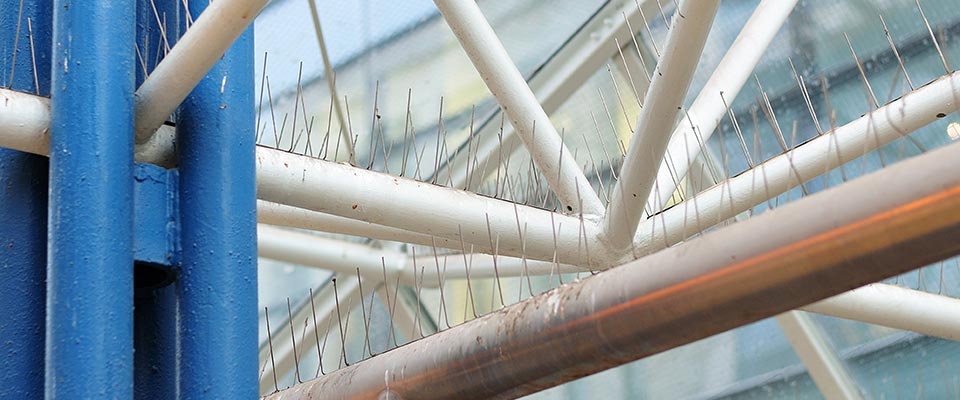
Open rafters and structural beams
High beams offer protected roosting points that can be difficult to reach from the floor. Birds may move throughout the building and contaminate multiple areas below.
Loading docks and canopies
Frequently opened doors, sheltered canopies and nearby food or waste can draw birds to loading zones. Droppings in these high-traffic areas create added cleaning and slip concerns.
Rooftop HVAC equipment and solar arrays
Mechanical screens, ducts and panels create warmth and shelter. Nesting material can accumulate around equipment and drainage paths.
Yards, silos and material storage
Outdoor storage and food-related facilities can attract larger flocks. These sites often require layered deterrence rather than a single product.
Industrial Bird Control Systems
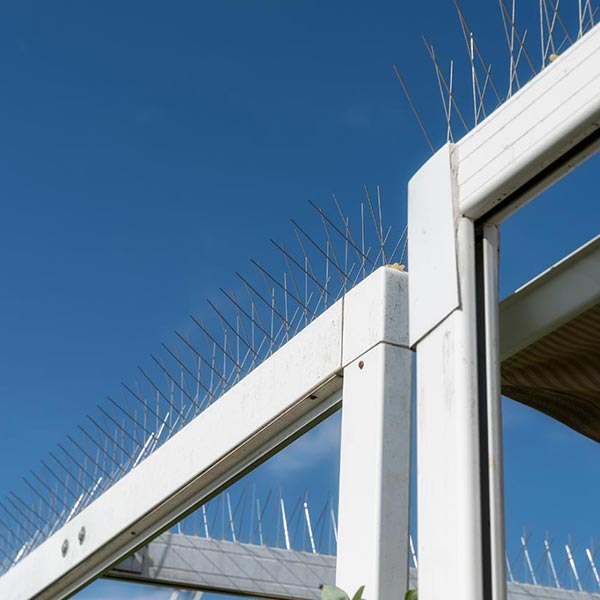
Bird spikes for exterior structures
Bird spikes suit parapets, signs, roof edges, lights and narrow beams where pigeons repeatedly perch. Complete coverage matters on broad industrial surfaces.
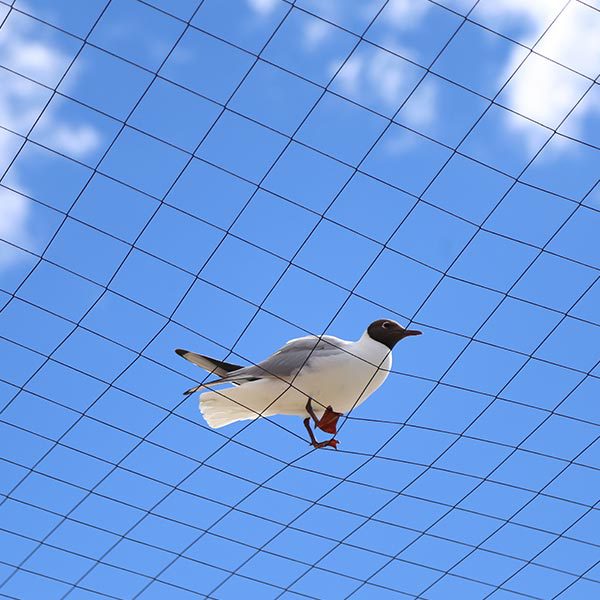
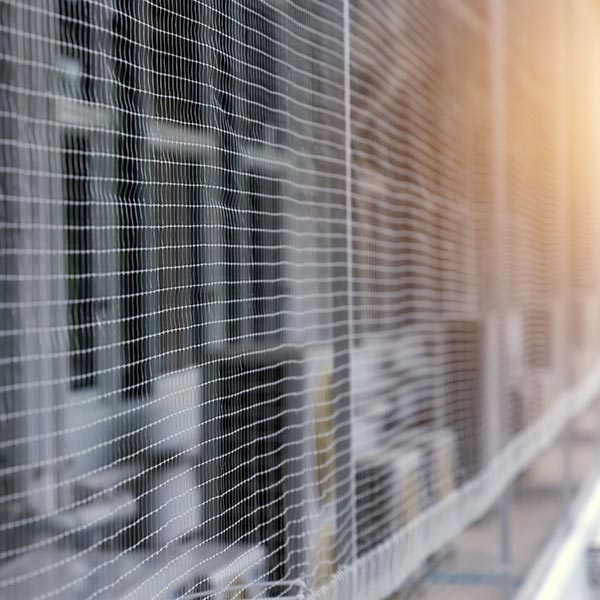
Warehouse bird netting
Bird netting provides a physical exclusion barrier beneath roofs, around canopies and across access points. A properly tensioned and sealed system can protect a defined zone while preserving usable space below.
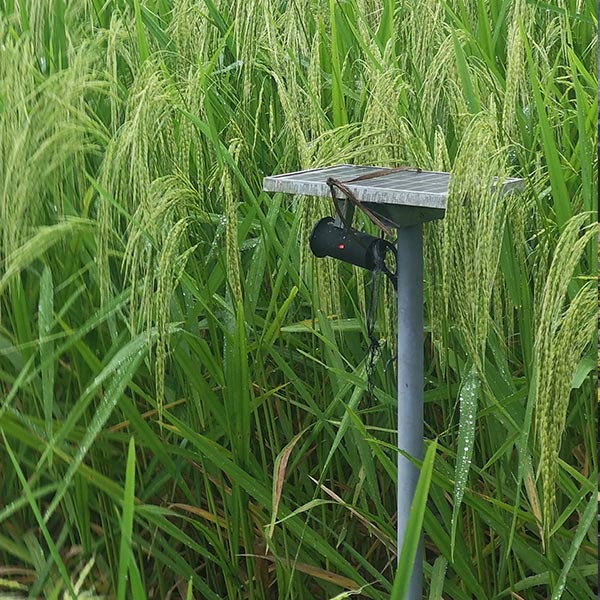
Active bird repeller systems
Sound and ultrasonic bird repellers can reinforce a management plan across large roofs, yards and other open areas. System design should account for obstructions, coverage, target species and the potential for habituation.

Trapping as part of an integrated plan
Pigeon trapping cages may help manage an established population where trapping is lawful and appropriate. Exclusion and sanitation are still necessary to address the conditions attracting birds.
A Practical Industrial Bird Control Process
1. Map bird movement and operational risk
Identify entry points, roosts, nests, food sources and the assets at risk. Note production zones, forklifts, high-traffic routes and areas requiring special access or sanitation controls.
2. Divide the facility into control zones
Treating the entire building identically may waste resources. Priority zones can include receiving, production, storage, roof equipment and exterior staging areas.
3. Choose exclusion before displacement where possible
Closing access with netting or another barrier generally provides clearer protection for a defined indoor space. Spikes and active deterrents can protect exterior landing areas and support exclusion.
4. Plan installation around operations
Lift access, working height, electrical equipment and production schedules can affect the installation plan. Coordination reduces disruption and keeps workers and inventory clear of the work area.
5. Inspect the system and correct new vulnerabilities
Doors, roofs and equipment change. Maintenance should check net tension, attachments, gaps and new landing points so a small failure does not reopen the site.
Industrial Sites We Support
- Warehouses and distribution centres
- Manufacturing and processing facilities
- Loading docks and freight terminals
- Parking and fleet facilities
- Food and agricultural buildings
- Retail distribution and cold-storage sites
- Rooftop mechanical and solar installations
For offices, retail centres and other public-facing properties, visit commercial bird control services.
Industrial Bird Control Service Areas
Pigeon Patrol supports industrial properties across British Columbia and Alberta, including:
FAQs
What is the best bird control system for a warehouse?
Netting is often the strongest option for excluding birds from rafters or defined interior zones. Spikes and active repellers can support the system on exterior landing areas.
Can bird netting be installed without blocking lights or sprinklers?
Netting systems can be designed around building services, but fire protection, lighting, ventilation and maintenance access must be considered during planning and installation.
How do birds get inside warehouses?
Common access points include open loading doors, damaged cladding, roof gaps, vents and unscreened openings. Observing flight paths helps identify the entry route.
Will ultrasonic repellers solve an established warehouse infestation?
n active repeller may support the plan, but established nesting and open access points usually require exclusion, sanitation and other measures as well.
Do you provide industrial bird control in Alberta and British Columbia?
Yes. Pigeon Patrol provides bird control products and tailored solutions for industrial and warehouse properties across both provinces.
Discuss Your Warehouse or Industrial Site
An effective plan starts with the structure, the birds and the way the facility operates. Review the full range of bird control services, contact Pigeon Patrol or call 604-585-9279.
You Can Also Shop Pigeon Control Products Online
It’s Time To Take Action & Get Protected With Pigeon Patrol Products. Shop all our products online today!